

Visiting a Japanese Zen garden is about more than quiet beauty, and knowing where to go can make all the difference.
Fact-Checked By: Maya Whitfield, Senior Travel Editor at WakaAbuja — Author Bio
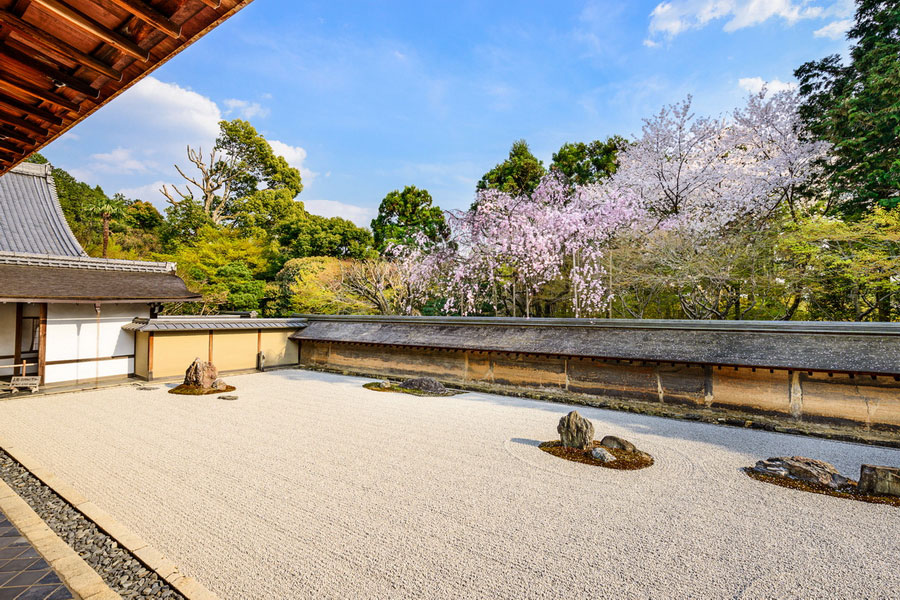
A Japanese zen garden (karesansui) is a dry landscape of rocks, raked gravel, and moss designed for seated contemplation, not walking. The most famous ones you can actually visit sit in Kyoto, including Ryōan-ji, Ginkaku-ji, and Saihō-ji, with entry fees typically around 500 yen for adults (confirm the latest price directly with the temple before you go). Most visitors make one big mistake: they walk through in ten minutes instead of sitting still for twenty.
I still remember my first visit to Ryōan-ji. I walked in, looked at fifteen rocks in a sea of white gravel, thought “nice,” and left in eight minutes. A Japanese woman sitting on the veranda watched me go, then quietly said, “You missed it.” She was right. These gardens were not built for cameras.
They were built for the slow, boring, uncomfortable act of doing nothing. Here is where to find the real ones, what you are actually looking at, and how not to waste your visit like I did.
Jump to: What is a zen garden | How to read one | Must-visit gardens | Best time to go | What to avoid | FAQ
Key takeaways
- Zen gardens are called karesansui, meaning dry landscape, and they use rocks and gravel to represent water without actually using any water.
- Ryōan-ji’s rock garden was created in 1499 and contains fifteen rocks arranged so you cannot see all of them from any single vantage point.
- Most famous gardens charge around 500 yen for adults (confirm the latest price directly with the temple), though Saihō-ji charges 3,000 yen and requires advance reservation by mail.
- The best time to visit is before 9am or after 3pm, when tour groups thin out and the gravel catches softer light.
- You cannot walk on the raked gravel in most rock gardens. Sit on the designated veranda and observe from there.
- Ginkaku-ji and Tenryū-ji offer walkable strolling gardens in addition to dry landscape sections, giving you two experiences in one visit.
- Booking your Kyoto accommodation through Agoda or Booking.com early saves real money during cherry blossom and autumn foliage seasons.
What is a Japanese zen garden in plain language?
A Japanese zen garden, properly called karesansui, is a dry landscape garden that uses rocks, gravel, moss, and pruned trees to create a miniature natural scene, usually without any actual water. The raked gravel represents rivers or oceans. The rocks represent mountains or islands. A visitor sits on a veranda or viewing platform and contemplates the composition.
The form developed in Kyoto’s Zen temples during the fourteenth and fifteenth centuries. Monks needed contemplative spaces within confined temple grounds where water features were impractical, and the abundant white Shirakawa gravel from Kyoto’s riverbeds made the dry aesthetic possible. What looks minimalist on the surface is actually one of the hardest garden styles to execute well.

Maya’s honest take: “The first time someone told me a zen garden represents water without water, I nodded like I understood. I did not. It took sitting at Daisen-in for forty minutes before the rocks stopped looking like rocks and started looking like a river.”
How do you actually read a zen garden without feeling lost?
Most first-time visitors stare at raked gravel, take a photo, and leave with no idea what they saw. That is normal. The garden does not explain itself. But knowing a few design elements turns a confusing pile of rocks into a story.
Rock groupings represent islands, mountains, or even animals. At Ryōan-ji, some interpretations describe the fifteen rocks as tiger cubs crossing a river, while others see a mother tiger leading her cubs. At Daisen-in, the rocks form a narrative landscape with a waterfall, a river, and an ocean compressed into a small courtyard.
Raked gravel patterns simulate the movement of water. Concentric circles around a rock suggest a stone dropped into a pond. Straight lines suggest flowing currents. The patterns are maintained daily by temple staff, and the rake marks themselves are part of the art.
Borrowed scenery (shakkei) incorporates distant landscapes into the garden’s composition. Tenryū-ji’s Sogenchi Garden uses the Arashiyama mountains as a backdrop, making the garden feel larger than its physical boundaries. Nanzen-ji similarly borrows the eastern hills.
Moss adds age and softness. Saihō-ji is called Kokedera, the Moss Temple, because over 120 varieties of moss blanket its grounds. The moss suggests centuries of patient growth, which is exactly the feeling the garden wants you to absorb.
Which zen gardens in Kyoto are actually worth visiting?
Kyoto has hundreds of temples, but a handful of zen gardens consistently earn the trip. Here are the ones I return to, with practical details so you can plan without guesswork.
Ryōan-ji
Location: Northwest Kyoto
Hours: 8:00 to 17:00 (March to November), 8:30 to 16:30 (December to February)
Fee: 500 yen for adults (confirm the latest price directly with the temple)
Why go: The world’s most famous rock garden. Fifteen rocks, white gravel, no explanation. Sit on the veranda and let your brain settle.
Ginkaku-ji (Silver Pavilion)
Location: Higashiyama, eastern Kyoto
Hours: 8:30 to 17:00 (summer), 9:00 to 16:30 (winter)
Fee: 500 yen for adults (confirm the latest price directly with the temple)
Why go: Two gardens in one. A dry sand garden with a sculpted cone, plus a mossy strolling garden up the hillside.
Saihō-ji (Kokedera)
Location: Arashiyama area, western Kyoto
Hours: 10:00 to 16:00, varies seasonally
Fee: 3,000 yen (confirm the latest price directly with the temple)
Why go: Advance reservation required by mail or official website. You copy sutras before entering. The moss garden is worth every bureaucratic hurdle.
Daisen-in
Location: Daitoku-ji complex, northern Kyoto
Hours: 9:00 to 16:30
Fee: 500 yen adults, 400 yen matcha optional (confirm the latest price directly with the temple)
Why go: A narrative rock garden that tells a story of water flowing from mountains to ocean. The most intricate in Kyoto.
Tenryū-ji
Location: Arashiyama, western Kyoto
Hours: 8:30 to 17:00
Fee: 500 yen for garden entry, additional for buildings (confirm the latest price directly with the temple)
Why go: A walkable strolling garden with a pond that has survived almost unchanged for 700 years. The north gate leads directly into the bamboo grove.
Tōfuku-ji
Location: Higashiyama, near Tofukuji Station
Hours: 9:00 to 16:00, varies by season
Fee: 400 to 600 yen for garden areas (confirm the latest price directly with the temple)
Why go: Four gardens surrounding the main hall, redesigned in 1939 with a modern touch. The south garden’s checkered moss and stone pattern is unlike anything else.
What is the best time to visit a Japanese zen garden?
Morning. Early morning. The gates at Ryōan-ji open at 8:00, and by 9:30 the tour buses arrive. I have sat alone on that veranda at 8:15 with nothing but the sound of gravel being raked by a temple worker. By 10am, it is a camera-phone symphony.
If you cannot do morning, aim for the last hour before closing. Light softens, crowds thin, and the garden takes on a different mood. Winter visits are underrated. Snow on raked gravel is one of the quietest sights in Japan.
Autumn foliage season (mid-November) is spectacular but crowded beyond reason. Cherry blossom season (late March to early April) is similarly packed. If you want solitude and you are flexible, visit in January or June.
What do first-time visitors get wrong at zen gardens?
I have made most of these mistakes myself. Learn from my wasted time.
Walking through in under fifteen minutes. The garden does not work that fast. Sit down. Set a timer for twenty minutes if you have to. The shift happens around minute twelve, when your brain stops trying to “figure out” the rocks.
Stepping on the gravel. Most rock gardens prohibit walking on the raked surface. There are designated viewing platforms and verandas. Stay on them. Temple staff will correct you, and it ruins the pattern for everyone after you.
Trying to “solve” the garden. There is no correct interpretation. Some scholars think Ryōan-ji is a koan, an unanswerable question meant to frustrate logical thinking. If you leave confused, you did it right.
Skipping Saihō-ji because of the reservation hassle. The mail-in reservation system filters out crowds. That is the point. You get a moss garden nearly to yourself for 90 minutes. It is the most peaceful experience I have had in Kyoto.
Visiting only the famous ones. Ryōan-ji is essential, but Konchi-in at Nanzen-ji is quiet and nearly empty. Kennin-ji sits in the middle of Gion, and walking from those crowded streets into its courtyard garden feels like stepping through a portal.
Forgetting cash. Many smaller temples do not accept credit cards. Bring yen. Entry fees are modest, usually 400 to 600 yen (confirm the latest price directly with the temple), but an ATM run interrupts the mood.
Frequently asked questions
Can you walk in a Japanese zen garden?
No, you generally cannot walk on the raked gravel or rock arrangements in a karesansui garden. These are designed for seated contemplation from a veranda or viewing platform. Walking on the gravel disturbs the rake patterns and damages the composition. Some gardens like Tenryū-ji and Ginkaku-ji have separate strolling paths where walking is allowed, but those are distinct from the dry landscape sections.
How long does it take to visit Ryōan-ji?
Plan for 45 to 90 minutes. The rock garden itself takes twenty minutes if you sit properly. The temple grounds include a large pond garden that is worth a slow walk. Entry is 500 yen for adults (confirm the latest price directly with the temple), and hours are 8:00 to 17:00 from March to November and 8:30 to 16:30 from December to February.
Is Ryōan-ji worth visiting?
Yes, if you give it time. It is the most famous rock garden in the world for a reason, and sitting on that veranda with fifteen rocks arranged so you cannot see them all at once is a genuinely unique experience. The caveat is crowd timing. Go at opening or late afternoon. If you rush through at noon in a tour group, you will wonder what the fuss was about.
Do I need reservations for Saihō-ji Moss Temple?
Yes, Saihō-ji requires advance reservation, typically by mail or through their official website. The process involves a sutra-copying session before you enter the garden. The entry fee is 3,000 yen (confirm the latest price directly with the temple), which is higher than most temples, but the experience is quieter and more structured than anywhere else in Kyoto.
What is the difference between a zen garden and a Japanese garden?
A zen garden, or karesansui, is a specific type of Japanese garden that uses dry landscape elements like rocks and gravel to represent water and nature without using actual water. Japanese gardens is a broader category that includes pond gardens, strolling gardens, tea gardens, and moss gardens. Not all Japanese gardens are zen gardens, but most zen gardens are Japanese.
Which zen garden is best for first-time visitors?
Start with Ginkaku-ji or Tenryū-ji. Both combine a dry landscape section with a walkable strolling garden, so you experience two styles in one visit without needing to understand karesansui theory first. Ryōan-ji is essential but can feel opaque if you have never encountered a rock garden before. Do Ginkaku-ji first, then Ryōan-ji the next morning.
Are zen gardens accessible for visitors with mobility issues?
Partially. The viewing verandas at Ryōan-ji and Daisen-in are accessible with assistance, but temple grounds often involve gravel paths, steps, and uneven surfaces. Tenryū-ji’s strolling garden has some paved sections but also unpaved paths. Check each temple’s official accessibility information before visiting, and consider bringing a companion for assistance.
Plan your trip: booking platforms we trust
I use these platforms because they consistently deliver what they promise for Japan travel. I do not list anything I have not personally tested or received reliable reader feedback on. For Kyoto specifically, book accommodation early during peak seasons, because the good budget options vanish months in advance.
Agoda
Best for Asian hotel deals, often the cheapest option for Kyoto stays.
Booking.com
General hotel search with strong filter options for location and budget.
GetYourGuide
Tours and activities, useful for guided garden visits with historical context.
Kayak
Flight price comparison if you are still figuring out dates for Kyoto.
WakaAbuja does its best to keep all information accurate at the time of publishing. Prices, policies, and availability change regularly. Always verify with official sources before you travel. We are not liable for errors caused by outdated information. Travel insurance is strongly recommended.