Joshua Tree National Park: The Complete Visitor’s Guide Nobody Actually Gives You (Costs, Entrances & What First-Timers Get Wrong)
Fact-Checked By: Maya Whitfield, Senior Travel Editor at WakaAbuja — Senior Travel Editor at WakaAbuja
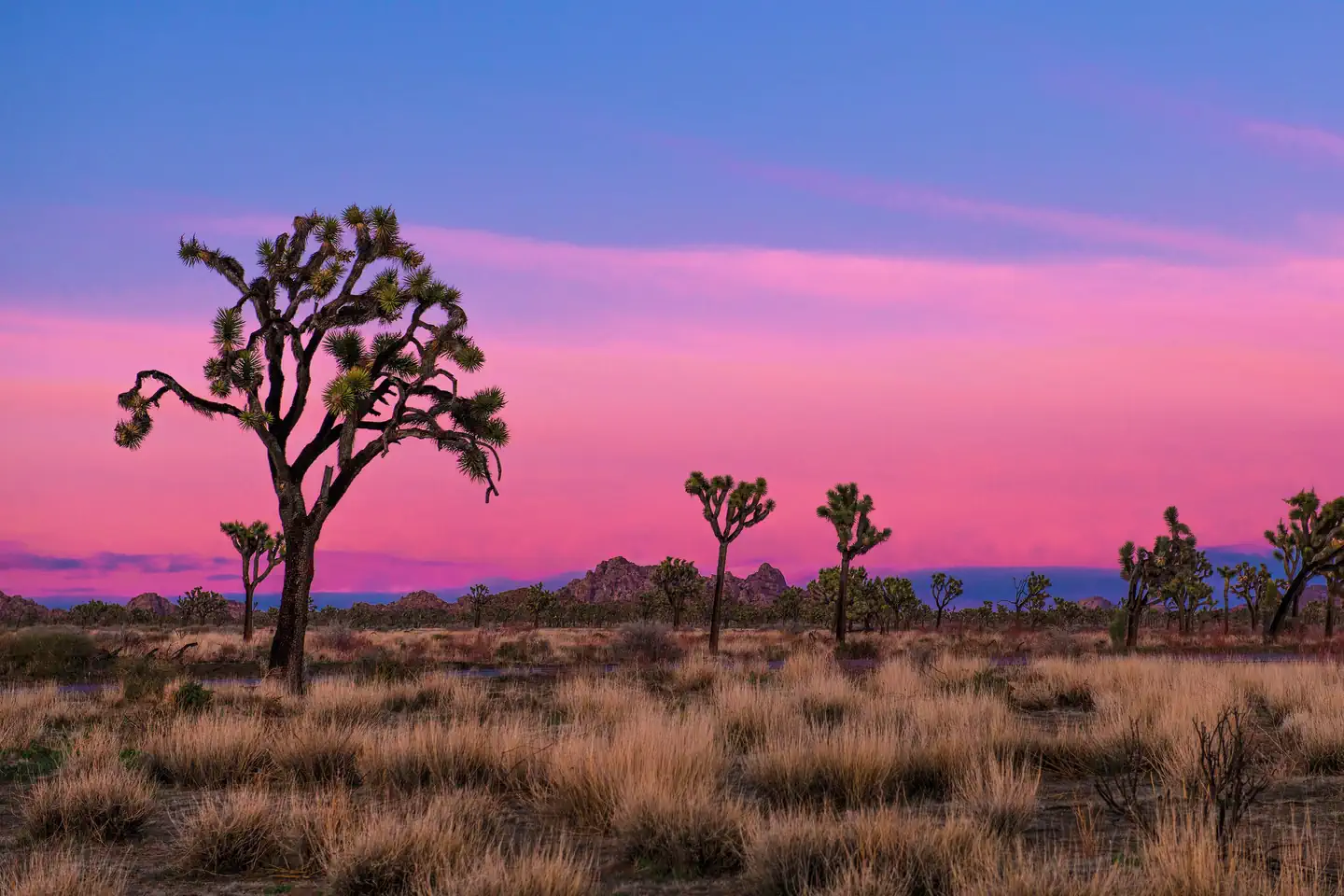
Joshua Tree National Park sits where the Mojave and Colorado deserts meet, about 100 miles east of Los Angeles. The standard entrance fee is $30 per private vehicle, valid for seven days. The park covers 790,636 acres. Spring (March to May) and fall (October to November) offer the most comfortable weather, with highs around 85°F, while summer routinely exceeds 100°F. Camping ranges from $25 to $35 per night depending on the campground (confirm current rates on Recreation.gov).
I have made almost every Joshua Tree mistake a first-timer can make. I entered through the wrong gate and wasted two hours driving to the wrong side of the park. I showed up in July thinking I could handle the heat and retreated to my car by 11 a.m. I booked a campsite six months in advance and then realized I had no idea which campground suited what I actually wanted to do.
This guide is the thing I wish someone had handed me before that first trip: a straight answer about which entrance to use, what things really cost, when to go, and the specific mistakes that ruin otherwise good visits.
Jump to: Which Entrance | Real Costs | Best Time | Camping | Itineraries | Mistakes | FAQ
Key takeaways
- Entrance fee is $30 per private vehicle for seven days (confirm current rates on the NPS fees page).
- Three entrances serve different purposes: West for the main rock formations, North for remote camping, and South for the Cholla Cactus Garden and I-10 access.
- Spring and fall are ideal; summer heat above 100°F makes midday hiking dangerous.
- Reservable campgrounds book six months in advance on Recreation.gov and cost $30 to $35 per night (verify current pricing on Recreation.gov).
- First-come campgrounds cost $25 per night but fill by Friday afternoon from September through May.
- You cannot sleep in your vehicle outside designated campgrounds.
- Cell service is unreliable; download offline maps before you enter .
Which entrance should you use at Joshua Tree?
This is the question nobody asks until they are sitting at the wrong gate with a forty-minute detour ahead of them. Joshua Tree has three entrances, and they are not interchangeable. I learned this the hard way on my first visit, when I drove to the West Entrance because it was closest to the town of Joshua Tree, then realized I wanted to see the Cholla Cactus Garden, which is on the complete opposite side of the park.
The West Entrance is the most popular and puts you closest to Hidden Valley, Barker Dam, and the main boulder formations. It is also the busiest, with entrance station lines that can stretch thirty minutes on spring weekends. The North Entrance, near Twentynine Palms, serves Indian Cove and the remote Black Rock area. It is quieter and useful if you are camping on that side of the park. The South Entrance, off Interstate 10, leads to Cottonwood Campground and the Cholla Cactus Garden. It is the least crowded and the most convenient if you are driving from the Palm Springs or Coachella Valley area.
West Entrance
Best for: The classic Joshua Tree experience
- Closest to Hidden Valley, Barker Dam, and Ryan Mountain
- Most boulder formations and rock climbing access
- Busiest entrance, especially March through May
- Longest entrance station waits
North Entrance
Best for: Indian Cove and Black Rock camping
- Serves Indian Cove, Black Rock, and remote hiking
- Quieter than West Entrance
- Black Rock is not connected by road to the rest of the park; you must exit and re-enter
- Good for rock climbers heading to Indian Cove
South Entrance
Best for: Cholla Cactus Garden and I-10 access
- Direct access to Cottonwood Campground
- Closest to Cholla Cactus Garden
- Least crowded of the three entrances
- Convenient from Palm Springs and the Coachella Valley
Maya’s honest take: “If you are doing a day trip from Los Angeles or Palm Springs, pick your entrance based on what you actually want to see, not which one is closest on the map. The park is huge. Driving from the South Entrance to Hidden Valley takes over an hour. That is an hour you are not spending on a trail.”
What does a Joshua Tree trip actually cost?
I get this question constantly, and the honest answer is that the entrance fee is the smallest part of the budget. The park itself is cheap to enter. Everything around it, from gas to lodging to camping gear, adds up fast. Here are the real numbers I have paid and seen quoted.
Entrance fees
- Private vehicle: $30 for 7 days (confirm current rates on NPS)
- Motorcycle: $25 for 7 days (verify current pricing)
- Per person (bike or foot): $15 for 7 days (check current rates)
- Annual pass: $55 (confirm on NPS)
- America the Beautiful Pass: $80 for US residents (check eligibility)
Camping costs
- Reservable campgrounds (Jumbo Rocks, Black Rock, etc.): $30 to $35 per night (verify on Recreation.gov)
- First-come campgrounds (Hidden Valley, Belle, White Tank): $25 per night (confirm current rates)
- No hookups anywhere in the park
The other costs that catch people off guard: gas from Los Angeles runs around $40 to $60 round trip depending on your vehicle, and there is no fuel inside the park. If you are flying in, rental cars at Palm Springs or Ontario airports add another layer. Lodging in the gateway towns of Joshua Tree, Twentynine Palms, and Yucca Valley ranges from budget motels to boutique rentals, and prices spike on spring weekends. Search options on Booking.com or Vrbo if you want a kitchen and more space than a motel room.
When is the best time to visit Joshua Tree?
The short answer is spring and fall. The longer answer is that each season has a trade-off, and the right choice depends on whether you prioritize comfort, crowds, or solitude.
Spring (March to May): Best overall, busiest
Daytime highs hover around 85°F, wildflowers bloom at lower elevations starting in February and peak in April, and the park feels alive . The catch is crowds. Entrance station lines are long, parking at popular trailheads fills by 8 a.m., and campgrounds book out months in advance . If you visit in spring, arrive at the gate before 7 a.m. and have a backup trail in mind for when the first one is full.
Fall (October to November): The underrated window
Temperatures drop into the 70s and 80s, the summer crowds disappear, and the light gets softer and moodier . October is my favorite month in the park. The only downside is that some services and campgrounds scale back after Labor Day, so check what is open before you commit .
Winter (December to February): Quiet and cold
Daytime highs sit around 60°F, but nights drop below freezing and higher elevations can see snow . The upside is solitude and exceptional stargazing. The downside is that you need winter gear and should plan hikes for the warmest part of the day.
Summer (June to September): Only if you know what you are doing
I am not going to tell you not to visit in summer, because some people genuinely enjoy the solitude and the monsoon storms. But the heat is dangerous. Daytime temperatures routinely exceed 100°F, and the park service treats summer hiking as a serious risk . If you go, hike before 8 a.m. or after 6 p.m., carry more water than you think you need, and do not attempt anything strenuous. Several campgrounds close for the summer .
How does camping work at Joshua Tree?
Camping inside the park is the best way to experience Joshua Tree, but the system requires planning. There are two types of campgrounds: reservable and first-come, first-served. I have done both, and I have a clear preference.
Reservable campgrounds include Jumbo Rocks, Black Rock, Indian Cove, Ryan, and Cottonwood. These book six months in advance on Recreation.gov and cost $30 to $35 per night (verify current rates on the booking platform) . They fill up fast during peak season. Jumbo Rocks is the most popular because it sits among the giant boulder formations, but it is also the busiest and noisiest. Black Rock has water and flush toilets, which makes it more comfortable than most, and it sits at 4,000 feet so it runs cooler than the valley floor .
First-come, first-served campgrounds are Hidden Valley, Belle, and White Tank. They cost $25 per night (confirm current fees) and have pit toilets and no water . Hidden Valley is the only one open year-round, and it is surrounded by the park’s best bouldering terrain. The catch is that first-come sites fill by Friday afternoon from September through May, and they are nearly impossible to get on spring weekends .
Maya’s honest take: “Book the reservation. I know the first-come sites are cheaper and I know the spontaneity feels romantic. But driving into the park at 4 p.m. on a Friday in April and hoping for a spot is a stress I do not wish on anyone. The reservation fee is worth the certainty. Book on Recreation.gov the moment your six-month window opens.”
One more thing: you cannot sleep in your vehicle outside a designated campsite. The park explicitly prohibits overnight parking at trailheads, pullouts, and dirt roads, and violators get cited . If you arrive without a campsite, your options are camping on Bureau of Land Management land outside the park or finding lodging in the gateway towns.
What should a one-day Joshua Tree itinerary look like?
A single day in Joshua Tree is tight but doable if you are strategic. The park is large, and trying to see everything in one visit means spending most of your time in the car. Here is the itinerary I give friends who only have one day.
Enter through the West Entrance at sunrise. Drive directly to Keys View first, before the crowds arrive. The 0.2-mile walk to the overlook gives you the best panorama in the park, stretching across the Coachella Valley to the Salton Sea . Then backtrack to Hidden Valley for the one-mile loop trail, which introduces you to the boulder formations and the park’s ranching history .
By late morning, drive to Barker Dam for another short loop, then head toward Jumbo Rocks and Skull Rock for photos and scrambling. Stop at Cholla Cactus Garden on your way toward the South Entrance, but keep your distance from the cholla. The spines latch onto anything that brushes them . Exit through the South Entrance to Interstate 10 if you are heading toward Palm Springs, or loop back to the West Entrance if you are returning to Los Angeles.
For a two-day visit, add the Ryan Mountain hike for panoramic views, the Arch Rock Trail for a family-friendly rock formation, and a stargazing session at Cottonwood Campground, which has some of the darkest skies in the park.
What should you pack for Joshua Tree?
Packing for Joshua Tree is not complicated, but the desert punishes people who underestimate it. Here is what actually matters.
Water, water, water
The park service recommends one gallon per person per day for hiking, and I would go higher in summer. There is no potable water inside the park except at a few visitor centers. Fill every container you have before you enter. I carry a three-liter reservoir plus two one-liter bottles even on short hikes.
Layers and sun protection
Desert temperatures swing dramatically between day and night. Bring a base layer, a mid-layer, and a windproof shell. A wide-brimmed hat, sunglasses, and high-SPF sunscreen are non-negotiable. I burned the back of my neck on a January hike because I assumed winter meant no sun exposure. It does not.
Footwear that can handle sand and rock
Trails range from sandy washes to granite slabs. Sturdy hiking shoes with good grip are the right call. Do not wear sandals unless you enjoy cactus spines between your toes.
Navigation and communication
Cell service is unreliable to nonexistent in most of the park. Download offline maps before you arrive. If you are hiking anything longer than a mile, carry a paper map or a GPS device. The park service explicitly recommends this.
What not to bring
Do not bring a drone. They are prohibited in all national parks. Do not bring firewood from outside the area, as it spreads tree-killing pests. And do not bring a hammock unless you have rock-friendly straps. Attaching lines to Joshua trees and junipers is prohibited.
What are the biggest mistakes first-time visitors make?
I have made most of these. Learn from my errors.
Underestimating the park’s size
Joshua Tree covers nearly 800,000 acres. Driving from one end to the other takes over an hour. Do not plan to “quickly see both sides” in a morning. Pick one area and explore it properly.
Arriving at noon
By midday, parking at popular trailheads is full, the heat is at its peak, and the light is flat for photography. Arrive at sunrise or within an hour of the gate opening.
Not checking the campground reservation window
Reservable campsites open six months in advance and sell out within minutes during peak season. Set a calendar reminder for the exact day your target dates become available.
Skipping the wildflower report
If you are visiting in spring and hoping to see blooms, check the park’s online wildflower report before you go. Blooms are unpredictable and depend entirely on winter rainfall.
Ignoring fire restrictions
Fire restrictions are common, especially in summer. When they are in effect, charcoal fires and wood-burning stoves are prohibited. Only gas or propane stoves are allowed. Check current restrictions before you pack your firewood.
Wearing the wrong shoes
This sounds trivial until you are picking spines out of your socks. Wear closed-toe hiking shoes. The desert is not a flip-flop environment.
Forgetting that shade is scarce
There are very few natural shade sources on Joshua Tree trails. Plan your hikes for early morning or late afternoon, and bring a sun hat even on short walks.
Frequently asked questions
How much does it cost to enter Joshua Tree National Park?
The standard entrance fee is $30 per private vehicle, valid for seven days (confirm current rates on the NPS fees page). Motorcycles pay $25, and individuals entering on foot or bike pay $15. An annual park pass costs $55 (verify current pricing).
Which entrance is best for first-time visitors?
The West Entrance is the most popular and puts you closest to Hidden Valley, Barker Dam, and the main boulder formations. It is also the busiest. If you are coming from the Palm Springs area, the South Entrance is more convenient and less crowded.
Do I need a reservation to camp in Joshua Tree?
It depends on the campground. Jumbo Rocks, Black Rock, Indian Cove, Ryan, and Cottonwood require reservations made up to six months in advance on Recreation.gov. Hidden Valley, Belle, and White Tank are first-come, first-served and cost $25 per night (confirm current fees).
Can I see Joshua Tree in one day?
Yes, but you will only cover a fraction of the park. A one-day visit can include Keys View, Hidden Valley, Barker Dam, and a drive through Jumbo Rocks. Enter at sunrise to maximize your time and pick one section of the park rather than trying to see everything.
Is Joshua Tree safe in summer?
It can be, with precautions. Summer daytime temperatures exceed 100°F, and the park service warns that hiking in the heat is dangerous. If you visit in summer, hike only at dawn or dusk, carry at least a gallon of water per person, and avoid strenuous trails entirely.
Where can I sleep if I do not have a campsite?
You cannot sleep in your vehicle outside designated campgrounds. Your options are camping on Bureau of Land Management land outside the park or finding lodging in the gateway towns of Joshua Tree, Twentynine Palms, or Yucca Valley. Search availability on Booking.com or Vrbo.
When do Joshua trees bloom?
Joshua trees typically bloom from February through April, depending on elevation and winter rainfall. Blooms are cream-colored and appear at the tips of the branches. The park updates an online wildflower report in spring that tracks what is blooming and where.
Plan your trip: booking platforms we trust
I use these platforms because they are the most reliable for the specific logistics Joshua Tree requires. Camping reservations go through Recreation.gov, which is the official booking system for national park campgrounds. For lodging in the gateway towns, Booking.com and Vrbo have the widest inventory. For flights into the region, compare fares on Kayak before you commit. And for guided tours or rock climbing instruction, GetYourGuide and TripAdvisor are where I check reviews and availability.
Recreation.gov
Official campground reservations for Joshua Tree.
Booking.com
Hotels and lodging in Joshua Tree, Twentynine Palms, and Yucca Valley.
Kayak
Flight comparison for Palm Springs and Ontario airports.
GetYourGuide
Guided hikes, rock climbing, and stargazing tours.
TripAdvisor
Reviews and operator comparisons before you book.
WakaAbuja does its best to keep all information accurate at the time of publishing. Prices, policies, and availability change regularly. Always verify with official sources before you travel. We are not liable for errors caused by outdated information. Travel insurance is strongly recommended.