advertisement
Lake Hallstatt, Austria: Complete Guide to Visiting
Fact-Checked By Maya Whitfield, Senior Travel Editor at WakaAbuja
Lake Hallstatt, known locally as Hallstätter See, is an 8.55 square kilometer alpine lake in Austria’s Salzkammergut region, reaching a maximum depth of 125 meters. It is free to visit, open year-round, and surrounded by three main villages: Hallstatt, Obertraun, and Bad Goisern. The lake is swimmable in summer, with water temperatures peaking around 22 to 23 degrees Celsius, and the single best thing you can do to enjoy it without crowds is arrive before 9 a.m.
Most guides will tell you this lake is 65 meters deep in one paragraph and 125 meters deep in the next. That is not an exaggeration. I read one popular page that contradicted itself inside the same section. Here is the verified reality, checked against official geographic sources, plus everything else you need to plan the visit: when to go, what it costs, where to swim, and how to experience the lake without fighting a tour bus for your spot at the shoreline.
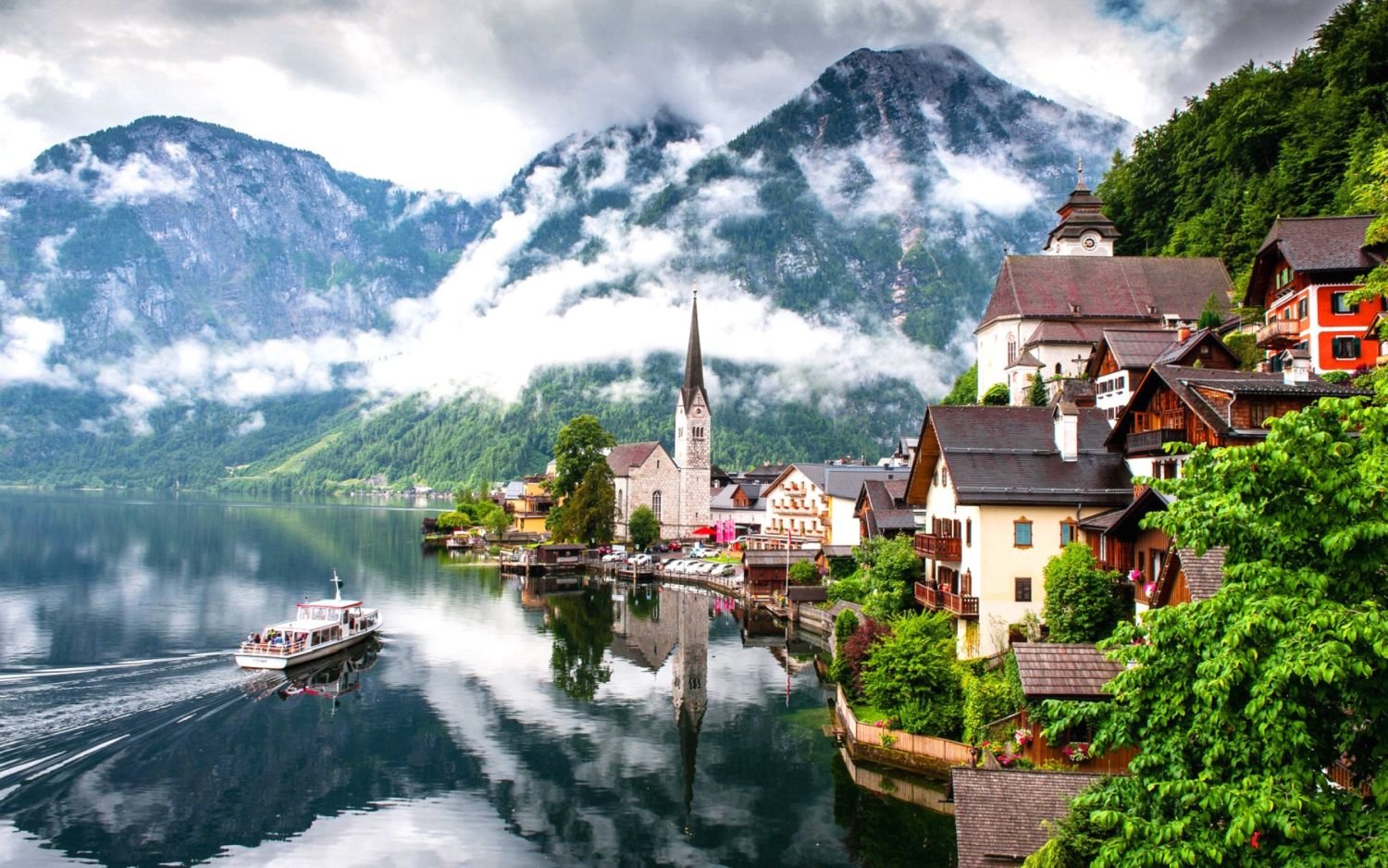
I have stood on the Hallstatt lakefront at 7:30 a.m. with the water glass-still and the mountains mirrored perfectly, and I have also seen that same shoreline at noon, shoulder-to-shoulder with tour groups. The difference in experience is not subtle.
Jump to: Quick Facts | Is It Worth It? | Best Time to Go | How to Get There | Avoiding Crowds | Swimming | Boats & Ferries | Cost Breakdown | FAQs
Key takeaways
- Lake Hallstatt is an alpine lake in the Salzkammergut region of Upper Austria, roughly 8.55 square kilometers in area and 125 meters at its deepest point.
- The lake is free to access and open all year. Swimming is best from mid-June through early September when water temperatures reach 20 to 23 degrees Celsius.
- Three villages ring the lake: Hallstatt on the western shore, Obertraun on the eastern shore, and Bad Goisern to the north.
- Arriving before 9 a.m. is the single most effective crowd-avoidance strategy, especially during July and August and the autumn foliage weeks in October.
- A 50-minute round-trip ferry ride across the lake costs about 12 euros per adult, and electric boat rentals start around 25 to 30 euros per hour.
- The lake is part of a UNESCO World Heritage cultural landscape that includes the Dachstein mountains and the historic salt-mining town of Hallstatt.
- A full day at the lake without any paid activities can cost under 30 euros per person, including parking and a simple lunch. Adding a boat rental and cable car ticket pushes the total past 80 euros.
Quick facts about Lake Hallstatt
These numbers come from the official Austrian geographic survey data, not from a tourism brochure, and unlike several popular guides, they are internally consistent. The lake is a glacial ribbon lake, long and narrow, pinched between steep mountain slopes. It is not the largest lake in the Salzkammergut, but it is among the most visually dramatic because the mountains rise almost directly from the water.
Verified lake statistics: surface area 8.55 square kilometers. Maximum depth: 125 meters. Length is roughly 5.9 kilometers. Maximum width roughly 2.3 kilometers. Elevation 508 meters above sea level. Water temperature ranges from about 8 degrees Celsius in winter to 22 or 23 degrees Celsius in high summer. The lake is fed by the Traun River and several mountain streams, and it drains northward toward Bad Goisern.
Is Lake Hallstatt worth visiting?
Yes, with a clear condition. The lake and its surrounding landscape are genuinely spectacular. The village of Hallstatt itself, perched on a narrow shelf between the water and the mountains, is one of the most photographed places in Austria for good reason. The reflections on still mornings, the swans moving across the surface near the ferry dock, and the sudden rise of the Dachstein peaks to the south—all of it lives up to the photographs.
The condition is timing. The experience of Lake Hallstatt in mid-July at 2 p.m. is fundamentally different from the experience at 8 a.m. in late September. When the tour buses arrive, the narrow lakeside promenade in Hallstatt village becomes a dense river of people, and the serenity that defines the place disappears. If you are only coming for a half-day bus stop, lower your expectations. If you can arrive early, stay overnight in Obertraun or Bad Goisern, and experience the lake in the morning and evening, it becomes one of the most memorable alpine lake visits in Europe.
Maya’s honest take: “I have been to more alpine lakes than I can count, and Hallstatt on a quiet morning is still in my top five. The problem is that quiet mornings require planning. If you roll in at noon on a summer Saturday, you are not visiting the lake; you are queuing for a photo of it.”
Best time to visit Lake Hallstatt
The lake changes character dramatically by month. The best window depends on what you want to do. For swimming and warm-weather activities, mid-June through early September delivers water temperatures above 20 degrees and long daylight hours. July and August are the warmest but also the most crowded. June and September offer a better balance of warmth and space. October brings autumn colors on the surrounding slopes and the most dramatic landscape photography, but the water is already cooling toward 14 or 15 degrees, and swimming becomes brisk.
Winter, from December through February, transforms the lake into a quiet, often snow-dusted scene. The village of Hallstatt sees fewer visitors but remains open. Ice skating and winter walks around the frozen northern end are possible in cold snaps, though the full lake rarely freezes completely. The Dachstein cable car runs year-round, and the Krippenstein plateau offers reliable snow sports from December through March. If your goal is photography rather than swimming, the winter stillness is arguably the most underrated season on the lake.
@thenadiajourney How to choose the best time to visit Hallstatt ❄️🏔️✨ • Winter (Nov–Feb) — snowy views, quieter streets and the most magical atmosphere. Perfect if you want photos without crowds. • Spring (Mar–May) — mountains turning green, calm lake views and mild weather. • Summer (Jun–Aug) — stunning scenery but very crowded; arrive early if you want clean shots. • Autumn (Sep–Oct) — golden landscapes and fewer tourists, great for a relaxed visit. ✨ Tip: If you want the “fairytale Hallstatt” you see on TikTok, winter & early spring are your best bet
Summer (Jun–Aug)
- Water warm enough for comfortable swimming
- Peak crowds, especially in Hallstatt village
- All boat rentals and cable cars on full schedule
- Book accommodation months ahead
Autumn (Sep–Oct)
- Best foliage photography in early to mid-October
- Fewer tourists after mid-September
- Water still swimmable in early September
- Some seasonal boat rentals begin closing in late October
Winter (Dec–Feb)
- Quietest season, lowest accommodation prices
- Dachstein ski and snowshoe season in full swing
- Lake partially freezes in cold snaps, rarely fully
- Some lakeside restaurants close for the season
How to get to Lake Hallstatt
The nearest major city is Salzburg, roughly 75 kilometers to the west. Vienna is about 300 kilometers to the east. The lake sits on the Salzkammergut railway line, and the train is the easiest public transport option. From Salzburg, take a train to Attnang-Puchheim and change for the Salzkammergut line toward Obertraun or Bad Aussee. The total journey takes about two and a half hours. From Vienna, the trip takes roughly three and a half hours with one change at Attnang-Puchheim.
By car, the lake is accessed via the B145 Salzkammergutstrasse, which runs along the eastern shore through Obertraun and Bad Goisern. The village of Hallstatt on the western shore has extremely limited parking. The P1 and P2 car parks near the village fill early in summer. If you are driving, park in Obertraun or at the park-and-ride near the Hallstatt salt mine and take the ferry or the short bus connection into the village. Parking at the Hallstatt village car parks costs around 15 to 18 euros for a full day depending on the season.
Maya’s honest take: “The ferry from the Hallstatt train station across to the village is one of the best lake introductions you can have. It takes eight minutes and costs a few euros, and the view as you pull away from the station and the village comes into frame is genuinely perfect.”
How to avoid the crowds at Lake Hallstatt

Hallstatt village is one of the most visited day-trip destinations in Austria, and the narrow layout of the town and lakefront cannot absorb large numbers of people gracefully. The tour bus pattern is predictable. Buses from Salzburg and Vienna begin arriving between 9:30 a.m. and 10 a.m. They peak between 11 a.m. and 3 p.m., then empty out again by 4 p.m. The lakefront promenade, the ferry dock, and the classic photo viewpoint above the village all fill during these hours.
The single most effective strategy is to be on the ground before 9 a.m. or after 4 p.m. If you stay overnight in Obertraun or Bad Goisern, you can walk or drive to the Hallstatt lakeside early and have it nearly to yourself until the first buses arrive. The second strategy is to base yourself on the eastern side of the lake, which sees dramatically fewer visitors. Obertraun has its own swimming beach, boat rentals, and the Dachstein cable car station, and the lakeside walk there is quiet even on a Saturday in August. The western shore near Hallstatt village is where the crowds concentrate. The eastern shore is where you go to escape them.
Swimming in Lake Hallstatt
Yes, you can swim in the lake. The water is clean and clear, with visibility often reaching several meters. The best swimming spots are not in Hallstatt village itself, where the shore is rocky and the ferry traffic is constant. Instead, head to the designated swimming areas in Obertraun and Bad Goisern. The Obertraun lakeside lido has a grassy sunbathing area, a shallow entry suitable for children, and a small cafe. The Bad Goisern lakeside beach, at the northern end of the lake, is larger and has better facilities, including changing rooms and a playground.
Water temperature in summer typically ranges from 20 to 23 degrees Celsius in July and August. In June and early September, expect 17 to 20 degrees. Outside the summer window, the lake is cold, and swimming becomes a brief, invigorating activity rather than a leisurely one. Most swimming areas are free to access, though some lidos charge a small entry fee of 3 to 5 euros during the peak season for the maintained facilities and lifeguard supervision.
Boat rentals, ferries, and electric boats
Several operators rent electric and pedal boats directly from the lakeshore in Obertraun and Bad Goisern. Prices vary by boat type and duration. A basic pedal boat for two people typically rents for 15 to 20 euros per hour. Electric boats, which are quieter and easier to handle, cost roughly 25 to 35 euros per hour depending on the size and motor wattage. Most operators require a small cash or card deposit, and life jackets are included in the rental price. Book directly at the lakeshore kiosks, as online booking is not consistently available.
The passenger ferry that crosses between Hallstatt train station and Hallstatt village operates on a regular schedule throughout the day and is timed to meet arriving and departing trains. A one-way crossing costs about 4 euros per adult. The longer scenic round trip, which runs the length of the lake and back over roughly 50 minutes, costs about 12 euros per adult and gives you the best water-level views of both shores, the village, and the Dachstein peaks to the south. Check the current timetable at the ferry dock before planning around it, as the schedule thins out in winter.
@travelinang One of the best ways to experience Austria’s charm is by renting a boat on Lake Hallstatt. Highly recommend! 🚤🇦🇹 #hallstatt #austria #austriatravel #lakelife #europeansummer
Typical boat rental price snapshot: A pedal boat for two is roughly 18 euros per hour. Electric boat for up to four people, roughly 30 euros per hour. A larger electric boat for up to six is roughly 40 euros per hour. These rates reflect pricing observed in summer 2024 and may shift by season. Confirm at the rental kiosk before you commit.
What a day at Lake Hallstatt actually costs
The lake itself is free. You can stand on the shore, swim, hike part of the shoreline, and take photographs without spending anything. The costs accumulate when you add parking, food, and paid activities. Here is a realistic breakdown for two common visitor profiles.
Budget day trip (per person)
- Parking in Obertraun or Bad Goisern: 5 to 8 euros
- Ferry one-way crossing: 4 euros
- Swim at a free public beach: 0 euros
- Simple lunch at a bakery or takeaway: 10 to 12 euros
- Short shoreline walk and photography: 0 euros
- Total: roughly 20 to 25 euros
Full experience day (per person)
- Parking near Hallstatt village: 15 to 18 euros
- Scenic round-trip ferry: 12 euros
- Electric boat rental for one hour: 30 euros
- Dachstein cable car ticket: 45 to 50 euros
- Restaurant lunch with a lake view: 20 to 25 euros
- Total: roughly 120 to 135 euros
Mountains, viewpoints, and villages around the lake
The Dachstein massif rises to the south of the lake, and the Krippenstein cable car from Obertraun takes you up to 2,100 meters in about fifteen minutes. The view from the top across the entire Salzkammergut lake district is one of the best panoramas in Austria, and the 5 Fingers viewing platform extends out over a sheer drop with the lake visible far below. On a clear day, you can see across to the Czech border.
The three main lakeside villages each offer a distinct experience. Hallstatt is the postcard village, with its alpine houses stacked vertically, the market square, and the salt mine accessible by funicular. It is beautiful and crowded. Obertraun is the quieter eastern-shore base, with the best swimming beach, the cable car station, and easy access to the lakeside cycling path. Bad Goisern sits at the northern end, where the lake narrows into the Traun River, and its lakeside lido and walking trails are the least touristy of the three. Staying in any of the three gives you early-morning access to the lake before the day-trippers arrive.
Mistakes to avoid at Lake Hallstatt
I have made some of these errors myself and watched many other visitors walk straight into the rest. None of them are hard to avoid once you know.
- Arriving in Hallstatt village at noon without a plan. You will spend your visit in a slow-moving crowd. Arrive before 9 a.m. or after 4 p.m., or stay on the eastern shore.
- Driving into Hallstatt village, expecting to find parking. The village car parks are small, expensive, and full by mid-morning in summer. Park in Obertraun or at the P1 park-and-ride and take the ferry or shuttle.
- Assuming you can swim from the village lakefront. The shore in Hallstatt is rocky and busy with ferry traffic. The swimming beaches are in Obertraun and Bad Goisern.
- Not checking the cable car weather before buying a ticket. On cloudy days, the top station can be inside the cloud layer, and you will see nothing. Check the live webcam before you pay.
- Visiting only Hallstatt village and skipping the lake itself. The village is famous, but the lake is the reason the village exists. Walk the shoreline path in Obertraun or take the ferry round trip to actually experience the water.
- Forgetting cash for small boat rental kiosks. Some operators only accept cash. Carry at least 40 euros in small notes.
Frequently asked questions
How deep is Lake Hallstatt?
Lake Hallstatt reaches a maximum depth of 125 meters. The average depth is considerably shallower, around 65 meters, which is where the common confusion between the two numbers originates. The 125-meter figure is the verified maximum depth according to Austrian geographic survey data.
Is Lake Hallstatt free to visit?
Yes. Access to the lake and its shoreline is free. You can walk along the lakeside paths, swim at public access points, and take photographs without paying an entrance fee. Costs only apply to parking, boat rentals, the ferry, and attractions like the cable car or the salt mine.
Can you swim in Lake Hallstatt?
Yes, swimming is permitted and popular in summer. The best swimming beaches are in Obertraun and Bad Goisern, where you will find shallow entry, grassy sunbathing areas, and changing facilities. The water temperature peaks at 22 to 23 degrees Celsius in July and August.
What is the water temperature in Lake Hallstatt?
Water temperature varies sharply by season. In high summer, July and August, the surface water reaches 20 to 23 degrees Celsius. In June and September, expect 17 to 20 degrees. In winter, the temperature drops to around 8 degrees, and the surface may partially freeze in prolonged cold spells.
Do you need a car to visit Lake Hallstatt?
No. The Salzkammergut railway line connects the lake to Salzburg and Vienna via Attnang-Puchheim, and the Hallstatt train station is directly across the lake from the village, connected by a timed ferry. Once at the lake, you can get around by ferry, on foot, or by bicycle along the lakeside path. A car is convenient but not required, and parking in Hallstatt village is limited and expensive.
How many days do you need at Lake Hallstatt?
One full day is enough to see the lake, swim, take a ferry ride, and visit either the Dachstein cable car or the Hallstatt salt mine. Two days, with an overnight stay in Obertraun or Bad Goisern, gives you the quieter early morning and late evening on the lake that most day-trippers miss. For hiking the surrounding trails properly, allow three days.
Does Lake Hallstatt freeze in winter?
Occasionally the northern end of the lake near Bad Goisern will freeze during prolonged cold snaps in January or February, but the full lake rarely freezes completely. In most winters, the surface remains open water with snow on the surrounding mountains. Ice skating is sometimes possible on the frozen northern section when conditions allow, but always check locally before stepping onto any ice.
Is Lake Hallstatt part of a UNESCO World Heritage site?
Yes. The Hallstatt-Dachstein/Salzkammergut cultural landscape, which includes the lake, the village of Hallstatt, the salt mine, and the Dachstein mountains, was inscribed as a UNESCO World Heritage site in 1997. The designation recognizes the region’s long history of salt mining and the distinctive way the landscape has been shaped by human activity over thousands of years.
Plan your trip: booking platforms we trust
For Lake Hallstatt, I prioritize platforms with free cancellation on accommodation because weather in the Salzkammergut changes fast and you may want to shift your dates. For tours and activities, I look for operators with recent reviews that mention small group sizes and early departure times, which matter enormously for avoiding the worst of the Hallstatt crowds.
Best for finding guesthouses and hotels in Obertraun and Bad Goisern with flexible cancellation and verified guest photos.
Best for booking small-group day trips from Salzburg that reach the lake early and include the Dachstein cable car.
Best for reading recent reviews of ferry schedules, boat rental operators, and lakeside restaurant quality.
Best for bundling flights into Salzburg or Vienna with a rental car and a Salzkammergut hotel in one booking.