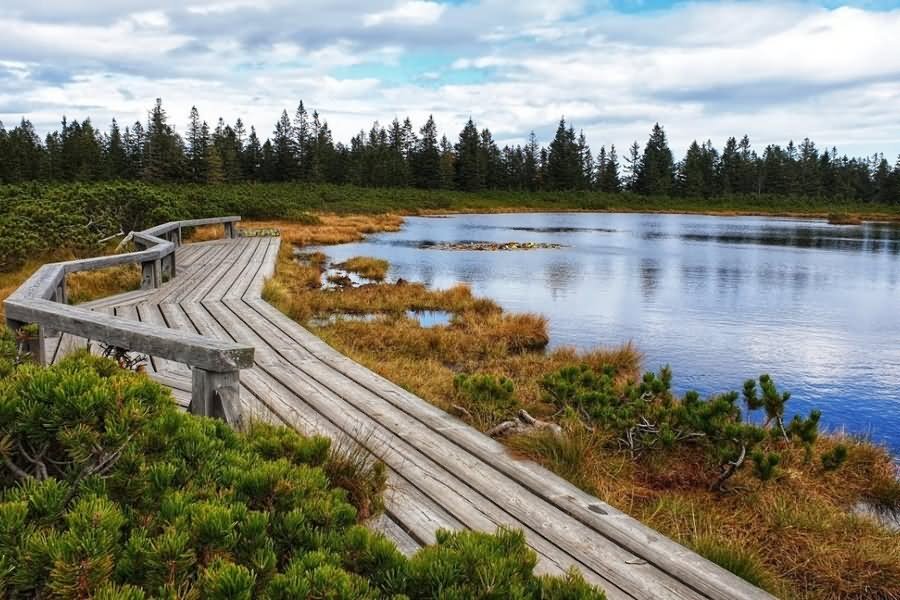
advertisement
Ribniško Jezero: Pohorje’s Hidden Peat-Bog Lake (Hiking Guide)
Fact-Checked By Maya Whitfield, Senior Travel Editor at WakaAbuja
Ribniško jezero is a rare high-altitude peat bog lake on the Pohorje massif in northern Slovenia, reached by an easy 25-minute boardwalk hike from the Ribniška koča mountain hut. The lake is free to visit, open year-round, and most famous for the wild lotus flowers that cover its surface in late summer. It is not a swimming lake but a protected Natura 2000 wetland with a short, family-friendly trail around its edge.
Most directory sites will show you a photo of Ribniško jezero and stop there. What they skip is the part that matters when you are standing at the trailhead with muddy shoes and a half-empty water bottle: which way the boardwalk goes, why the lake looks black, and whether those lotus flowers are actually blooming this month. I first hiked this trail on a drizzly September morning when the fog sat so low I could not see the far shore until I was nearly standing in it. This guide fills in the practical details the photo galleries leave out.
Jump to: Trail Facts | What Is This Lake? | The Lotus Flowers | How to Get There | The Hike Itself | Best Time to Visit | Nearby: Lovrenška Jezera | FAQs
Key takeaways
- The trail from Ribniška koča to Ribniško jezero is roughly 1.2 kilometers one way, taking about 25 minutes with only 53 meters of gentle ascent.
- The lake sits at approximately 1,500 meters above sea level and is a protected high-altitude peat bog, part of the Natura 2000 network.
- Entrance is free, and the trail is open year-round, though winter access depends on snow depth and road conditions to the trailhead.
- Wild lotus flowers typically bloom on the lake surface between July and August, with peak coverage varying by rainfall and temperature.
- The trail is a wooden boardwalk for most of its length, making it suitable for children and older hikers, but not for strollers or wheelchairs due to narrow sections.
- Nearby Lovrenška jezera, a series of small forest lakes, sits about five kilometers away and pairs naturally with a Ribniško jezero visit for a fuller Pohorje day hike.
Trail facts at a glance
This is the information most search results bury or skip entirely. Here it is up front, so you can decide if the walk fits your group before reading further.
Starting point: Ribniška koča mountain hut, Pohorje
Distance one way: roughly 1.2 kilometres
Walking time: 20 to 30 minutes each way
Elevation gain: approximately 53 metres, gentle and steady
Difficulty: easy, mostly flat boardwalk with some short inclines
Lake elevation: about 1,500 metres above sea level
Best season: June through October for access and July and August for lotus bloom
Parking: free gravel lot near Ribniška koča
What exactly is Ribniško jezero?
Ribniško jezero is not a typical alpine lake. It is a high-altitude peat bog, known locally as a hanging bog because it sits perched on a slope rather than in a valley basin. The lake is shallow, dark, and slow-moving, fed by rainwater and groundwater rather than a rushing mountain stream. The water looks almost black in certain light because of the peat tannins suspended in it. That darkness is natural and healthy, not a sign of pollution.
The entire area is protected as part of Slovenia’s Natura 2000 network, which safeguards rare and endangered habitats across the European Union. The bog ecosystem here supports specialized plant life, including sphagnum mosses, cotton grass, and the wild lotus flowers that draw most photographers. The lake has several smaller open water patches, sometimes called bog windows, where the peat mat thins and the underlying water shows through. These are visible from the boardwalk as you approach the main lake basin.
Because this is a protected peat bog, access is restricted to the marked boardwalk and the short path around the lake perimeter. Stepping off the boardwalk onto the bog itself causes lasting damage to the moss layer and is strictly discouraged. The boardwalk exists precisely so visitors can experience the lake without destroying the habitat that makes it unusual.
Maya’s honest take: “The first thing that struck me was the silence. It is not a dramatic alpine lake with jagged peaks. It is quiet, low, and a little mysterious. The boardwalk creaks underfoot, the bog smells faintly earthy and sweet, and the whole place feels older than the surrounding forest.”
The lotus flowers: when and why they bloom
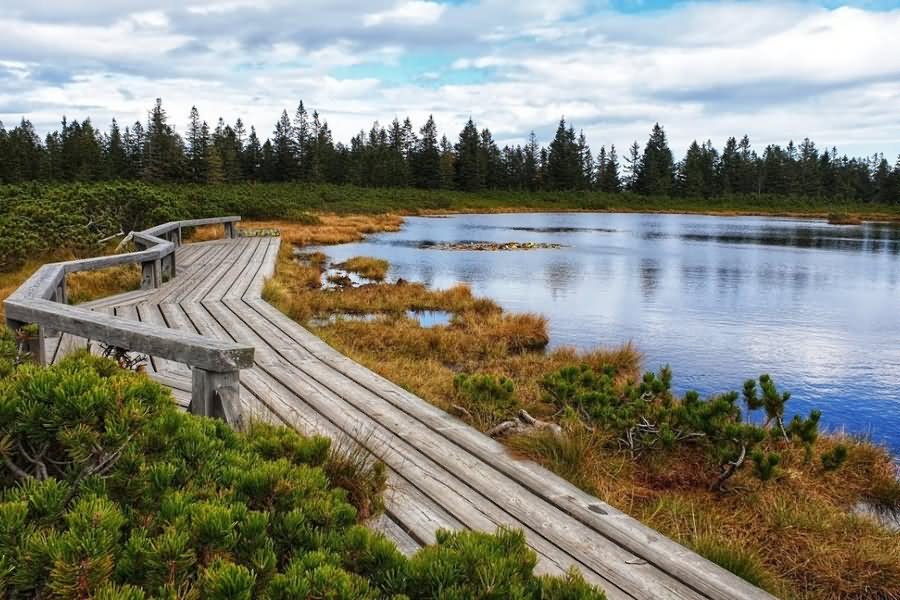
The lotus flowers at Ribniško jezero are the single biggest reason photographers and hikers seek this lake out. They cover sections of the dark water surface in broad mats of green leaves and pale yellow-white flowers during the warmest weeks of summer. Peak bloom typically lands between mid-July and mid-August, though the exact timing shifts with rainfall, snowmelt, and summer temperatures. In a dry, warm year, the flowers can appear earlier and spread wider. In a cold, wet summer, they may be sparse.
The lotuses are wild, not planted. They have established themselves in this specific bog ecosystem over many years and are now one of the defining features of the lake. The best time to photograph them is early morning, when the light is soft and the water surface is calm. By mid-afternoon, the sun is high and the flowers close slightly, making the lake look less colorful.
If you are visiting specifically for the bloom, check recent photos or local Pohorje hiking group posts before making a long drive. The bloom window is real but variable, and there is no official bloom tracker for this lake. A quick look at geo-tagged Instagram or Flickr photos from the previous two weeks will tell you more than any forecast.
How to get to Ribniško jezero
The standard access point is from Ribniška koča, a mountain hut on the northern side of Pohorje. The hut is reachable by car via a forest road that branches off the main route near Slovenj Gradec. The road is gravel for the final stretch and can be rough after heavy rain, but a normal passenger car handles it in dry conditions. Take it slowly on the corners and watch for hikers and cyclists sharing the road.
Parking is a free gravel lot near the hut. On summer weekends, the lot fills by late morning, so arrive before 9 a.m. if you want a spot close to the trailhead. Public transport to Ribniška koča is limited to seasonal weekend buses from Slovenj Gradec, and the schedule is not reliable enough to plan a tight itinerary around. A car is the realistic option for most visitors.
From the parking area, the trailhead is clearly marked with wooden signs pointing toward Ribniško jezero. The path starts wide and then narrows into the boardwalk section. There is no entrance gate, no ticket machine, and no posted opening hours. The trail is open 24 hours a day, year-round, though winter access depends on snow depth and whether the forest road to the hut has been cleared.
The hike itself: what to expect on the boardwalk
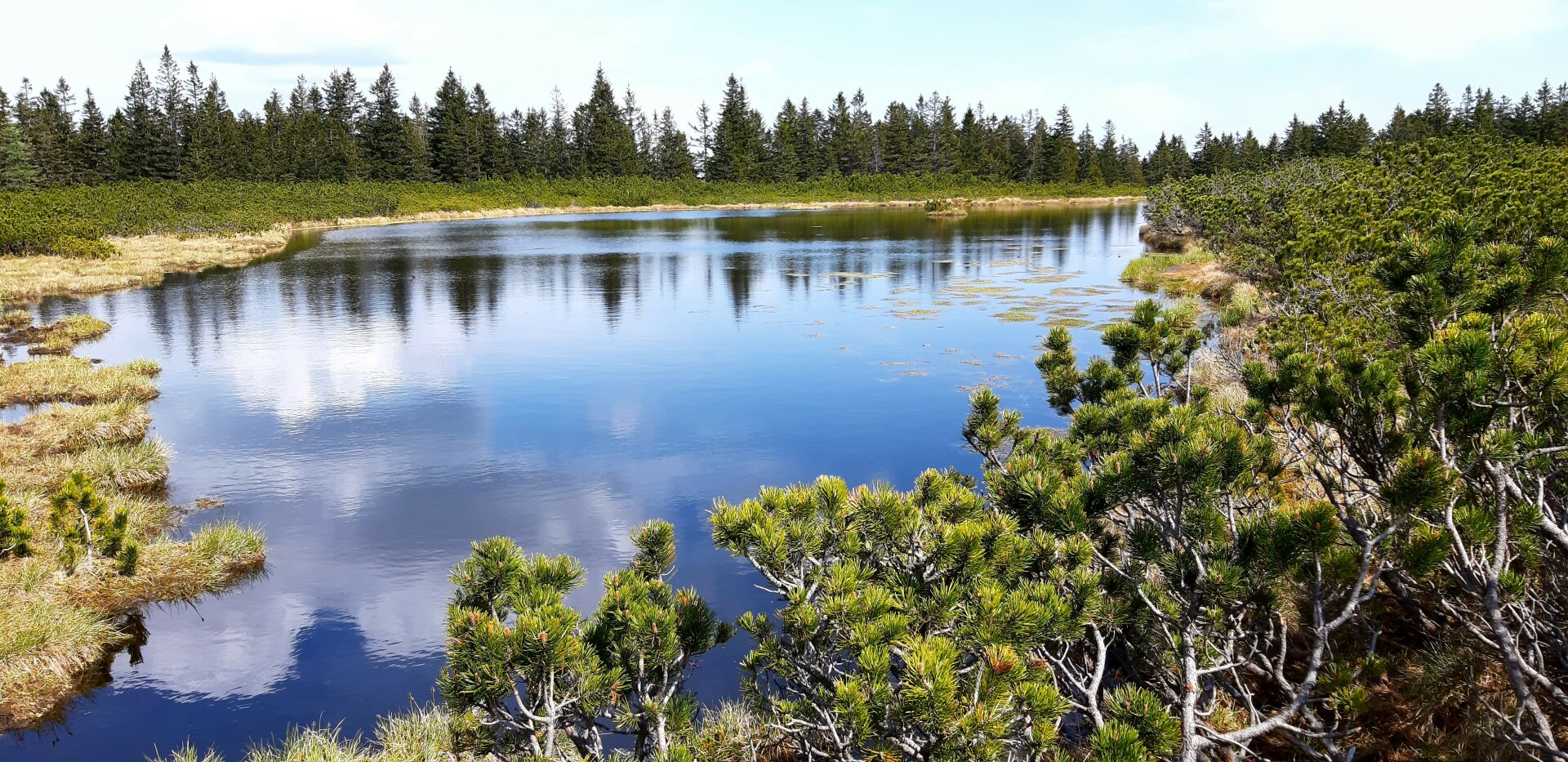
The walk to Ribniško jezero is short and gentle enough for most people who can manage a 30-minute uphill stroll. The first few hundred metres climb gradually through spruce forest on a wide dirt path. Then the boardwalk begins, a narrow wooden walkway raised slightly above the wet ground. The boards can be slippery after rain or morning dew, so wear shoes with decent grip.
About halfway along, the forest opens and the bog becomes visible through the trees. The boardwalk curves through dense moss and dwarf shrubs before arriving at the main lake basin. There is a small viewing platform near the shore where you can stop, take photos, and just stand still for a few minutes. The complete loop around the lake’s edge takes less than ten minutes and returns you to the main path.
This is not a challenging hike by any stretch. It is a nature walk. The reward is not the physical effort but the strangeness and quiet of the place. I passed two other hikers on my first visit, a retired couple from Maribor who said they come every August to see the lotuses. They sat on the platform bench for nearly an hour, just watching the water.
Maya’s honest take: “Bring a light jacket even in summer. The forest holds cool air, and the bog area is often several degrees colder than the parking lot. I was glad I had a fleece in my pack.”
Best time to visit Ribniško jezero
The lake changes character dramatically with the seasons. Summer, particularly July and August, delivers the lotus bloom and the warmest walking conditions. This is also when the trail sees the most visitors, though even a busy day here feels quiet compared to Slovenia’s famous lake destinations like Bled or Bohinj. Early mornings offer the best light and the fewest people.
Autumn, from late September through October, turns the surrounding forest gold and red. The lotuses are gone, but the bog takes on a moody, still quality that suits photographers who prefer muted tones and atmospheric fog. The boardwalk can be slick with fallen leaves and rain, so watch your footing.
Spring, from May through June, brings snowmelt and a higher water level. The cotton grass blooms along the boardwalk edges, and the lake surface appears wider than in late summer. Winter is the most demanding season. The forest road to Ribniška koča may be snow-covered or closed, and the boardwalk itself can be icy. You need proper winter footwear, and you should check road conditions before attempting the drive.
Nearby: Ribniško jezero versus Lovrenška jezera
If you are in the Pohorje area, you will likely come across Lovrenška jezera, a separate cluster of small lakes about five kilometres from Ribniško jezero. The two are often mentioned together, but they offer different experiences. Ribniško jezero is a single peat bog lake reached by a short, easy boardwalk. Lovrenška jezera is a series of several small forest lakes, some boggy and some clear, connected by a longer trail network that takes two to three hours to explore.
If you only have time for one, choose Ribniško jezero for the lotus bloom in summer or the quieter, shorter experience overall. Choose Lovrenška jezera if you want a longer walk with more variety in the landscape. They are close enough that doing both in a single long day is possible if you start early and keep a steady pace between them.
Mistakes to avoid at Ribniško jezero
The trail is short and easy, but a few common missteps can still make the experience less enjoyable. Here is what to watch for.
- Stepping off the boardwalk for a photo. The bog looks solid but is not. You will sink into the moss, and you will damage a protected habitat. Stay on the boards.
- Arriving mid-afternoon in summer. The light is harsh, the lotuses are closing, and the parking lot is fullest. Aim for early morning or late afternoon.
- Wearing smooth-soled shoes. The boardwalk becomes slick after rain and in morning dew. Trail runners or hiking shoes with grip make a real difference.
- Skipping Ribniška koča. The mountain hut serves honest local food and cold drinks, and it is the natural place to regroup before or after the walk. It also has toilets, which the lake area itself does not.
- Trusting your phone for navigation without downloading offline maps. Service on this part of Pohorje is patchy. Download the map area before you leave the main road.
- Expecting a full-day hike. This is a short walk, not a trek. Pair it with Lovrenška jezera or a visit to Rogla if you want a full day outdoors.
Frequently asked questions
How long is the hike to Ribniško jezero?
The trail from Ribniška koča to Ribniško jezero is about 1.2 kilometres one way, taking roughly 20 to 30 minutes at a relaxed pace. The route gains only about 53 metres of elevation, so it feels more like a nature walk than a strenuous hike. A full loop around the lake adds roughly ten minutes.
Can you swim in Ribniško jezero?
No. Ribniško jezero is a shallow, protected peat bog, not a swimming lake. The water is dark, soft-bottomed, and ecologically sensitive. Swimming or wading would damage the fragile bog ecosystem and is strongly discouraged. The lake is for walking around and observing, not entering.
Is there an entrance fee for Ribniško jezero?
No. The lake and the boardwalk trail are completely free to access. There is no ticket office, no entry gate, and no permit required. You only pay for parking if you use a private lot, and the gravel lot near Ribniška koča is free.
Is the trail to Ribniško jezero suitable for children?
Yes, most children who can walk steadily for 30 minutes will manage the trail easily. The boardwalk keeps the path out of the mud, and the short distance holds attention spans. Keep a close eye on young children near the boardwalk edges, which lack railings in places.
When do the lotus flowers bloom at Ribniško jezero?
The wild lotus flowers typically bloom between mid-July and mid-August, though the exact window shifts with summer temperatures and rainfall. In a warm, dry year they can appear earlier and spread wider across the lake surface. In a cool, wet summer they may be sparse or late.
Can you visit Ribniško jezero in winter?
Yes, but with significant caveats. The forest road to Ribniška koča may be snow-covered or closed, and the boardwalk can be icy. You need winter footwear with good traction and should check local road conditions before driving up. The lake itself remains accessible on foot, but the boardwalk may be partially buried in snow.
Is Ribniško jezero dog-friendly?
Yes, dogs on a leash are welcome on the boardwalk trail. The walk is short and shaded enough for dogs on warm days. Pack out all waste and carry water for your dog, as there is no reliable water source at the lake itself aside from the protected bog.
Plan your trip: booking platforms we trust
For a visit to Ribniško jezero, you will likely base yourself in Slovenj Gradec, Maribor, or somewhere else on the Pohorje plateau. The platforms below are the ones I use for this part of Slovenia, prioritising flexible cancellation and recent guest reviews from local accommodations.
Best for finding guesthouses and small hotels in Slovenj Gradec and around Pohorje with flexible cancellation.
Best for booking entire holiday cabins and cottages on the Pohorje plateau for family hiking weekends.
Best for reading recent reviews of Ribniška koča and nearby mountain huts before you rely on them for a meal.
Best for bundling a flight into Ljubljana or Graz with a rental car, which you will need to reach the trailhead.