advertisement
Lake Sevan, Armenia: Complete Guide to Armenia’s Largest Lake
Fact-Checked By Maya Whitfield, Senior Travel Editor at WakaAbuja
Lake Sevan is the largest lake in Armenia and the entire Caucasus, a high-altitude freshwater body covering 1,242 square kilometers at 1,900 meters above sea level. It sits roughly 90 minutes from Yerevan and serves as Armenia’s only real beach destination. The lake nearly disappeared during the Soviet era when engineers drained it for irrigation and hydroelectric power, lowering the water level by about 20 meters before two tunnels were built to save it.
Most encyclopedia entries will tell you Lake Sevan’s surface area and depth, then move on to water diversion tunnels and fish species without ever telling you whether the water is warm enough to swim in or which shore to drive to. I stood on the northern shore near Sevanavank one July morning and counted at least a dozen families wading in the shallows while someone sold roasted corn from a cart nearby. It felt like a proper summer lake town, not a fragile ecosystem on the edge of collapse.
The truth is both things at once. This guide covers the facts, the history, and the practical stuff you need to plan an actual visit.
Jump to: Quick Facts | How to Get There | History | Is It Safe to Swim? | Best Time to Visit | Beaches by Shore | Things to See | Cost Breakdown | FAQs
Key takeaways
- Lake Sevan covers 1,242 square kilometers and sits at 1,900 meters elevation, making it one of the largest high-altitude freshwater lakes in Eurasia.
- The lake is a 90-minute drive from Yerevan, reachable by car, marshrutka minibus, or organized tour.
- Swimming is generally safe and popular in summer, though water quality varies by location and published pollution data is often years old.
- The best swimming months are July and August, when water temperatures reach roughly 18 to 22 degrees Celsius.
- The northern shore near Sevan town is the most developed, with the most restaurants, hotels, and public beaches. The eastern and southeastern shores are quieter and greener.
- A day trip from Yerevan costs roughly 8,000 to 15,000 Armenian dram per person depending on transport, food, and beach access choices.
- Sevanavank monastery, Hayravank, and the Noratus khachkar cemetery are the three cultural sites every first-time visitor should see.
What is Lake Sevan?
Lake Sevan is a large freshwater lake in the Gegharkunik Province of Armenia, roughly 60 kilometers northeast of Yerevan. It is the largest lake in the Caucasus region and one of the largest high-altitude freshwater lakes in Eurasia. The lake sits at 1,900 meters above sea level, covers approximately 1,242 square kilometers, and reaches a maximum depth of about 80 meters. Twenty-eight rivers flow into it, but only one, the Hrazdan River, flows out. That single outflow is what made the lake so vulnerable to the Soviet-era water diversion that nearly emptied it.
The lake is fed primarily by snowmelt and mountain springs, which keeps the water cold well into early summer. The shoreline stretches across multiple distinct micro-regions, each with its own character. The water is slightly alkaline and rich in fish, including the endemic Sevan trout and introduced whitefish species that now dominate commercial catches.
Lake Sevan at a glance: surface area 1,242 square kilometers. Maximum depth is roughly 80 meters. Elevation: 1,900 meters above sea level. Water type: freshwater, slightly alkaline. One outflow river, the Hrazdan. Two distinct parts, Greater Sevan in the southeast and Lesser Sevan in the northwest, connected by a narrow strait.
Where is Lake Sevan, and how do you get there?

The lake lies in the Gegharkunik Province of central Armenia, about 60 kilometers from the capital, Yerevan, as the crow flies, though the road route is closer to 70 kilometers. The drive takes about 90 minutes on the M4 highway, which climbs steadily from the Ararat Valley into the mountains. The road is paved and in reasonable condition, though the final stretch into Sevan town can get busy on summer weekends.
Your transport options are straightforward. The most flexible choice is renting a car in Yerevan, which gives you the freedom to explore multiple shores and stop at viewpoints along the way. Driving in Armenia is manageable, though local driving styles are aggressive and winter roads can ice over. If you prefer not to drive, marshrutka minibuses leave from Yerevan’s Northern Bus Station to Sevan town several times daily. The ride costs roughly 800 to 1,000 Armenian dram and takes about two hours with stops. Organized day tours from Yerevan are the easiest option if you want a guide and planned stops at Sevanavank, Dilijan, or Haghartsin Monastery on the same day. GetYourGuide and local operators list these tours regularly.
Maya’s honest take: “The first time I saw the lake, it appeared suddenly around a bend in the M4. One minute you are in dry mountain scrub; the next the whole horizon turns blue. It is one of those arrivals that makes the drive feel like part of the experience.”
The dramatic history of Lake Sevan
The lake’s name likely derives from the Urartian word “suinia,” meaning “lake,” and the region has been inhabited since the Bronze Age. In 1956, a lakeside archaeological site at Lchashen uncovered wooden chariots and other artifacts preserved for over three thousand years in waterlogged soil. The lake holds cultural significance for Armenians as a source of fish, water, and identity, often called the “blue pearl” of Armenia.
The modern history of the lake is defined by a near-catastrophe. Beginning in 1949, Soviet engineers began a massive water diversion project to use Lake Sevan’s water for irrigation in the Ararat Valley and for hydroelectric power generation along the Hrazdan River cascade. Over the following decades, the water level dropped by roughly 20 meters, and the lake’s surface area shrank dramatically. The ecological damage was severe. The endemic Sevan trout lost critical spawning grounds, and the exposed shoreline became vulnerable to erosion.
Two major tunnels were eventually built to reverse the damage. The Arpa-Sevan tunnel, completed in 1981, began bringing water from the Arpa River into the lake. The Vorotan-Arpa tunnel, completed in 2004, added a second transfer route. These projects stabilized the level and have allowed a slow recovery, though the lake has not fully returned to its pre-diversion size. The water level remains a subject of active monitoring and political debate in Armenia, and current figures fluctuate year to year depending on rainfall and water usage.
Is Lake Sevan safe to swim in?
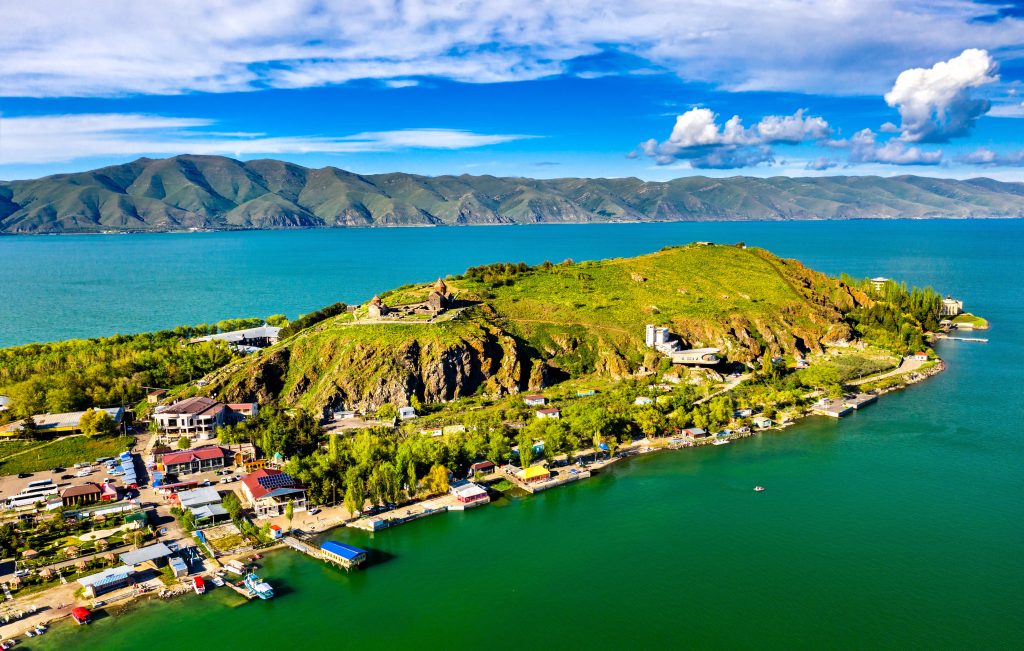
Yes, swimming is generally safe and extremely popular during the summer months. Families, local teenagers, and tourists all swim in the lake, particularly at the developed beaches on the northern shore. The water is freshwater, cold, and clear in most areas. The main safety consideration is not pollution but temperature. Because of the high altitude and spring-fed inputs, the water stays cold until late June. In July and August, surface temperatures reach roughly 18 to 22 degrees Celsius, which is refreshing but swimmable.
The more complicated question is water quality. Historical studies have documented elevated levels of heavy metals in the lake, including vanadium, selenium, and copper, linked to mining activity in the watershed. Much of this data comes from research conducted in the early 2010s and may not reflect current conditions. The Armenian government and international organizations continue monitoring water quality, but public, up-to-date, easily accessible data is not always published consistently. The beaches near Sevan town and the resort areas are actively used by thousands of swimmers each summer with no widespread health advisories. If you want the most current water quality information before swimming, check with the Armenian Ministry of Environment or recent environmental NGO reports published in the current year.
Best time to visit Lake Sevan
The best months for a full beach and swimming experience are July and August. Air temperatures in this window hover in the mid-20s to low 30s Celsius, and the water warms enough for extended swimming. These are also the busiest months, with domestic tourists arriving from Yerevan and international visitors on the standard Armenia circuit. Hotel prices peak, and the main beaches fill by midday on weekends.
June and September are the shoulder months. The weather is still pleasant, the crowds are thinner, and the lake is quieter. Water temperatures in June are colder, often too cold for comfortable swimming until the final week of the month. September retains some summer warmth, but evenings cool quickly at 1,900 meters. May and October are beautiful for photography and hiking around the lake but generally too cold for swimming. Winter at Lake Sevan is harsh, with snow, ice, and temperatures well below freezing. The lake partially freezes in severe winters, and most tourist facilities close entirely from November through March.
Summer (Jul–Aug)
- Warmest water, full swimming season
- Peak crowds and highest hotel rates
- Book accommodation ahead on weekends
Shoulder (Jun, Sep)
- Pleasant weather, fewer visitors
- Water cold in early June, cooling in late September
- Best value for hotels and guesthouses
Winter (Nov–Mar)
- Freezing temperatures, partial ice cover
- Most tourist facilities closed
- Dramatic snow-covered landscapes for photography
Lake Sevan’s beaches: which shore should you visit?
The lake has three distinct shoreline zones, each with a different character. Choosing the right one for your trip depends on whether you want convenience, quiet, or a resort-style stay.
North Shore (Sevan town)
Best for first-time visitors. The most developed stretch of shoreline, with the widest range of restaurants, hotels, and public beaches. The Sevanavank peninsula sits here. The public beaches charge a small entry fee in summer, usually a few hundred dram, and offer basic facilities like changing rooms and sunbed rentals. Expect crowds on weekends and holiday Mondays.
East Shore (Shorzha area)
Best for quiet and nature. This stretch is less developed, greener, and noticeably calmer than the north shore. The beaches here are a mix of sand and pebbles, and facilities are limited. You will find a few small guesthouses and campsites. The drive from Sevan town takes about 45 minutes along the eastern side of the lake.
Southeast Shore (Tsapatagh area)
Best for a resort stay. This area hosts a few larger resort hotels with private beaches, including the Avan Marak Tsapatagh and the Best Western Bohemian Resort. It is farther from Yerevan, roughly two and a half hours by car, but offers the closest thing Armenia has to a dedicated lake resort experience. Prices are higher here but include beach access and meals in some packages.
West Shore (Hayravank area)
Best for a quick stop. The Hayravank monastery sits on a rocky point here. The shore is mostly rocky with limited swimming access, but the views across the lake are excellent, and the small village setting gives you a glimpse of rural lakeside life.
Things to see around Lake Sevan
Three cultural sites anchor any visit, and each offers a different perspective on the lake and its history.
Sevanavank Monastery
Sevanavank sits on the peninsula near Sevan town, reachable by a steep stone staircase from the parking area. The monastery dates to the 9th century and consists of two small stone churches, Surp Arakelots and Surp Astvatsatsin, with carved khachkars inside. The view from the top across the lake is the single most famous image of Lake Sevan. There is no entrance fee to visit the churches, though the parking area charges a small fee for vehicles.
Hayravank Monastery
Hayravank sits on the western shore, smaller and far less visited than Sevanavank. It dates to the 9th century and includes a small church and a nearby Bronze Age fortress. The location on a rocky promontory gives you sweeping lake views without the crowd. Entry is free, and you might have the site almost entirely to yourself outside peak summer weekends.
Noratus Khachkar Cemetery
Noratus, on the western shore near the town of Gavar, holds the largest collection of khachkars, carved stone crosses, in the world. Over 800 khachkars stand in the cemetery, some dating back to the 9th century. The site is about 20 minutes by car from Sevan town and is free to enter. It is quieter than the monasteries and gives you a powerful sense of Armenian stone-carving tradition.
Wildlife: Sevan trout and the Armenian gull
Lake Sevan has its own endemic fish species, the Sevan trout, known locally as ishkhan. The trout is a salmonid adapted to the lake’s cold, high-altitude water. Overfishing, habitat loss from the water level drop, and competition from introduced species pushed the native trout to the brink of extinction. Conservation efforts, including hatchery programs, have helped stabilize small populations, but the fish remains rare and is protected.
The lake is also a major habitat for the Armenian gull, a species that breeds in large colonies along the shoreline. Birdwatchers visit the lake to see the gull along with migratory waterfowl and shorebirds, particularly during spring and autumn passage. The reed beds and marshy edges of the lake support a range of other bird life, making it one of Armenia’s most important bird areas.
How much does a trip to Lake Sevan cost?
Lake Sevan is not an expensive destination by European standards, but costs add up if you choose the resort-style experience. Prices below reflect rates I gathered in late 2024 from on-site visits and current listings. Always check official hotel and transport websites for current pricing before you book.
Sample day trip budget (per person, from Yerevan): A marshrutka round trip is roughly 2,000 dram. Car rental and fuel split two ways is roughly 8,000 dram per person. Public beach entry is roughly 500 dram. Sunbed rental is roughly 1,000 dram. Lunch at a lakeside restaurant is roughly 3,000 to 5,000 dram. The Sevanavank parking fee and small costs are roughly 500 dram. Total: roughly 7,000 to 15,000 dram depending on transport choice and dining preferences.
Accommodation price bands
Budget guesthouses in Sevan town and the eastern shore villages start around 10,000 to 15,000 dram per night for a double room. Mid-range hotels with lake views run 20,000 to 35,000 dram per night. The larger resort hotels on the southeast shore typically charge 40,000 to 80,000 dram per night, often including breakfast and beach access. Summer weekends and Armenian public holidays push rates to the top of these ranges. Book ahead for July and August.
Mistakes to avoid at Lake Sevan
Most of these are easy to avoid with a bit of planning. I made the swimming one myself on my first visit and watched others make the rest.
- Expecting warm water in June. The lake is cold until late June or early July. If swimming is a priority, plan for late July or August.
- Arriving at the public beach at noon on a weekend. The main beaches fill by midday. Arrive before 10 a.m. or after 4 p.m. for a calmer experience.
- Only visiting Sevanavank and calling it done. The monastery is impressive, but the lake deserves a slower exploration. Add Hayravank or Noratus to your route.
- Not checking the weather forecast. Mountain weather changes fast. A clear morning can turn windy and cool by early afternoon, especially in late summer.
- Forgetting cash. Many smaller restaurants, beach entry points, and guesthouses do not take cards. Carry Armenian drams in small bills.
- Underestimating the drive time from the southeast shore. Tsapatagh is two and a half hours from Yerevan. If you are on a day trip, stick to the north or west shore unless you leave very early.
Frequently asked questions
Is Lake Sevan freshwater or saltwater?
Lake Sevan is freshwater. It is fed by 28 rivers and snowmelt, with only one outflow, the Hrazdan River. The water is slightly alkaline but contains no significant salt content. It is safe for swimming and supports a range of freshwater fish species, including the endemic Sevan trout.
How deep is Lake Sevan?
The maximum depth of Lake Sevan is approximately 80 meters. The average depth varies depending on the water level, which has fluctuated significantly over the past century due to the Soviet-era water diversion and subsequent recovery. The lake is divided into Greater Sevan, the deeper southeastern section, and Lesser Sevan, the shallower northwestern section.
Can you visit Lake Sevan as a day trip from Yerevan?
Yes, and most visitors do exactly that. The drive takes about 90 minutes each way, leaving you a full afternoon to visit Sevanavank, swim, and have lunch before returning to Yerevan. A day trip works well if you leave by 9 a.m. and focus on the north shore area. Staying overnight gives you time to explore the eastern shore, Noratus, and a second monastery.
What is the current water level of Lake Sevan?
The water level fluctuates by year depending on rainfall, snowmelt, and water usage. After the dramatic drops of the Soviet era, the level stabilized somewhat following the completion of the Arpa-Sevan and Vorotan-Arpa tunnels. Current levels remain below the historical pre-diversion mark. The Armenian Ministry of Environment publishes periodic water level updates, and you should check recent reports for the most accurate current figure.
Are there beaches at Lake Sevan?
Yes. The lake has several public beaches, mainly on the northern shore near Sevan town. These beaches charge a small entry fee in summer and offer basic facilities like changing rooms, sunbeds, and food vendors. The eastern shore has quieter, less developed beach areas. Some resort hotels on the southeast shore have private beaches for guests.
Is Sevanavank monastery free to enter?
Yes, there is no entrance fee for Sevanavank Monastery itself. You climb the stone staircase from the parking area and enter the churches freely. The parking lot at the base of the peninsula charges a small vehicle fee, usually a few hundred dram. Donations to the church are optional.
What is the Sevan trout, and can you eat it?
The Sevan trout, known as ishkhan in Armenian, is an endemic salmonid species native to Lake Sevan. Wild populations are endangered due to overfishing, habitat loss, and competition from introduced species. The fish is legally protected, and wild-caught Sevan trout should not be eaten. Farmed trout, often labeled simply as trout, is widely available in lakeside restaurants and is a different species from the native ishkhan.
Is Lake Sevan worth visiting in winter?
It depends on what you want from the experience. The lake is cold, often partially frozen, and most tourist facilities are closed from November through March. The scenery, however, is dramatically beautiful, with snow-covered mountains and empty shorelines. If you are a photographer or simply want to see the lake in stillness, a winter drive and a short visit to Sevanavank can be rewarding. Just dress warmly and check road conditions first.
Plan your trip: booking platforms we trust
For Armenia, I look for platforms with verified reviews and flexible cancellation, because guesthouse quality around the lake varies. For tours, I prioritize operators that list specific departure times and small group sizes rather than vague “full day” descriptions.
Best for finding guesthouses and hotels in Sevan town and the eastern shore with flexible cancellation.
Best for booking Lake Sevan day trips from Yerevan that include transport and stops at Sevanavank and Dilijan.
Best for reading recent reviews of lakeside restaurants, beach facilities, and current swimming conditions.
Best for bundling flights to Yerevan with car rental and a Sevan-area hotel in one transaction.