advertisement
Olympic National Park: The Essential Guide to Planning Your Visit
Fact-Checked By Maya Whitfield, Senior Travel Editor at WakaAbuja
Olympic National Park protects three distinct ecosystems: glacier-capped mountains, temperate rainforest, and wild Pacific coastline. Most first-time visitors need 3 to 4 days to see the highlights across all three regions, though a 2-day trip works if you focus on Hurricane Ridge and one other area. The park charges a $30 per vehicle entry fee, and key areas like Hurricane Ridge and the Hoh Rainforest can close or restrict access during fire season or construction, so checking current conditions before you go is essential.
I have visited Olympic National Park four times now, and every trip has felt different. The first time, I tried to see everything in two days and spent half my time driving. The second time, I gave myself four days and finally understood why people call it three parks in one. The alpine light at Hurricane Ridge, the green hush of the Hoh Rainforest, and the gray crash of Rialto Beach are all within a few hours of each other, but they demand different pacing.
This guide is the planning layer I needed before that first rushed trip.
Jump to: What Makes It Different | How Many Days | The 4 Regions Compared | Current Conditions | First-Timer Mistakes | FAQs
Key takeaways
- Three ecosystems, one park. Mountains, rainforest, and coast all sit inside the same boundary, and they feel like separate parks.
- Plan for 3 to 4 days minimum. Two days means rushing between regions; four days gives you room to actually experience each one.
- Distance is the real challenge. Driving from Hurricane Ridge to the Hoh Rainforest takes over 2 hours. The park is huge, and roads are slow.
- Check closures before you commit. Fire season, road construction, and storm damage regularly close key areas. The NPS website is the source of truth.
- The entrance fee is $30 per vehicle. This covers entry to all areas of the park for 7 consecutive days.
- Cell service is unreliable. Download offline maps before you enter. You will lose signal in the rainforest and on many coastal sections.
What makes Olympic National Park different from other parks?
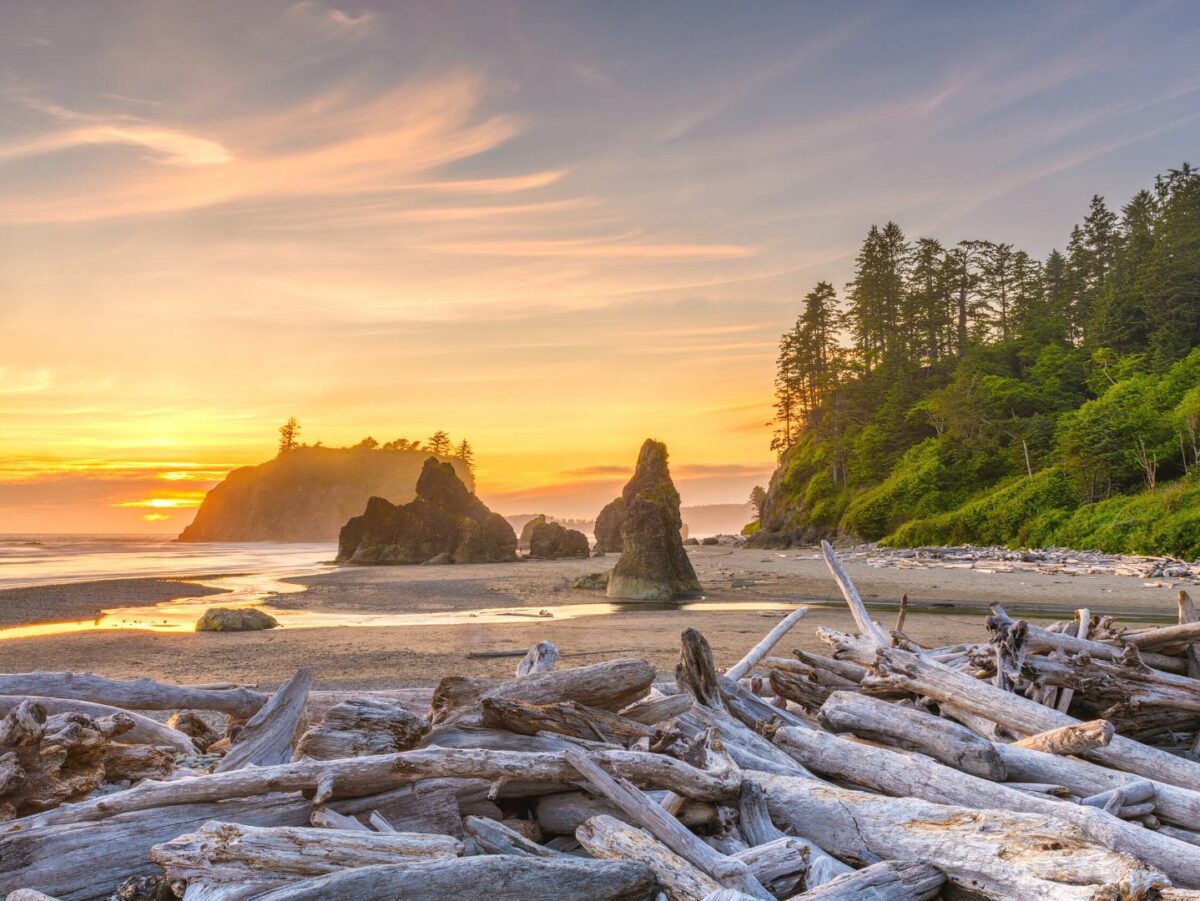
Most national parks do one landscape really well. Yellowstone does geothermal. Arches does red rock arches. Olympic does three completely different landscapes inside a single boundary, and the transitions between them are jarring in the best way. You can stand in snow at Hurricane Ridge in the morning, walk under moss-draped maples in the Hoh Rainforest by afternoon, and watch sunset over sea stacks at Rialto Beach in the evening. No other park in the United States offers that range in one day.
The reason is geography. The Olympic Mountains catch Pacific moisture and create a rain shadow. The west side gets over 12 feet of rain a year, feeding the rainforest. The east side near Port Angeles gets a fraction of that. The coastline is raw and largely roadless, accessible only at specific points. Understanding this geography is the key to planning a good trip, because it dictates weather, closures, and drive times.
Maya Whitfield’s honest take: “Do not try to ‘do’ Olympic National Park in a weekend and expect to enjoy it. The park is bigger than Rhode Island, and the roads do not cut through the middle. Pick two regions for a short trip, three for a medium one, and save the fourth for a return visit.”
How many days do you need in Olympic National Park?
The honest answer is 3 to 4 days for most people. That gives you one full day for the mountains, one for the rainforest, and one for the coast, plus travel time between them. If you only have 2 days, you can still have a great trip, but you need to choose two regions and accept that you will not see everything. I did the 2-day version on my first visit and spent too much time in the car.
If you have 7 days or more, you can add slower experiences: a longer coastal backpacking section, a day at Lake Crescent for swimming and kayaking, the Sol Duc hot springs, or the less-visited Staircase area in the southeast corner. The park rewards slow travel because each ecosystem has its own rhythm. A rushed visit to the Hoh Rainforest feels like a museum walkthrough. A slow one lets you hear the birds and smell the wet earth.
2-day itinerary focus
- Day 1: Hurricane Ridge sunrise, then drive to Lake Crescent for a swim
- Day 2: Hoh Rainforest morning, Rialto Beach sunset
- Stay in Forks or Port Angeles to minimize driving
4-day itinerary focus
- Day 1: Hurricane Ridge and Port Angeles
- Day 2: Lake Crescent and Sol Duc Falls
- Day 3: Hoh Rainforest and Forks
- Day 4: Rialto Beach and Second Beach
The 4 regions of Olympic National Park compared
This is the comparison I wish I had before my first trip. Each region has a different entry point, different weather, and different activities. You cannot see them all efficiently in one loop because the park has no through-roads. You drive around the perimeter, which is why trip length matters so much.
Hurricane Ridge
Best for mountain views, wildflowers in summer, and snowshoeing in winter. Access from Port Angeles. The road can close for weather or construction, so check before you drive up. Give yourself at least half a day.
Hoh Rainforest
Best for mossy old-growth trees and the Hall of Mosses trail. Access from the west side near Forks. Expect rain even in summer. The parking lot fills early, so arrive before 9 a.m. in peak season.
Pacific Coast
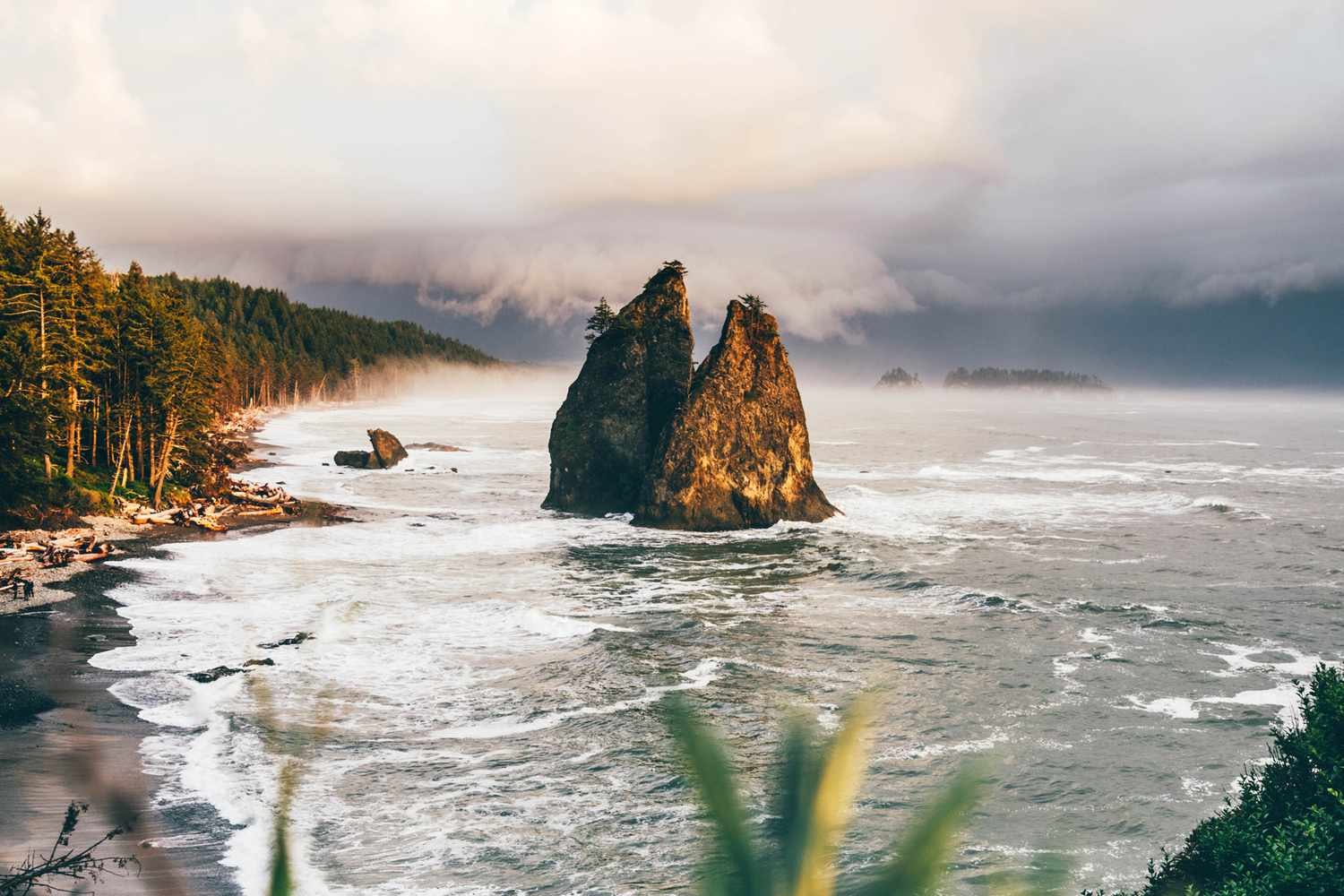
Best for wild beaches, sea stacks, tide pools, and dramatic sunsets. Access at Rialto Beach, Second Beach, and Ruby Beach. Tides matter for some sections, so check tide charts before hiking.
Staircase
The quieter, less-visited southeastern corner. Best for river views, old-growth forest, and solitude. Access from the Lake Cushman side. Some areas have been closed due to fire damage in recent years, so verify access.
What are the current conditions and closures at Olympic National Park?
Conditions change by season and sometimes by week. Wildfires, winter storms, and road construction have all closed major sections of the park in recent years. Hurricane Ridge Road has had periodic closures for repairs. The Staircase area was closed for an extended period after a wildfire. Rialto Beach had construction affecting parking and access.
I always check the official NPS Olympic National Park conditions page the day before I drive in. It is the only source that updates in real time for road status, trail closures, and emergency alerts. Do not rely on a blog post or a travel forum from six months ago. A closed road can cost you half a day of driving if you find out too late.
Where to check before you go
The National Park Service maintains a dedicated alerts and conditions page for Olympic National Park. It lists current closures, construction updates, and safety notices. I also check the Washington Department of Transportation for road conditions on highways leading to the park, especially in winter.
What mistakes do first-time Olympic visitors make?
I have made most of these myself or watched others make them. The park is forgiving, but these errors waste time and money.
1. Underestimating drive times
The park is spread out, and roads are winding and slow. Port Angeles to the Hoh Rainforest is over 2 hours. Olympic has no direct route from the coast to Hurricane Ridge. Use a mapping app and add 20 percent to every estimate.
2. Skipping the tide tables
Some coastal hikes, like the section from Rialto Beach to Hole-in-the-Wall, are only passable at low tide. Hiking at high tide can strand you or force a dangerous scramble. Check tide predictions before any beach hike.
3. Assuming summer means warm weather
The rainforest is cold and wet even in July. Hurricane Ridge can be 20 degrees colder than Port Angeles. Bring layers, including a waterproof jacket, regardless of the season.
4. Relying on cell service
There is almost no signal in the Hoh Rainforest, on many coastal sections, and on mountain roads. Download offline maps and save key information before you enter the park.
5. Not checking for construction closures
Road work on Hurricane Ridge Road and parking lot repairs at popular trailheads have caused real disruptions. Check the NPS alerts page before you commit to a plan.
6. Trying to see everything in one day
You will spend all day in the car and see little of what makes each area special. Pick two areas per day maximum, and plan to return for what you miss.
Frequently asked questions
What is the entrance fee for Olympic National Park?
The entrance fee is $30 per private vehicle, valid for 7 consecutive days. Motorcycles pay $25, and individuals on foot or bicycle pay $15 per person. An annual America the Beautiful pass costs $80 and covers entry to all national parks for a year.
When is the best time to visit Olympic National Park?
July through September offers the warmest, driest weather and the best chance of clear mountain views. June can be rainy but has fewer crowds. Winter brings heavy snow to Hurricane Ridge and stormy coastal weather, but it is a beautiful time for solitude if you are prepared.
Can you see Olympic National Park without a car?
It is difficult. The park covers nearly a million acres with no shuttle system connecting the major regions. A car is almost essential. Some visitors cycle or arrange private tours, but public transportation is extremely limited and does not reach most trailheads.
Do you need a reservation to enter Olympic National Park?
No, you do not need a timed entry reservation for most of the park. However, some lodges and campgrounds inside the park require advance reservations, and the Hoh Rainforest parking lot can reach capacity early in summer. Arrive early to guarantee parking.
Is Olympic National Park safe for solo hikers?
Yes, with preparation. Trails are well-maintained, and violent crime is extremely rare. The bigger risks are weather changes, slips on wet roots or rocks, and getting lost on unmarked coastal sections. Carry the ten essentials, tell someone your route, and check conditions before heading out.
Are there bears in Olympic National Park?
Yes, black bears live throughout the park, though they are rarely seen compared to parks like Yellowstone. There are no grizzly bears in Olympic. Store food properly, make noise while hiking, and never approach or feed wildlife.
Plan your trip: booking platforms we trust
For lodging near Olympic National Park, Port Angeles and Forks have the most options, but they book out months in advance for summer. I use Booking.com for flexible cancellation and a wide range of motels and cabins. For vacation rentals near the coast, Vrbo has better options for families staying multiple nights. For flights to Seattle, the main gateway, Kayak gives the best comparison across airlines.
WakaAbuja does its best to keep all information accurate at the time of publishing. Prices, policies, and availability change regularly. Always verify with official sources before you travel. We are not liable for errors caused by outdated information. Travel insurance is strongly recommended.