20 Things to Do in Patagonia, South America (Ranked by Locals)
Patagonia is a region shared by Argentina and Chile in southern South America, not a separate country. Its standout experiences include hiking in Torres del Paine and El Chaltén, seeing Perito Moreno Glacier, exploring the Carretera Austral, and watching marine wildlife around Península Valdés. For a first visit, I would choose one connected area rather than attempt the entire region.
I would build a Patagonia trip around experiences, not a race between famous names. A glacier walkway, a demanding mountain hike, and a wildlife boat trip involve very different logistics, even when they look close on a map.
This is a research-based planning guide, not a personal trip diary. My recommendations distinguish between straightforward sightseeing, weather-dependent outings, and adventures that need specialist support.
Jump to: Glaciers and hiking | Chilean road trips | Lakes and forests | Wildlife and Tierra del Fuego | Trip planning | FAQs
What should you know before choosing your Patagonia experiences?
- Argentina and Chile offer complementary experiences, not interchangeable itineraries.
- November to March is the main outdoor-travel window identified by Argentina’s tourism board.
- Bariloche and the Seven Lakes Route suit a lake-focused trip; El Calafate and El Chaltén suit a glacier-and-hiking trip.
- The Carretera Austral stretches for more than 1,200 kilometers, so it deserves its own planning time.
- Wildlife trips need species-specific timing, not just a general “best season.”
- Park access, trail conditions, boat departures, and accommodation should be checked separately.
These planning distinctions follow the official destination guidance from Chile Travel and Visit Argentina. [5][7]
Which glacier visits and hikes are worth prioritizing?
I would start here for the classic Southern Patagonia combination: ice, granite peaks, and trails. El Calafate and El Chaltén provide the Argentine base towns, while Puerto Natales is a useful starting point for Chilean Patagonia excursions.
Do not treat every activity in this category as a hike. Perito Moreno’s viewing walkways offer a different level of commitment from a mountain route, while a glacier excursion adds operator-specific requirements.
1. See Perito Moreno Glacier from the walkways.
For a first glacier encounter, this would be my starting point. The walkway network lets visitors observe Perito Moreno from several perspectives without committing to an ice trek. El Calafate is the gateway town; allow a dedicated outing rather than squeezing the glacier between transfers.
Wear footwear with dependable grip. Argentina’s park authority specifically warns that the metal walkway surfaces require suitable shoes, and it prohibits drones inside Los Glaciares National Park.
2. Take a guided glacier walk.
If seeing the ice leaves you wanting a closer encounter, consider an authorized guided glacier excursion. Visit Argentina lists both minitrekking and more demanding ice-walking options around Perito Moreno. I would choose by physical suitability and operating conditions, not simply by which tour sounds most adventurous.
Before paying, ask about eligibility, equipment, transfers, park admission, cancellation terms, and the actual time spent on the ice. A boat approach and an ice walk are not the same product.
3. Hike toward Laguna de los Tres from El Chaltén
Laguna de los Tres is one of El Chaltén’s best-known routes, leading toward the landscape beneath Fitz Roy. I would reserve the clearest suitable forecast for this outing and ask the visitor center about current conditions before setting off.
The official trail guidance highlights a very steep section that becomes dangerous in wind and rain. Treat the final approach as a decision point, not an obligation, and carry enough food, layers, and daylight margin to turn back safely.
4. Choose Laguna Capri for a less ambitious mountain day.
Laguna Capri is an alternative when a shorter El Chaltén hike better matches your fitness or schedule. Visit Argentina identifies it specifically as an option for shorter walks. I would rather finish a suitable route comfortably than struggle through a longer one for the sake of a photograph.
Shorter does not mean equipment-free. The park authority notes that northern-sector trails have no supply shops, so bring your own water, food, weather protection, and other essentials.
5. Hike to Base Torres in Torres del Paine
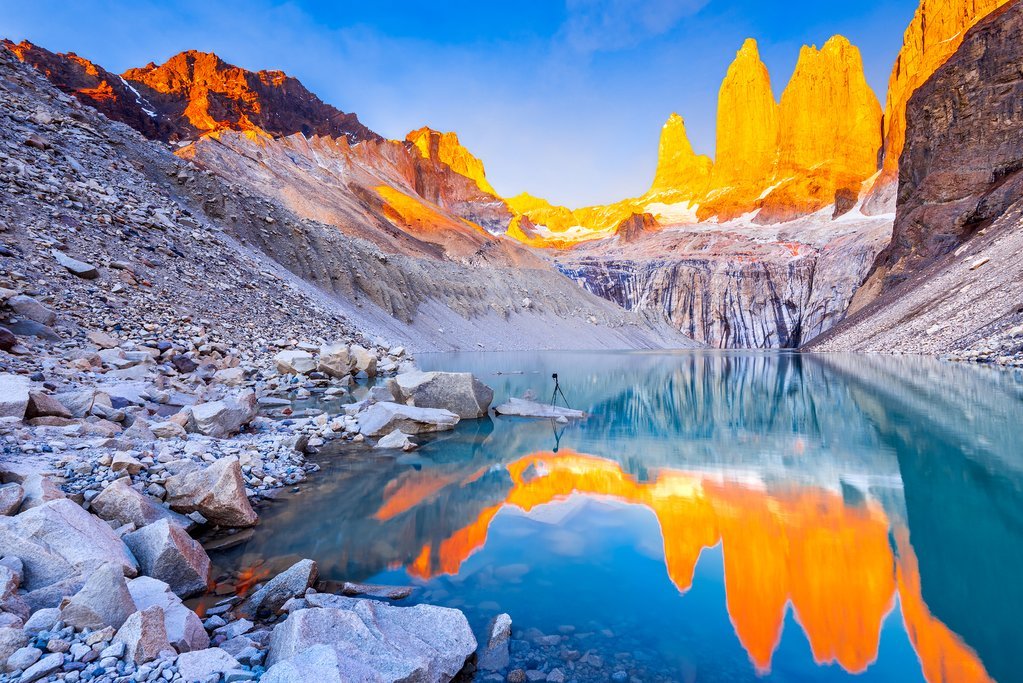
Base Torres is the signature destination for visitors who want to approach Torres del Paine’s granite towers on foot. Chile’s tourism board lists it alongside the W trek among the park’s defining routes. I would choose it as a dedicated hiking day, not a casual addition to a sightseeing drive.
Confirm the current trail opening, turnaround requirements, transport arrangements, and weather with the park or your authorized operator. Seeing the towers from a distance is a legitimate alternative when conditions or fitness make the hike unsuitable.
6. Commit to the W trek instead of collecting day trips.
The W is a different kind of experience: a trekking itinerary rather than a single viewpoint. For someone whose main goal is walking in Torres del Paine, I would prioritize it over adding several distant destinations. Chile Travel identifies the W as one of the park’s principal hiking experiences.
Resolve accommodation, meals, transport, equipment, and current access requirements before fixing the rest of your holiday. Do not assume a general park ticket also secures every overnight arrangement.
7. See Grey Glacier by an organized excursion.
Grey Glacier adds another way to experience Chilean Patagonia’s ice landscapes. Chile Travel lists glacier activities here, including guided ice experiences. My preference would be to choose the excursion format deliberately: sightseeing and an active glacier outing serve different travelers.
Ask the operator exactly what your departure includes and what happens if weather prevents it from running. Keep a flexible day nearby rather than connecting an important onward journey immediately afterward.
My planning take: choose your biggest hike first, then make the surrounding days easier. A holiday does not become better because every morning starts with tired legs.
What are the best things to do along Chile’s Carretera Austral?
I would treat the Carretera Austral as a trip in its own right. Chile Travel describes a route of more than 1,200 kilometers, connecting forests, lakes, glaciers, and access points for outdoor activities. That scale matters more than the number of pins saved on your phone.
8. Drive a manageable section of the Carretera Austral.
The road journey itself is the attraction, not merely transport between stops. Chile Travel recommends exploring it by car, bicycle, or motorhome. For a first visit, I would choose a section around the experiences that matter most instead of committing to the full route automatically.
Build your schedule from realistic driving stages, overnight stops, and confirmed transport connections. Leave room for stopping without making every scenic detour a threat to your next reservation.
9. Explore the Marble Caves on General Carrera Lake.
The Marble Caves are among the Carretera Austral’s signature attractions, located on General Carrera Lake. They make a useful counterpoint to Patagonia’s mountain walks: this experience focuses on the lake and its rock formations rather than a summit.
I would check the outing’s departure location, vessel type, weather policy, and suitability before booking. Avoid choosing a trip solely from close-up photographs that tell you nothing about the conditions required to reach those formations.
10. Visit Queulat’s Hanging Glacier landscape.
Queulat National Park’s Hanging Glacier is another major stop highlighted by Chile’s tourism board. I would include it when forest scenery and glacier views are priorities, rather than treating it as a compulsory detour on every Chilean itinerary.
Check which visitor areas and trails are operating before you travel there. A destination’s inclusion in a national tourism guide is not confirmation that every viewpoint is accessible on your particular day.
11. Hike in the Cerro Castillo area
Cerro Castillo belongs on the shortlist for travelers who want a walking-focused Aysén itinerary. Chile Travel describes a 53-kilometer traverse, a useful reminder that the area includes serious trekking rather than only brief viewpoint walks.
I would choose a route only after checking its current difficulty, access, navigation demands, and equipment needs. A day outing and a multiday traverse should never be treated as interchangeable bookings.
12. Explore Patagonia National Park’s Jeinimeni sector.
For a different landscape mix, consider the Jeinimeni sector of Chile’s Patagonia National Park. Chile Travel highlights the meeting of steppe and forest, along with Piedra Clavada and rock art. This is a strong option when you want more than another glacier photograph.
Keep this Chilean park distinct from Argentine destinations with similar names. I would verify the exact sector, approach road, and excursion meeting point before making accommodation plans.
Best fit
Travelers who enjoy road journeys, flexible stops, and choosing a smaller area in depth.
My caution
Do not add the whole route to a short Torres del Paine holiday simply because both are in Chile.
Where can you enjoy Patagonia’s lakes and forests?
I would consider northern Argentine Patagonia when lake scenery, forest walks, and a town-based holiday matter more than reaching the far south. Visit Argentina highlights Bariloche, the Seven Lakes Route, and Los Alerces as distinct reasons to visit this part of the region.
13. Explore Bariloche’s Circuit o Chico and lake viewpoints
Bariloche offers a practical introduction to Patagonia’s lake district. Circuito Chico, Nahuel Huapi National Park, and nearby lake scenery appear in Argentina’s official Route 40 recommendations. I would use this area for a varied sightseeing day rather than another endurance challenge.
Nearby Cerro Campanario and the Llao Llao Peninsula are also highlighted by the tourism board. Choose a few stops you actually want to explore instead of turning the outing into a hurried circuit.
14. Paddle on the lakes around Bariloche
Kayaking offers a different perspective on the same landscape. Visit Argentina identifies Nahuel Huapi and Moreno lakes as paddling locations around Bariloche. This would be my pick for adding an active experience without automatically signing up for another mountain hike.
Use an appropriate operator and ask about conditions, equipment, supervision, and cancellation policies. The scenery is the reason to go; suitable water conditions should determine whether you actually depart.
15. Follow the Seven Lakes Route
The Seven Lakes Route is one of the defining journeys of Argentine Patagonia. Official tourism guidance places this scenic section along Route 40 between the lake-district destinations of San Martín de los Andes and Villa La Angostura.
I would give it a dedicated travel day, with time to stop, rather than treating it as a background transfer. Before driving, check the latest road conditions and avoid building an itinerary around an unrealistically fast arrival.
16. Walk and sail in Los Alerces National Park
Near Esquel, Los Alerces offers forests, lakes, and a different pace from southern Patagonia’s best-known trekking centers. Visit Argentina identifies the park as a UNESCO World Heritage Site and describes seasonal Lake Menéndez outings and ancient alerce trees.
I would verify the exact sailing schedule and walking access before choosing accommodation. If the forest is your main interest, make sure your selected excursion actually reaches the area you want to see.
Where should you go for wildlife and Tierra del Fuego?
Patagonia is not only mountains. Its Atlantic coastline, Strait of Magellan, and southern channels offer marine wildlife experiences that deserve their own itinerary logic. I would choose the species and type of outing first, then select the destination and season.
17. Watch marine wildlife around Península Valdés
Península Valdés is the choice I would investigate first for an Atlantic-coast wildlife trip. Official tourism guidance highlights whales, sea lions, elephant seals, penguins, and other wildlife, with boat departures available from Puerto Pirámides when conditions permit.
Timing depends on the animal you want to see. Visit Argentina gives May to November as a general whale-watching window, but I would confirm local departures and recent conditions rather than treating any month as a sighting guarantee.
18. Visit the penguin colony on Magdalena Island
From the Punta Arenas area, Magdalena Island offers access to the Los Pingüinos Natural Monument and its Magellanic penguin colony. Chile Travel identifies it as one of the area’s principal wildlife outings.
Check seasonal operation, landing arrangements, and weather policies with your provider. I would favor a clearly described wildlife excursion over a vague promise to “see penguins,” which may not explain whether visitors actually land.
19. Sail the Beagle Channel from Ushuaia
A Beagle Channel sailing is one of Ushuaia’s defining experiences. Visit Argentina highlights sea lions, cormorants, and Magellanic penguins associated with Martillo Island excursions. The important booking detail is the actual route, because not every sailing offers the same wildlife stops.
I would compare duration, vessel, itinerary, and landing permissions before choosing. A channel sightseeing trip and a specialized penguin excursion can sound similar while delivering quite different days.
20. Explore Tierra del Fuego National Park
Tierra del Fuego National Park adds a land-based experience to an Ushuaia stay. Argentina’s tourism board describes access by road or via the historic End of the World Train. I would decide whether the train itself matters to me before buying a bundled excursion.
A train ride, a park transfer, and a walking itinerary are separate components. Check how much time your chosen arrangement leaves for exploring, especially if this is your only full day outside Ushuaia.
How should you plan a first trip to Patagonia?
Choose a travel cluster before booking flights
My suggested starting point is one cluster: El Calafate and El Chaltén for glaciers and hiking; Torres del Paine for a Chilean walking trip; Bariloche and the lake district for scenic touring; or an Aysén-focused Carretera Austral journey. These groupings reflect the attractions identified by the national tourism boards.
Match your season to your main activity
Visit Argentina recommends November to March for outdoor activities and June to August for winter sports. Wildlife uses a different calendar, so I would settle a must-see species before choosing dates. Summer travel still requires warm and waterproof clothing.
Leave room for conditions to change
Los Glaciares park officials warn that weather can change suddenly in any season. My practical response would be to leave an uncommitted day near the trip’s most important hike or boat excursion, rather than filling every available space with another booking.
Verify park requirements independently
In northern Los Glaciares, remote-area trekking and climbing require registration, and the De Agostini, Capri, and Poincenot camps require reservations. These are official requirements, not optional booking extras. Check the park authority’s visitor guidance before departure.
Compare transport before locking in accommodation
Argentina’s tourism board lists flights from Buenos Aires to several Patagonian gateways, including El Calafate, Ushuaia, Bariloche, and Esquel. I would compare usable arrival and departure times, not just the headline fare.
Use our flight-planning page alongside flight comparisons on Kayak. For broader preparation, our travel planning guides provide a place to organize the remaining decisions.
What mistakes should you avoid in Patagonia?
- Planning all 20 experiences as one ordinary holiday. I would use this list as a selection tool, not a checklist.
- Assuming summer removes mountain hazards. Los Glaciares officials warn of sudden weather changes throughout the year.
- Bringing a drone to Los Glaciares. The park authority explicitly prohibits drone use.
- Expecting reliable phone reception on every trail. The park warns that coverage can be weak or absent.
- Starting northern Los Glaciares winter hikes without the required equipment. Official guidance requires poles and crampons during the May-to-September winter period.
- Walking onto frozen lagoons. The park authority prohibits walking and skating on them because the surface is unstable.
I would also keep booking confirmations readable offline and write down the operator’s meeting point. Useful preparation is rarely glamorous, but it is better than discovering the wrong departure location at sunrise.
What else do travelers ask about Patagonia?
Is Patagonia a country?
No. Patagonia is a geographical and cultural region shared by Argentina and Chile. Its boundaries are not those of a single political jurisdiction, so travel requirements depend on which country you enter.
Is Argentine or Chilean Patagonia better?
Neither is universally better. I would choose Argentina for an El Calafate and El Chaltén combination, and Chile for Torres del Paine or a Carretera Austral-focused trip. The right choice depends on the experiences you want, not the border itself.
What is the best time to visit Patagonia?
November to March is the principal outdoor-travel window recommended by Visit Argentina. Winter sports and wildlife require different timing. I would choose dates around the main activity, then check local operating seasons.
How many days do you need in Patagonia?
I would use seven days for one focused area and around two weeks for a carefully selected combination. Argentina’s tourism board gives seven days as a short-trip framework and 14 to 21 days for a broader visit. Neither allows you to see everything comfortably.
Can you enjoy Patagonia without strenuous hiking?
Yes. Perito Moreno’s viewing walkways, lake-district sightseeing, organized sailings, and wildlife excursions offer alternatives to major treks. Check walking distances, boarding arrangements, and accessibility directly, because “not a hike” does not automatically mean step-free.
Do you need a guide for every hike?
No single rule applies to every Patagonia trail. Los Glaciares has marked routes, while climbing and remote-area trekking require registration. I would confirm the specific route’s current rules and use specialist support where the terrain or activity demands it.
Which resources can help you plan your trip?
I would book transport and essential overnight stops first, then compare optional activities. The commercial links below are booking resources, not substitutes for official park rules. Some links may generate a commission for WakaAbuja, at no additional cost to you.
Expedia: compare available flight-and-hotel combinations before booking separately.
Vrbo: investigate vacation rentals when a kitchen or extra shared space matters.
For more site resources, browse our hotel guides, best things to do, and visa information category. Confirm entry requirements with the relevant government or consulate for your passport.
WakaAbuja aims to provide accurate travel information, but policies, access, schedules, and availability can change. Verify details with official park authorities and operators before traveling. This research-based guide does not claim firsthand visits or replace professional outdoor advice. Review travel insurance terms carefully, particularly exclusions affecting trekking, remote travel, and glacier activities.