advertisement
Perito Moreno Glacier: The Complete Visitor Guide
Fact-Checked By Maya Whitfield, Senior Travel Editor at WakaAbuja
Perito Moreno Glacier is a 30-kilometer-long ice field in Los Glaciares National Park, Argentina, famous for its periodic ice-dam ruptures and active calving into Lago Argentino. A full-day visit from El Calafate, including transport, park entry, and a boat tour, costs roughly $100 to $350 per person depending on whether you add a glacier trek. The glacier has been retreating slightly since 2020, after decades of near-equilibrium.
Every few years, a wall of ice the height of a 20-story building collapses into a Patagonian lake, and thousands of people fly to Argentina just to watch it happen. I have stood on the metal boardwalk and felt the air shake when a chunk the size of an apartment block sheared off.
This guide gives you the real numbers for this year: what it costs, how to get there, which tour actually makes sense, and the one thing most other guides get wrong about this glacier.
Jump to: What Is It | Why It Breaks | 2026 Prices | How to Get There | Boardwalk vs. Boat vs. Trek | FAQ
Key takeaways
- Perito Moreno is one of the few glaciers worldwide that maintained relative stability for decades, but data since 2020 shows a measurable retreat.
- The glacier is not a day trip you can do on a whim. You need to plan transport from El Calafate, which is 80 kilometers away.
- A park entrance fee applies for foreigners and has increased steadily. Always check the official Los Glaciares National Park page for the current rate.
- You do not need to pay for a tour to see the glacier. A public bus plus park entry is the cheapest independent option.
- The ice-dam rupture cycle is not predictable. It can happen in winter, spring, or summer, and the last major event was in 2019.
- Walking on the glacier requires a guided tour, either the shorter mini trekking or the full-day big ice.
- Wind in Patagonia is a serious factor. A windproof jacket is more important than a heavy parka on most days.
What is Perito Moreno Glacier, and where is it exactly?
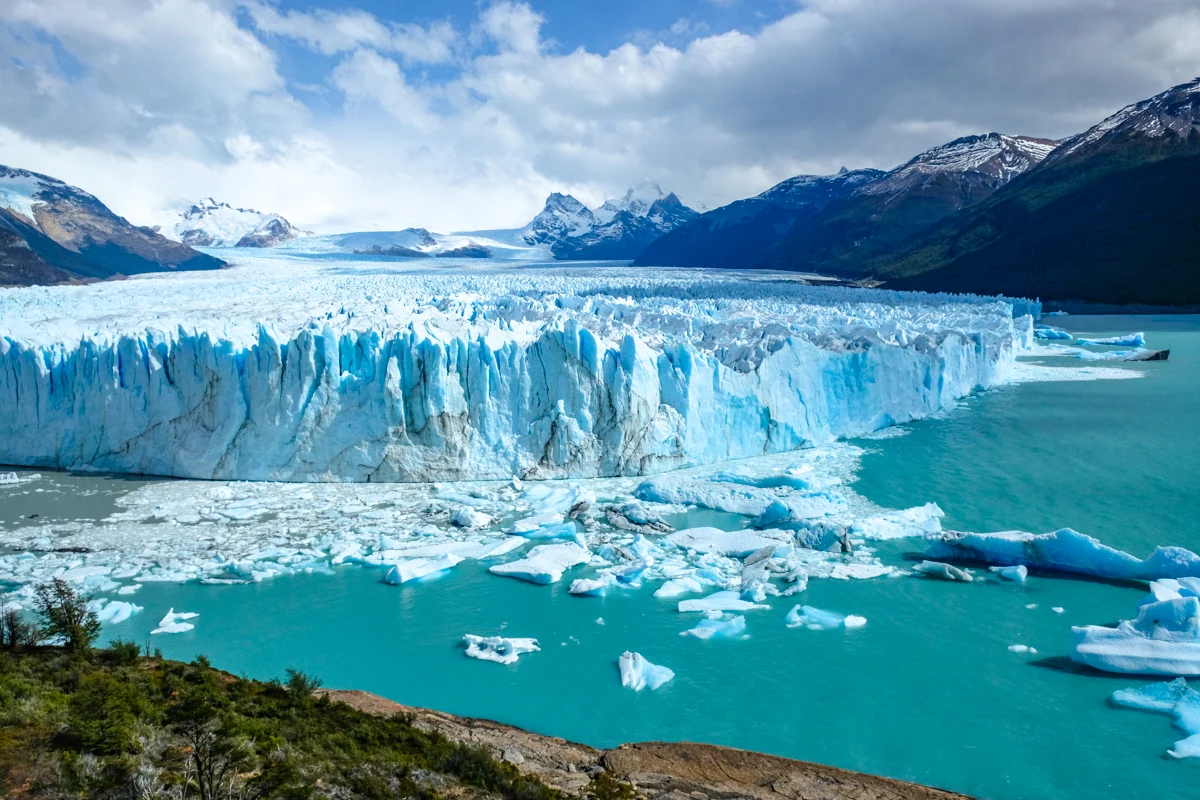
Perito Moreno Glacier sits in Los Glaciares National Park in Santa Cruz Province, Patagonia, Argentina. It is part of the Southern Patagonian Ice Field, the third largest ice mass in the world after Antarctica and Greenland. The glacier covers about 250 square kilometers and stretches 30 kilometers from the ice field to its terminus.
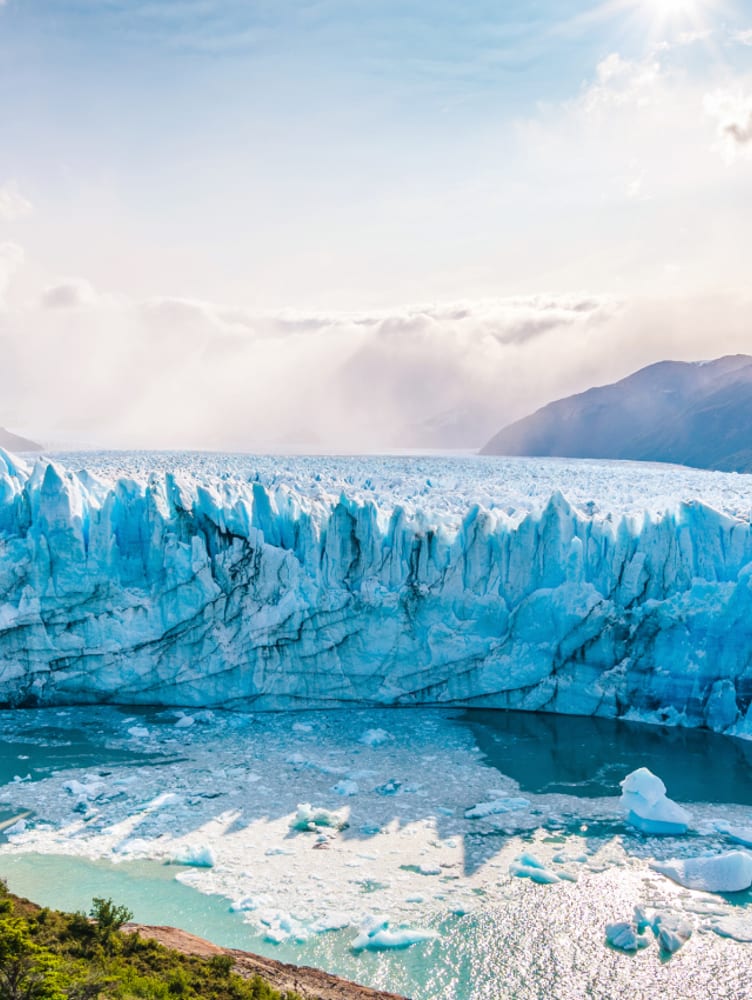
Its front wall rises roughly 74 meters above the surface of Lago Argentino. Below the water line, the ice extends another 100 meters or more. That vertical face is what you see from the boardwalk, and it is the reason the calving events look so dramatic. The ice here is old, dense, and blue where it has been compressed for centuries.
Maya’s honest take: “The first time you see it, you think your camera is broken. The blue is so saturated it looks edited in real life. It is not.”
The glacier is fed by snowfall in the Andes and flows eastward toward the steppe. Unlike most glaciers that end in the ocean, Perito Moreno terminates in a freshwater lake. That changes the calving dynamics and is part of why the ice dam forms the way it does.
Why does Perito Moreno Glacier break every few years?
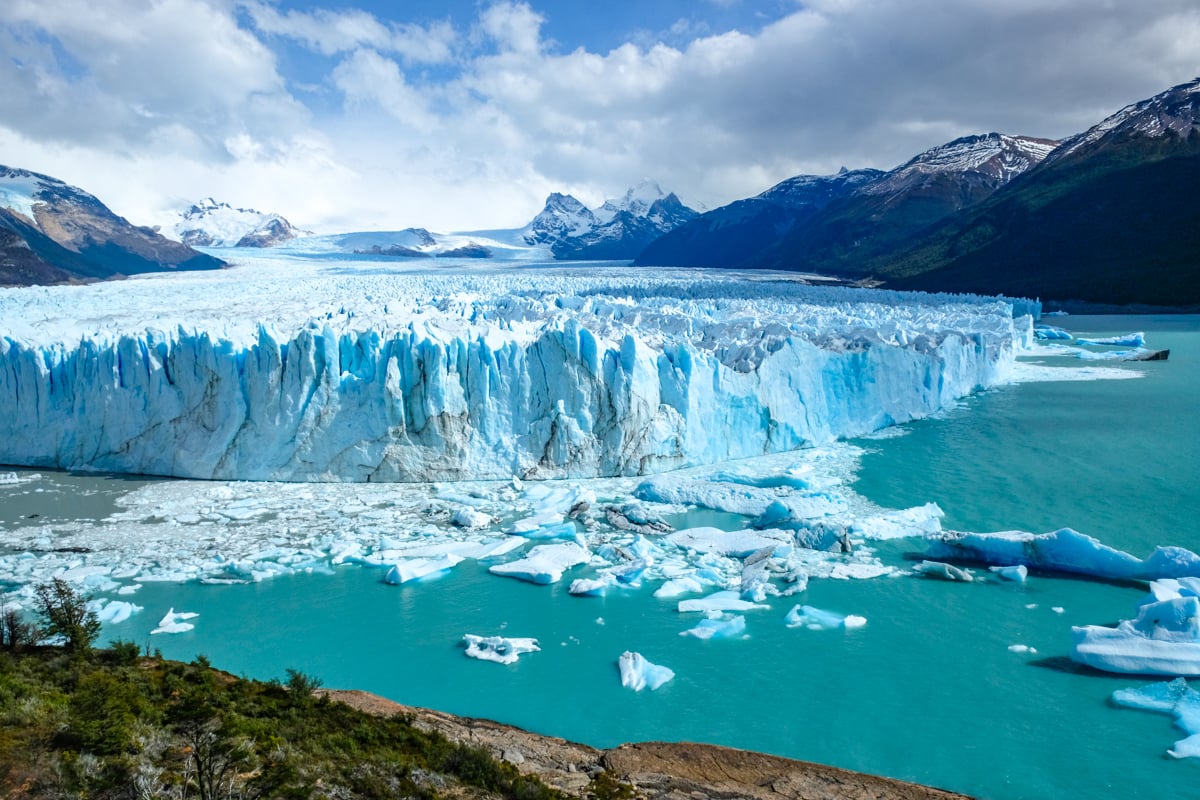
The glacier advances across a narrow channel of Lago Argentino and physically touches the opposite shore. When it connects, it creates a natural ice dam that splits the lake in two. The water level on the blocked side rises, sometimes by 20 meters or more.
The pressure eventually breaks the ice bridge. When it fails, the discharge rate can be massive. During the 2004 rupture, the outflow reached about 5,000 cubic meters per second. The 2012 event was smaller but still spectacular. These ruptures are not on a fixed schedule. The last one was in March 2019, and scientists do not predict the next one with certainty.
You can watch hours of old rupture footage online, but being there is different. The sound arrives late, like thunder from across the lake. Then the wave rolls toward the shore. The park service closes parts of the boardwalk during active rupture periods for safety.
For the geological mechanics, the National Park Service ice-dam explanation is a useful cross-reference, even though it covers Alaska rather than Argentina.
Is Perito Moreno Glacier growing or shrinking right now?
This is where most travel blogs are wrong. For roughly a century, Perito Moreno was one of the few glaciers on Earth that was not clearly retreating. It held a near-perfect balance between snowfall feeding it and melting at the front. Many articles still repeat that “stable glacier” framing as if it were current.
Since 2020, the situation has changed. A late 2023 report in El País and subsequent glaciology monitoring showed measurable retreat. The glacier has thinned, and the front has shifted in recent years. This does not mean it is collapsing. It does mean the old claim “this glacier is still advancing” is now outdated.
I have visited three times over the past decade. The face looks different every time. Small details: a new crack here, a missing ice cave there. The trend is clear even if the pace is slow. If you are writing about this glacier, get the 2020-plus data right.
How much does it cost to visit Perito Moreno Glacier this year?
The short answer: a self-guided day trip from El Calafate costs roughly $50 to $80 per person, including bus transport and the park entrance fee. Add a boat tour and you are around $150 to $200. A glacier trek pushes the total to $300 to $500. Prices in Argentina fluctuate with the exchange rate, so always confirm the day before you book.
Independent bus trip
Round-trip bus from El Calafate: $25–40
Park entrance fee: $20–35 for foreigners
Total: $45–75
Cheapest option. You walk the boardwalk and leave on the same bus. No guided commentary.
Boat tour add-on
Boat tour from the glacier’s southern wall: $30–60
With bus and park fee: $150–200
Gets you close to the ice face. Good for photos. The glacier looks smaller from water level than from above.
Glacier trekking
Mini Trekking (1.5 hrs on ice): $250–350 all-in
Big Ice (4–5 hrs on ice): $450–600 all-in
Includes transport, park fee, crampons, and guide. Must be booked in advance in high season.
I strongly recommend checking the official Los Glaciares National Park page for the current entrance fee. It changes without much notice, and you do not want to be the person at the gate short on pesos.
For booking tours and comparing operators, GetYourGuide lists current-season availability and lets you read recent reviews from people who actually went last week.
How do you get to Perito Moreno Glacier from El Calafate?
El Calafate is the gateway town. It has a small airport with flights from Buenos Aires and a few direct connections from other Patagonian hubs. From the town center, the glacier is about 80 kilometers west on Ruta Provincial 11, a paved road that runs along Lago Argentino.
You have three main options.
Public bus
Several local companies run daily buses from the El Calafate terminal to the glacier parking area. The ride takes about 90 minutes. Buses leave early in the morning and return mid-afternoon. You buy the park entry separately at the entrance gate.
Rental car
Renting a car gives you flexibility and lets you stay later, but parking fills by midday in peak season. The road is in good shape, but wind gusts can be strong enough to make you grip the wheel. I have done this twice and prefer the bus honestly, because you get to look at the landscape instead of the yellow line.
Organized tour
Most hotels in El Calafate can book a day tour that bundles transport, park entry, and sometimes a boat ride. You pay more but the convenience is real. If you only have one day, a tour is the safest bet. Compare options on TripAdvisor to see which operators are running that week.
Boardwalk, boat tour, or glacier trek: which one should you pick?
![Argentina's El Perito Moreno Glacier: How to Visit in 2026 [Expert Tips]](https://worldlyadventurer.com/wp-content/uploads/2019/04/perito-moreno-glacier-argentina-13.jpg "Perito Moreno Glacier: The Complete Visitor Guide 3")
This is the decision that actually matters. You do not need to do all three. Here is the honest breakdown.
Boardwalk only
Best for: Budget travelers, photographers, first-time visitors, families with kids.
The boardwalk is a series of metal walkways and platforms along the eastern shore. You get the best overall view of the glacier’s face and the calving. It is not a hike; it is a stroll with stairs. You can spend two hours here easily without spending a cent beyond the park entry.
Boat tour
Best for: People who want a different angle or have limited mobility.
The boat gets within a few hundred meters of the southern wall. You feel small, which is the point. But the glacier looks less tall from water level than it does from the boardwalk. If you can only do one, do the boardwalk.
Glacier trekking
Best for: Fit travelers who want the full sensory experience.
You wear crampons and walk on the ice itself. Mini Trekking is a short intro. Big Ice is a full day and much more demanding. Both require a guide and have age and fitness restrictions. This is the only way to hear the glacier creak and see the blue meltwater pools up close.
If I had one day and a moderate budget, I would do the boardwalk in the morning, a boat tour at midday, and skip the trek. If I had two days, I would add Mini Trekking on the second day. If you want a family-friendly base, look at Vrbo for cabins in El Calafate with kitchen space.
When is the best time of year to visit Perito Moreno Glacier?
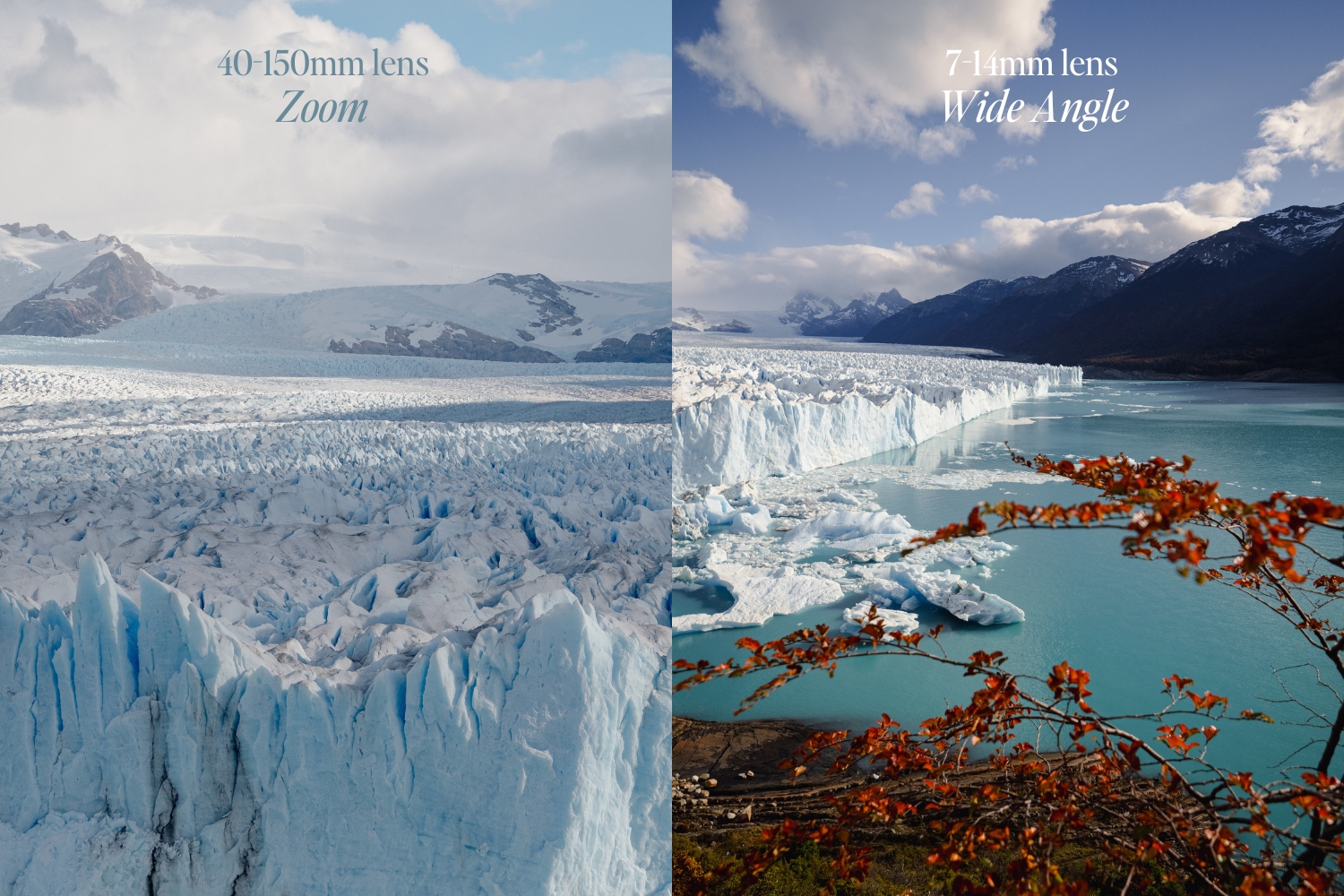
Patagonia has four seasons that do not match the Northern Hemisphere calendar. The austral summer, December through February, is the warmest and busiest. Average highs in El Calafate in January are around 19 Celsius, but the wind makes it feel colder. The days are long, and the light is sharp for photos.
My favorite month is March. The crowds thin out, the fall colors start on the steppe, and the weather is often calmer. April and May can be cold but still accessible. Winter, June through August, brings snow and shorter days, but also empty boardwalks and lower lodging prices.
Calving happens year-round. There is no “calving season” despite what some tour ads imply. The ice-dam rupture is a separate, rarer event. You cannot time your trip to see a rupture. You can time it to avoid the January crowds.
For lodging during peak months, book at least six weeks ahead. Booking.com has the widest range of options in El Calafate, from hostels to lakeside lodges.
Where should you stay when visiting Perito Moreno Glacier?
El Calafate is the only practical base. The town is small, walkable in the center, and built around tourism. Budget hostels and family-run guesthouses cluster near the bus terminal. Mid-range hotels line the main avenue. A few high-end estancia-style lodges sit outside town with lake views.
I have stayed in a different spot each visit. The best value I found was a small guesthouse four blocks from the terminal, booked through Hotels.com because I was chasing loyalty nights. The splurge option, a lake-view room with a wall of glass facing the water, is worth it once if you are on a honeymoon or a milestone trip.
Do not stay at the glacier itself. There is no lodging inside the park. The closest option is the private Nibepo Aike estancia, which is expensive and still requires a drive to the boardwalk.
What does it actually feel like to watch the ice calve?
The first thing you notice is the noise. It sounds like a rifle shot, then a deep, resonant boom that rolls across the lake. You scan the face to find the source. A piece of ice, sometimes the size of a bus, separates from the wall. It hangs for a split second, then tips and crashes into the water. The splash is late, arriving after the sound, which messes with your sense of time.
The crowd gasps. Some people cheer. Others just stand there with their mouths open. I have watched a man cry on the boardwalk, not from sadness but from the sheer scale of it. You feel very small, and very aware that this river of ice has been doing this for thousands of years.
The cold is real but manageable. Wear layers. The wind is the thing that gets you. It comes off the ice field and cuts through anything not windproof. I have worn a down jacket in January and been perfectly comfortable, but only because I had a shell over it.
What do you need to know before you go?
Cash and cards
El Calafate runs on a mix of cash and cards, but the exchange rate situation in Argentina changes constantly. Many places now accept cards at the official rate, but small guesthouses and some restaurants still prefer cash. Carry some Argentine pesos and a card that charges no foreign transaction fees.
Altitude and fitness
The boardwalk is at roughly 200 meters above sea level. There is no altitude issue here, unlike other Andean destinations. The only fitness requirement is for the glacier treks. Big Ice is a real physical day, with hours on your feet wearing crampons.
Wind and weather
Wind gusts over 80 kilometers per hour are common in spring and summer. The park can close sections of the boardwalk if gusts are dangerous. Check the park’s official page the morning you go. Do not trust a clear sky in El Calafate to mean calm weather at the glacier.
Food and water
There is a cafeteria at the parking area with basic sandwiches and coffee. I pack my own food and a full water bottle. The wind dries you out faster than you expect, so you will drink more than you think.
What are the most common mistakes visitors make at Perito Moreno Glacier?
The biggest mistake is not checking the park entrance fee before you go. It has jumped multiple times in recent years, and foreign visitors pay a different rate than Argentine residents. I have seen people at the gate who did not bring enough cash because they trusted an old blog post.
Another mistake is underestimating the wind. People show up in light jackets because the hotel in El Calafate felt fine. The glacier face acts like a wind tunnel. Bring a real windbreaker, even in February.
Do not plan a tight schedule. The bus ride is 90 minutes each way, and you will want at least two hours at the boardwalk. Rushing a glacier visit to make a flight is a recipe for stress.
Do not skip the boardwalk because you bought a boat tour. The boat is a nice add-on, but the boardwalk is the main event. If your tour only does the boat and gives you 30 minutes on the boardwalk, that is a bad tour.
Finally, do not touch or climb on the ice if you are not on a guided trek. The face is unstable, and falling ice kills people. The official park safety guidelines exist for a reason.
Frequently asked questions
How long do you need at Perito Moreno Glacier?
Plan for two to three hours at the boardwalk if you are visiting independently. With a boat tour, add an hour. If you are doing Mini Trekking, the full excursion takes most of a day. Do not try to squeeze it into a short afternoon.
Is Perito Moreno Glacier safe to visit?
Yes, the boardwalk and designated viewing areas are safe when you follow park rules. The danger comes from ignoring barriers or trying to get close to the ice face. Calving can happen without warning, and the resulting waves are strong. Stay on marked paths.
Can you walk on Perito Moreno Glacier without a guide?
No. Walking on the glacier requires a guided tour with proper equipment, including crampons and a safety briefing. Independent access to the ice is not allowed and is extremely dangerous due to crevasses and unstable ice.
Is Perito Moreno Glacier worth the trip from Buenos Aires?
If you are already traveling in Patagonia, yes. If you are flying to Argentina specifically for this glacier, combine it with El Chaltén and other parts of Los Glaciares National Park. The glacier is spectacular, but Patagonia is a long, expensive journey. Make the most of the region.
Do you need to book Perito Moreno tours in advance?
For the boardwalk and public bus, no. You can book the bus the day before in El Calafate. For glacier trekking, yes, especially in January and February. Mini Trekking and Big Ice sell out weeks ahead in peak season.
What should you wear to Perito Moreno Glacier?
Layers are key. A moisture-wicking base layer, an insulating mid-layer, and a windproof waterproof shell. Sturdy walking shoes or light hiking boots are fine for the boardwalk. You do not need heavy mountaineering boots unless you are doing a glacier trek.
Is Perito Moreno Glacier the same as El Calafate?
No. El Calafate is the town, roughly 80 kilometers from the glacier. Perito Moreno Glacier is inside Los Glaciares National Park. You stay in El Calafate and travel to the glacier for a day trip.
Plan your trip: booking platforms we trust
I book Patagonia trips in a specific order. Flights first, because El Calafate has limited connections. Then lodging, because the good places go early. Then the glacier trek, because that is the one activity with limited daily slots.
Best for comparing flights to El Calafate from Buenos Aires or other hubs.
Widest range of El Calafate guesthouses and hotels.
Best for comparing current tour operators and reading fresh reviews.
Good for family cabins or longer stays with a kitchen in El Calafate.