
advertisement
Railay Beach, Thailand: The Complete Travel Guide (Beaches, Costs & How to Get There)
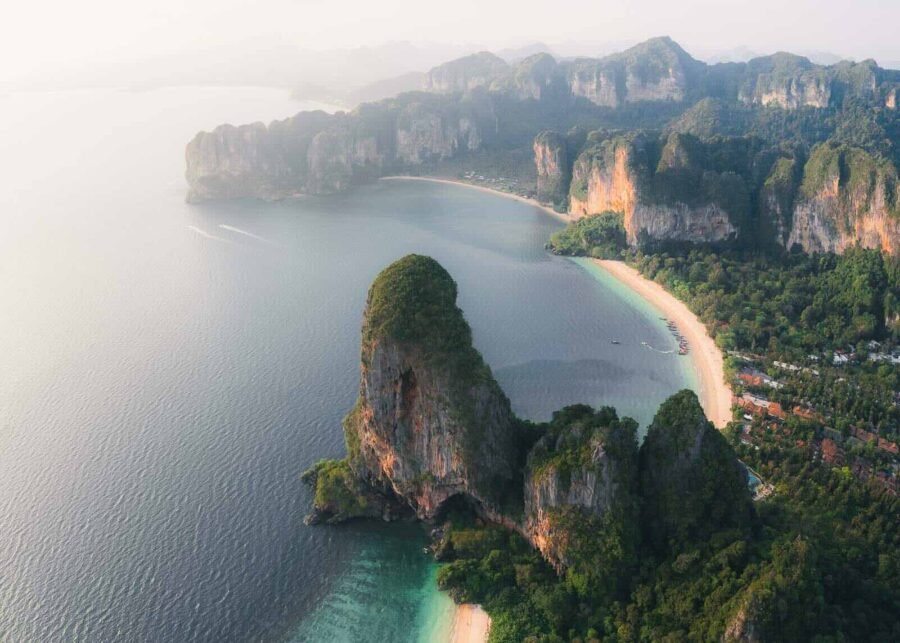
Railay Beach is a boat-access-only peninsula in Krabi province, Thailand, ringed by limestone cliffs too sheer for roads. It is not an island, but it functions like one: no cars, no traffic noise, just four distinct beach areas connected by footpaths. West Railay is the main swimming beach. East Railay is the budget and climbing hub. Phra Nang is the showstopper. Ton Sai is the climber’s crash pad.
Railay is not an island, but it might as well be. No road has ever reached it, and none ever will. Ringed by limestone cliffs too sheer to build a highway through, the only way in is a ten-minute boat ride from Ao Nang or Krabi Town. That isolation is exactly why it works: no traffic, no convenience stores on every corner, just four distinct beaches, world-class climbing, and a version of Thailand that feels a decade behind the mainland’s development.
Here is exactly which beach to pick, what it costs, and how to get there.
Jump to: The 4 Beach Areas | How to Get There | Best Time to Visit | What It Costs | Rock Climbing | Things to Do | Practical Tips | FAQs
Key takeaways
- Railay is a peninsula, not an island. It is physically connected to the mainland but cut off by cliffs. You can only reach it by boat.
- West Railay is the best swimming beach and the best area for first-time visitors. East Railay has mangroves, not sand, and is the budget and climbing base.
- A longtail boat from Ao Nang costs ฿100–150 per person and takes roughly 10 to 15 minutes. Boats run from early morning until sunset.
- Budget roughly ฿1,500–฿3,500 per night for mid-range accommodation. East Railay and Ton Sai offer the cheapest beds. West Railay and Phra Nang are the luxury end.
- Bring cash. There are very few ATMs on the peninsula, and they charge steep fees. Most small restaurants and bars do not accept cards.
- The best months are November through March. May through October is the monsoon, with rougher seas, lower prices, and fewer crowds.
The 4 Areas of Railay: Which One Is Right for You?

Railay is small; you can walk from one end to the other in under twenty minutes, but the four beach areas feel genuinely different. Picking the wrong one as your base means spending your trip walking to the beach you actually wanted instead of being on it. Here is the honest breakdown.
West Railay
Best for first-timers, swimmers, and couples. This is the postcard beach. Soft white sand, clear water, longtail boats bobbing in the bay, and a string of mid-range to luxury resorts backing onto the sand. The swimming is excellent. The sunset is the best on the peninsula. It is the most expensive area to sleep, but you are paying for the location. Walk north along the beach at low tide to reach the quieter end.
East Railay
Best for budget travelers and climbers. Do not arrive here expecting to swim. East Railay faces a mangrove estuary, not open sea. The shoreline is mud and rock, not sand. This is where the main boat pier sits and where most of the cheaper guesthouses, casual restaurants, bars, and climbing shops cluster along a raised boardwalk. It is the functional heart of the peninsula, not the pretty one.
Phra Nang Beach
Best for the single most beautiful stretch of sand in Krabi. Phra Nang sits at the southern tip of the peninsula, a ten-minute walk from East or West Railay. The sand is powdery, the water is turquoise, and the backdrop is a sheer limestone cliff with a cave shrine decorated with phallic carvings, a local fertility offering tradition. There are no accommodation options directly on Phra Nang, but the Rayavadee Resort spans the greenery between it and West Railay. Day-tripper longtail boats crowd the beach between 10 a.m. and 3 p.m. Arrive early or stay late to have it almost to yourself.
Ton Sai
Best for hardcore climbers and backpackers. Ton Sai is technically a separate cove around the headland from West Railay, accessible by boat or by a coastal scramble at low tide. It has a reputation as a dirtbag climber’s paradise: cheap bamboo huts, reggae bars, and some of the best accessible limestone climbing routes in Southeast Asia. The beach is rocky and the development is rustic. If you want air conditioning and a pool, stay on West Railay and walk over.
Maya’s honest take: “I have stayed on both sides. West Railay is worth the extra money if swimming and sunset cocktails are the point of your trip. East Railay works if you are climbing every day and just need a bed, a cold beer, and a short walk to the crag. Phra Nang is the morning secret you get to yourself before the day-tripper boats arrive at ten.”
How to Get to Railay Beach
No road reaches Railay. Every arrival is by boat, and the journey is part of the experience. The most common approach is through Ao Nang, but you can also arrive from Krabi Town or directly from Krabi Airport with a combined minivan-and-boat transfer. Here are the real timings and fares.
From Ao Nang
The simplest and most common route. Longtail boats leave from Ao Nang Beach throughout the day, roughly from 8 a.m. until sunset. The crossing takes 10 to 15 minutes. Tickets cost ฿100–150 per person one-way, purchased at the beach ticket counter. Boats depart when they are full, usually 8 to 10 passengers, not on a fixed schedule. Be prepared to wait 10 to 20 minutes during quieter periods. You will wade into the water to board and disembark. Wear shorts and sandals, not jeans and trainers.
From Krabi Town & Krabi Airport
From Krabi Town, a combined tuk-tuk or songthaew to Ao Nang plus longtail boat costs roughly ฿200–300 total per person and takes about an hour door to beach. From Krabi Airport, the most efficient option is a combined minivan-and-boat transfer booked at the airport arrivals hall, typically ฿350–450 per person including the boat ticket. The drive to Ao Nang takes 30 to 40 minutes, then the boat crossing adds another 15. Private transfer operators offer this exact route. Check current fares on GetYourGuide or with your hotel before arriving.
Boats from Ao Nam Mao, a pier a few kilometers east of Ao Nang, run year-round even when Ao Nang Beach is too rough during the monsoon. They land at East Railay’s pier. The fare is similar. If you are arriving between May and October, confirm with your boat operator which departure point is operating on the day.
Best Time to Visit Railay Beach
Railay sits on Thailand’s Andaman coast, which means it follows the southwest monsoon pattern. The dry season runs from November through March. This is peak tourist season: reliable sunshine, calm seas, postcard-perfect swimming conditions, and the highest accommodation prices. Book well ahead if you are traveling in December or January.
The monsoon runs from May through October. This does not mean constant rain. It means intermittent heavy downpours, usually in the afternoon or overnight, with stretches of clear sky in between. The sea can be rough, and swimming is sometimes unsafe when red flags are up. The upside is lower prices, fewer crowds, and a greener, more dramatic landscape. April is a transitional month, hot and humid, and the pre-monsoon build-up can feel oppressive. If you are coming primarily to climb, the monsoon months are fine as long as you are flexible on which crags are dry. If you are coming to swim and sunbathe, stick to the November–March window.
What Railay Beach Costs: A Real Budget Breakdown
Railay is more expensive than the mainland, partly because everything arrives by boat, and partly because the limited supply of accommodation on a small peninsula drives prices up. It is still affordable by international standards, but do not expect Ao Nang prices. Here are realistic mid-2026 figures in Thai Baht.
Accommodation (Per Night)
- Budget fan bungalow or dorm (East Railay, Ton Sai): ฿400–฿900
- Mid-range air-conditioned room (East or West Railay): ฿1,500–฿3,500
- Beachfront resort (West Railay): ฿4,000–฿8,000
- Luxury (Rayavadee, Phra Nang access): ฿12,000–฿30,000+
Daily Spending (Per Person)
- Local restaurant meal: ฿100–฿200
- Western-style dinner with drinks: ฿350–฿600
- Large Chang beer from a bar: ฿80–฿120
- Half-day rock climbing course: ฿1,000–฿1,800
- Longtail boat fare (Ao Nang to Railay): ฿100–฿150
Cash is essential. There are only a handful of ATMs on the entire peninsula, concentrated on the East Railay boardwalk, and they charge withdrawal fees of ฿200–฿300 on top of your bank’s fees. Most small restaurants, bars, and guesthouses do not accept cards. Bring enough baht to cover your entire stay, plus a buffer for boat fares and climbing courses. For comparing accommodation options, Booking.com lists most properties on the peninsula with verified reviews. For cheaper guesthouses on Ton Sai and East Railay, Agoda often has listings that do not appear on larger platforms.
Rock Climbing at Railay
Railay is one of the best sport-climbing destinations in the world for a reason. The limestone is steep, featured, and accessible. Hundreds of bolted routes range from beginner-friendly 5c to hard 8a and above, and many of the crags are a short walk from the East Railay boardwalk or Ton Sai. The climbing shops on East Railay offer half-day and full-day guided courses, private guiding, and gear rental. A half-day course for a beginner typically costs ฿1,000–฿1,800 per person and includes all equipment. Multi-day lead-climbing courses run higher. If you already climb, you can rent a harness, shoes, and a belay device for roughly ฿400–฿600 per day.
The best-known crags include the Diamond Cave wall, the Thaiwand Wall, and the routes around Phra Nang Beach, where you can belay from the sand. Check current course prices and operator reviews on TripAdvisor before committing.
Things to Do Beyond Climbing
If you are not a climber, Railay still holds your attention for two to four days comfortably. The Railay Viewpoint and Lagoon hike starts from a trailhead behind the East Railay bars. It is short, steep, and genuinely challenging in sections, with fixed ropes on the final scramble to the lagoon. Wear proper shoes. The viewpoint at the top looks out over the entire peninsula, and the hidden lagoon sits in a limestone bowl surrounded by cliffs. It is worth the sweat.
Diamond Cave is a short, lit walk-through cave system near East Railay, easy and accessible, with a small entry fee. The Phra Nang Cave shrine at the southern end of Phra Nang Beach is a local fertility offering site filled with carved wooden phalluses. It is fascinating, photogenic, and free. Kayak rentals on West Railay run roughly ฿300–฿500 per hour and let you explore the coastline and sea caves at your own pace. For boat trips to nearby islands, including the Hong Islands, book through a local operator on East Railay rather than online for a better price.
Practical Tips: Money, Packing, and Connectivity
Railay is small and walkable, but a few practical details will save you genuine frustration.
- Bring enough cash to cover your entire stay. The ATMs on the East Railay boardwalk charge steep fees and occasionally run out of money during busy periods. Most restaurants, bars, and guesthouses are cash-only.
- Pack light and in a backpack, not a wheeled suitcase. You will wade into the water to board and disembark from the longtail boat. There is no pier at West Railay. A wheeled suitcase held above your head in knee-deep water is a comedy you do not need to star in.
- Wear water-friendly sandals or flip-flops. You will take them off and put them back on multiple times a day.
- Wi-Fi is widespread but can be slow. Do not rely on it for work calls or streaming. A local SIM card with data, purchased at Krabi Airport or Ao Nang before your boat crossing, is cheap and reliable.
- There is no hospital on Railay. The nearest medical clinic is in Ao Nang. For anything serious, you will need to take a boat back to the mainland. Travel insurance is not optional here.
Frequently asked questions about Railay Beach
Is Railay Beach an island?
No. Railay is a peninsula physically connected to the mainland, but sheer limestone cliffs cut it off from the road network. The only practical access is by boat, which is why it feels like an island.
Is Railay Beach worth visiting?
Yes, especially if you climb, swim, or want a beach destination without traffic noise. The limestone scenery is among the most dramatic in Thailand. If you are looking for nightlife, shopping, or budget street-food markets, stay in Ao Nang or Krabi Town and day-trip to Railay instead.
How many days do you need at Railay Beach?
Two to three full days is the sweet spot. One day is enough for a day trip from Ao Nang if you just want to see Phra Nang and West Railay. Four or more days works if you are climbing, doing a course, or simply want to slow down and soak in the car-free quiet.
Can you swim at East Railay Beach?
No. East Railay faces a mangrove estuary. The shoreline is mud and rock. Swim at West Railay or Phra Nang Beach instead. East Railay is for arriving, eating, drinking, and sleeping.
Is Railay Beach walkable?
Yes. You can walk from East Railay to West Railay in under five minutes, from the East Railay boardwalk to Phra Nang Beach in ten minutes, and from West Railay to Ton Sai in about fifteen minutes via a coastal path that is passable at low tide. There are no roads, no cars, and no motorbikes on the main paths.
Are there ATMs on Railay Beach?
Yes, a few ATMs are located on the East Railay boardwalk, but they charge steep fees of ฿200–฿300 per withdrawal and occasionally run out of cash during busy periods. Bring enough baht from the mainland to cover your stay.
Plan your Railay trip: booking platforms we use
We do not process bookings ourselves. These are the platforms we use and recommend for researching and booking accommodation, transport, and activities on and around Railay Beach.
Best for comparing West Railay resorts and mid-range accommodation with verified reviews.
Best for finding budget guesthouses and bungalows on East Railay and Ton Sai.
Best for booking combined Krabi Airport-to-Railay transfers and island-hopping boat tours.
Best for reading recent reviews of climbing schools and restaurants before booking.
Best for comparing flight prices into Krabi Airport from multiple international departure points.
Best for bundling Krabi flights and Railay hotel bookings into a single itinerary.