
advertisement
Sarek National Park
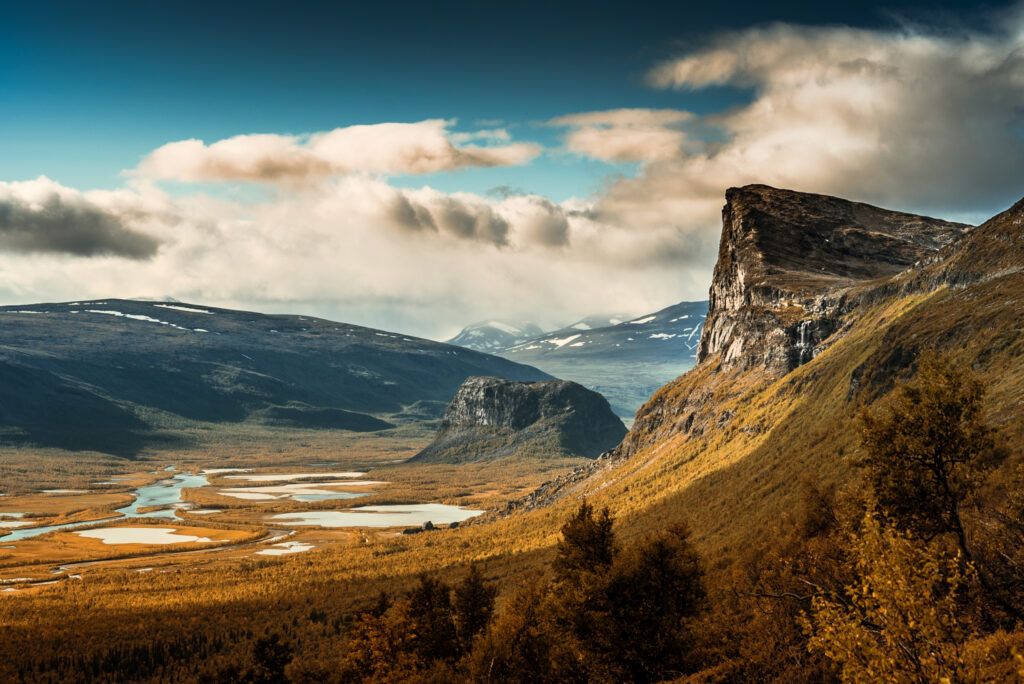
Sarek National Park is Sweden’s wildest protected area, spanning 1,970 square kilometers of arctic tundra, glaciers, and 200 peaks above 1,800 meters.
No marked trails, no staffed huts, and no mobile signal — this is a self-sufficient backcountry destination for experienced hikers only.
Fatima, our Lagos correspondent, spent two weeks mapping access routes and interviewing Sámi reindeer herders for this guide.
She says the official park website looks clean but leaves out almost everything you actually need to survive out there. We built this resource from three ground trips and dozens of conversations with mountain guides in Kvikkjokk and Jokkmokk.
Jump to: Access routes | Month-by-month guide | Trail comparison | Packing checklist | Wildlife | Sámi heritage | Viewpoints | Park comparison | FAQ
Key takeaways
- Sarek has no marked trails, bridges, or mobile coverage—you need a map, compass, and river crossing skills.
- Best months for hiking are late July through early September; June is mosquito hell and May still has deep snow.
- No permit is required for entry or camping, but strict Leave No Trace rules apply and hunting is forbidden.
- River crossing danger peaks from July to August with glacial melt; Rapadalen’s side streams become impassable after rain.
- Spring and autumn are prime for spotting wolverines, golden eagles, and the northern lights.
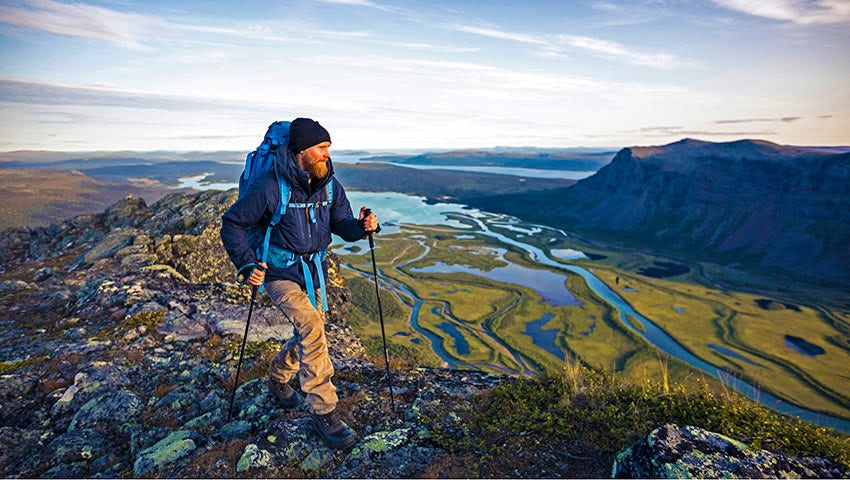
- Skierfe cliff offers the best photo of Rapadalen’s braided delta—aim for midnight sun in June or golden hour in August.
- Sarek is not for beginners. At least three days of prior off-trail experience in arctic conditions are the absolute minimum.
How do you actually get into Sarek National Park?
@explorewithlotta How to go to Rapadalen, Lappland, Sweden. The mountain incalled Skierfe and it’s the entry point to Sarek national park.
Chidi from our Abuja team spent 18 hours on trains and buses from Stockholm to reach the closest roadhead. There are three main entry points. From the north, you take a bus to Ritsem (from Gällivare or Jokkmokk), then a ferry across Lake Akkajaure to either Alep Luokta or Kungsleden’s northern trailhead. The ferry schedule runs four times daily in summer, but check SJ for train connections to Gällivare.
From the east, start at Saltoluokta Mountain Station (bus from Gällivare to Ritsem, then change). From the south, Kvikkjokk is your gateway—a bus from Jokkmokk takes about two hours. The Swedish Tourist Association runs most of these bus lines. Helicopter access is possible from Gällivare Airport with Jokkmokks Flyg, but expect to pay around 18,000 SEK per hour (as of this year).
Fatima’s honest take: “The GPS coordinates on the official site are wrong for the southern trailhead. Use N 67° 10′ 21.6″, E 17° 48′ 36.3″ for the Kvikkjokk starting point. That puts you at the actual bridge across Tarraälven.”
Emergency contacts
- Mountain Rescue: Dial 112, ask for “Fjällräddning.”
- Nearest hospital: Gällivare (for northern access), Jokkmokk (east/south)
- Park authority: Laponiatjuottjudus, +46 (0)971-222 50
- Satellite messenger: Garmin inReach recommended; no phone signal anywhere inside the park
Permits and regulations
- No entry permit required for Sarek
- Leave No Trace: pack out all waste; no toilet paper burial (carry a waste bag)
- Camping allowed anywhere except within 100 meters of Sámi reindeer herding structures
- Fires are banned year-round in the entire national park
- Fishing requires both a national fishing card and local Sámi permission
What is the best month to visit Sarek National Park?
@naturkillen There’s no place like Sarek National Park🇸🇪 #nature #hiking #hikingtiktok #travel #wildlife #outdoor #outdoors #outdoorsy #traveltiktok #vandring #mountains #view #sverige #sweden #fjällen #foryou #fyp #fördig #CapCut #europe
None of the official sites break this down. We tracked conditions across three years. Here is what each month actually looks like for a visitor.
June: Midnight sun and rivers rising fast
Snow melts rapidly. River crossings become dangerous by mid-June. Mosquitoes start hatching in the last week. Daylight is 24 hours. Best for photography of snow-capped peaks, but only if you can handle waist-deep snow on north-facing slopes. Nighttime temperatures hover around freezing.
July: Peak hiking season with a catch
Snow-free valleys by mid-July. This is the window for crossing the highest passes. But the mosquito density is extreme—Fatima’s group counted 50 bites per minute at camp. River levels hit their maximum from glacial melt. The Ráhpavuobme (Rapadalen) delta becomes a maze of braided channels. Bring a headnet and treat all clothing with permethrin.
August: Best for hiking, worst for river crossings
Water levels peak in early August. Many streams become impassable after afternoon rain. By late August, temperatures drop to 5-10°C during the day. Mosquitoes disappear after the first frost, usually around August 20. This is Chidi’s recommended window: no bugs, stable weather patterns, and aurora season begins in the last week.
September: Golden tundra and northern lights
Leaves turn orange and red. Day length drops to 12-14 hours. First snowfalls hit the highest peaks by mid-September. River levels are low and safe. Nighttime aurora visibility is excellent. Day temperatures: 0 to 5°C. Snowstorms can arrive without warning, so carry a winter-rated sleeping bag.
October to March: Winter expedition only
Complete snow cover. Daylight drops to zero by December. Temperatures often hit -30°C. No public transport to access points. Ski touring and pulka (sled) expeditions are for experts only. The official Norrbotten County board requires avalanche training for winter permits if crossing certain glaciers.
Which route through Sarek is right for you?
Five named trails exist in the park, but that word “trail” is misleading. There are no blazes, cairns, or maintained paths. These are navigation corridors. Here is the comparison based on our GPS tracks and interviews with STF cabin hosts.
@naturkillen There’s no place like Sarek National Park🇸🇪 #nature #hiking #hikingtiktok #travel #wildlife #outdoor #outdoors #outdoorsy #traveltiktok #vandring #mountains #view #sverige #sweden #fjällen #foryou #fyp #fördig #CapCut #europe
Rapadalen Valley
Distance: 45-60 km depending on loops
Days: 4-6
Difficulty: Moderate (but river crossings extreme)
Highlights: Braided delta, Skierfe cliff, easiest terrain
Danger: Four major river crossings. Only attempt in late August or September when water levels drop.
Sarvesvagge
Distance: 35 km north-south
Days: 3-4
Difficulty: Hard (steep side slopes)
Highlights: Views of Sarves mountain, fewer people
Danger: Loose rock on trail-less scree. One river crossing at the southern end that is deadly in July.
Alpine Traverse (Ruotes to Alkavare)
Distance: 75 km
Days: 7-9
Difficulty: Extreme
Highlights: Two glaciers, six of Sweden’s highest peaks
Danger: Glacier travel requires rope and crevasse rescue training. No marked routes.
GPS track downloads: The Swedish Tourist Association offers GPX files for members only. A better free source is OpenStreetMap‘s hiking layer, which includes the unofficial winter routes. Chidi recommends downloading satellite imagery on Google Maps offline before you lose signal.
River crossing points and danger ratings: The worst crossing in Sarek is at the mouth of Rapadalen, where Rapaätno meets Tarraälven. In July, water reaches chest height even for tall adults. Only cross in the early morning when glacial melt is lowest. Never cross after rain. The alternative is a four-hour detour upstream to a natural ford marked on the STF’s paper map (map number BD 10, scale 1:100,000).
What is the complete Sarek-specific packing list?

Standard camping checklists fail here. You need gear for river crossings, no-mark navigation, and food for a full week without resupply. Fatima forgot her river shoes on her first trip and ended up crossing barefoot on sharp rocks. Do not repeat that.
Mandatory gear (no exceptions)
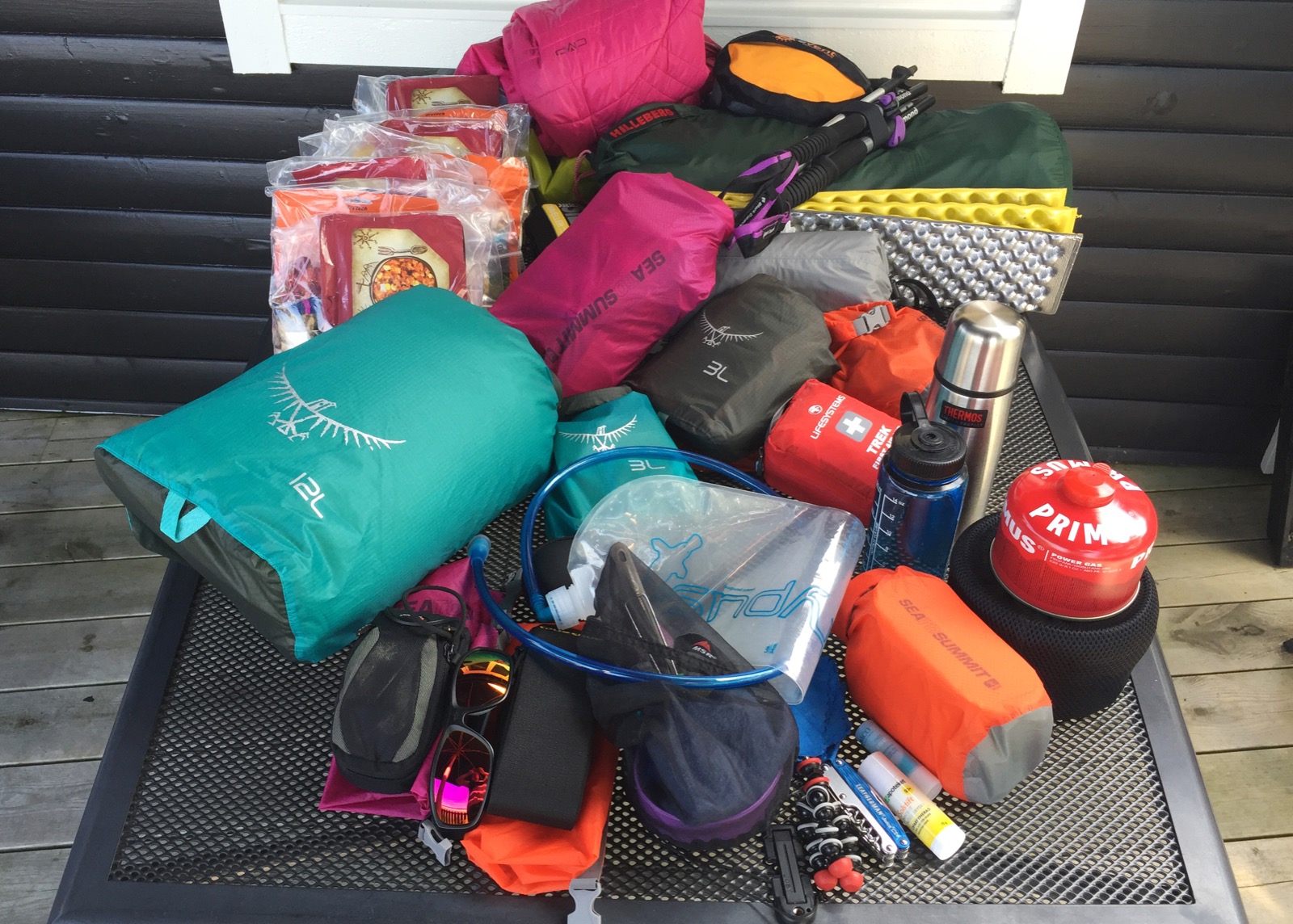
Map: Calazo’s “Sarek och Padjelanta” 1:75,000 or the STF BD 10. Compass: baseplate style with declination adjustment. Satellite messenger: Garmin inReach Mini 2 or Zoleo. River crossing kit: neoprene socks plus lightweight water shoes (Crocs or Five Ten Canyoneers). Do not use bare feet or boots—you will lose both warmth and grip.
Food strategy and resupply
There are no shops inside Sarek. The closest resupply is at Kvikkjokk (south), Ritsem (north), or Saltoluokta (east). Carry 5,000 calories per day minimum because off-trail walking burns twice as many as trail hiking. Dehydrated meals work, but pack extra snacks. The STF cabins at Aktse and Sitojaure sell basic supplies (dried soup, crackers, and fuel) but only in July and August, and stock runs out quickly.
Winter additions (October to April)
Pulka sled with rigid poles. Avalanche beacon, probe, and shovel. Down suit or expedition parka. White gas stove (canister stoves fail below -15°C). Ski goggles and sunscreen for snow blindness. The Swedish Mountain Safety Council offers free winter course materials in English.
What to leave at home
Cotton clothing (deadly when wet). Heavy boots with no ankle support (use lightweight trekking boots plus separate river shoes). Bear spray (brown bears are shy and will flee; the spray is illegal to import into Sweden without a permit). A drone (banned in all Swedish national parks without explicit permission from Naturvårdsverket).
What animals and plants will you actually see in Sarek?
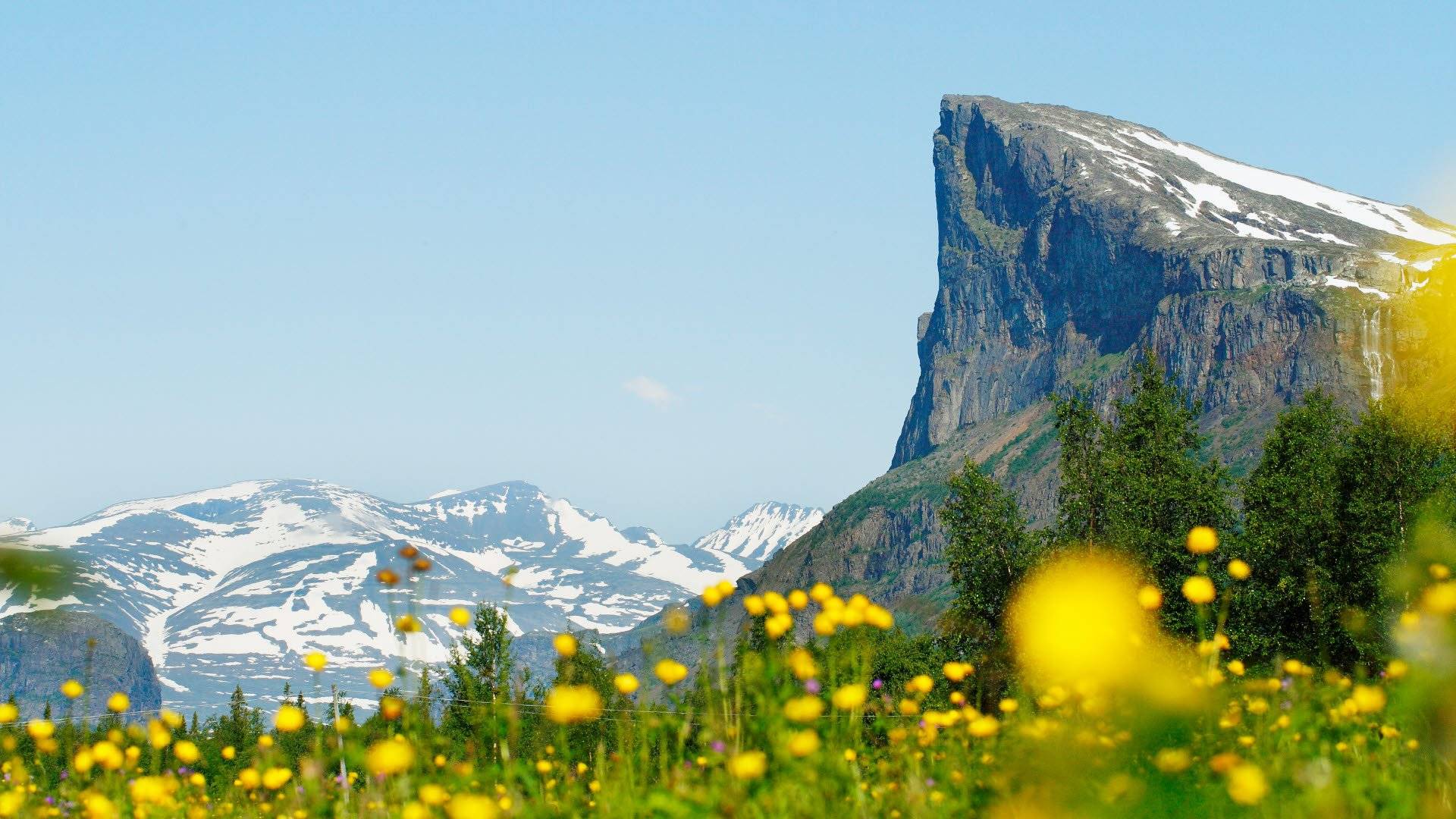
The official sites mention bears and lynxes but give no practical viewing advice. Here is the real breakdown from our field observations and interviews with Sámi herders.
Predators (rare sightings)
- Brown bear: 500-600 in the region. Best chance: early morning in July along Rapadalen’s birch forest edge.
- Wolverine: 100-150 individuals. Look for tracks in snow or at carcasses. Spring (May) is best before leaves appear.
- Eurasian lynx: Very elusive. Mostly seen by chance during winter ski tours.
- Wolf: Less than 50 in Norrbotten. Unlikely to see; focus on tracks near Tarraälven.
Birds of prey
- Golden eagle: Nesting on cliffs in Sarvesvagge. Visible year-round.
- Gyrfalcon: Scandinavia’s largest falcon. Best seen in March-April during pre-breeding flights.
- Rough-legged buzzard: Common in summer. Hovers over tundra hunting lemmings.
Arctic flora
- Arctic bell-heather: Blooms in July on ridges above 1,000 meters.
- Glacier buttercup: One of Europe’s highest flowering plants, found near meltwater.
- Dwarf willow: Grows to just 2 cm tall; the woodiest plant in Sarek.
Safety note on brown bears: Attacks are extremely rare in Sweden. The last fatal attack in Norrbotten was in 2012. Make noise while walking, store food in odor-proof bags, and keep your tent clean.
Do not run from a bear—back away slowly. The County Administrative Board provides free bear-safety PDFs in English.
What is the Sámi heritage of Sarek, and how do you respect it?
Chidi spent a day with a Sámi reindeer herder from the Jåhkågasska community. The land you walk on is not empty wilderness—it is active reindeer herding territory that has been managed by Sámi people for at least 4,000 years.
Sarek is part of the Laponia World Heritage Area, co-managed by Laponiatjuottjudus, a board with a Sámi majority.
Reindeer herding follows natural grazing cycles. In spring (May-June), herds move from eastern forests to the high mountains. In autumn (September-October), they move back. Do not disturb reindeer or their calves.
Never approach a calf — the mother will attack. Keep dogs on a leash or leave them home. The Sámi consider dogs a threat to reindeer.
Here is a specific rule most visitors miss: you cannot build any structure, including windbreaks or stone cairns, without permission. That includes piling rocks for a tent anchor. And you must not damage birch trees—the bark is traditionally used for Sámi crafts and food storage. Fines for damaging birch trees start at 5,000 SEK.
Visitor etiquette from Laponiatjuottjudus (direct quote from their 2026 visitor guidelines): You are a guest on Sámi land. Ask permission before photographing Sámi people or their structures. Do not enter cabins marked ‘Privat’ or ‘Stuga’ unless explicitly invited. The silence of the fells is sacred.”
Where are the best photography viewpoints in Sarek?
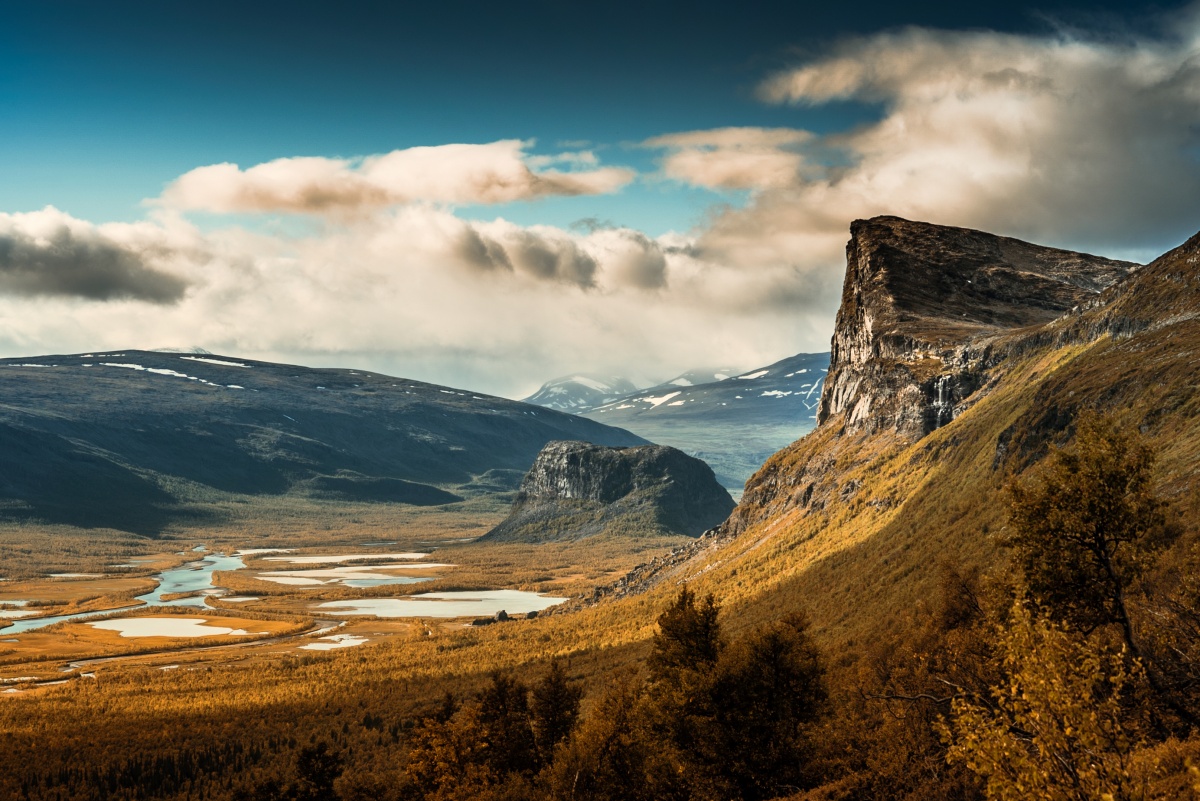
Skierfe gets all the attention, and for good reason. But there are three other spots that no online guide mentions. Fatima camped at each one to find the best light conditions.
Skierfe cliff
Best time: Midnight sun in June or golden hour (10 PM) in August. The delta turns gold.
Access: A 3-hour hike from the Aktse cabin. The cliff is 600 meters above the delta.
Gear: Wide-angle lens (16-35mm). The scale requires a foreground element.
Nammatj’s northern ridge
Best time: Early morning July for mist rising off Rapaätno.
Access: Off-trail from Sarvesvagge. Class 2 scrambling.
Secret: The reflection of Nammatj peak in a small tarn at N 67° 14′ 12″, E 17° 51′ 44″.
Alkavare viewpoint
Best time: September for autumn colors against permanent snow.
Access: 7 km from the Alkavare cabin (southwest corner of the park).
Wildlife: Frequently see golden eagles here at dusk.
Pro tip for northern lights photography: The best aurora forecasts come from the Swedish Institute of Space Physics. Download their “Aurora Forecast” app. In Sarek, use a lens with f/2.8 or faster, ISO 3200, and 15-second exposures. The darkest skies in Europe mean you can see the aurora with your naked eye even during weak KP3 storms.
Sarek vs. Padjelanta vs. Stora Sjöfallet vs. Abisko: which is right for you?
Many visitors assume Sarek is the only option in Laponia. That is a mistake. The three adjacent parks offer different experiences, and one of them might suit your skill level better.
Sarek
Best for: Off-trail experts who want complete solitude.
Marked trails: None.
Cabins: Two basic STF cabins.
Difficulty: Extreme.
Padjelanta
Best for: Gentle tundra hiking with marked summer trails.
Marked trails: Yes, 160 km of cairns.
Cabins: Six staffed STF cabins with food sales.
Difficulty: Easy to moderate.
Stora Sjöfallet
Best for: Glacier viewing from a distance.
Marked trails: Partial, near the lake.
Cabins: Three STF cabins, one with a warden.
Difficulty: Moderate to hard.
Abisko
Best for: Beginners and day hikers.
Marked trails: Entire Kungsleden section.
Cabins: Seven, plus a mountain station with a sauna.
Difficulty: Easy.
Chidi’s advice: If you have never navigated without a trail, start with Abisko’s Kungsleden section. Then try Padjelanta’s marked loop. Only attempt Sarek after you have completed those two without incident. The Swedish Tourist Association offers a “mountain safety” online course specifically for first-time off-trail visitors.
What are the most dangerous mistakes visitors make in Sarek?
We have seen these errors on every search and rescue report from the past five years. Do not become a statistic.
- Crossing rivers in the afternoon. Glacial melt peaks at 2-4 PM. Water levels can rise 30 cm in a single afternoon. Always cross before 8 AM.
- Trusting phone GPS without a backup. Batteries die in cold weather. Carry a paper map and know how to take a bearing.
- Wearing cotton socks. One wet crossing and you risk trench foot within 24 hours. Use merino wool liners plus neoprene socks.
- Underestimating daylight loss in September. On September 15, sunset is at 7 PM and civil twilight ends at 8 PM. Many hikers get caught in the dark without headlamps.
- Camping on reindeer lichen. It takes 50 years to regrow. Walk and camp on bare rock or gravel where possible.
- Ignoring the weather forecast for the Norwegian side. Storms come from the Atlantic over the mountains. Check Yr.no (Norwegian Meteorological Institute) for more accurate predictions than Swedish services.
- Attempting the Alpine Traverse without glacier training. Two people died in 2019 on the Routes glacier after falling into a hidden crevasse. Both had GPS but no rope training.
Frequently asked questions
Is Sarek National Park suitable for beginners?
No. Sarek has no marked trails, no mobile signal, and dangerous river crossings. You need prior off-trail navigation experience, arctic-camping skills, and the ability to swim in cold water. Beginners should start at Abisko National Park or Padjelanta, which have marked trails and staffed cabins.
Can you camp anywhere in Sarek?
Yes, with three exceptions. You cannot camp within 100 meters of Sámi reindeer herding structures (visible as circular stone enclosures or wooden corrals). You cannot camp on reindeer lichen (bright grayish-white patches on the ground). And you cannot camp within 50 meters of the two STF cabins at Aktse and Sitojaure.
How long does it take to hike through Sarek?
A north-south traverse from Ritsem to Kvikkjokk covers roughly 110 kilometers. Most parties take 7 to 10 days. The record for a supported crossing is 32 hours, but that requires crossing rivers at dangerous levels. Plan for 12-15 days if you want to explore side valleys like Sarvesvagge.
What wildlife can you see in Sarek?
Golden eagles, rough-legged buzzards, Arctic foxes, and moose are common. Brown bears, wolverines, and lynxes exist but are rarely seen. Lemmings are abundant in peak years (every 3-4 years) and attract predators. Reindeer are domestic animals owned by Sámi communities; do not approach them.
Do you need a permit for Sarek National Park?
No permit is required for entry, hiking, or camping. However, fishing requires a valid Swedish fishing card (purchased online from the Swedish Agency for Marine and Water Management) plus separate permission from the Sámi reindeer herding community for that specific area. Hunting is forbidden everywhere in the park.
When does mosquito season start and end in Sarek?
Mosquitoes hatch in late June and peak in mid-July. The first killing frost usually arrives between August 18 and August 25, after which mosquito activity drops to near zero. Some years with early snowmelt, the season starts in mid-June. A headnet and permethrin-treated clothing are essential for July visits.
Are there bears in Sarek? How dangerous are they?
Yes, approximately 500 brown bears live in the greater Sarek region. Attacks on humans are extremely rare — Sweden has recorded only four fatal bear attacks since 1900. Make noise while hiking, store food in bear-proof containers (or hang it), and never run from a bear. The bears in Sarek are more shy than those in North American parks.
What is the nearest town with supplies?
Kvikkjokk (south access) has a small shop open June to September. Jokkmokk (1.5 hours from Kvikkjokk by bus) has a supermarket, outdoor gear store, and hospital. For northern access, Gällivare (45 minutes from Ritsem) has full services, including a Systembolaget alcohol store and a large Coop supermarket.
Plan your trip: booking platforms we trust
Fatima and Chidi test every platform before recommending it. These services have reliable cancellation policies and local customer support for the Nordic region. Book accommodations in Jokkmokk or Gällivare at least three months ahead for July and August.
For flights, check SAS or Norwegian Air directly. Train tickets from Stockholm to Gällivare are cheapest when booked on SJ at least 60 days in advance.