Sequoia National Park: What to See, When to Go, and How to Plan Your Trip Without Wasting a Single Day
Fact-Checked By: Maya Whitfield, Senior Travel Editor at WakaAbuja — Senior Travel Editor at WakaAbuja
Sequoia National Park protects the largest living tree on Earth, the General Sherman Tree, and shares a border and an entrance fee with Kings Canyon National Park. The park is open 24 hours a day, year-round, but the Generals Highway connecting the two parks closes seasonally between Lodgepole and Grant Grove, usually from January through late March (check current road conditions before you drive). A standard vehicle entrance pass costs $35 for seven days, and non-U.S. residents must pay an additional $100 per person fee unless they hold an annual or America the Beautiful pass (verify current rates on the official NPS fees page).
I have driven the Generals Highway four times, twice in summer and twice in the shoulder season, and the single biggest mistake I see first-time visitors make is treating Sequoia as a quick stop on the way to Yosemite. It is not.
This is a park with a 4,000-foot elevation swing, two distinct ecosystems, and a road system that can shut down with a single snowstorm. If you plan it like a drive-through attraction, you will spend more time in your car than under the trees.
Jump to: Costs & Fees | Best Time to Visit | Things to Do | Sequoia vs. Kings Canyon | Itinerary | Mistakes to Avoid | FAQ
Key takeaways
- The General Sherman Tree is the largest tree on Earth by volume, standing 275 feet tall with a base diameter of 36 feet.
- Sequoia and Kings Canyon share one $35 entrance fee, valid for seven days in both parks (confirm current fees on the NPS site).
- Non-U.S. residents pay an additional $100 per person (ages 16+) as of January 1, 2026, a policy change that caught many international visitors off guard.
- June through August offers the most stable weather, but September and October mean fewer crowds and golden light through the groves.
- The Generals Highway between Grant Grove and Giant Forest typically closes for winter from January through late March, so you cannot drive between the two parks during that window.
- Crystal Cave tours require advance reservations and cost around $22 for adults (check the Sequoia Parks Conservancy site for current pricing).
- Summer weekends bring shuttle-only access to Moro Rock and Crescent Meadow, so plan to park and ride.
How much does it cost to enter Sequoia National Park?
Here is the number most guides bury: a standard entrance pass for a private vehicle is $35, and it covers both Sequoia and Kings Canyon National Parks for seven days (confirm current rates at the entrance station or on the NPS site) . That single fee gives you access to the General Sherman Tree, Moro Rock, Crystal Cave Road, and the Grant Grove area in Kings Canyon. I have never understood why people assume they need two separate passes. You do not.
The fee structure changed significantly for international visitors starting January 1, 2026. Non-U.S. residents aged 16 and over now pay an additional $100 per person on top of the standard entrance fee . This applies whether you are traveling independently or as part of a tour group. The only exceptions are visitors holding an annual Sequoia-Kings Canyon pass or an America the Beautiful pass . I have watched international travelers arrive at the Ash Mountain entrance station without knowing about this fee and have to turn around. Do not be that person.
@dailyfindsbyelaine SEQUOIA NATIONAL PARK Entrance fee of $35 per vehicle. 📍Tunnel Rock – a giant rock with a cool history 📍 Ampitheater Point – Breathtaking views 📍Moro Rock – 400 + steps and a little fear of heights Follow for more for part 3. #tiktokgocreator #SequoiaNationalPark #SequoiaParkAdventures #ExploreCalifornia #NationalParks
Standard vehicle pass
$35, valid 7 days (confirm current rate on arrival)
Covers everyone in a single private vehicle. Good for both Sequoia and Kings Canyon. No reservation required for day entry.
Annual park pass
$70, valid 1 year (verify on the NPS fees page)
Worth it if you plan to visit Sequoia and Kings Canyon more than twice in a year. Also covers the Hume Lake District of Sequoia National Forest.
Non-U.S. resident surcharge
+$100 per person, ages 16+ (check current policy before traveling)
Effective January 1, 2026. Applies on top of the standard entrance fee. Waived if you hold an annual or America the Beautiful pass.
Maya’s honest take: “The $100 international surcharge is steep, and I have seen it ruin trips for visitors who did not know about it. If you are coming from outside the U.S., budget for it before you book flights. The good news is that an America the Beautiful annual pass at $80 waives the surcharge entirely, so if you are visiting more than one U.S. national park this year, buy the pass instead.”
What is the best time to visit Sequoia National Park?
The honest answer depends on what you want. June through August gives you the most stable weather and the most predictable access. The sequoia groves sit at around 6,500 feet, and summer temperatures there hover in the 70s with lows in the 50s. That is genuinely comfortable. But summer also means shuttle bus queues, crowded trails, and the General Sherman Tree parking lot filling by 9 a.m.
September and October are my personal favorite window. The crowds thin out dramatically after Labor Day. The light turns golden and slants through the groves in a way that makes every photo look like it was shot by a professional. The trade-off is that some facilities start reducing hours, and light snow can arrive as early as October. I was in the Giant Forest in late September when the temperature dropped to freezing overnight. Pack layers even if the forecast looks mild.
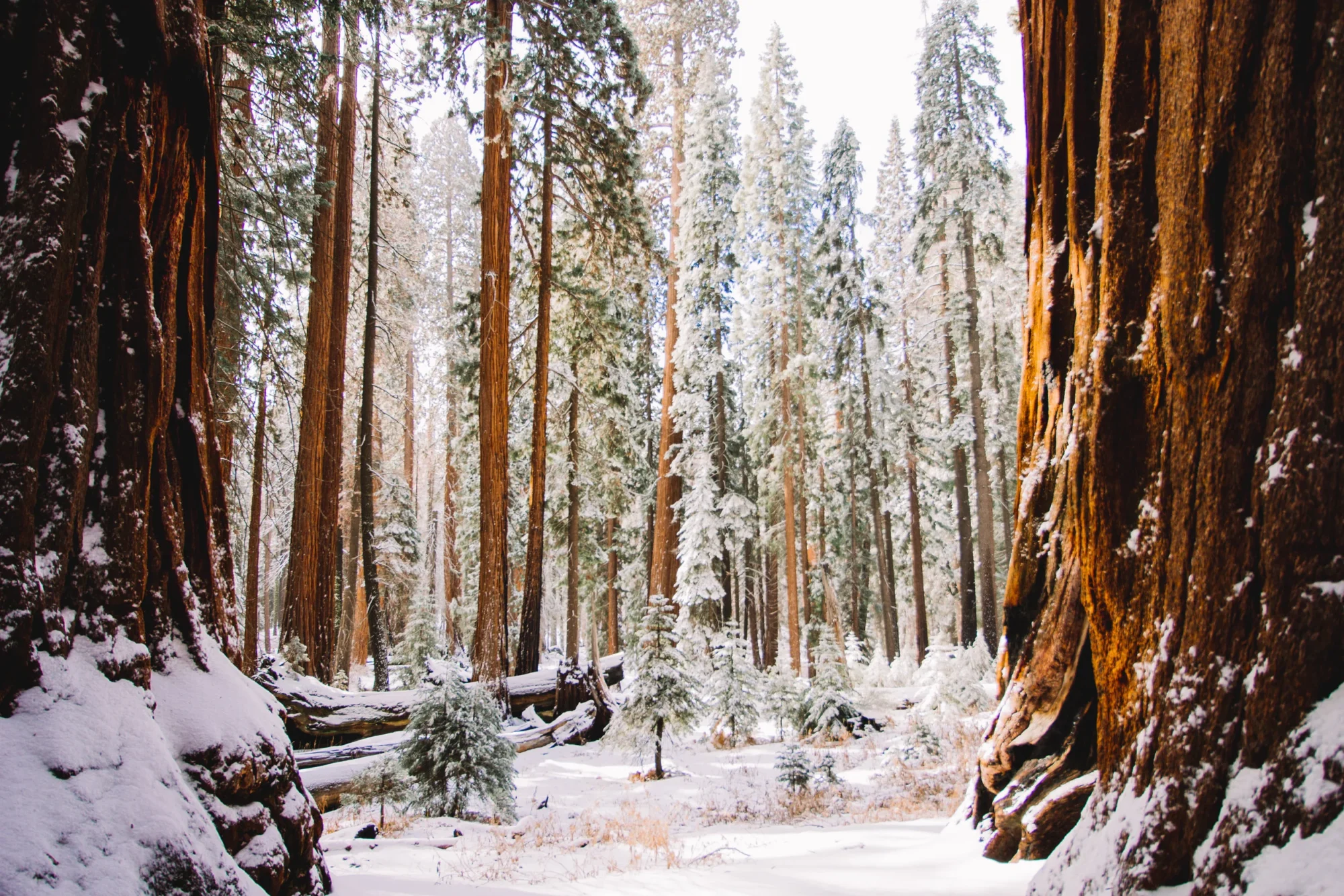
Winter is magical but complicated. The sequoias under snow are genuinely worth seeing, and the park runs free ranger-led snowshoe walks from mid-January through March. But the Generals Highway between Grant Grove and Giant Forest closes for the season, usually from early January through late March. That means you cannot drive between the two parks. You can still reach the Giant Forest and General Sherman Tree from the Ash Mountain entrance, but the connection to Kings Canyon is severed. Tire chains or snow traction devices are required on many park roads, and Crystal Cave Road is gated and closed at night.
What are the absolute must-see attractions in Sequoia National Park?
The park has a handful of headline attractions that justify the trip and a longer list of secondary stops that reward anyone with an extra day. Here is how I rank them after multiple visits.
General Sherman Tree
This is the largest tree on Earth by volume, 275 feet tall with a base diameter of 36 feet. The trail to the tree is paved but involves a descent and a climb on the way back, so budget 30 to 45 minutes round trip. There will be a line for the photo spot. There is no way around that. My tip: visit before 9 a.m. or after 4 p.m., and the crowd thins enough that you can actually stand at the base without someone’s selfie stick in your frame.
Congress Trail
Most people see General Sherman and leave. That is a mistake. The Congress Trail is a 2.9-mile paved loop that starts near the General Sherman Tree and takes you past the House, Senate, President, and McKinley trees. It is an easy walk with minimal elevation gain, and it lets you experience sequoia groves without the shoulder-to-shoulder crowds of the main tree. If you have time for only one trail in the park, make it this one.
Moro Rock
Moro Rock is a granite dome with a staircase of roughly 350 steps carved into its side, leading to a 360-degree view of the Great Western Divide and the Kaweah River canyon. The climb is steep and the stairs are narrow in places. If you are afraid of heights, this is not the stop for you. Everyone else: do it. The view from the top is the single best panorama in the park. In summer, Crescent Meadow Road and the Moro Rock loop are often accessible only by shuttle on weekends.
Tunnel Log
A fallen sequoia with a tunnel cut through it, just down the road from Moro Rock. Vehicles under 8 feet tall can drive through. It is a quick stop, maybe 15 minutes, but it is a fun photo and a genuinely strange experience. Go early if you want a clean shot without a line of cars waiting.
Crystal Cave
Crystal Cave is the only cave in the park open to public tours, and it requires a reservation. Tours last about 50 minutes and cost around $22 for adults and $11 for children 10 and under (confirm current pricing with Sequoia Parks Conservancy). The cave opens in late May and runs through early November. The trail to the cave entrance is half a mile and steep, so wear real shoes. Crystal Cave Road is gated at night and opens only during tour hours.
Tokopah Falls
A 3.8-mile out-and-back hike from Lodgepole Village that gains about 626 feet of elevation. The trail follows the Marble Fork of the Kaweah River and ends at a waterfall cascading down a granite cliff. It is a moderate hike, not a stroll, but it is one of the few places in the park where you can get away from the road noise and feel like you are in the backcountry without a permit.
Should I visit Sequoia or Kings Canyon National Park?
This is the question I hear most from people planning a Sierra Nevada trip, and the answer is that you should visit both because one entrance fee covers both. But if you are short on time and have to choose, here is the honest breakdown.
Sequoia has the marquee tree, the General Sherman, and the densest concentration of giant sequoia groves. The Giant Forest, Lodgepole, and Wuksachi areas are all in Sequoia, along with Moro Rock and Crystal Cave. If your goal is to stand next to the biggest tree on Earth, Sequoia is the park you need.
Kings Canyon, by contrast, is about canyons and rivers. The Grant Grove area has the General Grant Tree, the second-largest tree in the world, and the Cedar Grove area along the Kings River offers riverside trails, Zumwalt Meadow, and a portal into the High Sierra wilderness. Cedar Grove is typically open from May through early to mid-November and closes for winter.
Choose Sequoia if
- You want to see the General Sherman Tree
- You have limited time and want the classic photo
- You are visiting in winter, and the Generals Highway is closed
- You want the most accessible sequoia groves
Choose Kings Canyon if
- You want riverside hikes and canyon scenery
- You are visiting between May and November
- You want to escape the biggest crowds
- You are driving in from Fresno on Highway 180
My recommendation: if you have one day, focus on Sequoia. If you have two or three days, drive the Generals Highway between the parks, assuming it is open. That 32-mile drive connects the Giant Forest to Grant Grove and is one of the best scenic roads in the national park system. The section between Lodgepole Village and Montecito Lodge closes in winter, so check the road status page before you commit.
How should I plan a one-day or three-day Sequoia itinerary?
Here are two itineraries I have actually done, with realistic timing that accounts for parking, shuttles, and the fact that everything in this park takes longer than Google Maps suggests.
One-day Sequoia itinerary (from Three Rivers or Fresno)
Arrive at the Ash Mountain entrance by 8 a.m. if you are coming from the south, or the Big Stump entrance by 8 a.m. from Fresno. Drive straight to the General Sherman Tree parking area. See the tree and walk the Congress Trail loop. That should take until about 11 a.m. Drive to Lodgepole Village for an early lunch and a stop at the visitor center. In the afternoon, drive Crescent Meadow Road to Moro Rock, climb the stairs if you are able, and stop at Tunnel Log on the way back. Finish with a quick stop at the Giant Forest Museum before heading out. This is a full day with minimal hiking, and it covers the park’s highlights without rushing.
Three-day Sequoia and Kings Canyon itinerary
Day one: General Sherman, Congress Trail, and the Giant Forest area at an unhurried pace. Stay overnight in Wuksachi Lodge or a campground in Lodgepole. Day two: Moro Rock early, then Crystal Cave if you have a reservation (tours run late May through early November). Afternoon: hike Tokopah Falls from Lodgepole. Day three: drive the Generals Highway to Kings Canyon, stop at Grant Grove to see the General Grant Tree, and continue to Cedar Grove if the road is open for riverside trails and Zumwalt Meadow. This assumes the Generals Highway is open, which it is not in winter.
Maya’s honest take: “The three-day itinerary is the one I would do again. Two days feels rushed, and one day is enough only if you accept that you are doing a highlights tour, not experiencing the park. If you have the time, give it three days and use the middle day for Crystal Cave and Tokopah Falls.”
What mistakes do first-time visitors make at Sequoia National Park?
I have made most of these, and I have watched other people make the rest. Learn from us.
Assuming the Generals Highway is always open
The road between Grant Grove and Giant Forest closes for winter, usually from January through late March. Even in spring, temporary closures from snowstorms can happen. Check the NPS road conditions page before you drive. I once met a couple in Fresno who had planned to drive from Kings Canyon to Sequoia in February and had no idea the road was closed. They had to backtrack two hours.
Not bringing tire chains in winter or spring
Tire chains or snow traction devices can be required at any time on park roads from fall through spring. The park does not mess around with this. If you do not have chains when they are required, you may be turned away at the entrance station. You can sometimes rent or buy chains from businesses near the park entrances, but do not count on it during a storm.
Underestimating the elevation and the cold
The sequoia groves sit at 6,500 feet and higher. Even in July, mornings can be in the 40s. I have seen people shivering at the General Sherman Tree in shorts and t-shirts because they checked the weather for Fresno, which is 4,000 feet lower and twenty degrees warmer. Check the forecast for Giant Forest, not the valley.
Trying to drive to Moro Rock on a summer weekend
In summer, Crescent Meadow Road and the Moro Rock loop are often closed to private vehicles on weekends and holidays. You park at the Giant Forest Museum and take the free shuttle. This is not optional. I have watched people argue with rangers about it. The shuttle is frequent, and the ride is short. Just take it.
Not reserving Crystal Cave tickets in advance
Crystal Cave tours sell out, especially on weekends. Tickets go on sale in mid-March for the season that runs late May through early November. You cannot walk up and buy a ticket at the cave. Buy online through Sequoia Parks Conservancy before your trip.
Planning a day trip from Los Angeles or San Francisco without a buffer
Sequoia is about four hours from Los Angeles and four and a half hours from San Francisco under perfect conditions. Add traffic, park entrance queues, and the slow-winding roads inside the park, and you are looking at a very long day. If you are coming from either city, stay overnight in Three Rivers or inside the park. You will enjoy the experience far more.
Frequently asked questions
How much is the entrance fee for Sequoia National Park?
A standard entrance pass for a private vehicle is $35 and is valid for seven days in both Sequoia and Kings Canyon National Parks (confirm current rates on arrival). Non-U.S. residents aged 16 and over pay an additional $100 per person unless they hold an annual or America the Beautiful pass.
Is Sequoia National Park the same as Kings Canyon?
No, they are two separate national parks managed jointly by the National Park Service. They share one entrance fee and are connected by the Generals Highway, which closes seasonally in winter. Sequoia has the General Sherman Tree and more sequoia groves. Kings Canyon has the General Grant Tree, deeper canyons, and riverside trails.
Can you drive through a tree in Sequoia National Park?
Yes, at Tunnel Log on Crescent Meadow Road. A tunnel was cut through a fallen sequoia, and vehicles under 8 feet tall can drive through it. It is a short stop and gets busy, so visit early or late in the day for the best experience.
Do I need reservations to visit Sequoia National Park?
Day-use reservations are not currently required for general park entry. However, Crystal Cave tours require advance reservations, and summer camping and lodging book up months ahead. During summer weekends, Moro Rock and Crescent Meadow Road may be shuttle-only, but you do not need a separate reservation to ride the shuttle.
How far is Sequoia National Park from Los Angeles or San Francisco?
Sequoia is approximately four hours from Los Angeles and four and a half hours from San Francisco under ideal conditions. The drive from Fresno is much shorter, about an hour and a half. Add extra time for park entrance queues and slow mountain roads inside the park.
What should I pack for a Sequoia National Park day trip?
Layers, a rain jacket, and sturdy walking shoes are essential even in summer, because temperatures at 6,500 feet are much cooler than the surrounding valleys. Bring water, snacks, and sun protection. If you are visiting in winter or early spring, carry tire chains or snow traction devices, as they can be required on park roads at any time.
Plan your trip: booking platforms we trust
For Sequoia, the most useful bookings are lodging in Three Rivers or inside the park and any tours or activities you want to reserve in advance. I check hotel options on Booking.com and Agoda because Three Rivers has a limited inventory and prices swing hard in summer. For activities and cave tours, GetYourGuide and TripAdvisor are where I verify availability and read recent reviews. For flights into Fresno or Los Angeles, Kayak is the comparison tool I open first.
Booking.com
Hotels in Three Rivers and Fresno near the park entrances.
Agoda
Compare rates for Gateway Town lodging.
GetYourGuide
Tours and activities, including guided park visits.
TripAdvisor
Reviews and restaurant finds in gateway towns.
Kayak
Flight comparison for Fresno, Los Angeles, and San Francisco.
WakaAbuja does its best to keep all information accurate at the time of publishing. Prices, policies, and availability change regularly. Always verify with official sources before you travel. We are not liable for errors caused by outdated information. Travel insurance is strongly recommended.