
advertisement
Travel to Copenhagen Denmark: Everything I Wish I Knew Before My First Visit
Travel to Copenhagen Denmark delivers a compact, design-forward capital where world-class New Nordic cuisine, 12th-century castles, and a deeply ingrained cycling culture collide. A three-day trip covers the essential districts, with the efficient metro making the 15-minute airport transfer almost too easy.
My first hour in Copenhagen cost me 36 kroner and a bruised ego. The metro from the airport to Kongens Nytorv was swift, silent, and entirely driverless. The bruised ego came from stepping directly into a dedicated bike lane and getting a very polite but very firm bell ring from a local cyclist. Chidi, our logistics-obsessed WakaAbuja colleague, had warned me. “In Copenhagen, bikes have absolute right of way. Treat them like Lagos danfo buses, just faster and quieter. ” He was right.
This guide is built on multiple visits, countless smørrebrød lunches, and a deep admiration for a city that has figured out how to make urban living feel almost effortless.
Jump to: Getting There | Neighbourhoods | Itineraries | Food & Restaurants | Day Trips | FAQs
Key takeaways
- Copenhagen Airport (CPH) to the city center takes 15 minutes by driverless metro, costing 36 DKK for a single ticket.
- The city splits into distinct neighborhoods: Nyhavn for postcard charm, Vesterbro for nightlife, Nørrebro for global food, and Christianshavn for canal-side calm.
- The Copenhagen Card offers genuine value if you plan to visit three or more paid attractions and use public transport heavily.
- A mid-range daily budget of 1,200 to 1,500 DKK covers a private room, two meals out, attractions, and transport.
- Reffen street food market and the city’s smørrebrød stalls make eating well on a budget entirely achievable.
- CopenPay rewards tourists with free experiences, meals, and rentals for doing sustainable activities like cycling or picking up litter.
How Do You Get to Copenhagen, and How Do You Get From the Airport to the City?
@lifewithoutboundaries If you’re landing at Copenhagen Airport and wondering how to get into the city… don’t overthink it 🙌 It is SO simple — just take the metro (not the train… that’ll take you way farther, even toward Sweden 😅). Here’s exactly what to do: ➡️ Follow the signs for Metro as soon as you grab your luggage ➡️ Look for the red ticket machines (Billet) ➡️ Select your language + choose City Center / Copenhagen Central Station ➡️ Walk a few steps further and hop right on That’s it. No stress. No confusion. 💚 Within about 10–15 minutes, you’re in the heart of the city — and just steps from Nyhavn. We had all of our luggage, walked about 5 minutes to our hotel, and were out exploring almost immediately. This is one of those “wow, travel can actually feel easy” moments ✨ Save this for your trip — because Copenhagen makes getting around feel effortless 🙌 #copenhagen #denmark #travel #traveltips
Copenhagen Airport (CPH) is the main Nordic hub, served by SAS, Norwegian, and most major European carriers. From Nigeria, the most efficient routing is typically via Doha on Qatar Airways or via Istanbul on Turkish Airlines, both offering one-stop connections. Flight comparison tools on Kayak consistently show midweek departures as the cheapest. The airport has two terminals, Terminal 2 and Terminal 3, connected by a short indoor walkway. All international arrivals land in Terminal 3.
The metro station sits directly above Terminal 3. Take the escalator up from baggage claim, buy a ticket from the red machines, and board the M2 line toward Vanløse. It runs 24/7, and you will be at Kongens Nytorv in 15 minutes for 36 DKK. A taxi to the city center costs around 300 to 400 DKK. Chidi, ever the spreadsheet analyst, ran the math on my last trip. “The metro is eight times cheaper and maybe four minutes slower. Unless you have four suitcases, take the metro.” He is not wrong. If you are staying in a more distant neighborhood like Østerbro or Frederiksberg, the metro connects to the S-train network at Nørreport Station with minimal fuss.
@safaakp Copenhagen Airport to City Centre by Public Transport 🛬🚉🎢🎡⛵️🇩🇰 #copenhagen #traveltok #travel #denmark #airport
Fatima’s honest take: “Do not buy the City Pass from the airport machines unless you know exactly which zones you need. The basic 2-zone single ticket covers the airport to the city center. The machines push the more expensive multi-zone passes hard.”
When Is the Best Time to Travel to Copenhagen?
May through September is the prime window. June offers the longest days, with daylight stretching past 10:30 pm. July brings the Copenhagen Jazz Festival and a citywide holiday atmosphere but also peak hotel rates. August sees slightly lower prices and the Copenhagen Cooking festival. May and September strike the best balance: decent weather, manageable crowds, and hotel rates roughly 20 to 30 percent lower than the July peak, based on pricing data we track on Booking.com.
Winter, from November through February, is dark, cold, and hygge-focused. Temperatures hover around 0 to 4°C. The Christmas markets in Tivoli Gardens and the Nyhavn waterfront justify a December visit if you pack thick wool layers. Daylight shrinks to about seven hours in December, so plan indoor activities like museum visits for the afternoon darkness. The upside is the lowest hotel rates of the year, with rooms at design hotels like the Hotel SP34 dropping well below 1,000 DKK per night.
Best months overall
- May: Tivoli reopens, mild 15°C days, manageable crowds.
- September: Warm sea temperatures for harbor swimming, lower hotel rates, cultural festival season.
Worth considering for a different experience
- December: Christmas markets, Tivoli illuminations, genuine hygge atmosphere, lowest accommodation prices.
- July: Warmest weather, jazz festival, but peak pricing and heavy tourist density in Nyhavn.
Which Neighbourhoods Should You Know in Copenhagen?
Copenhagen is a patchwork of compact, distinct districts. Understanding the neighborhoods is the key to unlocking the city. Nyhavn is the iconic canal-front postcard, but it is also the most tourist-dense and expensive place to eat. Vesterbro, the former red-light district, is now the epicenter of cocktail bars, vintage shops, and the Meatpacking District’s restaurant cluster. Nørrebro is the most ethnically diverse and food-focused neighborhood, home to the Assistens Cemetery, where Hans Christian Andersen and Søren Kierkegaard are buried, and the best shawarma and falafel in the city along Nørrebrogade.
Christianshavn, across the inner harbor, is a quieter canal district with houseboats, the freetown of Christiania, and the striking modern architecture of the Opera House. Frederiksberg is an elegant, leafy enclave with broad boulevards, the Copenhagen Zoo, and a more residential, upscale feel. Østerbro, north of the city center, is family-friendly and under-visited by tourists, home to the Fælledparken green space and the Parken Stadium. For accommodation, Vesterbro and Nørrebro work best for nightlife and budget-to-midrange options. Frederiksberg and Østerbro suit families and travellers wanting a quieter home base. Check neighborhood-specific hotel deals on Hotels.com to compare rates across these zones.
Chidi’s honest take: “I stayed in Nørrebro for half the price of a Nyhavn hotel and ate better food. The 5A bus got me to the city center in ten minutes. Don’t sleep on staying slightly outside the old core.”
What Does a 3-Day Copenhagen Itinerary Look Like?
Three days covers the essential Copenhagen experience without feeling rushed. This itinerary assumes you have a Copenhagen Card, which covers all listed attractions and unlimited transport. The 72-hour card costs 919 DKK for adults and pays for itself if you follow this plan. Book your card online before arrival for a smoother experience.
@touristtolocal we just dropped our full 3 day copenhagen guide on YT with hidden gems we found with actual locals, plus all the must sees. WHERE TO STAY We loved the Hotel Hebron ! It’s this gorgeous @Best Western® Hotels & Resorts property that is located near copenhagen central station. We loved the breakfast buffet as well! #bestwestern FAV SPOTS + THINGS TO DO 👉 Pastry tour (comment HAPPY for the link!) 👉 Tivoli 👉 Exploring Freetown Christiania 👉 Kronborg Castle 👉 Kastellet 👉 Nyhaven 👉 Exploring Nørrebro 👉 Canal tour 👉 Eating at Torvehallerne Are you visiting denmark? What are you most excited for? 👇 #copenhagen #visitcopenhagen #denmark #denmarktravel copenhagen denmark | things to do in copenhagen | copenhagen travel guide | visit copenhagen | first time in copenhagen | copenhagen itinerary
Day 1: The Historic Core
Start at Nyhavn early, before 9 am, to photograph the colorful townhouses without the crowds. Walk to Amalienborg Palace for the noon changing of the guard. Lunch is smørrebrød at the Torvehallerne food market near Nørreport Station. Afternoon: Rosenborg Castle and the Crown Jewels in the King’s Garden. Evening: Tivoli Gardens, which is at its best after dark when the lights come on. Dinner at the Tivoli Food Hall for variety and lower prices than the sit-down restaurants inside the park.
Day 2: Christianshavn and Freetown
Morning: Climb the spiral spire of the Church of Our Saviour for the best panoramic view of the city. Walk through Christiania, the self-governing freetown, observing the no-photos rule on Pusher Street. Lunch at the Reffen street food market on Refshaleøen, an island of shipping-container kitchens. Afternoon: A canal tour departs from Nyhavn or Ved Stranden; the Copenhagen Card covers the classic one-hour loop. Dinner in the Meatpacking District in Vesterbro, where former slaughterhouses now house restaurants like Paté Paté and the Warpigs brewpub.
Day 3: Castles or Culture
@whimsysoul 5 beautiful castles & palaces to visit in Copenhagen #copenhagen #denmark #visitcopenhagen #visitdenmark #amalienborg #christiansborg #rosenborg #kronborg #castle #palace #royalpalace #dansk #scandinavian #whimsysoul
Option A (castles): Take the S-train to Hillerød for Frederiksborg Castle, the most impressive Renaissance castle in Scandinavia. Option B (museums): The National Museum and the Glyptoteket, both excellent rainy-day options. Afternoon: Rent a bike and ride through Nørrebro, stopping at Assistens Cemetery and the Jægersborggade street of independent shops. Final dinner at Høst, a mid-range New Nordic restaurant where the set menu delivers extraordinary value for around 350 DKK.
If you have five to seven days, add a day trip to Malmö and Lund in Sweden, a full day for the Louisiana Museum and the Hamlet castle at Helsingør, and a slow exploration of the Vesterbro and Frederiksberg neighborhoods. A full-week itinerary gives you the city at a genuinely relaxed pace.
Is the Copenhagen Card Worth It?
@iamn12 Everything you need to know about the Copenhagen card✨ I got the 5 day card which was perfect! You can use it to and from the airport but fyi alot of things are closed on Monday so bare that in mind when getting your card x 🇩🇰 #travel #copenhagen #cph #copenhagentips #copenhagentravel #copenhagenguide #solotravel #citybreak #copenhagencard #thingstodoincopenhagen #visitdenmark
The Copenhagen Card comes in four durations: 24 hours (500 DKK), 48 hours (739 DKK), 72 hours (919 DKK), and 120 hours (1,205 DKK). It covers entry to over 80 attractions, including Tivoli Gardens, the canal tours, Rosenborg Castle, and all the major museums, plus unlimited public transport across the entire Copenhagen region, including the airport metro and the S-train to Hillerød and Helsingør. For a 72-hour itinerary that hits three or four major attractions and uses public transport daily, the card almost always saves you money. A single entry to Tivoli (160 DKK), a canal tour (120 DKK), Rosenborg Castle (130 DKK), and three days of transport passes (roughly 240 DKK) already exceeds the card’s cost.
The card is not worth it if you plan to walk or cycle everywhere and visit mostly free attractions like Christiania, the Nyhavn waterfront, and the Assistens Cemetery. It is also not worth it for travelers staying entirely within the city core who will not use the S-train for day trips. Run a quick calculation based on your planned itinerary before buying. The official Copenhagen Card website lists all covered attractions with current individual entry prices, which is the most reliable source for this math.
How Much Does a Trip to Copenhagen Actually Cost?
@mostlytriss how much i spent in a day in copenhagen—do you think it’s cheap or expensive? 💸✨ copenhagen is honestly the most gorgeous city i’ve ever seen! so clean, the people are so happy, and the vibe is just different from anywhere i’ve been. i already can’t wait to go back! 🤍 if you haven’t been, i highly recommend it. save this post for you next trip to copenhagen and follow @mostlytriss for more travel content! . . . . . how expensive is copenhagen, copenhagen travel budget, cost of living in copenhagen, daily spending in europe, european travel expenses, best cities to visit in europe, budget vs luxury travel, travel money diary, scandinavian travel, city recommendations, solo female traveler, solo travel in europe, traveling alone, best cities for solo travelers, safe solo travel destinations, solo adventures, why you should solo travel #copenhagen #copenhagentiktok #copenhagentips #europetraveldestinations #europetravel #travelcontentcreator #ugctravel #solotraveler #solotravelwoman #CapCut
Copenhagen is expensive, but precise budgeting removes the anxiety. A dorm bed in a well-rated hostel like Steel House or Generator costs 250 to 400 DKK per night. A private room in a mid-range hotel like the Hotel Kong Arthur runs 1,000 to 1,600 DKK. Street food meals at Reffen or the Torvehallerne market cost 80 to 150 DKK. A sit-down dinner at a mid-range restaurant like Høst or Manfreds runs 300 to 500 DKK per person with a drink. A single metro or bus ticket in the central zones costs 24 to 36 DKK. A 24-hour City Pass is 80 DKK for zones 1-4.
A realistic daily budget for a mid-range traveller, staying in a private hotel room, eating two meals out, visiting one paid attraction, and using public transport, lands around 1,200 to 1,500 DKK per day. A budget backpacker cooking some meals and limiting paid attractions can manage 500 to 600 DKK daily. A luxury traveller dining at Michelin-starred restaurants like Kadeau or Geranium should budget 3,000 DKK or more per day. Always check current prices on the official websites before booking, as seasonal changes can swing restaurant menu prices by 10 to 15 percent.
What and Where Should You Eat in Copenhagen?
@laurschor I know I live in one of the best food cities in the world aka New York butttt I miss the food in Copenhagen take me back please! We ate at a lot of places but these are the 8 must eat at spots! 8 Restaurants You Can’t Miss: 1- Juno The Bakery 2- Pluto 3- Nordic Hot Dogs 4- Frank 5- Slagter Lund 6- Studio X Kitchen 7- Lille Bakery 8- Noma Projects #copenhagen #copenhagenfood #copenhagentravel #copenhagenpastry #copenhagenthingstodo
Copenhagen’s food reputation rests on New Nordic cuisine, but the everyday eating is just as compelling. Smørrebrød, the open-faced rye bread sandwich, is the essential lunch. The classic version is topped with pickled herring, curry salad, or roast beef with remoulade. Hallernes Smørrebrød in the Torvehallerne market does a superb selection from around 65 DKK per piece. Aamanns 1921 in the city center offers a more refined version for about 150 DKK for two pieces. The street food scene is dominated by Reffen, an enormous outdoor market on Refshaleøen island with over 50 stalls representing every cuisine from Danish to Korean. It is open from spring through autumn and closed in winter. The indoor alternative is the Tivoli Food Hall, open year-round.
For dinner, the mid-range sweet spot sits around 300 to 400 DKK. Høst in Nørrebro serves a three-course New Nordic set menu in a rustic-chic room for roughly 350 DKK. This is easily the best value high-level meal in the city, and it won a Michelin Bib Gourmand for exactly that reason. Manfreds on Jægersborggade does shared plates and natural wines for a similar price. If you want the full fine-dining experience, Noma alumni have scattered across the city: Kadeau on Christianshavn and Geranium near Parken Stadium hold multiple Michelin stars, with tasting menus running 2,800 DKK and up. Book these at least two months ahead. For late-night food, the pølsevogn (sausage wagons) dotted around the city sell a classic red hot dog with crispy fried onions for about 35 DKK, an essential Copenhagen experience.
Fatima’s honest take: “I ate a 35-krone hot dog from a street cart near Nørreport Station at 1 am, standing in the rain, and it was genuinely one of the best meals of my trip. The snap of the casing, the crunch of the onions, the soft bun. Don’t skip the pølsevogn.”
What Is CopenPay and How Does It Reward Sustainable Travel?
Copenhagen has launched CopenPay, a rewards program that turns sustainable tourist behavior into free experiences. The principle is simple: you show proof of a green action, and you get a reward. Cycling to a participating attraction, taking public transport instead of a taxi, arriving with a reusable coffee cup, or participating in a city clean-up event can earn you free museum entry, a complimentary coffee, a kayak rental, or a free lunch. Rewards vary by season and participating partner. The official Visit Copenhagen website lists current CopenPay partners and the specific actions they reward.
During my last visit, I collected litter for 15 minutes at a designated CopenPay station near the harbor and received a free hour of GoBoat rental, a self-drive electric boat that normally costs 549 DKK per hour. Chidi used his train ticket from the airport to claim a free pastry at Bageriet Brød in Nørrebro. The program is genuinely functional, not just a marketing slogan. Check the CopenPay page on the Visit Copenhagen site before your trip to see what rewards are active during your travel dates. This is a uniquely Copenhagen initiative that no other major city currently matches.
What Are the Best Day Trips From Copenhagen?
@fleurdellie Crazy hot for Copenhagen equals 27degC 😅 I’m dying #29weekspregnant #twinpregnancy Gilleleje and Hornbæk are two of my favorite coastal towns that are easy to get to on the train from Copenhagen. Where do you guys like to go to escape the city without a car? Fiskefrikadeller @adamsens_fisk Thanks @DSB for putting so many kid activities in the train magazine 💯 #daytrip #gilleleje #copenhagendaytrip
Malmö, Sweden, is the easiest international day trip. Take the Øresundståg train from Copenhagen Central Station across the Øresund Bridge, a 35-minute journey costing roughly 120 DKK each way. Malmö’s Turning Torso tower, the cobbled Lilla Torg square, and the excellent Malmöhus Castle fill a full day. The train ticket works on a simple return basis; there are no passport checks at the border for most nationalities. Roskilde, 25 minutes west by regional train, holds the Viking Ship Museum and the Roskilde Cathedral, a UNESCO World Heritage site housing the tombs of 38 Danish monarchs. The museum displays five original Viking ships recovered from the fjord, and you can book a sailing trip on a reconstructed longboat.
Hillerød, 40 minutes north on the S-train E-line, is home to Frederiksborg Castle, the most dramatic Renaissance castle in Scandinavia. It sits on three small islands in a lake, and the interior is a national history museum. The Copenhagen Card covers both the train and entry. Helsingør, an hour north, holds Kronborg Castle, the setting of Shakespeare’s Hamlet, and the M/S Maritime Museum of Denmark, a stunning underground building designed by Bjarke Ingels. On the way back, stop at the Louisiana Museum of Modern Art in Humlebæk, a world-class collection in a seaside setting with a sculpture park overlooking Sweden. For organized day trips that bundle transport and tickets, check GetYourGuide, which lists several highly rated guided options to Roskilde and the castles.
Is Copenhagen a Good Destination for Families with Kids?
Copenhagen is arguably the best city in Europe for young families. Tivoli Gardens is the obvious anchor, with rides calibrated for all ages, from toddler-friendly carousels to genuine thrill rides. The Copenhagen Card covers Tivoli entry, though rides cost extra. The Experimentarium in Hellerup, a short S-train ride north, is a hands-on science museum that can easily consume four hours of a rainy day. The Blue Planet, Northern Europe’s largest aquarium, sits near the airport and has striking whirlpool-shaped architecture.
For outdoor family time, rent a cargo bike, the quintessential Copenhagen family vehicle. Many bike rental shops offer cargo bikes with child seats. Cycle the harbor ring, stopping at the Islands Brygge harbor baths for a swim in the clean harbor water. The Copenhagen Zoo in Frederiksberg, while expensive at around 239 DKK for adults, is well-designed and houses the Norman Foster-designed elephant enclosure. Most restaurants, including higher-end ones, accommodate children without the stiff formality you might expect. High chairs are standard, and kids’ menus, while smaller, are often versions of the adult menu, not just fried chicken and chips.
Is Copenhagen Safe for Solo Female Travelers?
Copenhagen is one of the safest cities in the world for solo female travel. The central districts are well-lit and populated late into the night. The metro runs 24/7 with security cameras in every carriage. Street harassment is notably low compared to other European capitals. Standard precautions apply: avoid the isolated sections of Nørrebro Park after midnight, keep an eye on your drink in the Meatpacking District’s late-night bars, and lock your bike if you rent one, as bike theft is the most common crime targeting tourists.
Hostels like Steel House and Urban House offer female-only dorms. The official Visit Copenhagen tourism app has a safety feature that maps the nearest police stations and 24-hour pharmacies. Walking alone at night in the city center, Vesterbro, Frederiksberg, and Østerbro feels entirely comfortable.
Fatima’s honest take: “I walked from a late dinner in Vesterbro back to my hotel in Nørrebro at midnight, a 35-minute walk, and never once felt watched or uneasy. The bike lane traffic is honestly the biggest threat to your safety in this city.”
How Do You Save Money on a Trip to Copenhagen?
Embrace the Bike
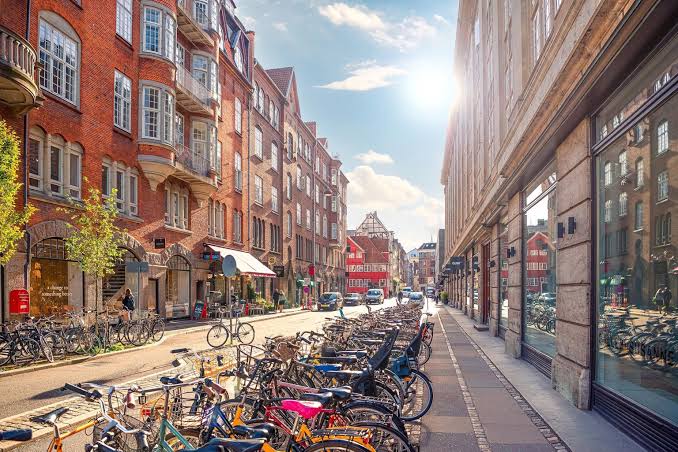
Renting a bike costs 100 to 150 DKK per day and doubles as your transport and an activity. The city is the most bike-friendly in the world, with dedicated raised cycle tracks on every major street. You will save at least 80 DKK daily on transport and see far more of the city.
Cook Some Meals
Supermarkets like Netto, Føtex, and Rema 1000 are everywhere. A breakfast of bread, cheese, and fruit from a supermarket costs 30 DKK, compared to 120 DKK in a cafe. Hostels with kitchens, bookable on Hostelworld, make this even easier.
Drink Tap Water
Copenhagen’s tap water is among the cleanest in the world. A reusable water bottle eliminates the 25 to 35 DKK you would otherwise spend on bottled water. Many cafes will refill it for free.
Use the Copenhagen Card Strategically
Buy the card only if you are visiting three or more paid attractions and using public transport for day trips. For a city-center-only stay focused on walking and free sights, skip it.
What Are the Common Mistakes to Avoid in Copenhagen?
- Stepping into the bike lanes without looking. This is not a minor thing. The raised cycle tracks look like pedestrian paths to a newcomer. Always check left before stepping sideways. A Dane on a cargo bike will not stop in time.
- Paying for bottled water. The tap water is cleaner than most bottled brands. Buying water is literally throwing away kroner.
- Eating lunch on Nyhavn’s main strip. The colorful canal-front restaurants charge a premium for a mediocre meal. Walk two streets back for better food at lower prices, or buy smørrebrød from a market and sit on the quayside.
- Visiting Tivoli only during the day. Tivoli is magical at night when the illuminations are on. A daytime visit is half the experience.
- Taking photos in Christiania’s Pusher Street. The dealers enforce this strictly and aggressively. Keep your phone or camera down in that specific zone. The rest of Christiania is photographable.
- Assuming all attractions are open on Monday. Many museums, including the Glyptoteket, are closed on Mondays. Check current opening hours on the official websites.
- Under-budgeting for coffee. A flat white routinely costs 45 to 55 DKK. Coffee culture is serious here, and a cafe session is a legitimate activity. Factor it into your daily spend.
Frequently asked questions
Is Copenhagen expensive to visit?
Yes, Copenhagen is one of the more expensive capitals in Europe. A mid-range daily budget sits around 1,200 to 1,500 DKK. However, free attractions like Christiania and the Nyhavn waterfront, affordable street food at Reffen, and the Copenhagen Card’s bundled pricing can significantly soften the cost.
Is English spoken in Copenhagen?
English is spoken fluently by nearly every Dane you will encounter as a tourist, from hotel staff to bus drivers to servers. You do not need Danish for any practical purpose. Signs and menus in the city center are almost always bilingual or English-only.
How many days do you need in Copenhagen?
Three full days cover the essential core: the historic center, Christianshavn, a food tour, and Tivoli. Five to seven days allows for day trips to Malmö, Roskilde, and the castle circuit north of the city. A two-day weekend trip works but feels rushed.
Is Copenhagen worth visiting?
Yes. Copenhagen offers a combination of world-class food, walkable medieval streets, genuinely innovative urban design, and a relaxed, safe atmosphere that few other European capitals match. It is expensive, but the quality of experience justifies the cost for most travelers.
What is the best area to stay in Copenhagen for first-time visitors?
Indre By, the inner city around Strøget and Nyhavn, is the most central and convenient for sightseeing. Vesterbro offers better value and nightlife while remaining a 15-minute walk from the core. Nørrebro is ideal for food-focused travelers and cheaper, characterful accommodation.
Do you need cash in Copenhagen?
Almost certainly not. Copenhagen is one of the most cashless cities in the world. Cards are accepted everywhere, including street food stalls, market vendors, and public transport ticket machines. A small amount of DKK in cash is a backup, but you may go an entire trip without using it.
Plan your trip: booking platforms we trust
The WakaAbuja team books through these platforms for our own Copenhagen trips. We earn a small affiliate commission if you book through these links, at no extra cost to you. This helps fund our independent, honest travel guides.