Travel to Atacama Desert, Chile: Complete Travel Guide (Costs, Routes & Itinerary)
Fact-Checked By Maya Whitfield, Senior Travel Editor at WakaAbuja
Travel to the Atacama Desert, Chile, today: The Atacama Desert in northern Chile is the driest non-polar desert on Earth, accessed primarily through the town of San Pedro de Atacama. A realistic trip requires at least four full days, a budget of roughly $80 to $150 USD per person per day including tours and accommodation, and a clear decision between renting a car and joining organized tours. This guide covers the real costs, the entry requirements, and the exact itinerary I used to make sense of this vast, high-altitude landscape.
There are two ways most travelers first encounter the Atacama. Either you land in Calama after a two-hour flight from Santiago, or you rattle across the border from Bolivia in a shared jeep after three days crossing the Uyuni salt flats. I arrived the first way, blinking into the high-altitude sun at an airport that felt like a desert outpost, and immediately faced the decision every traveler here confronts: rent a car or sign up for tours.
That single choice shapes your budget, your schedule, and how much solitude you actually find in a place that looks empty in photos but runs on a tightly organized tourism machine. Here is everything I wish I had known before I booked the flight.
Jump to: Visa & Entry | Getting There | Car vs. Tours Cost Comparison | Best Time to Visit | Top Things to Do | Solo & Female Traveler Safety | 5-Day Itinerary | Total Trip Budget | Packing List | FAQs
Key takeaways
- The gateway town is San Pedro de Atacama, roughly a one-hour drive from the Calama airport (CJC), which has direct flights from Santiago daily.
- Renting a car gives you schedule freedom and costs roughly $50 to $70 USD per day for a compact SUV, but tours remove the stress of navigating unpaved roads at altitude.
- Entry fees to individual sites are paid in cash in Chilean pesos and total roughly $40 to $60 USD per person across all major attractions.
- Altitude is real and hits hard. San Pedro sits at 2,400 meters above sea level, and several popular sites exceed 4,300 meters. Plan a full acclimatization day on arrival.
- Chile requires a $34 USD reciprocity fee from Australian citizens and specific visas from a handful of other nationalities, but US, UK, EU, and Canadian passport holders enter visa-free for 90 days.
- Piedras Rojas now requires a timed entry ticket booked in advance, and several lagunas have banned swimming entirely as of the most recent park regulation updates.
Do you need a visa? Chile entry requirements
Most travelers skip this section because Chile has some of the most open entry policies in South America, but the details matter if you hold the wrong passport. Citizens of the United States, Canada, the United Kingdom, the European Union, New Zealand, and most Latin American countries enter Chile visa-free and receive a 90-day tourist card, a small paper slip you must keep inside your passport and present on departure. Losing that slip causes a genuine headache at the airport. I watched someone spend 45 minutes at the immigration desk in Calama resolving exactly that mistake.
Australian citizens must pay a one-time reciprocity fee of $34 USD on arrival, payable by credit card only. This is not a visa but a reciprocal charge that mirrors what Chilean citizens pay to enter Australia. Citizens of India, China, and several African and Middle Eastern countries must apply for a tourist visa at a Chilean consulate before travel, a process that can take several weeks. If you are entering overland from Bolivia, border officials at the remote crossing near Hito Cajón do process tourist cards, but I strongly recommend carrying at least two photocopies of your passport photo page and the Chilean entry stamp page, as the Bolivian exit stamp and the Chilean entry stamp are physically on opposite sides of the same remote border post, and mistakes happen. Always verify current entry requirements on the official Chilean consulate website for your nationality before you book.
How to get to the Atacama Desert
The fastest and most common route is a two-hour flight from Santiago (SCL) to Calama (CJC) on LATAM, Sky Airline, or JetSMART. Round-trip flights booked two to three months in advance typically cost between $80 and $150 USD. From Calama Airport, the drive to San Pedro de Atacama takes roughly one hour on a well-paved highway. Shared shuttle vans wait outside the arrivals terminal and charge around $12,000 to $15,000 Chilean pesos per person (roughly $12 to $16 USD). Private transfers run closer to $40 to $50 USD for the vehicle. Arrange the shuttle in advance through your accommodation or book on the spot; the system is reliable and runs frequently during daylight hours.
The overland route from Bolivia via the Uyuni salt flat tours is the second most common approach. Three-day jeep tours from Uyuni end at the Chilean border near Hito Cajón, where you clear Bolivian exit and Chilean entry formalities before a transfer vehicle drops you in San Pedro by early afternoon. This route involves extreme altitude, spartan accommodation, and a border crossing that can take two hours or more depending on the queue. It is an unforgettable experience, but do not book it expecting comfort. Book it, expecting a raw, high-altitude expedition that happens to deliver you to one of the most surreal landscapes on the continent.
Rental car versus tours: full cost comparison
This is the single most important planning decision you will make for the Atacama, and it has a dollar figure attached to it that most guides bury in prose. I priced both options carefully during my trip. All figures below are in US dollars and reflect costs for two people traveling together over a five-day stay. Prices shift with season and demand, so check current rental rates and tour operator pricing before locking in your plan.
Rental car (compact SUV, 5 days)
- Car rental base rate: $250–$350 USD total
- Fuel: roughly $40–$60 USD
- Park entry fees (per person): $40–$60 USD, paid in cash pesos at each gate
- Total for 2 people: approximately $370–$470 USD
- Pros: total schedule freedom, sunrise at your own pace, empty parking areas if you arrive early
- Cons: unpaved roads, no guide context, altitude-driven fatigue, zero cell service on most routes
Organized tours (5 days, per person)
- Valle de la Luna afternoon tour: $25–$35 USD
- El Tatio Geysers sunrise tour: $35–$45 USD
- Piedras Rojas + Altiplanic Lagoons full-day: $50–$65 USD
- Baltinache Lagoons half-day: $35–$45 USD
- Stargazing tour: $35–$50 USD
- Total per person: approximately $180–$240 USD for a full slate of tours
- Pros: zero driving stress, guided knowledge, included meals on full-day tours, no navigation anxiety
- Cons: fixed schedules, crowded vans, rushed photo stops, early mornings you cannot control
For two people, the rental car plus entry fees comes out slightly cheaper than booking a full set of tours for both travelers, and the flexibility advantage is significant. For a solo traveler, tours are the clear winner financially, since you carry the full rental cost alone. My honest recommendation: rent a small SUV if there are two or more of you and at least one of you is comfortable driving on washboarded gravel at high elevation.
If you are solo or prefer not to drive, book tours individually through operators in San Pedro rather than prepackaging everything online; you can negotiate a small discount for booking multiple tours with the same agency in person.
Maya’s honest take: “I drove. The freedom of arriving at Piedras Rojas an hour before the first tour van and having the boardwalk entirely to myself for twenty minutes was worth every peso of the rental cost. But the road to Baltinache nearly rattled the fillings out of my teeth.”
Best time to visit the Atacama Desert
The Atacama is visitable year-round, but the experience shifts noticeably with the seasons. Summer months, December through February, bring warmer daytime temperatures but also the altiplanic winter, a period of afternoon rain showers at high elevation that can close roads to Piedras Rojas and the geysers with little notice. Winter months, June through August, deliver cold nights that drop well below freezing but stable, clear skies and dramatically smaller crowds.
I went in late September and got daytime temperatures around 22 degrees Celsius, nights around 4 degrees, and manageable crowds at every site except the Valle de la Luna sunset viewpoint, which filled regardless.
Summer (Dec–Feb)
- Daytime highs: 24–28°C; nights: 8–12°C
- Afternoon rain is possible at altitude; roads can wash out temporarily
- Peak tourist season: book accommodation and tours in advance
Autumn (Mar–May)
- Daytime highs: 20–25°C; nights: 2–8°C
- Clear skies, thinning crowds, excellent stargazing
- My personal pick: late March through April is a sweet spot for weather and availability
Winter (Jun–Aug)
- Daytime highs: 15–20°C; nights: -5 to 2°C
- Coldest nights require serious layers and a warm sleeping bag
- Smallest crowds, lowest accommodation prices, clearest skies for astrophotography
Top things to do in the Atacama Desert
These are the seven experiences that define an Atacama trip. Each entry reflects current fees and booking rules as of this year. Cash in Chilean pesos is required at every entry gate; no site accepts credit cards at the ticket booth.
@dashakofman everything you need to do in the driest place on earth 🌵 #southamericatravel #chiletravel #atacamadesert #travelbucketlist #travelgoals
Valle de la Luna (Moon Valley)
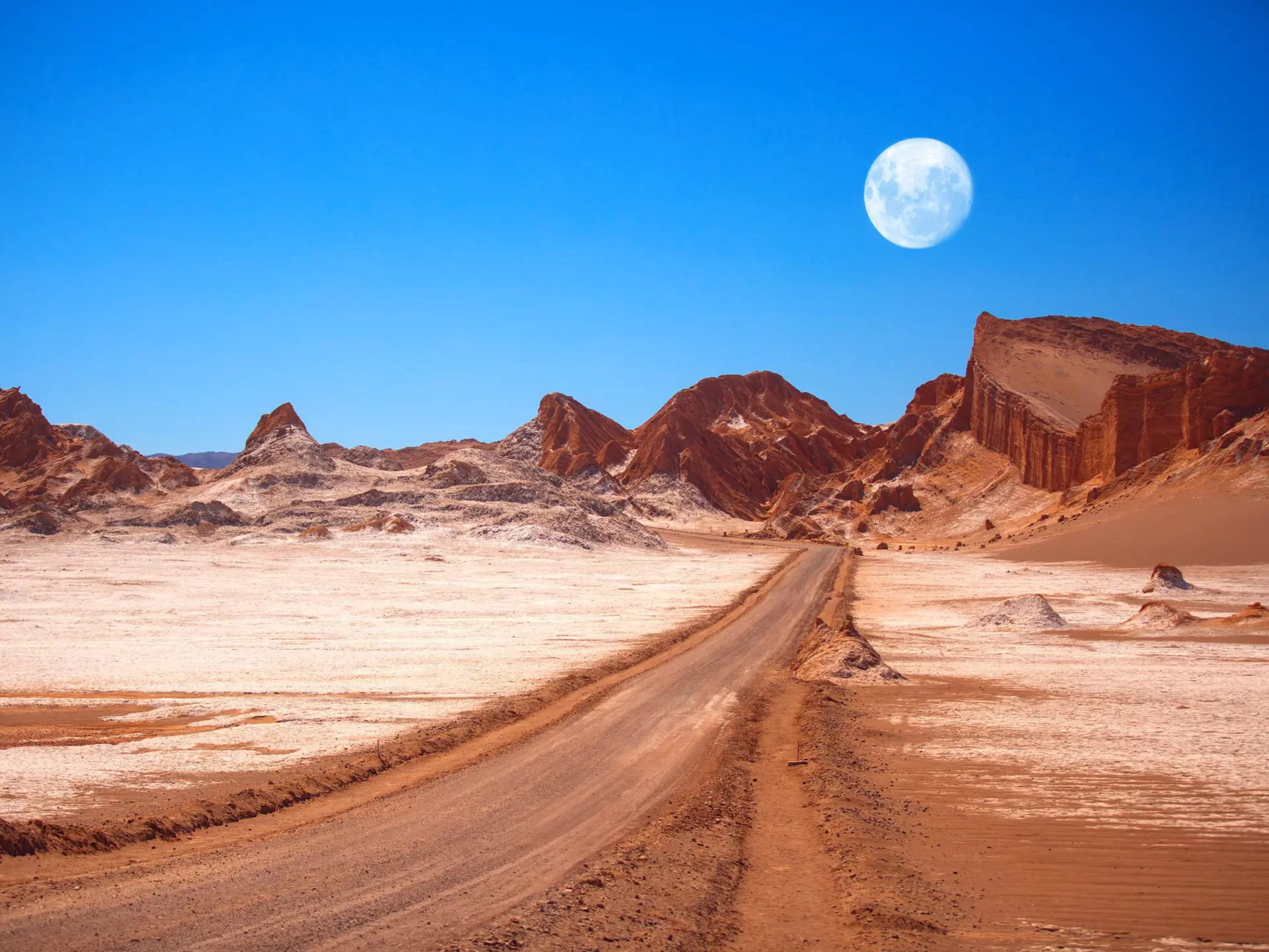
The closest major site to San Pedro, roughly 15 minutes by car. A single entry ticket, around $10,800 CLP (roughly $11 USD), covers the main viewpoints, the salt caves, and the sunset mirador. Arrive by 4 p.m. to walk the Duna Mayor ridge before driving to the designated sunset viewpoint. The sunset parking area fills completely; the gate staff will turn you away if the lot is full, regardless of whether you hold a valid ticket. Go early or book a tour that includes transport.
El Tatio Geysers
A sunrise visit is mandatory, as the steam columns are most dramatic in the cold pre-dawn air. The geyser field sits at 4,320 meters above sea level, and the access road is a mix of pavement and rough gravel that takes roughly 90 minutes from San Pedro. Departure is brutal: most tours leave between 4:00 and 4:30 a.m., and I passed three tour vans pulled over with carsick passengers on the climb. The entry fee is roughly $15,000 CLP. Bring every warm layer you own; the pre-sunrise temperature at the geyser field hovers around freezing even in summer.
Piedras Rojas (Red Rocks) and Altiplanic Lagoons
This site now operates on a timed entry reservation system. You must book a specific entry window through the official CONAF park website or through your tour operator before arrival. The turquoise Miscanti and Miñiques lagoons, framed by snow-dusted volcanoes, are reached on the same access road and included in the same full-day trip. Entry fees for the combined area total roughly $10,000 CLP. The altitude here tops 4,200 meters, so acclimatize for at least two full days in San Pedro before attempting this day.
Lagunas Baltinache (Hidden Lagoons)
Seven saltwater lagoons tucked into a stark white salt crust roughly an hour from San Pedro on a heavily washboarded road. Swimming is now completely banned across all seven lagoons as of updated park regulations, a change from earlier years when the first and last lagoons allowed floating. The entry fee is around $10,000 CLP. You can still walk the boardwalks and photograph the surreal blue water against the white salt, but do not expect to swim. A high-clearance vehicle helps noticeably on the access road.
Rainbow Valley (Valle del Arcoíris)
A quieter, less-visited site with bands of green, purple, and red mineral deposits streaking the rock walls. The road is manageable in a standard SUV. No formal entry booth operates here; a local community collector may ask for a small fee of roughly $3,000 to $5,000 CLP. The valley makes a good half-day morning trip paired with a relaxed afternoon in San Pedro.
Stargazing tours
The Atacama has some of the clearest night skies on the planet. Organized stargazing tours run nightly, weather permitting, and cost $35 to $50 USD per person for a two-hour session with telescopes and an astronomy guide. Book for a night as close to the new moon as possible. If you have a rental car, you can simply drive a few kilometers outside San Pedro, pull over, and look up. The Milky Way is visible to the naked eye on any moonless night.
Solo and female traveler safety in the Atacama
San Pedro de Atacama is one of the safest destinations in Chile for solo travelers, including women traveling alone. The town itself is small, walkable, and well-lit along the main streets of Caracoles and Tocopilla. Violent crime is rare. Petty theft, specifically unattended bags in parked cars at trailheads, is the most common issue. Lock your vehicle, keep valuables out of sight, and do not leave a phone or camera visible on the passenger seat while you hike.
The main safety concern in the Atacama is not crime. It is altitude, dehydration, and getting lost or stranded on an unpaved road with no cell service. If you are driving solo, tell your accommodation host your planned route and expected return time before you leave in the morning. Download offline maps for the entire region before you lose signal. Carry at least two liters of water per person for any half-day outing and twice that for a full day. If you book tours, choose operators with multiple recent positive reviews specifically mentioning guide professionalism. The tour desk staff at most hostels in San Pedro can recommend guides they know personally and will be honest about which operators to skip.

I traveled solo for three of my five days in the area and felt entirely comfortable walking through San Pedro after dark, eating alone at restaurants, and hiking on well-trafficked trails. The tourism infrastructure here is mature and used by independent travelers. That said, I would not recommend driving to the most remote sites, particularly Baltinache or the geysers, completely alone. Either join a tour for those days or link up with other travelers at your hostel who are heading the same direction.
How many days do you need? A 5-day Atacama itinerary
Four full days is the minimum to see the major sites without rushing to the point of exhaustion. Five days gives you a proper acclimatization buffer and room for one slower afternoon. This is the exact itinerary I followed. It builds altitude progressively and groups sites geographically to minimize driving back and forth across the same roads.
Day 1 — Arrival and acclimatization. Land in Calama, transfer to San Pedro, check into accommodation, and do nothing strenuous. Walk the town slowly, drink an absurd amount of water, eat a light lunch, and go to bed early. Your body needs this day at 2,400 meters before you push higher.
Day 2—Valle de la Luna afternoon and sunset. Sleep in, have a relaxed breakfast, and explore San Pedro’s shops and the small archaeological museum in the morning. Head to Valle de la Luna around 2 p.m. Walk the Duna Mayor, explore the salt caves, and claim a spot at the sunset mirador by 5:30 p.m.
Day 3 — Piedras Rojas and Altiplanic Lagoons (full day, high altitude). Leave San Pedro by 7 a.m. with a packed breakfast and lunch. Drive south toward the salt flats, visit the Chaxa Lagoon for flamingos in the morning light, then continue to Piedras Rojas for your timed entry slot. Stop at the Miscanti and Miñiques lagoons on the return drive. This is the highest-altitude day of the trip; take it slow.
Day 4—El Tatio Geysers sunrise and afternoon recovery. Depart at 4:30 a.m. Drive carefully, arrive at the geyser field by 6 a.m., and watch the steam columns in the first light. Be back in San Pedro by 10:30 a.m. Nap, eat a long lunch, and book a stargazing tour for the evening.
Day 5 — Rainbow Valley morning and departure. A shorter morning trip to Rainbow Valley, back in San Pedro by noon, then transfer to Calama for an afternoon flight. This gentle final day leaves you tired but not wrecked.
Total trip budget: three traveler styles
These figures are per person for a five-day trip, excluding international flights to Santiago. All amounts in US dollars. Cash is king in San Pedro; Only larger hotels and a handful of upscale restaurants reliably accept credit cards. Bring more pesos than you think you need, as the town’s ATMs frequently run out of cash on weekends.
Budget (hostel dorm, shared tours)
- Accommodation: $15–$25 USD/night (dorm bed)
- Tours: $180–$240 USD (full slate, shared)
- Meals: $10–$15 USD/day (cooking simple meals, local set lunches)
- 5-day total, excluding flights: roughly $400–$500 USD
Mid-range (private room, rental car shared by 2)
- Accommodation: $50–$80 USD/night (private room with private bathroom)
- Rental car (per person, shared): $125–$175 USD
- Entry fees and fuel: $60–$80 USD
- Meals: $20–$30 USD/day (restaurant lunches and dinners)
- 5-day total, excluding flights: roughly $600–$800 USD
Comfort (boutique hotel, private tours)
- Accommodation: $150–$300 USD/night
- Private tours or private driver: $80–$150 USD per half-day
- Meals: $40–$60 USD/day
- 5-day total, excluding flights: roughly $1,500–$2,500 USD
Mistakes to avoid in the Atacama Desert
These are the errors I made, watched other travelers make, or narrowly avoided. High altitude and remote desert roads do not forgive small oversights.
- Skipping the acclimatization day. Going straight from Calama airport to a 4,300-meter tour on day one is how people end up with splitting headaches, nausea, and ruined first two days. Give your body a full 24 hours at San Pedro elevation before pushing higher.
- Relying on ATMs in San Pedro without a cash backup. The town has two ATMs. On weekends and holiday weeks, both run dry. Bring a substantial cash reserve of Chilean pesos from Santiago or Calama.
- Driving to remote sites without offline maps downloaded. Cell service vanishes a few kilometers outside town. Download the entire region on Google Maps or Maps. me before you need it.
- Assuming park entry fees can be paid by card. Every site gate is cash only, Chilean pesos only. Dollar bills and credit cards will not work.
- Underestimating how cold the geyser morning is. I wore a thermal base layer, a fleece, a down jacket, and a wind shell and was still cold at 6 a.m. at 4,320 meters. Bring a hat and gloves even in summer.
- Not booking Piedras Rojas timed entry in advance. The new reservation system means spontaneous drop-in access is no longer guaranteed. Book through the official CONAF site or your tour operator before you arrive in San Pedro.
- Drinking alcohol on the first night at altitude. Alcohol dehydrates you and worsens altitude symptoms. Save the pisco sour for night three.
What to pack: desert and altitude checklist
The Atacama demands a weird mix of summer and winter gear. Daytime sun is intense and hot. Nighttime temperatures drop fast, and the pre-dawn hours at the geysers feel like proper winter. Pack for temperature swings of 25 degrees Celsius or more in a single day.
- Thermal base layer top and bottom (non-negotiable for the geyser morning)
- Fleece or insulated mid-layer
- Packable down jacket
- Windproof and waterproof outer shell
- Warm hat and gloves
- High-SPF sunscreen and lip balm with SPF (the UV at altitude is punishing)
- Sunglasses with full UV protection
- Reusable water bottle, at least 1 liter capacity, plus a backup bottle
- Headlamp for the geyser in the morning and any evening walks
- Dry bag or waterproof stuff sack for electronics (afternoon rain in summer hits without warning)
- Cash in Chilean pesos, more than you think you need, in mixed small and medium bills
- Photocopies of your passport photo page and Chilean tourist card
- Offline maps downloaded to your phone
- Basic first-aid kit including blister plasters, altitude sickness medication, and rehydration salts
Frequently asked questions
Is the Atacama Desert expensive?
It can be. A budget traveler staying in dorms and joining shared tours can manage on $80 to $100 USD per day. A mid-range traveler in a private room with a rental car should budget $120 to $150 USD per day. The combination of tour costs, entry fees, and limited budget accommodation stock keeps the floor higher than in most other South American destinations.
Do I need to speak Spanish?
You can get by without Spanish in San Pedro itself, as most tour operators, hotel staff, and restaurant servers speak functional English. Outside town, at park entry gates and in more remote areas, Spanish is essential. Learning basic numbers, greetings, and the phrase for “Is this road passable?” goes a long way.
Can you visit the Atacama Desert without a tour?
Yes, if you rent a car. All major sites have public access roads and entry gates open to independent travelers. Piedras Rojas now requires a timed reservation, but you can book that independently online. The geysers, Valle de la Luna, and Baltinache all accept self-drive visitors. Carry cash for entry fees and download offline maps before you leave San Pedro.
How bad is the altitude?
San Pedro sits at 2,400 meters, which most healthy adults tolerate with mild symptoms like shortness of breath and a slight headache for the first 24 hours. The problem is that the major attractions climb much higher. The geysers reach 4,320 meters, and Piedras Rojas tops 4,200 meters. A full rest day on arrival and gradual altitude build-up are essential. Drink water constantly and avoid alcohol for at least the first 48 hours.
What is the best way to get from Santiago to the Atacama Desert?
Fly. A two-hour flight from Santiago to Calama on LATAM, Sky Airline, or JetSMART is the only practical option. Round-trip fares booked in advance run $80 to $150 USD. Buses exist but take roughly 22 hours each way, which eats two full days of your trip. The flight is worth the money.
Is the water safe to drink in San Pedro de Atacama?
Tap water in San Pedro is not recommended for drinking. Most accommodations provide a filtered water dispenser for refilling bottles. Bring a reusable bottle and refill it at your hostel or hotel each morning. Buying bottled water constantly gets expensive and generates plastic waste in a region with limited recycling infrastructure.
Can I combine the Atacama with Bolivia or Argentina?
Yes, and many travelers do. The three-day jeep tour from San Pedro to Uyuni, Bolivia, across the salt flats is the classic overland extension. It operates in both directions. You can also cross into Argentina via the Paso de Jama land border near San Pedro, connecting to Salta and Jujuy, though this route requires your own vehicle or a pre-arranged private transfer.
Plan your trip: booking platforms we trust
For the Atacama specifically, I recommend booking accommodation and flights on the platforms below and booking tours directly with operators in San Pedro once you arrive or through GetYourGuide for advance reservations at Piedras Rojas and the geysers.
Best for comparing San Pedro hostels, guesthouses, and boutique hotels with verified guest reviews and free cancellation.
Best for comparing Santiago to Calama flight prices across LATAM, Sky Airline, and JetSMART in one search.
Best for booking Piedras Rojas timed-entry tours, El Tatio Geysers sunrise trips, and stargazing experiences in advance.
Best for reading detailed recent reviews of San Pedro tour operators, particularly for guide quality and vehicle condition.