
advertisement
Travel to Tbilisi: First-Timers Guide, Real Prices, Off-Beat Spots & What’s Changed
A comfortable mid-range trip to Tbilisi costs about 180 to 250 GEL per person per day in 2026, a sharp increase from the 80 to 120 GEL that old blog posts still quote. You need a minimum of three full days to cover the Old Town, Narikala Fortress, and the city’s surprising Soviet-era off-beat architecture, but five days unlocks the wine regions and the techno clubs that most visitors miss entirely.
I landed at Tbilisi International Airport just past midnight earlier this year, fumbled with the Bolt app on the arrivals-hall WiFi, and watched my card get declined twice because I had not told my bank I was in Georgia. The driver, a patient man named Giorgi, waited while I sorted it out on a grainy WhatsApp call to my bank at 1 AM. That ride into the city, past the floodlit Sameba Cathedral, cost 38 GEL. Three years ago, the same trip was 25 GEL. That is Tbilisi right now: still magnetic, still chaotic, but quietly getting more expensive than any guide written before 2023 will tell you.
I am Cole, and we built this page to give you the numbers, the off-beat route, and the current reality that the top-ranking blog posts keep missing.
Jump to: What’s Changed in 2026 | Real Daily Budget (GEL) | 3-Day Itinerary | Off-Beat Tbilisi | Georgian Wine Decoded | Clubs & Nightlife | Mistakes to Avoid | FAQ
Key takeaways
- Tbilisi is no longer ultra-budget. A mid-range day costs 180 to 250 GEL as of this year, driven by a post-2022 influx of relocating professionals that pushed up rent and restaurant prices.
- Three full days is the hard minimum. Day one for the Old Town and sulfur baths; day two for Sameba and Rustaveli; day three for the Chronicles of Georgia and the off-beat Soviet sites.
- The real off-beat Tbilisi is not a secret garden. It is the crumbling Soviet auditoriums, the mosaic-covered bus stops, and the abandoned cable car station above the city.
- Amber wine is not a marketing term. It is an 8,000-year-old qvevri method, and Tbilisi’s wine bars serve the best Saperavi you will taste for under 15 GEL a glass.
- Bassiani and Khidi are world-class techno clubs, but door policy is strict. Do not show up in shorts, do not take photos inside, and register online beforehand if you can.
- Bolt is the only ride-hailing app that works reliably. Yandex is gone, Uber is spotty, and the airport taxi touts still quote 80 GEL for a 38 GEL ride.
- Always carry some cash. Card acceptance is widespread in Vake and the Old Town, but the best khinkali spots and bazari stalls are cash-only.
What has actually changed in Tbilisi for this year?
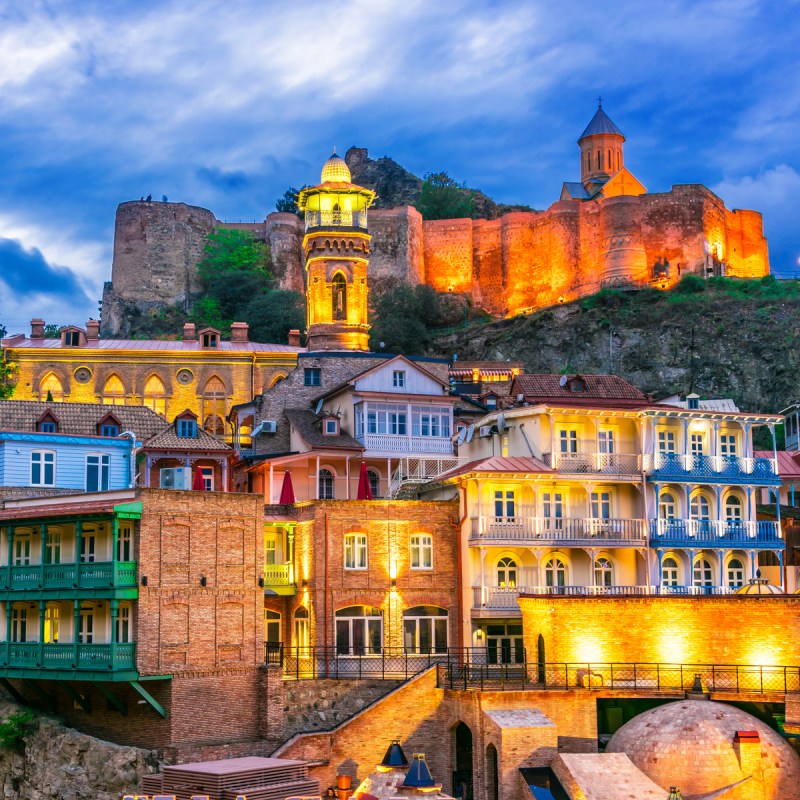
The biggest shift is economic. Between the post-2022 relocation wave and steady tourism growth, the Tbilisi you read about in 2019 guidebooks no longer exists at those prices. A khachapuri in a mid-range Sololaki café now costs 18 to 24 GEL, not 10. A one-bedroom Airbnb in Vera that rented for 1,200 GEL a month in 2020 is now closer to 2,500 GEL. This does not make Tbilisi expensive by Western standards, but the “cheapest city in Europe” framing is now actively misleading.
The second shift is infrastructure. The airport-to-city road has been resurfaced, the new Tbilisi Mall metro extension is fully operational, and the cable car to Narikala Fortress now runs on a unified travel card instead of standalone tickets. The downside is that some of the rugged charm, like the marshrutka chaos at Didube, is slowly being smoothed over. You can still find it, but you have to walk further from the metro station now.
Our researcher Fatima spent two weeks in Tbilisi in May of this year. She stayed in an Airbnb in Sololaki, around the corner from a wine bar that did not exist in 2022. “I paid 170 GEL for a dinner that would have been 90 GEL on my first visit,” she told us. “The quality is higher now, but so is the spend. You have to budget intentionally, not just show up expecting to live on 50 GEL a day.”
Cole’s honest take: “The guides that rank at the top of Google for Tbilisi right now are still quoting prices from 2018. I read the same ones before my trip and felt gaslit by the time I paid my first restaurant bill. Adjust your budget upward by about 60 percent from whatever the old blog posts say.”
What does a trip to Tbilisi actually cost per day this year?
These numbers are in Georgian Lari, based on actual receipts from Fatima’s trip in May of this year. The exchange rate at the time was roughly 2.75 GEL to 1 USD. The mid-range tier assumes you are eating at proper sit-down restaurants, staying in a private Airbnb or boutique hotel, and taking a Bolt taxi once or twice a day rather than walking everywhere.
Backpacker: 80 to 110 GEL/day
- Hostel dorm bed: 25 to 40 GEL
- Street food & khinkali: 20 to 30 GEL
- Metro & walking: 4 GEL
- One museum or cable car: 5 to 15 GEL
- Evening beer at a local bar: 8 to 12 GEL
Mid-range: 180 to 250 GEL/day
- Private Airbnb or boutique hotel: 90 to 150 GEL
- Sit-down lunch & dinner: 50 to 70 GEL
- Bolt taxis x2: 15 to 20 GEL
- Wine tasting flight: 25 to 35 GEL
- Club entry (Bassiani/Khidi): 30 to 50 GEL
Comfort: 350+ GEL/day
- Rooms Hotel or Stamba: 300 to 600 GEL
- Chef-driven dinner at Barbarestan: 80 to 120 GEL
- Private driver for day trips: 120 to 180 GEL
- Sulfur bath private room: 100 to 200 GEL per hour
The single expense that surprises people is the sulfur bath private room. Public baths cost as little as 15 GEL, but a private room at Chreli-Abano runs 100 to 200 GEL per hour depending on the room size. It is worth it once, but budget for it. For booking accommodation across all tiers, we scan Booking.com for the widest inventory of guesthouses in Old Town Sololaki, while Agoda occasionally undercuts on the same listings for smaller boutique hotels.
Where should you stay in Tbilisi?
The neighborhoods matter enormously here. Sololaki is the obvious first-timer choice: cobblestone streets, carved wooden balconies, and a five-minute walk to Freedom Square. Vera, on the other side of Rustaveli, is quieter and more residential, with the best neighborhood wine bars and cafés. I have stayed in both and prefer Vera for anything longer than four nights because it feels like you actually live there.
Avoid staying directly on Rustaveli Avenue if you are a light sleeper; the traffic and late-night street activity do not quiet down until well past 2 AM. The Marjanishvili area on the left bank is emerging as the creative district, with renovated Soviet-era apartment blocks and a younger crowd. For a first trip, stick to Sololaki or Vera. For accommodation searches that show you exact locations on a map, we use Hotels.com to track loyalty nights, and cross-reference guest reviews on TripAdvisor for recent complaints about construction noise, which is constant in parts of Sololaki right now.
Best for first-timers
- Sololaki: Historic district, walkable to sulfur baths and Narikala.
- Vera: Quieter, better wine bars, still a 15-minute walk to Rustaveli.
- Marjanishvili: Up-and-coming, excellent value, more local feel.
Worth considering
- Old Town proper: Closest to the Peace Bridge and cable car, but pricier and noisier.
- Vake: Upscale, far from the Old Town, best if you prefer parks and modern cafés over historic lanes.
What does a 3-day Tbilisi itinerary actually look like?
This route assumes you are staying somewhere central, waking up by 9 AM, and walking most of the time. Tbilisi is extremely walkable across the Old Town and Rustaveli corridor, but the hills are punishing. Wear shoes with actual grip. I watched a woman in leather-soled boots slide halfway down a Sololaki cobblestone lane in the rain and she was lucky to catch a railing.
@viewsgeorgiatours Yo, guide’s experience #tourguide #georgia #traveling #itinerary #tbilisi
Day 1: Old Town core
- Morning: Start at Freedom Square, walk south into the Old Town alleys. Coffee at a courtyard café.
- Late morning: Ride the cable car up to Narikala Fortress. Walk down to the Mother of Georgia statue.
- Lunch: Khinkali at a basement spot near the sulfur baths. Budget 25 GEL for a full plate.
- Afternoon: Sulfur bath hour at Chreli-Abano, booked a day ahead. Walk across the Peace Bridge to Rike Park.
- Evening: Dinner in Sololaki, then a wine flight at a bar on the same street. No taxi needed.
Day 2: Sameba to Rustaveli
- Morning: Walk or Bolt to Sameba Cathedral. The interior is free; the scale is staggering.
- Late morning: Metro from Avlabari to Rustaveli. Walk the avenue and stop at the National Museum.
- Lunch: Khachapuri and a salad at a mid-range café. 35 GEL total.
- Afternoon: Explore the Vera neighborhood on foot. Find the hidden courtyard wine bars.
- Evening: Dinner in Vera, then see if Bassiani has a night on. Check their social pages first.
Day 3: Chronicles & Offbeat
- Morning: Bolt to the Chronicles of Georgia monument near the Tbilisi Sea. Go early for empty photos.
- Late morning: Bolt back toward the city, stopping at the Soviet mosaic bus stops near the reservoir.
- Lunch: Grab takeaway khachapuri and eat it at Lisi Lake if the weather holds.
- Afternoon: Abandoned cable car station above the city, then the Dry Bridge flea market for Soviet relics.
- Evening: Final dinner at Barbarestan, booked at least three days ahead.
If you have five days, spend the extra two on a day trip to the Kakheti wine region and one full rest day wandering Vera with no agenda. For guided tours to Kakheti or the Kazbegi mountains, we book through GetYourGuide because their cancellation policy is the most forgiving if your plans shift.
What are the best off-beat things to see in Tbilisi right now?

The top-ranking guides for this query focus heavily on the Old Town and then give you a token paragraph about a single Soviet building. The real off-beat Tbilisi is scattered across the city’s periphery and takes a full day to appreciate properly. Here is what is actually worth your time as of this year, with an honest status check on each.
The Chronicles of Georgia monument near the Tbilisi Sea is the most photographed off-beat spot and is still completely free and ungated. Arrive before 9 AM to avoid the tour buses. The Soviet mosaic bus stops along the highway toward the reservoir are still intact as of May this year, though one near the old textile factory has been partially covered by new construction. The abandoned cable car station above the Mtatsminda ridge is accessible via a steep footpath from the television tower road. Fatima reported that the structure is still standing but more degraded than in photos from 2021; do not climb inside.
A note on the abandoned train houses that some older guides mention: a reader of one major Tbilisi blog reported being arrested there in 2020. We cannot verify current access and recommend you skip it entirely. The Dry Bridge flea market remains the safest bet for off-beat treasure hunting, with Soviet medals, enamel pins, and old cameras spread across tables every weekend. For updated reviews and photos from other travelers who visited these spots recently, check the forums on TripAdvisor before you go.
Fatima’s honest take: “The Chronicles of Georgia is not off the beaten path anymore, but it is still worth the Bolt ride. The real off-beat feeling comes from the bus stops and the old mosaics on public buildings near the Didube station. No one talks about those.”
Why is Georgian wine such a big deal?
Georgia is one of the oldest winemaking regions on Earth, with 8,000 years of continuous production. The qvevri method buries large clay vessels underground for fermentation, which gives amber wine its tannic, oxidative character. It is not a gimmick. It tastes like nothing else produced in Europe or the Americas, and Tbilisi’s wine bars serve world-class Saperavi and Rkatsiteli for prices that would buy you a single glass of mediocre Pinot Noir in London.
Start with an amber Rkatsiteli at a wine bar in Vera, then move to a red Saperavi with dinner. If the tannins in amber wine catch you off guard, that is normal. Georgian amber wine is meant to pair with the fatty richness of khachapuri and grilled meat. Most wine bars offer tasting flights of three to four wines for 25 to 35 GEL, and the staff will explain the qvevri process in detail if you ask. For finding the highest-rated wine bars and reading recent tasting notes, we scan TripAdvisor before choosing a spot, since new bars open every few months in Sololaki and Vera.
What is the Tbilisi nightlife and club scene like?
Bassiani is the anchor of Tbilisi’s techno reputation, housed in the basement of Dinamo Arena. The sound system is internationally respected, the nights run past 8 AM, and the door policy is famously selective. Do not show up visibly drunk, do not wear shorts, and do not take photos of the dance floor. Register for entry on their website beforehand if you want to reduce the chance of being turned away at the door.
Khidi, in a former bridge structure over the Mtkvari River, is the darker, more industrial alternative and books equally strong international DJs. For a less intense night, the courtyard bars in Sololaki and Vera serve natural wine until midnight, and the cocktail bars around Rustaveli have improved significantly since 2023. Cover charges at the major clubs range from 30 to 50 GEL, which is less than a single drink at a comparable club in Berlin.
@englishwithreeka This city will always have my heart ❤️ Thank you to @tavernadariani_ for the amazing music, vibes, hospitality, & food!! #expatsintbilisi #lifeabroad #საქართველო #dancingqueen #georgianculture
Cole’s honest take: “I got into Bassiani at 2 AM on a Saturday and walked out into broad daylight at 8:30. The crowd was a mix of locals and Eastern European regulars. It felt less like a tourist attraction and more like a genuine scene. That is rare in a city this size.”
What do you need to know about supra-etiquette?
A supra is a traditional Georgian feast led by a tamada, or toastmaster, who guides the table through a structured series of toasts. If you are invited to one, and you likely will be if you make local friends, you do not drink whenever you feel like it. You drink only when the tamada toasts, and you are expected to drink the entire glass of wine in one go for certain toasts, particularly those to peace, ancestors, and Georgia itself.
Do not try to toast before the tamada does. Do not sip your wine casually while a toast is being given. The tamada speaks uninterrupted, often for several minutes, and you listen. If you cannot finish a full glass, it is acceptable to toast with a smaller pour, but communicate this early. Declining wine entirely at a supper is difficult and may read as disrespectful, but a polite explanation that you are on medication or driving is generally accepted. Fatima attended a supra in a village outside Tbilisi and described it as “the warmest, most exhausting dinner I have ever had. Pace yourself or you will be under the table by the fifth toast.”
Are there scams and tourist traps to watch out for in Tbilisi?
Tbilisi is generally safe, but a few scams persist. The airport taxi touts are the most common. They will quote 80 GEL for a ride to the city center that costs 38 GEL on Bolt. Walk past them to the rideshare pickup zone and order through the app. The second trap is unmarked prices at tourist-facing restaurants on the Peace Bridge side of the river. If there is no menu with visible prices outside, assume you will pay 30 percent more than a comparable spot two streets back in the Old Town.
There is no widespread pickpocketing problem on the metro, but keep your wallet in a front pocket on crowded trains. The most emotionally manipulative scam involves children or elderly people approaching tourists with a story and a request for money near the sulfur baths. It is not dangerous, but it is persistent. A firm “No, sorry” and walking away works. For exchanging currency, use official exchange booths or ATMs attached to banks, not the standalone machines in bars that charge a 12 percent markup.
How do you actually get around Tbilisi?
The Tbilisi metro is two lines, Soviet-deep, and costs 1 GEL per ride with a rechargeable travel card. The stations are attractions in themselves, with brutalist chandeliers and mosaics. The city bus network is harder for visitors to navigate, so stick to the metro and Bolt for most trips. The cable car to Narikala Fortress and the funicular to Mtatsminda both use the same travel card.
Bolt is the dominant ride-hailing app, and you should install it before you land. Yandex is no longer available. Uber technically operates but has far fewer drivers. A trip across the city center rarely exceeds 10 GEL. For day trips to Kakheti or Kazbegi, you can book a small-group tour through GetYourGuide or negotiate with a driver at Didube, but the latter requires some Russian or Georgian to avoid overpaying.
Frequently asked questions
Is Tbilisi safe to visit right now given regional tensions?
Yes. Tbilisi is far from the occupied regions, and the day-to-day security situation in the capital is stable. Protests occasionally occur on Rustaveli Avenue and can disrupt traffic, but they are generally announced in advance. Check your home country’s travel advisory before departure.
Do I need a visa to travel to Georgia?
Citizens of the US, UK, EU, and many other countries can enter Georgia visa-free for up to one year. Always verify your specific nationality’s status on the official Georgian Ministry of Foreign Affairs website before booking, as the list is updated periodically.
What is the best time of year to visit Tbilisi?
May, June, and September offer warm weather without the peak summer heat or the July-August tourist surge. October is beautiful for the Kakheti wine harvest but brings rain. Winter is cold and gray, though the sulfur baths and cozy wine bars make a strong case for a December trip.
Can I use euros or dollars in Tbilisi?
No. The Georgian Lari is the only legal tender. Exchange offices are everywhere, and rates are generally fair, but bring clean, unmarked bills for the best rate. ATMs are widely available and typically dispense GEL directly.
Is English widely spoken in Tbilisi?
In the central districts, younger Georgians and hospitality staff speak functional English. Outside the city center and with older generations, Russian is more useful as a bridge language. Learning “gamarjoba” for hello and “madloba” for thank you goes a long way.
How many days do I need in Tbilisi?
Three full days cover the major landmarks and one offbeat route. Five days allows a day trip to Kakheti wine country and a slower pace. If you are using Tbilisi as a base for exploring Kazbegi and the rest of Georgia, plan for at least a week.
Plan your trip: booking platforms we trust
Our team has collectively spent months in Tbilisi across multiple visits. These are the platforms we use to book accommodation, tours, and transport, not a sponsored list. We prioritize services with flexible cancellation and verified recent reviews, because Tbilisi’s inventory shifts faster than most cities.