See Both Sides, Skip the Guesswork: Your Iguazu Falls Trip Guide
Fact-Checked By: Maya Whitfield, Senior Travel Editor at WakaAbuja
If you have two days at Iguazu Falls, spend a full day on the Argentine side for its walking circuits and a shorter day on the Brazilian side for the sweeping view. Buy separate tickets for the two national parks, check border-entry requirements before booking, and check each park’s live alerts: the Argentine Devil’s Throat circuit can close when river conditions make it unsafe.
I would plan this trip around access, not a checklist of photo spots. A beautiful itinerary is no help if you arrive at the wrong park entrance, overlook a visa requirement, or build your only afternoon around a temporarily closed walkway. This guide puts those decisions first, then covers tickets, timing, transport, and a workable itinerary.
Jump to: Quick facts · Which side? · Tickets · Itineraries · Getting there · Costs · FAQs
Key takeaways
- Argentina is the better choice for a full day of walking circuits; Brazil gives you the broad panorama.
- The Argentine general-admission ticket is ARS 60,000 (check the current tariff on the official park site). Its second-day discount is subject to the park’s conditions.
- Brazil’s published full ticket is R$134 (check the current total at official checkout), including a R$3 voluntary contribution.
- One ticket does not cover both countries’ parks.
- The Argentine Devil’s Throat circuit was listed as temporarily closed on the park’s alert page when this guide was checked. Verify its status before arranging your day.
- Allow one full day for Argentina and another half to full day for Brazil. Add time for immigration if you cross the border.
What should you know about Iguazu Falls before booking?
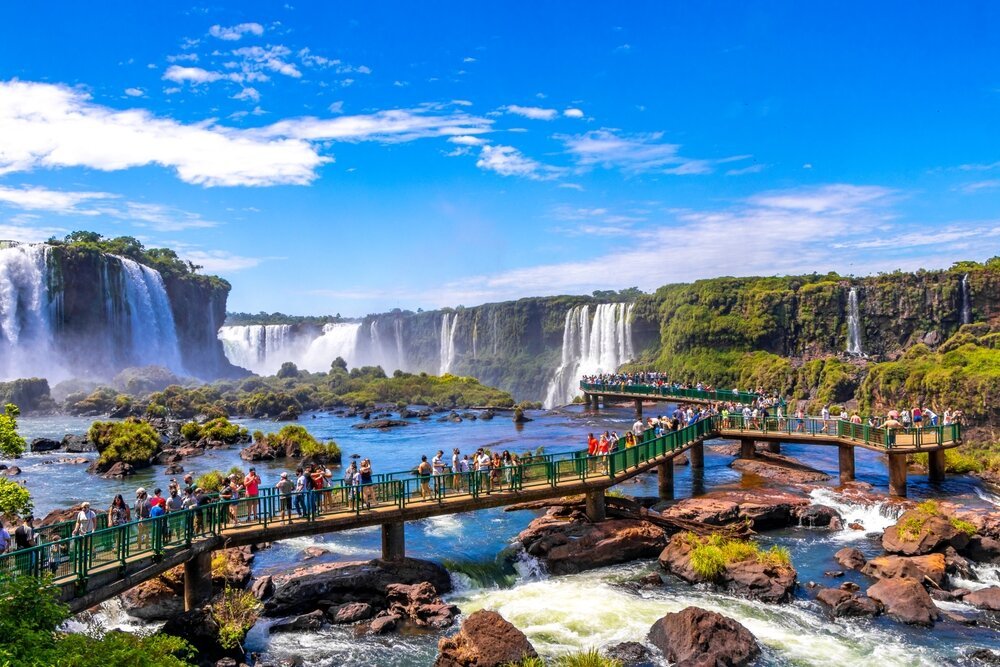
Iguazu Falls is a waterfall system on the Argentina–Brazil border, not a single drop or a single attraction with one entrance. UNESCO describes a waterfall front roughly 2.7 kilometers wide, with drops reaching about 80 meters. The Argentine and Brazilian national parks are separate UNESCO World Heritage properties, inscribed in 1984 and 1986, respectively. UNESCO’s Argentina listing and Brazil listing give the conservation context.
Argentina at a glance
Base yourself in Puerto Iguazú, Misiones. The park is designed around several walking circuits and its ecological train. Plan most of a day here.
Brazil at a glance
Base yourself in Foz do Iguaçu, Paraná. The classic Cataratas Trail frames the falls across the river. Allow at least a half day, or longer if you add other activities.

Which side of Iguazu Falls is better?
Choose Argentina if you want to move through the landscape on multiple trails. Choose Brazil if you want to step back and see the scale of the falls in one view. Neither replaces the other: with two days and permission to enter both countries, I would visit both.
Pick Argentina if…
- You enjoy spending a full day on different walking routes.
- You want close perspectives from the upper and lower circuits.
- You have time to work around train queues and circuit conditions.
Pick Brazil if…
- You have limited time and want the panoramic view.
- You prefer a simpler visit focused on the main falls trail.
- You are already staying in Foz do Iguaçu and cannot cross the border.
There is one important exception to the usual “Argentina first” advice: if a particular walkway is the reason for your trip, check its live status before choosing your order. The Argentine operator’s planning page recently displayed a preventive closure of the Garganta del Diablo, or Devil’s Throat, circuit because of increased river flow. Other circuits may remain open when that happens.
My planning take: Do not buy a cross-border transfer solely for a particular viewpoint until you have checked that viewpoint’s current access notice. Water makes the falls; water can also close a walkway.
How much are tickets for each Iguazu Falls park?
The parks sell separate admissions in different currencies. Argentina’s published general tariff is ARS 60,000 (check the latest tariff on the official site), effective from June 1, 2026. Brazil’s published full-ticket total is R$134 (check the current checkout total on the official site); that figure includes a voluntary R$3 contribution, while the ticket component is R$131 (check the current breakdown at checkout).
Argentine park ticket
General admission: ARS 60,000 (check the official tariff before paying). The park says admission includes its main circuits and ecological train, subject to operational closures.
A second visit to the same park within 72 hours qualifies for a 50% second-day discount under the published rules. Check the official purchase process and retain your first ticket.
Brazilian park ticket
Published full-ticket total: R$134 (check the official price notice and checkout). The price notice separates the R$131 ticket (check the current ticket component) from an R$3 voluntary contribution (check whether it appears in your checkout total).
Use the park’s official ticket guidance to confirm its current online booking and entry-time requirements.
Do not treat an advertised boat ride as part of ordinary park admission. Macuco Safari on the Brazilian side and Gran Aventura on the Argentine side are separate activities; check their operators’ prices, safety guidance, and operating status before adding either to your budget.
When is the best time to visit Iguazu Falls?
Go when your schedule allows, but plan for subtropical heat and rain rather than expecting a perfectly dry waterfall visit. The Southern Hemisphere summer is typically hotter and wetter; cooler months can feel more comfortable for walking. River flow and visibility vary, and exceptionally high water can trigger temporary circuit closures.
Warmer months
December through February can mean powerful-looking falls, humidity, frequent rain and holiday crowds. Give yourself a flexible schedule if a specific circuit matters.
Cooler months
June through August often makes longer walks more comfortable. Bring a light layer and do not assume that cooler weather means a dry path.
I would choose dates for the walking conditions I can tolerate, then check the Argentine park alerts and the Brazilian park website again immediately before each visit. Seasonal averages cannot tell you whether a walkway will be open on your day.
How should you plan one, two or three days at Iguazu Falls?
With one day, choose a single park unless you have transport and border logistics firmly arranged. With two days, give Argentina the longer visit and Brazil its own day or half day. With three days, use the extra time for a relaxed return, a boat activity or a weather buffer rather than rushing every attraction.
One day: make one side count
If you land late or need to cross an international border, attempting both parks can turn the day into a race between queues. From Puerto Iguazú, choose the Argentine circuits; from Foz do Iguaçu, choose the Brazilian panorama. Check closing and last-entry times before leaving your hotel.
Two days: the strongest first visit
On day one, arrive early at Argentina’s park. Walk the Upper and Lower circuits and use the ecological train if the route you want is operating. The operator’s usual schedule lists park hours from 8:00 to 18:00, but check your date and current alerts. On day two, cross to Brazil if your documents permit, follow the main falls trail and leave room for photographs without watching the clock.
Three days: add flexibility
Use day three to revisit Argentina under the published second-day discount rules, add an independently booked boat excursion, or simply keep it free in case rain or a temporary closure changes your first two days. A spare day is especially useful when the Devil’s Throat circuit is a priority, though reopening is never guaranteed.
How do you get to Iguazu Falls and cross between sides?
Fly to Puerto Iguazú in Argentina or Foz do Iguaçu in Brazil, then arrange local transport to the appropriate park entrance. Those airports, towns and parks are not interchangeable. Check the airport code and country before buying a flight, particularly if you are comparing separate one-way tickets on Kayak.
Check entry rules for both countries
Crossing from one park to the other means crossing the Argentina–Brazil border, not walking through a shared park gate. Visa and entry rules depend on your passport and travel history. Check both countries’ official immigration or consular guidance before buying nonrefundable transport. If you are unsure whether a day trip changes your entry requirements, resolve that question first through the relevant authority.
Budget time for the crossing
A taxi or cross-border tour may be convenient, but no operator can eliminate immigration formalities or guarantee a particular queue time. Ask where you will clear passport control in each direction, whether the driver waits, and whether the quote includes both park entrances. Leave generous time before a flight.
Choose a sensible base
Puerto Iguazú works well if the Argentine circuits are your main event. Foz do Iguaçu suits a Brazil-first itinerary and offers a larger city base. Compare hotels by actual travel time to your chosen park, not just distance on a map. For broader accommodation ideas, browse WakaAbuja’s hotel guides.
What should you budget for an Iguazu Falls trip?
Start with the two published park admissions, then price your actual dates for flights, rooms and transport. Argentina charges ARS 60,000 for general admission (check the latest official tariff), and Brazil publishes a full-ticket total of R$134 (check the current official checkout total). There is no reliable single-currency total for every visitor because exchange rates, transport choices and room prices move.
Essential costs
- One admission for each park you enter.
- Transport between your airport, accommodation and park entrances.
- Accommodation for each night of your itinerary.
- Meals, drinking water and any payment-card or exchange fees.
Optional costs
- Cross-border taxi or guided transfer.
- Boat trips such as Macuco Safari or Gran Aventura.
- A second Argentine park day, using the discount if eligible.
- Travel insurance and flexible booking options.
For a fair comparison, price the complete same-date trip twice: once based in Puerto Iguazú and once in Foz do Iguaçu. Include the border transfer if you intend to visit both parks. A cheap room is not a saving if it forces an expensive private ride every morning.
What mistakes should you avoid at Iguazu Falls?
The costly errors are usually logistical, not photographic. I would check these before paying for any nonrefundable part of the trip:
- Assuming one ticket covers both sides. Argentina and Brazil operate separate parks and ticket systems.
- Booking around a walkway without checking alerts. High river flow can close the Devil’s Throat circuit while other Argentine circuits stay open.
- Forgetting the border is international. Verify entry permission for both countries, including any rules that apply when you return.
- Leaving the Argentine park until late afternoon. Train departures, circuit access and final-entry times can limit what you see; consult the official visit planner.
- Underestimating spray and rain. Carry a light rain layer and protect your phone or camera.
- Feeding or crowding wildlife. Keep your food secured and follow posted national-park instructions.
- Buying an optional activity without reading its terms. Boat rides may have separate admission, age or health restrictions, and weather-dependent operation.
Frequently asked questions
Is the Argentine or Brazilian side of Iguazu Falls better?
Argentina is better for a longer walking-focused visit; Brazil is better for a wide view across the falls. Visit both if you have two days and can legally cross the border. Check live circuit alerts before deciding your order.
Can I visit both sides of Iguazu Falls in one day?
It is possible with an early start and well-arranged transport, but border queues and park operating hours can make it rushed. Two days give you a much better chance to enjoy both parks without cutting the Argentine circuits short.
Do I need separate tickets for Argentina and Brazil?
Yes. Each national park sells its own admission in its local currency. Check the Argentine tariff and Brazilian ticket instructions separately.
How much is the Argentine park ticket?
The published general tariff is ARS 60,000 (check the current official price). A discounted second visit may be available within 72 hours under the park’s published rules.
How much is the Brazilian park ticket?
The park publishes a full-ticket total of R$134 (check the current official price notice). That published total includes a voluntary R$3 contribution, so inspect the checkout breakdown before paying.
Is the Devil’s Throat walkway open?
Do not assume it is open. The Argentine operator’s live planning page displayed a preventive closure following increased river flow when this guide was checked. Look again immediately before traveling.
Which town should I stay in?
Stay in Puerto Iguazú for an Argentina-focused visit or Foz do Iguaçu for a Brazil-focused one. If visiting both, compare the complete cost and time of each base, including border transport and airport transfers.
Do I need a visa to see both sides?
That depends on your citizenship and entry circumstances. Check Argentina’s and Brazil’s official immigration or consular requirements for your passport before purchasing cross-border transport. A park ticket does not grant permission to enter the other country.
How can you book the trip?
Start with the parks’ official ticket pages. Once you know your entry dates and which side you will sleep on, compare flights, hotels and optional tours. These booking links may be affiliate links; confirm the final operator, inclusions and cancellation terms before paying.
Booking.com: compare hotels in your chosen base town.
GetYourGuide: compare guided transfers and optional activities.
For the rest of your planning, see WakaAbuja’s travel-planning guides, visa guides and flight-search resources.
WakaAbuja does its best to keep information accurate. Prices, park access, immigration rules and availability can change. Verify them with official sources before traveling. Consider travel insurance for your trip.