
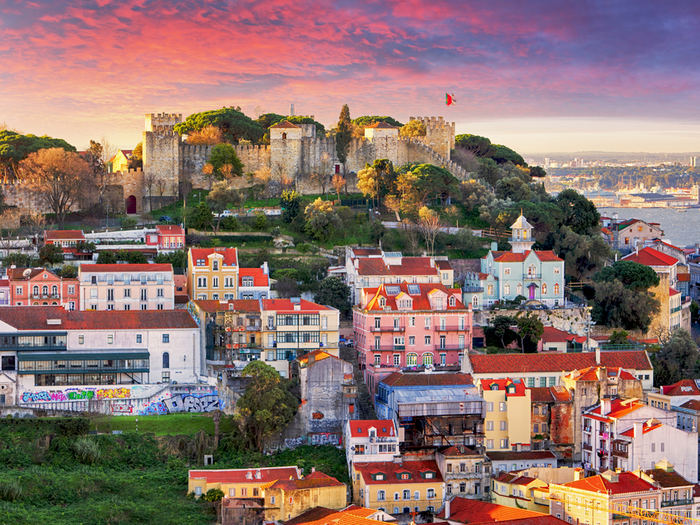
trip to lisbon

Trip to Lisbon: The Ultimate Guide for the Discerning Traveler

advertisement

Trip to Lisbon: Everything You Need to Know Before Going

A well-planned trip to Lisbon requires 4 to 5 full days to cover the city’s seven major neighborhoods, with an additional 2 days for Sintra and Cascais day trips.

Budget between €85 and €350 per person per day depending on your travel style, and book hotels at least 3 months ahead for summer visits. The Lisboa Card saves most travellers 15 to 30 percent on attraction entry fees and unlimited public transport.

I still remember standing on the Miradouro de Santa Luzia at 8am on a Tuesday, pastry in hand, watching the morning light turn the terracotta rooftops of Alfama a shade of burnt gold. That was the moment I understood why Lisbon hooks people so completely.

Chidi from our Abuja team has now visited Lisbon four times, and every trip reveals something the guidebooks miss: a fado singer rehearsing behind an open window, a hole-in-the-wall in Mouraria serving the best grilled sardines you will ever eat, a rooftop bar that does not appear on any map.

This guide is built from those real experiences. No stock photos, no recycled hotel lobby descriptions. Just the stuff we wish someone had told us before our first trip to Lisbon.

Jump to: When to visit | When to book | Neighbourhoods | Day-by-day itineraries | Attractions & ticket prices | Budget breakdown | Food & restaurants | Day trips | Nightlife | Trip type guide | Getting there & around | Mistakes & scams | FAQ

Key takeaways

  • Book hotels 3 to 4 months ahead for June through September; Lisbon’s summer inventory sells out faster than any other Western European capital.
  • Skip Rua Augusta for meals. The terrace restaurants on that pedestrian strip charge double for food that is a quarter as good as what you will find two streets over.
  • Tram 28 is best ridden at 7am or after 7pm. By 9am the queue at Martim Moniz can stretch 90 minutes, and pickpockets work the crush-loaded carriages.
  • The Lisboa Card breaks even after 3 major attractions and one day of transport. If you are visiting Jerónimos Monastery, Belém Tower, and riding trams, it pays for itself.
  • Lisbon’s hills are real. Pack one pair of shoes with proper grip. The calçada portuguesa (limestone mosaic pavements) become dangerously slick after rain.
  • Nightlife starts at midnight and ends at 6am. Do not show up to a club before 1am unless you want the dancefloor to yourself.
  • Sintra palaces sell out. Buy Pena Palace and Quinta da Regaleira tickets online at least 3 days before your day trip, especially from April through October.

When is the best time to plan a trip to Lisbon?

Lisbon works in every season, but the experience shifts dramatically. I have sweated through August afternoons when the mercury hit 38°C and nobody in Alfama had air conditioning, and I have walked nearly empty streets in February with a €49 hotel room waiting for me. Your ideal window depends entirely on what you want from your trip to Lisbon.

@emmygoesplaces

One of the many reasons why visiting Lisbon in the shoulder seasons is best. It’s usually sunny and warm in the day which is perfect for exploring but not too hot or too crowded and busy like it is in peak summer. The city just feels far more relaxed and special. Plus that extra golden light just looks and feels so good. #autumninlisbon #lifeinlisbon #lisbonlife #visitinglisbon #lisbonwinter

♬ original sound – Emmy | Life In Lisbon

advertisement

May, June, and late September are the sweet spot. Daytime temperatures hover between 22°C and 27°C, the tourist numbers are manageable, and you can still get a dinner reservation at a solid seafood restaurant without booking a week ahead. Chidi swears by the first two weeks of October: the light turns golden, the cruise ship crowds thin out, and hotel prices drop roughly 25 percent from August peaks.

July and August bring peak heat and peak crowds. Hotel rates jump 40 to 60 percent above shoulder season, and the queue for the Santa Justa Lift can exceed an hour. If summer is your only option, book everything early and plan outdoor activities for before 11am or after 5pm.

2 days in Lisbon: The perfect itinerary - Tripadvisor

November through February delivers the lowest prices and shortest queues, but expect rain roughly one day in three and pack a proper waterproof layer. Lisbon’s winter is mild by European standards (rarely below 8°C), but the humidity makes it feel colder than the number on the thermometer.

Fatima, our Lagos correspondent, on timing: “I did my first Lisbon trip in August and my second in March. March won by a mile. The jacaranda trees were starting to bloom; I walked straight into Jerónimos Monastery with zero wait, and my Airbnb in Príncipe Real was half the price of a comparable August booking.”

Best months overall

  • May: Warm but not hot; festivals begin, and jacarandas bloom.
  • June: The Santo António festival fills the streets with grilled sardines and dancing.
  • Late September: Sea still swimmable, crowds thinning, golden light for photography.
  • Early October: Hotel prices drop sharply; weather often holds until mid-month.

Worth considering

  • March to April: Unpredictable weather but low prices and blooming gardens.
  • November: Rainy but atmospheric; chestnut vendors on every corner.
  • December: Christmas lights on Avenida da Liberdade are genuinely special.

How far in advance should I book everything for a trip to Lisbon?

This is the question nobody answers properly, and it is the one that separates a smooth trip to Lisbon from one spent queueing outside sold-out monuments. Here is exactly what we have learned across multiple visits.

Flights: Book 8 to 12 weeks out for the best fare on European routes. For transatlantic flights from North America or Nigeria, the sweet spot is 12 to 16 weeks. Use Kayak to set price alerts and track the route for at least two weeks before you buy.

Hotels: For a summer trip to Lisbon (June to September), book 3 to 4 months ahead. The best-value boutique hotels in Chiado and Príncipe Real disappear first. For shoulder season, 6 to 8 weeks is usually enough. Chidi once tried booking a Príncipe Real guesthouse two weeks before an October trip and ended up paying €40 more per night than if he had booked in August. Booking.com and Hotels.com both offer free cancellation on most Lisbon properties, so lock in a rate early and recheck prices closer to your date.

Attraction tickets: Jerónimos Monastery and Belém Tower tickets sell out 3 to 5 days in advance during peak season. Pena Palace in Sintra regularly sells out a week ahead. Book these the moment your dates are firm. The Lisboa Card includes entry to many sites but does not guarantee skip-the-line access everywhere; read the fine print on the official site before you rely on it for peak-season queue jumping.

Popular restaurants: For Michelin-starred spots like Alma or Belcanto, book 4 to 6 weeks ahead. For in-demand mid-range places like Prado or Cervejaria Ramiro, 1 to 2 weeks is usually sufficient. Time Out Market requires no reservation; it is a food hall, show up at 11:30am to beat the lunch crush.

@mazepatravel

How to plan a trip to Portugal AND the exact order you should book everything in (flights, hotels, tours, train tickets etc) #portugaltrip how to plan a trip to portugal | portugal travel tips in

♬ original sound – Talia ☀️ Portugal Travel

Chidi’s booking timeline cheat sheet: “Flights at 12 weeks, hotel at 14 weeks for summer, attraction tickets at 4 weeks, and restaurant reservations at 2 weeks. I set calendar reminders for each and it has never failed me.”

Which Lisbon neighborhood should you stay in or explore first?

Lisbon is a city of distinct villages stitched together by hills. Each neighborhood has a personality so clear you will feel the shift the moment you round a corner. Chidi and I have stayed in four of them between us and walked every street of the rest. Here is the honest breakdown.

Alfama

The oldest quarter. A labyrinth of narrow lanes, steep staircases, and laundry flapping from wrought-iron balconies. This is where you come for fado, for the Sé Cathedral, and for the view from the castle. It is also where you will get lost roughly six times a day.

@mazepatravel

👉 Should you stay in Alfama when visiting Lisbon? Where to stay in Lisbon | Alfama hotels | Lisbon neighborhoods #alfama #lisbontravel #portugaltravel

♬ original sound – Talia ☀️ Portugal Travel

That is part of the point. Stay here if you want atmosphere above all else, but know that taxis cannot reach most Alfama addresses and you will be hauling luggage up cobblestone steps. Tram 28 rattles through the neighborhood, but the real magic is walking it at dawn before the crowds descend.

Bairro Alto

Quiet and shuttered by day, a roiling street party by night. Bairro Alto transforms around 10pm when the tiny bars fill and the crowd spills onto the pavement with plastic cups of mojitos. It is the heart of Lisbon’s budget nightlife.

The streets are steep, the buildings are old, and the noise travels straight through single-glazed windows. Do not stay here if you value sleep above all else. Do stay here if you want to roll out of your door and into the action.

Chiado

The elegant middle child between Bairro Alto and Baixa. Chiado is where you find Livraria Bertrand (the world’s oldest operating bookstore), the statue of Fernando Pessoa, and some of the best shopping in the city. The streets are flatter here than in Bairro Alto, the hotels skew boutique and upscale, and you are within walking distance of everything.

@itsgnochgnoch

solo in Lisbon: checking in Chiado 🇵🇹 #solotravel #lisbon #wheretostay #airbnb

♬ original sound – Nguyen | GNOCHGNOCH

Fatima calls Chiado the Goldilocks neighborhood: central but not chaotic, polished but not sterile.

Baixa

The grid-pattern downtown was rebuilt after the 1755 earthquake. Grand plazas, wide boulevards, and the triumphant Arco da Rua Augusta. Baixa is convenient for first-timers because it is flat and central, but the restaurant scene on Rua Augusta itself is a tourist trap.

Walk two blocks inland toward Rua dos Correeiros for honest, well-priced meals. The metro hub at Baixa-Chiado connects you to the airport in 30 minutes.

Príncipe Real

Lisbon’s most quietly stylish neighborhood. Tree-shaded square, concept stores, a Saturday organic market under the cedars, and some of the city’s best cocktail bars.

@littlebitsoflisbon

Replying to @yovana_2206 Looking for where to stay in Lisbon if you want nightlife without the clubs? Principe Real has it all! By night, it’s lively but never chaotic. The perfect neighborhood for travelers who want Lisbon life without the party scene! #LittleBitsOfLisbon #LisbonTravel #LisbonPortugal #WhereToStayInLisbon #LisbonNightlife

♬ ♡ ᶫᵒᵛᵉᵧₒᵤ ♡ – SoBerBoi

It sits on a hill above Bairro Alto and attracts a slightly older, more design-conscious crowd. Accommodation here tends toward restored 19th-century mansions turned into small luxury hotels.

Belém

Not somewhere you stay, but somewhere you dedicate an entire morning or afternoon. Belém holds the heavyweight attractions: Jerónimos Monastery, Belém Tower, the Monument to the Discoveries, and the original Pastéis de Belém bakery.

It is a 15-minute train ride from Cais do Sodré station. Go early. The monastery queue by 10:30am in summer is a scene of quiet desperation.

Cais do Sodré & Pink Street

Once the red-light district, now Lisbon’s club nexus. Rua Nova do Carvalho (Pink Street) is painted bubblegum pink and lined with bars that start filling around midnight.

The clubs proper do not open their doors until 11pm and the headline DJs go on at 2am. More on this in the nightlife section.

Best for first-timers

  • Chiado: Central, walkable, great dining and shopping.
  • Baixa: Flat, metro-connected, close to the river.

Best for atmosphere

  • Alfama: Ancient, photogenic, fado on every corner.
  • Príncipe Real: Sophisticated, calm, exceptional food.

What does a day-by-day Lisbon itinerary look like?

Lisbon - Travel News, Tips, and Guides | CN Traveller

We have tested these routes on the ground. They account for Lisbon’s hills, the opening hours of attractions, and the fact that you need to stop for pastéis de nata at least once a day.

4-day Lisbon itinerary (our recommended minimum)

Day 1: Baixa, Chiado, and Bairro Alto. Start at Praça do Comércio before 9am while the square is nearly empty. Walk up through the Arco da Rua Augusta, resist the terrace restaurants, and head to Rua dos Correeiros for a proper bifana (pork sandwich) at As Bifanas do Afonso.

Spend the late morning in Chiado browsing Livraria Bertrand and the Carmo Convent ruins. Late lunch at Time Out Market (arrive by 11:30am or after 2pm). Afternoon rest at your hotel, because evening is Bairro Alto time. Dinner at a tasca around 9pm, then bar hopping from 10:30pm.

Day 2: Alfama and Graça. Ride Tram 28 at 7:15am from Martim Moniz before the queues form. Get off at Largo das Portas do Sol for the miradouro. Walk down through Alfama’s lanes to the Sé, then climb to Castelo de São Jorge by 10am (tickets booked online the week before). Lunch in a backstreet Alfama tasca; the less English on the menu, the better.

@plannedbykyla

Alfama, Lisbon’s oldest and most beautiful neighborhood ✨ Alfama survived the catastrophic 1755 earthquake that destroyed most of Lisbon and what remains is one of the most perfectly preserved medieval neighborhoods in all of Europe. With roots going back to the Moorish occupation of Portugal, the winding cobblestone streets, colorful tiled buildings and intimate alleyways have barely changed in centuries!! We stayed in Alfama for 2 nights and here is everything we did: • Café da Garagem for breakfast on day one with the most incredible views over the city • Casa São Miguel for coffee and a pastry mid afternoon • Memmo Alfama for sunset wine, reasonably priced and the views are unreal • Tasca do Chico for Fado and drinks after dinner What we did: • Miradouro da Graça first thing in the morning • Miradouro das Portas do Sol • Feira da Ladra flea market on Saturday morning • Miradouro de Santa Luzia at golden hour with a pastel de nata Save this before your Lisbon trip 🫶🏼 #alfama #lisbonportugal #lisbon #portugalsummer creatorsearchinsights​​​​​​​​​​​​​​​​

♬ In a Sentimental Mood – Benny Goodman

Afternoon at the National Pantheon and the Feira da Ladra flea market if it is a Tuesday or Saturday. Evening fado in a small Alfama venue like A Baiuca, where the singers are locals and the room seats maybe 30 people, is a must.

Day 3: Belém and LX Factory. Train from Cais do Sodré to Belém at 8:30am. Jerónimos Monastery first (pre-booked ticket), then Pastéis de Belém for the warm custard tart that started it all. Belém Tower by 11am, Monument to the Discoveries after. Lunch at one of the riverfront kiosks.

Afternoon at the MAAT museum or the Coleção Berardo if contemporary art is your thing. Late afternoon bus or train to Alcântara for LX Factory, a converted industrial complex with shops, street art, and one of Lisbon’s best rooftop bars (Rio Maravilha).

Day 4: Príncipe Real, Estrela, and sunset at a viewpoint. Morning at the Príncipe Real garden and the Saturday organic market if timing aligns. Walk to the Estrela Basilica and its adjacent gardens. Lunch at a neighborhood spot in Campo de Ourique.

@mazepatravel

🌅 Here are my favorite viewpoints in Lisbon 👉 Have questions? DM me on Instagram and I’ll reply with a voicenote ! . . . . . . . . . . . #Miradouro #Miradouros #MiradouroLisbon #Lisbontravel #visitlisbon #lisbonrecommendations #travelrec #discoverportugal #lisbon

♬ original sound – Talia ☀️ Portugal Travel

Afternoon at the Gulbenkian Museum (world-class collection, surprisingly uncrowded). Sunset drinks at Miradouro de São Pedro de Alcântara or the kiosk at Miradouro da Graça. Final dinner at a restaurant you booked two weeks ago.

1-day and 2-day express itineraries

If you only have one full day, focus on Alfama (early morning), Belém (late morning to early afternoon), and Chiado/Bairro Alto (evening). Skip the castle interior and admire it from the miradouros instead. With two days, add Príncipe Real, the Gulbenkian, and a proper fado evening. You will miss depth but you will hit the essential beats.

Which Lisbon attractions are actually worth your time and money?

Not every attraction that makes the top-10 lists earns its entry fee. We have been to all of these, some twice, and here is the frank assessment with current pricing as of this year.

@experienceaddict

SAVE if you’re going to Lisbon soon!! & FOLLOW ME – Here are my top things to do in Lisbon ❤️ Watch all the way through to see all of the amazing things this city has to offer! #lisbon #lisbontravel #thingstodoinlisbon #travel #traveltiktok #lisbonguide

♬ original sound – 𝙇𝙭𝙪𝙞𝙨𝙨𝙤𝙪𝙣𝙙𝙯 🎧

Check official websites before you travel; prices shift annually and some sites introduce timed-entry slots without much warning.

Essential (worth every cent)

  • Jerónimos Monastery: €12 adult. The cloister alone justifies the flight. Buy tickets online 3+ days ahead. The Lisboa Card covers entry.
  • Castelo de São Jorge: €15 for adults. The views over the red rooftops to the river are the definitive Lisbon photos. Book the morning slot.
  • Pena Palace (Sintra): €14 park only, €20 palace + park. Book at least a week ahead. The exterior is more impressive than the interior.
  • MAAT: €9 adult. The riverside building is an architectural draw; the exhibitions vary in quality. The rooftop is free and worth visiting alone.

Good but not essential

  • Belém Tower: €8.50 adult. Striking exterior, cramped interior. Worth seeing from outside; only go in if the queue is under 20 minutes.
  • Santa Justa Lift: €5.30 return. The view is comparable to the free Elevador de Santa Just a viewpoint accessed from Largo do Carmo in Chiado.
  • Oceanário de Lisboa: €19 adult. Excellent aquarium but a trek out to Parque das Nações. Great for families on a rainy day.
  • Quinta da Regaleira (Sintra): €10 adult. The initiation well and gardens are memorable; the house interior is skippable.

Lisboa Card vs. individual tickets: quick comparison

As of this year, a 72-hour Lisboa Card costs €51 for adults. It covers Jerónimos Monastery (€12), Belém Tower (€8.50), Santa Justa Lift (€5.30), all metro and tram rides (roughly €1.65 per trip), and the train to Sintra (about €5 round trip). If you visit three major paid attractions and use public transport heavily across three days, the card pays for itself.

For a trip to Lisbon lasting 4+ days with Belém and Sintra on the agenda, the 72-hour card is almost always a net saver. Buy it at the airport tourist office or online for collection on arrival. Check the official Lisboa Card site for the full inclusion list and any recent changes before purchasing.

What does a trip to Lisbon actually cost? A realistic daily budget breakdown

Lisbon is no longer the bargain it was a decade ago, but it remains more affordable than Paris, London, or Amsterdam. Prices below reflect what we actually spent on recent trips, not aspirational backpacker numbers or luxury fantasies.

@travelbyram

This is how much I spent traveling to Lisbon 🇵🇹 for 72 hours ⬇️ 1. Flight ✈️: $100 ($50 each with Ryanair, Tangier -> Lisbon) 2. Hotel 🏨: $260 ($70 a night after price matching using my Venture X) 3. Transportation 🚗: $65 4. Activities 🛥️ : $60 (Sunset boat tour) 5. Food/Drinks 🥘 ☕️ : $180 GRAND TOTAL: $660 ($330 a person) —————————————- #72hoursinlisbon #lisbontravelguide #lisboncostbreakdown #lisbontravel

♬ Tropical – Izabella Creator BM

Budget: €85 to €110 per person per day

  • Hostel dorm bed: €18 to €30 per night.
  • Budget guesthouse double: €50 to €70 per night (per person sharing).
  • Meals: Breakfast at a pastelaria (€3 to €5), lunch from a tasca or market (€8 to €12), and dinner at a casual restaurant (€12 to €18).
  • Transport: €6.60 daily with a Viva Viagem card loaded for 24 hours.
  • Activities: One paid attraction (€8 to €15) and free miradouros fill the rest of the day.

Mid-range: €150 to €220 per person per day

  • Boutique hotel or nice Airbnb: €90 to €140 per night (per person sharing).
  • Meals: Proper sit-down breakfast (€8 to €12), lunch at Time Out Market or a good tasca (€15 to €20), dinner at a well-reviewed restaurant (€25 to €40).
  • Transport: Lisboa Card (€17/day averaged over 72 hours) plus occasional Uber (€5 to €8 per ride).
  • Activities: Two paid attractions plus a fado show (€15 to €25 cover).

Luxury: €280 to €350+ per person per day

  • Five-star hotel: €200 to €400 per night (per person sharing). Look at the Four Seasons Ritz or the Valverde Hotel.
  • Meals: Michelin-starred tasting menu (€120 to €195 at Alma or Belcanto), premium seafood at Cervejaria Ramiro (€50 to €70).
  • Transport: Private driver or Uber Black for all trips (€15 to €25 per ride across the city).
  • Activities: Private guided tour of Sintra (€150 to €300), wine tasting in Setúbal with a driver (€200+).

Fatima tracks every euro on her trips and her mid-range 5-day Lisbon visit this year came to €940 total, including a day trip to Sintra and two fado evenings. That is roughly €188 per day for a comfortable solo trip with a private room in a guesthouse, eating well but not extravagantly.

Her single biggest cost was accommodation at 42 percent of the total. Use Expedia for flight-plus-hotel bundles if you want to trim that line item, and check Vrbo for apartment rentals if you are staying 4 nights or longer with a group.

What and where should you eat on a trip to Lisbon?

Lisbon’s food scene has exploded in the last decade. You can still eat a €7 bifana standing at a counter, or you can spend €195 on a tasting menu at a restaurant with two Michelin stars. The best meals are often the ones in between.

Pastel de nata: where to get the real thing

The original is at Pastéis de Belém in Belém. The recipe dates to 1837 and the tarts come out warm, the custard barely set, and the puff pastry audibly crisp. The queue for takeaway moves fast; the queue for a table can take 30 minutes. In the city center, Manteigaria in Chiado makes an excellent contender, served warm with a dusting of cinnamon. Chidi did a side-by-side test on his last trip and called it a draw: Pastéis de Belém for the flaky pastry and Manteigaria for the deeper caramel notes in the custard.

Tascas: the soul of Lisbon dining

A tasca is a small, family-run eatery with a short menu, tiled walls, and prices that make you check the bill twice. Look for places where the menu is handwritten in Portuguese only. Zé da Mouraria in Mouraria serves massive portions of bacalhau for under €12. O Trigueirinho near the Sé does a grilled octopus that Chidi still talks about six months later. The rule: if there is a waiter outside with a menu in five languages, walk on.

Time Out Market

Yes, it is touristy. It is also genuinely excellent. The concept is simple: a food hall where some of Lisbon’s best chefs run stalls alongside traditional vendors. The standout is Marisqueira Azul for seafood and Manteigaria for those tarts. Go at 11:30am or 3pm to avoid the worst of the scrum. Evening is a zoo, and finding a seat can take 20 minutes of circling.

Michelin-starred and fine dining

Belcanto (2 stars, José Avillez) and Alma (2 stars, Henrique Sá Pessoa) are the headliners. Tasting menus run €150 to €195 per person before wine. Book 4 to 6 weeks in advance. For one-star options that are easier to book, try 100 Maneiras in Bairro Alto or Feitoria in Belém.

Fado dinner shows

Many fado venues in Alfama offer a fixed-price dinner with the performance. Quality varies wildly. Mesa de Frades is the pick: a tiny, tiled former chapel where the fado is serious and the food is Portuguese with a modern touch. Expect to pay €45 to €60 per person for dinner and the show. Book at least a week ahead.

For honest restaurant reviews beyond our picks, browse TripAdvisor but filter for recent reviews in Portuguese; they are consistently more candid than the English-language ones.

Which day trips from Lisbon are actually worth the journey?

Lisbon revealed as best-value location for a European city break | Lisbon  holidays | The Guardian

Lisbon’s surroundings hold some of the best experiences in Portugal. Not all day trips are equal, and the order below reflects genuine priority.

Sintra (essential)

If you take one day trip from Lisbon, this is it. Sintra is a UNESCO-listed fantasy of pastel palaces perched on forested hills. The train from Rossio station takes 40 minutes and costs roughly €5 return. Pena Palace is the star, but Quinta da Regaleira and its initiation well are, in Fatima’s opinion, more atmospheric.

Buy Pena Palace tickets online at least a week before. Go on a weekday if you possibly can. The crowds on a summer Saturday are overwhelming. For tours that handle the logistics, check GetYourGuide for small-group Sintra options that skip the bus queues.

Cascais and Estoril (easy coastal escape)

A 40-minute train from Cais do Sodré drops you in Cascais, a former fishing village turned elegant seaside town. The journey hugs the coast past Estoril. Walk the marina, eat grilled fish at a beachfront restaurant, and visit the dramatic Boca do Inferno sea cave. In summer, the small beaches fill by 11am. Combine with a late-afternoon stop at Belém on the return journey.

Óbidos (medieval walled town)

An hour north by bus from Lisbon’s Sete Rios station. Óbidos is a perfectly preserved medieval town inside fortress walls, known for ginjinha (sour cherry liqueur) served in tiny chocolate cups. It is small, you will see the whole thing in three hours, and it pairs well with a stop in the fishing town of Nazaré on a longer day.

Setúbal wine region

Forty minutes south by bus, Setúbal is the gateway to the Arrábida Natural Park and a historic wine region producing excellent Moscatel. The best way to do this is with a guided wine tour that includes transport between vineyards.

The scenery of the Arrábida hills dropping into turquoise water is stunning. For family groups or honeymooners wanting a private driver for a Setúbal wine day, GetYourGuide lists well-reviewed small-group and private options.

Fátima and Nazaré (longer day, religious and coastal)

Fátima is a major Catholic pilgrimage site about 90 minutes north. The sanctuary is vast and moving even for non-religious visitors. Combine it with Nazaré, the surf town where the biggest waves in the world are recorded each winter. The wave season runs October to February. This is a long day (10+ hours) best done with an organized tour or a rental car.

What is Lisbon nightlife actually like and how do you do it right?

10 facts you didn't know about Lisbon - WYSTC

Lisbon after dark is a city-wide, multi-stage event. The rhythm is specific: pre-drinks from 9pm, bar-hopping from 11pm, clubs from 1am, and after-parties until sunrise. I learned this the hard way by showing up to a club at midnight and finding it nearly empty.

The classic Lisbon bar crawl route

Start in Bairro Alto around 9:30pm. The streets here are packed with tiny bars where drinks cost €3 to €6 and the crowd spills out onto the cobblestones. Pavilhão Chinês is a must-see: a bar inside an old grocery store, every wall lined with vintage toys and curios. Around midnight, walk downhill toward Pink Street (Rua Nova do Carvalho) in Cais do Sodré. The bars here are louder, the drinks pricier (€7 to €12), and the crowd skews younger and more international. From Pink Street, the clubs are steps away.

Clubs and what to expect

Lux Frágil is the institution: a multi-level club in a former warehouse on the Santa Apolónia waterfront with a rooftop terrace overlooking the Tejo. Door policy is relaxed compared to London or New York, but do not show up in flip-flops. Cover charge is €10 to €20 depending on the night, and the headline DJ goes on around 3am. Ministerium near Praça do Comércio is a strong alternative for house and techno.

Clubs officially close at 6am, and the after-party scene moves to beach bars across the river in Costa da Caparica during summer. For late-night safety, use Uber or Bolt rather than hailing a street taxi. The app records your route and eliminates any fare disputes.

Chidi’s nightlife survival tip: “Do not buy drinks from anyone selling them out of a cooler on Pink Street. Those are not licensed vendors and you have no idea what is in the bottle. Stick to the actual bars. Also, eat a bifana at 2am from a street vendor; it soaks up everything and costs about €3.”

How should you tailor your trip to Lisbon for your specific travel style?

30+ Best Things to do in Lisbon, Portugal in 2023 ??

No two travellers experience Lisbon the same way. A solo female traveler has different priorities than a honeymooning couple or a group of six friends. Here is what we have learned across multiple trips with different companions.

Solo female travellers

Lisbon is one of the safest European capitals for women traveling alone. Violent crime is rare. The main concern is opportunistic theft on crowded trams and in busy nightlife zones. Fatima has done two solo Lisbon trips and her advice is specific: stay in Chiado or Príncipe Real rather than the deepest alleys of Alfama, where streets empty after dark; avoid the Martim Moniz area late at night; and use Uber rather than walking alone uphill from Cais do Sodré at 3am. T

The women-only floors at some hostels like Home Lisbon Hostel are popular and book out early. For solo dining, the counter at Cervejaria Ramiro is perfect; you will not feel out of place eating alone.

Honeymoons and couples

Príncipe Real and the boutique hotels of Chiado set the right tone. Book a sunset sail on the Tagus (€40 to €60 per person through GetYourGuide), a tasting menu at Alma, and a day trip to Sintra with a private driver rather than the crowded train. The Valverde Hotel on Avenida da Liberdade has a tucked-away courtyard pool and a quiet, romantic atmosphere. For villas outside the city, check Vrbo for properties in the Sintra foothills.

Group trips

Groups of four or more should consider renting an apartment in Baixa or near Avenida da Liberdade. The flat terrain matters when you are coordinating multiple people. For group meals, book ahead at larger restaurants like Solar dos Presuntos or Gambrinus, where tables can accommodate six to eight. Splitting an apartment through Vrbo almost always beats booking multiple hotel rooms, especially for stays of four nights or more.

Digital nomads

Lisbon’s nomad scene concentrates in the Santos and Alcântara areas, with coworking spaces like Second Home (in the Time Out Market building) and Heden in Graça. Internet speeds are excellent across the city. The coffee shop scene is deep: Copenhagen Coffee Lab and Fábrica Coffee Roasters have multiple locations with reliable WiFi and no pressure to leave.

For longer stays, the Booking.com monthly-stay filter surfaces apartment deals that drop the nightly rate substantially for 28+ night bookings. Note that Portugal’s digital nomad visa (D8) requires proof of income and a rental contract; the application process takes 2 to 3 months.

How do you get to Lisbon and get around once you are there?

Getting to Lisbon from the airport

Lisbon Humberto Delgado Airport (LIS) is 7 km from the city center. The metro red line runs from the airport to São Sebastião in about 20 minutes; from there you can connect to the rest of the network. A single metro ticket costs €1.65 plus €0.50 for the reusable Viva Viagem card.

The Aerobus is €4 and runs to Cais do Sodré via the main hotels. An Uber from the airport to Baixa costs €8 to €14 depending on demand. Taxis have a flat-rate airport supplement; insist the driver uses the meter and expect to pay €15 to €20 to central neighborhoods.

Metro, trams, and buses

The Lisbon metro has four lines covering most of the city except Belém and Alfama (Alfama is served by trams and buses). Trains run from 6:30am to 1am. The Viva Viagem card (€0.50 for the card, then load credit) works across the metro, buses, and trams.

A 24-hour unlimited public transport pass costs €6.60 and covers all metro lines and most buses and trams. The Lisboa Card (24h: €22, 48h: €37, 72h: €51) adds free entry to dozens of attractions on top of unlimited transport. Tram 28 and Tram 12 are the tourist-famous routes; for a less crowded tram ride with equally steep climbs, try Tram 25 to Campo de Ourique.

Tipping and payment

Portugal is not a tipping-heavy culture. Round up to the nearest euro for coffee and small meals. For a full restaurant meal, 5 to 10 percent is appreciated but not expected. Cards are widely accepted, but carry €20 to €30 in cash for small tascas and market stalls.

The ATM currency conversion trick is common: when a Portuguese ATM offers to convert the withdrawal to your home currency, always decline and choose euros instead. Your home bank will give a far better exchange rate than the ATM’s dynamic conversion.

Visa requirements

Portugal is in the Schengen Area. Nigerian passport holders need a Schengen visa applied for through the Portuguese embassy or VFS Global.

Processing takes a minimum of 15 calendar days and often longer during peak travel seasons. Apply at least 6 weeks before your trip to Lisbon. Travel insurance with at least €30,000 medical coverage is mandatory for the visa application. For other nationalities, check the official Portuguese immigration portal for current requirements.

What common mistakes and scams should you avoid on a trip to Lisbon?

Lisbon is not a dangerous city, but it has predictable tourist traps and a handful of active scams. Knowing them in advance saves money, time, and frustration.

  • Rua Augusta terrace restaurants. The outdoor tables on Lisbon’s main pedestrian drag charge €4 for an espresso that costs €0.80 two streets away. The food is reheated tourist-grade. Walk to Rua dos Correeiros or Rua da Prata for honest meals at half the price.
  • Tram 28 pickpockets. The crush-loading between Martim Moniz and the castle is a pickpocket’s dream. Keep your phone and wallet in a front pocket or a cross-body bag with the zipper under your hand. The riskiest stretch is between 10am and 4pm.
  • Rossio Square shell games. The card-and-cup hustlers on Rossio are not playing a game you can win. They use accomplices in the crowd who pretend to win to draw you in. Walk past without making eye contact.
  • Dynamic currency conversion at ATMs. Portuguese ATMs often present a screen offering to charge your card in your home currency rather than euros. The exchange rate they apply is terrible. Always select “Decline conversion” or “Charge in euros.”
  • Overpriced fado tourist menus. Some Alfama restaurants charge €60+ for a set menu with mediocre fado. Research the venue first. Genuine fado houses like Mesa de Frades or A Baiuca are transparent about pricing.
  • Unofficial taxi drivers at the airport arrivals hall. Anyone approaching you inside the terminal offering a taxi is unlicensed. Use the official taxi rank outside, the metro, or an Uber ordered through the app.
  • Buying “discounted” tickets from street sellers near Belém. These are either expired, counterfeit, or for a different attraction entirely. Buy tickets only from the official ticket office or the attraction’s verified website.

Chidi watched a Rossio shell-game operator lift €50 from a tourist’s pocket while the mark was distracted watching the cups. The whole thing took under four seconds. The best defense is simply not stopping to watch.

Frequently asked questions

How many days do I need for a trip to Lisbon?

Four to five full days is the minimum for a proper trip to Lisbon that covers the main neighborhoods, Belém, and a fado evening without feeling rushed. Add two extra days for Sintra and Cascais day trips. A one-week stay lets you settle into the city’s rhythm and add a wine tour or a beach day. Anything under three days means painful cuts to the itinerary.

Is the Lisboa Card worth it for a short trip?

For a 48-hour or 72-hour trip that includes Jerónimos Monastery, Belém Tower, and heavy public transport use, the Lisboa Card usually saves €15 to €30 compared to individual tickets. For a 24-hour trip, it is borderline and you should do the math based on which attractions you plan to visit. Check the official Lisboa Card website for the current inclusion list and compare against your planned itinerary.

What is the best area to stay in Lisbon for first-time visitors?

Chiado and Baixa are the best bases for a first trip to Lisbon. Both are central, flat enough for comfortable walking, and connected to the metro. Chiado has better restaurants and a more elegant feel. Baixa is more affordable and closer to the river. Avoid staying deep in Alfama unless you are comfortable climbing steep staircases with luggage.

Can I use euros everywhere in Lisbon?

Yes, Portugal uses the euro. Cards are accepted at most restaurants, shops, and attractions, but some small tascas and market stalls are cash-only. Carry €20 to €30 in small notes. Always choose to pay in euros when a card terminal offers currency conversion.

Is Lisbon safe for tourists at night?

Lisbon is generally very safe at night. Violent crime is uncommon. The main risk is pickpocketing in crowded nightlife areas like Bairro Alto and Pink Street. Stay aware of your belongings, avoid the Martim Moniz and Intendente areas after midnight, and use Uber or Bolt rather than walking long distances uphill after 2am.

When should I book Pena Palace tickets for a Sintra day trip?

Book Pena Palace tickets at least 7 days before your planned day trip if visiting between April and October. The timed-entry slots sell out, and showing up without a ticket means a long wait or outright disappointment. Book through the official Parques de Sintra website. Weekdays are significantly less crowded than weekends.

What is the best way to get from Lisbon airport to the city center?

The metro red line is the cheapest option at €1.65 plus €0.50 for a Viva Viagem card, taking about 20 minutes to the center. An Uber costs €8 to €14 and takes 15 to 25 minutes depending on traffic. The Aerobus is €4 and stops at major hotels. Avoid unlicensed drivers who approach you inside the arrivals terminal.

Do I need to speak Portuguese in Lisbon?

No, English is widely spoken in Lisbon’s tourist areas, restaurants, and shops. Learning a few Portuguese phrases (bom dia for good morning, and obrigado/obrigada for thank you) is appreciated and will earn warmer service. In smaller tascas outside the city center, a menu in Portuguese is common; use a translation app if needed.

Plan your trip: booking platforms we trust

The WakaAbuja team has used every platform listed below on real trips to Lisbon. We do not recommend services we have not tested ourselves. Each one serves a specific need, and spreading your bookings across the right platforms often saves more money than loyalty to a single site.

Booking.com

Best for hotels and guesthouses with free cancellation.

Expedia

Best for flight-plus-hotel package savings.

Kayak

Best for comparing flight prices across airlines.

Vrbo

Best for apartments and villas for groups and families.

GetYourGuide

Best for Sintra tours, sailing trips, and skip-the-line tickets.

Hotels.com

Best for loyalty rewards on hotel bookings.

TripAdvisor

Best for recent traveler reviews and restaurant research.

Agoda

Best for competitive rates on Lisbon hotels, especially from Asian departure points.

WakaAbuja does its best to keep all information accurate at the time of publishing. Prices, policies, and availability change regularly. Always verify with official sources before you travel. We are not liable for errors caused by outdated information. Travel insurance is strongly recommended.