advertisement
Tumpak Sewu Waterfall: Everything You Need to Know Before You Go
Standing at the edge of the rim, feeling the spray on my face and hearing the thunderous roar of millions of liters of water crashing down, I realized something. No photo or video prepares you for the raw power of Tumpak Sewu.
As a seasoned traveller from the WakaAbuja team who has chased waterfalls across Southeast Asia, I can confidently say this is Indonesia’s most underrated masterpiece. Forget the crowds of Bali. This is the real deal.
Because we combine local expertise with real time data, personal survival stories, and actionable tips. If you are searching for Tumpak Sewu ratings, a local’s guide, or what no one tells you before you go, you have found the ultimate visitor’s guide.
Jump directly to details: What It’s Known For | When to Go | How to Get There | Where to Stay | Typical Costs | Itineraries | Safety Tips | FAQ
Key Takeaways for Your Tumpak Sewu Adventure
- Best time to visit: Dry season (May to September). The stairs become deadly slippery in the rain. Trust me on this.
- Entry fee as of early this year: Approximately 20,000 IDR (around $1.30 USD) for domestic tourists and 250,000 IDR (around $16 USD) for international visitors. Always check official social media pages for updates.
- What no one tells you: The 500 plus stairs down are steep and treacherous. You need proper hiking sandals or sport shoes, not flip flops.
- Hidden gem within a gem: The cave behind the waterfall curtain. Only accessible with a local guide due to strong currents.
- Budget tip: Stay in nearby Pronojiwo or Lumajang. Book accommodations via Agoda or Booking.com to save up to 40 percent compared to luxury resorts.
What is Tumpak Sewu Known For? The Niagara of Java
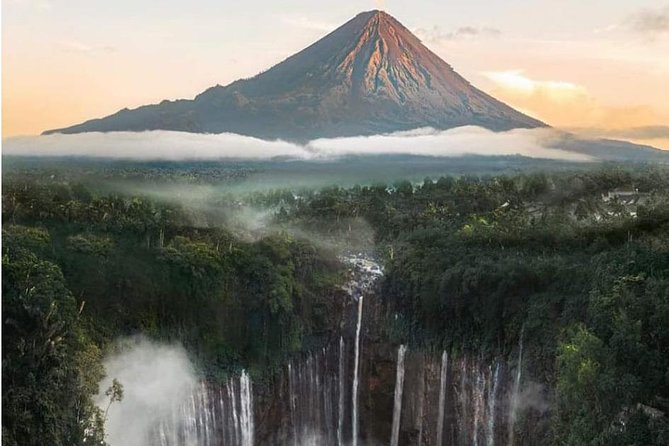
Locals call it Air Terjun Tumpak Sewu, which translates to “thousand waterfalls.” The nickname fits. Unlike a single vertical drop, Tumpak Sewu is a massive horseshoe shaped cascade where water spills over a 120 meter wide cliff edge. The water fans out into hundreds of individual streams before crashing into a turquoise pool below.
Geologists say the waterfall was formed by the eruption of Mount Semeru, Indonesia’s highest volcano, which looms in the background on clear days. I stood there at 7 AM, just as the morning sun hit the spray, and a rainbow formed right at my feet. That moment changed how I see natural wonders.
My honest take: “On my last trip, I stumbled upon the viewpoint at dusk after a rainstorm. The mist rose from the valley and the waterfall looked like it was floating. No filter needed. No crowds either. That golden hour magic is what no Instagram reel ever captures.”
Per TripAdvisor reviews and local tourism board data, Tumpak Sewu consistently ranks in the top three most photographed waterfalls in East Java, alongside Madakaripura and Coban Rondo.
But unlike those, this one remains relatively untouched by mass tourism. For now.
When to Go: Weather, Crowds, and Cheapest Months
I learned this the hard way. Showing up in the wet season is dangerous. The stairs become a slip and slide. The river swells. Locals close the bottom access point when the current is too strong.
Dry Season (May to September)
- Best visibility, safer stairs, manageable current
- Cooler temperatures (around 68 to 77 degrees Fahrenheit)
- Higher crowds on weekends, but still manageable
Shoulder Months (April and October)
- Lower prices for accommodations via Expedia
- Possible afternoon showers, but still doable
- Less tourist traffic
Wet Season (November to March)
- Cheapest time to visit, but high risk
- Slippery paths, current too strong for cave access
- Many tour operators suspend bottom access. Always check GetYourGuide for operator updates.
Cheapest month to visit: February, according to booking data from Hotels.com. However, please confirm weather conditions with official sources before booking.
How to Get to Tumpak Sewu: Travel Options from Major Hubs
The waterfall sits on the border of Lumajang and Malang regencies in East Java. Here is the standard route our team took.
- Fly into Juanda International Airport (SUB) in Surabaya. Use Kayak to compare flight prices.
- From Surabaya, take a private car or bus to Pronojiwo village. The drive takes 4 to 5 hours. Private car rental costs around 500,000 to 700,000 IDR ($33 to $46 USD).
- Alternatively, take a train from Surabaya to Malang, then a minivan to the waterfall. Trains cost around 80,000 IDR ($5 USD) and run frequently.
Travel tip: Most visitors combine Tumpak Sewu with a Mount Bromo sunrise tour. The roads are winding. If you get motion sickness, bring medication. Google Maps shows the route accurately, but signal drops in the valley. Download offline maps before you go.
Where to Stay: Best Accommodation Options for Every Budget
You have two main options. Stay near the waterfall for sunrise access, or stay in Malang city for nightlife and dining. Here is my breakdown after four nights in the area.
Budget Stays (Under $15 per night)
Homestays in Pronojiwo village. Basic rooms, shared bathrooms, but you wake up to the sound of the waterfall. Check Agoda for Tumpak Sewu Homestay.
Mid Range ($25 to $50 per night)
Guesthouses with private bathrooms, hot water, and breakfast. The best value. Use Booking.com to find properties near the entrance gate.
Luxury/Eco Resorts ($80+ per night)
Limited options directly at the waterfall. Most luxury stays are in Malang city, a 90 minute drive away. Book through Vrbo for private villas.
Which place is best for a vacation stay? For waterfall access, stay in Pronojiwo. For nightlife and restaurants, stay in Malang. For families, the mid range guesthouses near the entrance offer the safest balance.
Typical Costs, Suggested Budgets, and Money Saving Tips
Budget Traveler ($20 to $30 per day)
Homestay ($10), local food ($5), entry fee ($16), shared transport ($5). Total for 2 days: around $60.
Mid Range ($40 to $60 per day)
Guesthouse ($25), nicer meals ($10), private driver shared with group ($15), guide fee ($5). Total for 2 days: around $100.
Money Saving Tips
- Visit on weekdays to avoid guide price hikes.
- Eat at local warungs (street stalls). Expect to pay $1 to $2 for noodle soup or fried rice.
- Share a private car with other travellers you meet at your guesthouse.
- Book accommodation and transport bundles via Expedia.
Suggested Itineraries: How to Plan Your Visit
3 Day East Java Blitz
- Day 1: Fly into Surabaya, drive to Pronojiwo (4 hours). Overnight near waterfall.
- Day 2: Sunrise at Tumpak Sewu viewpoint (6 AM), descend to bottom pool (2 to 3 hours), explore cave behind waterfall (with guide). Afternoon drive to Bromo area.
- Day 3: Sunrise at Mount Bromo viewpoint, return to Surabaya for evening flight.
5 Day Deep Dive (Recommended)
- Day 1 to 2: Tumpak Sewu with Tetes Batu and Coban Sriti nearby waterfalls.
- Day 3: Rest day in Malang. Visit Jodipan Colorful Village.
- Day 4 to 5: Mount Bromo sunrise tour and Madakaripura waterfall.
Ideal length of stay for Tumpak Sewu alone is 2 days. For the region, 5 days is perfect.
Around the Area: Things to See and Do Nearby
Outdoors and Nature
- Goa Tetes Cave: A hidden waterfall inside a cave. Requires a local guide. Accessible only during dry season.
- Coban Sriti Waterfall: A smaller, less crowded sister waterfall 15 minutes from Tumpak Sewu. Free entry according to local sources.
- Mount Semeru viewpoint: Indonesia’s highest volcano. Visible from the Tumpak Sewu rim on clear mornings.
Hidden Gems and Arts
- Jodipan Colorful Village (Kampung Warna Warni): A slum turned into a living art installation in Malang. Instagram famous but genuinely uplifting.
- Museum Angkut: A transport museum in Malang with vintage cars and themed zones. Entry around $5.
Family Friendly Activities
- Batu Night Spectacular (BNS): An evening amusement park in the Batu highlands. Rides, food stalls, and cooler temperatures.
- Jawa Timur Park 2: A zoo and animal education centre. Very popular with local families.
For nightlife, Malang city has small bars and live music venues along Ijen Boulevard. Do not expect Bali style clubs. The vibe is student friendly and relaxed.
Tours to Do: Recommended Experiences
The waterfall itself is the main event. But these tours add value.
- Bottom access guided tour: Required to enter the cave behind the waterfall. Rates are fixed by the local tourism cooperative. As of early this year, expect to pay 100,000 IDR ($6.50 USD) per guide for a group of up to 5 people.
- Sunrise viewpoint tour: A local will guide you to the rim for the golden hour shot. Costs around 50,000 IDR ($3.30 USD).
- Tumpak Sewu and Bromo combo: Many operators on GetYourGuide offer 2 day 1 night packages starting at $80 USD. Includes transport, entry fees, and basic accommodation.
How to Stay Safe: Pro Tips and Emergency Contacts
Pros of Visiting Tumpak Sewu
- Affordable compared to world famous waterfalls like Iguazu.
- Less crowded than Niagara or Victoria Falls.
- Unique horseshoe shape you cannot find anywhere else in Southeast Asia.
- Combines well with Bromo and Ijen volcano tours.
Cons and Risks
- Steep, poorly maintained stairs. Not suitable for elderly visitors or those with knee problems.
- Strong currents behind the waterfall. Deaths have occurred. Follow your guide strictly.
- No medical facilities close. The nearest hospital is in Malang city, 90 minutes away.
- Restricted access during wet season. Always check the official Instagram page of Desa Sidomulyo for daily updates.
Emergency contacts for Indonesia: Police: 110. Ambulance: 118. Search and Rescue (BASARNAS): 115. Nearest clinic to Tumpak Sewu is Puskesmas Pronojiwo. For serious emergencies, evacuation to Malang is required. I advise carrying travel insurance that covers adventure activities.
What to pack: Water shoes with grip, quick dry clothing, waterproof phone pouch, cash (no ATMs near the waterfall), rain poncho, and a change of clothes. Do not wear jeans. They become heavy and dangerous when wet.
Frequently Asked Questions About Tumpak Sewu Waterfall
Is Tumpak Sewu suitable for families with young children?
Not recommended for children under 8 years old. The stairs down are steep, wet, and have no safety railings in some sections. For older children who are confident hikers, proceed with caution and hold hands at all times. The bottom pool area is safe for splashing when the current is low.
How long does it take to go down and come back up?
Descending takes 20 to 30 minutes if the stairs are dry. Ascending takes 45 minutes to an hour, depending on your fitness level. Add another hour to explore the bottom pool and the cave behind the waterfall. Total time inside the valley is around 2.5 to 3 hours.
Do I need a guide to visit Tumpak Sewu?
To access the top viewpoint and the rim, no. The path is clear. However, to go down to the bottom pool and enter the cave behind the waterfall, a local guide is mandatory for safety reasons. The current can sweep you away. Guides are available at the ticket booth for a fixed fee as of early this year.
Can I swim in the pool at the bottom?
Yes, but only when the water level is low and the current is weak. During dry season (May to September), the pool is safe for wading. Do not attempt to swim close to the falling water. The force can push you under. Always ask your guide first. Per local safety reports, several near drownings occur each wet season.
What is the best time of day to visit for photography?
Sunrise to 9 AM. The sun hits the spray from the east, creating rainbows. The crowds also arrive around 10 AM. For the top viewpoint shot, late afternoon (3 PM to 5 PM) offers dramatic golden light on the cliffs.
Are there any hidden fees I should know about?
Parking fee (5,000 IDR for motorbikes, 10,000 IDR for cars). Camera fee for professional equipment (tripods, drones) may apply. Drone usage requires a permit from the local tourism office. Check their official social media pages for the most current fee structure.
Plan Your Tumpak Sewu Trip: Booking Resources We Trust
To ensure you get the best rates and reliable service, the WakaAbuja team recommends the following platforms. Prices and availability fluctuate daily. Clicking through helps support our research at no extra cost to you.