Yangtze River: Length, Map, Facts & What Makes It China’s Lifeline
Fact-Checked By Maya Whitfield, Senior Travel Editor at WakaAbuja
The Yangtze River is China’s longest river, stretching more than 6,300 kilometers from the Qinghai-Tibetan Plateau to the East China Sea. It is the longest river in Asia and the third-longest river in the world, and its basin supports a huge share of China’s population, agriculture, transport, and economy.
The first thing I tell people about the Yangtze River is that it is much more than a line on a map. This is one of those geographical features that becomes easier to understand once you connect the numbers to real places, cities, wildlife, history, and everyday life.
The river rises high on the Qinghai-Tibetan Plateau, crosses much of China from west to east, passes through or near major cities, cuts through the famous Three Gorges and eventually reaches the East China Sea near Shanghai. Along the way, it becomes a source of water, transport, electricity, food, industry, and tourism.
Jump to: Yangtze River at a glance | Where it begins and ends | How long is the Yangtze? | Three Gorges Dam | History | Wildlife | Conservation | Visiting and cruising | Mistakes to avoid | FAQ
Key takeaways
- The Yangtze is more than 6,300 kilometers long and is China’s longest river.
- It is the longest river in Asia and the third-longest river in the world.
- The river begins on the Qinghai-Tibetan Plateau and flows east to the East China Sea.
- The Yangtze basin covers roughly one-fifth of China’s land area and contains more than one-third of the country’s population.
- The Three Gorges Dam has an installed generating capacity of 22,500 MW and is the world’s largest hydropower station by installed capacity.
- The river has extraordinary biodiversity, but species such as the baiji have disappeared, and the Yangtze finless porpoise remains critically endangered.
- For travelers, the most popular cruise route is between Chongqing and Yichang, particularly through the Three Gorges.
What are the most important Yangtze River facts?
The fastest way to understand the Yangtze is to look at its defining numbers. I use these figures as the starting point because they explain why this river matters geographically, economically, and historically.
Length
More than 6,300 km
It is China’s longest river and the third-longest river in the world.
Source
Qinghai-Tibetan Plateau
The river’s headwaters are located in the high plateau region of western China.
Mouth
East China Sea
The river reaches the sea in eastern China, close to the Shanghai region.
Basin
About 20% of China’s landmass
The basin is home to more than one-third of China’s population.
Maya Whitfield’s honest take: “If you remember only one thing, remember this: the Yangtze is not simply China’s longest river. It is one of the main physical systems around which modern China has developed.”
Best for
- Geography research, because the river crosses an enormous range of landscapes.
- China travel planning, especially for Chongqing, Yichang, and Shanghai.
- Understanding Chinese economic geography.
- Learning about freshwater conservation.
Worth considering
- The river has different names and characteristics along its course.
- The upper, middle, and lower reaches offer very different landscapes.
- A Yangtze cruise usually covers only a small portion of the entire river.
Where does the Yangtze River begin, and where does it end?

The Yangtze begins in the highlands of the Qinghai-Tibetan Plateau in western China and travels generally west to east before emptying into the East China Sea. UNESCO describes the main stream as extending more than 6,300 kilometers through 11 provinces.
Its upper reaches pass through rugged landscapes before the river eventually enters more densely populated parts of China. Farther downstream, the river becomes increasingly important for agriculture, manufacturing, transport, and major urban centers.
One reason a Yangtze River map can look deceptively simple is that the river system is enormous. The main channel is only part of the story. Hundreds of tributaries feed the wider Yangtze basin, creating a network that connects mountains, farmland, wetlands, and cities.
Maya Whitfield’s honest take: “Do not picture the Yangtze as one identical river for 6,300 kilometers. Its character changes dramatically as it moves from the high plateau through the interior and into eastern China.”
Best for
- Upper reaches: dramatic mountain geography and river origins.
- Middle reaches: major engineering projects and historical cities.
- Lower reaches: dense urban development and the river delta.
Worth considering
- The name Chang Jiang is commonly used in Chinese.
- Some sections have historically been known by other local names.
How long is the Yangtze River compared with other major rivers?
The Yangtze is more than 6,300 kilometers long, making it the longest river in Asia and the third-longest river in the world. That ranking is why the phrase “longest river in China” is only the beginning of the story.
River rankings can vary slightly depending on how scientists define a river’s source and measure its course. For that reason, I prefer using the figure of more than 6,300 kilometers when explaining the Yangtze rather than pretending every measurement method produces an identical number.
@intotravelchina The Yangtze River: Not just a river, but a living legend weaving through China’s past, present, and future. 🌉🚣♀️#travelchina #yangtzeriver #explorechina #cruiseship #cruisetips #longestriver #travelguide #naturebeauty
Yangtze River
More than 6,300 km
Longest river in China and Asia.
Yellow River
About 5,400 km
China’s second-longest major river.
Mississippi-Missouri system
About 6,275 km
A major North American river system often compared with the Yangtze.
Nile and Amazon
Global comparison
The exact ranking of the world’s longest rivers can vary according to measurement methodology.
The important point is scale. The Yangtze is long enough to cross an enormous portion of China while connecting environments that feel almost like different worlds.
Why is the Three Gorges Dam so important to the Yangtze River?
The Three Gorges Dam is the Yangtze’s most famous engineering landmark. Located near Yichang in Hubei Province, the concrete gravity dam reaches a maximum height of 181 meters and forms a reservoir stretching through the Three Gorges region.
The power station has an installed capacity of 22,500 MW, according to China Three Gorges Corporation. That makes it the world’s largest hydropower station by installed capacity. The project also supports navigation and has been designed to improve flood-control capacity in the middle and lower reaches of the river.
The project was completed in 2010 after construction began in the 1990s. It changed the physical and economic relationship between people and the river, but it also remains a subject of environmental and social debate.
Maya Whitfield’s honest take: “The Three Gorges Dam is impressive, but I would not reduce the Yangtze story to one giant dam. The river existed for thousands of years before the project, and its ecological story continues far beyond the reservoir.”
Best for
- Understanding modern Chinese hydropower.
- Seeing a major engineering project from a Yangtze cruise.
- Learning about river navigation and flood management.
Worth considering
- The dam does not mean flooding has disappeared from the Yangtze basin.
- Hydropower brings major benefits alongside environmental trade-offs.
Why has the Yangtze River mattered throughout Chinese history?
The Yangtze has been a geographical force in Chinese history for centuries. Its enormous basin supported agriculture and settlement, while its waterways provided routes for moving people, food, and goods.
The river also became an important cultural and political boundary. The north and south of China developed different historical identities, and the Yangtze often appeared in stories of war, migration, trade, and political power.
In later centuries, steamships and modern infrastructure changed the way people used the river. Today, bridges, ports, dams, and large cities sit alongside landscapes that still reveal the river’s older role.
@intotravelchina The Yangtze River: Not just a river, but a living legend weaving through China’s past, present, and future. 🌉🚣♀️#travelchina #yangtzeriver #explorechina #cruiseship #cruisetips #longestriver #travelguide #naturebeauty
Maya Whitfield’s honest take: “When I read the Yangtze’s history, the recurring theme is movement. People, grain, armies, ships, and ideas all used the river system to connect places that were otherwise difficult to reach.”
What wildlife lives in the Yangtze River?
The Yangtze supports an extraordinary freshwater ecosystem, but it is also one of the world’s clearest examples of how quickly river biodiversity can decline when pressure from human activity becomes intense.
The baiji, or Yangtze freshwater dolphin, is the most painful example. An extensive survey in 2006 failed to find any baiji, and the species has since been widely regarded as functionally extinct. Its disappearance is associated with pressures including fishing, shipping, and habitat change.
The Yangtze finless porpoise is still alive, but its future remains serious. WWF identifies the species as critically endangered and lists pollution, overfishing, boat traffic, sand mining, river fragmentation, and accidental entanglement among the threats it faces.
Maya Whitfield’s honest take: “The Baiji is the Yangtze fact I never skip. It turns an abstract conversation about river management into something very real: a species can disappear before most people realize how close it is to the edge.”
Best for
- Learning about freshwater conservation.
- Understanding the effects of river fragmentation.
- Studying endangered aquatic mammals.
Worth considering
- Wildlife sightings are never guaranteed on cruises.
- Conservation status can change as new surveys become available.
What is being done to protect the Yangtze River?
Yangtze conservation has increasingly focused on protecting habitats, reducing pollution, restoring aquatic ecosystems, and giving threatened species stronger protection. The challenge is enormous because the river basin is simultaneously an ecological system and one of China’s most economically important regions.
China has introduced stronger measures for Yangtze ecological protection, including restrictions designed to reduce pressure from fishing and other activities. Conservation also involves wetlands, tributaries, and connected habitats rather than only the main river channel.
The scale of the basin means that conservation cannot be treated as a single-project exercise. Water quality, shipping, agriculture, industry, hydropower, urban development, and wildlife management are connected.
For travelers, this is one reason responsible tourism matters. I would rather see visitors arrive with an understanding that the Yangtze is a living ecosystem than treat the river as scenery passing behind a cruise ship window.
Maya Whitfield’s honest take: “The best Yangtze travel experience is not just about getting the perfect photograph. Learn what you are looking at, respect protected areas, and support operators that take environmental responsibility seriously.”
Can you visit the Yangtze River and take a Yangtze cruise?
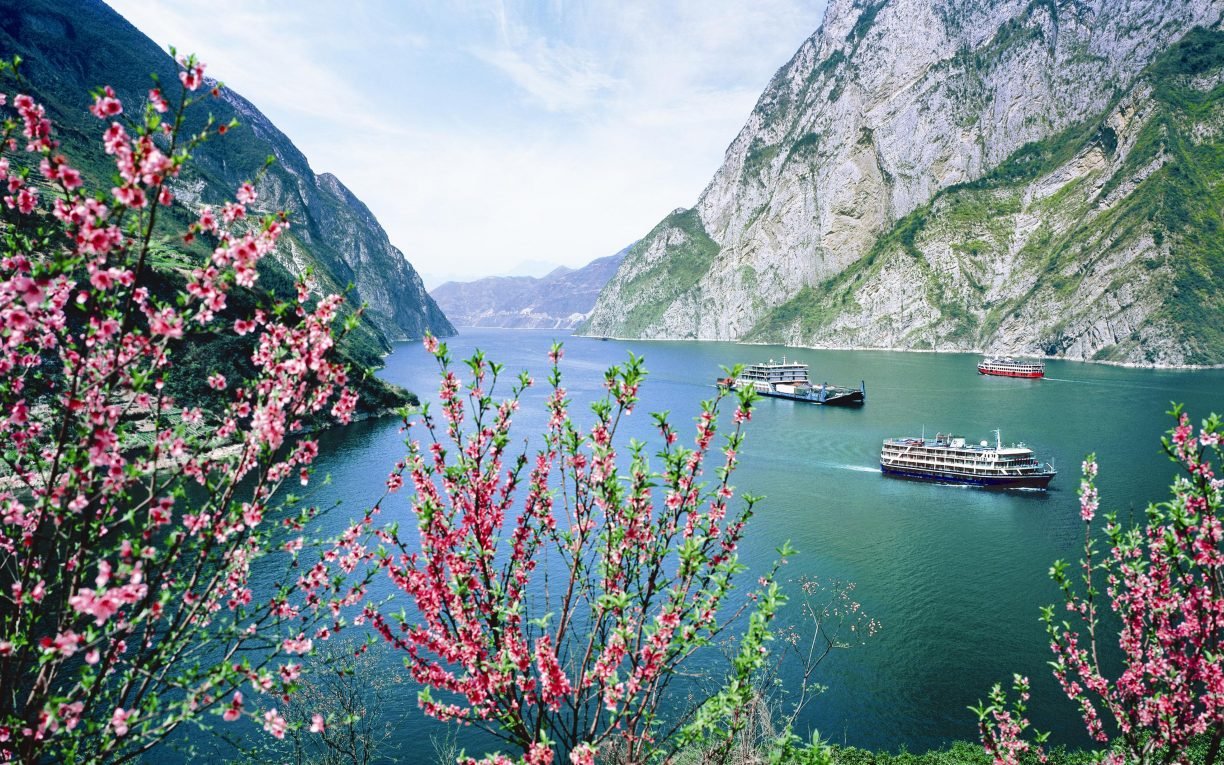
Yes. The Yangtze is one of China’s major travel experiences, and cruises make it possible to see a concentrated section of the river without trying to cover thousands of kilometers independently.
The most established sightseeing route runs between Chongqing and Yichang, taking passengers through the Three Gorges area. Depending on the ship and itinerary, trips commonly last three or four nights, while longer journeys can connect the river cruise with cities farther downstream.
I would choose the itinerary first and the ship second. A luxury ship with the wrong route is still the wrong trip. Check exactly which gorges, shore excursions, and transport transfers are included before paying.
When is the best time for a Yangtze River cruise?
Spring and autumn are generally the most comfortable seasons for a Yangtze cruise. Cruise operators commonly identify April, May, September, and October as popular periods because temperatures are more comfortable and sightseeing conditions are generally favorable.
Shoulder-season departures can offer lower prices, but conditions and exact cruise schedules vary. I would always check the current sailing calendar rather than relying on an old travel blog, especially because water levels and operating arrangements can affect embarkation points.
How much does a Yangtze River cruise cost?
There is no single Yangtze cruise price. Current advertised fares vary significantly by ship, cabin, route, season, and nationality restrictions. For example, published 2026 rates for some three- and four-night Century Cruises departures begin around US$649 to US$849, while luxury itineraries can cost considerably more.
Because fares, availability, and eligibility can change, I recommend checking the cruise operator’s official booking page immediately before making a decision. Treat online prices as starting points, not guaranteed final trip costs.
Should you travel upstream or downstream?
Both directions can work. Cruise information published for Yangtze travelers notes that upstream sailings generally take longer, while downstream trips can be shorter. The better choice depends on your wider China itinerary, flight connections, and which shore excursions you want.
What should you check before booking?
- Confirm the exact departure and arrival cities.
- Check whether port transfers are included.
- Read the full excursion list instead of assuming every attraction is included.
- Check cabin category, balcony arrangements, and occupancy rules.
- Confirm cancellation terms before making payment.
- Check current visa and entry requirements for your passport.
- Verify the final price directly with the cruise operator.
For authoritative background on the river basin and Three Gorges project, I recommend checking UNESCO’s water resources publications alongside information from China Three Gorges Corporation and recognized conservation organizations.
What mistakes should you avoid when researching or visiting the Yangtze River?
1. Confusing the Yangtze with the Yellow River
They are both major Chinese rivers, but they are completely different river systems. The Yangtze is China’s longest river, while the Yellow River is the country’s second-longest major river.
2. Assuming the entire Yangtze looks like the Three Gorges
The Three Gorges are famous, but they represent only one part of a river that stretches more than 6,300 kilometers.
3. Thinking the Three Gorges Dam stopped all flooding
The dam significantly increased flood-control capability in the middle and lower reaches, but the Yangtze basin remains exposed to complex flood risks. A massive river system cannot be reduced to one piece of infrastructure.
4. Booking a cruise based only on the lowest advertised price
A low fare can look attractive until you discover what is excluded. Check cabin type, meals, excursions, transfers, service charges, and cancellation conditions before comparing prices.
5. Assuming every cruise follows the same route
Ships and itineraries differ. Some cruises run between Chongqing and Yichang, while longer journeys can continue toward Shanghai or connect with other China tours.
6. Treating wildlife sightings as guaranteed
The Yangtze is an important wildlife ecosystem, but a cruise is not a wildlife safari. Threatened species can be difficult to see, and conservation status should never be judged by whether you personally spot an animal.
7. Using old cruise prices as a budget
Yangtze cruise prices change with season, ship, and availability. I would use published prices only as a rough starting point and verify the current fare with the operator before booking.
Frequently asked questions
How long is the Yangtze River?
The Yangtze River is more than 6,300 kilometers long. It is China’s longest river, the longest river in Asia and the third-longest river in the world.
Where does the Yangtze River start?
The Yangtze begins in the highlands of the Qinghai-Tibetan Plateau in western China. Its headwaters eventually form the enormous river system that flows eastward across China.
Where does the Yangtze River end?
The Yangtze flows into the East China Sea on China’s eastern coast. Its lower reaches pass through the densely populated and economically important Yangtze River Delta region.
Is the Yangtze River the longest river in China?
Yes. The Yangtze is China’s longest river, extending more than 6,300 kilometers from its headwaters to the East China Sea.
Is the Yangtze River the longest river in Asia?
Yes. The Yangtze is the longest river in Asia and is generally ranked third among the world’s longest rivers, although exact global rankings can vary depending on how river sources and lengths are measured.
Why is the Yangtze River important to China?
The Yangtze supports water supply, agriculture, transport, hydropower, industry, cities, and ecosystems across a huge basin. UNESCO notes that the basin covers about 20% of China’s landmass and contains more than one-third of the country’s population.
What is the Three Gorges Dam?
The Three Gorges Dam is a major hydropower, navigation, and flood-control project on the Yangtze near Yichang. Its power station has an installed capacity of 22,500 MW, making it the world’s largest hydropower station by installed capacity.
Can tourists take a Yangtze River cruise?
Yes. Yangtze cruises are a well-established way to experience the river, particularly the Three Gorges between Chongqing and Yichang. Cruise lengths, ships, excursions, and prices vary, so the itinerary should be checked carefully before booking.
What is the best time to take a Yangtze River cruise?
April, May, September, and October are commonly recommended for comfortable weather and sightseeing. Shoulder-season departures can cost less, but current schedules and conditions should be checked with the cruise operator.
Is the Yangtze River polluted?
Water quality and ecological conditions vary across the enormous Yangtze basin. Pollution, habitat alteration, overfishing, shipping, and other pressures have affected wildlife, although conservation and river-protection measures have also expanded.
Plan your trip: booking platforms we trust
I recommend separating your Yangtze planning into flights, accommodation, activities, and the river cruise itself. For the cruise, always compare the actual itinerary and cabin conditions rather than choosing solely the headline price. For hotels and transport around your China itinerary, these established booking platforms can be useful starting points.
Agoda
Useful for comparing hotels and accommodation options across Asia.
Booking.com
A broad hotel-search option for building the cities around your river itinerary.
Expedia
Useful for comparing flight and hotel combinations where available.
Kayak
Helpful for comparing flight prices when planning your wider China trip.
GetYourGuide
Useful for researching tours and activities in cities along your itinerary.
TripAdvisor
Useful for checking traveler reviews and researching restaurants and attractions.
My booking rule: use comparison platforms to research, but verify important cruise details, prices, availability, cancellation terms, and entry requirements with the official provider or relevant government source before paying.
Sources I used to fact-check this Yangtze River guide
I cross-checked the major geographical and infrastructure claims against authoritative material, including UNESCO’s World Water Development Report, China Three Gorges Corporation information on the hydropower station, and WWF material on Yangtze freshwater wildlife. Cruise-season and fare examples were checked against currently published cruise operator information and should be verified again before booking.
- UNESCO, World Water Development Report material covering the Yangtze basin and Three Gorges project.
- China Three Gorges Corporation: information on the Three Gorges hydropower station and its 22,500 MW installed capacity.
- WWF, information on Yangtze freshwater biodiversity and the critically endangered Yangtze finless porpoise.
- Current Yangtze cruise operator schedules and published fare information for practical travel guidance.
Why the Yangtze River deserves your attention
I think the Yangtze is most interesting when you stop treating it as a geography quiz answer. Yes, it is more than 6,300 kilometers long. Yes, it is China’s longest river. Yes, the Three Gorges Dam is an extraordinary piece of infrastructure.
But the deeper story is the relationship between a river and a civilization. The Yangtze connects mountains to megacities, ancient history to modern industry, hydropower to agriculture, and tourism to a fragile freshwater ecosystem.
If you are researching China, planning a Yangtze River cruise or simply trying to understand why this river appears so often in discussions about China’s geography and economy, start with the route, then look at the people and wildlife that depend on it. That is where the Yangtze becomes more than a statistic.