advertisement
Yoho National Park: Complete Guide to Trails, Lakes & Waterfalls
Fact-Checked By Maya Whitfield, Senior Travel Editor at WakaAbuja
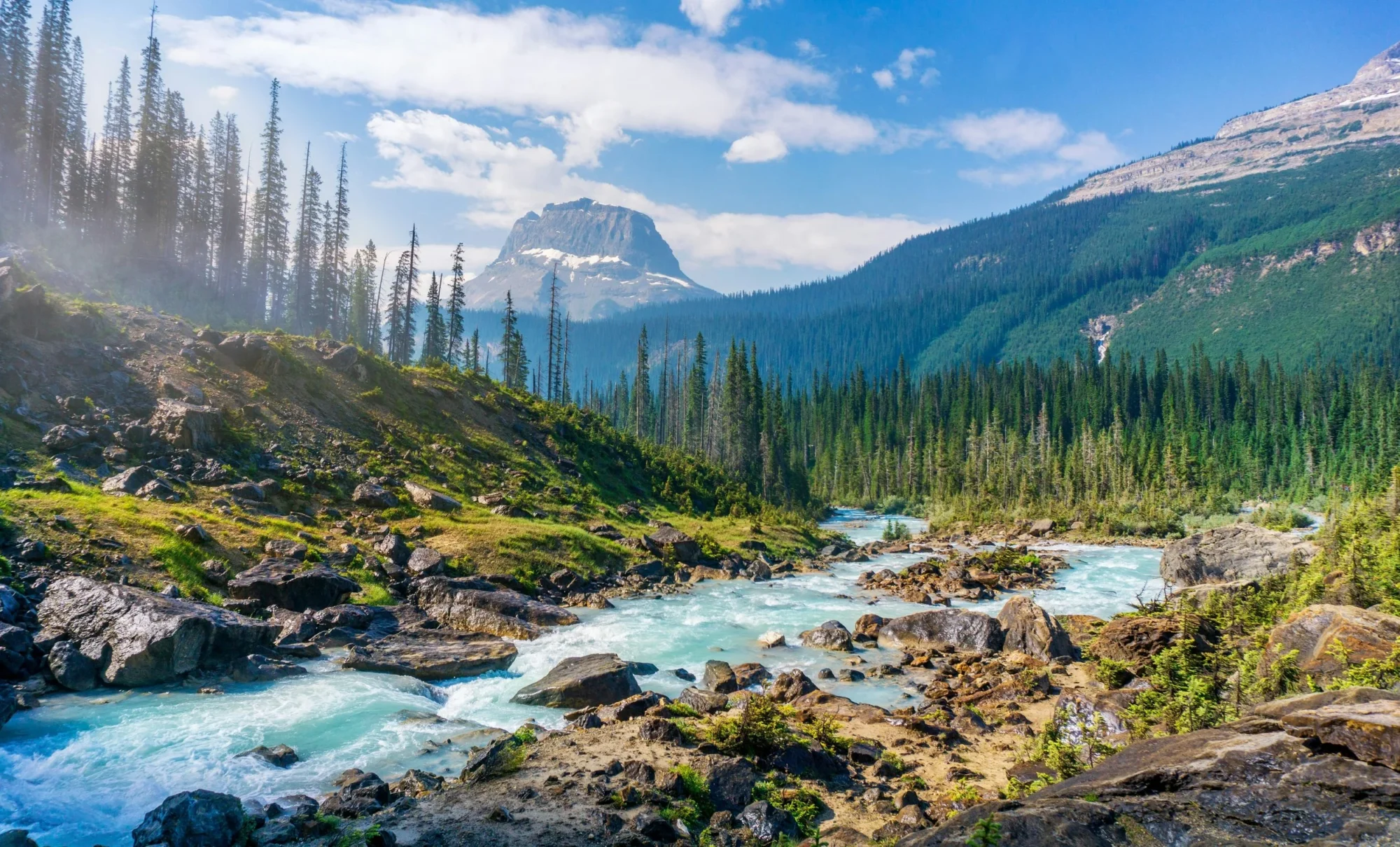
Yoho National Park is a compact Rocky Mountain park in British Columbia, about 30 minutes west of Lake Louise. Its headline stops are Emerald Lake, Takakkaw Falls, Natural Bridge, and the hard-to-book Lake O’Hara. You need a Parks Canada pass, and most visitors can see the park’s main highlights in one long day or a relaxed two days.
Yoho does not get the crowds of Banff or the fame of Jasper, which is exactly why its waterfalls, turquoise lakes, and 500-million-year-old fossil beds feel like a secret. This guide covers what the official park page leaves out: which trails to actually hike, how to snag a Lake O’Hara reservation, what it costs, and how many days you really need.
I have driven through Yoho on three separate Rockies trips, and each time I found something the guidebooks undersell.
Jump to: Quick Facts | Getting There | Top Things to See | Best Hikes | How Many Days | Yoho vs. Banff vs. Jasper | Current Alerts | FAQ
Key takeaways
- Yoho National Park sits in British Columbia on the western slope of the Canadian Rockies, directly west of Banff National Park.
- The park’s three most accessible highlights are Emerald Lake, Takakkaw Falls, and Natural Bridge, all reachable by paved road.
- Lake O’Hara requires a reservation for the shuttle bus, and spots sell out months in advance through Parks Canada’s reservation system.
- A Parks Canada Discovery Pass costs around $151 per family per year, while a daily pass for Yoho is about $11 per adult.
- All waterbodies in Yoho are currently closed to watercraft and angling until March 31, 2027, due to whirling disease and aquatic invasive species.
- Recreational drones are banned in the park, with fines up to $25,000.
- You can see the main roadside attractions in one long day, but two days give you time to hike and avoid the busiest hours.
Quick facts about Yoho National Park
Yoho was established in 1886 and is one of Canada’s oldest national parks. The name comes from a Cree expression of awe and wonder, which fits once you see Takakkaw Falls or the color of Emerald Lake. The park covers about 1,313 square kilometers, which is small compared to Banff or Jasper, but that compactness works in your favor. You can drive from one end of the park’s main corridor to the other in under an hour.
The park sits on the western side of the Continental Divide, so the water here drains toward the Pacific Ocean, not the Atlantic. That is why the Kicking Horse River, which runs through the park, has the volume and power to carve Natural Bridge and feed the waterfalls. The park also protects the Burgess Shale fossil beds, a UNESCO World Heritage Site containing some of the oldest and best-preserved soft-bodied fossils on Earth, dating back over 500 million years.
Maya’s honest take: “Yoho is what Banff would be if you removed half the traffic and all the gift shops. Same mountains, same water color, far fewer people. I have never had to circle a parking lot at Emerald Lake the way I have at Lake Louise.”
Where is Yoho and how do you get there?
Yoho National Park is in southeastern British Columbia, right along the Trans-Canada Highway. The main entrance is about 30 minutes west of Lake Louise, Alberta, and about 1.5 hours west of Banff town. If you are coming from the west, the town of Golden, BC, is the closest service center, about 25 minutes from the park boundary.
Driving distances to Yoho
From Lake Louise, the drive to the Yoho boundary takes about 15 to 20 minutes. From Banff, expect 45 minutes to an hour. From Calgary, the drive is roughly 2.5 to 3 hours, mostly on the Trans-Canada Highway. From Golden, it is 25 to 30 minutes eastbound. I have done the Calgary to Yoho drive in one stretch after an early morning flight, and it is an easy, scenic route with good highway conditions in summer.
The nearest commercial airports are Calgary International Airport in Alberta and, to a lesser extent, Kelowna International Airport in BC. Most visitors fly into Calgary and drive west. If you are comparing flight prices into Calgary, a tool like Kayak is the fastest way to see all your options across airlines.
The only town inside the park boundary is Field, BC, a tiny railway and tourism community with a few places to stay and eat. It is a good base for a multi-day Yoho trip, though many people day-trip from Lake Louise or Banff instead. For lodging in Field or Golden, I have had good luck searching Booking.com for small inns and lodges.
Top things to see and do in Yoho National Park
These are the named attractions the official park hub page never actually mentions by name. If you only have one day, hit these in order and you will have seen the park’s greatest hits.
Emerald Lake
Emerald Lake is the postcard image of Yoho. The water is a vivid turquoise, caused by glacial rock flour suspended in the lake. A flat, 5.2-kilometer loop trail circles the entire lake, and it is doable for most fitness levels. I walked it in about 90 minutes, stopping constantly for photos. There is a lodge, a café, and canoe rentals at the lake, but the lodge fills up far in advance. Even if you do not walk the loop, the view from the parking area is worth the stop.
Takakkaw Falls
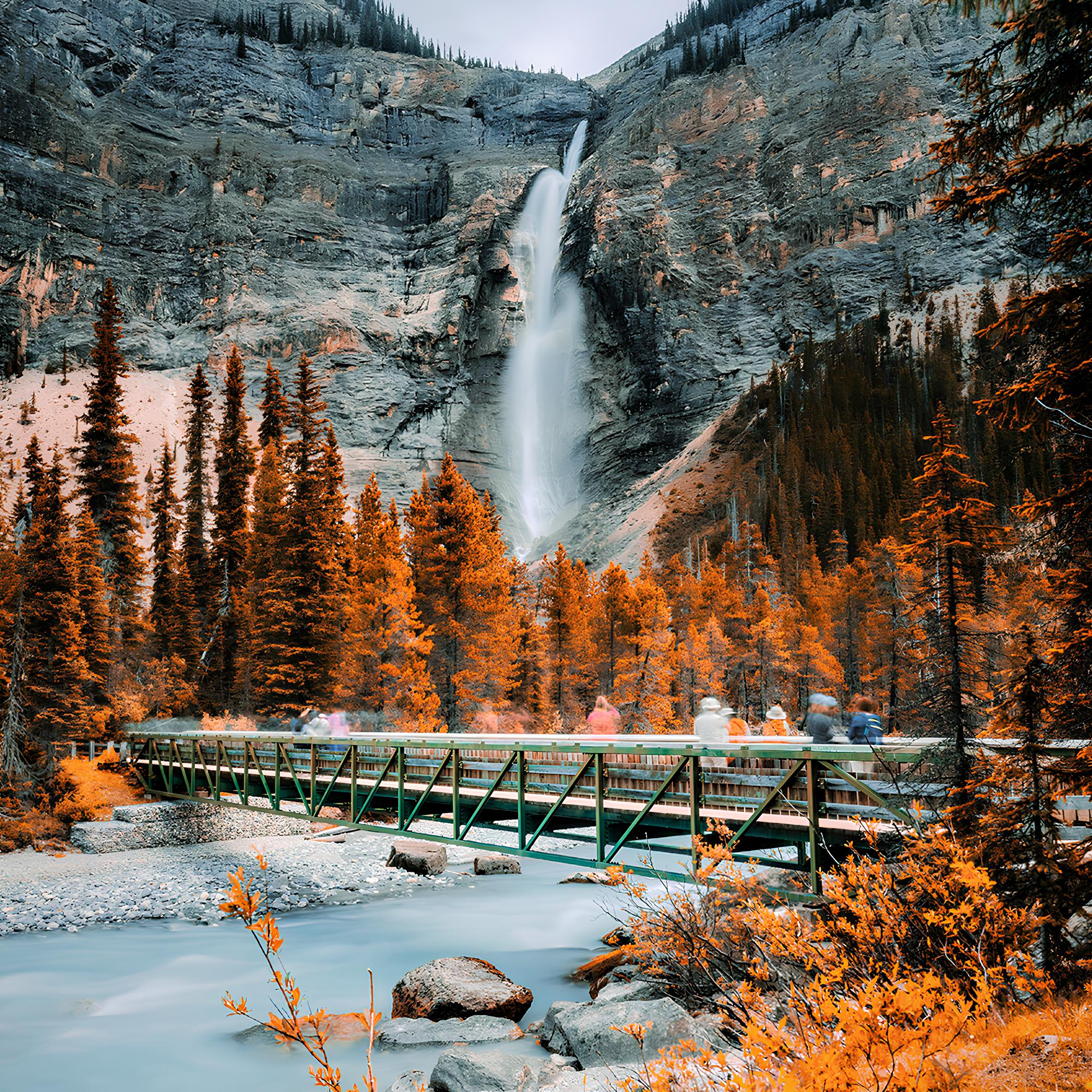
Takakkaw Falls is one of the highest waterfalls in Canada, with a free drop of about 254 meters and a total height of over 380 meters when you count the upper cascades. The name means “magnificent” in Cree, and it is not an exaggeration. The road to the falls is steep and winding, with a series of tight switchbacks that are not suitable for large RVs or trailers. The falls are visible from the parking lot, but a short 1.4-kilometer round-trip trail takes you to the base, where the spray soaks everything within 100 meters in early summer.
I have stood at the base of Takakkaw in late June and felt the ground vibrate. In July and August, the flow drops, but the falls are still impressive. The road to the falls is usually open from late June to early October, depending on snow. Check current road status on the Parks Canada website before you drive up.
Natural Bridge
Natural Bridge is a rock formation where the Kicking Horse River has carved a hole through solid limestone. It used to be a waterfall, but the river eroded the rock and now shoots through a narrow chasm under a stone bridge. It is a quick stop right off the road to Emerald Lake, with a short paved path to the viewing areas. I have been here in early June when the river was roaring and in September when the water was lower and you could see the rocks more clearly. Both are worth it, but the spring flow is the more dramatic of the two.
Lake O’Hara and the reservation system
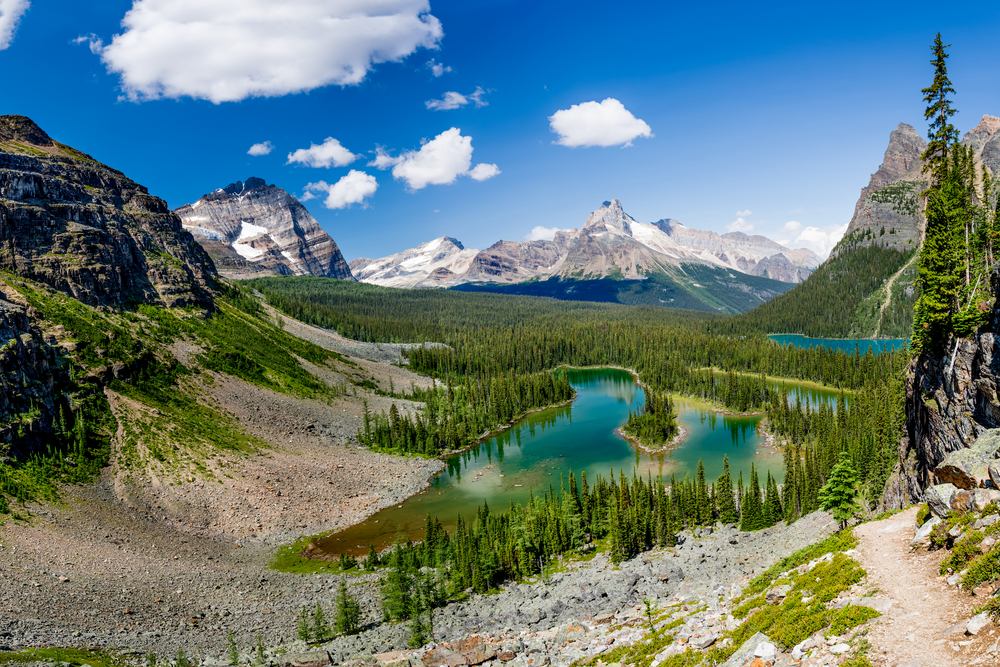
Lake O’Hara is the hardest part of Yoho to visit, and it is hard on purpose. The area is a protected alpine basin with some of the best hiking in the Canadian Rockies, but access is restricted to protect the fragile environment. You cannot drive your own vehicle to the lake. A Parks Canada shuttle bus runs from the parking lot near the Trans-Canada Highway to the lake, and seats are allocated through a reservation system that opens months in advance. A limited number of spots are also available for the campground and the Alpine Club hut.
If you do not get a shuttle reservation, your only option is to walk the 11-kilometer access road each way, which turns a beautiful lake visit into a 22-kilometer day. I have tried twice to get a reservation and missed both times. This is not a secret tip situation. The reservation system is the only realistic way in for most people. Book through the Parks Canada Lake O’Hara page as early as the system allows.
Spiral Tunnels and Kicking Horse Pass
The Spiral Tunnels are a railway engineering landmark, not a hiking trail. The Canadian Pacific Railway built two spiral loops inside the mountains to reduce the grade on the Kicking Horse Pass. You can watch a train enter and exit the tunnels from a viewpoint just off the Trans-Canada Highway. It is a 20-minute stop, but if you have kids or any interest in trains, it is genuinely cool. Bring binoculars if you have them, because the trains are longer than they look from the viewpoint.
Burgess Shale guided hikes
The Burgess Shale is one of the most important fossil sites in the world, and the only legal way to visit the fossil beds is on a guided hike led by a Parks Canada interpreter or an approved guide. These hikes run in summer and go to the Walcott Quarry or the Mount Stephen fossil beds. They are not easy hikes, with significant elevation gain, but you get to hold fossils that are half a billion years old. I have not done this hike yet, but I have spoken to people who have, and they all describe it as one of the best interpretive experiences in any national park. Book well ahead through Parks Canada.
Best hikes in Yoho National Park
Yoho has hikes for every level, from flat lake loops to alpine scrambles. Here are the ones I recommend most often, with real distances and difficulty ratings.
Easy hikes
- Emerald Lake Loop: 5.2 km, flat, 1.5 hours
- Takakkaw Falls Trail: 1.4 km round trip, gentle, 30 minutes
- Natural Bridge Trail: 0.5 km, paved, 15 minutes
Moderate hikes
- Wapta Falls Trail: 4.6 km round trip, 100 m gain
- Iceline Trail: 14 km loop, 700 m gain, spectacular glacier views
- Yoho Pass Trail: 9 km round trip, 300 m gain
Strenuous hikes
- Burgess Shale Walcott Quarry: 22 km round trip, 800 m gain, guided only
- Lake O’Hara Alpine Circuit: 12 km, 500 m gain, requires shuttle reservation
The Iceline Trail is the one I recommend to strong hikers who want a big alpine day without the Lake O’Hara reservation hassle. It climbs above the treeline and gives you views of glaciers, waterfalls, and the Yoho Valley all at once. The full loop is long, but you can do a shorter out-and-back to the high point and still get the payoff.
@natlaplante Iceline hike in Yoho national park! ⛰️ #yohonationalpark #placesincanada #hikingszn #hikingadventures #hikinghiddengem #camping #mountain #outdoors #placestovisit #canadiandestinations #creatorsearchinsights
How many days do you need in Yoho?
You can see the park’s main roadside attractions in one long day, but two days give you time to actually hike and avoid the busiest hours. Here is how I would structure it.
One-day itinerary
Start at Emerald Lake early, before 9 a.m. if you can, and walk the loop. Stop at Natural Bridge on your way out. Drive to Takakkaw Falls and do the short trail to the base. If you have energy left, stop at the Spiral Tunnels viewpoint on your way back toward Lake Louise or Golden. This works best as a day trip from Lake Louise or Banff.
Two-day itinerary
Day one, do the Emerald Lake and Natural Bridge area, then add the Wapta Falls hike in the afternoon. Stay overnight in Field or Golden. Day two, drive up to Takakkaw Falls and then tackle the Iceline Trail or a longer hike in the Yoho Valley. This pace lets you enjoy the park without rushing, and you avoid the worst of the midday tour bus crowds at the main stops.
For a multi-day Rockies road trip that includes Yoho, Banff, and Jasper, a rental car is essential. I book rental cars through Expedia when I am bundling with a flight, which usually saves a bit over booking separately.
Yoho vs. Banff vs. Jasper: Which should you visit?
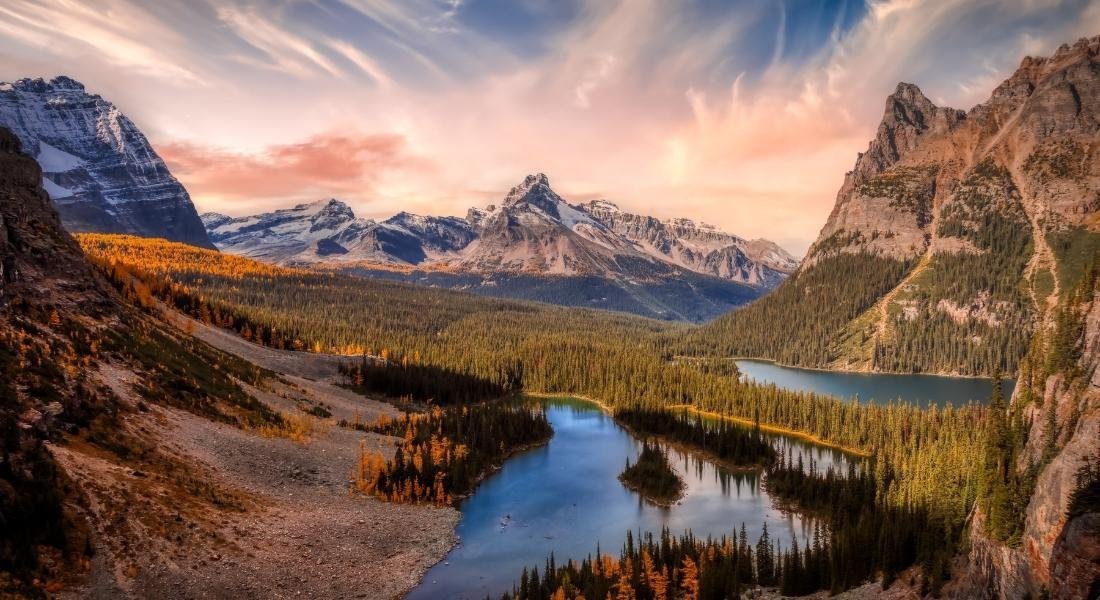
This is the question most first-time Rockies visitors actually ask, and the answer depends on what you want. Banff is the most developed and busiest. Jasper is bigger, wilder, and further north. Yoho is the smallest of the three and the least crowded, with some of the best waterfall and lake scenery packed into a compact area.
Yoho
Smallest, quietest, best for waterfalls and Emerald Lake. Easy to combine with a Banff or Lake Louise trip. Limited lodging inside the park.
Banff
Most iconic, most crowded, most services. Lake Louise and Moraine Lake are here, but so are the tour buses. Best for first-timers who want easy access to famous sights.
Jasper
Larger and wilder, with more wildlife and darker night skies. Best for multi-day backcountry trips and those who want fewer people. Further from Calgary.
If you only have two or three days and are flying into Calgary, Yoho plus Banff is the most efficient combination. If you have a week, add Jasper. Yoho alone is worth one to two days, not a full week.
Current conditions and safety alerts in Yoho
These are the official restrictions I confirmed from Parks Canada before writing this guide. They change, so verify them on the Parks Canada Yoho National Park page before you travel.
- Watercraft and angling closure: All waterbodies in Yoho and nearby Kootenay National Park are closed to watercraft and angling until March 31, 2027, due to whirling disease and other aquatic invasive species.
- Drone ban: Recreational drones are prohibited in all national parks, including Yoho. Fines can reach $25,000.
- Seasonal road closures: The road to Takakkaw Falls is typically open from late June to early October, depending on snow. The Lake O’Hara access road is closed to private vehicles year-round.
- Wildlife: Bears, elk, and moose are active throughout the park. Carry bear spray on trails and know how to use it. I have seen black bears near the road to Emerald Lake twice.
The Parks Canada trail conditions page is the best place to check current hiking status before you set out. I check it the night before any Rockies hike, because trail closures and bear warnings change daily in summer.
What does it cost to visit Yoho National Park?
You need a Parks Canada pass to enter Yoho, and the cost depends on how long you are staying and how many people are in your group.
Park pass fees
- Daily pass: About $11 per adult, $9.50 per senior, free for youth under 18
- Family/group daily pass: About $22 for up to 7 people in one vehicle
- Discovery Pass (annual): About $151 for a family or group, $75 for an individual
Other costs
- Lake O’Hara shuttle: Reservation required, fee per person, usually under $20 round trip
- Burgess Shale guided hike: Typically $100 to $200 per person depending on the route
- Camping: Front-country sites range from $25 to $40 per night depending on the campground
Fee amounts can change, and I do not want to guess at a price that shifts with the season. Always confirm current fees on the Parks Canada admission page before you budget your trip.
Best time to visit Yoho National Park
The best time to visit Yoho is July through September, when the roads are open, the trails are mostly snow-free, and the waterfalls are still running. I have been in late June and early September, and both were excellent, though September had fewer mosquitoes and slightly quieter trails.
June is a shoulder month. The falls are at their most powerful, and the snowmelt turns the lakes an almost unreal turquoise, but some high trails remain snow-covered, and the road to Takakkaw Falls may not be open yet. October brings fall color in the larch trees, but snow can close high-elevation trails early. Winter is a different park entirely, with cross-country skiing and ice climbing, but most of the main roads and facilities are limited or closed.
Frequently asked questions
How far is Yoho National Park from Banff?
Yoho National Park is about 45 minutes to an hour west of Banff town, depending on traffic. The drive follows the Trans-Canada Highway and passes through Lake Louise, which is about 15 to 20 minutes from the Yoho boundary.
Do you need a park pass for Yoho National Park?
Yes, you need a Parks Canada pass to enter Yoho. A daily adult pass costs about $11, and a family daily pass is about $22. If you are visiting multiple Canadian national parks in a year, the Discovery Pass is better value at around $151 for a family.
Is Yoho National Park worth visiting?
Yes, and I would argue it is the most underrated park in the Canadian Rockies. It has the same turquoise lakes and mountain scenery as Banff but with a fraction of the crowds. The waterfalls alone, especially Takakkaw Falls, justify the trip.
Can you swim in Emerald Lake or other Yoho lakes?
Swimming is technically allowed in some areas, but the water is glacially fed and extremely cold year-round. More importantly, all waterbodies in Yoho are currently closed to watercraft and angling until March 31, 2027, due to whirling disease. I would not plan a swimming trip here.
How do you get a Lake O’Hara reservation?
Lake O’Hara shuttle bus reservations are available through the Parks Canada reservation system and typically open months in advance. The shuttle is the only practical way to reach the lake unless you walk the 11-kilometre access road. Spots sell out quickly, so book as early as the system allows.
Is the road to Takakkaw Falls open year-round?
No. The road to Takakkaw Falls is usually open from late June to early October, depending on snow conditions. The road is steep with tight switchbacks and is not suitable for large RVs or trailers. Check the Parks Canada website for current road status before you go.
Are there bears in Yoho National Park?
Yes, both black bears and grizzly bears live in Yoho. I have seen black bears near the road to Emerald Lake on two separate trips. Carry bear spray, make noise on trails, and follow Parks Canada wildlife guidelines. Do not leave food in your vehicle at trailheads.
Plan your trip: booking platforms we trust
For a Canadian Rockies trip that includes Yoho, I book in this order: flight first, then car, then lodging near the park. Here are the platforms I use most often.
Best for comparing flights into Calgary.
Good for bundling a flight, hotel, and rental car.
Solid for lodges and inns in Field and Golden.
Best for cabins and vacation rentals near the park.
Useful for recent trail and lodge reviews.