
advertisement
Travel to Nice, France: The First-Timer’s Guide to What to Know Before You Go
Fact-Checked By: Maya Whitfield, Senior Travel Editor at WakaAbuja — Senior Travel Editor at WakaAbuja
Nice is easy to fall for and easy to get wrong on your first trip. The beach isn’t sand, dinner doesn’t start until 8pm, and the train tickets that look valid an hour early won’t actually work until they do. Budget €75 to €400+ per day depending on style; visit May to June or September for the best balance of weather and crowds; and stay in Old Town or Carré d’Or for walkability to the Promenade des Anglais and Vieux Nice (confirm the latest prices directly with operators).
Nice is the kind of city that rewards preparation. The pebble beaches catch first-timers off guard; the tram from the airport costs €1.70, but the machines only sell a €10 round-trip ticket, and regional train QR codes only activate 30 minutes before departure. Here’s everything worth knowing before you go, including what it actually costs, when to visit, and where to stay.
Jump to: How many days | When to visit | Getting there | Where to stay | Budget | Getting around | Mistakes to avoid | FAQ
Key takeaways
- The beach is pebbles, not sand. Bring water shoes or plan to rent them on-site (confirm rental prices with beach operators).
- Tram 2 from Nice Côte d’Azur Airport to the city center costs €1.70 for a single ticket, but airport machines only sell a €10 round-trip “L’Aéro” ticket (verify current fares on the Lignes d’Azur website).
- Fixed-fare taxis from the airport to Nice Centre cost €32, regulated by prefectural decree (confirm the latest price directly with the operator).
- Daily budgets range from €75 to €95 for backpackers, €140 to €180 for mid-range travelers, and €300+ for luxury stays (check current rates on the official site).
- The best time to visit is May to June or September for warm weather, thinner crowds, and lower prices than peak summer (verify seasonal events with the Nice Tourism Office).
- Regional train tickets to Monaco, Èze, and Cannes only activate 30 minutes before departure, even if you buy them earlier (confirm ticketing rules with SNCF).
- Dinner service typically starts at 7:30pm to 8pm, and many kitchens close between 2:30pm and 7pm (verify restaurant hours with individual establishments).
- Old Town (Vieux Nice) and Carré d’Or are the best neighborhoods for first-timers, with walkable access to beaches, restaurants, and tram lines (check hotel locations on Booking.com).
How many days do you need in Nice?
Nice works as a 2-day stopover, a 4-day long weekend, or a week-plus base for exploring the French Riviera. The right length depends on whether you’re treating Nice as a destination itself or as a hub for day trips to Monaco, Éze, Cannes, and Antibes (verify day-trip schedules with SNCF).
With 2 days, focus on Vieux Nice, the Promenade des Anglais, Castle Hill, and one museum like the Marc Chagall Museum or Matisse Museum. With 4 days, add a day trip to Monaco or Èze, explore the Cimiez neighborhood, and spend a full day on the beach or hiking the coastal trails. With a week or more, use Nice as a base for multiple day trips, explore neighborhoods like Le Port and Libération, and take time for slower meals and repeated beach visits (confirm museum hours with official sites).
Maya’s honest take: “If this is your first time on the French Riviera, plan at least 4 days. Two days feels rushed when you’re juggling Old Town exploration, beach time, and at least one day trip. A week lets you settle in and discover neighborhoods beyond the tourist core.”
2 days in Nice
- Day 1: Vieux Nice, Castle Hill elevator, Promenade des Anglais walk, sunset at Place Masséna (verify elevator operating hours with the Nice Tourism Office).
- Day 2: Marc Chagall Museum or Matisse Museum, Cimiez monastery and gardens, evening in Le Port neighborhood (check museum opening days, as some close on Tuesdays).
4 days in Nice
- Days 1 and 2: Same as the 2-day itinerary above (verify walking distances with Google Maps).
- Day 3: Day trip to Monaco by train (20 minutes, €4 to €5 each way, confirm current fares on SNCF Connect app).
- Day 4: Beach day at Ponchettes (the one sandy beach) or hiking the Sentier du Littoral coastal trail from Nice to Villefranche-sur-Mer (check trail conditions with local tourism offices).
7+ days in Nice
- Multiple day trips to Èze, Cannes, Antibes, and Menton (verify train schedules on SNCF Connect).
- Explore neighborhoods like Libération, Musicians’ Quarter, and Fabron for local life beyond tourist areas (check neighborhood guides on local blogs).
- Time for cooking classes, wine tastings, and repeated beach visits without rushing (book classes on GetYourGuide).
When is the best time to visit Nice, France?
Nice is a year-round destination, but your experience changes dramatically between shoulder seasons and peak summer. May to June and September offer the best balance of warm weather, manageable crowds, and reasonable prices, while July and August bring intense heat, packed beaches, and peak pricing (verify seasonal events with the Nice Tourism Office).
@zoexplores_ Best time to visit Nice👇🏼 Send me a DM with the word ‘Nice’ for my ultimate Côte d’Azur Guide, filled with the best things to do in Nice, day trips from Nice, best beaches and so much more!💌 (And the best part: it’s completely free!) Best time to visit Nice: Spring and Autumn, here’s why👇🏼 ☀️Summer: This is the peak tourist season in Nice, expect warm temperatures and sunny skies. This is the busiest season and the beaches can get really crowded. 🌷🍂Spring and Autumn: These shoulder seasons have lovely weather, with fewer crowds compared to summer. Temperatures are mild, making it ideal for exploring the city and enjoying outdoor activities without the summer crowds. You can still relax on the beach during late Spring and early Autumn. ❄️Winter: Nice experiences mild winters compared to many other European cities, with temperatures rarely dropping below freezing. While it may not be beach weather, it’s a great time to explore cultural sites, enjoy local cuisine, and experience the city at a slower pace with fewer tourists. Have you been to Nice before?🤩 #nicefrance #cotedazurfrance #cotedazur #nicetravelguide
January and February are quiet and cool, with average highs of 13°C (55°F) and lows of 5°C (41°F), making them ideal for museum visits and carnival season without beach crowds (confirm Nice Carnival dates with the official event website). March and April bring unstable weather with occasional rain, but also blooming gardens and fewer tourists. July and August see highs of 28°C to 30°C (82°F to 86°F), packed beaches, and accommodation prices 30% to 50% higher than shoulder season (check current hotel rates on Booking.com).
Maya’s honest take: “September is the sweet spot. The water is still warm from summer, the crowds thin out after mid-month, and hotel prices drop 25% to 35% compared to August. If you want swimming without the beach blanket sardine experience, aim for mid-September.”
Best for warm weather and swimming
- June to early September for water temperatures above 20°C (68°F) suitable for swimming (verify water temperatures with local beach reports).
- July and August for guaranteed sunshine, but expect packed beaches and peak prices (check accommodation availability on Hotels.com).
- Early September for warm water with fewer crowds and lower prices than August (confirm hotel rates on Booking.com).
Worth considering for sightseeing
- April to May and late September to October for mild weather ideal for walking and hiking (verify trail conditions with local tourism offices).
- February for Nice Carnival, one of the world’s largest carnival celebrations with parades and flower battles (confirm Carnival dates with the official event website).
- December for Christmas markets and festive lights without summer crowds (check market dates on the Nice Tourism Office website).
How do you get from Nice Côte d’Azur Airport to the city center?
Nice Côte d’Azur Airport (NCE) is just 7 kilometers from the city center, making it one of the most convenient airport transfers on the French Riviera. You have three main options: Tram 2 for €1.70, fixed-fare taxis for €32, or private transfers starting at €40 (confirm the latest price directly with the operator).
Tram 2 runs every 7 to 9 minutes from both terminals, takes 25 to 30 minutes to Jean Médecin in the center, and costs €1.70 for a single ticket valid for 74 minutes with transfers (verify current fares on the Lignes d’Azur website). The catch: airport ticket machines only sell the €10 “L’Aéro” round-trip ticket, not the €1.70 single. To buy a single ticket, walk 10 minutes to the Grand Arénas stop (one stop from the airport) where machines sell regular €1.70 tickets (check ticket machine locations on the Lignes d’Azur website).
Fixed-fare taxis cost €32 to Nice Centre, regulated by prefectural decree and valid day or night with luggage included (confirm the latest price directly with the operator). Taxis depart from official stands outside Terminal 1 (door A1) and Terminal 2 (door A3), take 15 to 20 minutes in normal traffic, and are the fastest door-to-door option for travelers with luggage or late arrivals (verify taxi stand locations on the Nice Airport website).
Maya’s honest take: “If you arrive during the day with light luggage, take the tram to Grand Arénas and buy the €1.70 ticket there. If you arrive late at night, with heavy bags, or in a group of 2 to 3, the €32 taxi fare splits nicely and saves the hassle of navigating the tram system after a long flight.”
Tram 2 details
- Single ticket: €1.70, valid for 74 minutes with unlimited transfers on tram and bus (verify current fares on the Lignes d’Azur website).
- “L’Aéro” round-trip ticket: €10, sold only at airport tram stops, valid for same-day return (confirm ticket validity with Lignes d’Azur).
- 1-day pass: €7 for unlimited travel on tram and bus across the network (check pass details on the official transport website).
- Operating hours: approximately 4:30am to 12:15am daily, every 7 to 9 minutes (verify current schedule on Lignes d’Azur).
Taxi and private transfer details
- Fixed-fare taxi to Nice Centre: €32, regulated rate valid 24/7 with luggage included (confirm the latest price directly with the operator).
- Fixed-fare taxi to Antibes: €72, Cannes: €85, Monaco: €95 (verify current rates on the Nice Airport website).
- Private pre-booked transfers: starting at €40 for a comfort sedan (1 to 4 passengers), €50 for a van (1 to 8 passengers) (check current rates on transfer company websites).
- Journey time: 15 to 25 minutes depending on traffic and exact destination (confirm typical travel times with taxi operators).
Where should you stay in Nice?
Nice has distinct neighborhoods, each with a different vibe and price point. For first-timers, Old Town (Vieux Nice) and Carré d’Or offer the best combination of walkability, restaurant access, and proximity to the Promenade des Anglais and Castle Hill (verify hotel locations on Booking.com).
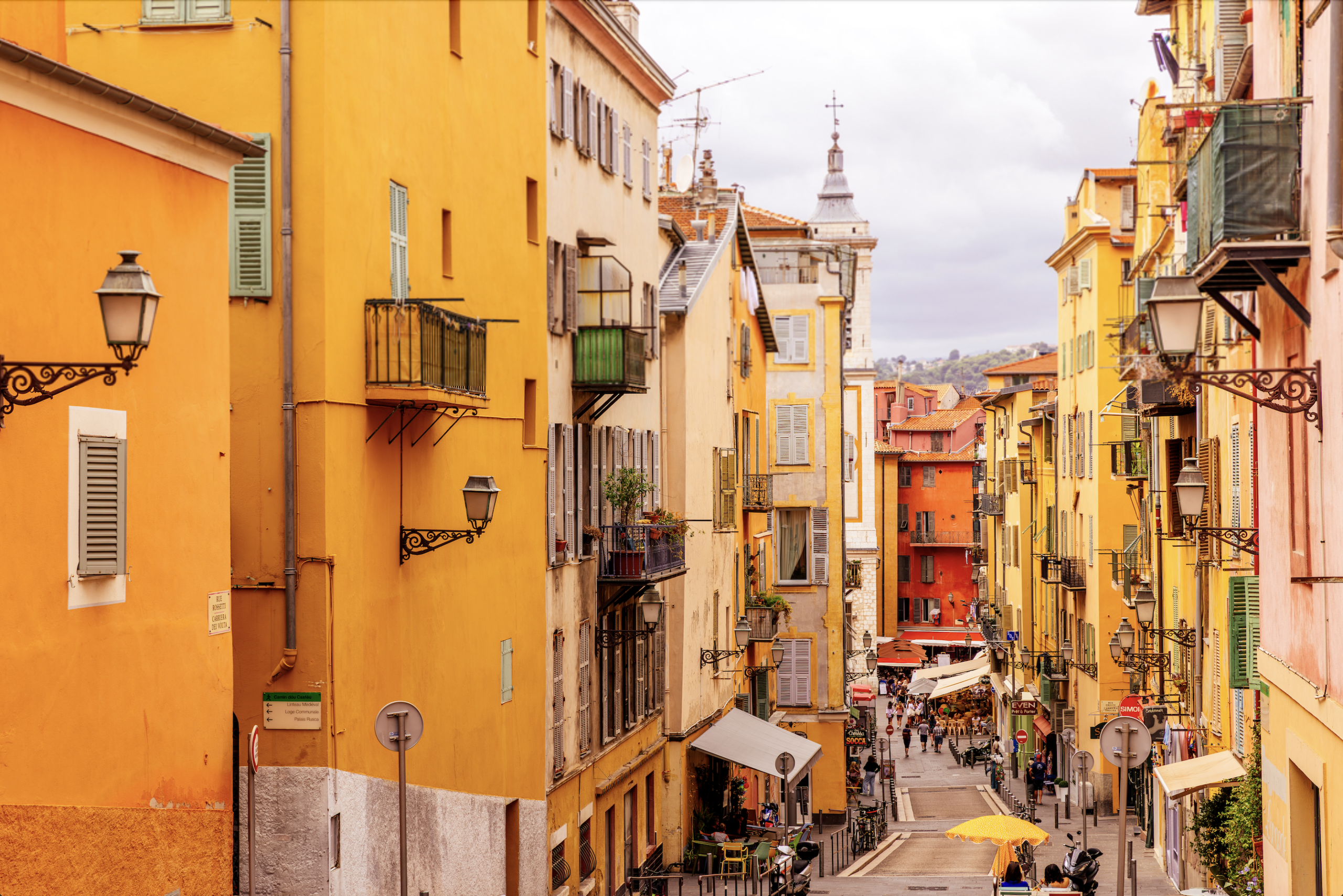
Old Town is a maze of narrow, pedestrian-only streets filled with restaurants, bars, and boutiques, with easy walking access to Castle Hill, the beach, and Place Masséna (check hotel addresses on Hotels.com). Carré d’Or, just west of Old Town, features elegant Belle Époque buildings, upscale hotels like Le Negresco and Anantara Plaza Nice, and a more refined atmosphere while remaining walkable to all major sights (verify hotel ratings on TripAdvisor).
Maya’s honest take: “Stay in Old Town if you want to be in the middle of the action with restaurants and bars on your doorstep. Choose Carré d’Or if you prefer quieter streets, Belle Époque architecture, and slightly more upscale hotels. Avoid staying near the train station unless you’re on a tight budget, as that area feels less polished at night.”
Old Town (Vieux Nice)
- Best for: first-timers, foodies, nightlife lovers, and travelers who want to be in the heart of the action (verify restaurant locations on TripAdvisor).
- Price range: €75 to €200+ per night for hotels and apartments (check current rates on Booking.com).
- Walkability: 5 to 10 minutes to Castle Hill, 5 minutes to the beach, and 10 minutes to Place Masséna (confirm walking distances with Google Maps).
- Atmosphere: bustling, narrow medieval streets, lively evening scene, some noise from bars and restaurants (read recent guest reviews on Hotels.com).
Carré d’Or
- Best for: honeymooners, luxury travelers, and those who prefer elegant Belle Époque architecture with a refined atmosphere (verify hotel amenities on hotel websites).
- Price range: €150 to €400+ per night for 4-star and 5-star hotels (check current rates on Expedia).
- Walkability: 10 to 15 minutes to Old Town, 5 to 10 minutes to the Promenade des Anglais, and 10 minutes to Jean Médecin shopping street (confirm walking distances with Google Maps).
- Atmosphere: quieter than Old Town, wide boulevards, upscale hotels and boutiques, more residential feel (read neighborhood guides on local blogs).
Budget-friendly areas
- Jean Médecin and near the train station: €50 to €100 per night for budget hotels and hostels (verify hostel ratings on Hostelworld).
- Libération neighborhood: local atmosphere, good tram connections, lower prices than Old Town (check tram routes on the Lignes d’Azur website).
- Trade-off: less picturesque, more urban feel, 15 to 20 minutes walk to Old Town and beaches (confirm walking distances with Google Maps).
What does a day in Nice actually cost?
Nice can be done on a backpacker budget or a luxury splurge, with daily costs ranging from €75 to €400+ depending on accommodation, dining, and activity choices (verify current prices with official sources). The French Riviera is not cheap, but strategic choices on accommodation and meals can keep costs manageable even in peak season (check accommodation rates on Booking.com).
Backpacker budget: €75 to €95 per day
- Accommodation: €25 to €50 for hostel dorm or private room in shared apartment (check current rates on Hostelworld).
- Food: €20 to €30 for market meals, bakeries, and one sit-down lunch (verify restaurant prices on TripAdvisor).
- Transport: €3 to €7 for walking plus one or two tram trips at €1.70 each (confirm tram fares on Lignes d’Azur website).
- Activities: €8 to €15 for one museum entry or free beach time (check museum prices on official websites).
Mid-range budget: €140 to €180 per day
- Accommodation: €75 to €110 for budget hotel or Airbnb studio (check current rates on Booking.com).
- Food: €45 to €65 for restaurant lunch with wine and casual dinner (verify meal prices on restaurant menus via TripAdvisor).
- Transport: €8 to €12 for tram day pass (€7) and one regional train day trip (confirm train fares on SNCF Connect).
- Activities: €15 to €30 for two museums or a guided tour (check tour prices on GetYourGuide).
Luxury budget: €300+ per day
- Accommodation: €180+ for 4-star or 5-star hotel with sea view (check current rates on Hotels.com).
- Food: €90+ for full dinner with wine, no compromises on restaurant choices (verify fine dining prices on Michelin Guide website).
- Transport: €32+ for taxis or private transfers as needed (confirm taxi fares with Nice Airport website).
- Activities: €50+ for private tours, boat rentals, or spa treatments (check tour prices on GetYourGuide and Viator).
Maya’s honest take: “The biggest budget surprise in Nice is accommodation. Summer prices can double compared to shoulder season, and Old Town hotels book out months in advance. If you’re flexible on dates, visiting in May, June, or September saves 25% to 35% on hotels compared to July and August.”
How do you get around Nice?
Nice is highly walkable, with most major sights within 20 to 30 minutes on foot from Old Town or Carré d’Or. The tram and bus network covers longer distances, and regional trains connect to Monaco, Èze, Cannes, and Antibes in 20 to 40 minutes (verify train schedules on SNCF Connect).
The Lignes d’Azur network operates two tram lines and dozens of bus routes, with a single ticket costing €1.70 and valid for 74 minutes with unlimited transfers (verify current fares on the Lignes d’Azur website). Tram Line 1 runs from the hospital in the west to the port in the east, passing through Jean Médecin and Place Masséna, while Tram Line 2 connects the airport to the port via the city center (check tram maps on the official transport website).
Regional trains operated by SNCF TER connect Nice-Ville station to Monaco (20 minutes, €4 to €5), Èze-sur-Mer (12 minutes, €3 to €4), Cannes (30 minutes, €8 to €10), and Antibes (25 minutes, €6 to €8) (confirm current fares on SNCF Connect app). The critical detail: QR codes on train tickets only activate 30 minutes before departure, even if you purchase them days in advance. Don’t panic when your ticket shows as invalid the day before, this is normal (verify ticketing rules with SNCF).
Maya’s honest take: “Download the SNCF Connect app before you arrive and buy your regional train tickets there. The app shows real-time departures, platform numbers, and the 30-minute activation countdown. Trying to figure this out at the station with spotty WiFi is a stress you don’t need.”
Tram and bus tickets
- Single ticket: €1.70, valid for 74 minutes with unlimited transfers (verify current fares on Lignes d’Azur website).
- 1-day pass: €7 for unlimited travel on tram and bus (check pass details on official transport website).
- 7-day pass: €20 for unlimited travel across the network (confirm pass validity with Lignes d’Azur).
- Where to buy: tram stop machines, tobacco shops (tabacs), or on buses for €2 (verify ticket vendors on Lignes d’Azur website).
Regional train day trips
- Monaco: 20 minutes, €4 to €5 each way (confirm current fares on SNCF Connect app).
- Èze-sur-Mer: 12 minutes, €3 to €4 each way, plus bus or 45-minute hike to Èze village (verify bus connections on regional transport websites).
- Cannes: 30 minutes, €8 to €10 each way (check train schedules on SNCF website).
- Antibes: 25 minutes, €6 to €8 each way (confirm ticket activation rules with SNCF).
What mistakes do first-time visitors to Nice make?
After reviewing dozens of trip reports and speaking with local operators, a clear pattern emerges: most first-timer mistakes cluster around beach expectations, transport logistics, and timing. Here are the seven most common pitfalls and how to avoid them.
- Expecting sandy beaches. Nice’s main beaches are pebbles (galets), not sand. Bring water shoes or rent them on-site for €5 to €10 per day (confirm rental prices with beach operators). The one exception is Ponchettes, a small sandy beach near Castle Hill (verify beach locations on local tourism websites).
- Buying the €10 airport tram ticket without realizing single tickets exist. Airport machines only sell the round-trip “L’Aéro” ticket. Walk one stop to Grand Arénas to buy €1.70 singles if you’re not returning the same day (check ticket machine locations on Lignes d’Azur website).
- Panicking when train QR codes don’t work the day before travel. Regional train tickets only activate 30 minutes before departure, even if purchased days in advance. This is normal, not a malfunction (verify ticketing rules with SNCF).
- Trying to have dinner at 6pm. Most Nice restaurants don’t open for dinner until 7:30pm or 8pm, and many kitchens close between 2:30pm and 7pm. Plan accordingly or stick to bakeries and casual spots (check restaurant hours on TripAdvisor).
- Renting a car for a Nice-only trip. Nice is walkable, the tram network is efficient, and parking is expensive (€2 to €4 per hour in central areas). Only rent a car if you’re planning multiple day trips to remote villages not served by train (verify parking rates with Nice city parking website).
- Underestimating pickpocket risk in crowded areas. Place Masséna, the tram, and the beach promenade are hotspots for pickpockets. Keep bags zipped, wallets in front pockets, and phones secured (check safety advice on local police websites).
- Visiting in August without booking months ahead. August is peak season, with accommodation prices 30% to 50% higher than shoulder season and many local shops closed for summer holidays. Book at least 60 days out or expect limited availability and inflated prices (verify hotel availability on Booking.com).
Maya’s honest take: “The water shoes thing is the most common regret I hear. People show up expecting soft sand, step onto sharp pebbles, and spend the rest of the trip wading awkwardly. A €10 pair of water shoes from a local sports store transforms the beach experience.”
Frequently asked questions
Is Nice, France safe for tourists?
Nice is generally safe for tourists, with violent crime rare and most incidents limited to pickpocketing in crowded areas like Place Masséna, the tram, and the beach promenade (verify current safety advice with local police websites). Use standard precautions: keep bags zipped, wallets in front pockets, and avoid leaving valuables unattended on the beach (check travel advisories on government websites).
Is Nice expensive compared to other French cities?
Nice is more expensive than most French cities outside Paris, with accommodation and dining costs 20% to 40% higher than Lyon or Marseille (verify price comparisons on hotel booking sites). Daily budgets range from €75 to €95 for backpackers, €140 to €180 for mid-range travelers, and €300+ for luxury stays (check current rates on Booking.com).
How many days do you need in Nice?
Two days covers the main sights (Old Town, Castle Hill, Promenade des Anglais), 4 days allows for a day trip to Monaco or Èze plus beach time, and a week lets you explore multiple day trips and neighborhoods at a relaxed pace (verify day-trip schedules on SNCF Connect).
Do I need to speak French to visit Nice?
No, English is widely spoken in tourist areas, hotels, and restaurants, though learning basic French phrases like “bonjour” and “merci” is appreciated (verify language expectations with hotel and restaurant websites). In local markets and smaller shops, French is more common, so a translation app can help (check app recommendations on travel forums).
What is the best beach in Nice?
Ponchettes is the only sandy beach in Nice, located near Castle Hill and easily walkable from Old Town (verify beach locations on local tourism websites). The main beaches along the Promenade des Anglais are pebbles, so bring water shoes or rent them on-site for €5 to €10 per day (confirm rental prices with beach operators).
Is Nice walkable without a car?
Yes, Nice is highly walkable, with most major sights within 20 to 30 minutes on foot from Old Town or Carré d’Or (confirm walking distances with Google Maps). The tram and bus network covers longer distances, and regional trains connect to Monaco, Èze, Cannes, and Antibes in 20 to 40 minutes (verify train schedules on SNCF Connect).
What is the best time to visit Nice, France?
May to June and September offer the best balance of warm weather, thinner crowds, and lower prices than peak summer (verify seasonal events with the Nice Tourism Office). July and August bring hot weather and packed beaches but also peak prices and limited availability (check hotel rates on Booking.com).
Do I need a visa to visit Nice, France?
Visitors from the US, Canada, UK, Australia, and EU countries do not need a visa for stays up to 90 days within a 180-day period in the Schengen Area (verify visa requirements with the French Ministry of Foreign Affairs website). Check your specific nationality’s requirements on official government websites before travel (confirm entry rules with embassy websites).
Plan your trip: booking platforms we trust
I’ve tested these platforms across dozens of trips for reliability, customer support, and real inventory. They’re not all right for every situation, but each one solves a specific problem better than the alternatives.
Booking.com
Widest selection of Nice hotels with free cancellation on most properties, including Old Town and Carré d’Or.
Hotels.com
Loyalty rewards program for repeat travelers booking mid-range and luxury Nice hotels.
Expedia
Flight and hotel packages for Nice, plus car rentals if you’re planning day trips beyond train routes.
GetYourGuide
Verified tours and activities in Nice, including Old Town walking tours, cooking classes, and boat rentals.
TripAdvisor
Real traveler reviews for restaurants, hotels, and attractions in Nice and the French Riviera.
Kayak
Flight price comparison for Nice Côte d’Azur Airport from multiple airlines and booking sites.
More France and French Riviera travel guides
If you’re planning a broader France trip or need more destination-specific advice, these guides cover the next steps in your itinerary.
- Hotels in France and the French Riviera — budget to luxury accommodation guides with verified prices.
- Best things to do in France — from Paris museums to Riviera beaches and mountain hiking.
- Travel planning guides — itineraries, packing lists, and logistics for European trips.
- Visa requirements for France and Schengen Area — entry rules, permitted stay lengths, and extension processes.
- How to find cheap flights to Europe — fare comparison strategies and booking timing tips.
WakaAbuja does its best to keep all information accurate at the time of publishing. Prices, policies, and availability change regularly. Always verify with official sources before you travel. We are not liable for errors caused by outdated information. Travel insurance is strongly recommended.