
advertisement
Mount Robson Provincial Park Canada: The Ultimate Visitor’s Guide
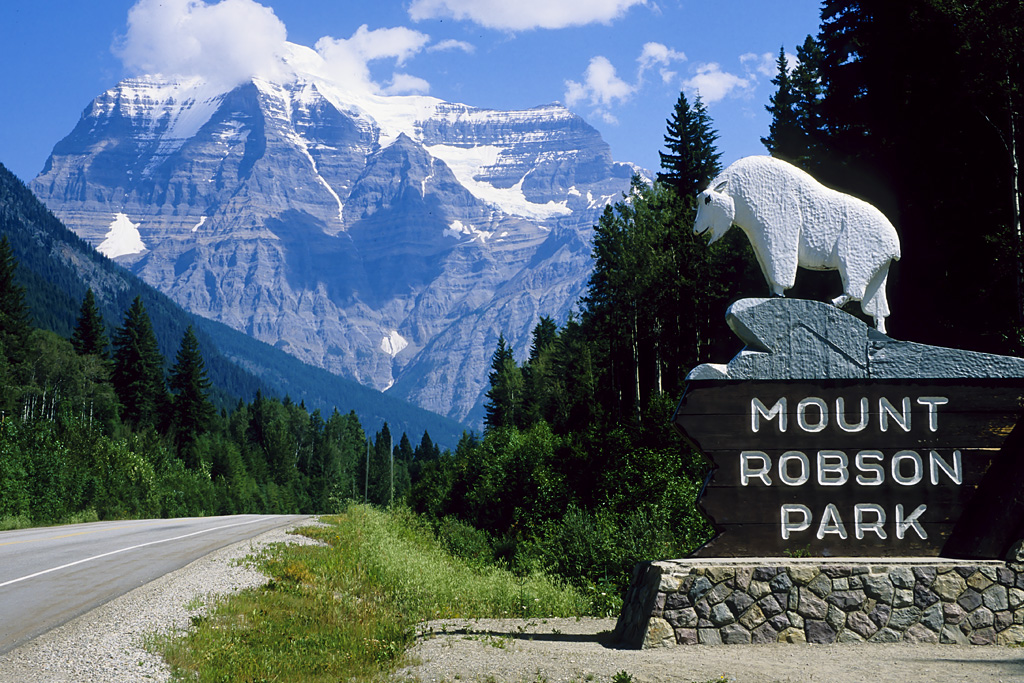
Mount Robson Provincial Park is a 2,249-square-kilometer wilderness area in British Columbia, Canada, anchored by the tallest peak in the Canadian Rockies at 3,954 meters.
The park delivers world-class multi-day backpacking on the Berg Lake Trail, abundant wildlife viewing along the Yellowhead Highway corridor, and over a dozen day hikes ranging from easy lakeside strolls to challenging alpine scrambles. Most visitors pair it with a Jasper National Park trip since the park boundary sits just 24 kilometers west of the Jasper townsite.
I still remember the first time Chidi, our lead outdoors writer at WakaAbuja, pulled over at the Mount Robson viewpoint off Highway 16. He had just driven five hours from Edmonton, jet-lagged and running on coffee, and then the entire mountain punched through the clouds in front of him. He sat on the hood of the rental car for twenty minutes, not saying a word. That is what Mount Robson does to people.
This guide is everything we have learned across multiple visits, including one memorable trip where Fatima, our Lagos correspondent, underestimated just how cold a Canadian alpine lake can be in August. (She screamed. Loudly.) Whether you are planning the full Berg Lake Trail or just want to stretch your legs on a day hike, here is how to do Mount Robson Provincial Park properly.
Jump to: Getting There | Best Time to Visit | Berg Lake Trail | Reservations Guide | Other Trails | Where to Stay | Wildlife | Packing List | What to Avoid | FAQ
Key takeaways
- Mount Robson is the highest peak in the Canadian Rockies at 3,954 meters, and the park spans 2,249 square kilometers of protected wilderness.
- The Berg Lake Trail is the park’s flagship experience, a 42-kilometer round-trip backpacking route that typically takes 3 to 5 days.
- Berg Lake Trail reservations open at 7:00 a.m. Pacific Time exactly four months before your planned start date and sell out within minutes for peak-season dates.
- You do not need to camp overnight to enjoy the park; at least seven day hikes and multiple roadside viewpoints deliver spectacular experiences.
- The park is home to grizzly bears, black bears, moose, mountain goats, and woodland caribou; carrying bear spray and knowing how to use it is non-negotiable.
- Cell service is essentially nonexistent throughout the park; download offline maps and tell someone your itinerary before you go.
- The closest major town with full services is Jasper, Alberta, roughly 85 kilometers east of the park entrance.
Where exactly is Mount Robson Provincial Park and how do I get there?
Mount Robson Provincial Park sits in east-central British Columbia, straddling the Yellowhead Highway (Highway 16) roughly 390 kilometers northeast of Prince George and 530 kilometers west of Edmonton. The park’s western boundary bumps right up against the Alberta border, and the eastern edge of Jasper National Park is literally a 24-kilometer drive away.
This makes it one of the easiest major wilderness parks to access in the entire Canadian Rockies system.
The nearest international airports are Edmonton International Airport (YEG, about 5.5 hours east) and Calgary International Airport (YYC, about 6.5 hours southeast). For a shorter drive, Prince George Airport (YXS) is roughly 4 hours west.
Chidi has done the Edmonton approach twice now and swears it is the more scenic drive, following the Yellowhead Highway through rolling foothills that gradually sharpen into proper mountain peaks. If you are already planning a Jasper National Park itinerary, Mount Robson is a natural add-on since you are already practically next door.
There is no public transit to the park. You need a vehicle. The drive from Jasper to the Mount Robson Visitor Centre takes about 50 minutes on a well-maintained paved highway. Watch for wildlife on the road, especially at dawn and dusk. Fatima counted seventeen elk along the Yellowhead corridor during one early-morning drive, and that was before she even reached the park boundary.

Chidi’s honest take: “Rent the car in Edmonton, not Vancouver. The Vancouver drive is gorgeous but eats up two full days of your trip. Edmonton to Mount Robson is a single-day push with time left for a sunset walk at Kinney Lake if you start early.”
Best for road-trippers
- Edmonton to Mount Robson: 5.5 hours via Highway 16, fully paved, plenty of fuel stops.
- Jasper to Mount Robson: 50 minutes, one of the most wildlife-rich highway stretches in Canada.
- Calgary to Mount Robson: 6.5 hours via the Icefields Parkway and Highway 16, arguably the most scenic approach.
Worth considering
- Prince George approach: 4 hours west, quieter highway, and fewer services once you leave town.
- Kamloops to Mount Robson: 5 hours via Highway 5, a solid option if you are looping through southern BC.
When is the best time to visit Mount Robson Provincial Park?
The park is open year-round, but for practical purposes, your window for hiking and comfortable camping runs from mid-June through late September. July and August deliver the most reliable weather, with daytime highs between 18 and 25 degrees Celsius and the lowest chance of trail-obscuring snow at higher elevations. These two months also bring the heaviest crowds, particularly on the Berg Lake Trail, where every campsite books out the moment reservations open.
Late June and early September are the sweet spots if you want quieter trails and still-reasonable conditions. Chidi did the Berg Lake Trail in the third week of September a few years back and had the Emperor Falls campsite nearly to himself, though nighttime temperatures dipped to minus 5 degrees Celsius. The trade-off is real: fewer people means colder nights and a higher chance of early snowfall. Fatima visited in early July and got perfect weather but had to share the trail with what felt like half of Germany.
Winter visits are possible but limited. The Mount Robson Visitor Centre reduces its hours significantly from October through April, and most trails are snowbound.
Cross-country skiing and snowshoeing are options for experienced backcountry travelers, but avalanche risk is serious. If you are looking for a season-by-season breakdown of the Canadian Rockies, we have a full guide that covers what to expect each month.

Fatima’s honest take: “Do not underestimate September. The light is golden, the mosquitoes are gone, and the larches start turning. I would trade a slightly colder sleeping bag night for empty trails any day.”
Is the Berg Lake Trail really worth the hype?
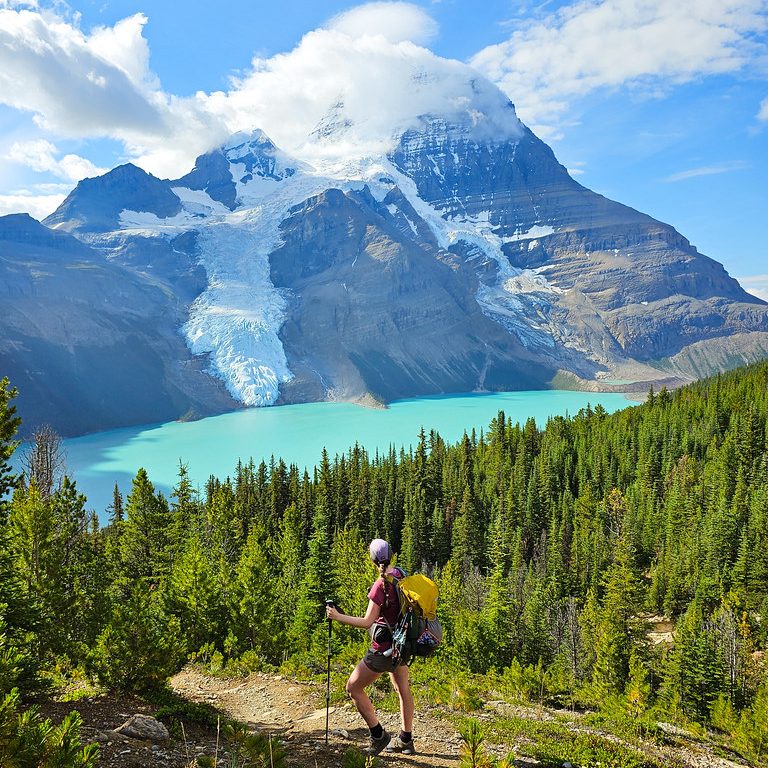
Yes. Unequivocally. The Berg Lake Trail is a 42-kilometer out-and-back route that climbs from the trailhead at 850 meters elevation to Berg Lake at 1,646 meters, passing through three distinct climatic zones along the way. You start in dense temperate rainforest, break into subalpine meadows around Whitehorn, and finish in proper alpine terrain where the glacier-fed turquoise of Berg Lake sits directly beneath the north face of Mount Robson.
@joshmcca Must add to bucket list 📝 🐻 🎒 📍 The Berg Lake Trail, Canada 🇨🇦 Located in Mount Robson Provincial Park right next to Jasper, this is a must do trek. Great for beginners. #berglake #britishcolumbia #solobackpack #camping #canadianrockies
The vertical relief from lake to summit is over 2,300 meters, a wall of rock and ice that makes the scale of the mountain impossible to ignore.
The standard itinerary takes 3 to 5 days. Most hikers camp at Kinney Lake (7 km in) or Whitehorn (11 km in) on night one, push past the Valley of a Thousand Falls to Emperor Falls or Marmot campsite on night two, and spend night three at Berg Lake or Robson Pass before hiking out. The total elevation gain is roughly 800 meters, but it is concentrated in one brutal section between Whitehorn and Emperor Falls, where you climb 500 meters in just 5 kilometers. Chidi still talks about that stretch like it personally insulted him.
As of this year, the Berg Lake Trail has been undergoing phased repairs following significant flood damage that affected several bridge crossings and trail sections. BC Parks has been reopening segments as restoration work is completed. The full trail to Berg Lake may not be accessible during all periods.
You absolutely must check the official BC Parks Mount Robson page for current trail status before planning your trip. Do not rely on year-old Reddit threads or outdated blog posts. Trail conditions change seasonally and after major weather events.
Berg Lake Trail at a glance
- Distance: 42 km round trip (23 km one way to Berg Lake).
- Elevation gain: 800 meters total, with the steepest section between Whitehorn and Emperor Falls.
- Duration: 3 to 5 days is standard; fit hikers can do it in 2 days with an overnight at Berg Lake.
- Campsites: 7 designated campgrounds along the route: Kinney Lake, Whitehorn, Emperor Falls, Marmot, Berg Lake, Rearguard, and Robson Pass.
- Difficulty: Moderate to challenging. The distance is manageable but the climb past Whitehorn is demanding.
Key highlights along the trail
- Kinney Lake: A shockingly blue lake at the 7 km mark, ringed by mountains and accessible as a day hike.
- Valley of a Thousand Falls: Between Whitehorn and Emperor Falls, three major waterfalls cascade off the cliffs above you.
- Emperor Falls: A 46-meter waterfall that thunders down right beside the trail at kilometer 15.
- Berg Lake: The payoff. Icebergs are floating in turquoise water, with Mount Robson’s north face towering directly above.
How do I actually get a Berg Lake Trail reservation?

This is the question that keeps aspiring Berg Lake hikers awake at night. The BC Parks reservation system opens bookings at 7:00 a.m. Pacific Time exactly four months before your intended start date. For a July 15th departure, you can book starting March 15th at 7:00 a.m. PT. And yes, the prime summer dates genuinely sell out within minutes. We are not exaggerating for dramatic effect.
Here is the step-by-step strategy Chidi has used successfully on two separate trips. First, create your BC Parks reservation account at least a week before your booking date. Log in the night before and confirm your account works. Have your credit card details saved in your browser. Second, pick three alternative start dates, not just one. If July 15th is your ideal, also be ready to book July 14th or 16th.
Third, know which campsites you want and in what order. Berg Lake and Robson Pass campsites fill first because they sit right at the alpine lake. Emperor Falls and Marmot fill next. Kinney Lake and Whitehorn fill last since they are lower down and less scenic for an overnight.
On booking day, be on the BC Parks reservation site by 6:55 a.m. PT with your dates and campsite preferences already mapped out on a piece of paper.
Refresh at exactly 7:00 a.m. and move fast. The system assigns a queue position; do not refresh once you are in the queue or you lose your spot. If you do not get a reservation, check back regularly in the weeks leading up to your trip. Cancellations happen, especially 2 to 4 weeks out when people finalize travel plans.
Fatima snagged a Berg Lake spot in mid-August by obsessively checking the cancellation page every morning for ten days straight. Persistence pays.
Chidi’s honest take: “Book Robson Pass or Rearguard as your backup if Berg Lake is gone.” They are only 1 to 2 kilometers from Berg Lake and you can easily day-hike to the lake itself. Most people fixate on the Berg Lake campsite and miss the perfectly good alternatives right next door.”
What other hiking trails are worth your time at Mount Robson?
Most visitors fixate entirely on the Berg Lake Trail and overlook the fact that Mount Robson Provincial Park has more than a dozen other hiking routes.
Some of them rival the best day hikes in Jasper or Banff, and they come with a fraction of the crowds. If you only have a day or you are not up for a multi-day backpacking commitment, you still have excellent options.
Day hikes worth planning your day around
Kinney Lake Trail
Distance: 14 km round trip
Elevation gain: 200 m
Difficulty: Easy to moderate
The first 7 km of the Berg Lake Trail, leading to the stunning Kinney Lake. Flat, wide, and well-maintained. Perfect for families and casual hikers. The lake is an almost unreal shade of blue-green.
Overlander Falls Trail
Distance: 1.5 km round trip
Elevation gain: Minimal
Difficulty: Easy
A short forested walk to a powerful waterfall on the Fraser River. This is a great leg-stretcher if you are passing through on Highway 16 and only have an hour.
Rearguard Falls Trail
Distance: 1 km round trip
Elevation gain: 50 m
Difficulty: Easy
This waterfall marks the furthest upstream migration point of Chinook salmon on the Fraser River. If you visit in late summer, you might see salmon leaping the falls.
Harder day hikes and backpacking alternatives
Mount Fitzwilliam Trail
Distance: 22 km round trip
Elevation gain: 1,100 m
Difficulty: Challenging
A serious day hike or overnight backpack to an alpine basin with views back toward Mount Robson. Far less trafficked than Berg Lake. Requires route-finding skills near the top.
Yellowhead Mountain Trail
Distance: 12 km round trip
Elevation gain: 700 m
Difficulty: Moderate to challenging
Steady climb through forest to alpine meadows with panoramic views of the Yellowhead Pass and surrounding peaks. Excellent fall colors in September.
Snowbird Pass Route
Distance: 20 km round trip from Berg Lake
Elevation gain: 700 m
Difficulty: Challenging
A day-hike extension from the Berg Lake area leading to a high pass with views of the Coleman Glacier. Only accessible if you are already camping at Berg Lake or Robson Pass. Closed during caribou calving season (typically May through mid-July).
For detailed trail reports and current conditions, AllTrails has user-submitted updates that are often more recent than official postings. Cross-reference with the BC Parks website before committing to any route.
Where should you stay near Mount Robson Provincial Park?

Accommodation options directly at Mount Robson are limited to the park’s campgrounds and a single lodge. The broader area around Valemount, BC and Jasper, Alberta, expands your choices considerably. Your decision really comes down to whether you want proximity to the trailhead or access to restaurants and amenities.
The Robson Meadows and Robson River campgrounds sit right inside the park, roughly 2 kilometers from the Berg Lake Trailhead. Both are vehicle-accessible, well-maintained, and equipped with flush toilets, potable water, and fire pits. Reservations open on the same BC Parks system and fill quickly for July and August. These are your best bet if you want to start hiking at dawn without a commute.
For a roof over your head, the Mount Robson Lodge offers cabin accommodations just outside the park boundary. Rooms are basic but comfortable, and the location cannot be beaten. Book through Booking.com for the widest selection of nearby properties, including options in Valemount.
Valemount, about 35 kilometers west of the park, has motels, B&Bs, a grocery store, and a few decent restaurants. It is the most practical base if you want services without driving all the way to Jasper. For families or groups, Vrbo lists several vacation rentals in the Valemount area with full kitchens and multiple bedrooms.
Jasper, while farther at 85 kilometers east, offers the most accommodation variety, from hostels to the iconic Fairmont Jasper Park Lodge. Check Expedia for flight and hotel packages if you are flying into Edmonton or Calgary and want to bundle your bookings.
Fatima’s honest take: “Stay at Robson Meadows campground if you can snag a spot. Waking up ten minutes from the trailhead instead of an hour away in Jasper means you start hiking in cool morning air instead of midday heat. It changes the whole experience.”
Inside the park
- Robson Meadows Campground: 125 sites, reservations required, open mid-May through late September.
- Robson River Campground: 19 sites, slightly more rustic, also reservable.
- Berg Lake Trail campsites: 7 backcountry campgrounds, reservation-only, for trail users.
Outside the park
- Mount Robson Lodge: Cabins and rooms, the closest roofed accommodation to the park entrance.
- Valemount (35 km west): Motels, grocery stores, fuel, and restaurants.
- Jasper (85 km east): Full-service mountain town with extensive lodging, dining, and outdoor outfitters.
What wildlife will you actually see at Mount Robson?
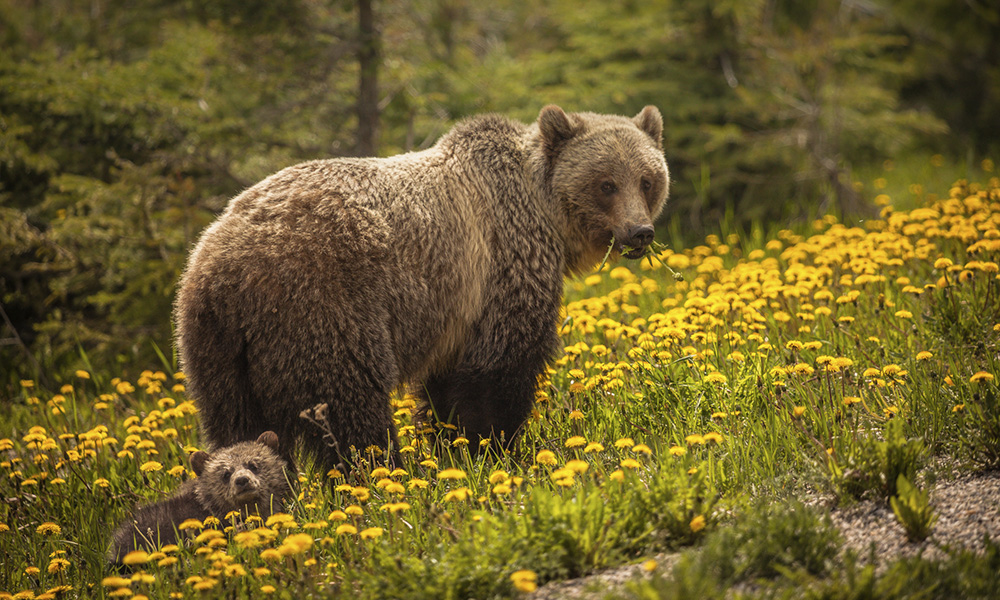
Mount Robson Provincial Park sits in a critical wildlife corridor between the Rocky Mountains and the interior of British Columbia. The concentration of large mammals here is among the highest in any Canadian national or provincial park system. Grizzly bears and black bears both inhabit the park in significant numbers.
During a single four-day trip on the Berg Lake Trail, Chidi saw three black bears and one grizzly sow with two cubs, all at a safe distance. The key word there is distance.
Beyond bears, the park supports moose, elk, mule deer, white-tailed deer, mountain goats, bighorn sheep, and a small but persistent population of woodland caribou. The caribou are the reason Snowbird Pass closes during calving season. Wolves and cougars are present but rarely seen. Smaller mammals like marmots, pikas, and hoary marmots are common in alpine areas and far less shy than the big predators. Birders should watch for bald eagles, osprey, Clark’s nutcrackers, and the elusive harlequin ducks that sometimes appear on the Fraser River near Overlander Falls.
Bear safety is not optional here. Every hiker in your group should carry bear spray in a readily accessible holster, not buried in a backpack. Know how to deploy it. Make noise while hiking, especially near streams and in dense brush where visibility is limited. Cook and store food at least 100 meters from your tent.
The BC Parks trailhead signage includes current wildlife activity warnings; read them before you start hiking. If you want to read more about staying safe in bear country, we have a bear safety guide that covers everything from spray technique to food storage.
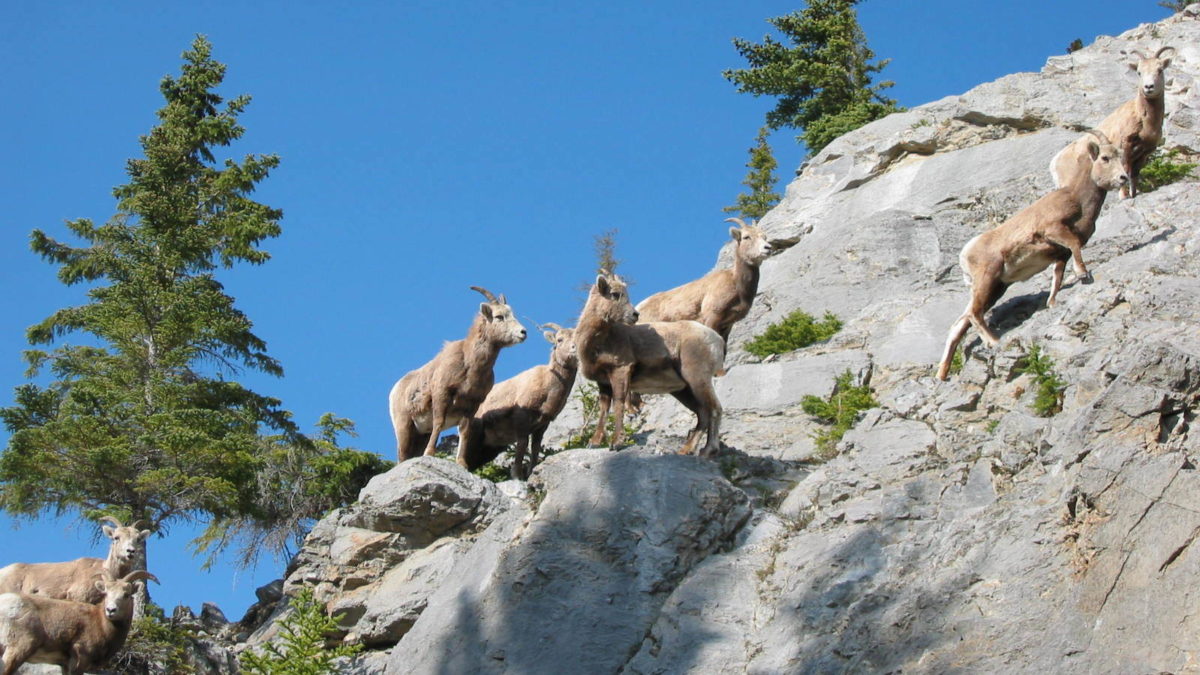
Chidi’s honest take: “The scariest wildlife encounter I have had at Mount Robson was not a bear. It was a mountain goat that refused to move off the trail for ten minutes while I stood there in the rain. Stubborn does not begin to describe it.”
What should you pack for Mount Robson Provincial Park?
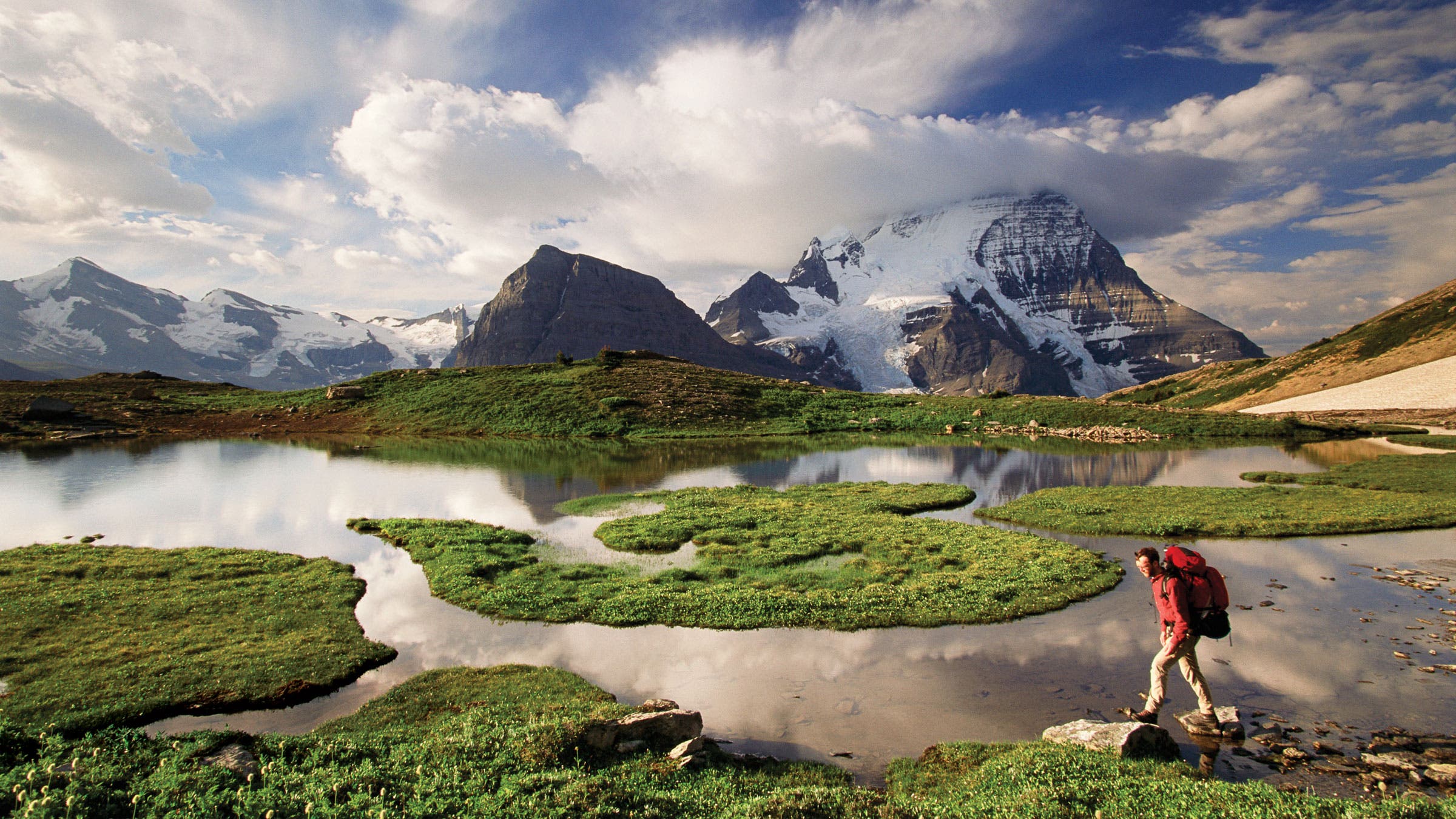
Mount Robson’s weather is famously unpredictable. The mountain generates its own microclimate, and it is not unusual to experience rain, sun, wind, and near-freezing temperatures all in a single day, even in August. The summit of Mount Robson is visible only about 30 percent of the time, according to park interpreters; clouds shroud it more often than not. Packing properly is the difference between a comfortable trip and a miserable one.
For day hikers, the essentials start with waterproof rain gear, both jacket and pants. A rain jacket alone will not cut it when the wind drives rain sideways. Sturdy hiking boots with ankle support are mandatory for anything beyond the Kinney Lake Trail. Bring layers: a moisture-wicking base layer; an insulating mid-layer like fleece or a lightweight puffy jacket; and that waterproof shell.
Add a hat, gloves, and a warm buff even in July. Temperatures at Berg Lake can drop to freezing overnight in any month. Sun protection is equally important since the alpine UV exposure is intense. Carry at least 2 liters of water per person and a water filter or purification tablets if you plan to refill from streams.
For multi-day backpackers, the gear list expands to include a three-season tent rated for wind, a sleeping bag comfortable to at least -5 degrees Celsius, a sleeping pad with good insulation, a backcountry stove, and a reliable bear canister or Ursack for food storage.
Some campsites on the Berg Lake Trail have bear lockers, but not all do. Confirm what is available at your specific campsites before you go. Fatima learned the hard way that a summer-rated sleeping bag in September at Berg Lake means shivering through the night. She now carries a bag rated to minus 7 degrees Celsius for all Canadian Rockies trips.
For a complete Canadian Rockies packing checklist, we have a dedicated guide that breaks down gear by season and activity type.
How do you make the most of a short visit to Mount Robson?
Start at the visitor center.
The Mount Robson Visitor Centre, located just off Highway 16 near the park entrance, is open daily from mid-May through early October. Rangers here have the most current trail conditions, wildlife reports, and weather forecasts. They also maintain a trail register where you can log your plans. This is not just a formality; it is a safety backup when there is no cell service.
Hike to Kinney Lake even if you only have half a day
The 14-kilometer round trip to Kinney Lake is the single best half-day experience in the park. The trail is wide, well-graded, and suitable for most fitness levels. The lake itself is the color of a swimming pool, ringed by steep mountain walls. Pack a lunch and eat it on the gravel beach at the far end of the lake.
Fill your fuel tank in Jasper or Valemount
There are no fuel stations inside Mount Robson Provincial Park. The closest fuel is in Valemount to the west and Jasper to the east. Do not let your tank dip below a quarter full on this stretch of highway. Towing charges in this part of BC are eye-wateringly expensive.
Download offline maps before you arrive
Cell service throughout the park ranges from patchy to nonexistent. Download your maps on Google Maps or AllTrails while you still have WiFi. For backpackers, the Gaia GPS app with offline layers is worth the subscription. A paper map from the visitor center is a smart backup. Refer to BC Parks for official trail maps and advisories.
Budget for a parks pass
As of this year, BC Parks does not charge a day-use fee for Mount Robson Provincial Park. However, camping fees apply for all overnight stays, and backcountry camping on the Berg Lake Trail costs per person per night. Check the BC Parks website for current rates since fees are reviewed annually.
What are the biggest mistakes people make at Mount Robson Provincial Park?
We have watched enough visitors stumble through Mount Robson to spot the patterns. Here are the most common mistakes, some of which our own team members have made firsthand so you do not have to.
- Assuming they will see Mount Robson. The peak is cloud-covered roughly 70 percent of the time. If you see it, consider yourself lucky. Plan your trip around the experience, not the summit view.
- Not booking Berg Lake Trail campsites in advance. Walk-up permits do not exist for this trail. If you show up without a reservation in July or August, you are not hiking to Berg Lake.
- Wearing cotton on a multi-day hike. Cotton kills in the backcountry. It absorbs moisture, dries slowly, and pulls heat from your body. Synthetic or merino wool layers only.
- Hiking alone without telling anyone their plans. Solo hiking is doable here, but someone needs to know your route and expected return time. Leave a note on your car dashboard with your itinerary.
- Storing food in their tent. This is how bears learn to associate tents with food. Use bear lockers where provided or hang your food properly. A fed bear is a dead bear.
- Underestimating the elevation gain past Whitehorn. That 500-meter climb in 5 kilometers breaks people who breezed through the first 11 kilometers. Pace yourself and start early.
- Relying on a single water bottle. Streams are plentiful on the Berg Lake Trail, but you still need capacity to carry water between sources. Two liters minimum.
Frequently asked questions
Is Mount Robson Provincial Park worth visiting if I am not hiking the Berg Lake Trail?
Absolutely. The Kinney Lake day hike alone justifies the drive, and the roadside viewpoints along Highway 16 deliver some of the best mountain photography in the Canadian Rockies. The park also offers shorter waterfall walks, wildlife viewing opportunities, and front-country camping that makes a fantastic base for exploring the broader Yellowhead corridor. Many visitors stop here as a day trip from Jasper and leave wishing they had allocated more time.
Can you visit Mount Robson Provincial Park without camping?
Yes. The Mount Robson Lodge offers cabin and room rentals just outside the park boundary, and Valemount (35 km west) and Jasper (85 km east) both have hotels, motels, and B&Bs. Day hikes like Kinney Lake, Overlander Falls, and Rearguard Falls require no overnight stay. The park’s front-country campgrounds are also an option if you want to camp but do not want to backpack.
Is the Berg Lake Trail open right now?
Trail access has been variable in recent years due to flood damage and ongoing restoration work by BC Parks. Some sections have reopened while others remain under repair. The situation changes by season and sometimes by month. You must check the official BC Parks Mount Robson page for the most current trail status before planning any trip. Do not rely on social media posts or older articles for this information.
Do I need a park pass for Mount Robson Provincial Park?
BC provincial parks do not charge a general day-use entry fee, and Mount Robson is no exception. You can park and hike without purchasing a pass. However, camping fees apply for all front-country and backcountry campsites, and these must be booked in advance through the BC Parks reservation system. A national parks pass is not valid here since Mount Robson is a provincial park, not a federal one.
What is the best month to hike the Berg Lake Trail?
Late July through mid-August offers the most reliable weather and the best chance of snow-free trails at higher elevations. Late August and early September bring fewer crowds, cooler temperatures, and the start of fall colors, but also a higher risk of early snow. Late June can work in low-snow years, but expect patchy snow near Berg Lake and potentially muddy trail conditions. Always check recent trip reports before committing.
Are there bears in Mount Robson Provincial Park?
Yes, both grizzly bears and black bears are present throughout the park in significant numbers. Bear encounters are common enough that every hiker should carry bear spray in an accessible holster and know how to use it. Make noise while hiking, especially in areas with limited visibility. Cook and store all food away from your tent. Check for wildlife advisories at the visitor center before heading out.
How difficult is the hike to Kinney Lake?
The Kinney Lake Trail is rated easy to moderate. It covers 14 kilometers round trip with only 200 meters of elevation gain on a wide, well-maintained path. Most reasonably fit people can complete it in 4 to 5 hours at a leisurely pace. The trail is suitable for families with children and for hikers who do not have extensive mountain experience.
Can you see Mount Robson from the highway?
Yes, and the Mount Robson Viewpoint on Highway 16 is one of the most photographed spots in the Canadian Rockies. It is located roughly 5 kilometers east of the visitor center. The mountain is visible from this pullout roughly 30 percent of the time, with early morning offering the best odds of clear conditions before clouds build around the peak.
Plan your trip: booking platforms we trust
Our WakaAbuja team has used every platform listed here across multiple Canadian Rockies trips. We recommend them because they have worked reliably for us, not because of any sponsorship arrangement.
For a trip to Mount Robson, you will likely need a combination of accommodation, a rental car, and possibly guided activities. Here is where we suggest looking:
Best for hotels in Valemount, Jasper, and Edmonton. Wide selection and reliable cancellation policies.
Ideal for family cabins and vacation rentals near Valemount with full kitchens.
Good for bundling flights to Edmonton or Calgary with hotel bookings.
Use for comparing flight prices across airlines into Edmonton, Calgary, or Prince George.
Look here for guided day hikes and multi-day tours in the Canadian Rockies if you prefer not to go solo.
Best for honest restaurant reviews in Jasper and Valemount, plus recent traveler photos of trail conditions.
Use for loyalty rewards if you book hotels frequently; earn free nights after multiple stays.
Useful for international travelers routing through Asia on the way to Canada; competitive on Edmonton and Calgary hotels.