Trip to Busan: How Many Days You Actually Need, What It Really Costs, and the Famous Spots Worth Skipping
A trip to Busan needs three full days to cover Haeundae, Gamcheon Culture Village, Jagalchi Market, and at least one temple without sprinting. Two days is possible if you drop the East Coast entirely. Budget roughly 90,000 to 150,000 Korean won per person per day for a mid-range trip, excluding flights (confirm current rates with your hotel and tour operator). A day trip from Seoul on the KTX is technically doable but costs you about five hours in transit, so staying overnight is almost always the better call.
I have made the Seoul-to-Busan day trip mistake exactly once. I left at 6am, saw Gamcheon and Haeundae in a blur, ate a late lunch at Jagalchi, and got back to my Seoul hotel at 11pm with sore feet and no memory of what the sea actually looked like. Busan is not a checklist city.
It is a coastal city with hills, a huge fish market, and neighborhoods that reward slowing down. This guide answers the three questions that decide whether your trip works: how many days, what it costs, and which “must-sees” are actually worth your time.
Jump to: How many days | 3-day itinerary | Busan vs Seoul day trip | What it costs | Getting around | What to skip | Safety basics | FAQ
Key takeaways
- Three full days is the honest minimum for a first trip to Busan. Two days of work only if you skip the East Coast beaches.
- A mid-range trip costs roughly 90,000 to 150,000 Korean won per person per day, excluding flights (confirm current prices with your bookings).
- The KTX from Seoul takes about 2.5 hours and runs frequently, but a same-day return wastes five hours in transit.
- Google Maps does not work well for walking directions in Korea. Use Naver Map or KakaoMap instead.
- K-ETA is required for visa-free visitors from many countries, costs 10,000 Korean won, and must be applied for at least 72 hours before departure (check the official K-ETA site).
- Gamcheon Culture Village is worth visiting at 8:30am before the tour buses arrive, not at noon.
How many days do you actually need for a trip to Busan?
Three days. That is the number I give everyone now, and it is the number that lets you see the west side (Gamcheon, Jagalchi, and Gwangalli) on day one, the east side (Haeundae and Haedong Yonggungsa) on day two, and a slower day three for either a hike, a spa, or a second pass at a neighborhood you liked.
Two days is possible but tight. You can do Gamcheon in the morning, Jagalchi for lunch, and Haeundae in the late afternoon, but you will not have time for Haedong Yonggungsa temple, which sits outside the main beach area and takes a half day to reach and see properly. If you are on a tight schedule, two days is a fair compromise. If you came all the way to Korea, give Busan three.
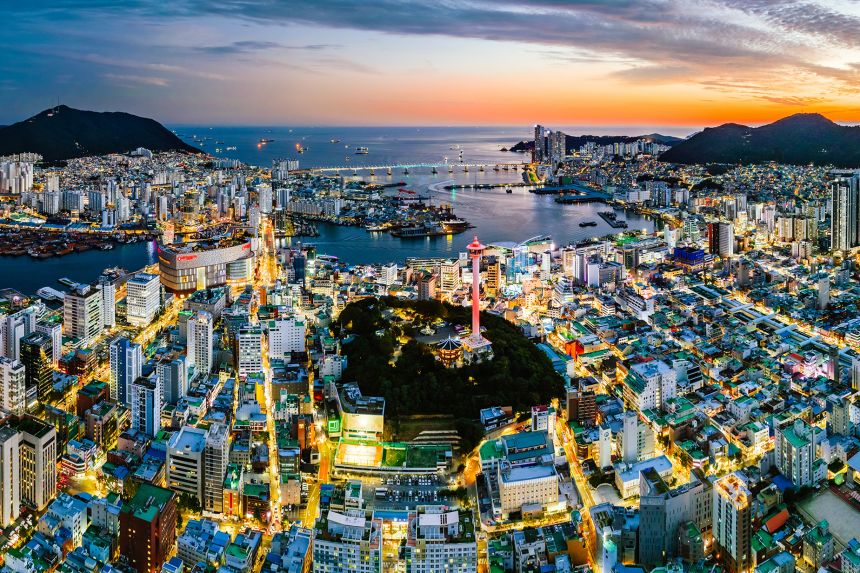
One day is not enough. I have seen it done on a Seoul day trip, and the person came back exhausted and slightly disappointed. Busan rewards staying overnight because the city changes character after dark, especially around Gwangalli Beach, where the bridge lights up.
What does a realistic 3-day Busan itinerary look like?
This is the loop I would give a friend: it groups sights by geography so you are not crossing the city twice, and it front-loads the busiest spots before the crowds.

Day 1: West Busan (Gamcheon, Jagalchi, Gwangalli)
Start at Gamcheon Culture Village at 8:30am. The hillside of painted houses is the most photographed spot in Busan, and by 11am it is shoulder to shoulder. Then take a taxi to Jagalchi Market for a late lunch. Buy seafood on the ground floor, take it upstairs, and pay a small cooking fee per person to have it prepared (confirm the current fee at the stall). Finish at Gwangalli Beach for sunset and dinner, and stay long enough to see the Gwangan Bridge light up.
Day 2: East Busan (Haeundae, Haedong Yonggungsa, Dalmaji Hill)
Head to Haedong Yonggungsa Temple in the morning. It sits on a rocky coast and is one of the few major Korean temples by the sea. Then walk Haeundae Beach and the Dalmaji Hill path in the afternoon. Dinner in the Haeundae area, where you will find raw fish restaurants and more casual Korean barbecue spots. If you have the energy, the Busan X and the Sky observation deck at Haeundae LCT are open late (confirm hours and current ticket prices).
Day 3: Pick your pace.
If you are a hiker, do the Igidae Coastal Walk, an easy cliffside path with sea views. If you want culture, the Beomeosa temple in the hills north of the city takes half a day and feels completely removed from the urban chaos. If you are traveling with family, a spa day at a jjimjilbang is genuinely fun and costs around 15,000 to 20,000 won for entry (confirm current pricing).
Maya’s honest take: “Book your Gamcheon visit for opening time. I once arrived at 11am and spent forty minutes just trying to walk up a staircase through a wall of selfie sticks.”
Should you day trip to Busan from Seoul or stay overnight?
Stay overnight. This is not a close call. The KTX from Seoul Station to Busan Station takes about 2.5 hours each way, and a round trip eats around five hours of your day before you have even seen anything (check current fares and timetables on the official Korail site). You can technically see Gamcheon and Haeundae in six hours, but you will not enjoy them because you are watching the clock.
A day trip makes sense in exactly one scenario: you are on a very short Seoul trip, and Busan is a bonus, not the goal. In that case, take the earliest train, book a guided day tour that includes transport, and accept that you are getting a sampler. For everyone else, two nights in Busan beats any day trip.
Best for day trip
- Short Seoul trip, where Busan is a bonus
- Booking a guided tour with transport included
- Seeing Gamcheon and one beach, no more
Worth considering
- Two nights in Busan for a proper trip
- KTX tickets on Kayak to compare rail and flight combinations
What does a trip to Busan actually cost?
Ranges are useless without a total. Here is what a real three-day trip looks like for three types of traveler, excluding international flights. All figures are per person.
Budget travelers staying in guesthouses or hostels, eating street food and convenience store meals, and using the subway can manage on about 70,000 to 90,000 Korean won per day (confirm current rates with your accommodation). That puts a 3-day trip at roughly 210,000 to 270,000 won before flights. Mid-range travelers in a 3- or 4-star hotel, eating at sit-down restaurants and paying for one paid attraction per day, should budget 120,000 to 180,000 won daily, or roughly 360,000 to 540,000 won for three days. Luxury travelers at Haeundae’s beachfront hotels with private tours can easily spend 300,000 won per day or more (check current hotel rates before booking).
Food is where the numbers move most. A bowl of milmyeon (cold noodles) is a cheap lunch, somewhere around 8,000 to 10,000 won. A raw fish meal at Jagalchi with cooking fees can run 40,000 won per person depending on what you buy (confirm market prices on the day). The KTX from Seoul is roughly 60,000 won one way for a standard seat (check Korail’s official site for current fares). None of these numbers are fixed, and prices shift seasonally.
How do you get around Busan without a car?
The Google Maps problem
Google Maps walking directions in Korea are unreliable because the Korean government restricts the export of detailed map data. Use Naver Map or KakaoMap instead. Both have English interfaces and give you accurate transit and walking routes. I learned this the hard way on my first trip when Google Maps tried to walk me through a wall to get to a subway entrance.
Subway and T-money card
The Busan subway is clean, cheap, and covers most of the city. A single ride is about 1,400 won with a T-money card, which you buy at any convenience store for a small deposit (confirm current fares on the official Busan Metro site). Tap on and tap off, and top up at station machines as you go. Taxis are also affordable and useful for short hops between Gamcheon and Jagalchi, where the subway does not go directly.
Getting to Busan from Seoul or the airport
From Seoul, take the KTX from Seoul Station or Suseo Station to Busan Station. From Gimhae International Airport, the light rail connects to the subway network in about 20 minutes. If you are flying in, compare fares on Kayak before you commit to a Seoul arrival, because direct flights to Gimhae are often cheaper than the KTX once you factor in the Seoul transfer.
Which famous Busan spots are worth skipping?
This is the section nobody writes because everyone wants to be positive. Here is my honest list.
Skip the Busan Tower unless you are already in Yongdusan Park. The view is fine, but the Busan X Sky observation deck at Haeundae is taller and gives you the coastal view that makes the city special (confirm current ticket prices at either).
Skip Haeundae Beach in peak summer if you hate crowds. In July and August, it is shoulder to shoulder. Gwangalli is smaller but less crowded, and it has the better night view.
Skip the trick-eye museum and the aquarium if you have been to one before. They are fine for families with young kids, but they are not what makes Busan distinct.
Skip the Gamcheon “must-buy” stamp tour if you are short on time. It is fun, but it locks you into a specific route through the village, and you will miss the quieter alleyways that are the real reward.
Skip the DMZ-style “Busan city tour bus” if you can navigate the subway. The city is easy to do on your own, and the bus locks you into a fixed schedule.
Is Busan safe for tourists, and what should you know?
Busan is a safe city by international standards. Violent crime against tourists is rare, and walking around Haeundae or Gwangalli at night is normal and comfortable. The bigger risks are petty theft in crowded markets, traffic when you are crossing streets (Korean drivers are assertive), and getting lost on the hillside staircases in Gamcheon.
Emergency numbers: 112 for police, 119 for fire and ambulance. Both have English-speaking operators. Pharmacies are marked with a green cross, and most neighborhoods have one within walking distance. If you need a hospital, the major international clinics are in the Haeundae and Seomyeon areas. Buy a local eSIM or SIM at the airport on arrival so you can use Naver Map and call a taxi if needed.
Maya’s honest take: “Solo travelers, especially women, generally report feeling safe in Busan. The bigger nuisance is drunk men on late-night subway cars in the Seomyeon area, so avoid the last trains if you can.”
When is the best time to visit Busan?
Late spring and early autumn. April to May brings cherry blossoms and mild temperatures. September to October is warm, dry, and clear. The Busan International Film Festival in early October is a real draw, but hotel prices spike during it (check current rates early).
Summer is hot and humid, with heavy rain in July. Winter is cold but dry, and Christmas lights along Haeundae make December worth considering if you do not mind the chill. New Year sunrise at Haedong Yonggungsa is a genuine local tradition, and the temple gets crowded at dawn on January 1st. Plan around whichever of these matters to you and book hotels early if your dates fall on an event weekend.
Frequently asked questions
How many days do you need for a trip to Busan?
Three full days is the honest minimum for a first visit. That gives you time for west Busan, east Busan, and a slower third day. Two days works if you skip the east coast beaches and temple. One day is too short to enjoy the city.
Is Busan worth visiting compared to Seoul?
Yes, and it feels genuinely different. Busan has beaches, a major fish market, hillside neighborhoods, and a coastal temple that Seoul cannot match. Seoul is the capital with more museums and nightlife, but Busan is the better city for a slower, seaside side of Korea.
Can you do a day trip to Busan from Seoul?
You can, but it is not ideal. The KTX takes about 2.5 hours each way, so a round trip eats five hours. A guided day tour handles the logistics but still leaves you with only about six hours in the city. Staying overnight is a much better experience.
Do you need a visa or K-ETA for Busan?
Many visa-free visitors, including US, UK, Canadian, and Australian passport holders, need a K-ETA before boarding. It costs about 10,000 Korean won and must be applied for at least 72 hours before departure (confirm the current fee on the official K-ETA site). Some nationalities are temporarily exempt, so check before you book flights.
Does Google Maps work in Busan?
Not well. Google Maps is restricted in Korea for detailed navigation. Use Naver Map or KakaoMap instead, both of which have English interfaces and accurate walking and transit directions.
What is the best area to stay in Busan?
Haeundae is best for beach access and upscale hotels. Seomyeon is best for transit, nightlife, and budget options. Gwangalli is best for the bridge view and a slightly quieter night scene. For a first trip, Haeundae or Seomyeon makes the logistics easiest.
Plan your trip: booking platforms we trust
I use these platforms because they consistently surface useful inventory and clear pricing for Korea, and I have booked through most of them myself. The links below are affiliate links, which means WakaAbuja may earn a small commission if you book through them at no extra cost to you. Use the one that fits your trip, not all of them.
Booking.com
Best for Haeundae and Seomyeon hotels with free cancellation.
Agoda
Strong Asian hotel inventory and frequent Busan deals.
GetYourGuide
Tours and day trips, including Busan city tours from Seoul.
Kayak
Compare flights into Gimhae versus Seoul Incheon before you book.
TripAdvisor
Reviews and restaurant finds, especially for Jagalchi and Haeundae.
WakaAbuja does its best to keep all information accurate at the time of publishing. Prices, policies, and availability change regularly. Always verify with official sources before you travel. We are not liable for errors caused by outdated information. Travel insurance is strongly recommended.