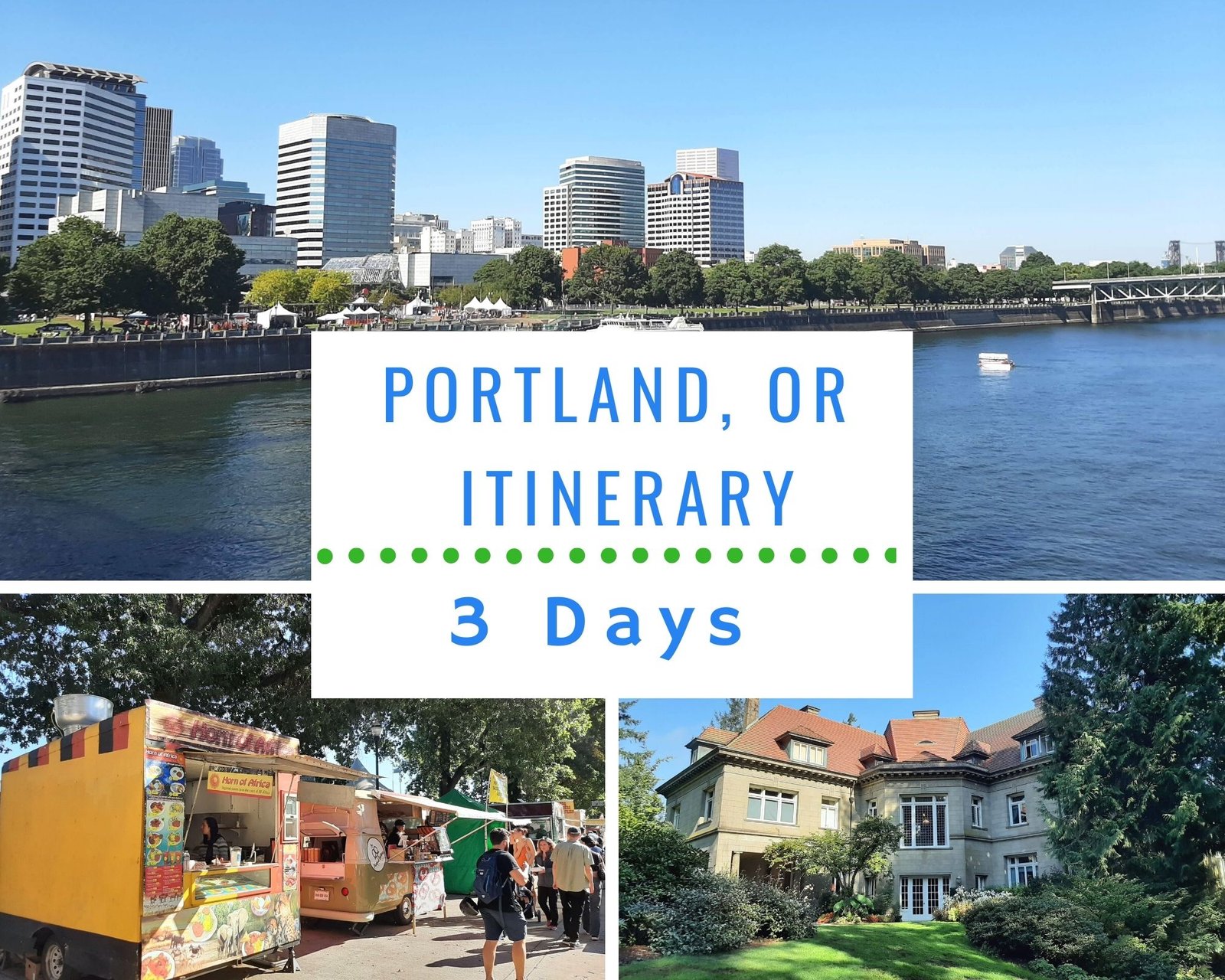
A trip to Portland, Oregon, works best with 3 to 4 days to cover the downtown core, east-side neighborhoods, and a short nature excursion. Budget roughly $150–$250 USD per person per day for mid-range comfort, and schedule your visit between late May and early October if you want to avoid the steady drizzle that defines the other seven months of the year.
A trip to Portland, Oregon, sounds straightforward until you are staring at a map trying to figure out how many days you need, what a food cart lunch actually costs, and whether the rain reputation is exaggerated. It is not, from October through April. This guide is built from repeated trips by our team, most recently a week-long stay by our Vancouver-based correspondent, Chloe, who tracked every dollar spent so you can budget realistically.
Whether you are flying in from Toronto, Chicago, or London, here is how to plan a Portland trip that delivers the food, the forests, and the famously weird city energy without logistical headaches.
Jump to: Quick Facts | When to Visit | Getting There & Around | Where to Stay | Trip Costs | Itineraries | What to Eat | Things to Do | US & Canada Visitor Tips | FAQ
Key takeaways
- Plan for 3 to 4 full days to cover Portland’s core neighborhoods and one nature day trip like the Columbia River Gorge.
- A mid-range daily budget runs $175–$225 USD per person, covering a boutique hotel or private Airbnb room, three meals with one at a sit-down restaurant, transit, and one paid attraction.
- Late June through September is peak season with dry, warm days; May and October are shoulder months with lighter crowds and occasionally wet conditions.
- PDX airport to downtown takes roughly 35 minutes on the MAX Red Line light rail, costing $2.50 USD, which is dramatically cheaper than a $35–$45 ride-share.
- Canadians benefit from a favorable exchange rate as of this year but should always check current rates; no ESTA is required, just a valid passport.
Quick Facts for a Trip to Portland
Most first-time visitors underestimate Portland’s sprawl. The city spreads across the Willamette River with downtown and the Pearl District on the west side and the hipper residential neighborhoods like Hawthorne, Alberta, and Division on the east side. Crossing between the two is easy by bus, bike, or ride-share, but the distance means you cannot do everything on foot.
Chloe, who handled our latest research trip, described Portland as “a city of distinct villages stitched together by bridges.” That phrasing stuck with us because it explains why the city feels both intimate and surprisingly large. A 20-minute bus ride with a transfer is a normal part of a Portland day, not a sign of poor planning.
Chloe’s honest take: “Portland is not a city where you check off a list of landmarks and feel done. The satisfaction comes from lingering, whether that’s an extra hour in Powell’s Books or a second coffee because the cafe has a fireplace and it started raining. Budget time, not just money.”
Essential stats
- Recommended stay: 3–4 days for first-timers.
- Currency: US Dollar (USD). Check current CAD or GBP conversion before booking.
- Airport: Portland International Airport (PDX).
- Public transit: TriMet buses, MAX light rail, and the Portland Streetcar.
This is not Portland, Maine
- UK and Canadian travelers occasionally book flights to the wrong Portland. Confirm your ticket says PDX, not PWM. Portland, Oregon is on the West Coast, roughly three hours south of Seattle by car.
When Is the Best Time for a Trip to Portland, Oregon?
The rain reputation is earned. From late October through April, Portland is persistently drizzly, grey, and damp. The locals do not let it slow them down, and you should not either if you pack correctly, but a summer trip is simply easier. July and August deliver reliably dry days in the 25–29°C range (high 70s to mid-80s Fahrenheit) with low humidity, which feels glorious after a wet spring.
September is our personal recommendation. The summer crowds thin out, hotel prices dip slightly, and the weather often stays dry and warm through the third week of the month. The International Rose Test Garden still has blooms, and the food cart pods are fully open but less packed. If you must visit in winter, build your itinerary around indoor attractions: Powell’s Books, the Portland Art Museum, coffee shops, breweries, and live music venues. Forest Park trails turn to mud, so the Gorge is a better winter outdoor bet if the roads are ice-free.
Best months
- June–September: Dry, warm, all patios open, farmers markets at peak.
- May & October: Shoulder season, lower hotel rates, some rain but fewer tourists.
Worth considering
- November–February: Cheapest flights and hotels, but plan for rain daily. The holiday lights at the Grotto are a legitimate winter attraction.
How Do You Get to Portland and Navigate the City Once You’re There?
Portland International Airport (PDX) sits about 10 miles northeast of downtown. The MAX Red Line light rail connects directly from the terminal to the city center in roughly 35 minutes for $2.50 USD. This is the single best logistical tip we can give: skip the $40 ride-share unless you are arriving after midnight when MAX service is reduced. The station is inside the airport, the trains are clean, and you will share the car with a mix of travelers and locals.
For a road trip from Seattle, the drive is about three hours on I-5 South. From Vancouver, BC, budget roughly five and a half hours including a border crossing at the Peace Arch or Pacific Highway entry. Amtrak Cascades also runs a scenic train from Seattle to Portland in about three and a half hours with a stop in Tacoma and Kelso. Canadians connecting from Vancouver should note that the Amtrak Cascades route currently requires a bus connection from Vancouver to Seattle, then the train south. Check the official Amtrak Cascades website for current schedules as of this year.
Once inside the city, TriMet buses and the MAX light rail cover most tourist routes. A day pass costs $5.00 USD and is available through the Hop Fastpass app. Biking is also genuinely viable here; the city has dedicated bike lanes and a bike-share program called Biketown with stations throughout the core.
Where Should You Stay on Your Portland Trip?
Portland’s neighborhoods feel like distinct small towns, and your choice of base shapes the entire trip. Downtown and the Pearl District put you walking distance from Powell’s, the waterfront, and the museums, but the east side gives you better food cart access and a more residential, local feel. There is no wrong answer here, but there is a clear difference in vibe.
@torinucci where to stay in portland & some things to do: 🛌 stay in the heart of downtown portland at @hotelvintagepdx 📚walk just a block over to the famous @powellsbooks (and apparently they have the best coffee in the city too) ☕️ another cute coffee shop nearby was @lessandmorecoffee more portland things to do coming soon! #pdxcoffee #portlandhotels #kimptonhotels #visitportland #portlanditinerary
Downtown & Pearl District
- Best for: First-timers who want walkable access to major sights.
- Hotel range: $140–$300+ USD/night. The Mark Spencer Hotel and the Crystal Hotel are solid mid-range picks.
- Vibe: Polished, central, quieter after business hours than the east side.
East Side (Alberta, Division, Hawthorne)
- Best for: Food-focused travelers and repeat visitors.
- Accommodation: Mostly boutique inns, Airbnbs, and guesthouses. $100–$200 USD/night typical.
- Vibe: Hip, residential, excellent bar and restaurant density.
For booking, we typically check Booking.com for flexible cancellation policies and Vrbo for whole apartments on the east side. Hotel prices jump significantly during the Portland Rose Festival in early June, so book at least six weeks ahead for summer weekends.
What Does a Trip to Portland Actually Cost in USD?
Chloe tracked our latest research trip costs down to the dollar for a mid-range experience. Here is how that broke down per person per day in USD, rounded to the nearest $5. Note that Canadian travelers benefit from a favorable exchange rate this year but should always check current conversions before budgeting.
@io_onthego Budget trip or nah? #portland #budgettravel #kexhostel #oregoncoast #nonrevlife
Budget ($110–$140/day)
- Accommodation: Hostel or budget Airbnb private room ($50–$70).
- Food: Food carts for two meals, one casual counter-service ($30–$40).
- Transport: TriMet day pass ($5).
- Attractions: Mostly free outdoor sights, one paid museum ($15–$20).
Mid-Range ($175–$225/day)
- Accommodation: Boutique hotel or full Airbnb ($120–$160).
- Food: One sit-down dinner, two casual meals ($60–$80).
- Transport: Mix of transit and 1–2 short ride-shares ($15–$20).
- Attractions: Two paid entries plus a coffee-shop budget ($30–$40).
The Perfect Portland Itinerary for 1, 3, or 5 Days
This is the section the official tourism guide frustratingly skips. A list of attractions is not a trip plan. Below are three day-by-day structures that respect geography and energy levels.
1-Day Portland Blitz
Morning: Powell’s City of Books (arrive at 9 a.m. to beat crowds). Walk to the Pearl District for a Stumptown coffee.
Lunch: Food cart pod at Hawthorne Asylum or Cartopia.
Afternoon: International Rose Test Garden and a walk through Forest Park’s Lower Macleay Trail to the Witch’s Castle.
Dinner: Casual east-side spot like Eem for Thai-barbecue hybrid.
3-Day Portland Classic
Day 1: Downtown core — Powell’s, Lan Su Chinese Garden, Portland Art Museum, dinner in the Pearl.
Day 2: East side exploration — Alberta Arts District murals, Division Street food crawl, Mt. Tabor sunset hike.
Day 3: Columbia River Gorge day trip—Multnomah Falls (timed permit required as of this year; check the USDA Forest Service site), Hood River lunch, and return via the Historic Columbia River Highway.
5-Day Deep Dive
Follow the 3-day plan, then add:
Day 4: Willamette Valley wine country day trip (Dundee Hills, roughly 45 minutes from Portland; book tastings in advance).
Day 5: Slow morning at a neighborhood coffee roaster like Nossa Familia, browse the PSU Farmers Market if it’s Saturday, and close with a leisurely afternoon at the Japanese Garden.
For a detailed food-focused version of this plan, read our full Portland food cart guide.
What Should You Eat on a Trip to Portland?
Portland’s food scene is anchored by two things: food cart pods and an aggressively good brunch culture. A food cart pod is essentially a permanent outdoor food court with 8–15 individual carts surrounding a shared seating area. Meals run $9–$15 USD, and the variety inside a single pod can stretch from Georgian khachapuri to Korean fried chicken. The Hawthorne Asylum pod and the Cartopia pod on Southeast Hawthorne are open late. Prost Marketplace on North Mississippi pairs German-style beer with a compact pod that punches well above its size.
For a sit-down dinner that does not require a reservation booked three weeks in advance, Chloe recommends the happy hour at the bar at Kann, Gregory Gourdet’s acclaimed Haitian restaurant, where a small plate and a cocktail run about $28 total. If you cannot get in, the nearby Expatriate lounge serves a legendary nacho plate that has no business being as good as it is in a dimly lit cocktail bar. Coffee is its own category here: skip the line at the original Stumptown and walk to Nossa Familia or Coava for a slower, more personal experience.
@yvetteciao Too many good eats in 2025!! Stream Rice Roll King La Moon Som Tum Golden Triangle No Saint Tacos La Guera (tent in the parking lot) #pdxfoodie #portland #portlandoregon Masu x Morchella fin & forage
What Are the Actual Best Things to Do in Portland Beyond the List?
The official tourism site catalogs attractions competently, but it treats every sight as equally worthy. They are not. Powell’s City of Books is non-negotiable and deserves two hours minimum. The International Rose Test Garden in Washington Park is free, photogenic, and peaks in June and September. The Portland Japanese Garden, a separate ticketed attraction adjacent to the rose garden, is legitimately one of the finest Japanese gardens outside Japan and worth the $22 admission.
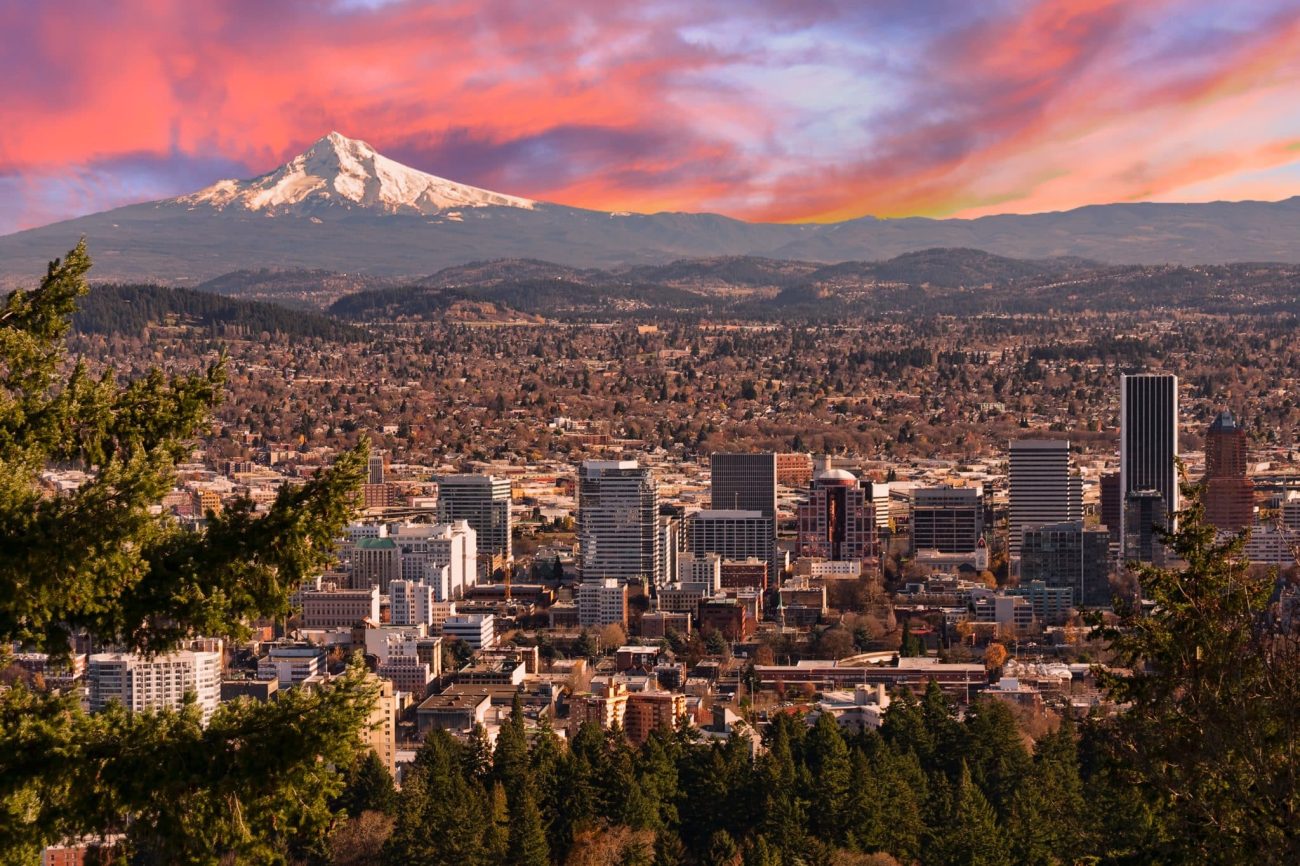
For a less obvious stop, Mt. Tabor is an extinct volcanic cinder cone inside city limits with a short summit trail and a clear view of downtown. Chloe walked it at sunset and said it was the moment the city finally made spatial sense to her: “You see the river, the bridges, the west hills, and the Cascade volcanoes in the distance all at once.” Forest Park’s Lower Macleay Trail to the stone ruins of the Witch’s Castle is an easy urban hike, but wear shoes you do not mind getting muddy, even in dry months.
Book tours and walking-food-tour combos through GetYourGuide, which aggregates local operators. We have had consistently reliable experiences with their Portland food cart and brewery tour listings.
What Do US and Canadian Travelers Need to Know Before Visiting Portland?

Canadians do not need a visa or an ESTA for a tourist visit to the United States, but a valid passport is required. There is no workaround for an expired passport at the border. Check your expiration date now. UK travelers should verify ESTA status on the official Customs and Border Protection website; an ESTA is valid for two years, but if yours expired during the pandemic-era pause, you may need to reapply at least 72 hours before departure.
Tipping in Portland follows standard US norms: 18–20% at sit-down restaurants, $1–$2 per drink at bars, and a dollar or two for counter-service tips if the tablet prompts you. Sales tax in Oregon is 0%, which means the price on the menu or the shelf is exactly what you pay. This surprises visitors from other states and countries every single time and is genuinely one of Portland’s most underrated pleasures.
Driving is on the right side of the road. The electrical plugs are standard US Type A and B, 120V, so UK travelers need an adapter; Canadians do not. Portland is generally safe for tourists during daylight and evening hours in the neighborhoods covered by this guide. Old Town/Chinatown has a concentrated unhoused population and can feel unpredictable after dark; the area around the Lan Su Chinese Garden is fine during the day, but plan your route out before sunset.
Frequently asked questions
How many days do you need for a trip to Portland, Oregon?
Three full days is the sweet spot for a first visit, giving you one day for the downtown core, one day for the east-side neighborhoods, and one day for a nature excursion like the Columbia River Gorge. If you have five days, you can add a Willamette Valley wine day trip and a slower-paced final morning without feeling rushed.
Is Portland, Oregon, safe for tourists right now?
Portland is safe for tourists in the neighborhoods and attractions covered in this guide, particularly during the day and evening. The central city experienced an uptick in property crime and visible homelessness in recent years, concentrated in the Old Town/Chinatown district. Standard urban awareness applies: do not leave valuables in a parked car, and choose a well-lit route at night.
What is the best month to visit Portland?
September is the best all-around month. Summer crowds thin out after Labor Day, the weather remains warm and reliably dry, and hotel rates dip slightly from July–August peaks. June is also excellent, though the Rose Festival early in the month drives hotel prices up sharply.
Does it really rain all the time in Portland?
From late October through April, yes, a light drizzle is the default weather pattern for days or weeks at a time. It rarely pours, but the persistent grey dampness is real. Locals do not use umbrellas, a quirk you will notice immediately. Pack a waterproof jacket with a hood and waterproof shoes, and you will be fine.
How do I get from PDX airport to downtown Portland?
The MAX Red Line light rail connects directly from the airport terminal to downtown in roughly 35 minutes for a flat $2.50 fare. The station is inside the airport near baggage claim. Ride-shares like Uber and Lyft cost $35–$45 and take 20–30 minutes depending on traffic.
Do I need a car for a trip to Portland?
No car is needed for the downtown core and east-side neighborhoods. Public transit and ride-shares cover the city efficiently. Rent a car only for a day trip to the Columbia River Gorge or Willamette Valley; for the Gorge specifically, check GetYourGuide for half-day tour options that eliminate the parking hassle at Multnomah Falls.
Plan your trip: booking platforms we trust
Our WakaAbuja team has booked Portland travel through these platforms repeatedly and has found them reliable for price transparency and cancellation flexibility. We do not accept payment for these links; they are here because we use them ourselves.
Best for Portland hotels with free cancellation, especially in the Pearl District.
Ideal for east-side apartments and full homes with kitchens in Alberta or the division.
We use Kayak to compare PDX flight prices across airlines in one search.
Good for scanning recent restaurant and hotel reviews before booking.
Our go-to for Columbia River Gorge tours and Portland food walking tours.