
advertisement
Singapore Trip Planner: Costs, Itineraries & What to Know Before You Go
A well-planned Singapore trip needs 4 to 5 full days to cover the core neighborhoods, major attractions, and a solid cross-section of the food scene without feeling rushed. A realistic daily budget ranges from $80 to $120 USD for a budget-conscious traveler up to $300 to $500+ USD for a luxury experience, with mid-range comfort landing around $150 to $250 USD per person per day.
A Singapore trip can cost anywhere from $80 to $400 a day depending on how you travel, and almost none of the official guides will tell you that upfront. The tourism board homepages are full of glossy skyline shots and “uncover the beauty” taglines. They are not wrong; Singapore is genuinely stunning, but they do not answer the question you actually typed into the search bar: How do I plan this, what does it cost, and what do I book first? This planner gives you real itineraries, real numbers, and the honest trade-offs I have learned across multiple visits.
Jump to: How Many Days | Best Time to Visit | Cost Breakdown | Sample Itineraries | Where to Stay | Getting Around | Mistakes to Avoid | FAQs
Key takeaways
- Four to five full days is the sweet spot for first-timers. Three days works for a highlights reel if you are already in Southeast Asia.
- A realistic mid-range daily budget is $150–$250 USD per person. Budget travelers can manage on $80–$120 USD. Luxury travelers should plan for $300–$500+ USD.
- February and July–September are the best windows for decent weather with manageable crowds. Avoid Chinese New Year if you want lower hotel prices.
- Stay in Chinatown, Bugis, or the Colonial District for the best central access. Orchard Road and Marina Bay are pricier; Little India and Tiong Bahru offer character at a lower cost.
- Get an EZ-Link or Singapore Tourist Pass immediately upon arrival. The MRT is the most efficient way to move around the city, and single-trip tickets waste time and money.
- Hawker centers are the heart of Singaporean food culture, not a “budget option.” Eat at Maxwell, Lau Pa Sat, and Old Airport Road. Skip the overhyped tourist-trap chains.
How Many Days Do You Need for a Singapore Trip?
Four to five full days is the honest answer for a first-time visitor who wants to see the major neighborhoods, eat properly across several hawker centers, and not spend the whole trip clock-watching. Three days is the functional minimum, enough for Marina Bay, Chinatown, Little India, and one big-ticket attraction like Gardens by the Bay, but you will be moving fast. A week lets you add Sentosa, a day trip to Pulau Ubin, and a slow morning in Tiong Bahru without feeling guilty about it.
Maya’s honest take: “My first Singapore trip was a 3-day layover extension. I saw the highlights, ate well, and left knowing I had only scratched the surface. My second trip was 6 days, and that felt like actually experiencing the city rather than just photographing it. If you can stretch to 5 days, do it.”
3 Days (Layover or Quick Stop)
Day 1: Marina Bay, Merlion, Gardens by the Bay light show. Day 2: Chinatown, Maxwell Food Centre, Buddha Tooth Relic Temple. Day 3: Little India, Kampong Glam, Haji Lane. You will miss Sentosa, the Botanic Gardens, and any day trips. Accept this upfront and do not try to cram more.
5 Days (Recommended)
Add the Botanic Gardens, a proper afternoon in Tiong Bahru, Sentosa Island, and at least two more hawker centres beyond the famous ones. You have time for a slow evening at a rooftop bar without calculating tomorrow’s schedule.
7+ Days (Full Immersion)
Add Pulau Ubin for a glimpse of old Singapore, the Sungei Buloh wetlands, Joo Chiat and Katong for Peranakan culture and laksa, and a full day dedicated to the food neighbourhoods. You can also cross into Johor Bahru, Malaysia, by train for a day trip.
Best Time to Visit Singapore: Weather, Crowds, and Prices
Singapore sits near the equator, so the temperature hovers between 25°C and 32°C (77°F–90°F) year-round. There is no cold season, only a wetter and a drier half of the year. The Northeast Monsoon (December to early March) brings the heaviest and most sustained rain. The Southwest Monsoon (June to September) brings early-morning squalls that usually clear by mid-morning. February and July through September are the windows I recommend most often.
The big price spike to avoid is Chinese New Year, typically late January or February depending on the lunar calendar. Hotel rates can double, and many local eateries close for the holidays. The Singapore Grand Prix in September also drives hotel prices up sharply around the Marina Bay circuit. Check the official Visit Singapore events calendar for exact festival dates before you lock in flights.
February
Often the driest month of the year. Avoid the Chinese New Year week itself for hotel prices, but the rest of February is an excellent window with comfortable humidity and fewer crowds.
July–September
The Southwest Monsoon brings short morning showers, not all-day rain. Crowds are moderate. The Great Singapore Sale typically runs in these months, and the Singapore Food Festival hits in July.
November–January
The wettest period. Persistent rain and occasional flooding in low-lying areas. Hotel prices drop outside the Christmas and New Year peak week, but you will spend more time indoors.
Real Singapore Trip Cost Breakdown: Budget, Mid-Range, and Luxury
Singapore is not a cheap destination by Southeast Asian standards, but it offers genuine value at every tier if you know where to spend and where to save. The figures below are per person, per day, in USD, based on mid-year pricing. Accommodation is the biggest variable; food can be the cheapest part of your day if you eat at hawker centers or the most expensive if you chase fine-dining tasting menus.
Budget ($80–$120 USD/day)
- Accommodation: Hostel dorm or budget capsule hotel, $20–$40.
- Food: Hawker centers for all meals, $15–$25/day.
- Transport: MRT and bus with EZ-Link card, $5–$8/day.
- Attractions: Free walking tours, public gardens, one paid entry every other day, $10–$15/day.
Mid-Range ($150–$250 USD/day)
- Accommodation: 3–4 star hotel in Chinatown or Bugis, $90–$150.
- Food: Mix of hawker lunches and sit-down restaurant dinners, $30–$50/day.
- Transport: MRT daily plus 1–2 Grab rides, $10–$15/day.
- Attractions: Gardens by the Bay domes, National Gallery, one cocktail bar, $25–$50/day.
Luxury ($300–$500+ USD/day)
- Accommodation: Marina Bay or Orchard Road 5-star, $250–$400+.
- Food: Fine dining, tasting menus, rooftop bars, $80–$150/day.
- Transport: Taxis and private-hire cars, $20–$40/day.
- Attractions: All major entries, spa treatments, private tours, $50–$100+/day.
For flights, use Kayak to compare fares into Changi Airport (SIN), consistently ranked among the world’s best airports. For hotel bookings, Booking.com and Agoda tend to have the strongest Singapore inventory, with Agoda often edging ahead on price for Asian properties specifically.
Sample Singapore Itineraries: 3 Days, 5 Days, and 7 Days
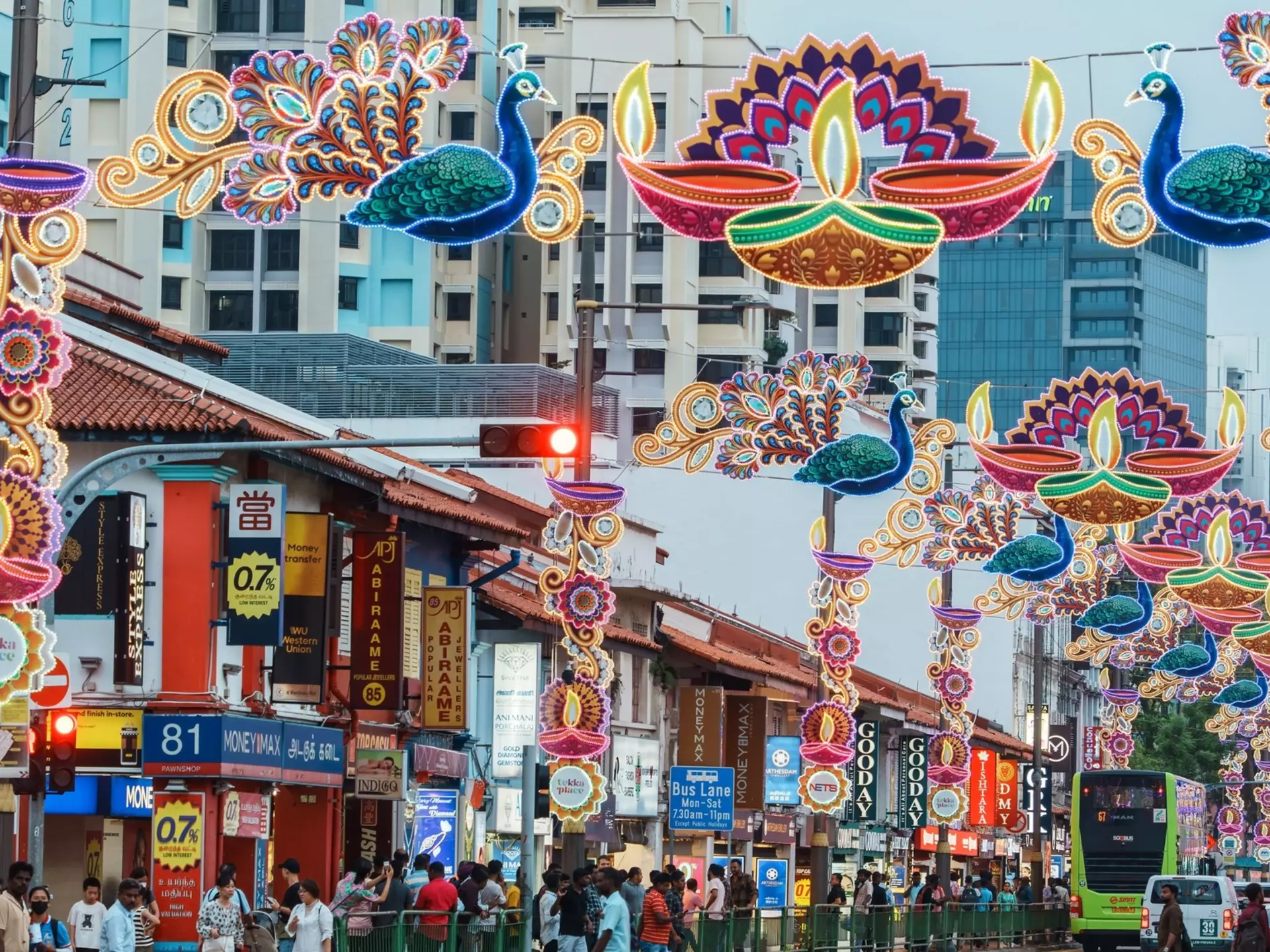
These are real day plans I have sketched for friends visiting Singapore for the first time. They assume you are staying centrally in Chinatown or Bugis and using the MRT as your primary transport. Adjust the order based on your energy levels and the weather forecast.
3-Day Singapore Itinerary
Day 1: Marina Bay Sands SkyPark observation deck (morning), Merlion Park, lunch at Satay by the Bay, Gardens by the Bay Cloud Forest and Supertree Grove, Garden Rhapsody light show at 7:45 p.m.
Day 2: Chinatown Complex hawker breakfast, Buddha Tooth Relic Temple, Maxwell Food Centre for Tian Tian chicken rice, afternoon at the National Gallery, evening at a Clarke Quay riverside bar.
Day 3: Little India (Tekka Centre, Sri Veeramakaliamman Temple), Kampong Glam and Haji Lane, Sultan Mosque, final dinner at Lau Pa Sat satay street.
5-Day Singapore Itinerary
Days 1–3: As above, with the 3-day plan spread more comfortably.
Day 4: Singapore Botanic Gardens (UNESCO site, free entry to most areas), lunch in Tiong Bahru at the market, explore the neighbourhood’s indie bookshops and cafes, evening at a rooftop bar like Smoke & Mirrors.
Day 5: Sentosa Island: cable car from HarbourFront, Siloso Beach, lunch at a beachfront restaurant. Skip the casinos unless that is specifically your interest. Universal Studios is a full-day commitment on its own; only include it if you are a theme-park person.
7-Day Singapore Itinerary
Days 1–5: As the 5-day plan above.
Day 6: Morning bumboat to Pulau Ubin for cycling and a glimpse of 1960s Singapore. Afternoon at Joo Chiat and Katong for Peranakan shophouse architecture and a proper Katong laksa at 328 Katong Laksa.
Day 7: Free morning for any neighbourhood you want to revisit, plus last-minute souvenir shopping. Or a day trip to Johor Bahru, Malaysia, via the 5-minute train from Woodlands.
Where to Stay in Singapore: Neighbourhood Comparison
Singapore’s neighbourhoods are compact and well-connected by MRT, but they feel genuinely different from each other. The right choice depends on whether you want to walk out of your hotel into a hawker centre, a shopping mall, or a quiet heritage street. I have stayed in most of these areas across different trips.
@thetomitomo These are the BEST places to stay in Singapore!#traveltips #singapore #travel #hotel #accommodation #publictransport #bus #train #mrt #dashingheights
Chinatown
Best for first-timers and food-focused travelers. Central, excellent MRT connectivity, and surrounded by some of the city’s best hawker centers, including Maxwell and Chinatown Complex. Hotels range from boutique heritage shophouse conversions to modern mid-range towers.
Bugis & Kampong Glam
Best for a stylish, walkable mix of heritage and nightlife. Arab Street and Haji Lane are on your doorstep. Great cafes, independent boutiques, and a short walk to Little India and the Colonial District. My personal favorite area to stay.
Marina Bay
Best for luxury travelers and iconic skyline views. Home to Marina Bay Sands and the Ritz-Carlton. Stunning at night, less characterful at street level during the day. You pay a premium for the postcode.
Little India
Best for a vibrant, budget-friendly base. Full of color, spice shops, and excellent vegetarian food. Can be intense for first-time visitors. Choose a hotel on a quieter side street rather than directly on Serangoon Road.
Tiong Bahru
Best for a quiet, local neighborhood feel. Art Deco architecture, an excellent hawker centre, and some of Singapore’s best cafes. Fewer hotel options, so book early. Feels like a village within the city.
Orchard Road
Best for shoppers who want a mall on their doorstep. Singapore’s main shopping boulevard. Convenient MRT access, but the area lacks the cultural texture of the heritage neighborhoods. Pick this if shopping is a priority.
Getting Around Singapore: MRT, Buses, and Transport Passes
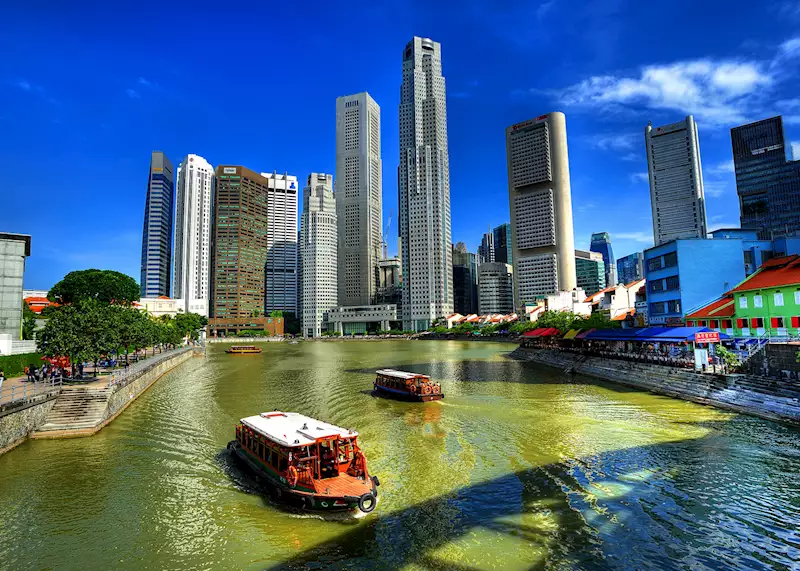
Singapore’s public transport system is world-class, affordable, and the only sensible way to move around the city. The MRT (Mass Rapid Transit) covers virtually every neighborhood and attraction you will visit. Buses fill the gaps. Taxis and Grab (the Southeast Asian ride-hailing equivalent of Uber) are useful late at night or when you are tired and the MRT station is a 15-minute walk in the humidity.
Do not buy single-trip tickets. Get an EZ-Link card from any MRT station ticket office or convenience store for a small deposit, load it with credit, and tap in and out. Alternatively, the Singapore Tourist Pass offers unlimited MRT and bus rides for 1, 2, or 3 days. It is worth it if you plan to move around heavily across multiple neighborhoods in a short period. Check current pass prices on the official Land Transport Authority website.
Maya’s honest take: “I bought a 3-day tourist pass on my first trip and barely broke even because I ended up walking between Chinatown, Bugis, and the Colonial District instead of taking the train. If you enjoy walking, a standard EZ-Link card with pay-per-ride credit is usually cheaper.”
8 Mistakes First-Time Visitors Make on a Singapore Trip
Singapore is one of the easiest cities in the world to visit, but a few common missteps can cost you time, money, or a missed meal. These are the ones I see repeated most often.
- 1. Only eating at restaurants and skipping hawker centers. Hawker centres are not a budget fallback. They are the soul of Singaporean food, and many stalls hold Michelin Bib Gourmand awards. Eat at them deliberately.
- 2. Underestimating the humidity. You will sweat more than you expect. Carry a water bottle, wear breathable fabrics, and plan indoor attractions during the midday peak heat.
- 3. Not carrying tissue paper to a hawker center. Reserving a table by placing a packet of tissues on it is a real, functioning social code. Bring tissues.
- 4. Assuming you can wing it with hotel bookings. Singapore runs at high occupancy year-round. Book accommodation as early as possible, especially if your dates overlap with Chinese New Year, the Grand Prix, or major conferences.
- 5. Overpacking the itinerary. The official guide lists dozens of attractions. You will not see them all in 5 days. Pick your priorities and leave room for spontaneous hawker center detours.
- 6. Ignoring Singapore’s strict laws. Chewing gum sales are banned. Littering, jaywalking, and eating or drinking on the MRT carry real fines. Vaping is illegal. Take the signs seriously.
- 7. Staying only in the Marina Bay bubble. The skyline is spectacular, but the city’s real character lives in Chinatown, Little India, Katong, and Tiong Bahru. Leave the postcard zone.
- 8. Skipping Changi Airport as an experience. The Jewel complex, with its indoor waterfall and rainforest, is worth arriving early or staying after check-out to explore. It is not just a transit point; it is a destination in its own right.
Frequently asked questions about planning a Singapore trip
How many days is enough for a Singapore trip?
Four to five full days is ideal for a first visit. Three days covers the essential highlights if you are on a tight schedule. A week lets you add day trips, Sentosa, and deeper neighborhood exploration without rushing.
Is Singapore expensive to visit?
Singapore can be expensive for accommodation and alcohol, but food at hawker centres is remarkably affordable at $3–$6 USD per meal. A budget traveler can manage on $80–$120 USD per day. A comfortable mid-range trip costs $150–$250 USD per day.
Do I need a visa to visit Singapore?
Many nationalities, including US, UK, EU, Australian, and Canadian passport holders, can enter Singapore visa-free for stays of up to 90 days. Always verify your specific entry requirements on the official Immigration & Checkpoints Authority website before booking.
What is the best month to visit Singapore?
February, outside the Chinese New Year period, offers the driest weather and comfortable humidity. July through September is also a good window with short morning showers that clear quickly and the added benefit of the Great Singapore Sale.
Is Singapore safe for tourists?
Yes. Singapore is consistently ranked as one of the safest cities in the world for travelers. Violent crime is rare. Standard precautions against petty theft apply in crowded areas, but the city is exceptionally secure by global standards.
Do I tip in Singapore?
Tipping is not expected and is not part of Singaporean culture. Most restaurants add a 10% service charge to the bill. There is no need to leave additional money on the table. Taxi drivers and hawker center stallholders do not expect tips.
What is the best area to stay in Singapore for first-time visitors?
Chinatown is the best all-around choice for first-time visitors: central, well-connected by MRT, and surrounded by excellent hawker food. Bugis and Kampong Glam are a close second for their stylish, walkable mix of heritage, cafes, and nightlife.
Can I drink the tap water in Singapore?
Yes. Singapore’s tap water is treated to World Health Organization standards and is perfectly safe to drink directly from the tap. Carry a refillable bottle.
Plan your trip: booking platforms we use for Singapore
I have booked Singapore trips across all of these platforms. Each one serves a different purpose. Use the right tool for the right booking, and you will save money compared to booking everything in one place.
Best for hotel deals across Singapore and the wider Southeast Asia region.
Best for comparing hotel and apartment options with flexible cancellation filters.
Best for comparing flight prices into Singapore Changi Airport from multiple airlines.
Best for booking skip-the-line tickets for Gardens by the Bay and guided food tours.
It’s best for reading recent hawker center and restaurant reviews before choosing where to eat.
Best for bundling flights and hotels into a single Singapore package itinerary.