advertisement
Kalahari Desert, Botswana: Complete Guide to the Region, Wildlife & Best Time to Visit
Fact-Checked By Maya Whitfield, Senior Travel Editor at WakaAbuja
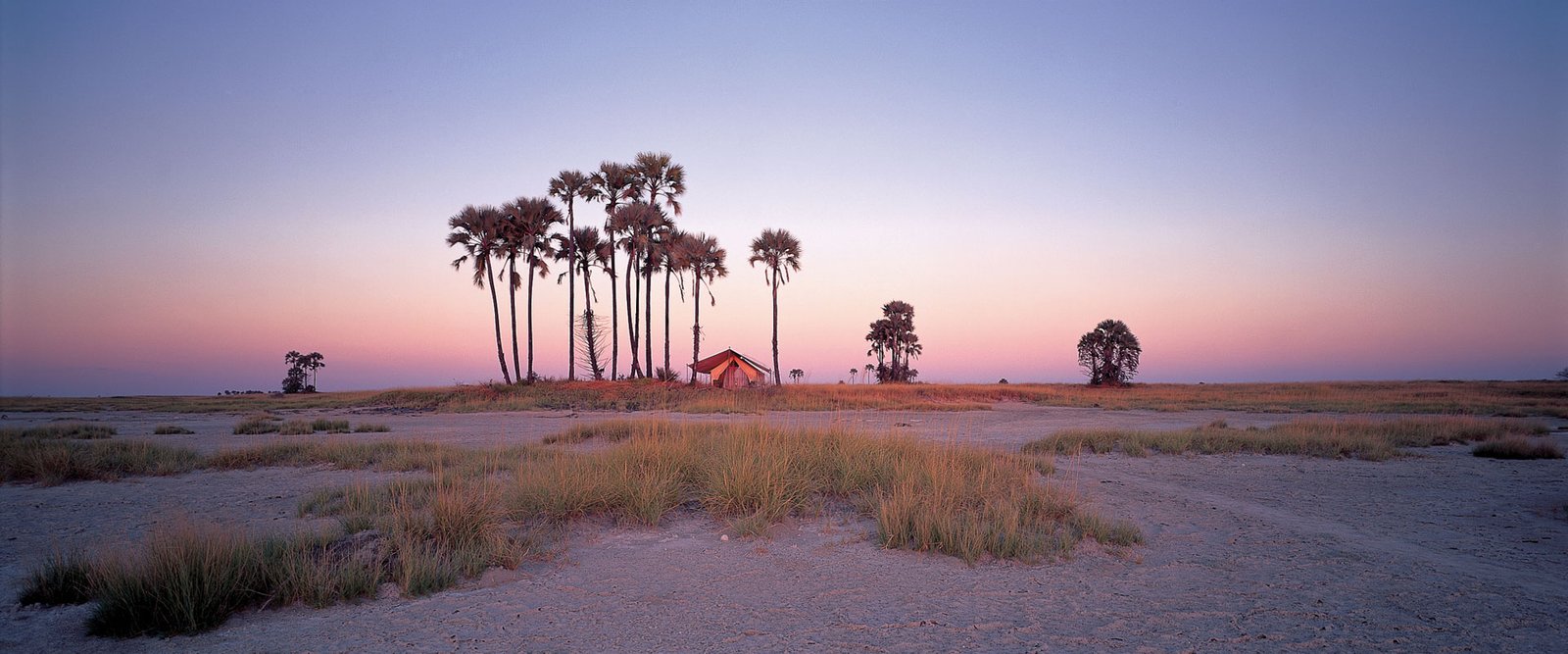
The Kalahari Desert covers roughly 900,000 square kilometers across Botswana, Namibia, and South Africa, but its richest wildlife areas and the largest protected zone, the Central Kalahari Game Reserve, sit inside Botswana. It is not a barren sand desert. It is a semi-arid savanna and xeric shrubland with seasonal rains, dry river valleys, and vast salt pans that support black-maned lions, meerkats, and some of Africa’s most underrated safari experiences.
Wikipedia will tell you the Kalahari spans three countries and gets 110 to 200 millimeters of rain annually. What it leaves out is the stuff that actually helps you understand the place as a traveler or a curious reader who specifically searched for the Botswana side of it. Which protected area should you focus on, the Central Kalahari Game Reserve or the Kgalagadi Transfrontier Park? When do the zebra herds move through, and where can you actually stay once you are inside?
I wrote this guide to answer exactly those questions, with Botswana at the center of the frame where it belongs.
Jump to: Where in Botswana | Geography & Climate | Wildlife | San People | Best Time to Visit | Kalahari vs. Namib vs. Okavango | Planning Your Trip | FAQs
Key takeaways
- Botswana contains the largest protected portion of the Kalahari ecosystem, the 52,800-square-kilometer Central Kalahari Game Reserve.
- The Kalahari is a semi-arid savanna, not a dune desert. Grasses, thorn scrub, and acacia trees cover most of it, and seasonal rains briefly flood the Makgadikgadi Pans.
- Black-maned Kalahari lions, brown hyenas, meerkats, and massive zebra and wildebeest migrations are the headline wildlife draws.
- The San people have lived in the Kalahari for at least 20,000 years and still guide visitors in several community-run tourism projects.
- The best wildlife viewing months are December through April, when the green season brings grazers and newborns, but dry season (May to October) offers easier animal spotting at water sources.
- Kalahari safaris cost less than Okavango Delta trips, with unfenced public campsites inside the reserves starting under $50 USD per person per night.
Where the Kalahari sits in Botswana
Botswana claims the largest and most ecologically intact chunk of the Kalahari Desert. The sandy basin covers roughly 70 percent of the country’s land area, sweeping across the center, the southwest, and the north. Three distinct protected zones define the Kalahari experience here, and they are not interchangeable. Understanding which one matches the trip you have in mind is the single most important planning decision you will make.
Central Kalahari Game Reserve (CKGR)
The CKGR is the big one; at 52,800 square kilometers, it is one of the largest protected areas in Africa. It sits in the geographic center of Botswana, accessed primarily via the town of Ghanzi or the Matswere Gate in the northeast. The terrain is rolling sandveld, fossil river valleys, and open grassland. There are no fences. Wildlife moves freely across the reserve and beyond. Inside, you will find a handful of designated public campsites and a few private, higher-cost lodges. Self-drive in a proper 4×4 is the standard way to explore, and the solitude here is profound. I have driven for four hours without seeing another vehicle.
Kgalagadi Transfrontier Park (Botswana side)
This is the Botswana portion of the cross-border park shared with South Africa. The Botswana side is accessed from the west, near the town of Tshabong, and is far less developed than the popular South African side. The landscape here is drier and redder, with classic Kalahari red dunes and dry riverbeds along the Nossob and Auob river valleys. The wildlife is concentrated along those dry riverbeds. Facilities on the Botswana side are minimal, so this is pure, rugged self-sufficient safari territory. It suits a traveler who has already done the CKGR and wants something even more remote.
Makgadikgadi Pans National Park
The pans sit at the northeastern edge of the Kalahari basin. During the dry season, they are a blinding white salt expanse stretching to the horizon. During the rainy season, shallow water covers sections of the pans and draws tens of thousands of flamingos and a massive zebra migration. The pans are not what most people picture when they hear “desert,” but they are a critical piece of the Kalahari ecosystem and offer a completely different landscape from the scrubby savanna of the CKGR.
Maya’s honest take: “The CKGR is the Kalahari experience most people are imagining when they search for this place. If you can only visit one of the three, start there. The Kgalagadi and the pans are extraordinary, but they suit second trips or travelers who already know exactly what kind of landscape they want.”
Geography and climate of the Kalahari
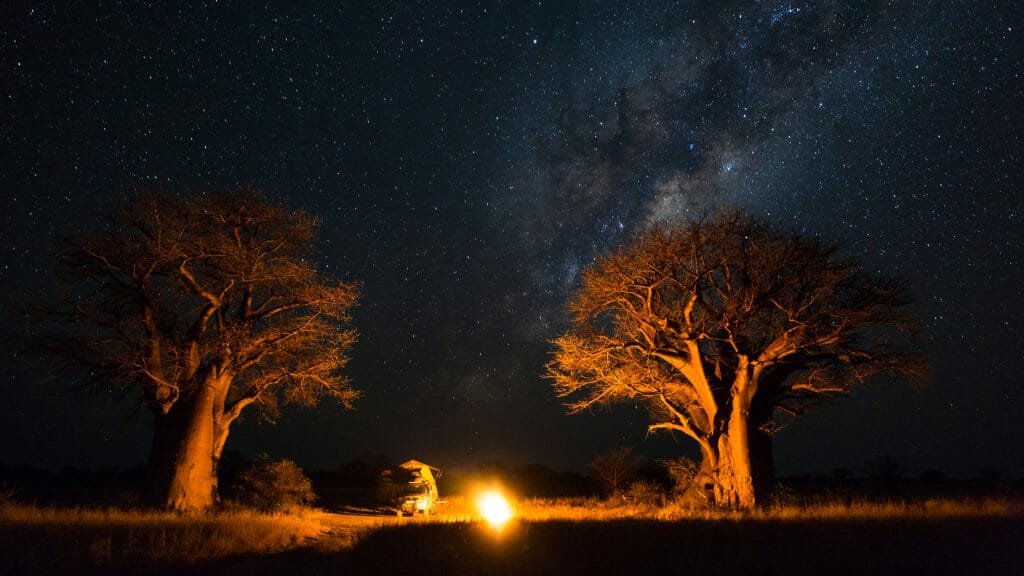
The Kalahari Desert covers roughly 900,000 square kilometres, stretching from the Orange River in South Africa north through Botswana into eastern Namibia and western Zimbabwe. The basin sits on a thick layer of Kalahari sand, ancient wind-deposited sediment that holds water surprisingly well and supports grasses and trees that could not survive on bare rock. The mean annual rainfall ranges from about 500 millimetres in the wetter northeast, near the Okavango Delta’s fringe, down to 110 millimetres in the driest southwestern corner.
Temperatures are extreme. Summer daytime highs from October to March routinely push past 40 degrees Celsius. The recorded high at Twee Rivieren, on the South African side, is 44.8 degrees Celsius. Winter nights from June to August can drop below freezing, and I have woken up in the CKGR in July with frost on the tent fly. Pack for both extremes if you are visiting during the dry winter season.
The Kalahari has no permanent surface water across most of its area. The fossil river valleys like Deception Valley in the CKGR once carried water but have been dry for thousands of years. Underground, however, the picture is completely different. The Dragon’s Breath Cave in Namibia, near the Botswana border, holds the world’s largest known non-subglacial underground lake, and the aquifer systems beneath the Kalahari sustain boreholes that make wildlife and human habitation possible across the region.
Maya’s honest take: “The single biggest misconception is that the Kalahari is a rolling sand dune desert like the Sahara. It is not. It is a dry savanna with grass, thorny shrubs, and acacia trees covering most of it. You will see sand, yes, but you will see a lot more vegetation than you expect.”
Wildlife you will actually see in the Kalahari
The Kalahari is not the Serengeti. You will not see the dense concentrations of grazers and predators that crowd the Masai Mara. What you get instead is lower densities, wide open space, and the quiet thrill of spotting a single brown hyena crossing a pan at sunset or a black-maned lion walking a dry riverbed with no other vehicle in sight. The wildlife here has adapted to a landscape with no permanent surface water, and that adaptation is what makes the viewing special.
Predators
- Black-maned Kalahari lions, especially around the CKGR and Kgalagadi dry riverbeds
- Brown hyena, a rare, shaggy, solitary scavenger that thrives here
- Cheetah and leopard, though sightings are less frequent than in denser reserves
- African wild dog packs, particularly in the northern CKGR
- Bat-eared foxes and black-backed jackals, common and entertaining
Herbivores and other wildlife
- Oryx (gemsbok), the antelope icon of the Kalahari, thriving without surface water
- Springbok and red hartebeest, common across the CKGR grasslands
- Meerkats, especially visible in the Makgadikgadi Pans area
- Kori bustard and secretary bird, two of the most striking ground-dwelling birds
- Zebra and wildebeest migrations during the green season
The seasonal zebra migration, primarily through the Makgadikgadi Pans region during the rainy months, is one of Africa’s longest land migrations after the Serengeti spectacle. Zebras move from the Boteti River area toward the pans as seasonal water fills the salt flats, and the sight of thousands of zebras crossing a shallowly flooded pan is genuinely surreal.
The San people and cultural context
The San, sometimes still called Bushmen in older literature, have lived in the Kalahari for at least 20,000 years, making them among the oldest continuous human cultures on earth. Their deep knowledge of the landscape, its plants, its animal behavior, and its hidden water sources is the reason humans survived here long before boreholes and safari vehicles existed. The San languages are distinct, using click consonants, and their oral traditions encode ecological knowledge passed down across hundreds of generations.
The relationship between the San and the Botswana government has been fraught. A widely reported dispute from the late 1990s through the 2010s involved the relocation of San communities from the Central Kalahari Game Reserve, with the government citing conservation and development needs and the San arguing for their right to remain on ancestral land. The legal battle went to Botswana’s High Court and reshaped the conversation around indigenous land rights inside protected areas. Today, a number of community-based tourism projects employ San guides who lead bush walks, share traditional tracking skills, and tell their own history on their own terms. Booking with these operators directly channels your money into the community rather than into an external lodge owner’s pocket. Ask at the Ghanzi craft market, or look for operators explicitly run by San cooperatives.
Best time to visit the Kalahari in Botswana
The Kalahari has two sharply contrasting seasons, and the “best” one depends on what you want to see. The green season runs roughly December through April. Rain falls in scattered afternoon storms, the pans fill with shallow water, the grass turns green, and the zebra and wildebeest herds arrive in the Makgadikgadi area. This is the most visually beautiful time, with dramatic skies and lush vegetation, but the animals are spread out and harder to spot. The sandy tracks inside the reserves become muddy and difficult to drive. A 4×4 with good ground clearance is mandatory, and some remote tracks become entirely impassable.
The dry season runs May through October. The grass thins, the pans bake to hard white salt, and wildlife concentrates around the few borehole-fed water points. Predator sightings are easier because the animals cannot stray far from water. June, July, and August are the coolest months, with daytime temperatures in the low 20s Celsius and nights dropping below freezing. This is the most comfortable window for camping, and it is also when the CKGR attracts the most visitors. Book public campsites months ahead if you are targeting July or August.
Green season (Dec–Apr)
- Lush scenery, dramatic skies, best photography light
- Zebra migration in Makgadikgadi area
- Flamingos on the pans
- Animals scattered, harder to spot
- Roads muddy, some tracks impassable
- Lower accommodation rates outside the Christmas window
Dry season (May–Oct)
- Easier wildlife viewing at water points
- Cool, comfortable camping weather Jun–Aug
- Clear skies, minimal rain, reliable roads
- July and August are peak; book campsites early
- September and October are very hot but deliver concentrated game viewing
Kalahari compared to other iconic African landscapes
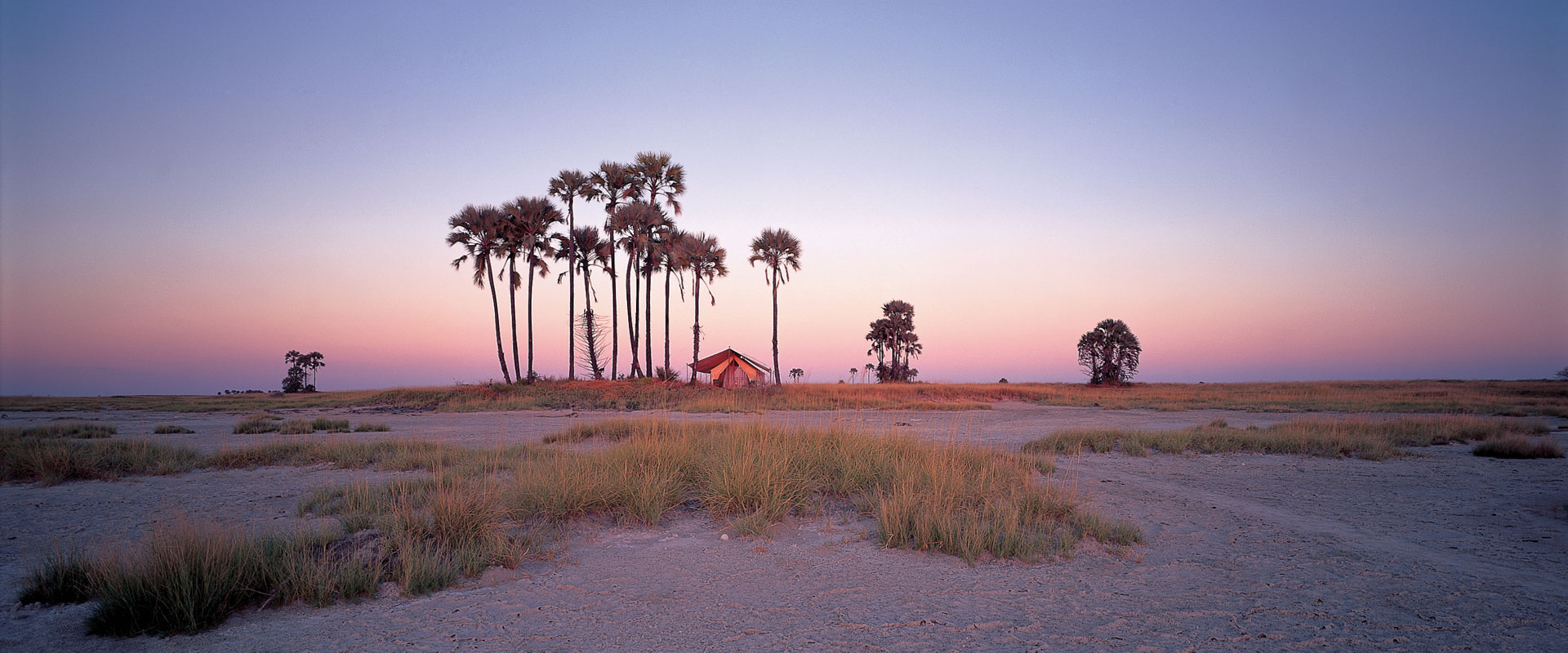
First-time visitors to Botswana often try to combine the Kalahari with the Okavango Delta, which makes perfect geographic sense, but the two landscapes are complete opposites. The table below lays out the honest differences so you can decide how to split your time.
Kalahari (Botswana)
Semi-arid savanna and dry pans. Low wildlife density, high solitude. Best for self-sufficient travelers who value empty landscapes and the challenge of finding animals over guaranteed sightings. Much cheaper than the Delta. Access by 4×4 from Ghanzi or Maun.
Namib Desert
True coastal dune desert. High red dunes, Sossusvlei, coastal fog. Almost no large wildlife compared to the Kalahari. Visually stunning in a stark, minimalist way. The Kalahari has far more vegetation and animal life.
Okavango Delta
Wetland oasis, the opposite of the Kalahari. Dense wildlife, high prices, and water-based activities (mokoro and boat safaris). The Delta and the Kalahari sit right next to each other in northern Botswana but could not be more different as travel experiences.
Sahara Desert
Vast sand sea. Ergs, dunes, and almost no vegetation or large wildlife outside oases. The Kalahari is a savanna by comparison. If you are picturing endless empty sand dunes, that is the Sahara or the Namib, not the Kalahari.
Planning your Kalahari trip: access, cost, and safety
Getting there
The most common gateway for the Central Kalahari Game Reserve is the town of Ghanzi, reachable by paved road from Maun or Gaborone. From Ghanzi, you turn north onto a gravel and sand track toward the reserve gates. Maun is the other major access point, sitting between the CKGR and the Okavango Delta, making it the logical staging town for a combined Kalahari-and-Delta itinerary. The Kgalagadi Transfrontier Park is accessed from the west via Tshabong, and the Makgadikgadi Pans are reached from Maun or Nata. A 4×4 with high clearance is non-negotiable for all three areas. A GPS with offline maps and two spare tires are standard equipment for any self-drive Kalahari trip.
What it costs
A Kalahari safari costs significantly less than a stay in the private concessions of the Okavango Delta. Public campsites inside the Central Kalahari Game Reserve run roughly $30 to $50 USD per person per night. Private lodges inside or just outside the reserves range from $200 to over $600 USD per person per night depending on whether they are fully catered. Self-drivers need to carry all their own water, fuel, food, and firewood, and a well-provisioned 4×4 rental with a rooftop tent and full camping kit starts around $150 to $200 USD per day. Compared to a fly-in Delta lodge at $800 to $1,500 per person per night, the Kalahari is the affordable, self-sufficient counterpoint to Botswana’s luxury safari circuit.
Safety notes
The Kalahari is remote, and remoteness is its own risk. The main danger is not wildlife but heat, dehydration, and vehicle breakdowns in an area with no cell reception and no quick assistance. Carry at least five liters of drinking water per person per day. Store extra fuel in jerry cans. Travel with a satellite phone or a reliable satellite messenger device. In the CKGR, you must be fully self-sufficient. There is no shop, no fuel station, no clinic, and no rescue service inside the reserve boundaries. Park regulations require you to stay inside your vehicle or designated campsites at night. Lions and hyenas walk through unfenced campsites regularly, and you cook, eat, and sleep within arm’s reach of that reality. It is not dangerous if you follow basic camp discipline: no food in tents, no walking alone in the dark, and a headlamp on at all times after sunset.
Maya’s honest take: “The Kalahari rewards self-sufficiency more than almost any other African safari destination. If you are comfortable with a 4×4, a map, and a satellite phone, this place gives you a kind of raw, quiet immersion that a guided lodge circuit simply cannot match.”
Mistakes to avoid on a Kalahari trip
Most of the serious problems I have seen or experienced in the Kalahari trace back to underestimating the distance, the heat, or the sand. Here are the ones to take seriously.
- Driving in without enough water. Five liters per person per day is the floor, not the ceiling. In October, drink more. Dehydration sets in fast, and there is no tap to refill.
- Relying on phone GPS alone. There is no signal across most of the CKGR and Kgalagadi. Download offline maps and carry a paper map and a compass as backup.
- Underestimating how deep the sand gets. Some CKGR tracks are deep, loose sand for kilometers. Deflate tires to around 1.2 bar, carry recovery tracks, and know how to use them before you need them.
- Arriving in July or August without a campsite booking. The limited public campsites inside the CKGR book out months in advance for peak dry season. Show up without a reservation and you will be turned back at the gate.
- Leaving food or scented items in a tent. Hyenas and jackals investigate campsites nightly. Store everything in the vehicle or a sealed metal box. A hyena shredding a tent to get at a forgotten granola bar is not a hypothetical scenario.
- Driving at night. It is prohibited inside the reserves and genuinely dangerous on the access roads. Animals, unlit vehicles, and livestock on the road are invisible until you are on top of them.
- Skipping a satellite communication device to save money. A breakdown in the CKGR without a way to call for help can turn into a life-threatening situation within 24 hours. Rent or buy a satellite phone or an inReach-style device.
Frequently asked questions
Is the Kalahari Desert all sand?
No. The Kalahari is a semi-arid savanna and xeric shrubland. Much of it is covered in grasses, acacia trees, and thorny scrub growing on a deep layer of sand. True bare sand dunes exist in parts of the Kgalagadi Transfrontier Park, but the vast majority of the Kalahari, especially the Central Kalahari Game Reserve in Botswana, looks more like a dry grassland with scattered trees than a rolling dune desert.
What is the difference between the Kalahari and the Sahara?
The Sahara is a true hot desert with vast sand seas and extremely sparse vegetation covering most of its area. The Kalahari receives more rainfall, supports extensive grass and tree cover, and sustains large mammal populations, including lions and elephants. The Kalahari is often described as a dry savanna rather than a true desert in the strict ecological sense.
Can you visit the Kalahari on a budget?
Yes, more so than the Okavango Delta. Public campsites inside the Central Kalahari Game Reserve cost roughly $30 to $50 USD per person per night. Self-drivers with a rented 4×4 and camping gear can run a Kalahari safari for $200 to $300 USD per day for two people all in. The trade-off is that you must carry all your own water, fuel, and food, and there are no services inside the reserves.
How do you get from Maun to the Central Kalahari Game Reserve?
Maun is the most common staging town. From Maun, drive southwest on the paved A3 road toward Ghanzi, then turn north onto the gravel and sand access track that leads to the Matswere Gate entrance of the CKGR. The drive from Maun to the gate takes roughly five to six hours depending on road conditions and your vehicle. Fuel up fully in Maun or Ghanzi and carry extra jerry cans. There is no fuel inside the reserve.
Is it safe to camp in the Kalahari with lions and hyenas around?
Yes, if you follow basic camp discipline. Lions and hyenas do walk through unfenced campsites at night. Keep all food, cooking equipment, and scented toiletries sealed inside the vehicle. Do not leave your tent after dark without a bright headlamp. Do not sleep with food in your tent. These simple rules have kept thousands of campers safe in the Kalahari for decades.
When can you see the zebra migration in the Kalahari?
The zebra migration moves through the Makgadikgadi Pans region during the rainy season, roughly December through March. The timing shifts depending on when the rains arrive each year. Zebras congregate on the pans as seasonal water fills the salt flats, and the best viewing window is usually January and February. Check with lodge operators or the Botswana Department of Wildlife for current migration locations before booking.
Do you need a 4×4 to visit the Kalahari in Botswana?
Yes, absolutely. The access roads and the tracks inside the Central Kalahari Game Reserve, Kgalagadi Transfrontier Park, and Makgadikgadi Pans are deep sand or mud depending on the season. A high-clearance 4×4 with low-range gearing is essential. A standard sedan or a 2WD SUV will get stuck quickly once you leave the paved highway.
Plan your trip: booking platforms we trust
For a self-drive Kalahari trip, you will likely book campsites directly with the Botswana Department of Wildlife and National Parks or through a local safari operator based in Maun or Ghanzi. The platforms below help with the international flights, the 4×4 rental, and any lodge-based nights you want to add to your itinerary.
Best for comparing flight prices into Maun or Gaborone from multiple international departure cities.
Best for finding guesthouses and lodges in Maun and Ghanzi before and after your reserve nights.
Best for booking guided Kalahari safari packages and San cultural walks with local operators.
Best for reading recent trip reports on CKGR road conditions and wildlife sightings from other self-drivers.