advertisement
Japan’s autumn leaves are at their most spectacular from Hokkaido to Kyoto, but the best spots balance vivid scenery with crowds, timing, and how much effort it takes to reach them.
Fact-Checked By: Maya Whitfield—Senior Travel Editor at WakaAbuja
The best places to see autumn leaves in Japan are Kyoto for temples and maples, Nikko for mountain scenery, Kamikochi for alpine colors, and Miyajima for the iconic floating torii framed by red maples. Peak foliage moves from north to south, hitting Hokkaido in late September, Tokyo and Kyoto in mid- to late November, and Kyushu in early December. Budget around 15,000 to 30,000 yen per day for accommodation and transport during peak season (confirm the latest price directly with the operator).
Most autumn leaves guides give you a list. This one gives you a ranking, a map, the rough costs, and the exact arrival times that decide whether you are photographing empty temple grounds or a wall of tripods. I have done both in Japan.
I once arrived at Kiyomizu-dera at 7 a.m. and had the terrace almost to myself. The next year I arrived at 9 a.m. and could not move. The difference was two hours and one alarm clock.
Jump to: How the Season Works | The Koyo Wave Map | The Ranked List | What It Costs | Building a Route | Forecasts | Mistakes | FAQ
Key takeaways
- Peak foliage travels north to south. Hokkaido peaks in late September, Tokyo and Kyoto in mid- to late November, and Kyushu in early December.
- Arrive before 7 a.m. at Kyoto temples in peak week. Kiyomizu-dera and Tofuku-ji draw huge crowds by 9 a.m. from mid to late November.
- Budget 15,000 to 30,000 yen per day per person for hotel, transport, and meals during peak autumn season (confirm the latest price directly with the operator).
- The JR Pass is useful only if you take 3 or more long-distance trains. For a Kyoto-only trip, it is not worth the cost.
- Book accommodation 3 to 6 months ahead for mid-November in Kyoto. Rooms sell out faster than cherry blossom season.
- Kamikochi and Oirase Stream are the best off-Kyoto picks. They offer alpine and river scenery instead of temple views.
How Does Japan’s Autumn Color Season Work?
Japan’s autumn colors, called koyo, move gradually from the northern island of Hokkaido down to Kyushu over roughly three months. The peak is triggered by a combination of cooler nights and shorter daylight. The magic number is around 8°C (46°F) at night, which causes chlorophyll to break down and reveals the yellows, oranges, and reds underneath.
This is why the same tree can look completely different depending on where in Japan it is. A maple in Sapporo turns red in October while the same species in Kyoto stays green until late November. Plan your trip around the wave, not around a single date.
The Koyo Wave: A Visual Guide to Peak Timing
Think of the autumn color season as a wave that starts in the far north in September and reaches the far south by early December. Here is the wave broken into five zones so you can pick your dates and your region together.

Peak windows by region
Hokkaido (Sapporo, Daisetsuzan): late September to mid-October
Tohoku (Aomori, Oirase Stream, Nikko): mid-October to early November
Kanto and Chubu (Tokyo, Kamikochi, Hakone, Kawaguchiko): early to late November
Kansai (Kyoto, Nara, Miyajima): mid-November to early December
Kyushu (Fukuoka, Kagoshima): late November to mid-December
The 12 Best Places to See Autumn Leaves in Japan, Ranked
I ranked these by four criteria: scenery quality, crowd level, ease of access, and how much effort it takes to reach the best viewpoint. The top spots combine high scenery with reasonable access. The lower-ranked picks are still excellent; they just require more planning.
1. Kyoto (Kiyomizu-dera, Tofuku-ji, Eikan-do)
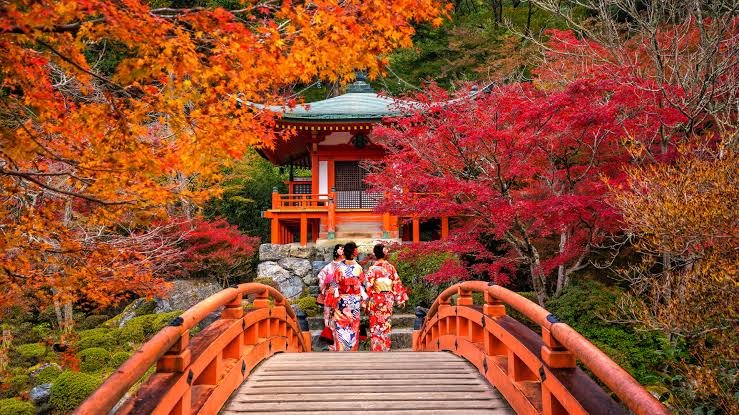
Kyoto is the default answer for a reason. The combination of historic temples, manicured gardens, and Japanese maples is unmatched anywhere in the country. Tofuku-ji has the most dramatic maple displays in the city. Kiyomizu-dera is the most famous, and the crowds match the fame. Arrive by 6:40 a.m. in peak week if you want a clear shot from the terrace.
2. Nikko (Toshogu Shrine and Irohazaka)
Nikko is about two hours north of Tokyo and combines mountain scenery with ornate shrine architecture. The Irohazaka winding road is the best drive for autumn colors in the country, with 48 hairpin turns through maple forest. Go on a weekday if you can. Weekends in early November are packed with tour buses.
3. Kamikochi (Northern Japan Alps)
Kamikochi sits at 1,500 meters in the Japanese Alps, which means it peaks earlier than Kyoto, usually in mid- to late October. The scenery is alpine: snow-capped peaks, clear rivers, and larch trees turning gold. Access is by bus only, which keeps the crowds manageable. The Kappa Bridge area is the classic photo spot.
4. Miyajima (Itsukushima Shrine)
Miyajima is most famous for its floating torii gate, but in autumn the island’s maple valley, Momijidani, fills with red and orange. The combination of the torii, the shrine, and the autumn colors is unique in Japan. Take the ropeway up to Mount Misen for the best view of the Seto Inland Sea.
5. Lake Kawaguchiko (Mount Fuji Views)
Lake Kawaguchiko is the best base for viewing Mount Fuji, and in November the northern shore is lined with maple trees turning red. The Fuji Kawaguchiko Autumn Leaves Festival runs from early to late November, with evening illumination. If the sky is clear, you get the classic combination of red maples framing the mountain.
6. Hakone (Lake Ashi and the Ropeway)
Hakone is a short trip from Tokyo and combines lake, mountain, and onsen scenery. The ropeway over the volcanic valley of Owakudani gives you views of the surrounding hills covered in autumn colors. The pirate ship cruises on Lake Ashi are touristy, but the views are genuine.
7. Oirase Stream (Aomori)
Oirase Stream is a 14-kilometer walking path that follows a mountain river through beech and maple forest. It is one of the best autumn hikes in Japan and far less crowded than Kyoto. The peak is usually late October to early November. Rent a car or take the bus from Towada Lake.
8. Kenrokuen Garden (Kanazawa)
Kenrokuen is one of Japan’s three great gardens, and autumn is arguably its best season. The garden uses yukitsuri, the conical rope supports that protect trees in winter, and in autumn they frame the yellow and red foliage. Kanazawa is easily reached by shinkansen from Tokyo or Kyoto.
9. Nara Park (Todai-ji and Kasuga Taisha)
Nara is a short train ride from Kyoto and Osaka, and it offers a quieter autumn experience. The deer in Nara Park roam freely under maple trees, and Kasuga Taisha shrine is lined with lanterns through the forest. Peak is usually the same week as Kyoto, so combine the two.
10. Daisetsuzan National Park (Hokkaido)
Daisetsuzan is the first place in Japan to see autumn colors, usually starting in mid September. The alpine scenery is spectacular but access requires a rental car or a long bus ride. This is the pick for travelers who want to be ahead of the wave and do not mind cold weather.
11. Mount Takao (Tokyo Day Trip)
Mount Takao is about an hour from central Tokyo and has a cable car and chairlift to the summit. The autumn colors are good, the crowds are heavy on weekends, and the view of Mount Fuji on a clear day is a bonus. Go on a weekday morning for the best experience.
12. Rikugien Garden (Tokyo)
Rikugien is a traditional Edo-period garden in northern Tokyo, and it hosts a famous evening illumination in late November. The maples around the central pond reflect in the water, and the lights make the colors look almost artificial. Book a timed entry slot during the illumination week.
Maya Whitfield’s honest take: “If you only have one autumn trip in Japan, do Kyoto. If you have two, add Nikko or Kamikochi. If you want to avoid the crowds entirely, go to Oirase Stream instead of the temples.”
How Much Does an Autumn Leaves Trip to Japan Cost?
Peak autumn season is one of the most expensive times to visit Japan, along with cherry blossom season. Here is a rough per-person per-day budget (confirm the latest price directly with the operator).
Budget
Hostel or capsule hotel: 3,000 to 5,000 yen
Food: 2,500 to 4,000 yen
Transport: 1,500 to 3,000 yen
Daily total: 7,000 to 12,000 yen
Mid-range
3-star hotel: 10,000 to 18,000 yen
Food: 5,000 to 8,000 yen
Transport: 2,000 to 4,000 yen
Daily total: 17,000 to 30,000 yen
Comfortable
4-star ryokan or hotel: 25,000 to 50,000 yen
Food: 10,000 to 20,000 yen
Transport: 3,000 to 5,000 yen
Daily total: 38,000 to 75,000 yen
How Do You Build a Route Around the Koyo Season?
5-day trip
Base yourself in Kyoto for four nights and do one day trip to Nara. This is the classic short autumn trip. Do not try to add Tokyo or Nikko unless you want to spend half your time on trains.
10-day trip
Fly into Tokyo, spend two days in the city (Mount Takao and Rikugien for foliage), then go to Nikko for two days. Take the shinkansen to Kyoto for four days, with a day trip to Nara. This route follows the koyo wave from mid-November onward.
14-day trip
Add Kamikochi and Kanazawa to the 10-day route, or push further west to Miyajima and Hiroshima. This is the best route for serious photographers who want alpine, temple, and coastal scenery in one trip.
How Do You Check the Live Autumn Leaves Forecast?
The Japan Meteorological Corporation (JMC) publishes a koyo forecast every autumn with estimated peak dates for each region. The forecast updates several times through the season, so check it again close to your travel dates.
Other useful sources include the Japan National Tourism Organization’s seasonal pages and the official websites of major temples and parks, which often post real-time updates on current foliage status. If you are in Japan already, local tourism offices in Kyoto and Nikko maintain daily or weekly color reports.
For broader travel planning resources, see our travel planning guides, our things to do section, and our hotel reviews.
What Are the Biggest Mistakes on a Japan Autumn Leaves Trip?
- Booking too late. Kyoto hotels for mid-November sell out 3 to 6 months ahead. Cherry blossom season is competitive, but autumn is worse in Kyoto.
- Assuming peak dates are fixed. The koyo wave shifts by 1 to 2 weeks year to year. A warm autumn can delay everything.
- Only going to Kyoto. Kyoto is the best single destination, but you will miss alpine, coastal, and river scenery that the rest of Japan offers.
- Arriving at temples after 8 a.m. The famous spots fill up early. The difference between 7 a.m. and 9 a.m. is enormous.
- Buying a JR Pass when you do not need one. A Kyoto-only trip does not justify the cost. Buy individual tickets instead.
- Skipping the illumination events. Many temples and gardens have special evening light-ups during autumn. They are worth the extra ticket.
- Underestimating the cold. November in Kyoto and October in the Alps are genuinely cold at dawn. Bring a proper jacket.
Frequently asked questions about autumn leaves in Japan
When is the best time to see autumn leaves in Japan?
The best time depends on the region. Hokkaido peaks in late September to mid October. Tokyo and Kyoto peak in mid to late November. Kyushu peaks in late November to mid December. If you can only pick one window, aim for the second and third weeks of November in Kyoto or Tokyo.
Where is the best place to see autumn leaves in Japan?
Kyoto is the best single destination, with Tofuku-ji, Kiyomizu-dera, and Eikan-do offering the most dramatic displays. For variety, add Nikko for mountain scenery or Kamikochi for alpine colors.
How much does an autumn trip to Japan cost?
A mid-range trip costs around 17,000 to 30,000 yen per person per day including hotel, food, and local transport (confirm the latest price directly with the operator). Budget travelers can get by on 7,000 to 12,000 yen per day using hostels and convenience store meals.
How far in advance should I book a hotel for autumn in Kyoto?
Book 3 to 6 months ahead for mid-November dates in Kyoto. The second and third weeks of November are the most competitive because they usually fall during peak koyo. Ryokan and machiya rentals sell out even earlier.
Do I need a JR Pass for an autumn leaves trip?
Only if you plan to take three or more long-distance shinkansen rides. For a Kyoto-only trip or a Tokyo-Kyoto round trip, buying individual tickets is usually cheaper. Compare your total train costs against the pass price before buying.
Which autumn leaves spots are family-friendly or accessible?
Kenrokuen Garden in Kanazawa has paved paths and is easy for strollers and wheelchairs. Rikugien in Tokyo has mostly flat walking paths. Nara Park is open and accessible if you avoid the steeper shrine trails. Kyoto temples often have stairs and uneven stone paths.
Is autumn a good time for photography in Japan?
Yes, it is one of the best. The light in November is soft and the colors are saturated. Overcast days are actually better for photographing maples than bright sunshine, because shadows are less harsh. Bring a tripod if you plan to shoot temple illuminations at night.
Plan your trip: booking platforms we trust
These are the platforms I use to plan autumn trips to Japan. For shinkansen and JR Pass bookings, use the official JR site. For hotels and tours, compare at least two of these before paying.
Agoda
Best for Japan hotel deals, especially in Kyoto and Tokyo.
Booking.com
Reliable for hotels and ryokan with free cancellation.
GetYourGuide
Good for guided autumn foliage tours and temple day trips.
Kayak
Best for comparing flights into Tokyo or Osaka before you book.
Expedia
Useful for bundling flights and hotels into one autumn package.
TripAdvisor
Essential for reading recent reviews of temples, ryokan, and restaurants.
For more planning help, see our travel planning guides, our hotel reviews, our things to do section, and our visa category. When you are ready to book flights, start with our discounted flights page.
WakaAbuja does its best to keep all information accurate at the time of publishing. Prices, policies, and availability change regularly. Always verify with official sources before you travel. We are not liable for errors caused by outdated information. Travel insurance is strongly recommended.