advertisement
Explore the best beaches in Portugal with 17 standout coastal spots selected by region, beach style, and the best time of year to visit.
Fact-Checked By: Maya Whitfield—Senior Travel Editor at WakaAbuja
The best beaches in Portugal are Praia da Marinha in the Algarve for dramatic cliffs, Praia do Norte in Nazaré for record-breaking surf, Praia de Carcavelos near Lisbon for easy access from the city, and Praia da Falésia in the Algarve for long walks and family swimming. Most Portuguese beaches are free to access, though parking costs around 5 to 15 euros per day in peak season (confirm the latest price directly with the operator). The best months to visit are May, June, and September.
Portugal’s coastline stretches for over 900 miles, and no two beaches on it feel the same. Some are hidden coves you will have to go to yourself in October. Others are packed with surfers chasing 80-foot waves off Nazaré. I have swum at Praia da Falésia in June, watched the sunset from the cliffs at Marinha, and made the mistake of driving to a popular Algarve beach at 11 a.m. on a Saturday in August. This guide skips the guesswork.
It is organized by region and by what kind of trip you are actually planning, with the parking, timing, and crowd details most lists leave out.
Jump to: Comparison Table | Near Lisbon | Algarve | Alentejo & Silver Coast | Northern Portugal | Azores & Madeira | Practical Tips | FAQ
Key takeaways
- The Algarve has the most famous beaches, but the Alentejo and Silver Coast have the quietest ones. Go west for solitude, south for dramatic cliffs.
- May, June, and September are the best months. July and August are crowded and expensive, and the water is still cold even at the peak of summer.
- Most Portuguese beaches are free. Parking in peak season ranges from 5 to 15 euros per day (confirm the latest price directly with the operator).
- Blue Flag status matters. It means the beach has been certified for water quality, safety, and facilities. Check the official registry before you go.
- Water temperature rarely exceeds 22°C in the Atlantic. It is colder than the Mediterranean, even in August.
- Praia do Norte at Nazaré holds the record for the largest wave ever surfed, at 26.2 meters in 2020 by Sebastian Steudtner.
Portugal’s Best Beaches at a Glance
Here is how the top picks compare by region, best season, and what they are actually best for. Use this to narrow your trip before you read the full entries.
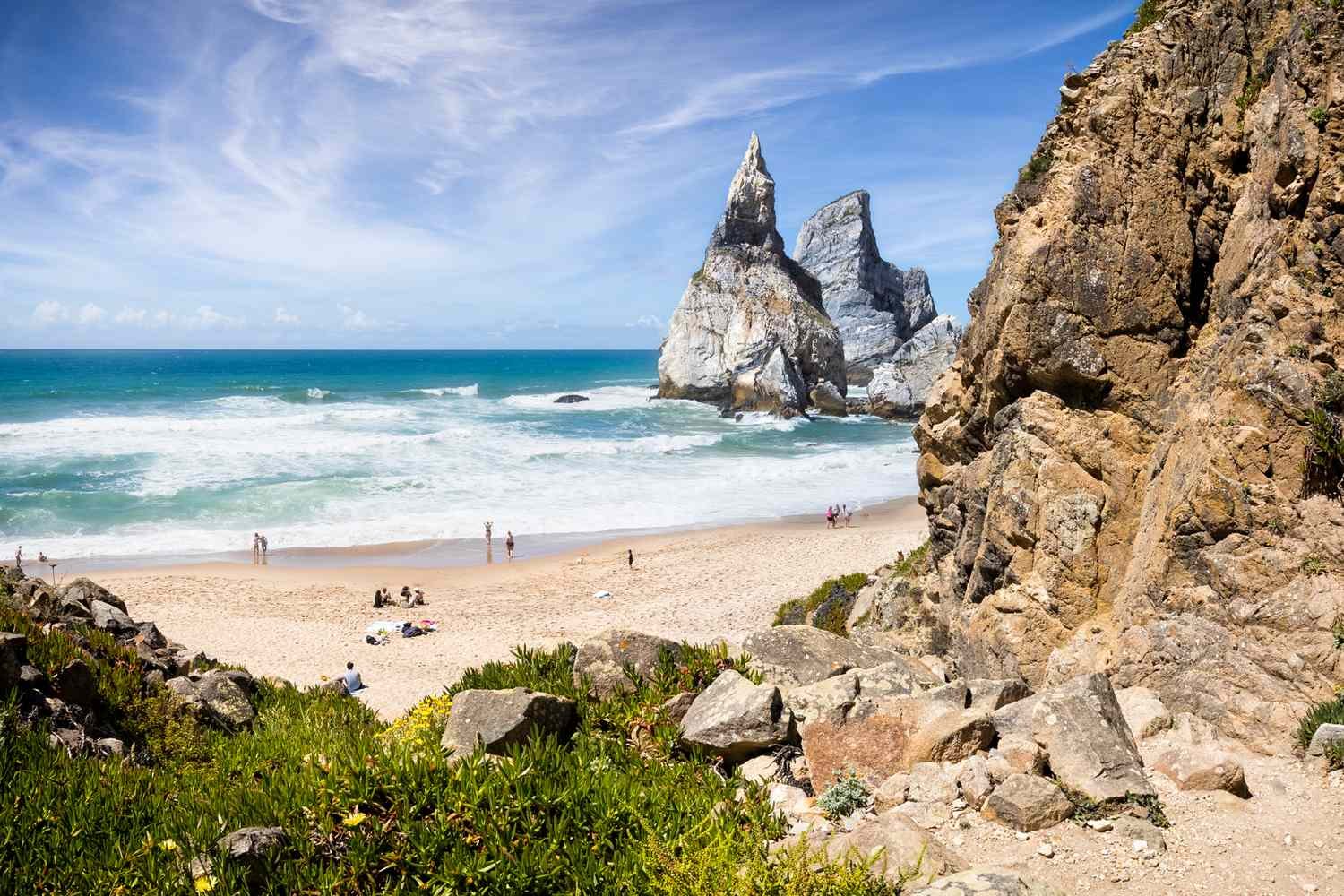
:max_bytes(150000):strip_icc()/TAL-praia-da-ursa-PORTUGALBEACHES0526-4dbbbf2bc52346bc893ebd2426553c39.jpg "Portugal's Best Beaches, Region by Region: Where to Go for Surf, Solitude, or Families 1")
Praia da Marinha
Region: Algarve
Best for: Cliffs and photography
Best month: June or September
Blue Flag: Yes
Praia da Falésia
Region: Algarve
Best for: Families and long walks
Best month: June to September
Blue Flag: Yes
Praia do Norte, Nazaré
Region: Silver Coast
Best for: Big wave watching
Best month: October to March
Blue Flag: No (surf beach)
Praia de Carcavelos
Region: Lisbon area
Best for: Easy day trip from Lisbon
Best month: June to September
Blue Flag: Yes
Praia de Odeceixe
Region: Alentejo
Best for: River meets ocean
Best month: June or September
Blue Flag: Yes
Praia de Moledo
Region: Northern Portugal
Best for: Wild northern scenery
Best month: July to September
Blue Flag: Yes
What Are the Best Beaches Near Lisbon?
Lisbon has the advantage of being one of the only European capitals with real ocean beaches within a 30-minute train ride. The Cascais and Sintra coastlines are the easiest to reach without a car.
Praia de Carcavelos
Carcavelos is the most accessible beach from central Lisbon, about 25 minutes by train from Cais do Sodré. The beach is wide, has lifeguards in summer, and is a popular spot for beginner surfers. Parking is limited and expensive, so the train is genuinely the best option. There is a fee for sunbed rental in summer.

Praia do Guincho
Guincho is a wilder beach near Cascais, popular with windsurfers and kite surfers because of the constant wind. It is not a swimming beach for most of the year. The scenery is spectacular, and the seafood restaurants along the road are worth the trip. You need a car or a taxi from Cascais to get there.
Praia da Adraga
Adraga is a smaller beach near Sintra, tucked between cliffs and accessible via a narrow road. It is quieter than Carcavelos and has a good restaurant overlooking the sand. Parking is free but very limited. Get there before 10 a.m. in summer if you want a spot.
What Are the Best Beaches in the Algarve?
The Algarve is Portugal’s most famous beach region, and for good reason. The cliffs are dramatic, the water is turquoise, and the beaches are among the most photographed in Europe. The downside is crowds. In August, the main beaches are packed.
Praia da Marinha
Marinha is the postcard Algarve beach, with limestone cliffs, sea caves, and clear water. It has been repeatedly ranked among the best beaches in Europe. The access is via a set of stairs from the clifftop parking lot. There is no lifeguard outside in summer. It is a Blue Flag beach, and swimming is generally safe but can be rough when the swell is up.
Praia da Falésia
Falésia is a long, wide beach backed by red and orange cliffs. It stretches for over 6 kilometers, so even in August you can find space by walking away from the main access points. It is one of the best beaches in Portugal for families because the sand is soft and the water is calm on most days. Parking is available but fills up fast in peak season.
Praia de Benagil
Benagil is famous for the sea cave, one of the most photographed natural landmarks in Portugal. You can only reach the cave by boat, kayak, or paddleboard from Benagil beach or nearby Praia de Carvalho. The beach itself is small and crowded in summer. Book a boat tour in advance, since they sell out quickly.
Praia do Camilo
Camilo is a small, picturesque beach near Lagos, accessible via a long wooden staircase. It is one of the most photographed beaches in the Algarve, but it is also one of the smallest. Come early or late, and expect to share the space with photographers.
Maya Whitfield’s honest take: “Praia da Falésia is worth the trip even in August. Walk 15 minutes east along the sand and you will find space. Most people never leave the area near the parking lot.”
What Are the Best Beaches in the Alentejo and Silver Coast?
The Alentejo coast and the Silver Coast are where Portuguese people go on holiday. These beaches are quieter, wilder, and often more beautiful than the Algarve. The trade-off is that you almost always need a car.
Praia de Odeceixe
Odeceixe sits at the mouth of the Seixe River, so you get a river beach on one side and an ocean beach on the other. It is one of the most distinctive beaches in Portugal. The riverside is calm and good for children. The ocean side has surf. Parking is available, and there are restaurants at the top of the beach.
Praia da Comporta
Comporta is about 1.5 hours south of Lisbon and is known for its white sand, dunes, and low-key atmosphere. It has become popular with the fashion and design crowd, so prices in the area have risen. The beach itself is free, and parking is available in the village.
Praia do Norte, Nazaré
Nazaré is famous for the biggest waves ever surfed. In October 2020, Sebastian Steudtner surfed a 26.2-meter wave here, the largest ever recorded. The big wave season runs from October through March. In summer, the beach is calm and suitable for swimming. The clifftop fort at Praia do Norte offers the best viewing point year-round.
What Are the Best Beaches in Northern Portugal?
Northern Portugal is often overlooked by international visitors, but the coastline here is beautiful and much less crowded than the south. The water is colder, the weather is less predictable, and the scenery is more rugged.
Praia de Moledo
Moledo is a wide beach near the Spanish border, with views across to the island of Ínsua and its small fortress. It is popular with Portuguese families and surfers. The water is cold even in summer, but the beach is beautiful and rarely crowded outside in August.
Praia do Cabedelo
Cabedelo is across the river from Viana do Castelo, accessible by a small ferry. It is a windsurfing and kitesurfing destination because of the strong winds at the mouth of the Lima River. The beach is wide and clean, with a popular surf school.
Praia da Aguda
Aguda is just south of Porto and easy to reach by train from the city. It is a smaller, family-friendly beach with a strong fishing tradition. The seafood restaurants here are excellent and much cheaper than in Lisbon or the Algarve.
What Are the Best Beaches in the Azores and Madeira?
The Azores and Madeira are technically part of Portugal, but they feel like a different country. The beaches are volcanic, dramatic, and often hidden between cliffs.
Praia Formosa, Madeira
Praia Formosa is the largest beach in Madeira, a mix of black volcanic pebbles and imported golden sand. It is about 15 minutes from Funchal by bus or car. The water is cold but swimmable in summer, and the sunsets from the beach are excellent.
@rperrotta07 Praia Formosa 🌊✨ One of the most beautiful spots in Madeira, where the ocean meets the volcanic landscape and the sunset makes everything even more magical. 🇵🇹💙 📍 Praia Formosa, Funchal, Madeira #Madeira #MadeiraIsland #Portugal #PraiaFormosa #Funchal
♬ original sound – Thiago Navarro Music – Thiago Navarro Music
Praia de Santa Bárbara, Azores
Santa Bárbara is on the north coast of São Miguel in the Azores. It is one of the few golden-sand beaches in the archipelago, and it is a popular surf spot. The beach has lifeguards in summer and a small restaurant. You need a car to get there.
Praia da Vitória, Terceira, Azores
Praia da Vitória is a large, sheltered beach on Terceira Island with calm water and good facilities. It is one of the most family-friendly beaches in the Azores. The town itself is charming and worth a day of exploring.
Practical Tips: Parking, Blue Flags, and Water Temperature
Parking costs
Most Portuguese beaches are free to access, but parking in popular areas during peak season costs between 5 and 15 euros per day (confirm the latest price directly with the operator). In the Algarve, some beach car parks fill by 9 a.m. in August. Arrive early or take the train where possible.
Blue Flag status
The Blue Flag is an international certification for beaches that meet standards for water quality, safety, facilities, and environmental management. You can check the official registry at the Foundation for Environmental Education. If a beach has a Blue Flag, it usually means lifeguards are present in season and the water is regularly tested.
Water temperature
Atlantic water in Portugal is cold compared to the Mediterranean. Even in August, the water temperature in the Algarve rarely exceeds 22°C, and in the north it stays around 17 to 19°C. Bring a wetsuit if you plan to swim for long periods or surf.
Lifeguard season
Lifeguards are on duty at most Blue Flag beaches from June through September. Outside those months, you swim at your own risk. Rip currents are a real hazard, especially on the Atlantic-facing beaches in the Silver Coast and Alentejo.
What Are the Biggest Mistakes When Visiting Portugal’s Beaches?
- Going in August and expecting space. The Algarve is packed. Go in June or September for the same weather with fewer people.
- Arriving at Praia da Falésia after 10 a.m. in peak season. The parking lot fills up, and the walk to the beach gets long.
- Assuming the water is warm. The Atlantic is cold even in summer. Check the temperature before you commit to a long swim.
- Not booking Benagil cave tours ahead. The boat and kayak tours sell out days in advance in summer.
- Ignoring rip currents. The Atlantic can be dangerous. Swim near a lifeguard and follow any flags or warning signs.
- Assuming all beaches have facilities. Many of the best ones, especially in the Alentejo, have no restaurants, no bathrooms, and no lifeguards outside peak season.
- Driving to Nazaré for big waves in summer. The big wave season is October through March. Summer waves are small and gentle.
Frequently asked questions about Portugal’s best beaches
What is the best beach in Portugal for families?
Praia da Falésia in the Algarve is the best family beach. It is long and wide, and the water is calm on most days. The sand is soft, and there are lifeguards in summer. Praia de Odeceixe is also excellent for families because of the calm riverside.
What is the best month to visit Portugal’s beaches?
May, June, and September are the best months. The weather is warm, the water is swimmable, and the crowds are smaller than in July and August. September is especially good in the Algarve because the water has had all summer to warm up.
Are Portugal’s beaches free?
Yes, almost all Portuguese beaches are free to access. There are no entry fees. Parking in peak season typically costs 5 to 15 euros per day (confirm the latest price directly with the operator). Sunbed and umbrella rentals cost extra.
Which Portugal beach has the biggest waves?
Praia do Norte in Nazaré has the biggest waves in the world. In October 2020, Sebastian Steudtner surfed a 26.2-meter wave there, the largest ever recorded. The big wave season is October through March.
What is the best beach near Lisbon?
Praia de Carcavelos is the easiest to reach, about 25 minutes by train from Cais do Sodré. For something quieter and more scenic, Praia da Adraga near Sintra is worth the drive. Praia do Guincho is great for wind sports but not for swimming.
Do I need a car to visit Portugal’s best beaches?
For the Algarve and Lisbon-area beaches, no. Trains and buses cover most of the main beaches. For the Alentejo, Silver Coast, and northern beaches, a car is essential. The Azores and Madeira also require a rental car to reach most beaches.
Is the water in Portugal warm enough to swim?
The Atlantic is cold compared to the Mediterranean. In the Algarve, the water reaches about 22°C in late summer, which is comfortable for most swimmers. In northern Portugal, the water stays around 17 to 19°C. Bring a wetsuit if you plan to swim for long periods.
Plan your trip: booking platforms we trust
These are the platforms I use to plan Portugal beach trips. For Algarve or Alentejo stays, book 2 to 3 months ahead for June and September and 4 to 6 months ahead for August.
Booking.com
Best for finding hotels and guesthouses near Portugal’s beaches.
Vrbo
Good for renting a villa or apartment in the Algarve for a week.
Kayak
Useful for comparing flights to Lisbon, Faro, and Porto before you book.
Expedia
Best for bundling Portugal flights and hotels into one booking.
GetYourGuide
Essential for booking Benagil cave tours, surf lessons, and Nazaré wave-watching trips.
TripAdvisor
Useful for reading recent reviews of beach towns and restaurants.
For more planning help, see our travel planning guides, our hotel reviews, our attractions section, and our visa category. When you are ready to book flights, start with our discounted flights page.
WakaAbuja does its best to keep all information accurate at the time of publishing. Prices, policies, and availability change regularly. Always verify with official sources before you travel. We are not liable for errors caused by outdated information. Travel insurance is strongly recommended.