advertisement
Where to Swim With Turtles: The Best Destinations for Every Season and Budget
Fact-Checked By: Maya Whitfield, Senior Travel Editor at WakaAbuja
The best places to swim with sea turtles are Akumal Bay in Mexico for easy walk-in access, the Gili Islands in Indonesia for reliable year-round sightings, and Sipadan in Malaysia for serious divers who can secure a permit. Akumal requires a licensed guide in the protected zone and costs roughly $50 to $75 per person for a guided experience (confirm the latest price directly with the operator). Sipadan permits are capped at 254 per day and cost around $95 per day for non-Malaysians (check current rates with licensed operators).
I have snorkeled with turtles in four countries, and I have learned that the experience depends less on the destination and more on the rules, the season, and how early you get in the water. A crowded turtle beach at 11 a.m. is a completely different experience from the same beach at 7 a.m.
This guide ranks the top spots by what actually matters: cost, best season, and how hard it is to get there.
Jump to: Comparison table | Americas | Asia and Pacific | Costs | Ethical operators | FAQ
Key takeaways
- Akumal Bay in Mexico is the most accessible turtle snorkeling spot in the world, with turtles in 2 to 4 meters of water just off the beach.
- Sipadan in Malaysia caps permits at 254 per day, and you cannot buy one directly. You must book through a licensed resort package.
- Akumal now requires a licensed guide in the protected zone, and groups are limited to 6 people per guide.
- Galapagos National Park charges foreign tourists $200 for entry (confirm the latest fee directly with the park authority).
- The best time to snorkel is early morning, before 9 a.m., for calmer water, better visibility, and fewer people.
- Never touch, chase, or feed sea turtles. Minimum distances are 3 to 5 meters depending on the location and species.
- Reef-safe sunscreen is mandatory in many protected areas, including Akumal. Chemical sunscreens are banned.
Quick comparison: Which turtle spot fits your trip?
The table below gives you the essential facts for each destination so you can filter by budget, season, and access type. Detailed descriptions follow in the sections below.
Easy access, low cost
- Akumal Bay, Mexico: Walk-in, guided zone, $50 to $75 per person
- Gili Islands, Indonesia: Shore snorkel or boat tour, $15 to $40
- Abu Dabbab, Egypt: Shore snorkel, $10 to $30
- Apo Island, Philippines: Boat from Negros, $10 to $25
Requires planning or permits
- Sipadan, Malaysia: 254 permits per day; must book resort package; roughly $95 per day for permit
- Galapagos Islands: $200 park entry fee, guided tours required
- Ningaloo Reef, Australia: Boat tours, seasonal, $150 to $250
- Maldives: Resort-based, $50 to $150 per snorkel excursion
Maya’s honest take: “If you want the highest chance of seeing a turtle with the least effort, go to Akumal. If you want the most turtles per dive, go to Sipadan. Those are two very different trips.”
Best places to swim with turtles in the Americas
The Americas offer the widest range of turtle experiences, from walk-in beach snorkeling in Mexico to multi-day dive trips in the Galapagos. The Caribbean side is generally calmer and more accessible, while the Pacific side delivers bigger marine life and more dramatic underwater landscapes.
1. Akumal Bay, Mexico
Akumal means “place of the turtles” in Mayan, and the name is earned. Green sea turtles feed on the seagrass beds in 2 to 4 meters of water just off the beach, making this the most accessible turtle snorkeling spot in the world . As of 2026, snorkeling in the protected zone requires a licensed guide, and groups are capped at 6 people . Independent snorkelers can still enter the near-shore zone, but the densest turtle areas require a guide .
Best time: Year-round, but November through May offers the clearest water. Arrive before 9 a.m. to beat the tour buses from Cancun . Cost: Environmental entrance fee around $15 to $20, plus guided tour roughly $30 to $50. Total guided experience: $50 to $75 per person (confirm the latest price directly with the operator).
2. Maui, Hawaii (Turtle Town and Maluaka Beach)
Maluaka Beach, known as Turtle Town, sits on Maui’s southern coast and is home to Hawaiian green sea turtles. The reef structures and lava formations here attract turtles year-round. The peak season runs from May through September .
The beach lacks clear signage, which keeps crowds lower than at other Maui snorkel spots. Best time: Early morning for calmer water and better visibility. Cost: Free if you snorkel on your own, or $50 to $100 for a guided tour (check current rates with local operators).
@maria.in.nashville Turtle Town is an area around Maluaka Beach in Maui where there are lots of turtles that live in the caves!! We had so much fun swimming with this guy 🐢 We did our snorkel excursion with @KaiKananiSailing & they were the best! #maui #hawaii #hawaiitiktok #fyp #honeymoon #newlymarried #wailea #beach #snorkeling #turtle #seaturtle #snorkel
3. Galapagos Islands, Ecuador
The Galapagos are home to a unique species of green sea turtle found nowhere else. Snorkeling and diving with them is possible year-round. The islands are a once-in-a-lifetime destination, but they come with real costs: foreign tourists pay a $200 national park entry fee, plus a $20 transit control card (confirm the latest fees directly with the Galapagos National Park authority).
Best time: Year-round, though December through May offers warmer water. Cost: Park fee of $200, plus guided tours and liveaboard expenses.
4. Barbados
Barbados has resident populations of green and hawksbill turtles. Carlisle Bay, Paynes Bay, and Pebbles Beach are the most popular snorkel spots. Nesting runs from February to July for some populations and May to October for others.
Best time: Year-round, with peak turtle activity during nesting seasons. Cost: Boat tours $30 to $60, or shore snorkeling from Carlisle Bay for free if you bring your own gear (confirm tour prices with operators).
5. Tortuguero National Park, Costa Rica
Tortuguero is one of the most important nesting sites for green turtles in the Western Hemisphere. Swimming directly off the beach is not safe due to currents and nesting activity, but organized snorkel and dive tours from nearby Cano Island offer turtle encounters.
Best time: Nesting season runs July through October. Cost: Park entry around $15, plus tour costs $50 to $80 (check current rates with operators).
Best places to swim with turtles in Asia and the Pacific
Asia and the Pacific offer some of the highest turtle densities in the world. The Coral Triangle, which includes Indonesia, Malaysia, and the Philippines, has more sea turtle species than any other region. Sipadan in particular is legendary among divers for its turtle population.
6. Sipadan, Malaysia
Sipadan is widely considered one of the top dive sites in the world, and turtles are the main attraction. The island is a protected reserve with no overnight stays. Access is capped at 254 permits per day, distributed through licensed dive operators based on Mabul and Kapalai. You cannot buy a permit directly. You must book a resort package that includes Sipadan days, and most operators require a minimum 3- to 5-night stay.
Divers must hold Advanced Open Water certification, and each permit allows up to 3 dives per day. The permit and conservation fee runs roughly $95 per day for non-Malaysians (confirm the latest price directly with your operator). Best time: Year-round, with nesting peaking in July and August.
7. Gili Islands, Indonesia
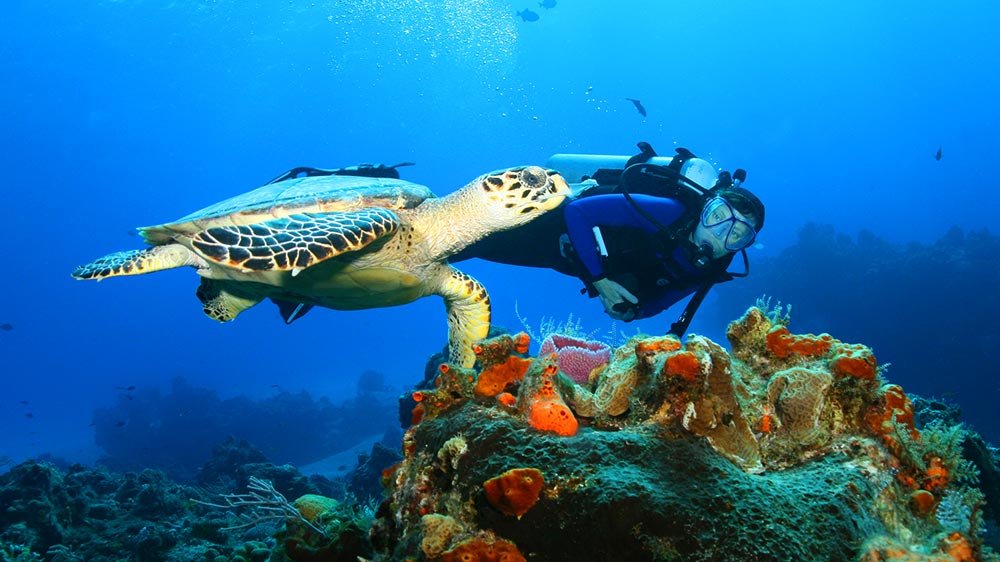
The three Gili Islands (Trawangan, Meno, and Air) have resident green and hawksbill turtle populations. The turtles here are accustomed to swimmers, and sightings are reliable year-round. You can snorkel from shore on all three islands, though boat tours reach the best spots.
Best time: Dry season, April through October, for calmer seas and better visibility. Cost: Snorkel tours are $15 to $40, or free if you snorkel from shore with your own gear (confirm tour prices with local operators).
8. Apo Island, Philippines
Apo Island is a fully protected marine sanctuary off Negros Oriental. The turtles here are habituated to snorkelers and feed in shallow water close to shore. Access is via boat from Malatapay Market near Dumaguete.
Best time: Year-round, though March through June offers the calmest conditions. Cost: Boat transfer and sanctuary fees total roughly $10 to $25 per person (check current rates with local boat operators).
9. Balicasag Island, Philippines
Balicasag is a marine sanctuary near Bohol with healthy coral reefs and resident green turtles. Access is via island-hopping tours from Panglao or by renting a private boat. There is an entrance fee for the sanctuary zone.
Best time: March through June for calm seas. Cost: Sanctuary fee around $5 to $10, plus boat costs.
10. Ningaloo Reef, Australia
Ningaloo Reef on Australia’s west coast is home to hawksbill, green, and loggerhead turtles. Unlike the Great Barrier Reef, Ningaloo is accessible directly from shore in many places. The nesting season runs from November through March.
Best time: November through March for nesting, or June through October for clear water and calmer seas. Cost: Boat tours are $150 to $250, or shore snorkeling is free in some areas (confirm tour prices with local operators).
@helen_jannesonbense f you’re dreaming of seeing turtles like this then Ningaloo reef is your place 🐢 The best spots to see them are in Cape Range National park 🐢 Osprey bay 🐢 Turquoise bay 🐢 Oyster stacks 🐢 Lakeside Always ensure you never touch wild animals and allow the turtles to swim your way comfortably without interfering with their natural behavior. The more relaxed, gently and slowly you swim, the more comfortable they’ll be around you. #traveltiktok #turtle #ningalooreef #exmouth #wathedreamstate #seeaustralia #spiritanimal autisticjoy #specialinterest
11. Maldives
Five species of sea turtles inhabit Maldivian waters, including green and hawksbill. Many resorts have house reefs with resident turtles, and dedicated snorkel excursions are available. The best sightings are often at cleaning stations where turtles gather to have parasites removed.
Best time: December through April for dry season and calm seas. Cost: Snorkel excursions from resorts typically cost $50 to $150 per person (check current rates with your resort).
How much does it cost to swim with turtles?
The cost varies dramatically depending on where you go and whether you need a guide or permit. Here is a realistic breakdown by cost tier.
Budget: Under $50 per person
Shore snorkeling in the Gili Islands, Apo Island, and Abu Dabbab in Egypt can be done for under $30 if you bring your own gear. Akumal is slightly higher because of the required guide and environmental fee, but still affordable at $50 to $75 for the full guided experience.
Mid-range: $50 to $150 per person
Guided boat tours in Hawaii, Barbados, and the Maldives fall into this range. These typically include equipment, a guide, and sometimes lunch. For Sipadan, the permit alone is around $95 per day, but you also need to pay for accommodation, meals, and dive gear through your resort package.
Premium: $150 and up
The Galapagos Islands require a $200 park entry fee alone, plus liveaboard or hotel costs and guided tour fees. Ningaloo Reef boat tours run $150 to $250. Liveaboard dive trips to remote locations can exceed $500 per day.
For booking hotels near these destinations, I use Booking.com for general searches and Agoda when I am looking at Asian destinations. For tours and activities, GetYourGuide has reliable options in most of these locations.
How do you choose an ethical turtle tour operator?
Swimming with turtles is a privilege, and the wrong operator can ruin the experience for you and harm the animals. Here is what I look for before I book.
Check the rules before you book.
Different destinations have different regulations. Akumal requires licensed guides in the protected zone and limits groups to 6 people. Sipadan requires Advanced Open Water certification and permits obtained through licensed operators. Know the rules before you pay anyone.
Ask about group size and distance rules.
Good operators keep groups small and enforce minimum distances. The international guideline for turtles is a minimum interaction distance of 3 meters, though some locations require 4.5 to 5 meters. If an operator promises you can touch or hold a turtle, walk away.
Confirm reef-safe sunscreen requirements
Akumal bans chemical sunscreens containing oxybenzone and octinoxate because they damage coral and harm sea turtles. Biodegradable sunscreen is mandatory, and it is enforced at the entrance. The easiest solution is a full-coverage rash guard, which minimizes how much sunscreen you need at all.
Look for conservation affiliation.
Operators that partner with conservation organizations or contribute to local monitoring programs are generally more responsible. In Akumal, the Centro Ecológico Akumal has been protecting marine ecosystems since 1993 and runs turtle monitoring and nest protection programs.
Do not chase, touch, or feed
These rules are universal and non-negotiable. Touching turtles can compromise their health and is illegal in many jurisdictions, including under the U.S. Endangered Species Act. Feeding them changes their behavior and can make them dependent on humans. Chasing them causes stress and forces them to expend energy they need for foraging and reproduction.
Frequently asked questions about swimming with turtles
Is it safe to swim with sea turtles?
Yes, swimming with sea turtles is generally safe as long as you respect their space and do not try to touch or ride them. Turtles are not aggressive toward humans, but they can bite or bump into people if they feel threatened. Keep a minimum distance of 3 to 5 meters and let the turtle control the interaction.
Do you need a permit to swim with turtles in Hawaii?
No, you do not need a permit to snorkel with turtles in Hawaii. However, Hawaiian green sea turtles are protected under the Endangered Species Act, and it is illegal to touch, chase, or harass them. Maintain a respectful distance and let them approach you if they choose.
What is the best month to swim with turtles in the Caribbean?
The best months for turtle encounters in the Caribbean are typically November through May, when water visibility is highest and seas are calmest. Nesting seasons vary by location: Barbados sees nesting February through October, while Akumal has resident turtles year-round with peak clarity in winter months.
Can you swim with turtles in Akumal without a guide?
In the near-shore zone (the first 50 meters or so), you can enter without a guide. To access the deeper seagrass zone where turtle density is highest, you now need a licensed guide. Groups are limited to 6 people per guide, and sessions run about 55 minutes.
How hard is it to get a Sipadan permit?
Sipadan permits are genuinely difficult to get. Only 254 are issued per day, and they are distributed through licensed dive operators based in Mabul and Kapalai, not sold directly to the public. You must book a resort package that explicitly includes Sipadan days, and most operators require a minimum 3- to 5-night stay. Book several months in advance for peak season.
What should I do if a sea turtle swims close to me?
Stay calm and let the turtle pass. Do not reach out to touch it or block its path. If it approaches you, maintain your position and avoid sudden movements. The turtle is likely just curious or focused on feeding. Enjoy the moment from a respectful distance.
What is the best time of day to snorkel with turtles?
Early morning is consistently the best time. Turtles are more active and feeding in the shallows, the water is calmer, visibility is better, and crowds are smaller. In Akumal, tour buses from Cancun arrive around 10 a.m., so the experience changes dramatically after that time.
Is reef-safe sunscreen really necessary?
Yes, it is necessary and increasingly mandatory. Chemical sunscreens containing oxybenzone and octinoxate are banned in Akumal’s marine protected area and other destinations because they damage coral reefs and harm sea turtles. Biodegradable sunscreen is required, or you can wear a rash guard to minimize sunscreen use altogether.
Plan your trip: booking platforms we trust
I use these platforms when planning my own turtle snorkeling trips. They are reliable for comparing prices, reading recent reviews, and booking with confidence.
Agoda
Best for Asian hotel deals, especially in Malaysia, Indonesia, and the Philippines.
General hotel search with strong filter options and free cancellation deals.
Best for flight and hotel packages if you want to bundle and save.
Flight price comparison across multiple airlines and booking sites.
Family villas and vacation rentals for groups or longer stays.
Tours and activities, including snorkel trips and marine wildlife excursions.
Loyalty rewards bookings, which is good if you collect stamps toward free nights.
Reviews and restaurant finds, useful for checking recent snorkel tour feedback.
WakaAbuja does its best to keep all information accurate at the time of publishing. Prices, policies, and availability change regularly. Always verify with official sources before you travel. We are not liable for errors caused by outdated information. Travel insurance is strongly recommended.