advertisement
Zion National Park: The Complete First-Timer’s Planning Guide That Actually Decides for You
Zion National Park sits in southwestern Utah and welcomes millions of visitors every year. The park entry fee is $35 per private vehicle for a 7-day pass, though non-U.S. residents now pay an additional $100 per person (confirm current rates on the official NPS site). Most first-timers need 2 to 3 days to cover the headline hikes and shuttle system without rushing. The single biggest planning mistake is ignoring the Angels Landing permit lottery and the mandatory shuttle season, which runs from March through late November.
I have watched grown adults cry at the Zion Canyon Visitor Center. Not from the scenery, which is genuinely staggering, but from the realization that they drove six hours only to discover they cannot drive their rental car into the canyon and missed the permit window for the one hike they came for. Zion is not a park you wing. It is a park you plan, and the planning has more moving parts than almost any other national park in the American Southwest.
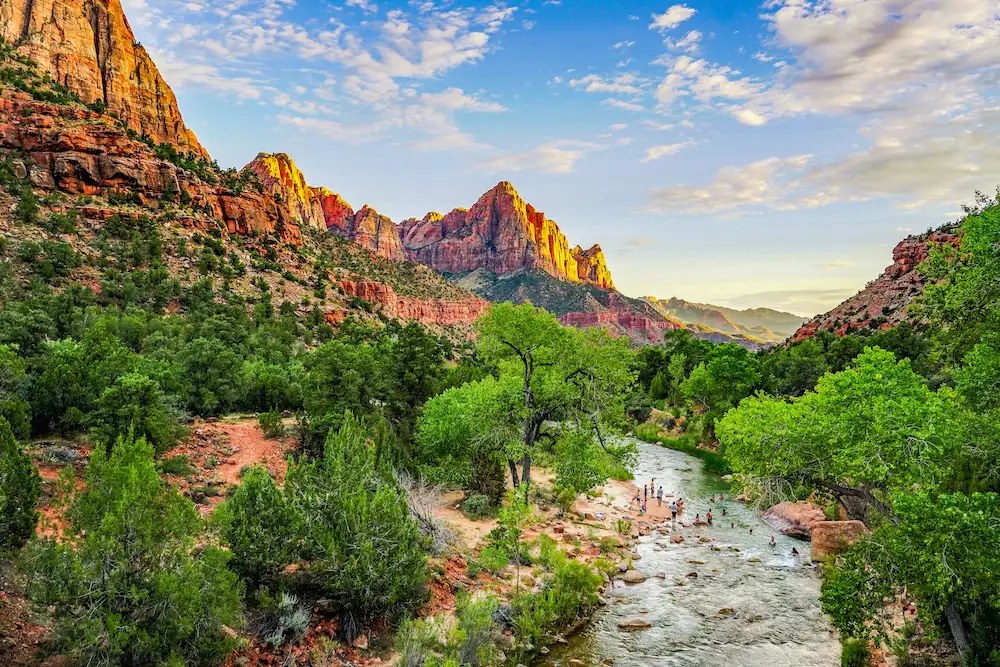
The park itself is a 229-square-mile gorge carved by the Virgin River, with sandstone walls that glow orange at sunrise and turn purple at dusk. But the logistics are the price of admission: a shuttle system that controls access to the main canyon, a permit lottery for Angels Landing that runs on its own schedule, and seasonal closures that can shut down The Narrows without warning.
I have made every mistake on this list at least once, including the time I showed up in April expecting to hike The Narrows and found it closed because of snowmelt. This guide exists so you do not repeat my errors.
Jump to: Best time to visit | How many days you need | Hikes compared | Permits explained | Shuttle system | Where to stay | FAQ
Key takeaways
- Private vehicles are banned from Zion Canyon from March through late November, so you must use the free shuttle system.
- Angels Landing requires a permit obtained through a lottery on Recreation.gov. Seasonal lotteries open quarterly, and a day-before lottery runs every morning of your trip (apply between 12:01 AM and 3 PM Mountain Time).
- Most first-timers should plan 2 to 3 days. One day feels rushed, and anything beyond 4 days suits serious hikers or photographers.
- The Narrows often closes in spring due to snowmelt and high water. Summer and early fall offer the safest conditions (check current flow rates on the NPS site).
- The entrance fee is $35 per vehicle for 7 days, with an additional $100 per person for non-U.S. residents age 16 and up (confirm the latest fee directly with the operator or on the official site).
- Springdale, the town just outside the park entrance, is the most convenient base. Book hotels early, especially for spring and fall (check current rates on Booking.com).
- Flash floods are a real danger in slot canyons. Always check the forecast and NPS alerts before entering The Narrows or any narrow canyon.
What is the best time to visit Zion National Park?
The honest answer depends on what you can tolerate: crowds or cold. I have visited in every season, and my strong preference is late September through early November. The cottonwoods turn gold, daytime temperatures sit in the comfortable 60s and 70s Fahrenheit, and the summer mobs have thinned out.
Spring (March through May) is the second-best window, with wildflowers and moderate temperatures. The catch is water. Snowmelt from the high country can make The Narrows dangerous or entirely closed, often through May. Summer (June through August) is the most popular and the hottest, with canyon floor temperatures regularly exceeding 100°F. The Narrows is at its best for wading during this period, but monsoon season from July through September brings flash flood risk.
Winter (December through February) is my secret weapon for solitude. The shuttle may stop running or operate on a reduced schedule, and some trails ice over, but seeing the red cliffs dusted with snow is worth the cold. Just bring traction devices for your boots and check NPS conditions before any hike.
Maya’s honest take: “If you can only visit once, aim for the last two weeks of October. The weather is perfect, the shuttle lines are manageable, and the fall colors against the red rock are the closest thing to a religious experience I have had in a national park.”
Best for
- Fall (Sept to Nov): Comfortable temperatures, fewer crowds, golden cottonwoods
- Summer (June to Aug): The Narrows at its most accessible, with long daylight hours
- Winter (Dec to Feb): Solitude, snow-dusted scenery, zero shuttle stress
Worth considering
- Spring (March to May): Wildflowers and mild temps, but the Narrows is often closed
- July and August: Monsoon season brings afternoon storm risk in slot canyons
How many days do you need in Zion National Park?
Two to three days covers the essentials for most first-timers. One day is enough to ride the shuttle, walk the Riverside Walk, and see the canyon from the floor, but it leaves no room for a proper hike or a permit-dependent experience.
I recommend three days for a first visit. Day one: arrive early, get your bearings, and hike Emerald Pools or the Watchman Trail. Day two: attempt Angels Landing if you win a permit, or hike Observation Point if you do not. Day three: dedicate the full day to the Narrows, assuming conditions allow. That structure gives you a buffer for weather closures and permit luck.
If you are an avid hiker with a week, you can add the West Rim Trail, Kolob Canyons (a quieter section of the park most visitors skip), and day trips to Bryce Canyon or Snow Canyon State Park. The park itself rewards depth, but the front-country highlights are concentrated enough that you will not feel cheated with three days.
Maya’s honest take: “Do not book a one-night stay and expect to see Zion. The shuttle alone eats 40 minutes of your day in each direction during peak season. Give yourself at least two nights in Springdale.”
Which Zion hike is right for you? The major trails compared
Zion has over 80 miles of trails, but four names come up in every conversation: Angels Landing, The Narrows, Observation Point, and Emerald Pools. Each demands a different fitness level, time commitment, and tolerance for exposure.
Angels Landing is the headline act: 5.4 miles round trip, roughly 1,500 feet of elevation gain, and a final half-mile along a narrow sandstone spine with chains bolted to the rock. It is genuinely dangerous, with documented fatalities, and requires a permit. The Narrows is the opposite experience, a river hike through a slot canyon with walls up to 1,000 feet high. You wade through the Virgin River, and the water can reach chest-deep depending on flow. Observation Point offers the best view in the park from a higher vantage, but the trail from the canyon floor has been closed by rockfall for years. The East Mesa route is longer but accessible. Emerald Pools is the family-friendly option: a series of waterfalls and pools on a relatively flat trail suitable for most fitness levels.
For a detailed comparison, the National Park Service maintains current trail conditions and closure information on its official site. Always check before you commit, especially for Angels Landing and The Narrows, where conditions change daily.
Best for
- Angels Landing: Thrill-seekers, fit hikers, those who won the permit lottery
- The Narrows: Anyone comfortable wading in water, photographers, families with older kids
- Observation Point: Hikers who want the best panoramic view without chain exposure
- Emerald Pools: Families, casual walkers, anyone short on time
Worth considering
- Watchman Trail: Easy 3-mile hike with canyon views, good sunset option
- West Rim Trail: Strenuous, but connects to Angels Landing and offers solitude beyond the chains
If you want a guided experience for The Narrows or a canyoneering trip, GetYourGuide lists local operators who provide gear and expertise.
Do you need a permit for Angels Landing? Yes, and here is how the lottery works.
Angels Landing has required a permit since April 2022. You cannot buy one at the trailhead or at the visitor center. The only way in is through a lottery on Recreation.gov, and there are two paths to securing one.
The seasonal lottery opens quarterly and lets you select up to seven preferred dates for the upcoming season. The day-before lottery runs every single day: apply between 12:01 AM and 3 PM Mountain Time the day before your intended hike, and results come out by 4 PM that afternoon. The application fee is $6, which covers up to six people, and winners pay an additional $3 per person (confirm the latest fees on Recreation.gov).
Your odds are better than you might think. The National Park Service reports an overall average of roughly 50% across both lotteries during the pilot program. Midweek days outside holidays can reach 100%, while Memorial Day weekend Sunday drops to around 8%. If you are flexible with dates, your chances improve dramatically.
Maya’s honest take: “I have won the day-before lottery twice on a Tuesday in October. If you can avoid weekends and holidays, Angels Landing stops feeling like a lottery and starts feeling like a reservation.”
The Narrows does not require a permit for the standard bottom-up day hike from the Temple of Sinawava. However, the 16-mile top-down route from Chamberlain’s Ranch does require a permit, available through Recreation.gov. Most first-timers stick to the bottom-up route, which needs no permit but does require checking water flow and flash flood risk before entering.
How does the Zion shuttle system work?
From March through late November, private vehicles are prohibited on the Zion Canyon Scenic Drive. You park at the Zion Canyon Visitor Center (arrive before 8 AM for a spot) or in Springdale, then ride the free shuttle into the canyon. The shuttle stops at all the major trailheads: Zion Lodge, The Grotto, Big Bend, and the Temple of Sinawava, which is the gateway to The Narrows.
Shuttles run every 10 to 15 minutes during peak season, starting as early as 6 AM or 7 AM depending on the month. No ticket or reservation is needed. You simply queue and board. The Springdale shuttle, which is also free, connects the town’s hotels and restaurants to the park entrance.
My advice: board the first shuttle of the morning if you want to hike Angels Landing or The Narrows without standing in a queue for an hour. The shuttle experience is smooth and efficient, but it does add a layer of timing to your day. If you are staying in Springdale, the walk to the pedestrian entrance can be faster than waiting for the town shuttle during peak hours.
Where should first-timers stay near Zion National Park?
Springdale is the answer for 90% of first-timers. The town sits directly outside the park’s south entrance, and many hotels are within walking distance of the pedestrian gate or the Springdale shuttle line. Staying here means you can leave your car parked and avoid the visitor center parking chaos entirely.
Hotel prices in Springdale range widely by season. Expect to pay a premium for spring and fall weekends. Budget options exist, but they book out months in advance. I have had good luck finding last-minute cancellations on Booking.com and Agoda during shoulder season. For a family or group wanting more space, Vrbo has vacation rentals in and around Springdale.
Camping inside the park is available at South Campground and Watchman Campground, both near the visitor center. Watchman takes reservations and is the more convenient of the two. If you are visiting in winter when the shuttle is not running, staying inside the park becomes less critical because you can drive your own vehicle into the canyon.
For more options in the area, browse hotel guides on WakaAbuja.
What should you pack and prepare for a first Zion trip?
Zion’s desert environment and elevation changes demand preparation that casual tourists often underestimate. The canyon floor can be 100°F while the rims are 20 degrees cooler. Afternoon thunderstorms in summer arrive fast.
Layers and footwear
Bring moisture-wicking layers you can shed, a hat, and sunscreen. For The Narrows, closed-toe water shoes with good grip are essential. You can rent river shoes, neoprene socks, and a walking stick in Springdale. I resisted renting gear on my first Narrows attempt and regretted it within the first half-mile of the slippery riverbed.
Water and snacks
There is no potable water on most trails. Carry at least 2 to 4 liters per person for any hike longer than two hours. The shuttle stops have water refill stations at the visitor center and Zion Lodge.
Flash flood awareness
Flash floods are the single greatest risk in Zion. They can occur in the Narrows and other slot canyons even when the sky above you is clear, because rain miles upstream funnels into the drainage. The National Weather Service issues flash flood warnings, and the NPS closes The Narrows when warnings are active. Check the forecast the morning of your hike. If rain is in the forecast anywhere in the watershed, change your plans.
For current conditions and alerts, the NPS Zion conditions page is the authoritative source.
What mistakes do first-timers make at Zion National Park?
I have made most of these. Learn from my errors instead of creating your own.
Assuming you can drive into the canyon
From March through November, you cannot. The shuttle is your only access to the scenic drive. Arrive at the visitor center before 8 AM or park in Springdale and walk to the pedestrian entrance.
Not entering the Angels Landing lottery early enough
The day-before lottery closes at 3 PM Mountain Time. If you remember at 4 PM that you wanted to hike tomorrow, you have already missed it. Set a phone reminder.
Underestimating the Narrows’ water levels
In spring, snowmelt can push the Virgin River flow above safe levels, closing the hike entirely. Check the current cubic feet per second (CFS) reading on the NPS site. Ideal conditions are at or below 70 CFS. Above 150 CFS, the hike is closed.
Wearing cotton and sneakers into the river
Cotton stays wet and cold. Sneakers have no grip on wet river rocks. Rent proper gear in Springdale if you do not own it.
Ignoring the heat
Summer afternoons in Zion Canyon are brutal. Start hikes at sunrise, carry more water than you think you need, and take the shuttle back to your hotel during the hottest part of the day if you are not acclimated.
Booking only one night
Zion is not a drive-through park. One night means you spend more time in transit than on trails. Two nights minimum, or three if you want to hike The Narrows and Angels Landing.
Frequently asked questions about Zion National Park
How much does it cost to enter Zion National Park?
The standard entrance fee is $35 per private vehicle for a 7-day pass. Motorcycles pay $30, and individuals entering on foot or bicycle pay $20. Non-U.S. residents age 16 and up pay an additional $100 per person (confirm current rates on the official NPS site). Children 15 and under are exempt from both fees.
Do I need a reservation for the Zion shuttle?
No. The Zion Canyon shuttle and the Springdale shuttle are both free and do not require tickets or reservations. You simply queue at any shuttle stop and board. Lines can be long during peak hours, so arrive early if you have a specific trail in mind.
Is Angels Landing worth the permit hassle?
Yes, if you are comfortable with exposure and heights. The final half-mile along the chains is unlike anything else in the park system. If you are nervous about sheer drop-offs or do not win a permit, Observation Point offers a superior panoramic view without the chain section.
Can I hike The Narrows without a permit?
Yes, the standard bottom-up day hike from the Temple of Sinawava does not require a permit. You can hike upstream as far as Big Spring and return the same way. The 16-mile top-down route from Chamberlain’s Ranch does require a permit and advance planning.
Is Zion National Park open in winter?
Yes, the park is open year-round. The shuttle typically stops running or operates on a reduced schedule in winter, which means you can drive your own vehicle into Zion Canyon. Some trails may be icy, so bring traction devices for your boots. Winter offers the fewest crowds and the most peaceful experience.
What is the closest town to Zion National Park?
Springdale, Utah, sits directly outside the park’s south entrance and is the most convenient base for first-timers. It has hotels, restaurants, and shuttle access to the park. Hurricane and St. George are larger towns within a 45-minute to 1-hour drive.
Can I bring my dog to Zion National Park?
Pets are allowed only on the Pa’rus Trail and in developed areas like parking lots and campgrounds. They are not permitted on any other trails, on shuttle buses, or in the backcountry. If you are traveling with a dog, plan to have someone stay with it or leave it at a pet-friendly accommodation in Springdale.
Plan your trip: booking platforms we trust
I use these platforms because they consistently surface the best options for Zion trips, from Springdale hotels to flight deals into Las Vegas or St. George. Each has its strengths for a specific part of the planning process.
Booking.com
Best for general hotel searches in Springdale and surrounding towns
Agoda
Strong for Asian hotel chains and loyalty deals
Kayak
Flight price comparison for Las Vegas or St. George arrivals
Vrbo
Vacation rentals for families and groups needing space
GetYourGuide
Guided tours and gear rentals for The Narrows and canyoneering
TripAdvisor
Restaurant reviews and local activity ideas in Springdale
For flights into the region, start with WakaAbuja’s cheap flight search. For more trip planning resources, browse WakaAbuja travel planning guides.
WakaAbuja does its best to keep all information accurate at the time of publishing. Prices, policies, and availability change regularly. Always verify with official sources before you travel. We are not liable for errors caused by outdated information. Travel insurance is strongly recommended.