advertisement
Split Rock Lighthouse, MN: Hours, Prices, and the Best Time to Visit (Complete Guide)
Fact-Checked By: Maya Whitfield, Senior Travel Editor at WakaAbuja — Senior Travel Editor at WakaAbuja
Split Rock Lighthouse is actually two separate entities: the historic site run by the Minnesota Historical Society (MNHS) and the surrounding Split Rock Lighthouse State Park run by the Minnesota DNR. The historic site charges $15 for adults and $8 for kids ages 5 to 17, with a grounds-only pass at $8 (confirm current prices on the MNHS site). A Minnesota State Park vehicle permit is separate, running about $7 daily or $35 annually (check current rates with the DNR). The lighthouse is open daily from 10:00 AM to 6:00 PM between May 1 and October 19 this year, with limited winter hours.
I have been visiting Split Rock Lighthouse for years, and the one thing that trips up almost every first-timer is not knowing these are two different places with two different fees. I watched a family last summer park at the state park, walk up to the historic site entrance, and discover they needed a second ticket they had not budgeted for.
This guide is the thing I wish someone had handed me before my first trip: the real costs, the actual hours, and the timing that makes the difference between a rushed stop and a memorable one.
Jump to: Historic Site vs. State Park | Hours & Prices | The Story | What to Do | Best Time to Visit | Photography | Itineraries | FAQ
Key takeaways
- Split Rock Lighthouse Historic Site and Split Rock Lighthouse State Park are separate: the historic site charges admission, while the state park requires a vehicle permit (around $7 daily or $35 annually; confirm with the DNR).
- Historic site admission is $15 for adults, $12 for seniors and students, and $8 for kids ages 5 to 17, with a grounds-only pass also at $8 (check current rates on mnhs.org).
- Summer hours run 10:00 AM to 6:00 PM daily from May 1 through October 19 this year.
- Fall is the best time for photography, with golden hour light and birch trees turning yellow along the North Shore.
- The 5-mile Split Rock loop trail takes about 2 hours and 11 minutes, featuring waterfalls and Lake Superior views (verify trail conditions locally).
- Pets are not allowed on the historic site, though service animals are permitted (verify current policy before visiting).
- Drones are prohibited in both the historic site and the state park.
What is the difference between the Split Rock Lighthouse Historic Site and State Park?
This is the single most confusing thing about visiting Split Rock, and I am going to clear it up before anything else. The historic site is the 25-acre area containing the lighthouse itself, the keeper’s house, the fog signal building, and the visitor center. It is run by the Minnesota Historical Society, and you pay an admission fee to enter the buildings.
The state park is the 2,200 acres surrounding the historic site, managed by the Minnesota Department of Natural Resources. It contains hiking trails, a cart-in campground, Pebble Beach, and the shoreline viewpoints where you get the famous photograph of the lighthouse on its cliff. You need a state park vehicle permit to park there, but you do not pay historic site admission unless you want to go inside the buildings.
This matters because many people want to photograph the lighthouse from the state park shoreline, which requires only the cheaper vehicle permit. Others want to tour the lighthouse and keeper’s house, which requires the historic site ticket. Some want both, and some do not realize they need both. I have watched this confusion play out at the entrance more times than I can count.
Historic Site (MNHS)
- Lighthouse interior and keeper’s house
- Visitor center and museum exhibits
- Guided tours available
- Admission fee applies
- Pets prohibited
State Park (DNR)
- Hiking trails and shoreline access
- Pebble Beach and photography spots
- Cart-in campground
- Vehicle permit required
- Pets allowed on trails
Maya’s honest take: “If you only have time for one thing, buy the state park permit and walk to Pebble Beach for the classic photo. If you have an extra hour, add the historic site ticket. The lighthouse interior is fascinating, but the view from the shoreline is what you came for.”
What are the hours and prices for Split Rock Lighthouse?
The historic site operates on a seasonal schedule that changes significantly between summer and winter. I have visited in both seasons, and the experience is different enough that you should know what you are getting into.
From May 1 through October 19 this year, the site is open daily from 10:00 AM to 6:00 PM. This is peak season, and all buildings are typically accessible. During winter months, typically late October through early May, only the visitor center is open with limited hours, often 11:00 AM to 4:00 PM Thursday through Sunday, though the grounds remain open daily until dusk.
General Admission
Adults: $15 (confirm on mnhs.org)
Seniors, college students, military: $12
Kids ages 5-17: $8
Grounds pass (no interior access): $8
Includes lighthouse interior, keeper’s house, and visitor center.
State Park Permit
Daily: ~$7 (check with MN DNR)
Annual: ~$35
Required for parking in the state park. Covers all Minnesota state parks for the day or year.
The guided Keeper’s Tour costs $25 and runs at 9:00 AM on Fridays, Saturdays, and Sundays through October 20. Tickets for this tour are only available online and must be purchased by 11:59 PM the evening before. The Conquering the Cliff Tour, a 60-minute guided experience, costs $20 for adults and $15 for children.
General admission tickets are not available for pre-sale and must be purchased at the site. This is worth knowing if you are planning a tight schedule. Arrive early on summer weekends, because the ticket line can get long.
Why was Split Rock Lighthouse built?
The story starts with a storm. In November 1905, a gale on Lake Superior wrecked nearly thirty ships, with six going down within a dozen miles of the Split Rock River. It was one of the worst shipping disasters in Great Lakes history, and it made the need for a lighthouse on that stretch of coastline undeniable.
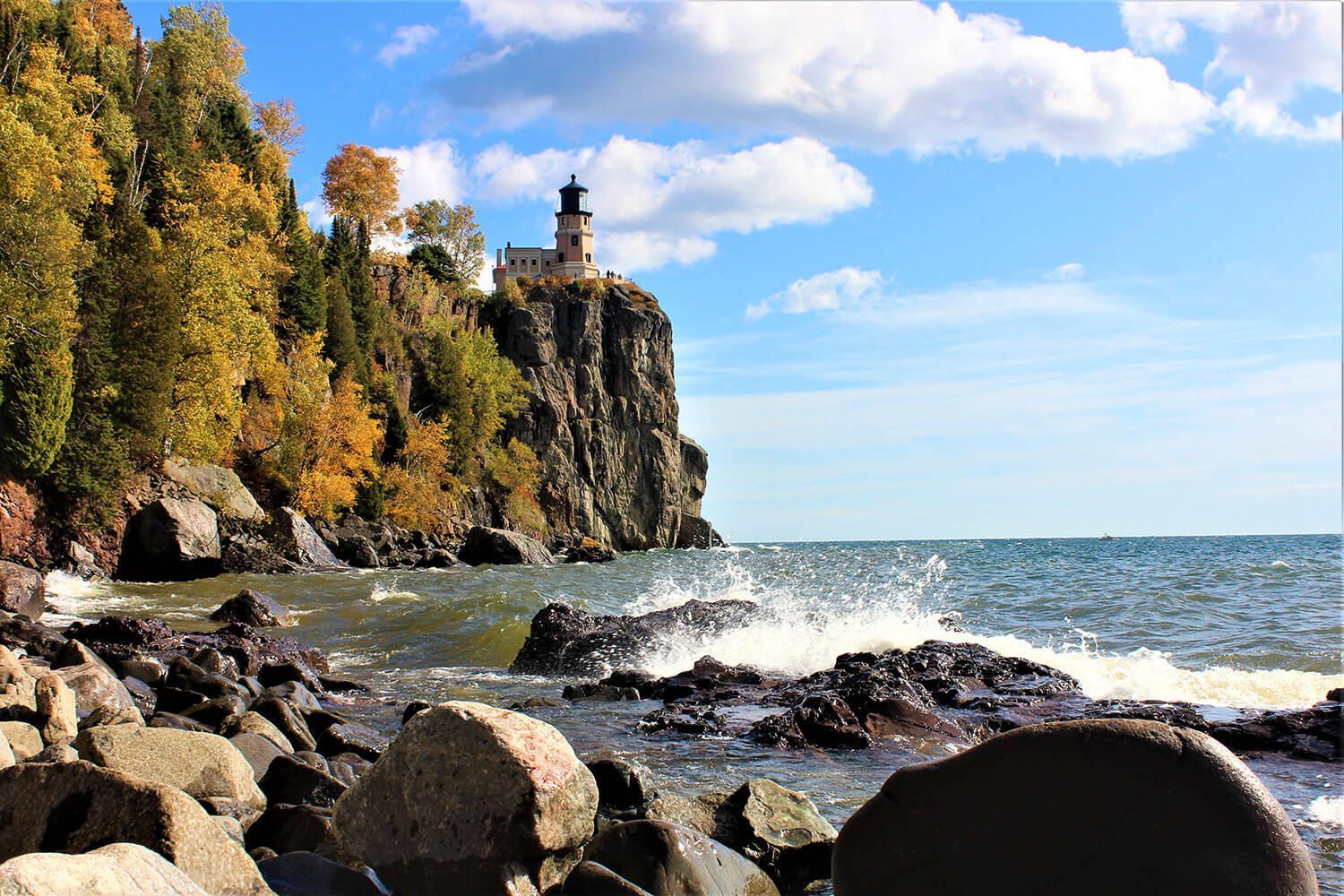
Construction began in 1909, and the U.S. Lighthouse Service completed Split Rock Light Station in 1910. The lighthouse sits on a 130-foot anorthosite cliff, pushed up by magma within the Midcontinent Rift over a billion years ago. The combination of the sheer cliff, the vast lake, and the isolated station created one of the most dramatic settings in the country.
The keepers and their families lived a rugged, isolated life. Originally a seasonal station, keepers would live there during the shipping season but leave during the off-season. Highway 61 made the station more accessible by land, and in the 1930s the keepers began living onsite year-round. The restored keeper’s dwelling now offers a glimpse into that life, with original artifacts including keeper Franklin Covell’s snowshoes, which represent the transitional period when the station became year-round.
The lighthouse was decommissioned in 1969 and became a historic site. Today it is one of the most photographed lighthouses in America, and the site hosts an annual Edmund Fitzgerald memorial event each November to honor the 29 crew members lost on Lake Superior.
What is there to see and do at Split Rock Lighthouse?
The historic site itself is compact enough to explore in an hour or two, but the surrounding state park can occupy a full day or more. Here is what I actually do when I visit.
Touring the Lighthouse and Keeper’s House
General admission gets you into the lighthouse tower, the keeper’s house, the fog signal building, and the visitor center. The Fresnel lens at the top of the tower is the centerpiece, and the view from the lantern room is worth the climb. The keeper’s house is restored to its pre-1924 appearance and shows how families lived in this isolated station.
Hiking Trails
The state park has 14.5 miles of hiking, biking, and cross-country ski trails. The Split Rock loop via the Superior Hiking Trail is about 5 miles and takes roughly 2 hours and 11 minutes. It features waterfalls along the Split Rock River and Lake Superior views. The Day Hill Trail leads to an overlook with panoramic views of the lighthouse and the shoreline. The Little Two Harbors Trail is a flat, 0.75-mile accessible gravel path from the Trail Center to Pebble Beach.
Camping
The cart-in campground has 20 sites that require you to park and wheel your gear to your site using carts provided at the parking area. Sites include a fire ring, picnic table, and bear-proof food storage. Showers operate seasonally from April through October. Campers frequently mention Site 20 as the most private and Site 4 as having a direct view of the lighthouse. Reservations can be made up to 120 days in advance through the Minnesota DNR system.
When is the best time to visit Split Rock Lighthouse?
The honest answer depends on what you want. Summer gives you full access and the most reliable weather. Fall gives you the best photographs. Winter gives you solitude and dramatic ice formations but limited hours and some closed buildings.
Summer (June through August)
All buildings are open, the weather is warmest, and the days are longest. The trade-off is crowds. Summer weekends bring tour buses and families, and the ticket line can be slow. Go on a weekday if you can, or arrive right at 10:00 AM when the site opens.
Fall (September through October)
This is my favorite time to visit. The birch forests along the North Shore turn vivid yellow, and the golden hour light paints the lighthouse in warm tones. The historic site remains open through October 19 this year. Crowds are lighter than summer, and the photography conditions are exceptional.
Winter (November through April)
The historic site operates on limited hours; often only the visitor center is open, and the grounds are open daily until dusk. But winter offers something summer cannot: ice formations on the cliffs and the chance to photograph the lighthouse against a frozen lake. The state park trails remain open for snowshoeing and cross-country skiing. Just check conditions before you go, and be prepared for cold, wind, and potentially icy paths.
Where and when should you photograph Split Rock Lighthouse?
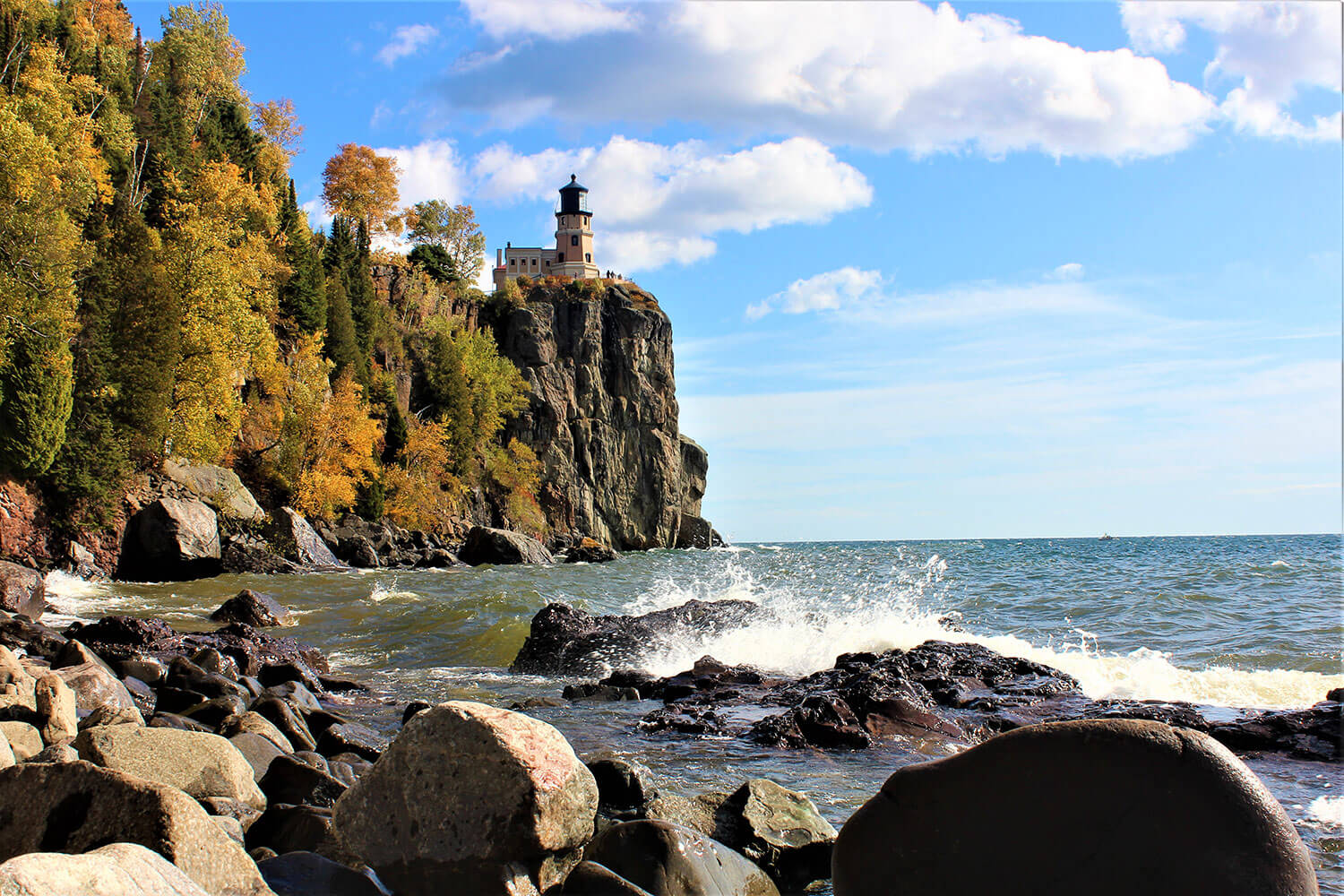
This is the section I wish existed when I first visited. Split Rock is one of the most photographed lighthouses in America, but the iconic shot is not taken from the historic site itself. It is taken from the state park shoreline, specifically from Pebble Beach .
The best light is at sunrise and during blue hour, when the beacon glow contrasts with the sky . Fall is the best season for color, with September and October offering golden light and turning leaves. Winter offers dramatic ice formations framing the lighthouse .
From Pebble Beach, you get the classic composition: the lighthouse on its cliff, the lake stretching to the horizon, and the shoreline framing the shot. It is a quarter-mile walk from the parking lot, and the terrain is manageable for most people . Minimal hiking is required, with most viewpoints within half a mile of parking.
If you want a different angle, the Day Hill Trail leads to an overlook with panoramic views of the lighthouse and Split Rock Point . The Little Two Harbors Trail along the shoreline offers views of Ellingsen Island and the historic fishing village location .
Maya’s honest take: “Skip the obvious viewpoint near the historic site entrance. Walk to Pebble Beach instead. The composition is better, the light is better, and you get the full cliff in the frame. Bring a tripod if you are shooting at blue hour.”
How long should you spend at Split Rock Lighthouse?
I have done Split Rock as a quick photo stop, a half-day visit, and an overnight camping trip. Here is what each actually looks like.
Half-day (2 to 3 hours)
Buy the state park permit, park at the historic site lot during site hours, and walk to Pebble Beach for photos. Then buy historic site admission, tour the lighthouse and keeper’s house, and watch the 22-minute film in the visitor center . This covers the essentials without feeling rushed.
Full day (5 to 6 hours)
Add a hike. The Split Rock loop is 5 miles and takes about 2 hours and 11 minutes . Or do the shorter Day Hill Trail for panoramic views. Pack a lunch and eat at one of the picnic sites along the shore. This is the pace I recommend if you are not staying overnight and want to see both the historic site and the state park properly.
Weekend (overnight camping)
Book a cart-in campsite at the state park. Site 4 has a direct view of the lighthouse and is close to the parking lot, while Site 20 is the most private but requires a longer cart haul . Spend the afternoon hiking, photograph the lighthouse at sunset and sunrise, and explore the trails the next day. This is the way to experience Split Rock without the day-trip rush. Search camping availability through the Minnesota DNR reservation system.
What are the biggest mistakes people make at Split Rock Lighthouse?
I have made most of these, and I have watched countless others make the rest.
Not realizing there are two separate fees
The state park permit and the historic site admission are separate. You need the state park permit to park in the state park. You need historic site admission to go inside the buildings. Many people assume one covers the other. They do not.
Coming at midday in summer and expecting solitude
Summer weekends are busy. If you want a quieter experience, go on a weekday morning or visit in September or October. The light is better in fall anyway.
Forgetting the winter hours
From late October through early May, the historic site has limited hours and some buildings may be closed. Check the MNHS website before you go. The grounds are open daily until dusk, but the visitor center is often only open Thursday through Sunday in winter .
Bringing a pet to the historic site
Pets are not allowed on the historic site . Service animals are permitted. If you are traveling with a dog, you can walk the state park trails but cannot bring your pet into the lighthouse area.
Flying a drone
Drones are not permitted in the historic site or the state park . Leave the drone at home.
Skipping the hike
Many visitors see the lighthouse from the parking lot and leave. They miss the shoreline views, the waterfalls, and the trails that make the state park worth the vehicle permit. At minimum, walk to Pebble Beach. If you have time, do the Split Rock loop.
Frequently asked questions
How much does it cost to visit Split Rock Lighthouse?
Historic site admission is $15 for adults, $12 for seniors and students, and $8 for kids ages 5 to 17, with a grounds-only pass also at $8 (confirm current prices on mnhs.org). A Minnesota State Park vehicle permit is separate, around $7 daily or $35 annually (check current rates with the DNR).
What are the hours for Split Rock Lighthouse?
From May 1 through October 19 this year, the historic site is open daily from 10:00 AM to 6:00 PM. Winter hours are limited, typically only the visitor center is open Thursday through Sunday, though the grounds remain open daily until dusk. Check mnhs.org before visiting in winter.
Can you go inside Split Rock Lighthouse?
Yes, with general admission you can enter the lighthouse tower, keeper’s house, fog signal building, and visitor center. The grounds-only pass does not include interior access. Guided tours are available for an additional fee.
How long does it take to visit Split Rock Lighthouse?
Plan 2 to 3 hours for the historic site and a walk to Pebble Beach. Add another 2 hours if you want to hike the 5-mile Split Rock loop. A full day lets you explore both the historic site and the state park trails.
Is Split Rock Lighthouse dog-friendly?
Pets are not allowed on the historic site, though service animals are permitted. Dogs are allowed on the state park trails if kept on a 6-foot leash. If you are traveling with a pet, stick to the state park and skip the historic site.
What is the best time to photograph Split Rock Lighthouse?
Sunrise and blue hour offer the best light, with the beacon glow contrasting against the sky. Fall (September and October) is best for color, and winter offers dramatic ice formations. Pebble Beach in the state park is the classic photography spot.
Is there camping at Split Rock Lighthouse State Park?
Yes, the cart-in campground has 20 sites where you park and wheel your gear to your site using provided carts. Sites include fire rings and bear-proof storage. Showers operate seasonally from April through October. Reservations open 120 days in advance through the Minnesota DNR system.
Plan your trip: booking platforms we trust
I use these platforms because they are reliable for North Shore logistics. For flights into Duluth or Minneapolis, Kayak gives me the best comparison tool. For hotels in Two Harbors or Duluth, Booking.com and Agoda have the widest inventory. For tours and activities along the North Shore, GetYourGuide and TripAdvisor are where I check reviews and availability.
WakaAbuja does its best to keep all information accurate at the time of publishing. Prices, policies, and availability change regularly. Always verify with official sources before you travel. We are not liable for errors caused by outdated information. Travel insurance is strongly recommended.