advertisement
Trip to Rarotonga, Cook Islands: Costs, Best Time to Go, and What to Know Before You Book
A trip to Rarotonga in the Cook Islands costs roughly NZ$2,500 to NZ$4,000 per person for a seven-night stay, including flights from New Zealand, mid-range accommodation, food, and one lagoon tour (confirm current rates with your booking platform). The best time to go is May, June, September, or October, when the weather is dry, prices drop outside school holidays, and the island is quieter. Almost every international flight routes through Auckland, so if you are coming from Europe or North America, plan for a stopover. You need a passport valid for at least six months beyond arrival, proof of onward travel, and confirmed accommodation for your first night. No visa is required for most Western passport holders staying under 31 days.
I first visited Rarotonga expecting a quiet beach stopover on the way home from Auckland. I stayed eleven days. That is the thing about this island: it is small enough to drive around in 45 minutes, but layered enough that you keep finding reasons to extend your trip.
This guide is built for the person who wants one page that answers everything, not fifteen tabs. Flights, costs, the best months to visit, where to stay, what to eat, a full 7-day itinerary, and the before-you-book checklist. If you have already read three Rarotonga guides and still do not know what it actually costs, this is the one that fixes that.
Jump to: Key Takeaways | Is It Worth It | Before You Book | Best Time to Go | What It Costs | Where to Stay | 7-Day Itinerary | FAQ
Key takeaways
- Most visitors arrive via Auckland. Direct flights from Sydney and Los Angeles exist on some schedules, but Auckland is the main gateway year-round.
- Seven nights for one person costs NZ$2,500 to NZ$4,000 in the mid-range tier, all-inclusive of flights from New Zealand, accommodation, food, and one tour (confirm current rates with the operator).
- May, June, September, and October are the sweet spot: dry weather, lower prices, fewer crowds, and water warm enough for snorkeling.
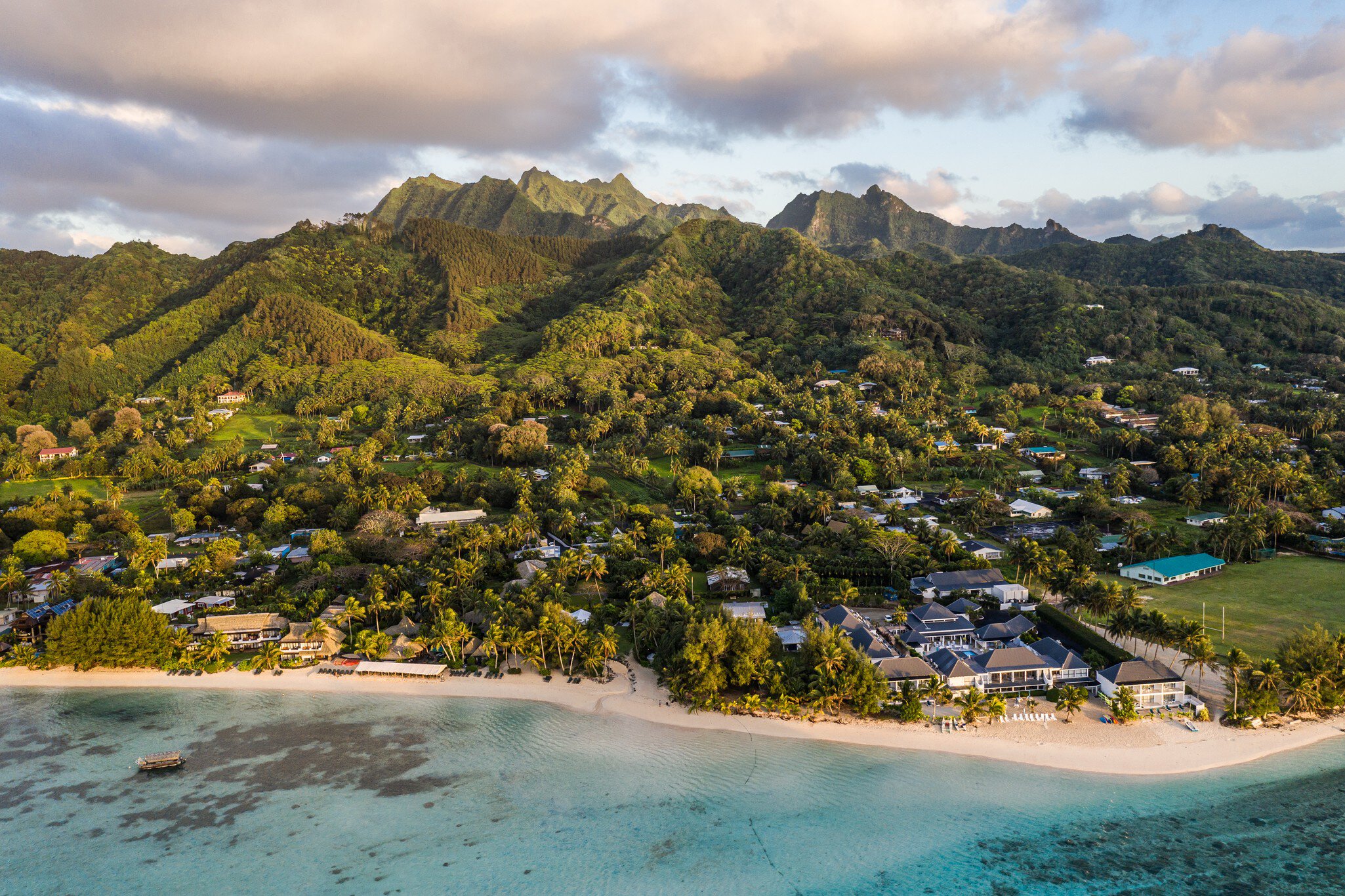
- Muri Beach and Muri Lagoon on the southeast coast are the best base for first-timers. Most resorts, restaurants, and lagoon tours are within walking distance.
- Rarotonga uses New Zealand dollars. There are no ATMs at the airport, so bring cash or withdraw in Avarua town on arrival day.
- You need a passport valid for six months beyond arrival, proof of onward travel, and confirmed accommodation for your first night.
- The entire island is 32 kilometers around. Rent a car or scooter for at least two days. Public buses run hourly but stop early in the evening.
Is a trip to Rarotonga worth it?
Yes, if you want a South Pacific island that feels genuinely uncommercialized compared to Fiji or Bora Bora. Rarotonga has no high-rise resorts, no chain hotels, and a strict building height limit of four stories. The island feels like a working community first and a tourist destination second.
It is not for everyone. If you want nightlife, mega-resorts, and nonstop entertainment, you will be bored by day three. If you want lagoon swimming, easy hiking, excellent local food, and the feeling of being somewhere that has not been packaged to death, it is one of the best value destinations in the Pacific.
The Cook Islands also have a unique advantage: they are one of the few Pacific destinations where you can visit a second, completely different island (Aitutaki) on the same trip for around NZ$500 to NZ$700 return in flights (check current fares on Air Rarotonga’s official site). Aitutaki’s lagoon is widely considered the most beautiful in the world. Combining Rarotonga and Aitutaki is the single best use of your money on a Cook Islands trip.
Maya Whitfield’s honest take: “The people who complain about Rarotonga are usually the ones who booked seven nights at a resort and never left the property. Rent a scooter. Eat at the Saturday market. Drive to the end of the road and see what is there. The island rewards curiosity.”
What should you know before booking a Rarotonga trip?
Most Rarotonga guides skip this section and jump straight to resorts. That is a mistake. The practical details affect your budget and your comfort more than the resort choice does.
Entry requirements
Cook Islands entry is straightforward for most Western passport holders. You need a passport valid for at least six months beyond your arrival date, a confirmed return or onward ticket, and proof of accommodation for at least the first night. No visa is required for stays under 31 days for citizens of New Zealand, Australia, the US, Canada, the UK, and most EU countries. For longer stays or other nationalities, check the Cook Islands Ministry of Foreign Affairs and Immigration site directly.
Flight routes and who flies there
Air New Zealand operates the main route from Auckland, roughly four hours. Flights also run from Sydney on some days and from Los Angeles on a seasonal schedule. If you are coming from Europe or the US East Coast, plan for at least one overnight stop in Auckland. Jet lag going west is significant; allow a full day to adjust before booking any early-morning tours.
Currency, cash, and cards
The Cook Islands uses the New Zealand dollar. Some places also accept the Cook Islands dollar, which is pegged 1:1 but not usable outside the country. Cards are accepted at most resorts and larger restaurants, but smaller cafes, market stalls, and the Saturday market are cash-only. There are ATMs in Avarua town, but not at the airport. Bring some NZD cash in small denominations for your first day.
SIM cards and data
You can buy a local Vodafone or Bluesky SIM at the airport or in Avarua. Data packages start around NZ$20 for a week’s worth of basic use (check current rates with the provider). Wi-Fi at resorts is usually fine for messaging and email but can be slow for video calls. Download offline maps before you arrive, because some parts of the island have weak signal.
Getting around the island
Rarotonga has one ring road, 32 kilometers around. You can drive the whole loop in about 45 minutes with no traffic. Rent a car or scooter for at least two days to explore properly. Scooter rentals run about NZ$25 per day (confirm current rates with the rental agency). Cars run NZ$60 to NZ$90 per day. The public bus runs both directions on the hour, but the last buses stop around 4 PM on the anti-clockwise route and 6 PM on the clockwise route. Do not rely on buses for evening plans.
When is the best time to visit Rarotonga?
The short answer: May, June, September, and October. The longer answer depends on whether you prioritize weather, price, or crowd levels, because those three things do not line up neatly in the Cook Islands.
Peak season (June to August)
- Weather: Dry, cooler nights, low humidity. Best overall conditions.
- Prices: Highest of the year. Flights and resorts book out early.
- Crowds: Busiest, especially during New Zealand school holidays in July.
- Best for: Travelers who prioritize weather and do not mind crowds.
Shoulder season (May, September, October)
- Weather: Mostly dry, warm water, occasional brief showers.
- Prices: 20% to 30% lower than peak (confirm current rates with the resort).
- Crowds: Moderate. Easy to book restaurants and tours.
- Best for: Most travelers. This is the sweet spot.
Wet season (November to April)
- Weather: Hot, humid, higher rain risk. Cyclone season runs November to April.
- Prices: Lowest of the year. Best deals on flights and resorts.
- Crowds: Quiet, except around Christmas and New Year.
- Best for: Budget travelers who can tolerate rain and humidity.
The cyclone risk is worth taking seriously. The Cook Islands sit in the South Pacific cyclone belt, and the season officially runs November through April. Most years pass without a major event, but travel insurance that covers cyclone disruption is not optional during these months. I have watched travelers stuck in Auckland for four days because a storm closed the runway. That is a real risk.
How much does a trip to Rarotonga cost?
This is the question most Rarotonga guides dodge, and it is the one that actually determines whether you can go. Here are realistic numbers, based on my own trips and the budgets of travelers I have met on the island. All figures are in New Zealand dollars, per person, for a seven-night stay.
Budget tier
- Flights from Auckland: NZ$500 to NZ$800 return (check current fares on Kayak).
- Accommodation: Guesthouses and backpacker rooms, NZ$80 to NZ$150 per night.
- Food: Local cafes, markets, and self-catering, NZ$40 to NZ$60 per day.
- Transport: Bus pass, NZ$16 per day, or a scooter for NZ$25 per day.
- Total for 7 nights: NZ$2,000 to NZ$2,800.
Mid-range tier
- Flights from Auckland: NZ$500 to NZ$900 return.
- Accommodation: Beachfront motels and 3- to 4-star resorts, NZ$200 to NZ$400 per night.
- Food: Mix of restaurants and cafes, NZ$80 to NZ$120 per day.
- Activities: One lagoon tour, one Aitutaki day trip, NZ$300 to NZ$500 total.
- Total for 7 nights: NZ$2,500 to NZ$4,000.
Luxury tier
- Flights from Auckland: NZ$900 to NZ$1,400 return in premium or flexible fares.
- Accommodation: Beachfront villas and premium resorts, NZ$600 to NZ$1,500 per night.
- Food: Resort dining primarily, NZ$150 to NZ$250 per day.
- Activities: Private lagoon tours, spa treatments, and chartered fishing, NZ$500 to NZ$1,000 total.
- Total for 7 nights: NZ$5,000 to NZ$9,000.
Two cost notes that surprise most first-timers. First, food on Rarotonga is more expensive than you expect because almost everything is imported. A basic cafe lunch runs NZ$20 to NZ$30 per person. Second, alcohol is heavily taxed. A cocktail at a resort bar can run NZ$20 to NZ$25 (confirm current prices on-site). Budget accordingly if you plan to drink.
Maya Whitfield’s honest take: “The biggest budget mistake I see is people flying to Rarotonga from Europe or the US East Coast and burning half their budget on the long haul. If you are coming that far, combine Rarotonga with a few days in Auckland or Sydney to make the flights worth it. Rarotonga alone from London is a lot of flying for a week.”
Where should you stay in Rarotonga?
Rarotonga has two main accommodation zones: the south coast (Muri and Titikaveka) and the west coast (Arorangi and Avarua). Both have resorts, both have beaches, but they serve different trips.
Muri and Titikaveka (south coast)
- Best for: First-timers, families, lagoon access.
- Why: Muri Lagoon is the island’s best swimming and snorkeling spot. Most lagoon tours depart from here.
- Trade-off: More tourist-oriented, fewer local restaurants within walking distance.
Arorangi and Avarua (west coast)
- Best for: Sunsets, local feel, proximity to town.
- Why: Avarua is the capital with the market, banks, and best cafes. Arorangi has the best sunsets.
- Trade-off: The lagoon is narrower and rockier on this side.
For most first-timers, Muri is the right call. It has the highest concentration of resorts, the easiest access to the lagoon, and enough restaurants within walking distance that you do not need a car every night. If you want more of a local feel and better sunsets, Arorangi is the better choice.
A note on booking: Rarotonga has a limited number of rooms, and the good mid-range properties sell out months ahead during peak season. If you are traveling June through August, book six months out. Booking.com has the widest coverage of Rarotonga properties, including the smaller beachfront motels that do not appear on the bigger platforms.
What does a 7-day Rarotonga itinerary look like?
This itinerary works for a first trip. It balances lagoon time, island exploration, food, and one full day trip to Aitutaki. Adjust based on your arrival day and energy level.
Day 1: Arrive, settle in, sunset at Arorangi
Most flights land in the early morning or late afternoon. Check into your accommodation, then take a gentle first drive or bus ride to Arorangi on the west coast for sunset. Dinner at a local cafe or the Night Market in Muri if it is open (it runs Tuesday to Sunday). Early night.
Day 2: Muri Lagoon and snorkeling
Spend the morning swimming and snorkeling in Muri Lagoon. The best snorkeling is around the motus (small islets) and the outer reef. Rent a kayak or stand-up paddleboard for a few hours, about NZ$20 to NZ$30 (confirm current rates with the rental operator). Afternoon at the beach. Dinner at one of the Muri beachfront restaurants.
Day 3: Circle the island by scooter or car
Rent a scooter or car for the day and drive the full 32-kilometre ring road. Stop at the Black Rock (Tuoro) in Arorangi, the Papua Waterfall, and the beach at Titikaveka. Have lunch in Avarua at a local cafe. Visit the Cook Islands National Museum if it is open. Return via the east coast for sunset.
Day 4: Aitutaki day trip
Take an early morning flight to Aitutaki, about 45 minutes, and spend the day on a lagoon cruise. This is the highlight of most Cook Islands trips. The standard tour includes a stop at One Foot Island, snorkeling, and a motu lunch. Tours run NZ$200 to NZ$300 per person plus flights (check current rates with the tour operator). If your budget allows, staying overnight in Aitutaki is better than a day trip. The lagoon deserves more than six hours.
Day 5: Hiking and inland exploration
Hike the Cross Island Track, a steep but manageable trail that crosses the island through the interior. It takes three to four hours round trip and requires proper shoes, water, and a dry day. The view from the Needle (Te Rua Manga) is the best on the island. If the weather is bad, substitute the easier Papawha Track or spend the day at the beach.
Day 6: Saturday market and local food
If your trip includes a Saturday, the Punanga Nui Market in Avarua is the best morning you can spend on the island. Local produce, cooked food, crafts, and live music. Go early, around 7 AM, before the heat and the crowds. If it is not Saturday, spend the morning at a local cafe and the afternoon visiting the island’s churches and historical sites.
Day 7: Last swim and departure
Final morning swim at Muri Lagoon. Check out, drop your bags at your accommodation or the airport, and have a last lunch in Avarua. Most international flights leave in the afternoon or evening. Arrive at the airport three hours before departure.
Maya Whitfield’s honest take: “If you have the budget and the time, book two nights in Aitutaki instead of a day trip. I have done both. The day trip feels rushed, and you miss the sunset over the lagoon, which is the single best thing in the Cook Islands. Two nights turns a good trip into an unforgettable one.”
What should you avoid on a Rarotonga trip?
Most Rarotonga guides tell you what to do. Fewer tell you what to avoid. These are the mistakes I have made or watched other travelers make.
Booking only three or four nights
Rarotonga is a long way from most places. If you are flying from Auckland, four nights is workable. If you are flying from Europe, North America, or Australia, four nights is not worth the journey. Seven nights is the minimum for a trip that justifies the travel time.
Assuming the lagoon is swimmable everywhere
The lagoon is not uniform around the island. Muri and Titikaveka have the best swimming. The west coast and parts of the north are rockier and shallower. If swimming is your priority, stay on the south coast.
Underestimating the sun
The Cook Islands sit close to the equator. The UV index is extreme year-round, even on cloudy days. I have seen travelers with second-degree burns after two hours on the beach without sunscreen. Reef-safe sunscreen, a hat, and a rash guard are not optional.
Not booking Aitutaki in advance
Air Rarotonga flights to Aitutaki sell out during peak season. If you want to add Aitutaki to your trip, book the flight and the lagoon tour before you leave home. Waiting until you arrive on Rarotonga often means missing out.
Relying on public buses for evening plans
The bus is cheap and useful during the day. It stops early in the evening, and service is not reliable after 6 PM. If you are planning dinner away from your accommodation, arrange a taxi, rent a car, or stay somewhere walkable.
Skipping travel insurance
The Cook Islands are in a cyclone zone, and flights get delayed or cancelled during the wet season. Travel insurance that covers weather disruption and medical evacuation is essential. Medical facilities on Rarotonga are limited; serious cases are transferred to New Zealand. Travel insurance is the one thing I would never skip here.
Frequently asked questions
How many days do you need in Rarotonga?
Seven nights is the minimum for a trip that justifies the travel time, especially if you are flying from outside New Zealand. Five nights works if you are coming from Auckland for a short break. If you want to add Aitutaki, add three more nights. Anything under four nights is not worth the journey from Europe or North America.
What is the best time of year to visit Rarotonga?
May, June, September, and October offer the best balance of dry weather, lower prices, and fewer crowds. The peak season runs June through August with the best weather but the highest prices. The wet season, November to April, brings lower prices but also cyclone risk and higher humidity.
Which side of Rarotonga is best to stay on?
The south coast, particularly Muri and Titikaveka, is best for first-timers. It has the island’s best lagoon swimming, the highest concentration of resorts, and the easiest access to lagoon tours. The west coast, around Arorangi and Avarua, is better for sunsets and a more local feel but has a rockier, narrower lagoon.
Do you need a visa for the Cook Islands?
No visa is required for citizens of New Zealand, Australia, the US, Canada, the UK, and most EU countries for stays under 31 days. You need a passport valid for at least six months beyond arrival, proof of onward travel, and confirmed accommodation for your first night. Longer stays require a permit from the Cook Islands Ministry of Foreign Affairs and Immigration .
Is Rarotonga expensive?
It is more expensive than Fiji or Bali but less expensive than Bora Bora or Hawaii. The main costs are flights, accommodation, and imported food. Budget travelers can manage on NZ$2,000 to NZ$2,800 for seven nights from Auckland. Mid-range travelers should budget NZ$2,500 to NZ$4,000 per person (confirm current rates with your booking platform).
Can you visit Aitutaki from Rarotonga?
Yes. Air Rarotonga operates daily flights from Rarotonga to Aitutaki, about 45 minutes, with return fares around NZ$500 to NZ$700 (check current fares on Air Rarotonga’s official site). You can do a day trip, but staying two or three nights is better. The lagoon cruises to One Foot Island are the highlight of most Cook Islands trips.
Is Rarotonga safe?
Yes. Rarotonga is one of the safest destinations in the Pacific. Violent crime is rare. Petty theft exists but is uncommon. The main risks are sunburn, reef cuts, and scooter accidents. Rent a scooter only if you have ridden one before and always wear a helmet. Medical facilities are limited; serious cases are evacuated to New Zealand.
Plan your trip: booking platforms we trust
I use these platforms myself. None of them pay me to say that. They are the ones that consistently surface the best rates or the most useful comparison tools for a Cook Islands trip.
Booking.com
Widest coverage of Rarotonga and Aitutaki accommodation.
Kayak
Compare flights to Rarotonga from Auckland, Sydney, and Los Angeles.
GetYourGuide
Book lagoon cruises, Aitutaki tours, and island excursions.
Expedia
Bundle flights and hotels for package pricing.
Agoda
Strong coverage for Auckland or Sydney stopover hotels.
Vrbo
Vacation rentals for families and groups traveling together.
TripAdvisor
Reviews and restaurant recommendations on Rarotonga.
WakaAbuja does its best to keep all information accurate at the time of publishing. Prices, policies, and availability change regularly. Always verify with official sources before you travel. We are not liable for errors caused by outdated information. Travel insurance is strongly recommended.