

advertisement
The best beaches in the USA are not always the most famous, and these 22 coastal spots are where locals go for great beaches without the usual hype.
Fact-Checked By: Maya Whitfield—Senior Travel Editor at WakaAbuja
The best beaches in the USA span every coast, from Poipu Beach in Hawaii, named the top US beach this year by Dr. Beach for its calm family lagoon and separate surf break, to Siesta Key in Florida, ranked number one nationally by U.S. News & World Report for its pure quartz sand. Most beach parking costs $10 to $30 per day (confirm the latest price directly with the operator), Gulf Coast water stays warm enough to swim from May through October, and Pacific Northwest beaches are best for scenery, not swimming.
I once drove 12 hours to a beach that turned out to be a narrow strip of gravel between two parking lots. I have also stumbled onto a free county beach in the Florida Panhandle where the sand squeaked under my feet. The difference was never the destination. It was the planning.
This guide covers 22 beaches that locals actually recommend, grouped by region, with real parking costs, swim safety notes, and the honest trade-offs most travel magazines skip.
Jump to: Pacific Coast | Gulf Coast | Atlantic Coast | Great Lakes | Hawaii & Islands | How to Choose | Mistakes to Avoid | FAQ
Key takeaways
- Poipu Beach, Hawaii, is the top-ranked US beach this year, according to Dr. Beach, thanks to its calm family lagoon and separate surf break.
- Siesta Key, Florida, took the number one spot in U.S. News & World Report’s rankings for its pure quartz sand and family-friendly amenities.
- Gulf Coast water is warm enough to swim from May through October, while Pacific Northwest beaches rarely exceed 60°F even in summer.
- Parking costs $10 to $30 per day at most popular beaches (confirm the latest price directly with the operator). Arrive before 9 a.m. in summer, or you will circle for an hour.
- Rip currents are the biggest hidden danger. If caught, swim parallel to shore, not against the current, per NOAA guidance.
- Great Lakes beaches offer freshwater swimming from late June through early September, with Lake Erie the warmest but most prone to algae advisories.
What Are the Best Beaches on the Pacific Coast?
The Pacific Coast is not for warm-water swimming. It is for drama, tide pools, and sunsets that make you pull over on the highway. Water temperatures run 55 to 65°F even in summer, so most people wade, not swim. These beaches reward early risers and anyone willing to walk a little further than the parking lot.
On a trip to Big Sur last spring, I stood at the Keyhole Arch at Pfeiffer Beach around 7 p.m. and watched a wave shoot straight through the rock opening as the sun dropped into the ocean behind it. There were 14 other photographers lined up on the sand. That is what this beach is famous for, and it earns the hype, but you need to know going in that there is no swimming. The surf is strong and the currents are dangerous. Go for the photos, the tide pools, and the walk, not the water.
Maya Whitfield’s honest take: “The Pacific Coast is not a swim destination. It is a stand-and-stare destination. Bring a jacket, even in July, and plan your day around low tide, not high noon.”
Best for
- Photography: Pfeiffer Beach at sunset, with the Keyhole Arch framing the light.
- Tide pools: Cannon Beach, Oregon, where Haystack Rock rises 235 feet above the sand.
- Dogs: Huntington Dog Beach in California allows off-leash dogs year-round.
- Accessibility: Huntington Beach has Mobi-Mats north and south of the pier for wheelchair users.
Worth considering
- Gold Beach, Oregon: Affordable and quiet, with jet boat trips up the Rogue River.
- Shell Beach, California: One of the cheapest beach towns on the West Coast.
Why Are Gulf Coast Beaches the Best for Swimming?
The Gulf Coast has the warmest water and the softest sand in the continental United States. The sand is pure Appalachian quartz, washed down from the mountains over thousands of years, which means it stays cool underfoot even on hot days. Water temperatures reach the low 80s in summer, making it ideal for families with young children.
Siesta Key, near Sarasota, is the beach that keeps winning national awards. U.S. News & World Report named it the number one beach in the country this year. The sand is powdery enough that it feels like flour between your fingers, and it does not burn your feet in the afternoon sun. The main beach has volleyball courts, lifeguards, and a large free parking lot that still fills up by 10 a.m. in July.
Further north on the Panhandle, St. Andrews State Park took the number two spot on Dr. Beach’s list this year, praised for feeling natural and undeveloped compared to the high-rise strip of Panama City Beach next door. The park has white sand, excellent shelling, and quiet bird watching. Take the ferry to Shell Island for an even quieter experience. Parking costs around $8 per vehicle (confirm the latest price directly with the operator).

Best for
- Families: Siesta Key has lifeguards and calm Gulf water.
- Shelling: St. Andrews State Park is known for excellent shelling and bird watching.
- Budget travelers: Saint Joe Beach has among the lowest median nightly rates in the region.
Worth considering
- Anna Maria Island: Ranked third in this year’s U.S. News national beach rankings.
- Sanibel Island: Famous for shelling, ranked sixth nationally.
What Makes Atlantic Coast Beaches Different?
The Atlantic Coast runs from the rugged granite shores of Maine down to the subtropical beaches of Florida. The middle section, from New York through the Carolinas, offers the best mix of warm-enough water, manageable crowds, and reasonable prices. The northern beaches are colder but quieter. The southern beaches are warmer but busier.
Main Beach in East Hampton, New York, ranked fifth nationally this year on Dr. Beach’s list, praised for blending nature and the built environment better than almost any beach in the country. The dunes are tall, the water is clean, and lifeguards are on duty all summer. Parking is the real challenge. Dr. Beach recommends bicycling to avoid the summer parking chaos entirely. There is no free parking for non-residents during peak season.
Further south, Assateague Island National Seashore on the Maryland and Virginia border is the beach with the wild horses. The island has no development, no boardwalks, and no hotels. You camp nearby or stay in a small town and drive in. The beach is wide, clean, and rarely as crowded as commercial beaches. Parking is $25 per vehicle (confirm the latest price directly with the operator).
Maya Whitfield’s honest take: “If you want the classic American beach day with boardwalks and ice cream stands, go south. If you want space and silence, go to a National Seashore. They are two different vacations.”
Are Great Lakes Beaches Worth Visiting?
Yes, and they are the most underrated beaches in the country. The Great Lakes contain about 20 percent of the world’s fresh surface water, and the beaches along them rival ocean beaches for sand quality and scenery. The swimming season is shorter, roughly late June through early September, but the water is fresh and the crowds are smaller than the coasts.
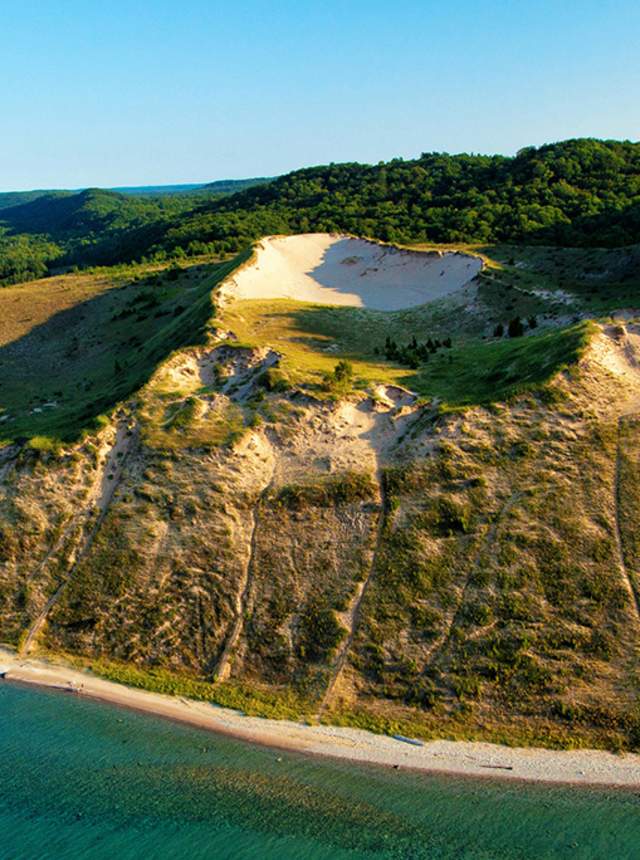
Sleeping Bear Dunes in Michigan was named the Most Beautiful Place in America by ABC’s Good Morning America, and the sand dunes rise 460 feet above Lake Michigan. The park has seven primary beaches, plus hiking trails, lighthouses, and a scenic drive. Water is cold even in summer, but shallow areas warm up enough for wading. Parking is included in the park entrance fee.
Twelvemile Beach, inside Pictured Rocks National Lakeshore, was named one of America’s Best Beaches by Condé Nast Traveler this year. The beach is flanked by glacial dunes and birch trees, with Lake Superior’s clear blue-green water. It is remote and quiet, with no development and very limited facilities. Bring everything you need.
Presque Isle State Park in Pennsylvania is the best Great Lakes beach for casual swimming because Lake Erie is the warmest and shallowest of the lakes. The park has 11 beaches, many with lifeguards in summer. Be aware that Lake Erie can have algae bloom advisories, especially in the western basin. Check local advisories before swimming and avoid water that looks scummy or discolored. The Centers for Disease Control and Prevention tracks harmful algal blooms at cdc.gov/habs.
Best for
- Scenery: Sleeping Bear Dunes, Michigan.
- Quiet: Twelvemile Beach, Michigan, inside Pictured Rocks National Lakeshore.
- Warm water: Presque Isle, Pennsylvania, on Lake Erie.
Worth considering
- Kelleys Island State Park, Ohio: Warm Lake Erie water and fossil hunting on the limestone shore.
- Oscoda Beach Park, Michigan: Family-friendly with a splash pad and playground on Lake Huron.
Which Hawaii Beaches Are Actually Worth the Flight?
Hawaii dominates every legitimate best-beach ranking, and this year is no exception. Dr. Beach’s top 10 included four Hawaii beaches. The flight is long and expensive, but the water is warm year-round, the snorkeling is world-class, and the beaches are genuinely different from anything on the mainland.
Poipu Beach on Kauai took the number one spot this year. The beach is split by a sand tombolo into two distinct areas: a calm, shallow lagoon perfect for children and snorkeling, and a surf break for more experienced swimmers. The water is clear, the sand is golden, and smoking is prohibited on the beach, which earned bonus points in the rankings. Lifeguards are on duty daily.
On Maui, Wailea Beach ranked fourth nationally. It is a collection of five pocket beaches in the island’s luxury resort area, and the hotels are set far back from the shoreline with public beach access guaranteed. The sand is white coral that slopes gently into calm water, ideal for snorkeling when conditions are right. Parking is available but fills up quickly in the morning.
Maya Whitfield’s honest take: “Every Hawaii beach is expensive to reach. If you are spending the money to fly there, do not just park at the resort pool. Poipu’s lagoon and Wailea’s snorkeling are the real reasons to come.”
How Do You Choose the Right Beach for Your Trip?
Match the beach to your priorities, not the photos
If swimming is your priority, stick to the Gulf Coast, Hawaii, or Lake Erie in midsummer. If scenery and photography matter more, the Pacific Northwest and Big Sur deliver. If you have dogs, California and Oregon have the most permissive policies. If accessibility is a concern, Miami Beach and Huntington Beach have the most developed infrastructure, including free beach wheelchairs and Mobi-Mats.
Check the water temperature before you book
Gulf Coast water reaches the low 80s in summer. Atlantic beaches from Virginia south are comfortable from June through September. Pacific beaches rarely exceed 65°F, even in August. Lake Superior stays cold year-round, while Lake Erie warms up fastest. If you want to swim without a wetsuit, book the Gulf or Hawaii.
Understand rip current risks before you get in the water
Rip currents are the leading cause of beach drownings in the US. They are especially common on Atlantic and Gulf beaches after storms. If caught in one, do not fight it. Swim parallel to the shore until you are out of the current, then swim back in. NOAA maintains a national rip current safety resource at weather.gov/safety/ripcurrent. Always swim near a lifeguard.
What Are the Biggest Beach Mistakes to Avoid?
I have made most of these. Here is what to skip.
- Arriving after 10 a.m. in summer. Parking fills up fast at every popular beach. Get there by 9 a.m. or plan for a long walk.
- Expecting to swim at every beach. Some of the most beautiful beaches, like Pfeiffer Beach and most of the Pacific Northwest, are not safe for swimming.
- Ignoring water quality advisories. Lake Erie and some Gulf beaches have algae or bacteria advisories after heavy rain. Check local health department websites before swimming.
- Assuming dogs are allowed. Only specific beaches allow dogs, and most require leashes. Research before you bring your pet.
- Underestimating the sun. Even on cloudy days, UV rays reflect off the water and sand. Reapply sunscreen every two hours.
- Not bringing cash for parking. Many beach lots are cash-only or charge more for cards.
- Assuming accessibility. Only a handful of beaches have Mobi-Mats or beach wheelchairs. Miami Beach and Huntington Beach are the leaders.
Frequently asked questions about US beaches
What is the number one beach in the US?
Poipu Beach on Kauai, Hawaii, was ranked number one by Dr. Beach this year. Siesta Key, Florida, took the top spot in U.S. News & World Report’s rankings. Both are excellent choices depending on whether you want tropical scenery or Gulf Coast quartz sand.
Which US beaches are safest for swimming?
Gulf Coast beaches in Florida, Alabama, and Texas have the warmest water and generally calmer surf. Hawaii beaches with protected lagoons, like Poipu, are also excellent. Always swim near a lifeguard and check rip current forecasts before entering the water.
What is the best beach for families with kids?
Siesta Key in Florida is the top family pick, with calm water, lifeguards, and soft sand that does not get hot. Poipu Beach in Hawaii has a protected lagoon ideal for young swimmers. Both have restrooms and parking.
Are there free beaches in the US?
Yes, many public beaches have no entry fee. Parking is the main cost, usually $10 to $30 per day (confirm the latest price directly with the operator). Some state parks charge an entrance fee of $5 to $8 per vehicle.
Which US beaches are dog-friendly?
Huntington Dog Beach in California allows dogs off-leash year-round. Cannon Beach in Oregon has a permissive voice-command policy and is a top destination for dog owners. Brohard Beach in Florida is Sarasota County’s only dog beach where dogs can enter the water. Always check local rules before you go.
What is the best time of year to visit US beaches?
For Gulf Coast beaches, December through April offers dry weather and comfortable temperatures, though the water is cooler. For swimming, June through September is best. Pacific Northwest beaches are best in July and August for the least rain. Hawaii is swimmable year-round.
Which US beaches are wheelchair accessible?
Miami Beach has over 20 access points with boardwalks and mats, plus free beach wheelchairs at South Pointe Park and Ocean Rescue Headquarters. Huntington Beach in California has Mobi-Mats north and south of the pier and an all-inclusive beach playground.
Plan your trip: booking platforms we trust
These are the platforms I use to book beach trips. I always compare the hotel’s own site against at least one of these before paying.
Booking.com
Best for finding beachfront hotels and reading recent guest reviews.
Vrbo
Ideal for family beach houses and longer stays near the sand.
Kayak
Best for comparing flights to beach destinations before you book.
Expedia
Useful for bundling flights and hotels into a single beach package.
GetYourGuide
Good for booking snorkeling tours, surf lessons, and boat trips.
TripAdvisor
Essential for finding restaurants and activities near specific beaches.
WakaAbuja does its best to keep all information accurate at the time of publishing. Prices, policies, and availability change regularly. Always verify with official sources before you travel. We are not liable for errors caused by outdated information. Travel insurance is strongly recommended.