Everything You Need to Camp Comfortably, From Weekend Getaways to Backcountry Adventures
Fact-Checked By: Maya Whitfield—Senior Travel Editor at WakaAbuja
The best camping gear checklist is not one list; it is four lists sorted by trip type: car camping, backpacking, family camping, and cold-weather camping. For a weekend car-camping trip, the core essentials are shelter, a sleep system, kitchen basics, clothing layers, first aid, and a headlamp. Expect to spend 3,000 to 7,500 SEK for a complete basic kit if you are buying everything new (confirm the latest price directly with the operator).
Most camping checklists tell you what to pack. Almost none tell you how much to pack, how much it costs, or what to leave at home. I have stood in a parking lot at midnight realizing I brought three cooking pots but no can opener. I have also watched a first-time camper carry a full-size cooler and a cast iron pan half a kilometer to a site they could have driven to.
This checklist fixes that. It gives you the real list, the quantities, the cost breakdown, and the honest truth about what is overkill.
Jump to: How Much to Pack | Car Camping | Backpacking | Family Camping | Cold Weather | What It Costs | Mistakes to Avoid | Full Category Reference | FAQ
Key takeaways
- Start with shelter, sleep, and safety. Everything else is negotiable on a first trip.
- Water is the most under-packed item. Plan 3 to 4 liters per person per day for drinking and cooking.
- Clothing is the most over-packed category. Layers beat bulk, and two pairs of socks per day beats five shirts.
- A basic kit costs 3,000 to 7,500 SEK. Buy in this order: sleeping bag, sleeping pad, tent, stove, and headlamp (confirm the latest price directly with the operator).
- Trip type changes the list, not just the optional tags. Backpacking cuts weight. Family camping adds comfort items. Cold-weather camping adds insulation.
- Leave the axe, the extra tarp, and the Dutch oven at home. Most first-timers bring too much, not too little.
How Much Should You Actually Pack? Quantities That Matter

This is the section most checklists skip. They list “socks” and “water” but never tell you how many. Here is the math I use after years of trips, adjusted for a standard 3-night weekend.
Per person, per 3-night trip
Water: 9 to 12 liters total (3 to 4 liters per day)
Food: 7,500 to 9,000 calories total (2,500 to 3,000 per day)
Fuel: One 230g canister for two people cooking simple meals
Socks: 2 pairs per day in wet conditions, 1 pair per day in dry conditions
Underwear: 1 pair per day plus one spare
Pants: 2 pairs for 3 nights, unless wet or muddy
Shirts: 1 per day plus one spare
Camping Checklist by Trip Type
The list changes depending on how you are camping. Pick the one that matches your trip.
Car Camping
Best for: First trips, families, anyone with a car and a cooler.
Add: cooler with ice, camp chairs, lantern, real stove, and full-size sleeping pad.
Skip: Ultralight gear. You have room, so comfort matters more than weight.
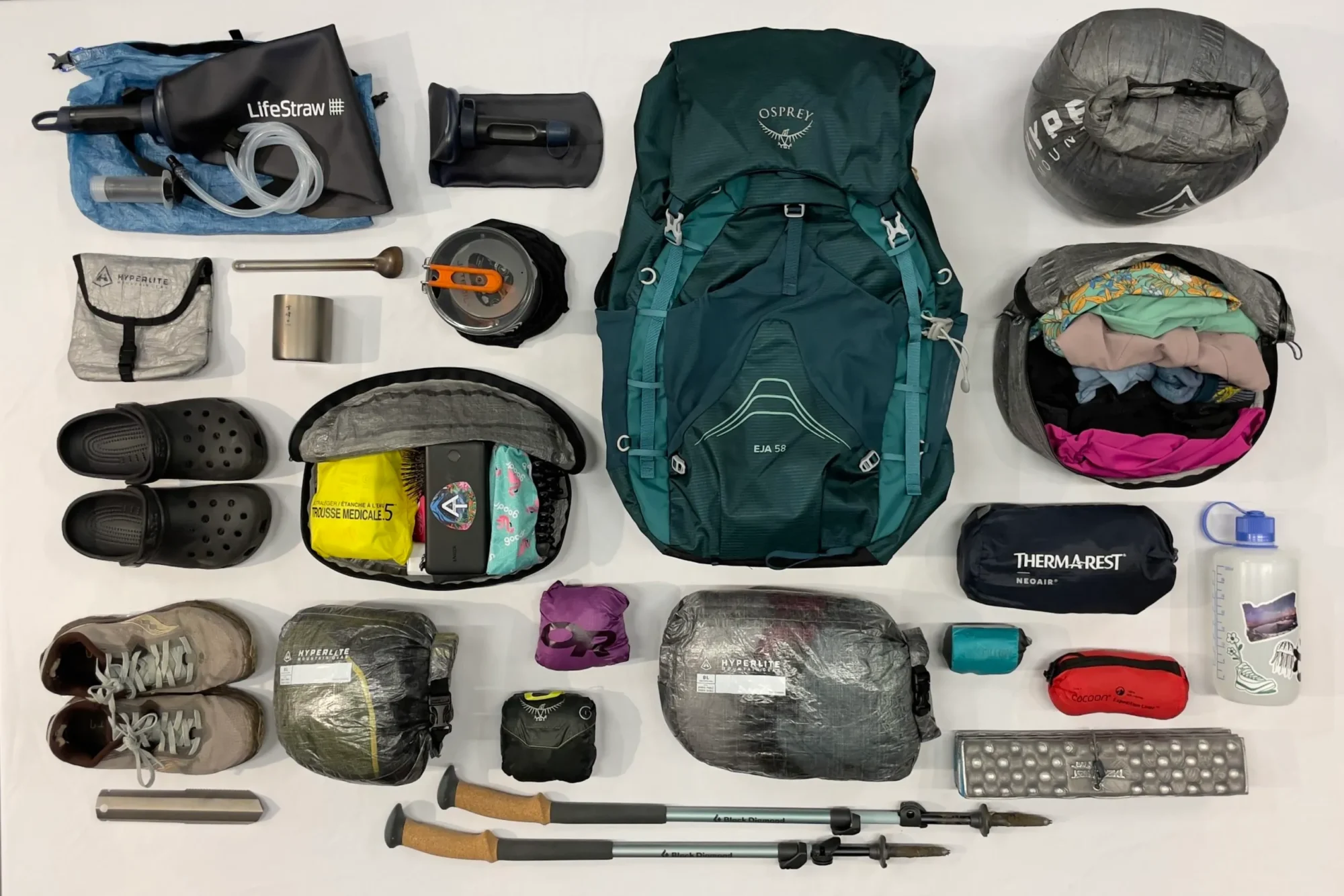
Backpacking
Best for: Hikers, minimalists, anyone carrying everything on their back.
Add: water filter, lightweight stove, high-calorie dehydrated food, compact sleeping bag.
Skip: Camp chairs, lanterns, cast iron, anything that weighs more than it earns.
Family Camping with Kids
Best for: Parents who want the kids to sleep and not melt down.
Add: Extra clothes per kid, favorite snacks, comfort items, entertainment that does not need batteries, and baby wipes.
Skip: Delicate gear. Kids will break or lose something, and that is fine.
Cold Weather/Shoulder Season
Best for: Early spring, late autumn, or high-altitude nights.
Add: Insulated sleeping pad with R-value 4 or higher, down jacket, wool base layers, warm hat and gloves, and extra fuel for hot drinks.
Skip: Cotton anything. It holds moisture and makes you cold.
What Does a Full Camping Kit Actually Cost?

If you are starting from zero, here is what a complete basic setup costs in Swedish kronor, at three quality levels. All prices are rough ranges for decent gear that lasts more than one season (confirm the latest price directly with the operator).
Budget kit
Total: 3,000 to 4,500 SEK
What you get: Basic tent, synthetic sleeping bag, foam sleeping pad, simple stove, headlamp, and budget kitchen set.
Best for: First-timers who are not sure they will camp more than once or twice.
Mid-range kit
Total: 6,000 to 10,000 SEK
What you get: A lighter tent, a down or high-quality synthetic sleeping bag, an inflatable sleeping pad, a reliable stove, a better headlamp, and a full kitchen set.
Best for: Regular campers who want gear that lasts and packs smaller.
Premium kit
Total: 15,000 to 25,000+ SEK
What you get: Ultralight tent, high-fill-power down sleeping bag, premium inflatable pad, integrated stove system, and specialized clothing layers.
Best for: Backpackers and serious outdoor people who count grams and camp in real weather.
What Are the Biggest Mistakes First-Time Campers Make?
I have made all of these, and I have watched other people repeat them. Here is what to avoid.
- Overpacking clothes. Two pairs of pants and one shirt per day plus a spare are enough. You will not change as often as you think.
- Underpacking water. 3 to 4 liters per person per day is the baseline. Running out of water is worse than running out of food.
- Bringing an axe or large knife. You do not need to chop wood at most established campsites.
- Forgetting a headlamp. Your phone flashlight dies fast, and you need both hands to set up a tent in the dark.
- Skipping the rainfly. Even clear forecasts change. A wet sleeping bag ruins a trip faster than anything else.
- Buying everything before the first trip. Rent or borrow the tent, sleeping bag, and sleeping pad until you know you will use them.
- Ignoring the weather forecast for the specific campsite, not the nearest town. Mountain and forest sites are often 5 to 10 degrees colder.
Maya Whitfield’s honest take: “The best camping gear checklist is the one you actually use. If you print it and never check it, it is just paper. Pack the night before, check the list twice, and leave the axe at home.”
Full Category-by-Category Camping Gear Checklist Reference
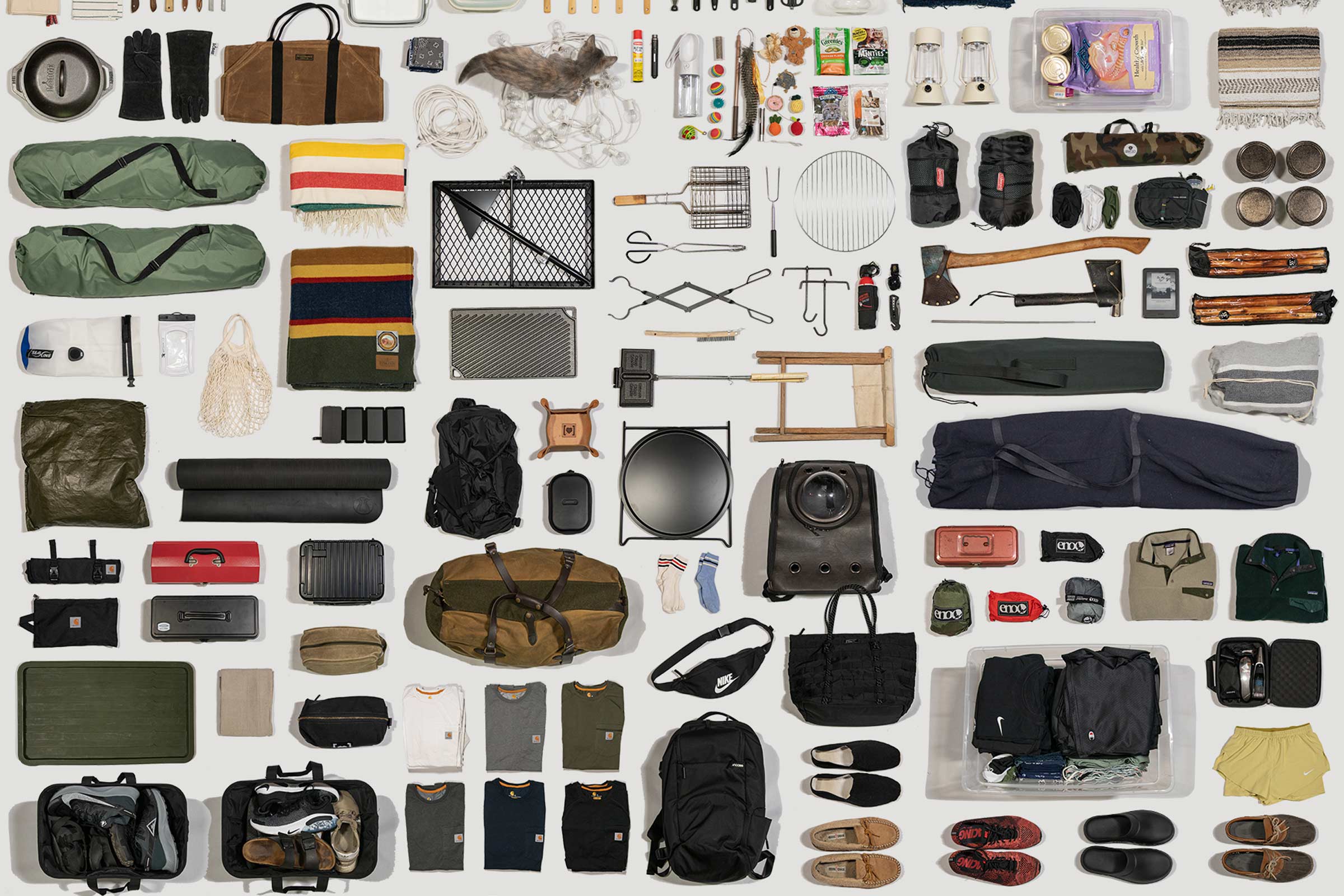
If you want the complete master list, here it is, organized by category. Use this as the reference for all trip types, then adjust using the trip-type cards above.
Shelter and sleep
- Tent with rainfly and footprint
- Sleeping bag rated 10 degrees colder than the expected low
- Sleeping pad with appropriate R-value
- Pillow or stuff-sack pillow
- Earplugs
Camp kitchen
- Stove and fuel
- Lighter or waterproof matches
- Pot and pan with lid
- Plate, bowl, mug, and utensils per person
- Knife and cutting board
- Cooler with ice packs for car camping
- Biodegradable soap and sponge
- Trash bags
Clothing and footwear
- Base layer top and bottom
- Insulating mid-layer
- Waterproof shell jacket
- Hiking pants
- Moisture-wicking t-shirts
- Warm hat and gloves
- Sun hat
- Hiking shoes or sturdy sneakers
- Camp shoes
Navigation and lighting
- Headlamp with spare batteries
- Lantern or string lights
- Map and compass, or offline maps on a charged phone
- Portable charger
First aid and hygiene
- Bandages, gauze, and medical tape
- Antiseptic wipes
- Blister treatment
- Pain relievers
- Personal medications
- Toothbrush and toothpaste
- Biodegradable soap
- Hand sanitizer
- Toilet paper and trowel
- Quick-dry towel
- Sunscreen SPF 30 or higher
- Insect repellent
Tools, repair, and safety
- Multi-tool or pocket knife
- Duct tape
- Paracord
- Tent pole repair sleeve
- Extra stakes
- Whistle
Personal and admin
- ID and reservation confirmation
- Cash for firewood or small fees
- Phone and charger
- Keys
Frequently asked questions about camping gear checklists
What should be on a basic camping checklist?
A basic camping checklist covers shelter, sleep system, clothing layers, food, water, a headlamp, and a small first aid kit. Add a stove and kitchen basics if you plan to cook. That is the core. Everything else is comfort or trip-specific.
What is the minimum camping gear for a beginner?
Tent, sleeping bag, sleeping pad, headlamp, water, food, warm layers, and a first aid kit. Rent or borrow the big three before buying. That is all you need for a first weekend trip.
How much water should I bring camping?
Plan 3 to 4 liters per person per day for drinking, cooking, and basic hygiene. For a 3-night trip, that is 9 to 12 liters per person. Bring more if there is no water source at the campsite.
How much does a full camping kit cost?
A basic kit costs 3,000 to 4,500 SEK. A mid-range kit runs 6,000 to 10,000 SEK. A premium kit can exceed 15,000 SEK (confirm the latest price directly with the operator). Buy in priority order: sleeping bag, sleeping pad, tent, stove, and headlamp.
What should I not bring camping?
Leave the axe, cast iron pan, extra tarps, full-size pillows, and most of your closet at home. Overpacking is the most common first-timer mistake. Pack light, especially for backpacking.
What is the difference between car camping and backpacking checklists?
Car camping lets you bring comfort items like a cooler, camp chairs, and a lantern because weight does not matter. Backpacking cuts everything to the lightest possible version because you carry it all on your back.
How do I pack for camping with kids?
Add extra clothes per kid, favorite snacks, a comfort item for sleep, and simple entertainment. Bring baby wipes even if your kids are not babies. Keep the gear list simple and focus on keeping everyone warm, fed, and dry.
Plan your trip: gear and booking resources we trust
These are the platforms I actually use to research and book camping gear and campsites. I always cross-check the official gear sites against at least one of these before buying.
REI
Best for researching gear specs and reading expert buying guides before you purchase.
Booking.com
Useful for finding cabins or glamping sites near major camping areas.
Expedia
Good for bundling a car rental with a campsite-adjacent hotel for the night before you hit the trail.
GetYourGuide
Best for booking guided camping trips or outdoor experiences if you want a structured first trip.
TripAdvisor
Essential for reading campsite reviews and finding good spots near national parks.
Vrbo
Useful for renting a cabin or vacation home near a camping area for a mixed indoor-outdoor trip.
WakaAbuja does its best to keep all information accurate at the time of publishing. Prices, policies, and availability change regularly. Always verify with official sources before you travel. We are not liable for errors caused by outdated information. Travel insurance is strongly recommended.