Discover the world’s best wildlife destinations, with practical tips on costs, the best seasons to visit, and how to enjoy unforgettable encounters safely.
Fact-Checked By Maya Whitfield, Senior Travel Editor at WakaAbuja
The best places to see wildlife depend on what you want to see and how much you want to spend. Costa Rica and South Africa offer excellent value for first-timers, while Rwanda and Antarctica deliver once-in-a-lifetime encounters at premium prices. Most bucket-list wildlife trips need to be booked 6 to 12 months ahead, especially for gorilla permits and polar bear season.
Everyone has seen the same ten wildlife bucket-list photos. What nobody tells you is that half these trips book out six months or more in advance, some cost $150 per day while others cost $6,000, and the difference between a magical encounter and a wasted trip usually comes down to timing you cannot guess. I have made expensive mistakes, so you do not have to.
This guide gives you all 25 destinations with real costs, real booking windows, and the safety and ethics questions worth asking before you hand over your credit card.
Jump to: Quick Comparison | Best By Category | Full 25 Destination List | Permit Deadlines | Ethics & Safety | FAQs
Key takeaways
- Cost varies more than you think. A week in Costa Rica can cost less than a single day in Rwanda or Antarctica.
- Booking windows are unforgiving. Gorilla permits and polar bear lodges sell out 6 to 12 months ahead.
- Ethics matter as much as sightings. Responsible operators keep distance, respect closures, and fund conservation.
- Season timing is everything. The same destination can be spectacular in July and empty in January.
- You do not need to be rich to see incredible wildlife. Several world-class destinations cost under $200 per day.
- Safety is mostly about preparation. The animals are not the biggest risk. Remote roads, weather, and poor planning are.
Quick-pick comparison of the best places to see wildlife
This table gives you the fast answer. Use it to narrow down before you read the full destination breakdowns below.
Costa Rica
Main species: sloths, monkeys, toucans, sea turtles
Best season: December to April
Cost tier: $ (budget-friendly)
Difficulty: Easy
Best for: First-timers, families
Masai Mara, Kenya
Main species: Big cats, elephants, wildebeest migration
Best season: July to October
Cost tier: $$ (moderate)
Difficulty: Easy to moderate
Best for: Classic safari, photography
Rwanda
Main species: Mountain gorillas, golden monkeys
Best season: June to September, December to February
Cost tier: $$$ (premium)
Difficulty: High (steep terrain)
Best for: Once-in-a-lifetime splurge
Antarctica
Main species: Penguins, seals, whales
Best season: November to March
Cost tier: $$$ (premium)
Difficulty: Moderate (rough seas)
Best for: Expedition travelers, photographers
Yellowstone, USA
Main species: Bison, wolves, bears, elk
Best season: May to September
Cost tier: $ (budget-friendly)
Difficulty: Easy
Best for: Self-drive, families, budget travelers
Churchill, Canada
Main species: Polar bears, beluga whales
Best season: October to November
Cost tier: $$$ (premium)
Difficulty: Moderate (cold, remote)
Best for: Polar bear enthusiasts, photographers
Best places to see wildlife by category
Not every destination suits every traveler. These shortcuts get you to the right list faster.
Best for first-timers
- Costa Rica: easy logistics, high wildlife density
- Yellowstone: self-drive, well-marked roads
- Kruger, South Africa: rest camps and guided drives
- Ecuador’s Amazon: accessible jungle lodges
Best on a budget
- Ecuador’s Amazon: $80 to $150 per day
- India’s national parks: $100 to $200 per day
- South Africa’s self-drive parks: $120 to $250 per day
- Nepal’s Chitwan: $100 to $200 per day
Best for photographers
- Masai Mara: big cats and migration action
- Katmai, Alaska: bears catching salmon
- Galapagos: fearless, approachable wildlife
- Pantanal, Brazil: jaguars in open habitat
Best for families
- Yellowstone: kid-friendly trails and boardwalks
- Costa Rica: sloth sanctuaries and turtle nesting
- Galapagos: small ship cruises with naturalists
- San Diego, USA: easy whale watching access
Best for a splurge
- Rwanda: gorilla trekking at $1,500 per permit
- Antarctica: expedition cruises from $8,000
- Churchill: polar bear lodges from $6,000 per week
- Galapagos: premium small ship cruises
The full list: 25 best places to see wildlife
Each entry follows the same format so you can compare like with like. I have noted where I have been personally and where the details come from verified operator data and conservation sources.
1. Masai Mara, Kenya
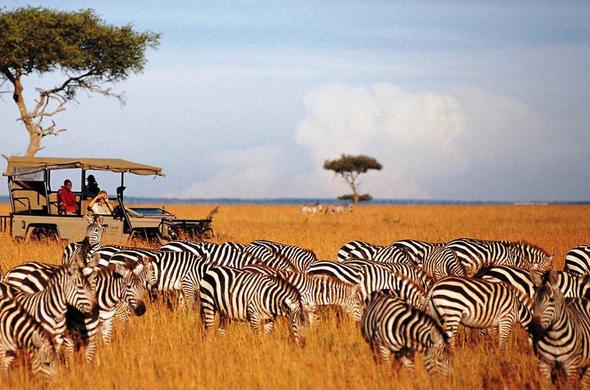
Main attraction: Lions, leopards, cheetahs, and the great wildebeest migration.
Best time: July to October for the migration river crossings. January and February for big cats.
Cost: $200 to $600 per person per day for a mid-range safari.
Booking lead time: 6 to 12 months for migration season camps.
One vivid detail: I watched a cheetah mother teach her three cubs to hunt at dawn, and the grass was so golden it looked staged.
2. Yellowstone National Park, USA
Main attractions: bison, gray wolves, grizzly bears, and elk.
Best time: May to September for accessibility. April and October for fewer crowds.
Cost: $35 vehicle entry for 7 days. Lodging is $100 to $300 per night.
Booking lead time: 3 to 6 months for in-park lodges.
One vivid detail: A wolf pack crossed the road in front of my car at dawn in the Lamar Valley, and I forgot to take a photo because I was holding my breath.
3. Costa Rica
Main attractions: sloths, howler monkeys, toucans, and sea turtles.
Best time: December to April for dry season. July to September for turtle nesting.
Cost: $100 to $250 per person per day, including lodging and guided walks.
Booking lead time: 2 to 4 months for popular lodges near Manuel Antonio or Tortuguero.
One vivid detail: A three-toed sloth turned its head to look at me with what I swear was boredom, then went back to sleeping.
4. Rwanda
Main attraction: Mountain gorillas in Volcanoes National Park.
Best time: June to September and December to February for drier trails.
Cost: $1,500 per gorilla permit, plus $500 to $1,000 per night for lodging.
Booking lead time: 6 to 12 months for permits. They sell out completely.
One vivid detail: A silverback walked past me close enough that I could hear his breathing, and the ranger whispered, “Do not move,” with a calmness I did not share.
5. Antarctica
Main attractions: Emperor and Adélie penguins, leopard seals, and humpback whales.
Best time: November to March for expedition cruises.
Cost: $8,000 to $20,000 per person for a 10- to 14-day cruise.
Booking lead time: 12 to 18 months for the best ships and dates.
One vivid detail: A leopard seal repeatedly brought me a live penguin, apparently trying to teach me to hunt. I did not learn.
6. Churchill, Canada
Main attractions: polar bears, beluga whales, and arctic foxes.
Best time: October to November for polar bears. July and August for belugas.
Cost: $4,000 to $10,000 per person for a 5- to 7-day tour.
Booking lead time: 12 months for the best polar bear lodges.
One vivid detail: A polar bear stood on its hind legs and pressed its nose against the window of my tundra vehicle, and its breath fogged the glass.
7. Galapagos Islands, Ecuador
Main attraction: Giant tortoises, marine iguanas, blue-footed boobies, and sea lions.
Best time: December to May for calm seas. June to November for whale sharks.
Cost: $500 to $1,200 per person per day for a small-ship cruise.
Booking lead time: 6 to 12 months for premium ships.
One vivid detail: A sea lion pup nibbled my snorkel fin while its mother watched with total indifference.
8. Kruger National Park, South Africa
Main attraction: the Big Five, wild dogs, and hundreds of bird species.
Best time: May to September for dry season visibility.
Cost: $120 to $400 per person per day for self-drive or guided safari.
Booking lead time: 3 to 6 months for rest camp accommodations.
One vivid detail: I watched a pack of African wild dogs hunt an impala at sunset, and the coordination was the most impressive thing I have ever seen in nature.
9. Katmai National Park, Alaska
Main attraction: Brown bears catching salmon at Brooks Falls.
Best time: July and September for peak salmon runs.
Cost: $1,000 to $1,500 per person for a day trip from Anchorage, including flights.
Booking lead time: 6 to 12 months for Brooks Lodge reservations.
One vivid detail: A bear caught a salmon midair and made eye contact with me while it ate, as if to say, “You are next, tourist.”
10. Borneo, Malaysia
Main attractions: orangutans, proboscis monkeys, and pygmy elephants.
Best time: March to October for drier trails.
Cost: $150 to $350 per person per day for guided river safaris and jungle lodges.
Booking lead time: 3 to 6 months for the best river lodges.
One vivid detail: A male orangutan crossed the river on a fallen log while I was in a boat below, and he ignored us completely, which felt like the highest compliment.
11. Pantanal, Brazil
Main attractions: Jaguars, giant otters, capybaras, and hyacinth macaws.
Best time: July to October for dry season and jaguar sightings.
Cost: $250 to $600 per person per day for a guided jaguar-focused tour.
Booking lead time: 6 to 12 months for the best jaguar lodges.
One vivid detail: A jaguar walked along the riverbank in broad daylight, and I could see every muscle move under its skin. It did not care that we were there.
12. Serengeti National Park, Tanzania
Main attractions: the great migration, big cats, and Nile crocodiles.
Best time: June to October for river crossings. January to March for calving season.
Cost: $250 to $700 per person per day for a mid-range to luxury safari.
Booking lead time: 6 to 12 months for migration season camps.
One vivid detail: I watched a wildebeest calf take its first steps in January, and a lioness watched it too, from about 200 meters away. Life and death in the same frame.
13. Chitwan National Park, Nepal
Main attractions: Bengal tigers, one-horned rhinos, and sloth bears.
Best time: October to March for dry season visibility.
Cost: $100 to $250 per person per day, including lodging and guided walks.
Booking lead time: 2 to 4 months for the best jungle lodges.
One vivid detail: A one-horned rhino crossed the river in front of our canoe at dawn, and the only sound was the water moving around its legs.
14. Amazon Rainforest, Ecuador
Main attractions: pink river dolphins, parrots, monkeys, and caimans.
Best time: August to February for lower water and better wildlife visibility.
Cost: $80 to $200 per person per day for a jungle lodge stay.
Booking lead time: 2 to 4 months for popular lodges.
One vivid detail: A pink river dolphin surfaced next to our canoe at sunset, and its color was so strange against the dark water that it looked like a dream.
15. Svalbard, Norway
Main attractions: Polar bears, arctic foxes, walruses, and reindeer.
Best time: May to September for expedition cruises.
Cost: $500 to $1,500 per person per day for a small-ship expedition.
Booking lead time: 12 months for the best ships and dates.
One vivid detail: A polar bear swam between ice floes in front of our ship, and the silence of the Arctic made the sound of its breathing carry across the water.
16. Kanha National Park, India
Main attractions: Bengal tigers, leopards, barasingha deer, and wild dogs.
Best time: October to June. The park closes during the monsoon.
Cost: $100 to $250 per person per day, including safari drives and lodging.
Booking lead time: 3 to 6 months for peak winter months.
One vivid detail: A tiger walked out of the bamboo at dusk, looked directly at our jeep, and then vanished back into the forest without making a sound.
17. Great Barrier Reef, Australia
Main attractions: Reef sharks, sea turtles, giant clams, and manta rays.
Best time: June to October for clear water and manta ray season.
Cost: $150 to $400 per person per day for boat trips and diving.
Booking lead time: 2 to 4 months for popular liveaboard trips.
One vivid detail: A manta ray with a wingspan wider than my arms swam beneath me, and for a second I forgot I was underwater and tried to breathe through my nose.
18. Denali National Park, Alaska
Main attractions: Grizzly bears, caribou, moose, Dall sheep, and wolves.
Best time: June to September for park access and wildlife viewing.
Cost: $100 to $300 per person per day, including camping or lodge stays.
Booking lead time: 3 to 6 months for bus tours and campgrounds.
One vivid detail: A grizzly bear dug for roots on a hillside for an hour, and the ranger told us it was the same bear he had seen there every summer for six years.
19. Okavango Delta, Botswana
Main attraction: Elephants, hippos, leopards, wild dogs, and water birds.
Best time: July to October for dry season and high water levels.
Cost: $400 to $1,000 per person per day for a fly-in camp.
Booking lead time: 6 to 12 months for the best camps.
One vivid detail: A herd of elephants crossed the water in front of our mokoro canoe, and the poler pushed us backward without a word, as if this happened every day.
20. Monterey Bay, California
Main attractions: Humpback whales, blue whales, sea otters, and sea lions.
Best time: April to November for whale watching. Year-round for sea otters.
Cost: $50 to $150 per person for a half-day whale-watching tour.
Booking lead time: 1 to 2 weeks for most tours.
One vivid detail: A humpback whale breached three times in a row off the bow of our boat, and the splash was so loud it sounded like a cannon.
21. South Luangwa National Park, Zambia
Main attractions: leopards, hippos, elephants, and the endemic Thornicroft’s giraffe.
Best time: July to October for dry season and walking safaris.
Cost: $250 to $600 per person per day for a walking safari camp.
Booking lead time: 6 to 12 months for the best walking safari operators.
One vivid detail: I walked within 30 meters of a leopard on foot, and the guide’s hand on my shoulder was the only thing that kept me from running.
22. Komodo National Park, Indonesia
Main attractions: Komodo dragons, manta rays, coral reefs, and dolphins.
Best time: April to November for dry season and calm seas.
Cost: $150 to $400 per person per day for a boat tour or liveaboard.
Booking lead time: 3 to 6 months for liveaboard trips.
One vivid detail: A Komodo dragon walked past me on a trail, and its gait was so purposeful that I realized it was not afraid of me at all. I was afraid of it.
23. Etosha National Park, Namibia
Main attractions: Black rhinos, elephants, lions, springboks, and flamingos.
Best time: June to October for dry season at the waterholes.
Cost: $150 to $400 per person per day for self-drive or guided safari.
Booking lead time: 3 to 6 months for in-park rest camps.
One vivid detail: At a floodlit waterhole, I watched a black rhino drink while a lion waited in the shadows, and the rhino knew exactly where the lion was. The tension was electric.
24. Kangaroo Island, Australia
Main attraction: Kangaroos, koalas, sea lions, echidnas, and little penguins.
Best time: September to November for spring wildlife activity.
Cost: $150 to $350 per person per day, including lodging and guided tours.
Booking lead time: 2 to 4 months for the best eco-lodges.
One vivid detail: A koala climbed down from a tree and walked across the road in front of my car, then looked back as if to say, “You can wait.”
25. Isle of Mull, Scotland
Main attractions: white-tailed eagles, puffins, seals, red deer, and otters.
Best time: April to August for seabirds and puffins.
Cost: $80 to $200 per person per day, including lodging and boat trips.
Booking lead time: 1 to 3 months for wildlife-watching boat tours.
One vivid detail: A white-tailed eagle flew over our boat with a fish in its talons, and its wingspan was wider than I am tall. The guide said it was a juvenile, which made it more impressive.
Booking windows and permit deadlines you need to know
This is the section that saves you from heartbreak. The best wildlife trips are not available on a whim. They require planning, and the deadlines are not flexible.
Gorilla permits in Rwanda and Uganda
Rwanda charges $1,500 per permit. Uganda charges $800. Both sell out 6 to 12 months ahead for peak months. There is no waiting list. If you miss the window, you miss the trip.
Polar bear season in Churchill
The tundra vehicles and lodges run for a short October to November window. The best operators are fully booked by February or March for the same year. Book 12 months out.
Antarctica cruises
Cruise ships are limited by international agreements. The best cabins on the best ships sell out 12 to 18 months in advance. Last-minute deals exist but usually for less desirable dates or ships.
Galapagos small-ship cruises
Boats with fewer than 100 passengers are small ships strictly regulated. Premium ships fill 6 to 12 months ahead, especially for holiday dates.
Okavango Delta fly-in camps
The best camps have fewer than 20 beds each. Prime dry season dates from July to October are often fully booked by January or February of the same year.
Pantanal jaguar lodges
Jaguar-focused lodges in the Pantanal have exploded in popularity. The best ones book out 6 to 12 months ahead for the July to October dry season.
Check the official park or operator website for current availability before you plan anything else. Do not book flights until your permit or cabin is confirmed.
Wildlife viewing ethics and safety
Seeing animals in the wild is a privilege, not a right. The rules exist because stressed animals die, get injured, or abandon their young. A responsible operator follows these rules without you having to ask. A bad one will not mention them unless you do.
Keep the distance.
Most parks have minimum viewing distances. In Yellowstone, it is 100 yards from bears and wolves. In the Galapagos, it is 6 feet from most animals. In Africa, guides should never chase or crowd a sighting. If your guide pushes closer than the rules allow, you are with the wrong operator.
Never feed or touch
Feeding animals changes their behavior and can make them dependent on humans. Touching them can transfer disease. This applies everywhere. No exceptions, no matter how cute the animal is.
Respect closures and quiet zones.
Some areas close during breeding or nesting season. Others have noise restrictions. Ignoring these rules harms the very wildlife you came to see. A good guide will explain why a trail is closed, not complain about it.
Ask where your money goes.
A responsible tour operator pays park fees, employs local guides, and funds conservation or community projects. Ask directly: “What percentage of my trip fee goes to conservation?” If the answer is vague, book elsewhere.
For more guidance, check the standards set by the International Union for Conservation of Nature and the World Wildlife Fund. They publish responsible tourism guidelines that serious operators follow.
What mistakes do people make when booking wildlife trips?
I have made most of these. Learn from me instead of paying for them yourself.
1. Booking flights before permits
You can always find another flight. You cannot find another gorilla permit. Lock in the permit or cabin first, then book everything else around it.
2. Underestimating the physical demands
A gorilla trek in Rwanda means hours of steep, muddy climbing at altitude. A polar bear trip means standing in freezing wind. Read the difficulty notes honestly.
3. Choosing the cheapest operator
Cheap operators cut corners on guides, vehicle maintenance, and conservation fees. That cheap trip can become expensive when your vehicle breaks down or you miss the wildlife because the guide is untrained.
4. Ignoring the season
The same destination can be world-class in August and empty in February. Check the best time to visit for each specific animal, not just the country.
5. Skipping travel insurance
Wildlife trips go to remote places. Medical evacuation from Antarctica or the Serengeti costs more than the trip itself. Insurance is not optional.
6. Not checking the ethics policy
If an operator chases animals or allows off-road driving in protected areas, you are part of the problem. Choose a responsible operator even if it costs more.
7. Expecting guaranteed sightings
No ethical operator guarantees specific animal sightings. Wildlife is unpredictable. If a company promises you will see a tiger or a jaguar, that is a red flag, not a selling point.
Frequently asked questions
What is the best month overall to see wildlife?
August is the best single month for wildlife viewing across many destinations. It is peak dry season in Africa, prime bear season in Alaska, and good weather in Yellowstone. September is a close second. The exact best month depends on the species, but August delivers the most consistent results globally.
How far in advance should I book a wildlife trip?
For gorilla permits, polar bear season, and Antarctica cruises, book 12 months ahead. For standard safaris in Kenya, Tanzania, or South Africa, 6 months is usually enough. For Costa Rica or Yellowstone, 3 to 6 months works. Always book the permit or cabin first, then flights.
Is it safe to see wildlife without a guide?
Yes, in well-regulated parks like Yellowstone, Kruger, and Costa Rica’s national parks. Self-drive safaris in South Africa are common and safe if you follow park rules. But in remote or dangerous areas like Rwanda’s gorilla parks or polar bear country, a guide is essential and often legally required.
What is the cheapest place to see incredible wildlife?
Costa Rica, Ecuador’s Amazon, and India’s national parks offer world-class wildlife for $100 to $250 per day. Yellowstone is also excellent value if you are already in the US. These destinations do not require expensive permits or remote expedition logistics.
Do I need special permits for gorilla trekking or polar bear tours?
Yes. Gorilla trekking in Rwanda requires a $1,500 permit per person, and Uganda charges $800. These are separate from tour costs and sell out months ahead. Polar bear viewing in Churchill requires booking with a licensed operator; there is no self-guided polar bear viewing. Permits are non-transferable and non-refundable.
Can I do a wildlife trip as a solo traveler?
Yes, many small-group wildlife tours are solo-friendly, and some operators specialize in solo travelers. You may pay a single supplement for lodging, but some camps offer shared rooms. Read the solo traveler policy before booking, and ask about group size limits.
What is the difference between a wildlife safari and a wildlife cruise?
A wildlife safari is land-based and usually involves vehicle game drives in places like Kenya, Tanzania, or South Africa. A wildlife cruise is ship-based and gets you to coastal or polar regions like the Galapagos, Alaska, or Antarctica. Both focus on animal observation, but the pace, comfort, and cost structure are very different.
Plan your trip: booking platforms we trust
Once you have chosen your destination and locked in the permit, these platforms help with the rest. For comparing flights to wildlife destinations, Kayak is my first stop. For booking lodges and camps near national parks, Booking.com has the widest selection. For package deals that include tours and accommodations, Expedia sometimes beats separate bookings. For reading real traveler reviews of specific operators, TripAdvisor is unmatched.
Booking.com: best for lodges and camps near national parks
TripAdvisor: best for real operator reviews and wildlife tour photos
GetYourGuide: best for short wildlife day tours and excursions
Expedia: best for flight and hotel package deals
WakaAbuja does its best to keep all information accurate at the time of publishing. Prices, policies, and availability change regularly. Always verify with official sources before you travel. We are not liable for errors caused by outdated information. Travel insurance is strongly recommended.