advertisement
For the best places to snorkel, look beyond clear water and choose destinations where marine life, coral reefs, visibility, and underwater experiences make every swim worth it.
Fact-Checked By: Maya Whitfield—Senior Travel Editor at WakaAbuja
The best places to snorkel in the world are Raja Ampat in Indonesia for reef biodiversity, the Maldives for manta rays and whale sharks, the Galápagos for swimming with sea lions, and the Red Sea in Egypt for the most accessible coral. Day-tour snorkeling trips typically cost $40 to $150 per person depending on the destination (confirm the latest price directly with the operator), and the best season varies widely by region, so check each spot before you book flights.
Every “best places to snorkel” list shows you the same photo of a manta ray and calls it a day. What it does not tell you is whether that spot is right for a nervous first-timer, what the trip actually costs, or whether you will be swimming alongside forty other boats when you get there. I have snorkeled in the Maldives, the Philippines, and the Red Sea, and the difference between a trip that works and one that does not comes down to timing, skill fit, and how crowded the site gets.
This guide ranks the world’s best snorkeling destinations the way you would actually plan a trip, by season, skill level, and budget.
Jump to: At a Glance | Which Snorkeler Are You | The Full List | Best Time by Month | What It Costs | What to Pack | Safety and Etiquette | FAQ
Key takeaways
- Raja Ampat and the Maldives are the two best overall destinations for reef quality and marine life diversity.
- The best season depends on the destination, not a single global window. The Maldives manta season peaks from June to November, while Raja Ampat is best from October to April.
- Day tours cost $40 to $150 per person (confirm the latest price directly with the operator). Liveaboard trips run from $1,500 to $4,000 per week.
- The Red Sea in Egypt is the most underrated snorkeling destination. Coral quality rivals Southeast Asia at a fraction of the cost.
- Beginner snorkelers should start with Roatán, Isla Mujeres, or Hanauma Bay. All three have calm water and easy shore access.
- Reef-safe sunscreen is mandatory in most marine parks. Regular sunscreen chemicals bleach coral and are banned in places like Palau and parts of Mexico.
Best Places to Snorkel at a Glance
Here is how the top destinations compare on the factors that actually matter for planning. Use this to narrow the list to two or three candidates before you read the full entries.
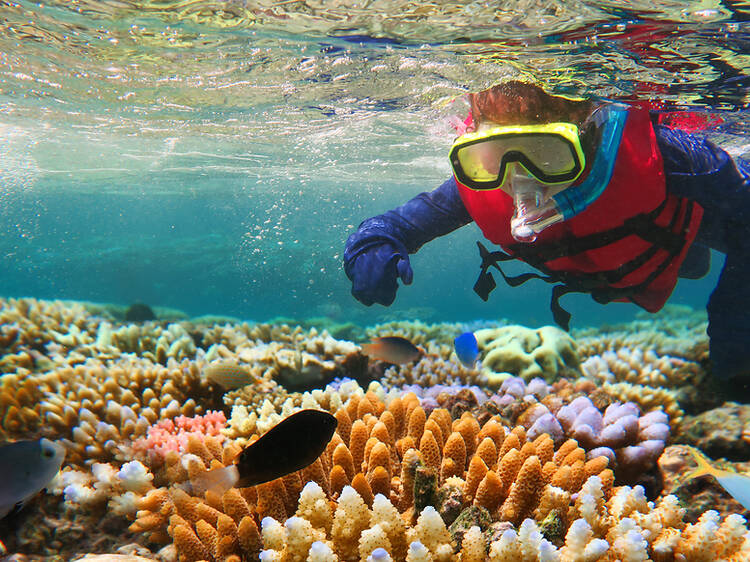
Raja Ampat, Indonesia
Best season: October to April
Highlights: 75% of all known coral species
Skill level: Intermediate to advanced
Cost tier: High
Maldives
Best season: November to April (dry), June to November (mantas)
Highlights: Manta rays, whale sharks, Hanifaru Bay
Skill level: Beginner to intermediate
Cost tier: High
Red Sea, Egypt
Best season: March to May, September to November
Highlights: Dolphins at Sataya Reef, coral gardens
Skill level: Beginner to intermediate
Cost tier: Low to mid
Galápagos, Ecuador
Best season: December to May
Highlights: Sea lions, marine iguanas, penguins
Skill level: Beginner to intermediate
Cost tier: High
Roatán, Honduras
Best season: March to September
Highlights: Reef fish, sea turtles, easy shore access
Skill level: Beginner
Cost tier: Low to mid
Hanauma Bay, Hawaii
Best season: Year-round
Highlights: Shallow reef, parrotfish, turtles
Skill level: Beginner and family
Cost tier: Low to mid
Which Kind of Snorkeler Are You?
Skip straight to the destination that fits your travel style. Here is how I would match the list to real travelers.
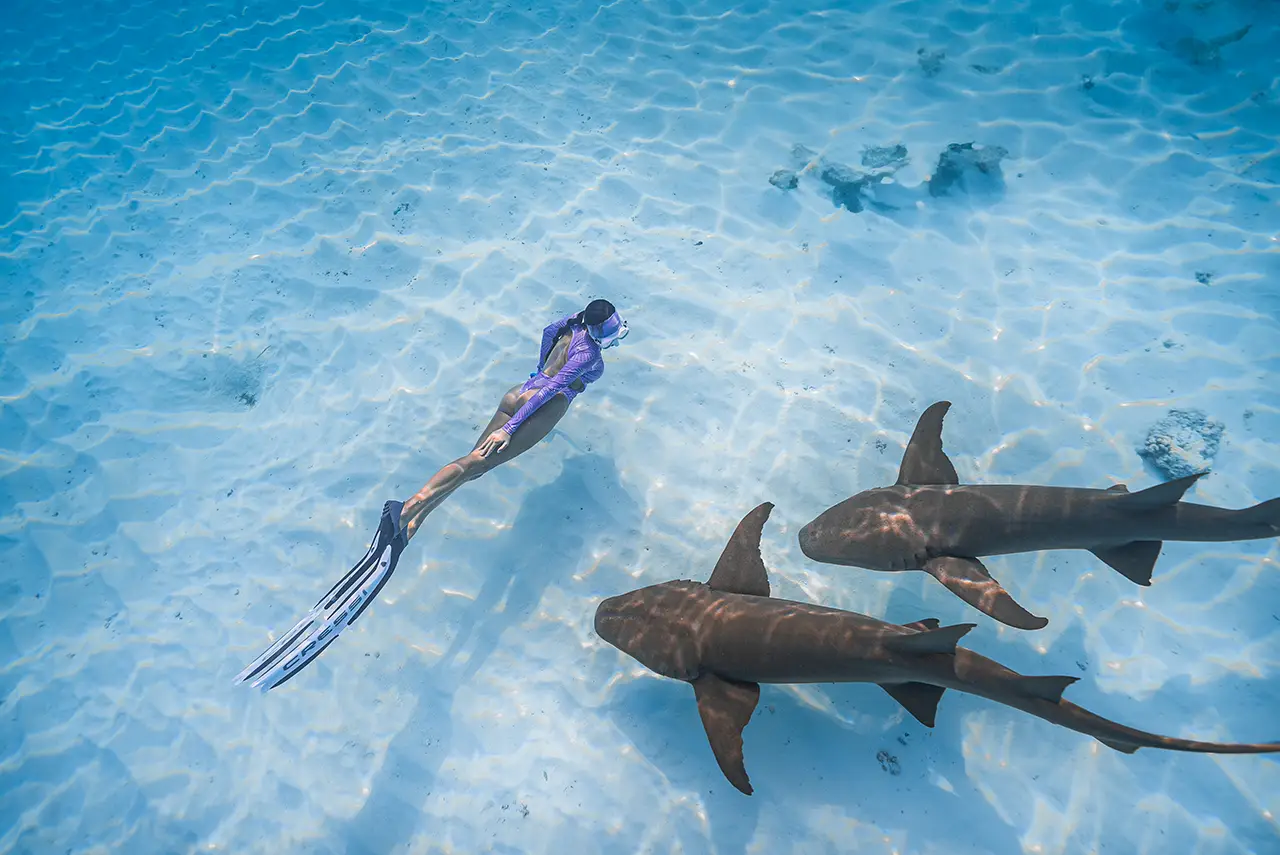
Beginner or family
- Roatán, Honduras: Shore snorkeling from the beach, calm water.
- Hanauma Bay, Hawaii: Protected bay, no currents, lifeguards on duty.
- Isla Mujeres, Mexico: Shallow reef, easy boat access from Cancún.
Wildlife bucket list
- Maldives: Manta rays at Hanifaru Bay in season.
- Galápagos: Sea lions that swim right up to you.
- Tofo Beach, Mozambique: Whale sharks on snorkel tours.
Budget backpacker
- Red Sea, Egypt: Cheap day trips from Dahab or Hurghada.
- Moalboal, Philippines: Sardine run and turtles right off the beach.
- Lake Malawi, Africa: Freshwater cichlids, no boat needed.
Luxury or liveaboard
- Raja Ampat, Indonesia: Remote, pristine, high-end lodges and liveaboards.
- French Polynesia: Overwater bungalows and reef snorkeling from your deck.
- Komodo, Indonesia: Liveaboard trips with manta and reef shark encounters.
The 17 Best Places to Snorkel in the World
These are ranked roughly by overall quality and the range of what you can see, but the right one for you depends on timing and skill level. Costs are rough day-tour ranges per person (confirm the latest price directly with the operator).
1. Raja Ampat, Indonesia
Raja Ampat is the most biodiverse marine environment on Earth, with over 75 percent of all known coral species recorded in the region. Snorkelers can see reef sharks, manta rays, and schools of fish at sites like Cape Kri and Arborek. The best season is October to April. Skill level: intermediate to advanced, because some sites have strong currents. Day trips from around $80 to $150 (confirm the latest price directly with the operator). Fly into Sorong via Jakarta or Makassar.
2. Maldives
The Maldives is the best place in the world to snorkel with manta rays and whale sharks. Hanifaru Bay in Baa Atoll is a UNESCO Biosphere Reserve where hundreds of mantas aggregate from June to November. South Ari Atoll has year-round whale sharks. Best season depends on what you want to see: dry season is November to April, manta season is June to November. Skill level: beginner to intermediate. Day trips from around $60 to $120 (confirm the latest price directly with the operator).
3. Red Sea, Egypt
This is the most underrated snorkeling destination in the world. The coral is healthy, the water is clear, and the cost is a fraction of the Maldives or Raja Ampat. Snorkel from the shore at Dahab’s Blue Hole, or take a boat to Sataya Reef to swim with spinner dolphins. Best season is March to May and September to November. Skill level: beginner to intermediate. Day trips from around $30 to $80 (confirm the latest price directly with the operator).
4. Galápagos, Ecuador
Nowhere else in the world can you snorkel with sea lions, marine iguanas, and penguins in the same trip. The water is cold, so you need a wetsuit, but the wildlife encounters are unmatched. Popular sites include Los Túneles on Isabela and Kicker Rock off San Cristóbal. Best season is December to May when the water is warmest. Skill level: beginner to intermediate. Day trips from around $100 to $180 (confirm the latest price directly with the operator).
5. Great Barrier Reef, Australia
The Great Barrier Reef is the largest coral reef system in the world, and day trips from Cairns and Port Douglas make it accessible even for a short trip. Lady Elliot Island is the best snorkeling spot on the reef, with manta rays and turtles year-round. Best season is June to October for the clearest water. Skill level: beginner to intermediate. Day trips from around $150 to $250 (confirm the latest price directly with the operator).
6. Moalboal, Philippines
The sardine run at Moalboal is one of the most spectacular snorkeling experiences in the world. Millions of sardines move in a single coordinated ball, and you can swim right into it from the beach. Turtles are also common on the reef just offshore. Best season is December to May. Skill level: beginner. Day trips from around $20 to $40 (confirm the latest price directly with the operator).
7. Hanauma Bay, Hawaii
Hanauma Bay on Oahu is the best snorkeling spot in Hawaii for beginners. The bay is protected, the water is shallow, and there are lifeguards on duty. Reservations are required for non-residents and the entry fee is around $25 per person (confirm the latest price directly with the operator). Best season is year-round. Skill level: beginner and family.
@brent.swansen Snorkeling at Hanauma Bay was one of those moments that actually lived up to the hype 🐠🌊 Crystal clear water, unreal views, and getting to see a completely different side of Hawaii underwater. Definitely one we’ll remember.
8. Roatán, Honduras
Roatán sits on the Mesoamerican Barrier Reef, the second-largest reef system in the world. West Bay Beach has snorkeling right off the sand, and the reef is shallow enough for beginners. The best season is March to September. Skill level: beginner. Day trips from around $30 to $60 (confirm the latest price directly with the operator).
9. Isla Mujeres, Mexico
Isla Mujeres is a short ferry ride from Cancún and has some of the easiest snorkeling in the Caribbean. The Underwater Museum (MUSA) and the reef at El Farito are popular sites. The best season is December to April. Skill level: beginner. Day trips from around $40 to $80 (confirm the latest price directly with the operator).
10. La Paz, Mexico
La Paz is the gateway to Isla Espiritu Santo, where you can snorkel with sea lions at Los Islotes. The water is calmer than the Pacific coast, and visibility is excellent. The best season is October to May. Skill level: intermediate, because the sea lion colony has some current. Day trips from around $80 to $150 (confirm the latest price directly with the operator).
11. Komodo, Indonesia
Komodo is best known for its dragons, but the marine life is equally impressive. Manta Point and Batu Bolong are the standout snorkeling sites. Liveaboard trips are the best way to see the area because day trips from Labuan Bajo are long. Best season is April to December. Skill level: intermediate to advanced. Liveaboard trips from around $1,500 to $3,000 per week (confirm the latest price directly with the operator).
12. Fiji
Fiji has soft coral gardens that rival anything in the Indo-Pacific. The Yasawa Islands and Beqa Lagoon are the top snorkeling areas. Best season is May to October. Skill level: beginner to intermediate. Day trips from around $60 to $120 (confirm the latest price directly with the operator).
13. Similan Islands, Thailand
The Similan Islands are only accessible from November to April and offer some of the clearest water in Southeast Asia. Snorkeling is done from liveaboards or day trips from Khao Lak. Best season is December to March. Skill level: beginner to intermediate. Day trips from around $80 to $130 (confirm the latest price directly with the operator).

14. Tofo Beach, Mozambique
Tofo is one of the few places in the world where you can reliably snorkel with whale sharks. The best season is October to March. Skill level: intermediate, because the open ocean can have swell. Day trips from around $80 to $150 (confirm the latest price directly with the operator).
15. Fernando de Noronha, Brazil
Fernando de Noronha is a remote archipelago 350 kilometers off the Brazilian coast. Only 420 visitors are allowed on the island at a time, which keeps the snorkeling uncrowded and the reef healthy. Best season is August to December. Skill level: beginner to intermediate. Day trips from around $60 to $120 (confirm the latest price directly with the operator).
16. Lake Malawi, Africa
This is the wildcard entry. Lake Malawi holds more fish species than any other lake in the world, and most of them are colorful cichlids found nowhere else. Snorkeling is done from the shore, no boat required. Best season is May to October. Skill level: beginner. Essentially free if you stay at a lakeside lodge.
17. French Polynesia
French Polynesia offers overwater bungalow stays with reef snorkeling from your private deck. Moorea and Bora Bora have the best combination of easy access and healthy reef. Best season is May to October. Skill level: beginner to intermediate. Day trips from around $80 to $150 (confirm the latest price directly with the operator).
Maya Whitfield’s honest take: “If you can only do one snorkeling trip in your life and you have the budget, go to Raja Ampat. If you want value, go to the Red Sea. I have spent more on one Maldives liveaboard than on two full weeks of Egyptian day trips, and the coral in Egypt was healthier.”
Best Time of Year to Snorkel, Month by Month
Snorkeling seasons differ by region because of monsoon patterns and water temperatures. Here is the short version.
Peak windows by destination
Maldives: November to April for dry season and clear water; June to November for manta and whale shark season.
Raja Ampat and Komodo: October to April for Raja Ampat; April to December for Komodo.
Red Sea: March to May and September to November for the best combination of warmth and visibility.
Galápagos: December to May for warmer water; June to November for more wildlife activity but colder water.
Caribbean and Mexico: December to April for the dry season across the region.
Great Barrier Reef: June to October for the clearest water.
Southeast Asia: December to April for most of Thailand and the Philippines; October to April for Indonesia.
How Much Does a Snorkeling Trip Actually Cost?
Snorkeling itself is cheap. Getting to the good spots is what costs money. Here are rough bands per person per day (confirm the latest price directly with the operator).
Budget (under $100 per day)
Shore snorkeling from a guesthouse in Moalboal, Dahab, or Roatán. Day boats in the Red Sea or Philippines often cost less than $40 including lunch. Accommodation and food add $30 to $60 per day.
Mid-range ($100 to $300 per day)
Guided day trips in the Maldives, Isla Mujeres, or the Similan Islands. Mid-tier hotels or resorts add $100 to $200 per night. This is the most common range for a first snorkeling trip.
Splurge (over $300 per day)
Liveaboard trips in Komodo or Raja Ampat, overwater bungalows in French Polynesia, or luxury lodges in the Maldives. Liveaboards run $1,500 to $4,000 per week for meals, accommodation, and multiple snorkel dives daily (confirm the latest price directly with the operator).
What Should You Pack for a Snorkeling Trip?
Bring your own mask
Rental masks are usually the weak point of any snorkeling trip. A leaky mask ruins visibility. Buy a mask that fits your face and test it at home before you go. Snorkel and fins are usually fine to rent.
Reef-safe sunscreen only
Regular sunscreen contains oxybenzone and octinoxate, which bleach coral. Many marine parks, including Palau, Hawaii, and parts of Mexico, have banned these chemicals. Use mineral-based sunscreen with zinc oxide or titanium dioxide, or wear a rash guard instead.
Rash guard or dive skin
A thin rash guard protects you from sun and from minor jellyfish stings. In colder destinations like the Galápagos or the Red Sea in winter, bring a shorty wetsuit, which most tour operators will also rent.
Dry bag and underwater camera
A dry bag keeps your phone and wallet safe on the boat. An underwater camera or a waterproof phone case is worth the small cost for the photos you will want to keep.
Snorkeling Safety and Etiquette
Snorkeling is a low-risk activity when done sensibly. Most accidents come from overestimating your ability, underestimating currents, or ignoring local warnings. Here are the rules I follow.
- Never snorkel alone in an unfamiliar area. Buddy up, or join a guided tour if you are new.
- Check currents before you enter the water. Ask a local guide. If the surface is choppy, it is not a good day for snorkeling.
- Do not touch coral or marine life. Coral is fragile and touching it can kill it. Some species, like fire coral and lionfish, can sting or cut.
- Keep a respectful distance from wildlife. Do not chase or corner animals. If they approach you, stay calm and let them move away.
- Never stand on the reef. If you need to rest, float on your back or return to the boat.
- Avoid snorkeling at dusk or dawn in areas with known crocodile activity. This applies mainly to the Andaman Islands, parts of the Philippines, and northern Australia.
- Check the marine park rules before you go. Some sites ban fins, require permits, or restrict visitor numbers.
For the most current safety guidance in any specific destination, check the local marine park authority or your country’s travel advisory page before you go.
Frequently asked questions about snorkeling
What is the best month overall to go snorkeling?
There is no single best month globally because seasons vary by region. For the Caribbean and Mexico, December to April is best. For the Maldives, November to April. For Southeast Asia, December to April. For the Great Barrier Reef, June to October. Match your trip to the destination’s dry season.
Where is the best snorkeling for beginners?
Roatán in Honduras, Hanauma Bay in Hawaii, and Isla Mujeres in Mexico are the best beginner destinations. All three have calm water, shallow reefs, and easy access from shore or a short boat ride. No strong currents and plenty of reef fish close to the surface.
Do I need to be a strong swimmer to snorkel?
No, but you should be comfortable in the water. Most snorkel tours require basic swimming ability and provide life jackets. If you are not a confident swimmer, choose a protected bay or shore entry site and let the tour guide know your comfort level.
Is a regular mask better than a full-face snorkel mask?
For most people, a regular mask with a separate snorkel is better. Full-face masks are harder to clear if water gets in, and they restrict breathing if something goes wrong. A well-fitted traditional mask is easier to manage and more reliable.
What is the cheapest snorkeling destination?
The Red Sea in Egypt and Moalboal in the Philippines are the cheapest destinations on this list. Day trips cost around $20 to $80, and shore snorkeling is often free or costs a few dollars (confirm the latest price directly with the operator). Lake Malawi is also very cheap once you are there.
Do I need reef-safe sunscreen?
Yes. Regular sunscreen chemicals bleach coral, and many marine parks ban them outright. Use mineral-based sunscreen with zinc oxide or titanium dioxide, or wear a rash guard instead. This is a rule, not a suggestion, in places like Palau and Hawaii.
Is snorkeling safe for children?
Yes, in calm water and with proper supervision. Choose protected bays like Hanauma Bay or Roatán’s West Bay Beach. Bring properly fitting masks for kids and consider full life jackets. Avoid boat trips with strong currents or long swims.
Plan your trip: booking platforms we trust
These are the platforms I use to plan snorkeling trips. For remote destinations like Raja Ampat or the Maldives, book as far ahead as possible, since liveaboards and the best lodges fill up months in advance for peak season.
GetYourGuide
Best for booking snorkeling day trips and guided tours.
Booking.com
Reliable for beachfront hotels and dive resorts near snorkel sites.
Kayak
Best for comparing flights to remote snorkeling destinations.
Expedia
Useful for bundling flights and hotels for international snorkeling trips.
Vrbo
Good for renting a villa or apartment near the best snorkel beaches.
TripAdvisor
Essential for reading reviews of snorkeling tours and dive shops.
For more planning help, see our travel planning guides, our hotel reviews, our attractions section, and our visa category. When you are ready to book flights, start with our discounted flights page.
WakaAbuja does its best to keep all information accurate at the time of publishing. Prices, policies, and availability change regularly. Always verify with official sources before you travel. We are not liable for errors caused by outdated information. Travel insurance is strongly recommended.