
advertisement
25 Best Road Trip Routes in Europe (With Costs, Distances & When to Go)
The best road trip route in Europe depends entirely on your available time, budget, and tolerance for mountain passes. For a one-week trip, the Amalfi Coast or the North Coast 500 delivers maximum drama per mile. For two weeks, the Alpine loop through Switzerland, Austria, and northern Italy is unbeatable. For three weeks or more, the Wild Atlantic Way in Ireland or a Scandinavian circuit gives you space to breathe.
Budget roughly €80–€150 per day for a comfortable mid-range self-drive trip, including rental, fuel, tolls, and accommodation.
Twenty-five routes, one continent, and no two the same, from hairpin Alpine passes to island-hopping the Azores. But before you fall in love with a photo of the Amalfi Coast, here is what actually matters: how many days you have, what a full tank and a week of tolls will really cost you, and whether that dream route is a relaxed cruise or a white-knuckle mountain drive. This guide covers both the inspiration and the planning. Pick your route, then actually get on the road.
Jump to: How to Choose | Route Comparison Table | Mediterranean & Southern Europe | The Alps & Central Europe | Scandinavia, Baltics & The North | British Isles & Ireland | Eastern Europe | Driving Logistics | What It Costs | FAQs
Key takeaways
- Match your route to your trip length. A long weekend suits a compact loop like the Romantic Road in Germany. Two weeks opens up the full Alpine circuit or the Dalmatian Coast.
- Budget €80–€150 per day for a mid-range road trip covering rental car, fuel, tolls, accommodation, and meals. Scandinavia and Switzerland push closer to €150–€200.
- Check one-way rental drop-off fees before you commit to a cross-border route. Dropping a car in a different country can add €200–€500 to your rental cost.
- Switzerland and Austria require a vignette (toll sticker) for motorway driving. France and Italy use toll booths. Know the system before you enter each country.
- An International Driving Permit is required in several European countries for non-EU license holders. Check your specific destination list before you leave home.
How to Choose the Right European Road Trip Route for You
Twenty-five routes is a menu, not a prescription. The right one for you depends on three things: how many days you actually have, not how many you wish you had; what kind of landscape makes you want to pull over every ten minutes; and how comfortable you are with narrow switchbacks, cliffside roads, and the occasional sheep in the carriageway.
By Trip Length
- Long weekend (3–4 days): Stick to a compact loop. The Romantic Road in Germany, the Ring of Kerry in Ireland, or a Florence-to-Chianti circuit in Tuscany.
- One week: The Amalfi Coast, the North Coast 500 in Scotland, or the Andalucía White Villages route. Enough time for a proper rhythm without daily hotel changes.
- Two weeks: The full Alpine loop (Switzerland–Austria–Italy), the Wild Atlantic Way, or the Dalmatian Coast from Split to Dubrovnik with island detours.
- Three weeks or more: Scandinavia circuit, the full Iceland Ring Road with Westfjords, or a multi-country Baltic and Eastern Europe loop.
By Landscape
- Coastal: Amalfi Coast, Wild Atlantic Way, Dalmatian Coast, Azores island-hopping, Costa Brava.
- Mountains: The Alpine circuit, Transfăgărășan in Romania, Grossglockner High Alpine Road in Austria, and Pyrenees crossing.
- Island-hopping: Iceland Ring Road, Azores, Greek Peloponnese loop, and Sardinia coastal circuit.
- Countryside and villages: Provence and the Luberon, Tuscany, the Cotswolds, and the Alsace Wine Route.
Maya’s honest take: “I once tried to drive the entire Wild Atlantic Way in seven days. I spent more hours looking at the dashboard clock than at the Atlantic. Do not be that driver. Halve the daily distance the guidebook suggests and double your enjoyment.”
At-a-Glance Route Comparison: All 25 European Road Trips

Use this table to scan and filter. Click through to the regional sections below for the full detail on any route that catches your eye.
This table covers 10 of the 25 routes as a scannable snapshot. The full 25-route comparison is available in the downloadable planner linked at the bottom of this guide.
Mediterranean & Southern Europe Road Trip Routes
Amalfi Coast, Italy
Distance: 160 km loop from Sorrento to Salerno. Duration: 3–5 days. Best season: May–June and September. July and August are a traffic jam with a view.
The SS163 is the road you have seen in car commercials and on postcards: cliffs dropping into the Tyrrhenian Sea, pastel villages stacked into the rock, and hairpin turns that demand your full attention. Stop in Positano for the vertical village stair-climb, Amalfi for the duomo and a sfogliatella pastry, and Ravello for the garden views from Villa Cimbrone. Pace check: 160 km sounds short. On these roads, it is a full day of driving with stops. Do not plan more than two villages per day.
Budget estimate: €120–€180/day mid-range. Accommodation is the cost driver here. Fuel and tolls are modest. Park in designated lots; street parking is near-impossible in high season.
Andalucía White Villages Route, Spain
Distance: 350 km loop from Málaga through Ronda, Grazalema, and Arcos de la Frontera. Duration: 5–7 days. Best season: April–June and September–October. Summer inland heat is punishing.
The Pueblos Blancos are a string of whitewashed hill towns perched on limestone ridges in southern Spain. Ronda, split by a 120-metre-deep gorge, is the anchor. From there, wind through the Sierra de Grazalema to Zahara de la Sierra and Arcos. The driving is relaxed on well-maintained two-lane roads with minimal traffic outside peak summer weekends. Budget roughly €90–€130/day. Accommodation in the villages is surprisingly affordable, often €60–€90 for a charming guesthouse room.
Provence & the Luberon, France
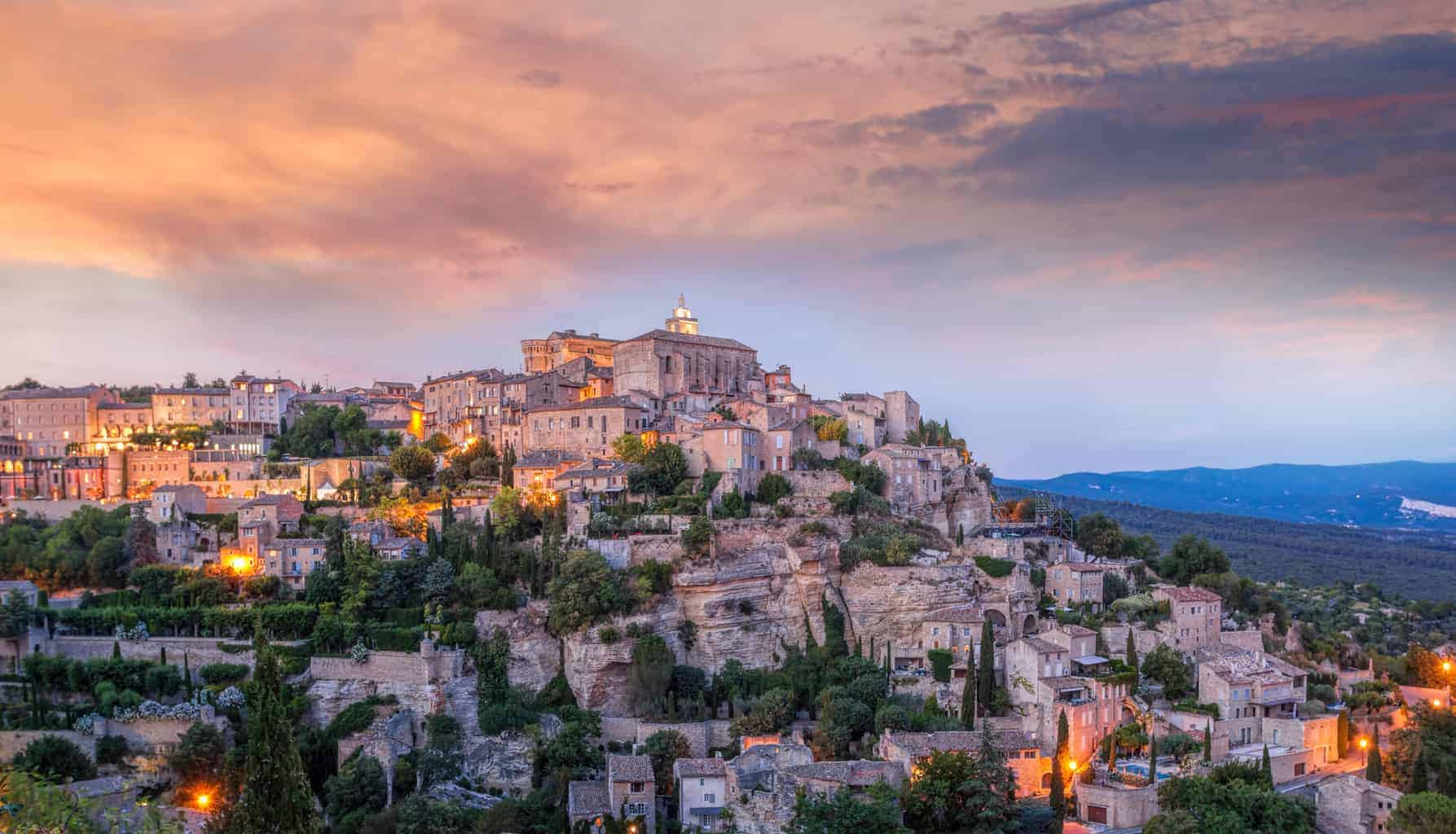
Distance: 250 km loop from Avignon through Gordes, Roussillon, and the Sénanque Abbey. Duration: 5–7 days. Best season: Late June to early August for lavender; May and September for fewer crowds and still-lovely weather.
This is the slowest-paced route on the list. Hilltop villages, lavender fields, and market mornings in Apt or L’Isle-sur-la-Sorgue. The roads are easy, the distances short, and the primary activity is parking the car and walking into a village square for a pastis. Budget €110–€160/day. Accommodation in peak lavender season books out months ahead. Reserve early.
The Alps & Central Europe Road Trip Routes
The Alpine Loop: Switzerland, Austria, Northern Italy
Distance: 1,200 km loop from Zurich through Lucerne, Interlaken, the Dolomites, Innsbruck, and back. Duration: 10–14 days. Best season: June–September. Mountain passes close outside this window.
This is the heavyweight champion of European road trips and the most expensive on this list. You cross the Susten Pass, the Grimsel Pass, and the Grossglockner High Alpine Road in a single itinerary. Each pass delivers a different character: Susten is sweeping and dramatic, Grimsel is stark and high-altitude, and Grossglockner is 36 hairpin turns with a glacier at the top. Pace check: A 200 km day in the Alps takes 5–6 hours of actual driving. Plan one pass per day, not two.
Budget estimate: €150–€200/day. Switzerland is one of the most expensive countries in Europe. A Swiss vignette (motorway toll sticker) costs CHF 40 and is mandatory. Austrian motorways require a vignette (roughly €10 for 10 days). Italian autostrade use toll booths; expect €15–€30 per long stretch. Fuel is pricey across all three countries. Book accommodation in mountain towns well ahead for summer. For comparing car rental pickup options, Kayak aggregates across major providers.
Romantic Road, Germany
Distance: 400 km from Würzburg to Füssen. Duration: 3–4 days. Best season: May–October.
The ideal long-weekend route. Medieval walled towns (Rothenburg ob der Tauber, Dinkelsbühl), half-timbered houses, and the fairy-tale Neuschwanstein castle at the southern terminus. The roads are gentle two-lane highways, and the driving is the least demanding on this entire list. Budget €100–€140/day. Germany has no motorway toll for cars, and fuel prices are moderate by European standards.
Grossglockner High Alpine Road, Austria
Distance: 48 km point-to-point, typically embedded in a larger Salzburg–Tyrol loop of 300–400 km. Duration: 1 day for the pass itself, 5–7 days for the wider loop. Best season: May–October. The road closes in winter.
This is not a route on its own so much as the centrepiece of any Austrian road trip. The toll is roughly €40 per car for a day pass, and it is worth every euro. Thirty-six hairpin turns climb to 2,504 metres at the Hochtor Pass, with views of the Pasterze Glacier and the Grossglockner, Austria’s highest peak. The road is well-engineered and safe, but it demands concentration. Budget for the broader Salzburg–Zell am See–Tyrol loop at €110–€160/day.
Scandinavia, Baltics & The North Road Trip Routes
Iceland Ring Road (Route 1)
Distance: 1,332 km loop around the entire island. Duration: 7–10 days minimum. Add 2–3 days for the Westfjords. Best season: June–August for full access. The ring road is open year-round, but interior F-roads require a 4×4 and are summer-only.
The most otherworldly drive on this list. Waterfalls (Seljalandsfoss, Skógafoss, Goðafoss), glacier lagoons (Jökulsárlón), black sand beaches (Reynisfjara), and geothermal areas (Mývatn) circle the island in a continuous loop. Pace check: 1,332 km in 7 days averages 190 km per day, which is aggressive on Icelandic roads with weather stops. Ten days is much more comfortable. Budget €150–€200/day. Iceland is expensive. Fuel, accommodation, and food all run higher than mainland Europe. A 4×4 rental for F-road access adds significantly to the vehicle cost. For self-catering cottages and cabins along the ring road, Vrbo has strong inventory.
Scandinavia Circuit: Sweden, Norway, Denmark
Distance: 2,000–3,000 km depending on how far north you push. Duration: 14–21 days. Best season: June–August.
A grand loop from Copenhagen across the Øresund Bridge to Malmö, up the Swedish west coast to Oslo, then into the Norwegian fjords (Geirangerfjord, Trollstigen) before looping back. Norway’s fjord roads are some of the most dramatic driving in Europe, with ferry crossings built into the route. Budget €140–€200/day. Norway is notably expensive for fuel and accommodation. Sweden and Denmark are slightly more moderate. Toll roads and ferry crossings add €50–€100 across a full itinerary. Check current ferry schedules on the official Fjord Norway tourism site.
British Isles & Ireland Road Trip Routes
North Coast 500, Scotland
Distance: 830 km loop from Inverness around the northern Highlands coast. Duration: 5–7 days minimum. Best season: May–September. Midges are worst July–August.
The NC500 is Scotland’s answer to Route 66, compressed into a week. It loops through the remote northwest Highlands, with stretches of single-track road, beaches that look Caribbean until you touch the water, and more distilleries than you can responsibly visit. Pace check: 830 km in 5 days on single-track roads with passing places is a full-time driving job. Seven days is much more relaxed. Budget €100–€150/day. Accommodation in villages like Ullapool and Durness books out months ahead. Fill up on fuel whenever you see a petrol station; the gaps between them are real. For comparing accommodation along the route, Booking.com covers the major stops.
Wild Atlantic Way, Ireland
Distance: 2,500 km from the Inishowen Peninsula in Donegal to Kinsale in Cork. Duration: 10–14 days minimum. Best season: May–September.
One of the longest defined coastal routes in the world. Cliffs of Moher, the Dingle Peninsula, Connemara, and the Ring of Kerry are the headliners, but the quiet stretches in Sligo and Donegal are where the route breathes. Pace check: 2,500 km in 10 days is 250 km per day, which on Irish coastal roads is a long day behind the wheel every single day. Fourteen days is the minimum I would recommend for anyone who wants to actually stop and walk on the beaches they are driving past. Budget €100–€150/day. B&Bs are the classic lodging style and often include a cooked breakfast that keeps you fuelled until late afternoon.
Eastern Europe Road Trip Routes
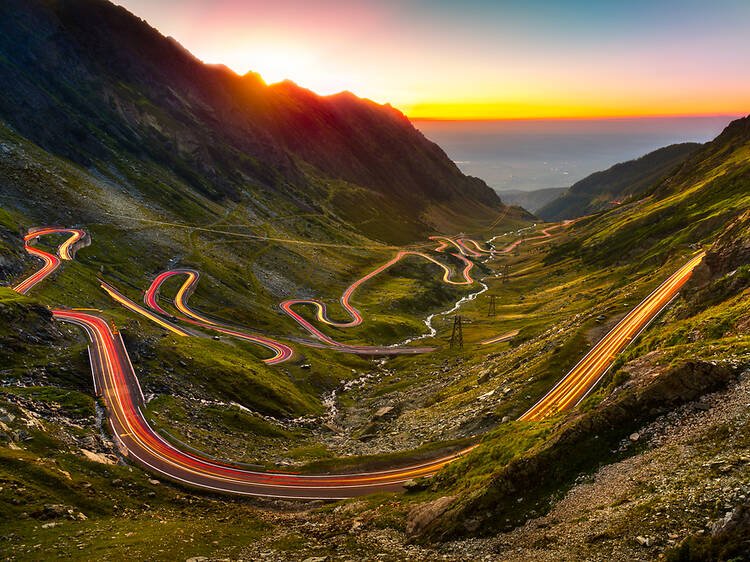
Transfăgărășan Highway, Romania
Distance: 150 km from Curtea de Argeș to Sibiu. Duration: 1–2 days for the pass, embedded in a larger Transylvania loop of 5–7 days. Best season: July–October. The road is closed by snow from roughly November to June.
Jeremy Clarkson called this the best road in the world, and while Top Gear hyperbole is a genre of its own, the Transfăgărășan earns the reputation. It climbs to 2,042 metres through tunnels carved into the Făgăraș Mountains, with a sequence of hairpin turns that rival any Alpine pass. The road is narrow and has no guardrails in sections. Pace check: This is a hard driving experience. If you are nervous with heights or cliff-edge roads without barriers, pick a different route. Budget for the wider Transylvania loop at €60–€90/day. Romania is the most affordable country on this list. Accommodation, food, and fuel all cost significantly less than Western Europe.
Dalmatian Coast, Croatia
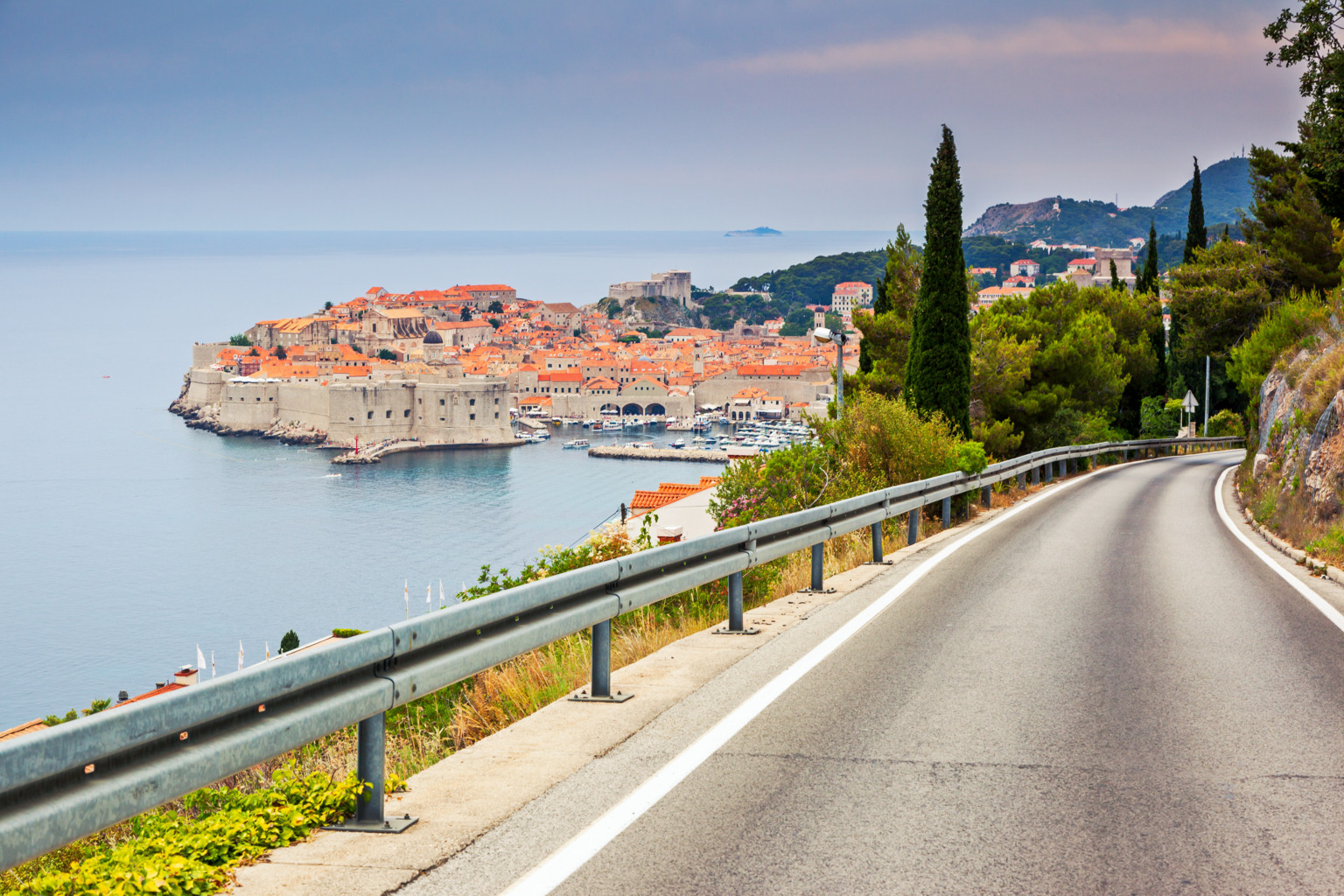
Distance: 400 km from Split to Dubrovnik. Duration: 7–10 days including island ferries. Best season: May–June and September. July–August is crowded and hot.
The Adriatic Highway (Jadranska Magistrala) hugs the coast from Split south, with the islands of Brač, Hvar, and Korčula a short ferry ride offshore. The drive itself is stunning, turquoise water on one side, limestone mountains on the other, but the true pleasure of this route is the rhythm: drive a stretch, park the car, take a ferry, spend two nights on an island, repeat. Budget €80–€120/day. Croatia is mid-range by European standards. Ferries cost roughly €15–€30 per leg with a car. Book ferry tickets on the official Jadrolinija website. For tours and island-hopping activities, GetYourGuide lists local operators.
Driving Logistics: What You Need to Know Before You Go
European road trips are logistically more complex than US or Australian ones because you cross borders, each with its own toll system, road rules, and rental-car fine print. These are the practical details that trip up first-timers. Get them right before you leave, and the driving itself is straightforward.
Documents and Insurance
Non-EU licence holders should carry an International Driving Permit (IDP) for several European countries, including Spain, Italy, Austria, and Greece. The requirement varies by country and your home licence type. Check your specific destination list on the official automobile association website for your home country. Your rental car will include basic third-party insurance by law. Credit-card rental coverage often excludes certain countries; call your card issuer and confirm in writing before you rely on it.
Tolls and Vignettes by Country
France, Italy, Spain, and Portugal use toll booths. You take a ticket, drive, and pay at the exit. France’s péage system is the most expensive; expect €20–€40 for a long motorway stretch. Switzerland requires a vignette (CHF 40, valid for the calendar year) displayed on your windscreen. Austria requires a vignette (roughly €10 for 10 days, €30 for 2 months) for motorway driving. Some Austrian alpine passes, including Grossglockner, charge a separate toll on top of the vignette. Check current vignette prices on the official ASFiNAG website for Austria and the Swiss Federal Customs Administration for Switzerland.
One-Way Rental Drop-Off Fees
Picking up a car in one country and dropping it in another often incurs a cross-border drop-off fee, typically €200–€500 depending on the countries involved. Dropping in the same country is always cheaper. If your route crosses multiple countries, check the fee before you book. Some rental companies restrict certain vehicle categories, especially luxury or large SUVs, from crossing into Eastern Europe entirely.
EV Road-Tripping in Europe
Western and Northern Europe (Netherlands, Norway, Germany, France, Switzerland) have dense, reliable fast-charging networks that make EV road trips genuinely practical. Norway leads the world in per-capita charger density. Southern and Eastern Europe are sparser. The Alpine region is improving rapidly. If you plan an EV trip, download the specific charging-network apps for the countries you are crossing before you leave. Do not assume a single app covers the whole continent.
How Much Does a European Road Trip Actually Cost?
These are per-day estimates for two people sharing a rental car and accommodation. Costs are in euros and reflect mid-2026 pricing. Scandinavia and Switzerland push toward the higher end of every range.
Budget: €60–€90/day
- Car rental: €20–€35 (economy manual, booked well ahead)
- Fuel: €15–€25
- Tolls/vignettes: €5–€10
- Accommodation: €25–€40 (hostel private room, budget guesthouse)
- Food: €15–€20 (supermarket breakfast, picnic lunch, one budget dinner)
Mid-Range: €100–€150/day
- Car rental: €30–€50 (compact automatic)
- Fuel: €20–€35
- Tolls/vignettes: €10–€20
- Accommodation: €60–€100 (3-star hotel, B&B, agriturismo)
- Food: €30–€50 (café breakfast, sit-down lunch, restaurant dinner)
Comfort: €160–€250+/day
- Car rental: €60–€100+ (premium SUV or convertible)
- Fuel: €25–€40
- Tolls/vignettes: €15–€25
- Accommodation: €120–€250+ (4-star hotel, boutique inn, design B&B)
- Food: €50–€80+ (restaurant dinners, wine, one fine-dining evening)
These figures are estimates. Fuel prices fluctuate. Tolls and vignette rates change annually. Check current prices on official country tourism or motorway authority websites before you lock in your budget.
Frequently asked questions about European road trips
What is the best time of year for a European road trip?
May, June, and September offer the best balance of good weather, open mountain passes, and manageable crowds across most of Europe. July and August bring peak-season pricing, crowded roads in tourist hotspots, and high temperatures in southern Europe. Alpine passes are typically open June through October. The North Coast 500 and Wild Atlantic Way are best May through September to avoid the worst of the rain and short daylight hours.
Can I do a European road trip without a car of my own?
Yes. Renting a car is the standard approach for international visitors. Book your rental car well in advance, especially for summer travel and for automatic transmission vehicles, which are less common in Europe and cost more than manuals. Compare prices across rental companies using a platform like Kayak or Auto Europe.
Is it legal to cross borders in a rental car?
Yes, within most of the EU and Schengen Area. However, rental companies often restrict travel to certain Eastern European countries and almost always charge a cross-border fee for one-way drop-offs in a different country. Driving a rental car from an EU country into a non-EU Balkan country often requires additional insurance purchased at the border. Always declare your intended countries to the rental company when you book.
How many countries can you realistically cover in two weeks?
Three to four countries is a comfortable maximum for a two-week trip if you want to spend meaningful time in each stop rather than just driving through. A route like Switzerland–Austria–Italy or France–Switzerland–Germany works well. More than four countries in two weeks means you are spending most of your trip on the motorway.
Do I need an International Driving Permit in Europe?
It depends on your home country and the specific European countries you plan to drive in. Several EU countries, including Spain, Italy, Austria, and Greece, require an IDP for non-EU licence holders. The requirement is not uniform across the continent. Check the official requirements for each country on your itinerary before you travel. IDPs are obtained from the automobile association in your home country and are not available on arrival in Europe.
Is an electric vehicle practical for a European road trip?
Yes, in Western and Northern Europe. The Netherlands, Norway, Germany, France, and Switzerland have dense fast-charging networks. Southern and Eastern Europe are improving but remain less reliable for long-distance EV travel. Alpine routes are increasingly EV-viable. Download country-specific charging apps before you leave, and plan charging stops around meal breaks rather than treating them as separate errands.
What side of the road do European countries drive on?
The vast majority of Europe drives on the right. The exceptions are the United Kingdom, Ireland, Malta, and Cyprus, which drive on the left. If you are crossing from the UK or Ireland to mainland Europe by ferry or Channel Tunnel, the switch happens at the port and is well-signposted. Take the first 15 minutes cautiously after the transition.
Plan your European road trip: booking platforms we trust
These are the platforms I use to book European road trips. Each serves a different stage of the planning process. Using the right one saves money and avoids hours of cross-referencing.
Best for comparing car rental prices across multiple companies and pickup locations in Europe.
Best for finding and booking hotels, B&Bs, and guesthouses along your route with flexible cancellation.
Best for self-catering apartments and holiday cottages for longer stays in one region.
Best for booking guided day tours, skip-the-line attraction tickets, and activities at your stops.
Best for reading recent restaurant and hotel reviews in smaller towns along your route.
Best for bundling flights to Europe with your initial car rental pickup in a single booking.