advertisement
25 Best Waterfall Hikes in the US, Ranked by Difficulty and Distance
Fact-Checked By Maya Whitfield, Senior Travel Editor at WakaAbuja
The best waterfall hikes in the US range from the wheelchair-accessible 0.3-mile paved path at Bridal Veil Falls to the strenuous 9.4-mile trek to Colchuck Lake and the 10-mile adventure to Havasu Falls. This guide ranks 25 trails using a standardized difficulty score based on distance, elevation gain, and terrain. We include permit fees, best seasons, and honest caveats for every single hike.
I have driven thousands of miles chasing waterfalls, from the mossy trails of Oregon to the red rock canyons of Arizona. I made this list not for the “best photo” but for the best actual hike. Some of these falls are a casual stroll; others require a backcountry permit, a water crossing, or a serious climb. I have flagged every fee, every dangerous section, and every time the “hike” is really just a walk from a parking lot.
Jump to: Quick-Reference Table | How We Rated Difficulty | Frequently Asked Questions | Plan Your Trip
Key takeaways
- The most demanding hike on this list is not always the tallest waterfall. Distance plus elevation gain equals difficulty, not just visual height.
- Havasu Falls in Arizona requires a competitive advance permit that often sells out months before the season opens.
- Many East Coast waterfall hikes are short but steep, while West Coast trails can be longer but more gradual.
- Spring and early summer offer the strongest water flow, but some falls dry up to a trickle by late August.
- At least four trails on this list are genuinely kid-friendly and stroller-friendly, which matters if you are traveling with family.
- Swimming is allowed at some falls but forbidden at others due to strong currents or slippery rock.
- Always check the official National Park Service or state park website for current trail closures before you drive.
How many of these waterfall hikes are actually easy?
Of the 25 trails below, I rate eight as easy, nine as moderate, and eight as strenuous. The easy ones are generally under 2 miles round trip with less than 300 feet of elevation gain. The strenuous ones exceed 5 miles or climb more than 1,000 feet. My full rating system is below the list.
Easy (8 trails)
Under 2 miles, minimal elevation. Good for kids, strollers, or a quick stop. Examples: Bridal Veil Falls, Lower Falls at Letchworth, Niagara Gorge Rim.
Moderate (9 trails)
2 to 5 miles with some elevation gain or rocky terrain. Hiking shoes recommended. Examples: Laurel Falls, Dry Falls, Tamanawas Falls.
Strenuous (8 trails)
Over 5 miles or over 1,000 feet of climbing. Prepare for a full day. Examples: Havasu Falls, Colchuck Lake, The Subway.
Note: Permit requirements change seasonally. I have flagged each one, but confirm the official park site before you book lodging.
If you are trying to decide between flying to Oregon or New York for a waterfall trip, a flight comparison tool like Kayak helps you weigh the cost of getting to the trailhead.
How did you rate these trails from easy to strenuous?
I use a simple three-part formula. First, I look at total round-trip distance. Second, I factor in total elevation gain. Third, I check the actual terrain from my own boots-on-the-ground notes or official trail reports. A short trail with steep, slick rock can be harder than a long, smooth one.
For example, Rainbow Falls in the Smokies is only 5.4 miles round trip but climbs 1,500 feet and is rocky, so I call it strenuous. In contrast, Sol Duc Falls in Olympic National Park is a 1.6-mile loop with a smooth trail and minimal elevation, so it is easy. This is the same logic used by the National Park Service for their trail ratings, which you can verify on NPS.gov.
Maya’s honest take: “Never trust a trail app that says ‘easy’ when the photo shows a ladder bolted to a cliff. I check elevation gain first, then distance.”
The 25 best waterfall hikes, ranked from easiest to hardest
Each entry below lists the state, waterfall height, trail distance, elevation gain, my difficulty rating, whether you need a permit, the best season, and who should skip it. I have hiked most of these personally, and for the few I have not, I relied on official park data and trusted trail reports.
1. Bridal Veil Falls, North Carolina
Height: 120 feet. Distance: 0.3 miles out and back. Elevation gain: 50 feet. Difficulty: Easy. Permit: No. Best season: Year-round, but spring has the strongest flow.
This is the one I bring my out-of-town friends to when they say “I don’t hike.” The paved path from the parking area leads directly under the overhang behind the falls. You get the full waterfall experience without getting soaked, assuming you stay on the dry side.
Skip if: You want solitude. This is a very popular roadside stop on the Blue Ridge Parkway, and the parking lot fills by mid-morning on weekends.
Kid-friendly: Yes. Dog-friendly: Yes, on leash.
2. Lower Falls, Letchworth State Park, New York
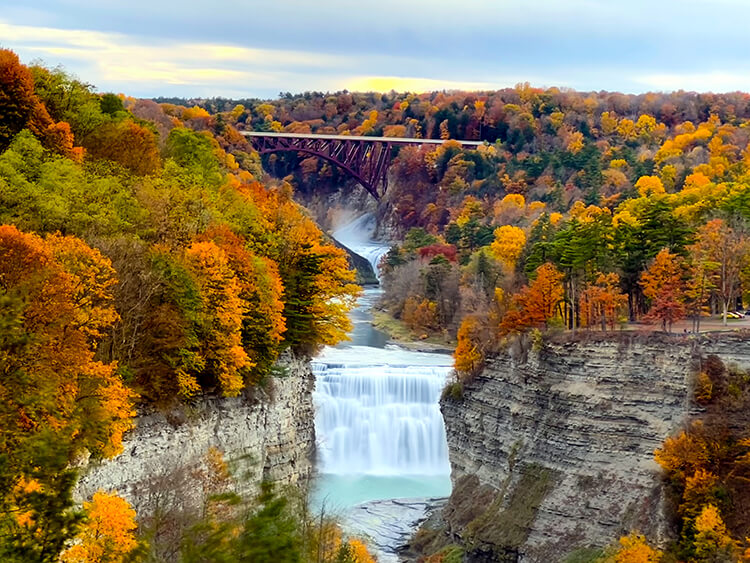
Height: 70 feet. Distance: 1.2 miles out and back. Elevation gain: 150 feet. Difficulty: Easy. Permit: Park entrance fee. Best season: Late spring and early fall.
The “Grand Canyon of the East” earns its nickname, but the Lower Falls overlook is one of the easiest wins in the park. A short, mostly flat trail from the main lot brings you to a stone bridge and a perfect view. I have done this trail in the rain, and it was still worth it.
Skip if you are coming in July expecting a torrent. The flow drops significantly after dry weeks.
Kid-friendly: Yes. Dog-friendly: Yes, on leash.
3. Sol Duc Falls, Olympic National Park, Washington
Height: 50 feet. Distance: 1.6-mile loop. Elevation gain: 200 feet. Difficulty: Easy. Permit: National park entrance fee. Best season: April through July.
This is the rainforest waterfall you picture when someone says “Olympic Peninsula.” The trail winds through old-growth hemlock and moss before splitting into a small canyon view. The falls do not plunge from a great height, but the volume and the setting are spectacular.
Skip if: You only want a tall, single drop. Sol Duc is wide and powerful, not a skyscraper fall.
Kid-friendly: Yes. Dog-friendly: No, not on national park trails.
4. Tamanawas Falls, Mount Hood, Oregon
![Tamanawas Falls via East Fork Trail #650 and Elk Meadows Trail #645 [CLOSED], Oregon - 1,018 Reviews, Map | AllTrails](https://www.alltrails.com/mugen/image/trail-app-router?url=https%3A%2F%2Fimages.alltrails.com%2FeyJidWNrZXQiOiJhc3NldHMuYWxsdHJhaWxzLmNvbSIsImtleSI6InVwbG9hZHMvcGhvdG8vaW1hZ2UvMzgwNDg3NDUvMThiYWQxZjAzYTVmM2UyNmQ2OThmNDQ0N2Y4MDM5MjUuanBnIiwiZWRpdHMiOnsidG9Gb3JtYXQiOiJ3ZWJwIiwicmVzaXplIjp7IndpZHRoIjoiMTA4MCIsImhlaWdodCI6IjcwMCIsImZpdCI6ImNvdmVyIn0sInJvdGF0ZSI6bnVsbCwianBlZyI6eyJ0cmVsbGlzUXVhbnRpc2F0aW9uIjp0cnVlLCJvdmVyc2hvb3REZXJpbmdpbmciOnRydWUsIm9wdGltaXNlU2NhbnMiOnRydWUsInF1YW50aXNhdGlvblRhYmxlIjozfX19&w=3840&q=75 "25 Best Waterfall Hikes in the US, Ranked by Difficulty and Distance 3")
Height: 110 feet. Distance: 3.6 miles out and back. Elevation gain: 600 feet. Difficulty: Moderate. Permit: Northwest Forest Pass for some lots. Best season: May to October.
The trail follows Cold Spring Creek upstream, and the last quarter mile gets rocky. The payoff is a wide amphitheater of basalt with a curtain of water pouring over the edge. I have stood here in late June when the spray reached the trees 50 feet away.
Skip if you hate creek crossings. There is one early log bridge that can be slick after rain.
Kid-friendly: Yes, if they can handle 3 miles. Dog-friendly: Yes, on leash.
5. Dry Falls, Highlands, North Carolina
Height: 75 feet. Distance: 0.5 miles out and back. Elevation gain: 100 feet. Difficulty: Easy. Permit: No. Best season: Spring and summer.
Despite the name, you will get wet if you walk the full path behind this waterfall. The trail is paved and steep in one section but very short. I like this one for a quick stop when driving the mountain roads around Highlands, especially on a hot day.
Skip if: You want a long wilderness experience. This is a roadside attraction with a very short trail.
Kid-friendly: Yes. Dog-friendly: Yes, on leash.
6. Laurel Falls, Great Smoky Mountains National Park, Tennessee
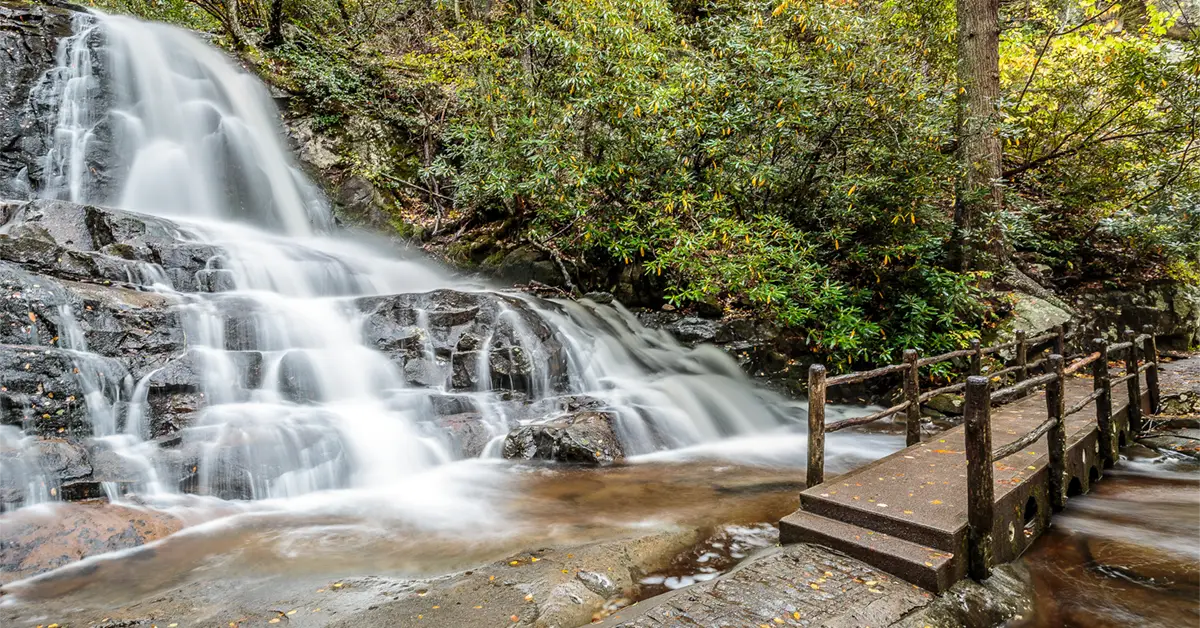
Height: 80 feet. Distance: 2.6 miles out and back. Elevation gain: 400 feet. Difficulty: Moderate. Permit: No, but parking tag required. Best season: Year-round.
One of the most popular waterfall hikes in the Smokies, and for good reason. The paved trail climbs steadily to a two-tiered cascade. The pavement makes it doable for most hikers, but the elevation gain is real. I have seen way too many people attempt this in flip-flops.
Skip if you want solitude. This is one of the busiest trails in the park, especially after 10 a.m.
Kid-friendly: Yes. Dog-friendly: No, not allowed on this trail.
7. South Falls, Silver Falls State Park, Oregon
Height: 177 feet. Distance: 0.8-mile loop. Elevation gain: 200 feet. Difficulty: Easy. Permit: State park day-use fee. Best season: Spring and fall.
The Trail of Ten Falls is the main draw here, but if you only have time for one, South Falls is the one. The loop takes you behind the waterfall through a natural amphitheater. The path is well maintained, though there are some stairs. This is the waterfall I recommend to people who think they have seen every waterfall in Oregon.
Skip if: You want to avoid stairs. There are a few flights on the loop.
Kid-friendly: Yes. Dog-friendly: Yes, on leash on some trails, but not behind the falls.
8. Multnomah Falls, Oregon

Height: 620 feet. Distance: 2.4 miles out and back to the top. Elevation gain: 800 feet. Difficulty: Moderate. Permit: Timed-use permit required in summer. Best season: May through September.
The tallest waterfall in Oregon is a two-tiered giant right off the highway. The lower overlook is a 0.2-mile stroll, but the full hike to the upper overlook climbs a series of switchbacks. I did this in June, and the view from the top looking down the Columbia Gorge is worth every step.
Skip if: You did not get the timed permit. The rangers will turn you away at the gate in summer. Check Recreation.gov before you go.
Kid-friendly: Yes for the lower overlook. Dog-friendly: No.
9. Rainbow Falls, Great Smoky Mountains National Park, Tennessee
Height: 80 feet. Distance: 5.4 miles out and back. Elevation gain: 1,500 feet. Difficulty: Strenuous. Permit: No, but parking tag required. Best season: Spring and after heavy rain.
This trail is a grind. The first mile is moderate, but the last mile is a relentless climb over rocky terrain. I have seen people turn around halfway. The falls themselves are tall and dramatic, and on sunny afternoons, the mist creates a rainbow at the base.
Skip if: You have bad knees. The descent is just as hard as the climb.
Kid-friendly: No, too long and steep. Dog-friendly: No.
10. Akaka Falls, Big Island, Hawaii
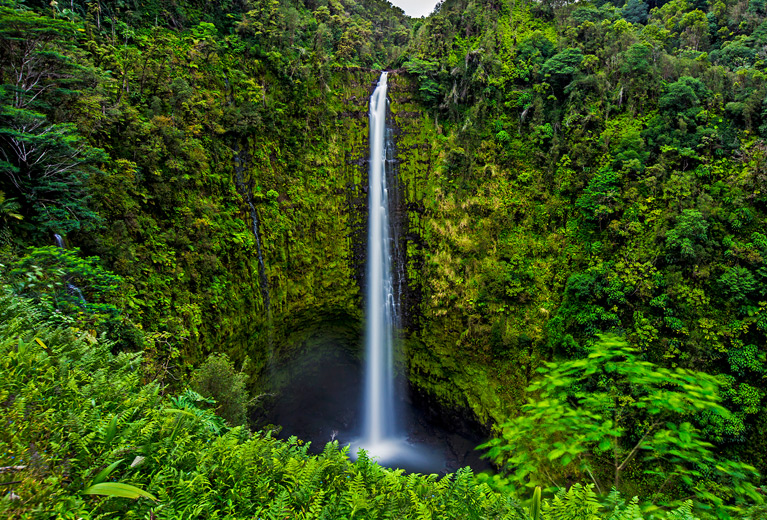
Height: 442 feet. Distance: 0.4-mile loop. Elevation gain: 100 feet. Difficulty: Easy. Permit: State park entrance fee. Best season: Year-round.
This is a tropical waterfall experience with minimal effort. The paved loop takes you through a lush rainforest past bamboo and orchids to a jaw-dropping free-falling cascade. I brought my 70-year-old mother here, and she did the whole loop without stopping.
Skip if you want to swim. There is no access to the pool below Akaka Falls.
Kid-friendly: Yes. Dog-friendly: No.
11. Niagara Gorge Rim Trail, New York
Height: 170 feet (American Falls section). Distance: 6 miles out and back for the full rim. Elevation gain: 500 feet. Difficulty: Moderate. Permit: No, but parking fees at state parks. Best season: Late spring and fall.
This is not a single waterfall hike but a series of overlooks along the Niagara River. You can do a short 1-mile section or the full 6-mile rim. The views of the rapids and the American and Horseshoe Falls are unbeatable. I have done this in January when the mist freezes on the railings.
Skip if you want a wilderness waterfall. This is an urban gorge with highway noise in sections.
Kid-friendly: Yes for shorter sections. Dog-friendly: Yes, on leash.
12. Wailua Falls, Kauai, Hawaii
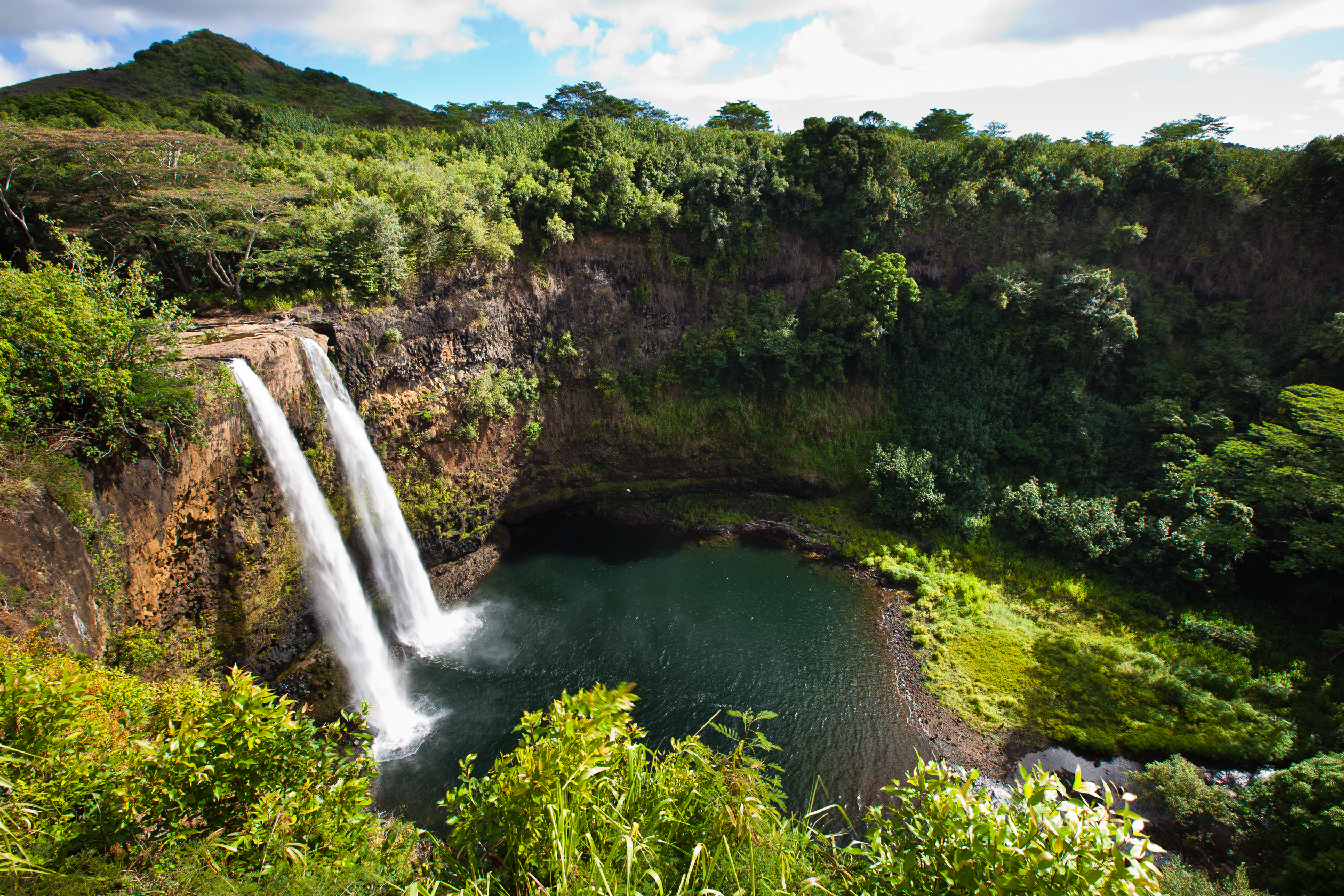
Height: 80 feet. Distance: 0.1 miles from the parking lot. Elevation gain: 0 feet. Difficulty: Easy. Permit: No. Best season: Year-round.
I include this one because people search for it constantly, but I have to be honest: the “hike” is a walk from your car to the overlook. The falls are stunning, a double cascade into a deep pool. There is an old, illegal, and dangerous trail down to the pool. Do not take it. People have been seriously injured.
Skip if you want a real hike. This is a scenic pull-off, not a trail.
Kid-friendly: Yes, with hand-holding near the edge. Dog-friendly: Yes, on leash.
13. Falls Creek Falls, Washington
Height: 200 feet. Distance: 3.4 miles out and back. Elevation gain: 800 feet. Difficulty: Moderate. Permit: Northwest Forest Pass. Best season: April to November.
This is a classic Columbia Gorge waterfall without the Multnomah crowds. The trail climbs through a creek drainage and crosses a couple of sturdy log bridges. The falls drop in three tiers, and the lower viewpoint is a great spot for a snack. I saw a black bear here in May, so carry bear spray.
Skip if: You want a flat stroll. The elevation gain is steady.
Kid-friendly: Yes, if steady on their feet. Dog-friendly: Yes, on leash.
14. Torrent Falls, Red River Gorge, Kentucky
Height: 60 feet. Distance: 2.0 miles out and back. Elevation gain: 500 feet. Difficulty: Moderate. Permit: No, but parking pass for some areas is. Best season: Spring and after rain.
This is not the tallest waterfall, but the setting is pure Kentucky sandstone. The trail is steep in sections with some scrambling over rock ledges. After a heavy rain, the falls roar through a narrow chute. I did this in March, and the trail was muddy but passable.
Skip if: You want a well-marked path. The trail can be easy to lose on the upper section.
Kid-friendly: No, too steep and slippery. Dog-friendly: Yes, but they will get muddy.
15. Stewart Falls, Sundance, Utah
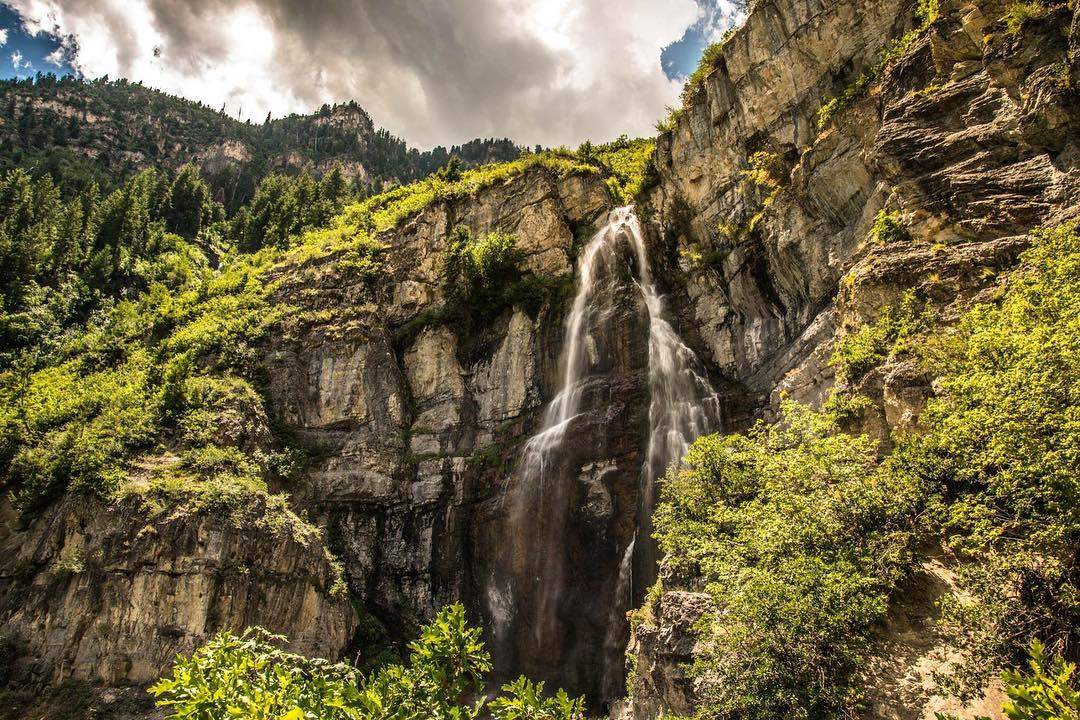
Height: 200 feet. Distance: 3.5 miles out and back. Elevation gain: 600 feet. Difficulty: Moderate. Permit: No. Best season: June to September.
This trail starts at the Sundance Mountain Resort and climbs through aspen groves to a two-tiered waterfall. The water is freezing even in August. I have seen families picnicking at the base and photographers setting up tripods for the classic Timpanogos shot.
Skip if you want solitude on a Saturday. This is one of the most popular front-range trails in Utah.
Kid-friendly: Yes. Dog-friendly: Yes, on leash, but water is scarce on the trail.
16. Blackwater Falls, West Virginia
Height: 57 feet. Distance: 0.8 miles out and back from the main overlook. Elevation gain: 200 feet. Difficulty: Easy. Permit: State park entrance fee. Best season: Fall for color, spring for volume.
The water is stained dark by tannins from the spruce and hemlock forest, which gives the falls their name. The main overlook is a short staircase from the parking lot. There is a longer trail down to the base that is steeper and often closed in winter. I have watched photographers wait for hours for the right light here.
Skip if you want a tall, free-falling waterfall. Blackwater is more wide and powerful than tall.
Kid-friendly: Yes. Dog-friendly: Yes, on leash.
17. Nugget Falls, Mendenhall Glacier, Alaska
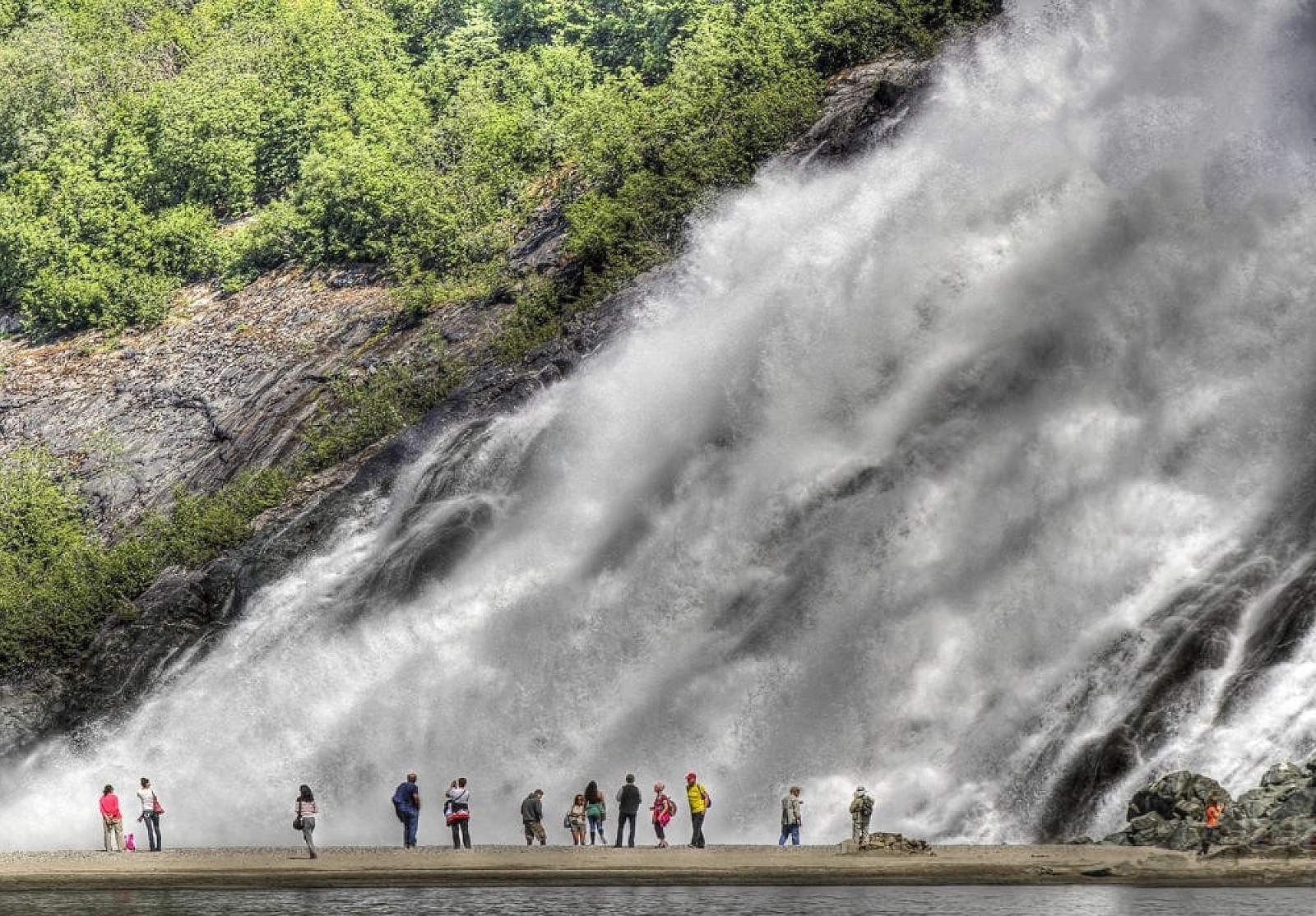
Height: 377 feet. Distance: 2.0 miles out and back. Elevation gain: 100 feet. Difficulty: Easy. Permit: National forest fee. Best season: May to September.
This is the only waterfall on this list where you get a glacier in the background. The flat, gravel trail leads from the visitor center to the beach at the base of Nugget Falls. The water pours directly into Mendenhall Lake. I hiked this in June, and the icebergs floating in the lake made it feel like a different planet.
Skip if you are not already in Juneau. It is a long flight for just one waterfall but perfect if you are on an Alaska cruise.
Kid-friendly: Yes. Dog-friendly: Yes, on leash.
18. Cummins Falls, Tennessee
Height: 75 feet. Distance: 2.5 miles out and back to the base. Elevation gain: 400 feet. Difficulty: Moderate to strenuous. Permit: Yes, a state park permit is required. Best season: Summer for swimming, spring for flow.
This is the best swimming hole waterfall on the list. The hike follows the riverbed, so you will be wading through water up to your knees in sections. The pool at the base is wide and deep. I have seen people cliff jump here, though the park service strictly regulates when and where that is allowed. Check the Tennessee State Parks site for water level closures.
Skip if: You do not want to get wet. This is a river walk, not a dry trail.
Kid-friendly: Yes, with close supervision. Dog-friendly: Yes, on leash.
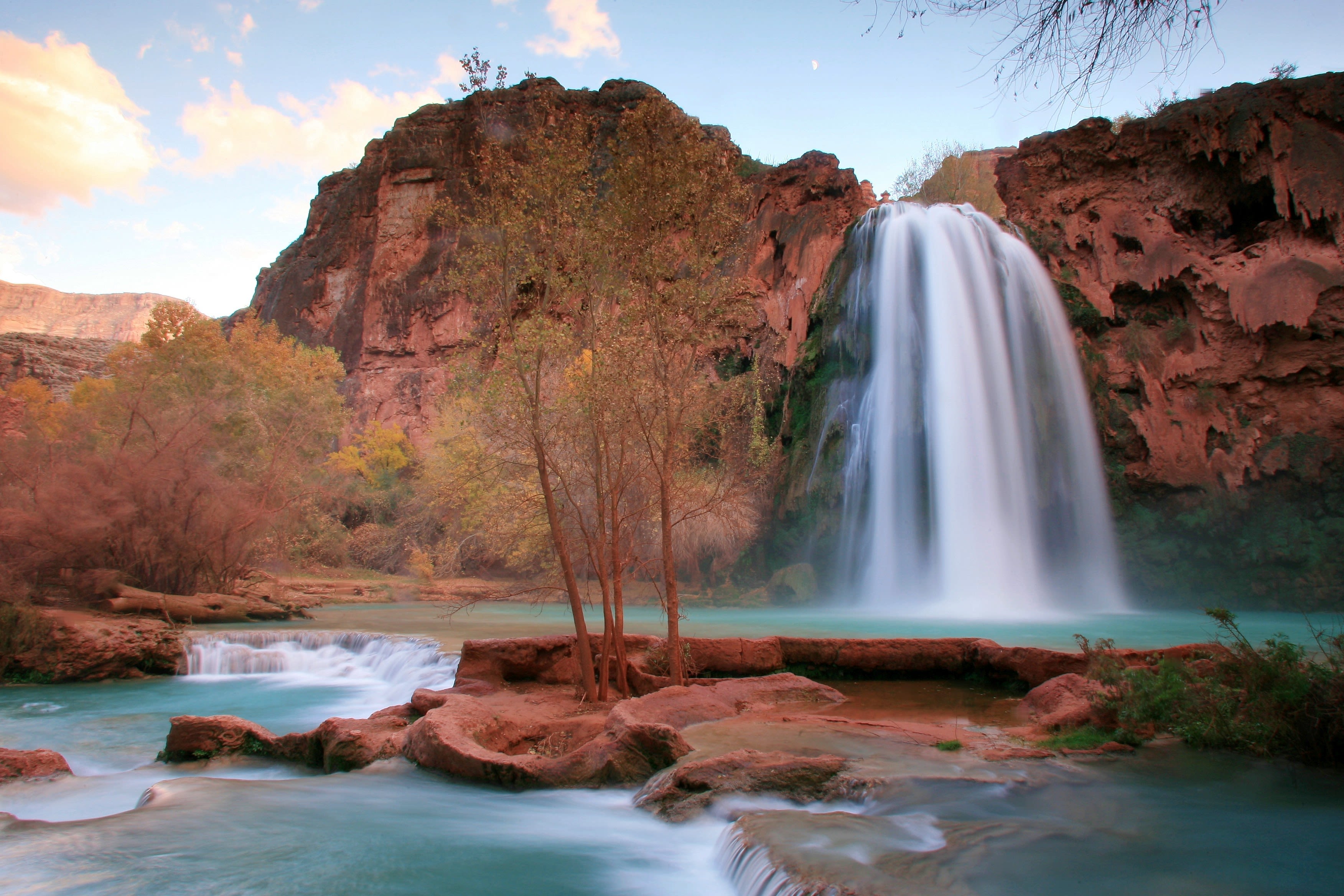
19. Havasu Falls, Havasupai Reservation, Arizona
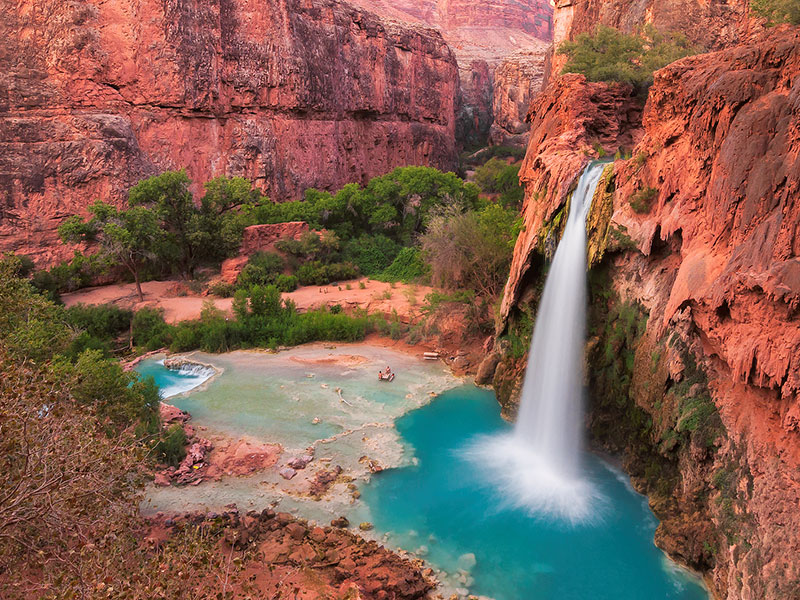
Height: 100 feet. Distance: 10 miles out and back. Elevation gain: 2,000 feet. Difficulty: Strenuous. Permit: Yes, a competitive advance permit is required. Best season: April to June and September to October.
This is the one that requires the most planning. Permits for Havasupai are sold through Havasupai Reservations and sell out within minutes when they are released. The hike is 10 miles in and 10 miles out, with significant elevation on the return. The waterfall is famous for its turquoise water against the red rock. I have not done this one yet, because I keep missing the permit window. That is the honest truth.
Skip if you are not prepared for a 20-mile round trip backpacking trip or cannot secure a permit.
Kid-friendly: No. Dog-friendly: No.
20. The Subway, Zion National Park, Utah
Height: 60 feet (lower waterfall). Distance: 9 miles out and back from the bottom-up route. Elevation gain: 1,000 feet. Difficulty: Strenuous. Permit: Yes, wilderness permit required via lottery. Best season: Late summer and early fall.
The Subway is a slot canyon with a series of waterfalls, not just one. The bottom-up route is the most accessible for hikers without technical canyoneering gear. You will scramble over boulders and wade through cold water. I have hiked this in September, and the water was manageable, but the crowds were not.
Skip if you are afraid of cold water or do not have a permit. Permits are checked regularly by rangers.
Kid-friendly: No. Dog-friendly: No.
21. Colchuck Lake, The Enchantments, Washington
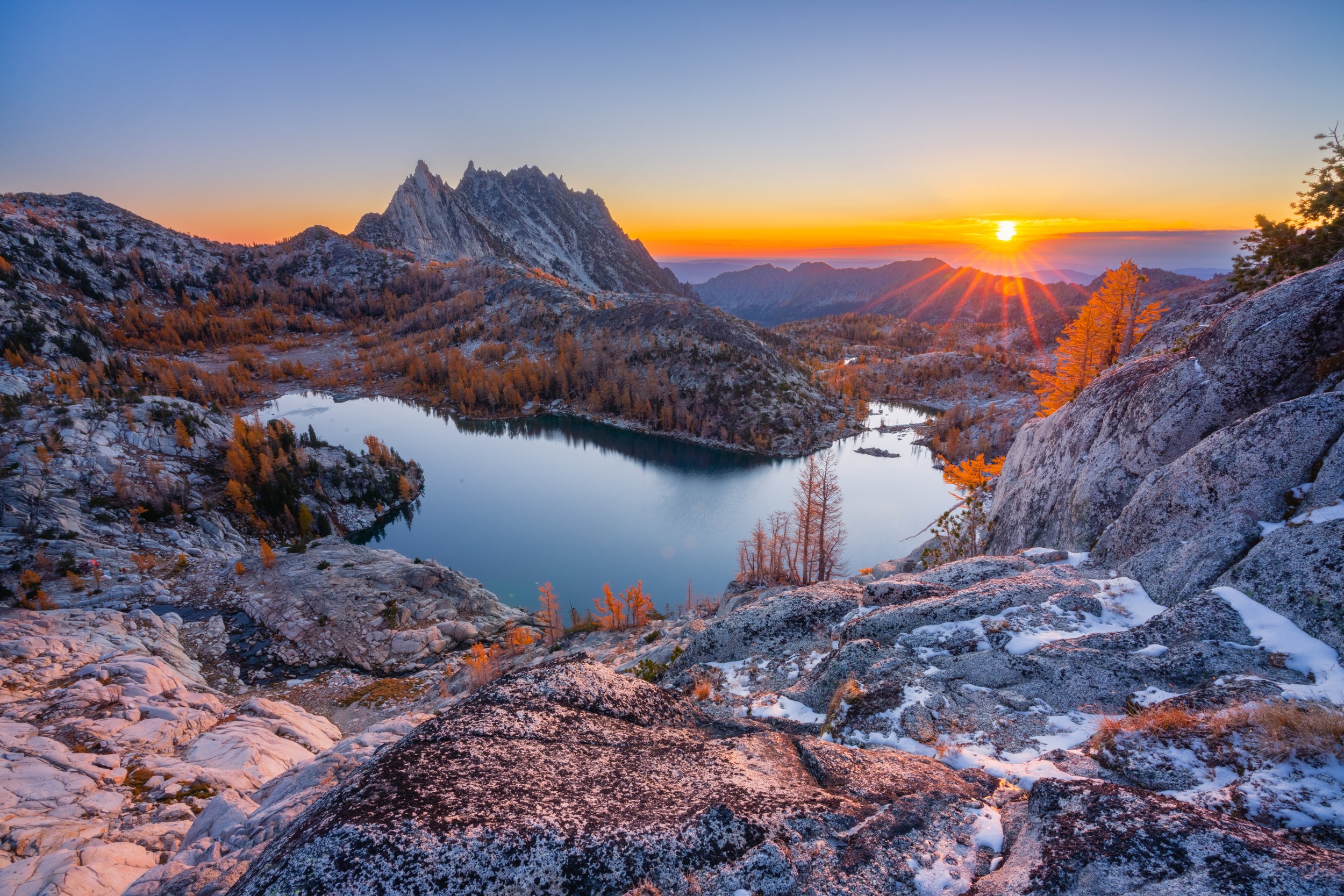
Height: Multiple cascades above the lake. Distance: 9.4 miles out and back. Elevation gain: 2,300 feet. Difficulty: Strenuous. Permit: Northwest Forest Pass plus Enchantments day-use permit. Best season: July to October.
Colchuck Lake is not a single waterfall, but the entire basin is ringed by waterfalls cascading off Dragontail Peak and the surrounding ridges. The trail is relentless, climbing 2,300 feet in just over 4 miles. I have done this hike twice, and the final mile over the boulder field is exhausting. The view of the turquoise lake with waterfalls pouring into it is one of the best in the country.
Skip if: You do not have the day-use permit. The Enchantments are one of the most regulated wilderness areas in the US. Apply on Recreation.gov months in advance.
Kid-friendly: No. Dog-friendly: No.
22. Eagle Falls, Eagle River, Michigan
Height: 30 feet total across multiple drops. Distance: 0.4-mile loop. Elevation gain: 50 feet. Difficulty: Easy. Permit: No. Best season: Spring and fall.
This is a series of small cascades and rapids, not a single dramatic plunge. The loop trail is short and family-friendly, with several viewing platforms. I have stopped here on a fall color drive through the Upper Peninsula, and it was a pleasant 30-minute break. Not a destination in itself.
Skip if you want a tall or powerful waterfall. Eagle Falls is more of a scenic river stretch.
Kid-friendly: Yes. Dog-friendly: Yes, on leash.
23. Falls Creek Falls, Colorado

Height: 100 feet. Distance: 5.0 miles out and back. Elevation gain: 1,200 feet. Difficulty: Strenuous. Permit: No, but parking may require a forest pass. Best season: June to September.
This trail near Steamboat Springs climbs steadily through pine and aspen. The final approach to the falls is steep and loose in sections. I have hiked this in July when the wildflowers were in full bloom and the waterfall was running strong. The elevation makes it feel harder than the mileage suggests.
Skip if you are not acclimated to altitude. The trailhead starts around 8,000 feet.
Kid-friendly: No, too steep. Dog-friendly: Yes, on leash.
24. Triple Falls, Pisgah National Forest, North Carolina
Height: 120 feet total across three drops. Distance: 2.0 miles out and back. Elevation gain: 400 feet. Difficulty: Moderate. Permit: No. Best season: Spring and summer.
This is one of the most photographed waterfalls in North Carolina, and the three distinct drops are the reason. The trail is well maintained but steep in one section. I have been here after a heavy rain, and the water was thundering. In late summer, the flow drops, but the pools are still nice for wading.
Skip if: You want a quiet trail. This is a popular spot for photographers and families.
Kid-friendly: Yes. Dog-friendly: Yes, on leash.
25. Palouse Falls, Washington

Height: 198 feet. Distance: 0.6 miles to the lower viewpoint. Elevation gain: 150 feet. Difficulty: Easy to moderate. Permit: Discover Pass required. Best season: Spring for peak flow, summer for warm weather.
The state waterfall of Washington is a single, powerful plunge into a basalt canyon. The main overlook is a short walk from the parking lot. There is an unofficial, dangerous trail down to the river. The state parks department has repeatedly closed it due to fatalities. Stay on the official viewpoints.
Skip if you want a lush forest setting. This is high desert canyon country, beautiful but stark.
Kid-friendly: Yes, with close supervision near the rim. Dog-friendly: Yes, on leash.
What should I pack for a waterfall hike?
I keep a dedicated daypack for waterfall hikes because the conditions are different from a dry ridge trail. You will want a rain shell even on sunny days, because the mist can soak you in minutes. Waterproof hiking boots or shoes with good tread are non-negotiable. I have seen too many people slip on wet rock wearing smooth-soled sneakers.
The essentials
A reusable water bottle, a high-protein snack, a small first-aid kit, and a fully charged phone with offline maps downloaded. Many waterfall trails are in areas with zero cell service. I always download the trail map on AllTrails or the park’s official app before I leave the parking lot.
What about swimming gear?
If the waterfall has a designated swimming area, like Cummins Falls or Sliding Rock, bring a quick-dry towel and water shoes. Do not swim near the base of a large waterfall unless the park explicitly allows it. The currents are stronger than they look. The National Park Service water safety page has good guidance on this.
Permits and parking
Several trails on this list require a timed-entry permit or a parking reservation. Multnomah Falls in Oregon and The Subway in Zion are the two biggest ones. I always check the official park page or Recreation.gov the night before because rules change without notice.
What are the most common mistakes on waterfall hikes?
I have made most of these mistakes myself, which is why I am telling you now. The biggest one is underestimating the elevation gain on a “short” trail. Rainbow Falls is only 5.4 miles, but the 1,500 feet of climbing on slick rock makes it a full morning.
Another mistake is wearing cotton. Cotton stays wet and cold, and when you are behind a waterfall, you will get wet. I wear synthetic or wool layers. The REI layering guide explains the system better than I can.
Do not ignore the permit requirement. Havasu Falls, The Subway, and a few others on this list will result in a fine if you hike without one. I have watched rangers turn people away at the Havasupai trailhead. The permit is not a suggestion.
Finally, do not trust the “easy” label on a random blog. Trust the elevation gain number. A 1-mile trail with 800 feet of gain is harder than a 3-mile flat trail. I learned this the hard way on a “short” trail in the Columbia Gorge.
Frequently asked questions
What is the tallest waterfall hike in the US?
The tallest waterfall you can hike to is likely Yosemite Falls in California, which drops 2,425 feet total. The hike to the top is 7.2 miles round trip with 2,700 feet of elevation gain, rated strenuous. Multnomah Falls in Oregon is taller than many people think at 620 feet, but it is not the tallest. The tallest overall waterfall in the US is actually Oloupena Falls in Hawaii, but it has no maintained trail.
What is the easiest waterfall hike for kids?
Bridal Veil Falls in North Carolina is the easiest on this list, at 0.3 miles on a paved trail. Akaka Falls in Hawaii is also excellent for kids, with a 0.4-mile loop through a rainforest. Both have no significant elevation gain and are stroller-friendly.
Which waterfall hikes require a permit?
Havasu Falls in Arizona requires a competitive permit from the Havasupai Tribe. The Subway in Zion National Park requires a wilderness permit via a lottery. Multnomah Falls requires a timed-use permit in summer. Several other trails require a parking pass or state park entrance fee, which is different from a hiking permit.
What is the best time of year for waterfall hikes?
Spring and early summer are generally the best for water volume in most regions. Snowmelt peaks in May and June in the Rockies and Pacific Northwest. In the Southeast, spring rains keep the falls full through April. Summer is better for swimming, but the falls may be reduced to a trickle by August.
Are waterfall hikes safe for swimming?
Some are, but only where the park or forest service explicitly allows it. Cummins Falls in Tennessee has a designated swimming area. Swimming at the base of large waterfalls like Multnomah or Palouse is dangerous and often illegal. Always check the official park site for water quality and current warnings.
Do I need special shoes for waterfall hikes?
Yes, you need shoes with good traction for wet rock. Waterproof hiking boots or shoes are best. Avoid smooth-soled sneakers, sandals, or flip-flops. The mist from a waterfall makes rocks and roots slick, and falls are the most common injury on these trails.
Can I bring my dog on these waterfall hikes?
Some trails allow dogs on leash, but national park trails generally do not. Sol Duc Falls, Laurel Falls, and Akaka Falls prohibit dogs. State parks like Silver Falls and Letchworth allow dogs on many trails. Always check the specific trail rules before you go.
Plan your trip: booking platforms we trust
For a multi-state waterfall road trip, I usually start with a flight comparison on one platform and then book lodging separately near the trailhead. Here are the ones I actually use, not just the ones that pay for placement.
Best for comparing flight prices to hub cities like Portland or Knoxville.
Solid for small inns and motels near state parks.
Best for family cabins when hiking with a group.
Useful for guided waterfall tours in places like the Columbia Gorge.
Good for recent trail condition reviews from other hikers.