advertisement
Blue Mountain, Ontario: What to Know Before You Go (Cost, Distance, Best Time to Visit)
Fact-Checked By Maya Whitfield, Senior Travel Editor at WakaAbuja
Blue Mountain is Ontario’s largest year-round mountain resort, located in Collingwood roughly two hours north of Toronto. The resort’s official website will sell you a lift ticket or a hotel room, but it skips the planning details most first-time visitors actually search for: real costs, the honest trade-offs, and which season actually matches the trip you have in mind. This guide fills in every gap the booking page leaves open.
First, a quick bit of housekeeping because the search results for “Blue Mountain” are genuinely confusing. There is this Blue Mountain, the Ontario resort outside Collingwood. There is Blue Mountain Resort in Pennsylvania, a completely separate ski area. And there are the Blue Mountains in Jamaica, a coffee-growing region that has nothing to do with skiing.
If you are planning a trip to the Ontario one, the one with the pedestrian village and the ridge overlooking Georgian Bay, you are in the right place. Here is everything the official resort page assumes you already know.
Jump to: Where Is It? | What It Costs | Best Time to Visit | Winter vs. Summer | How It Compares | Good for Beginners? | Pros & Cons | FAQs
Key takeaways
- Blue Mountain Resort sits in Collingwood, Ontario, about a two-hour drive from downtown Toronto via Highway 400 and County Road 124.
- It is not a single tall peak but an escarpment ridge with 365 acres of skiable terrain, 43 runs, and a vertical drop of 720 feet.
- A one-day adult lift ticket during peak winter season typically runs between $89 and $119 CAD, with discounts for booking online in advance.
- The resort operates year-round: skiing and snowboarding in winter, plus downhill mountain biking, hiking, golf, and a ridge-top ropes course in summer.
- Staying overnight in the Village at Blue Mountain puts you steps from the lifts but costs significantly more than a motel in downtown Collingwood ten minutes away.
- Winter weekends and holidays draw heavy crowds. Lift lines at the main gondola can stretch past 30 minutes between 10 a.m. and 1 p.m. on a Saturday in February.
- If you are comparing it to the Pennsylvania Blue Mountain resort, know that the Ontario one has more developed village infrastructure and summer activities, while the Pennsylvania one has a larger vertical drop at 1,082 feet.
Where is Blue Mountain and how far is the drive?
Blue Mountain Resort sits just outside Collingwood, Ontario, on the southern shore of Georgian Bay. The resort is about 150 kilometers north of Toronto. In clear traffic, the drive takes roughly two hours. On a Friday afternoon in summer or a Saturday morning during ski season, that same drive can stretch to three hours or more. The 400-series highways funnel cottage-country traffic through Barrie, and the stretch between Barrie and Collingwood on County Road 124 becomes a slow-moving line of cars during peak weekends.
From Kitchener-Waterloo, the drive is about two hours and fifteen minutes via Highway 6 and County Road 124. From Buffalo, New York, after crossing the Peace Bridge, you are looking at roughly two hours and forty-five minutes, making Blue Mountain a realistic weekend drive for skiers from western New York as well as the Greater Toronto Area. The resort runs paid parking lots, and during winter weekends the closest lots fill by 9:30 a.m. Arrive early or budget an extra fifteen minutes to park in the satellite lot and ride the shuttle.
Maya’s honest take: “I left Toronto at 3 p.m. on a Friday once in January and did not park at the resort until nearly 6:30 p.m. The stretch from Barrie to Collingwood was a parking lot. If you can take a Friday or Monday off and travel mid-morning, the drive is a completely different experience.”
What does a Blue Mountain trip actually cost?
The official resort site pushes season passes and package deals but avoids publishing a clear, line-by-line cost breakdown. Here is what I have tracked from recent published pricing and on-site purchases. All figures are in Canadian dollars and reflect rates gathered in late 2024 and early 2025. Prices shift between seasons and with demand, so always check the official Blue Mountain Resort website for current numbers before you book.
Lift tickets
A single-day adult lift ticket purchased online in advance during peak winter typically falls between $89 and $119 CAD. Walk-up window prices run higher, sometimes reaching $130 CAD on holiday weekends. Night skiing tickets, covering roughly 4 p.m. to 9 p.m., cost less, usually between $49 and $65 CAD. The resort uses dynamic pricing, so midweek, non-holiday tickets often dip noticeably below the weekend rate.
Season passes
The resort’s own 5×7 Pass covers five days of skiing with some blackout restrictions and starts around $300 to $400 CAD for the season, depending on how early you buy. The Ikon Pass, which covers Blue Mountain plus dozens of other resorts globally, starts at a much higher price point, typically over $1,000 CAD, and makes sense only if you plan to ski at multiple Ikon destinations in a single season.
Lodging tiers
Staying directly in the Village at Blue Mountain puts you within walking distance of the lifts, restaurants, and the skating loop. Village hotel rooms and condo rentals start around $250 to $350 CAD per night during winter weekends and can climb past $500 CAD during holiday periods. Motels and small inns in downtown Collingwood, a ten-minute drive away, run closer to $120 to $180 CAD per night for a comparable date. The money you save staying off-site easily covers a few meals or an extra day of lift tickets.
Sample weekend budget (per person, two sharing): Two nights in a Collingwood motel is roughly $300 CAD. Two one-day lift tickets booked online were roughly $200 CAD. Meals, coffee, and a couple of après-ski drinks are roughly $150 CAD. Gas from Toronto is roughly $40 CAD. Total: approximately $690 CAD per person for a winter weekend.
Best time to visit Blue Mountain
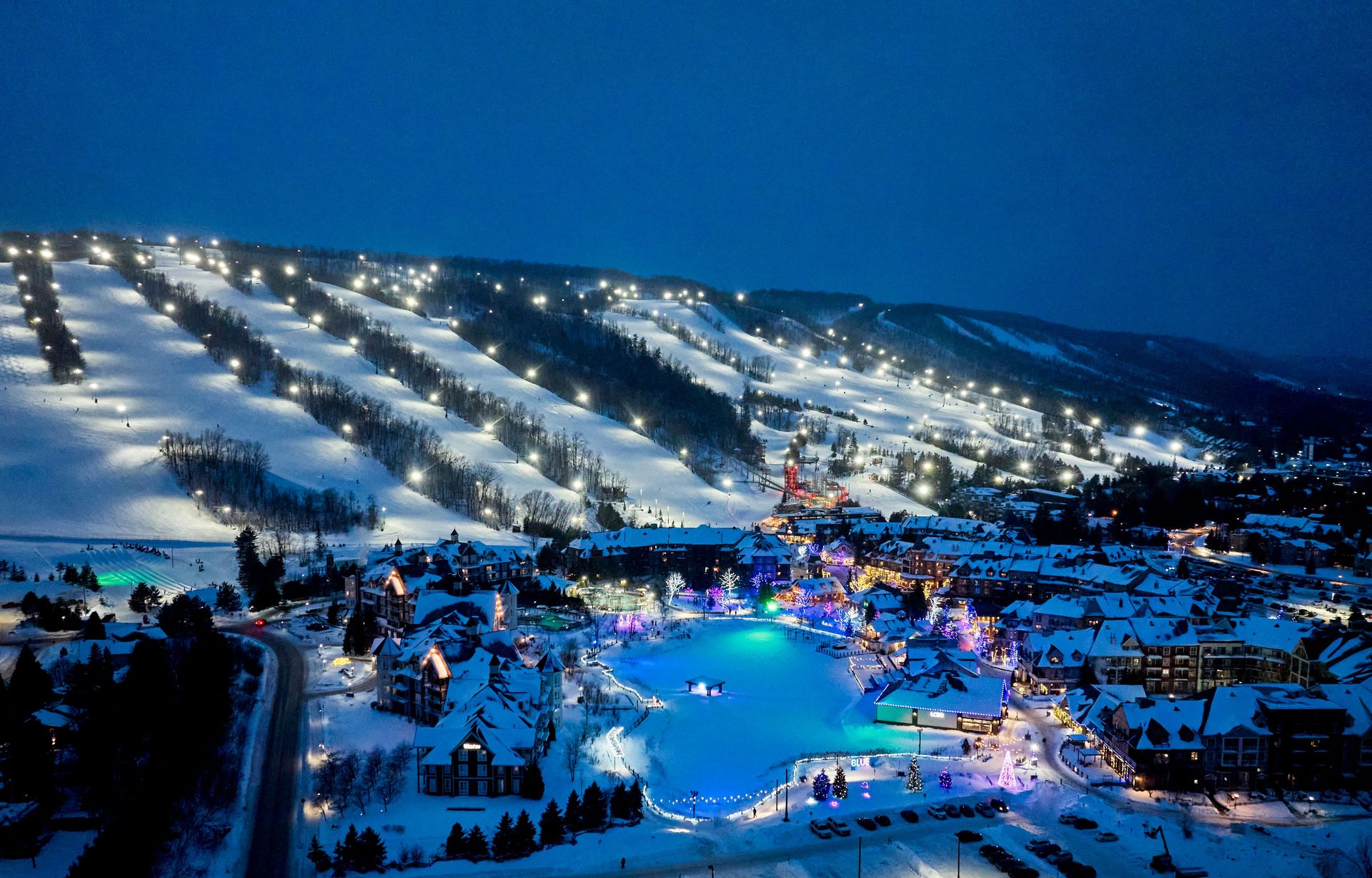
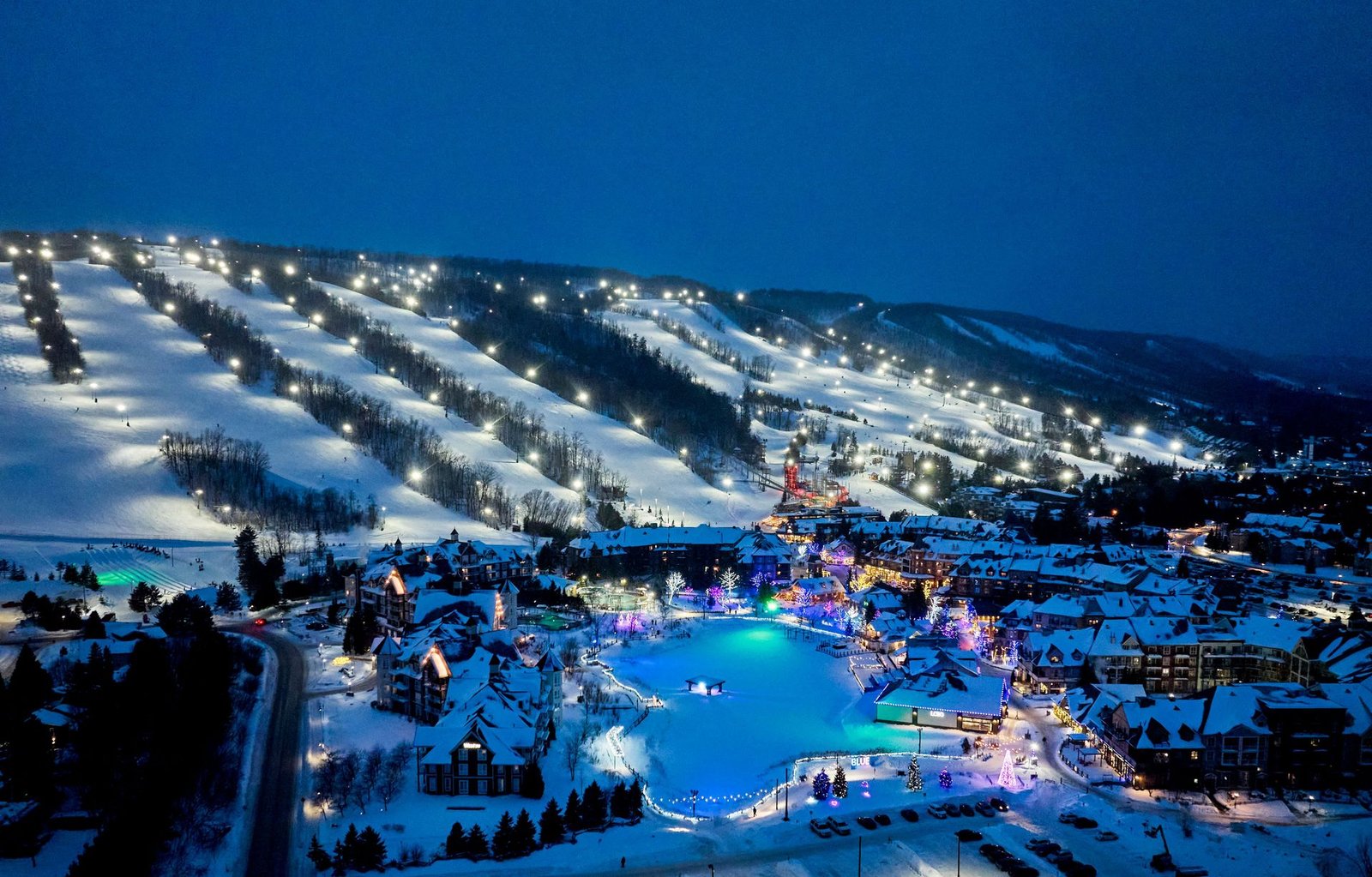
The best time depends entirely on what you want to do. For skiing and snowboarding, January and February deliver the most reliable snow conditions. The resort supplements natural snow with extensive snowmaking, so the base is typically solid from mid-December through early March. The week between New Year’s and the first full week of January is the busiest and most expensive stretch. If you can go the second or third week of January, you get good snow with half the crowd.
For summer visits, July and August bring warm weather and the full schedule of mountain biking, the ridge-top ropes course, and the open-air events calendar. The Village hums with patios and live music. June and September are quieter shoulder months. You will find lower lodging rates and thinner crowds, but some weekday activities may run on reduced hours. Fall colors in the Collingwood area peak around the first two weeks of October, making that window a strong pick for hikers and photographers.
Winter (Dec–Mar)
- Best snow January and February
- Avoid Christmas, New Year, and Family Day weekends for crowds
- Night skiing available most evenings
Summer (Jun–Aug)
- Mountain biking, hiking, ridge running, and golf open
- Village patios and events in full swing
- Weekends still busy; book lodging early
Shoulder (Apr–May, Sep–Oct)
- Lower room rates, thinner crowds
- Fall colours peak early October
- Some activities on reduced weekday schedules
Winter versus summer at Blue Mountain: Which should you pick?
Blue Mountain markets itself as a year-round destination, and for once that claim holds up. The winter product is skiing and snowboarding on 43 runs across 365 skiable acres. The vertical drop is 720 feet. That is modest compared to the big western resorts or even Vermont, but it is the most terrain you will find in Ontario. The snow is largely machine-made, and the runs are short, so you will ride the lift frequently and get a lot of laps in a day. Night skiing extends the day well past sunset, which is a genuine advantage if you can only get away for a Saturday.
The summer product is completely different and honestly more distinctive. The downhill mountain bike park opens with lift-serviced trails from green to double black. The ridge-top Ridge Runner, a mountain coaster on rails, winds down the escarpment with views over Georgian Bay. The hiking trails connect to the Bruce Trail, and the Monterra Golf Course sits right on the resort property. The Village stays active with patios and live music. If you are choosing between seasons and you have already skied elsewhere in North America, the summer visit at Blue Mountain might surprise you more than the winter one.
Maya’s honest take: “Blue Mountain in summer is a different animal. The mountain biking is legitimately fun, the Ridge Runner is a short thrill, but the view is the real payoff, and the Village on a warm evening feels like a proper vacation town rather than a ski hill that happens to be open.”
How does Blue Mountain compare to other Ontario ski destinations?
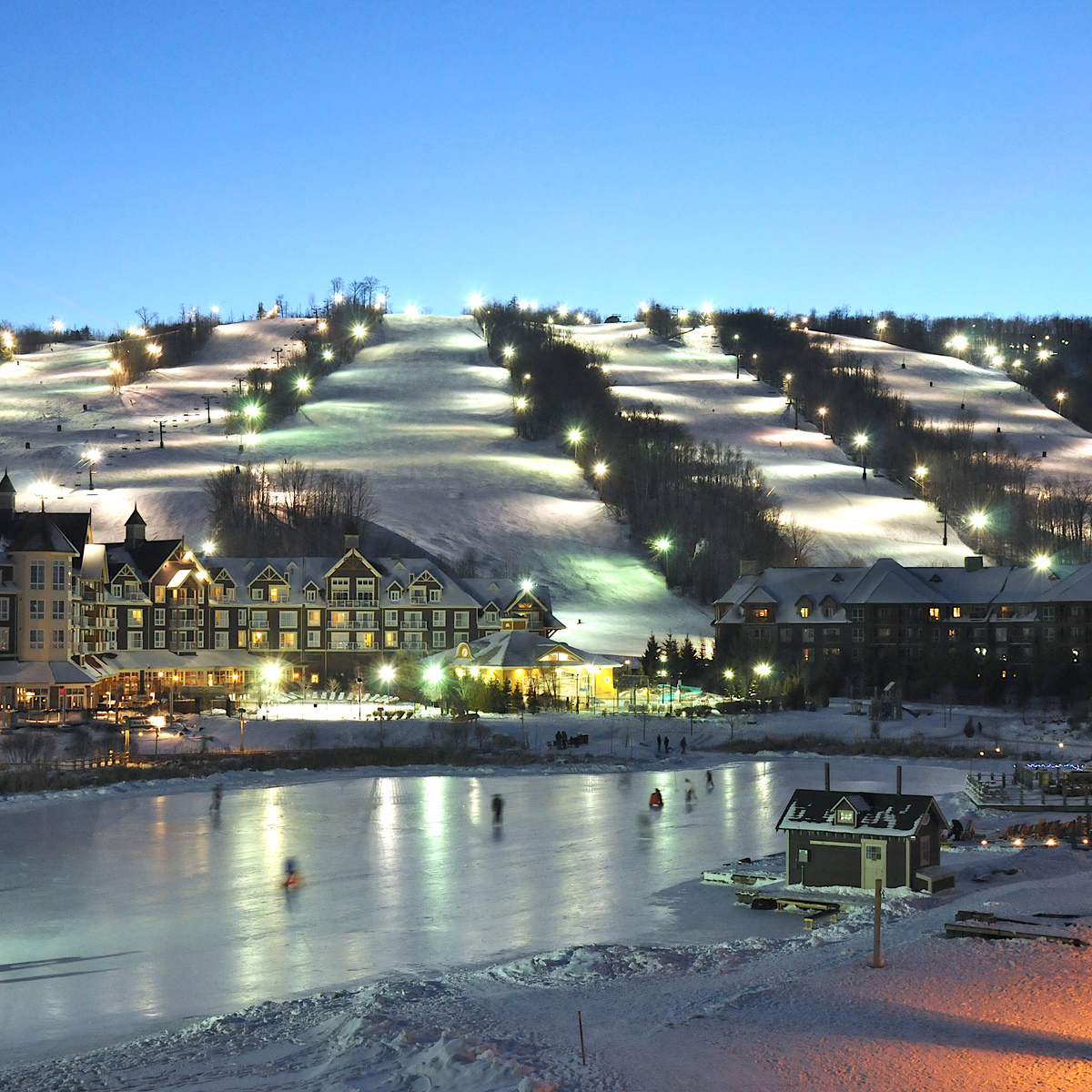
Ontario has several other ski areas within a similar drive of Toronto, and the choice between them comes down to what kind of day or weekend you want. Blue Mountain wins on village atmosphere, overall terrain variety, and the sheer number of non-skiing activities. It loses on price and crowd density compared to smaller, less developed hills.
Blue Mountain
Best for the full resort experience. 720-foot vertical, 43 runs, full pedestrian village with restaurants, shops, and a skating loop. The most terrain and the highest prices in Ontario. Summer activities are unmatched by any other Ontario hill. Lift lines get long on winter weekends.
Mount St. Louis Moonstone
Best for pure skiing, fewer frills. 550-foot vertical, closer to Toronto off Highway 400 near Barrie. Excellent snowmaking and grooming. No village, no lodging on-site, so it is strictly a day trip hill. Lift tickets are cheaper, and the terrain park is highly regarded.
Horseshoe Resort
Best for families with young kids. A 308-foot vertical, closer to Toronto near Barrie. Smaller, gentler terrain that suits beginners and young children well. Has on-site lodging and a small village feel, though much quieter than Blue Mountain. Lower prices across the board.
Blue Mountain, Pennsylvania
For comparison only, not local. 1,082-foot vertical in Palmerton, PA. Larger vertical drop than the Ontario Blue Mountain, but no pedestrian village and far fewer summer activities. The two resorts share a name and zero else. If you were searching for “Blue Mountain” and meant Pennsylvania, now you know the difference.
Is Blue Mountain good for beginners and families?
Yes, with a caveat about crowds. The resort has a dedicated learning area with a magic carpet and gentle green runs near the base. The ski school runs group and private lessons for all ages, and the instructors I have watched work with kids are patient and well-trained. The Village provides plenty of non-skiing activities for family members who do not want to ski all day, which is a real advantage over a day-trip hill where the only option is sitting in the lodge.
The caveat is that on busy weekends, the beginner area gets congested. Faster skiers cutting through to reach other lifts, crowded magic carpets, and a general sense of organized chaos can be intimidating for a true first-timer. If you can book a midweek lesson or a non-holiday weekday, the learning experience improves dramatically. Sunday afternoons, after the weekend crowd begins thinning out around 2 p.m., are also a better window than Saturday mornings.
Honest pros and cons of Blue Mountain
No resort is perfect, and Blue Mountain’s marketing copy is not going to volunteer the downsides. Here is the unvarnished list based on multiple trips across different seasons.
Pros
- The village is genuinely pleasant, walkable, and full of decent dining options
- Year-round operations mean the resort stays lively even outside ski season
- Night skiing extends the ski day and makes a one-night trip feel worthwhile
- Summer activities, particularly the downhill biking and Ridge Runner, are unique in Ontario
- Two hours from Toronto makes it a realistic weekend escape
Cons
- Weekend lift lines at the main gondola can exceed 30 minutes mid-morning
- Village lodging is expensive; off-site lodging means driving and parking
- The vertical drop is modest compared to eastern resorts in Vermont or Quebec
- Dynamic pricing means walk-up tickets on peak days feel steep for the terrain size
- The manufactured snow base can get icy on busy afternoons
Mistakes to avoid on a Blue Mountain trip
Most of these I learned the hard way or watched other first-timers stumble into. They are easy to fix before you leave.
- Arriving after 9 a.m. on a Saturday in winter. The close parking lots fill by mid-morning, and the lift lines build fast. Aim to be pulling into the lot by 8:30 a.m. or earlier.
- Buying lift tickets at the window. Online advance purchase saves $15 to $25 CAD per ticket. There is no upside to waiting.
- Booking Village lodging without checking off-site options. A ten-minute drive saves $100 to $200 CAD per night. That trade-off is worth considering unless walking to the lifts is a non-negotiable priority.
- Skipping a reservation for dinner on a Saturday night. The popular village restaurants fill completely. Book a table by early afternoon or expect a long wait.
- Forgetting that winter tires and a full gas tank matter. The stretch of Highway 26 near Collingwood gets snow squalls off Georgian Bay that can reduce visibility to near zero in minutes. Check the forecast and have proper winter tires.
- Assuming the summer version of the resort is just a ski hill without snow. It is a genuinely different and full product. If you only think of Blue Mountain as a winter destination, you are missing half of what it offers.
Frequently asked questions
Is Blue Mountain in Ontario the same as the one in Pennsylvania?
No. Blue Mountain Resort in Collingwood, Ontario, and Blue Mountain Resort in Palmerton, Pennsylvania, are two completely separate ski areas with different ownership, terrain, and village infrastructure. The Ontario resort is part of the Alterra Mountain Company family and has a pedestrian village. The Pennsylvania resort is independently operated with a larger vertical drop but no village. They share a name only.
How far is Blue Mountain from Toronto?
The drive from downtown Toronto to Blue Mountain Resort is roughly 150 kilometers and takes about two hours in clear traffic via Highway 400 north and County Road 124. On Friday afternoons and Saturday mornings during peak season, the same drive can stretch to three hours or more due to cottage-country congestion through Barrie.
Is Blue Mountain good for beginner skiers?
Yes. The resort has a dedicated beginner area with magic carpets and gentle green runs, plus a well-regarded ski school offering group and private lessons. The main drawback for beginners is crowding in the learning zone on busy weekends. A midweek or Sunday afternoon lesson offers a much calmer experience.
Can you visit Blue Mountain without skiing?
Absolutely. The pedestrian village has restaurants, shops, a skating loop, and a spa. In summer, you can hike sections of the Bruce Trail, ride the Ridge Runner mountain coaster, play golf at Monterra, or simply sit on a patio. In winter, non-skiers can snowshoe, use the tubing park, or enjoy the Village atmosphere while the skiers in the group hit the slopes.
What is the best month to visit Blue Mountain?
For skiing, mid-January through late February offers the most reliable snow and avoids the Christmas and New Year price surge. For summer activities, July and August provide warm weather and the full activity schedule, though late June and early September offer lower lodging rates with most attractions still running. Fall colors peak around the first two weeks of October and make for excellent hiking.
Do you need a car to get to Blue Mountain?
Yes, strongly recommended. There are private shuttle services from Toronto and occasional bus operators, but public transit options are limited and infrequent. Once you are at the resort, the village is walkable, but getting to off-site lodging, grocery stores, or alternative trailheads requires a vehicle.
How does the Ikon Pass work at Blue Mountain?
Blue Mountain is an Ikon Pass partner resort. The full Ikon Pass includes seven days of skiing at Blue Mountain, while the Ikon Base Pass includes five days with some blackout dates. If you plan to ski at multiple Ikon destinations in a season, the pass offers good value. If Blue Mountain is your only ski trip, the resort’s own 5×7 pass or advance online day tickets are usually cheaper options.
Plan your trip: booking platforms we trust
For Blue Mountain specifically, the resort’s own website is the most direct path to lift tickets, season passes, and village lodging. The platforms below give you more options for off-site accommodation and package deals that can reduce the overall trip cost.
Best for comparing Collingwood motels and inns with flexible cancellation policies and real guest photos.
Best for bundling a Toronto flight with a Collingwood hotel and a rental car in one transaction.
Best for booking entire condos and chalets near the Village for family groups and extended stays.
Best for reading recent reviews of Village restaurants, ski school experiences, and seasonal conditions.