Canberra Travel Guide: 35 Best Things to Do, Eat, and Explore
Canberra is Australia’s capital, located in the Australian Capital Territory (ACT) around Lake Burley Griffin. For a first visit, I would plan two nights and three days, combining Australian Parliament House, the Australian War Memorial, the National Gallery of Australia, and a Lake Burley Griffin walk; add Tidbinbilla or Namadgi for a nature day. Major national institutions are often free, but special exhibitions, parking, and timed-entry attractions can still cost money.
Some links on this page are affiliate links. We may earn a commission at no extra cost to you.
Canberra is not a city that reveals itself from one central square. Its best experiences are spread between the parliamentary triangle, lakefront paths, museums, hills, nature reserves, and food neighborhoods.
This guide is designed to help a visitor choose rather than simply list attractions. It is based on official attraction pages and current visitor information, not invented opening hours, prices, or personal visits. Check each attraction’s own page immediately before booking, because exhibitions, redevelopment work, and seasonal events change.
Jump to: Key takeaways · Top things to do · Free activities · With kids · Food and drink · Day trips · When to visit · Where to stay · Getting around · Itineraries · History · FAQs · Sources
Key takeaways
Canberra rewards a planned visit. The official VisitCanberra tourism site organizes the city around neighborhoods, attractions, food, and seasonal events, which is a sensible starting point for a first itinerary.
- Parliament House entry is free, and it is open daily except Christmas Day.
- The Australian War Memorial has free entry, with galleries open daily except Christmas Day and the Last Post Ceremony at 4:30 pm.
- The National Gallery of Australia is open daily from 10 am to 5 pm, with free admission to its collection and sculpture garden.
- The National Museum of Australia has free general admission and is open daily from 9 am to 5 pm, except Christmas Day.
- Questacon recommends pre-booking and allows at least two hours for exhibitions or four hours for a fuller visit.
- Transport Canberra operates buses and light rail; VisitCanberra currently says public transport is free on Fridays.
- Tidbinbilla Nature Reserve and Namadgi National Park are the strongest nearby nature choices, with Namadgi offering more than 160 km of trails.
What are the best things to do in Canberra?
The best first-time choices are Parliament House, the Australian War Memorial, the National Gallery of Australia, the National Museum of Australia, Questacon, Lake Burley Griffin, Mount Ainslie, the Australian National Botanic Gardens, and the National Arboretum. They cover politics, history, art, science, landscape, and outdoor space without requiring a rushed schedule.
1. Visit Australian Parliament House.
Parliament House is the working home of Australia’s federal Parliament and a useful first stop for understanding the capital. Entry is free; special exhibitions and events may require tickets.
Time to allow: at least two hours. Best for: first-time visitors and anyone interested in politics or architecture. Practical check: opening hours differ between sitting and non-sitting days, so confirm before setting out.
The free Heart of the House tour is listed at 25 minutes and requires a booking.
Check Parliament House’s visitor information.
2. Spend time at the Australian War Memorial
The Australian War Memorial combines galleries, commemorative spaces, and the Last Post Ceremony. Entry is free, and tickets are not required.
Time to allow: two to three hours. Best for: history-minded travelers and families with older children. Practical check: the memorial notes that redevelopment may mean some galleries are temporarily closed.
The 4:30 pm Last Post Ceremony is a meaningful reason to time your visit, but check the current program before planning around it.
Plan a visit to the Australian War Memorial.
3. See the National Gallery of Australia.
The National Gallery of Australia is a major art stop with free access to its collection and National Sculpture Garden. It is open daily from 10 am to 5 pm, except Christmas Day.
Time to allow: two to three hours. Best for: art lovers and anyone seeking an indoor option. Practical check: some temporary exhibitions require paid tickets.
The gallery recommends 2 pm or later for a quieter visit.
Check the National Gallery’s visitor information.
4. Explore the National Museum of Australia.
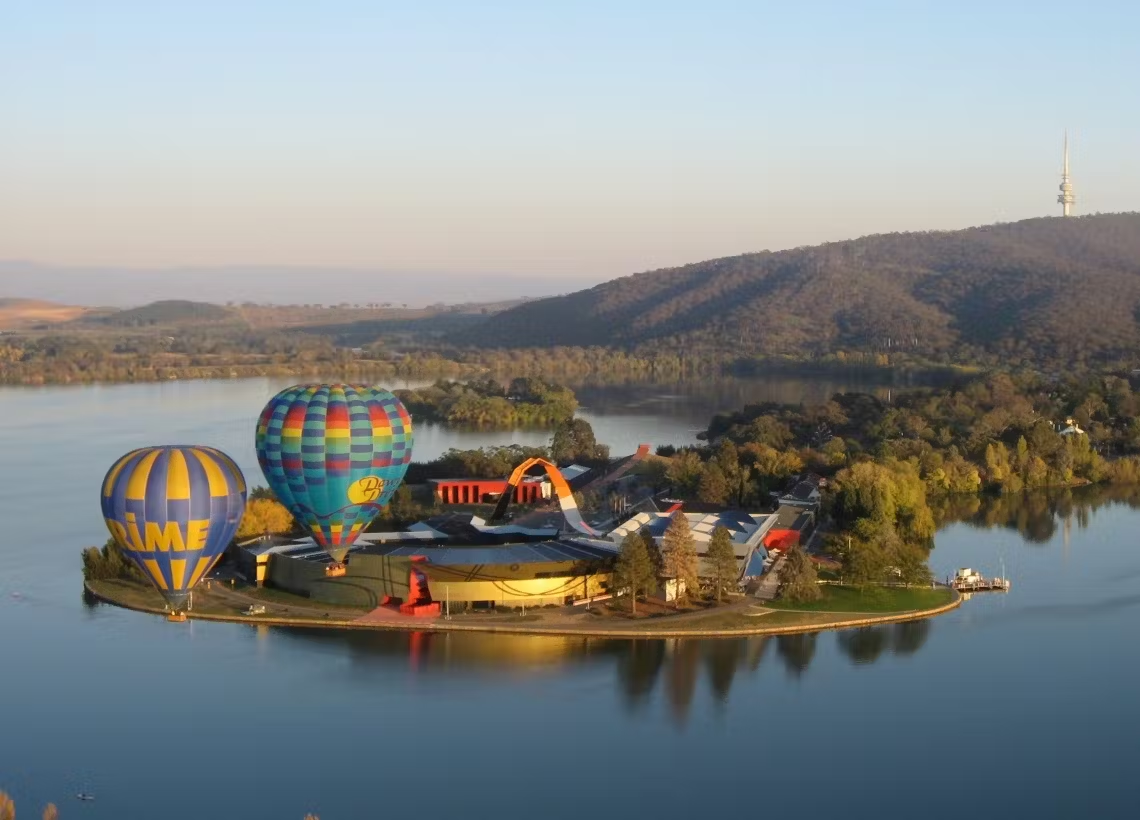
The National Museum of Australia is on the Acton Peninsula beside Lake Burley Griffin and has free general admission. It is open daily from 9 am to 5 pm, except Christmas Day.
Time to allow: two to three hours. Best for: a broad introduction to Australian history and culture. Practical check: special exhibitions and events may cost extra.
Review the National Museum’s visitor information.
5. Walk around Lake Burley Griffin.
Lake Burley Griffin is the central landscape feature that connects many of Canberra’s national institutions. VisitCanberra lists the lake among its free outdoor activities and provides a cycle map for full or partial loops.
Time to allow: one to three hours. Best for: walkers, cyclists, and photographers. Practical check: choose a segment rather than assuming the full circuit is suitable for every fitness level.
Use VisitCanberra’s Lake Burley Griffin cycling guide.
6. Look across the city from Mount Ainslie.
Mount Ainslie is one of Canberra’s most useful orientation stops, with views over the National Triangle. VisitCanberra’s visitor guide describes a 4.5 km return walking route from Remembrance Nature Park to the summit.
Time to allow: two to four hours if walking. Best for: sunrise, sunset, and active travelers. Practical check: bring water, check trail conditions, and do not assume the summit road is open to all vehicles.
Read VisitCanberra’s visitor guide.
7. Try the science exhibits at Questacon.
Questacon is a science center with interactive exhibitions and demonstrations. It is open daily from 9 am to 5 pm, except Christmas Day.
Time to allow: at least two hours, or four hours for a fuller visit. Best for: children, families, and curious adults. Practical check: the center uses timed entry and recommends pre-booking, especially at weekends and during school holidays.
Book and plan a Questacon visit.
8. Visit the Australian National Botanic Gardens.
The Australian National Botanic Gardens focuses on Australian native plants and combines recreation, conservation, science, and learning. It is a strong choice for a slower morning or an outdoor break between museums. [824]
Time to allow: one to two hours. Best for: garden lovers, walkers, and families. Practical check: events and seasonal programs change, so check the current calendar.
Check the Australian National Botanic Gardens’ visiting information.
9. Explore the National Arboretum Canberra.
The National Arboretum is about 6 km from the CBD and combines forests, gardens, architecture, and views. Its official visit page describes more than 94 forests and conservation-focused plantings.
Time to allow: one to three hours. Best for: views, picnics, and a quieter outdoor stop. Practical check: confirm the current opening arrangements and any activity charges before traveling.
Review the National Arboretum’s visitor information.
10. Time for a spring visit around Florida
Floriade is Canberra’s major spring flower festival at Commonwealth Park. VisitCanberra lists the next edition from 10 to 10 October next year, marking the festival’s 40th anniversary.
Time to allow: two to four hours. Best for: garden lovers and spring visitors. Practical check: dates, entry arrangements, and NightFest programming can change, so use the official event page for the year you travel.
Check the official Floriade event listing.
Best for history
Choose the Australian War Memorial, Parliament House, and the National Museum of Australia. Allow a full day rather than treating them as quick photo stops.
Best for art
Start with the National Gallery of Australia, then add the National Museum and outdoor public art around the lake. The Gallery’s collection and sculpture garden are free.
Best for outdoors
Combine Lake Burley Griffin, Mount Ainslie, the Botanic Gardens, and the Arboretum. For wildlife and longer walks, investigate Tidbinbilla and Namadgi.
What can you do in Canberra for free?
Canberra has a strong free-attraction offer, especially around the parliamentary triangle and lake. VisitCanberra identifies the National Library, National Museum, Museum of Australian Democracy, Botanic Gardens, Lake Burley Griffin, Black Mountain, and the Arboretum’s POD Playground among free options.
Free cultural stops
- Parliament House, with free entry and free guided tour options.
- National Gallery of Australia, including the National Sculpture Garden.
- National Museum of Australia, with free general admission.
- Australian War Memorial, with free entry and no ticket requirement.
- Australian National Botanic Gardens, a free outdoor cultural and natural attraction.
Free outdoor options
- Lake Burley Griffin walking and cycling routes.
- Mount Ainslie lookout and the Kokoda Track walking route.
- Black Mountain and Gibraltar Peak, listed by VisitCanberra among free outdoor activities.
- Yarralumla Bay, Lennox Gardens, and the Australians of the Year Walk.
- POD Playground at the National Arboretum.
Free does not mean free of cost in every sense. Parking, transport, food, special exhibitions, and paid activities can still affect the day’s total. The National Museum, for example, lists weekday parking charges.
What are the best things to do in Canberra with kids?
For children, I would prioritize Questacon, the National Arboretum’s playground, the Botanic Gardens, and a lake outing. Parliament’s family-oriented tour is also worth considering, but it is more structured than a playground visit.
Questacon
Questacon is the clearest family-first choice because it is designed around interactive science experiences. The official site recommends pre-booking and suggests at least two hours for exhibitions.
My tip is to arrive early on a school holiday and build in a café or outdoor break. Do not plan a demanding museum schedule immediately afterward.
POD Playground
POD Playground at the National Arboretum is a free outdoor option listed by VisitCanberra. It works well alongside a walk, picnic or lookout visit.
Check the Arboretum’s current opening information and weather before making it the main event of the day.
Australian National Botanic Gardens
The Botanic Gardens provide space to walk, learn about native plants and attend seasonal family programming. The official site lists Storytime and school-holiday activities among its events.
I would choose this over another indoor museum if the weather is suitable. Bring sun protection and water rather than assuming shaded paths cover every part of the visit.
Parliament House family tour
Parliament House offers a family-focused “How Parliament Works” tour aimed at children aged six and above. The official page lists weekend and ACT school-holiday sessions at 11 am, with booking required.
This is a good choice for older children, not a substitute for free play. Check the current session dates and ticketing conditions before committing.
Where should you eat, drink coffee and find breweries?
Braddon is the most convenient food-and-drink neighborhood for a first stay, while Kingston Foreshore suits a lakefront evening. VisitCanberra describes Braddon as accessible by light rail and highlights its food and shopping precinct role.
Braddon
Braddon is my practical recommendation for a first visit because it combines food, nightlife and easy access to the city and light rail. It is particularly useful if you want to walk between dinner and your accommodation.
Check individual venues for current hours and reservations. A lively area is not automatically the right choice for a quiet early night.
Kingston Foreshore
Kingston Foreshore is worth investigating for a lakeside meal or drinks. It is a different experience from Braddon: more waterfront-oriented rather than centered on the city’s main nightlife strip.
Use our hotel-planning guides to match your accommodation to the neighborhood you will spend the most evenings in.
Old Bus Depot Markets
The Old Bus Depot Markets are a useful weekend option for food, crafts and local producers. Confirm the market’s current operating days and times directly before planning a Sunday around it.
I would not build a whole day around a market unless you enjoy browsing. Pair it with a nearby walk or another neighborhood stop.
Coffee and breweries
Canberra has a strong coffee culture, but the best café is usually the one close to your morning activity rather than the one with the most social-media attention. For breweries, check opening days, food availability and whether bookings are required.
VisitCanberra’s food and drink guide is a useful directory for current venues and tours.
What are the best day trips from Canberra?
For a first visit, Tidbinbilla and Namadgi are the most practical day trips because they are close to the city. Longer coastal or alpine trips need a full day and careful transport planning.
Tidbinbilla Nature Reserve
Tidbinbilla is a strong choice for wildlife, walking and a break from the city. VisitCanberra highlights koalas, platypus and endangered Australian animals as reasons to visit.
Time to allow: most of a day. Best for: families, wildlife watchers and walkers. Practical check: confirm current entry arrangements, trail conditions and any activity bookings before leaving Canberra.
Namadgi National Park
Namadgi National Park sits on the northern edge of the Australian Alps and borders Kosciuszko National Park and the Brindabellas. VisitCanberra describes more than 160 km of trails, from easy day walks to multi-day hikes.
Time to allow: most of a day. Best for: hikers and nature-focused travelers. Practical check: choose a trail suited to conditions, water availability and your fitness level.
Jervis Bay
Jervis Bay is a coastal option for travelers willing to commit a long day to the journey. It is not a casual add-on to a city itinerary; check the drive, parking and return timing before booking accommodation around it.
Use our travel-planning resources to decide whether a coastal day trip is worth the transport time.
Snowy Mountains
The Snowy Mountains suit a winter or alpine-focused itinerary, but they are a full-day commitment from Canberra. Check road conditions, seasonal access and activity bookings before relying on the trip.
This is not the best first-visit day trip if your priority is Canberra’s museums and lakefront. Save it for a longer stay or a dedicated alpine break.
Canberra wine region
The Canberra wine region is a good half-day or full-day option for food and wine travelers. VisitCanberra’s food and drink guide can help identify current tours and producers.
Arrange transport in advance if you plan to taste wine. A tasting itinerary is not a reason to drive without a clear plan for getting back safely.
When is the best time to visit Canberra?
My first months to compare are autumn and spring, especially if you want comfortable walking weather and seasonal events. Canberra has four distinct seasons, so the right time depends on whether you prioritize museums, outdoor walking or festivals.
- Summer: best for long daylight and lake activities, but plan heat, sun protection and hydration.
- Autumn: a strong all-round window for walking, sightseeing and cooler conditions.
- Winter: best for a city-and-culture trip, with colder mornings and potentially frosty conditions.
- Spring: my first choice for Floriade, gardens and outdoor sightseeing, subject to the festival’s current dates.
VisitCanberra’s spring guide describes Floriade as running from 12 September to 11 October in the current season, with NightFest from 1 to 4 October. Those dates are event-specific, so do not treat them as a permanent annual calendar.
For a first visit, I would avoid planning around a single event unless it is the reason you are traveling. A festival can add atmosphere, but it can also increase demand for accommodation and transport.
Where should you stay in Canberra?
Choose the city center or Braddon for a first visit, then compare Kingston Foreshore for a lakefront stay or a quieter residential area if you have a car. VisitCanberra organizes accommodation and attractions around neighborhoods on both sides of Lake Burley Griffin.
City center and Braddon
This is the most convenient base for a first trip because it places you close to transport, restaurants and the city’s main services. The light rail connects the city with Braddon and Dickson.
My tip is to check the exact walking distance to your first morning activity. A central address does not automatically mean every national attraction is walkable.
Kingston Foreshore
Kingston Foreshore is worth comparing if you want a lakefront atmosphere and a more relaxed evening setting. It is a good choice for a couple or a traveler who values restaurants and water views over being beside every museum.
Check transport before booking if you plan to rely on buses rather than a car.
Acton and Parkes
Acton and Parkes are useful for proximity to national institutions, including the National Museum, National Gallery and Questacon. They suit travelers who want to minimize transfers between major attractions.
The trade-off is that these areas can feel quieter at night than Braddon or the city center.
Outer suburbs
Outer suburbs can offer better value, but only choose one after checking the journey to your main activities. A cheaper room that adds an hour of daily travel is rarely the bargain it appears to be.
Compare Canberra accommodation and read recent visitor reviews for practical comments on noise, parking and walking access.
How do you get around Canberra?
Use a mix of walking, buses, light rail and rideshare rather than assuming a car is essential. Transport Canberra operates the public bus and light-rail network, and VisitCanberra currently describes public transport as free on Fridays.
Light rail
The light rail runs between Gungahlin Place and Alinga Street in the city. VisitCanberra describes services from every five minutes at peak times to every 15 minutes off peak, with later Friday and Saturday services.
It is particularly useful for Braddon and Dickson, but it does not replace a car for every nature reserve or distant attraction.
Buses and the Red Explorer Loop
Transport Canberra buses cover much of the city, while the Red Explorer Loop Bus is a hop-on, hop-off option departing from Canberra Museum and Gallery.
Check the route direction and timetable before relying on it for a tight schedule. A loop service is convenient, but not a substitute for planning the return journey.
Walking and cycling
Canberra is pleasant for walking and cycling around the lake and between some central attractions. The Australian War Memorial notes that it is about 2 km from the city center, with paved walking and cycling paths leading to its entrance.
Use the official Lake Burley Griffin cycling map to choose a segment rather than committing to the full circuit.
Car hire and rideshare
Consider a car only for a day trip, a dispersed itinerary or a stay outside the main visitor areas. Compare parking, insurance excess and fuel terms before booking.
For airport transfers and late-night travel, compare a taxi or rideshare with the bus timetable. Use our flight-planning guide to coordinate arrival times with your first activity.
How many days do you need in Canberra?
Two nights and three days is my preferred first-visit length. It allows one major cultural day, one outdoor or family day and one flexible day for a day trip or a slower neighborhood exploration.
One day: keep it focused
- Morning: Parliament House or the Australian War Memorial.
- Midday: National Gallery of Australia or National Museum of Australia.
- Late afternoon: Lake Burley Griffin walk, then dinner in Braddon.
Do not try to add Questacon, the Arboretum and a day trip to the same day.
Two days: a balanced weekend
- Day one: Parliament House, Australian War Memorial and Mount Ainslie at sunset.
- Day two: National Gallery, National Museum or Questacon, then a lake walk and Kingston Foreshore dinner.
This works well if you prefer a city break rather than a nature-focused holiday.
Three days: my preferred first visit
- Day one: Parliament House, Australian War Memorial and the National Triangle.
- Day two: National Gallery, National Museum and Lake Burley Griffin.
- Day three: Questacon or the Botanic Gardens, then Tidbinbilla or Namadgi if conditions allow.
Keep the final afternoon flexible. Canberra’s outdoor attractions are more enjoyable when you are not racing between bookings.
What is Canberra’s history in brief?
Canberra was purpose-built as Australia’s capital, with Lake Burley Griffin central to the city plan associated with Walter Burley Griffin. The Australian War Memorial, Parliament House and national cultural institutions reflect that role.
The city is also part of Ngunnawal and Ngambri Country. The National Gallery of Australia acknowledges this connection on its official site, and visitors should treat First Nations histories and cultural sites with care.
For a deeper history-focused visit, combine the Australian War Memorial, National Museum and Parliament House. That is more useful than trying to cover every historical site in one day.
How much does a Canberra trip cost?
Canberra can be affordable because several major institutions have free entry, but transport, parking, special exhibitions and food determine the real total. The National Gallery, National Museum, War Memorial and Parliament House all offer free general access.
I have not verified a comparable set of current hotel, meal and car-hire prices, so I will not invent daily budget figures. Use these spending styles instead:
- Lower-cost plan: free institutions, public transport, self-catering or casual meals and one paid activity.
- Mid-range plan: a comfortable hotel, selected taxis, paid exhibitions and one organized excursion.
- Higher-spend plan: upgraded accommodation, private transfers, premium dining and multiple guided experiences.
Check the exact parking rules before driving. The National Museum lists paid weekday parking, while the National Gallery notes that parking payment is card-only and free from 5 pm for after-hours events or eligible disability-parking permit holders.
Compare flight-and-hotel packages against separate bookings. For a group, a self-catering rental can be worth considering, but include cleaning charges and transport before assuming it saves money.
What practical details should visitors know?
Canberra is in the Australian Capital Territory, uses Australian dollars and follows Australian time zones. Check your passport, visa and travel-insurance arrangements before booking nonrefundable transport.
Money and tipping
Australia uses the Australian dollar. Card payment is widely accepted, but keep a small amount of cash for markets, small venues or situations where card facilities are unavailable.
Tipping is not generally expected in the way it is in some countries. Decide whether to leave something for good service rather than assuming a fixed percentage is required.
Accessibility and safety
Check accessibility directly with each attraction. The Australian War Memorial, for example, describes accessible parking, wheelchair access and mobility aids, while the National Gallery provides information on disability-related admission arrangements.
For outdoor walks, carry water, sun protection and appropriate footwear. Do not rely on a general city forecast for conditions on a hill, reserve or alpine day trip.
Travel insurance and documents
International visitors should confirm visa and entry requirements through official government sources before travel. Domestic visitors should check their transport, accommodation and activity cancellation terms.
Choose travel insurance appropriate to your activities, particularly if your itinerary includes hiking, cycling, watersports or a longer day trip.
Which Canberra planning mistakes should you avoid?
The most common mistake is treating Canberra as a compact city where every attraction is a short walk away. It is better to group attractions by area and leave time for transfers.
- Trying to see every national institution in one day. Fix: choose two major stops and one outdoor break.
- Booking a distant hotel without checking transport. Fix: map the journey to your first morning activity.
- Assuming all museums are free. Fix: check special exhibitions, tours and parking separately.
- Planning a day trip around an unverified timetable. Fix: confirm the operator’s current schedule before booking.
- Underestimating Questacon’s popularity. Fix: pre-book, especially during weekends and school holidays.
- Adding a wine tasting without transport. Fix: arrange a tour, driver or accommodation plan before drinking.
Frequently asked questions
These answers distinguish general advice from attraction-specific rules. For current hours, tickets and accessibility, use the official attraction pages linked throughout this guide.
How many days do you need in Canberra?
Two nights and three days is enough for a balanced first visit. A weekend works if you prioritize two or three major attractions, while a longer stay allows a nature day trip and a slower pace.
Is Canberra worth visiting?
Yes, particularly for travelers interested in Australian history, politics, art, museums, gardens and outdoor space. It is less suitable if you expect a dense, walkable nightlife city without planning transport between neighborhoods.
What are the best free things to do in Canberra?
Start with Parliament House, the Australian War Memorial, the National Gallery of Australia, the National Museum of Australia and the Australian National Botanic Gardens. Lake Burley Griffin and Mount Ainslie are also strong free outdoor options.
Is Canberra good for families?
Yes. Questacon, the POD Playground, the Botanic Gardens and family-oriented Parliament tours are useful starting points. Check age suitability, timed-entry requirements and current programming before booking.
Do I need a car in Canberra?
Not for a city-and-museum itinerary. Buses, light rail, walking and cycling can cover many central activities, while a car becomes more useful for Tidbinbilla, Namadgi or a longer day trip.
When is Floriade?
VisitCanberra lists the next Floriade from 10 to 10 October next year at Commonwealth Park. Check the official event page before planning a trip around it, because dates and programming can change.
What is the best area to stay in Canberra?
For a first visit, compare the city center or Braddon for convenience, Kingston Foreshore for a lakefront stay, and Acton or Parkes for proximity to national institutions. Match the base to your main activities rather than choosing by price alone.
Is public transport free in Canberra?
VisitCanberra currently says public transport is free on Fridays. For other days, check Transport Canberra’s current fares, ticketing rules and timetable before relying on buses or light rail.
Sources we checked
Official attraction pages, the Australian Parliament, national cultural institutions and VisitCanberra informed this guide. I have avoided unverified opening hours, prices and event dates where the information could change.
- Australian Parliament House: visitor information
- Parliament House: opening hours and admission
- Australian War Memorial: visit information
- National Gallery of Australia: visitor information
- National Museum of Australia: visit information
- Questacon: tickets and visiting information
- Australian National Botanic Gardens: visiting information
- National Arboretum Canberra: visitor information
- VisitCanberra: official tourism information
- VisitCanberra: free things to do
- VisitCanberra: buses, light rail and getting around
- VisitCanberra: Tidbinbilla and Namadgi
- VisitCanberra: Floriade event listing
Plan your trip: compare the complete booking
I would choose the neighborhood first, then compare accommodation and transport for the same dates. Use our hotel guides and travel-planning resources to structure the decision.
WakaAbuja aims to keep information accurate, but opening hours, exhibitions, transport and availability change. Verify arrangements with official sources before traveling. Consider travel insurance appropriate to your itinerary and read the policy exclusions carefully.