
advertisement
Planning a Trip to Chicago: A Complete Guide (Itinerary, Costs & Best Time to Go)
Fact-Checked By Maya Whitfield, Senior Travel Editor at WakaAbuja
You need at least 3 full days in Chicago for a first trip, and 4 days is better if you want to add a neighborhood or museum without rushing. Budget 180 to 280 USD per person per day for a comfortable mid-range trip, including hotel, food, transit, and attractions.
Fly into O’Hare if you are staying downtown or on the North Side and Midway if you are staying on the South Side or want a smaller, faster airport. The best months are May, June, September, and October.
If you are planning a trip to Chicago, here is what actually matters: how many days to book, what it will cost, and when to go. This guide covers all three, plus a real day-by-day itinerary, so you can make decisions today instead of clicking through a dozen pages to piece it together.
I have visited Chicago in every season, including a February trip that taught me exactly why the city empties out in winter. The planning advice below is what I wish I had before my first visit.
Jump to: How Many Days You Need | Best Time to Visit | O’Hare vs. Midway | Where to Stay | 3-Day Itinerary | What It Costs | Getting Around | FAQ
Key takeaways
- Three full days is the minimum for Chicago. Four to five days lets you add neighborhoods, a museum, and a lakefront afternoon without rushing.
- A realistic mid-range budget is 180 to 280 USD per person per day, covering hotel, food, transit, and one or two paid attractions.
- Fly into O’Hare for most first-time visits. It has more flight options and a direct Blue Line train downtown. Midway is smaller and faster but serves fewer routes.
- Stay in the Loop, River North, or the West Loop for a first trip. These areas are walkable, central, and well-connected by the CTA.
- The best months are May, June, September, and October. Summer is busy and expensive. Winter is quiet but brutally cold.
- You do not need a car in Chicago. The CTA trains and buses, plus walking, cover almost everything a first-timer wants to see.
- Get a Ventra card or use the Ventra app for CTA rides. A single ride is 2.50 USD, and a 1-day pass is 5 USD.
How Many Days Do You Need in Chicago?
Three full days is the minimum for a first trip to Chicago. That gives you one day for downtown and the lakefront, one day for museums, and one day for neighborhoods and food. If you try to do Chicago in two days, you will spend the whole time in transit and leave feeling like you only saw the postcard version.
Four days is the sweet spot. It lets you add a second museum, a proper afternoon in a neighborhood like Wicker Park or Pilsen, and a slower meal or two. Five days and up is for people who want to do Chicago the way locals do: long brunches, a baseball game, a lakefront bike ride, and time to wander without a schedule.
Maya’s honest take: “Chicago is a city of neighborhoods, not just a downtown. Three days gets you the skyline. Four days gets you the city. If you can only do three, skip one museum instead of skipping a neighborhood.”
Best Time to Visit Chicago
The best months for a Chicago trip are May, June, September, and October. These shoulder-season months have pleasant weather, manageable crowds, and a full calendar of festivals and events. My personal favorite is September. The summer heat breaks, the lakefront is still warm enough to enjoy, and the city feels like it is back to full energy after Labor Day.
Summer, from late June through August, is the busiest and most expensive season. Hotel prices peak, and major events like Lollapalooza and the Air and Water Show draw huge crowds. It is also the best time for lakefront activities and rooftop bars. Winter, from December through February, is cold, often below freezing, and occasionally miserable. The city is quiet and hotel prices drop, but you will spend a lot of time indoors.
Best Months
- May and June: warm, lively, pre-peak prices
- September and October: mild, crisp, full event calendar
Good Months
- April: unpredictable but often pleasant
- November: quiet, pre-holiday, lower prices
- July and August: best lakefront weather, biggest crowds
Avoid If Possible
- January and February: freezing, gray, and often snowy
- March: still cold, no lakefront appeal yet
How to Get to Chicago: O’Hare vs. Midway
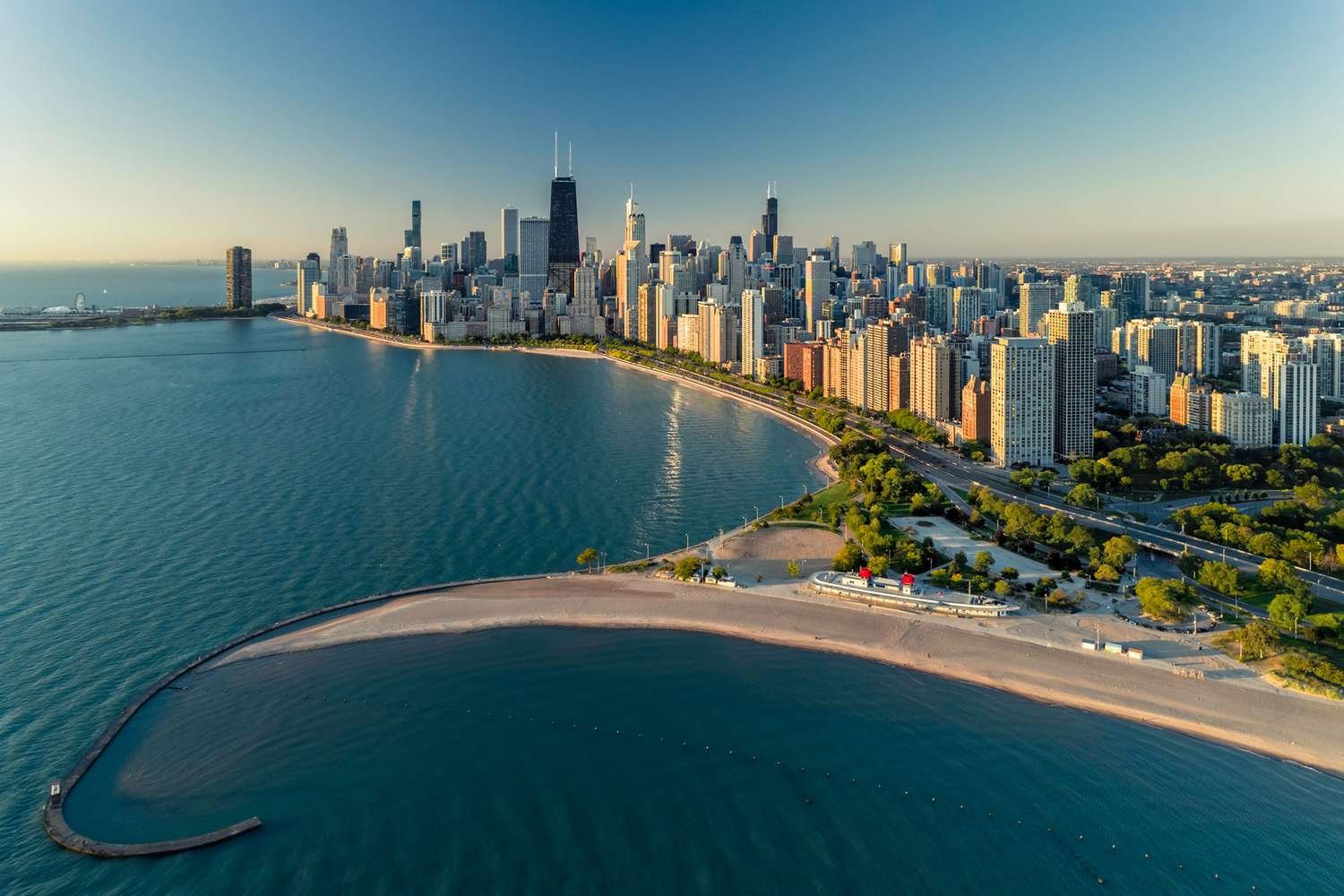
:max_bytes(150000):strip_icc()/chicago-illinois-CHITG0221-e448062fc5164da0bba639f9857987f6.jpg "Planning a Trip to Chicago: A Complete Guide (Itinerary, Costs & Best Time to Go) 1")
Chicago has two major airports, and they serve different purposes. O’Hare International Airport is the larger of the two, with far more domestic and international flights. Midway International Airport is smaller, faster to navigate, and often used by Southwest Airlines. For most first-timers, O’Hare is the default choice because of flight availability and the direct Blue Line train into downtown.
Which Airport Should You Fly Into?
Fly into O’Hare if you are staying in the Loop, River North, West Loop, or anywhere on the North Side. The Blue Line runs 24 hours and takes about 45 minutes to downtown for 5 USD. Fly into Midway if you are staying on the South Side or if you find a significantly cheaper or faster flight. Midway is closer to downtown by train, about 25 to 30 minutes on the Orange Line, also for 5 USD.
Getting Downtown From Each Airport
From O’Hare, the Blue Line is the cheapest and most reliable option. It runs directly from the airport terminals to downtown stations like Clark/Lake and Jackson. From Midway, the Orange Line connects to the Loop in under half an hour. A taxi or ride-share from O’Hare to downtown costs 50 to 70 USD and from Midway around 35 to 50 USD. Unless you are arriving very late or with heavy luggage, the train is the better value.
For comparing flight prices into both airports, Kayak is my starting point because it shows O’Hare and Midway results side by side. For bundling flight and hotel, Expedia often has package deals that beat booking separately, especially for downtown Chicago hotels.
Where to Stay in Chicago: Best Neighborhoods by Trip Style
The Loop is the most central place to stay, and it puts you within walking distance of Millennium Park, the river, and most downtown museums. River North is more upscale, with better restaurants and nightlife. The West Loop is the best food neighborhood in the city and a great choice if you are traveling for meals. For a more local, less touristy feel, look at Wicker Park or Logan Square, but know you will be taking the Blue Line into the center.
@meganschibelka Chicago hotel recs for best location, views, amenities ✨🫶🏼 #chicagohotels #chicagotravel #wheretostayinchicago #chicago #chicagorecommendations
The Loop
Best for first-timers. Walkable, central, and close to the lakefront, Millennium Park, and the Art Institute. Hotel-heavy and quiet at night once the workers leave.
River North
Best for nightlife and dining. More expensive than the Loop, but livelier in the evening. Close to the riverwalk and some of the city’s best restaurants.
West Loop
Best for food-focused travelers. The neighborhood with the highest concentration of excellent restaurants. Fewer big hotels, more boutique options and apartments.
For hotel booking in Chicago, Booking.com has the widest selection in the Loop and River North. If you are collecting loyalty rewards, Hotels.com is a solid alternative for the same properties. For a longer stay or a family trip, Vrbo has apartments in the West Loop and Lincoln Park that can be cheaper than two hotel rooms.
Sample 3-Day Chicago Itinerary
This is the itinerary I give to first-timers who have exactly three full days. It assumes you are staying downtown and using the CTA plus walking. It is not overstuffed. It leaves room for deep-dish pizza, which in Chicago is not optional.
@chefkolbykash You got 72 hours in Chicago, what you doing? #chicago #itinerary #creatorsearchinsights
Day 1: Downtown and Architecture
Start at Millennium Park early, before the crowds. The Cloud Gate sculpture, known locally as the Bean, is best at sunrise or shortly after. From there, walk to the Art Institute of Chicago, which opens at 11 a.m. most days. Spend a few hours inside, then walk the riverwalk north toward the Chicago River. In the afternoon, take an architecture boat tour, which is the single best introduction to the city. End the day with dinner in River North or the West Loop.
Day 2: Museums and the Lakefront
Spend the morning at the Field Museum or the Shedd Aquarium, both on the museum campus south of downtown. The Field Museum is my pick for a first visit, especially for the dinosaur hall. After lunch, walk or bike along the lakefront trail heading north. The stretch from the Museum Campus to North Avenue Beach is one of the best urban walks in the country. Dinner in Lincoln Park or Lakeview.
Day 3: Neighborhoods and Food
Start in Wicker Park, where the coffee shops and vintage stores set the tone. Ride the Blue Line up from downtown, then walk west toward Logan Square for lunch. In the afternoon, head south to Pilsen for the murals and Mexican food, or stay north for a more relaxed afternoon in Lincoln Park. End the trip with a deep-dish dinner at one of the classic spots, and do not let anyone tell you thin crust is the only “real” Chicago pizza. Both are real.
For guided tours, architecture cruises, and food tours, GetYourGuide has a solid range of Chicago options. For restaurant and bar recommendations, TripAdvisor is the fastest way to see recent visitor feedback.
What a Trip to Chicago Really Costs
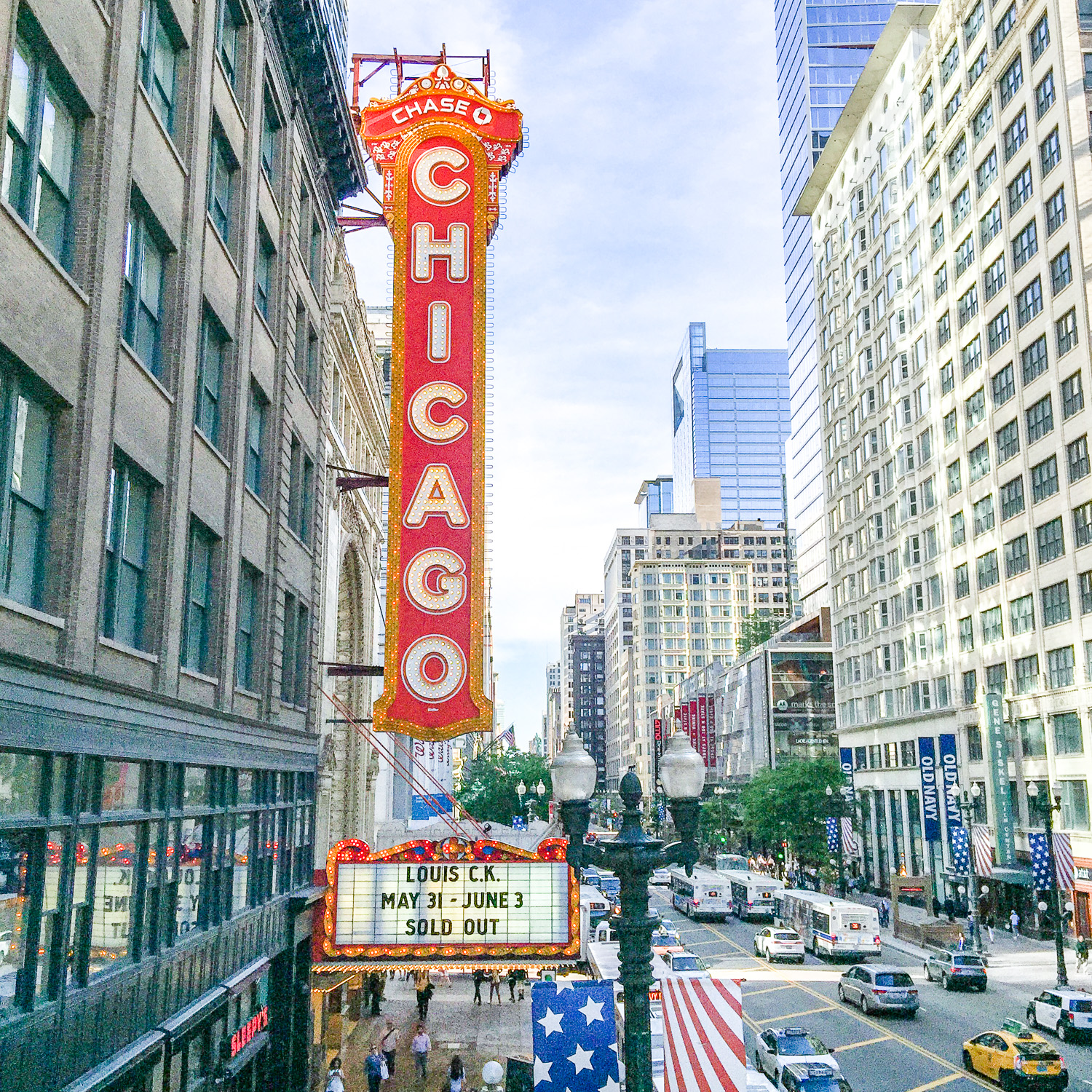
Chicago is more affordable than New York or San Francisco, but it is not cheap. A budget traveler can do it for around 100 to 140 USD per day. A mid-range traveler should budget 180 to 280 USD per day. A higher-end trip runs 350 USD per day and up. These numbers include accommodation, food, transit, and one or two paid attractions per day, but not your flight.
Budget: 100 to 140 USD per day
- Hostel or budget hotel: 50 to 70 USD
- Food: 30 to 40 USD for casual meals and a deep-dish slice
- Transit: 5 to 10 USD with a Ventra day pass
- Attractions: 20 to 30 USD for free sights and one paid entry
Mid-range: 180 to 280 USD per day
- 3 or 4-star hotel in the Loop: 120 to 180 USD
- Food: 60 to 80 USD for good restaurants and one nice dinner
- Transit: 10 to 15 USD including occasional ride-share
- Attractions: 40 to 60 USD for an architecture tour and a museum
Higher-end: 350-plus USD per day
- Boutique or 5-star hotel: 250-plus USD
- Food: 150-plus USD for fine dining and cocktails
- Transit: 30-plus USD for private transfers and taxis
- Attractions: 100-plus USD for premium tours and experiences
For a 4-day, mid-range trip for one person, expect to spend around 720 to 1,120 USD before flights. Chicago hotel prices swing dramatically by season and event calendar. A downtown room that costs 150 USD in February can cost 350 USD during Lollapalooza or a major convention. Book early if your dates overlap with a big event.
Getting Around Once You Are in Chicago
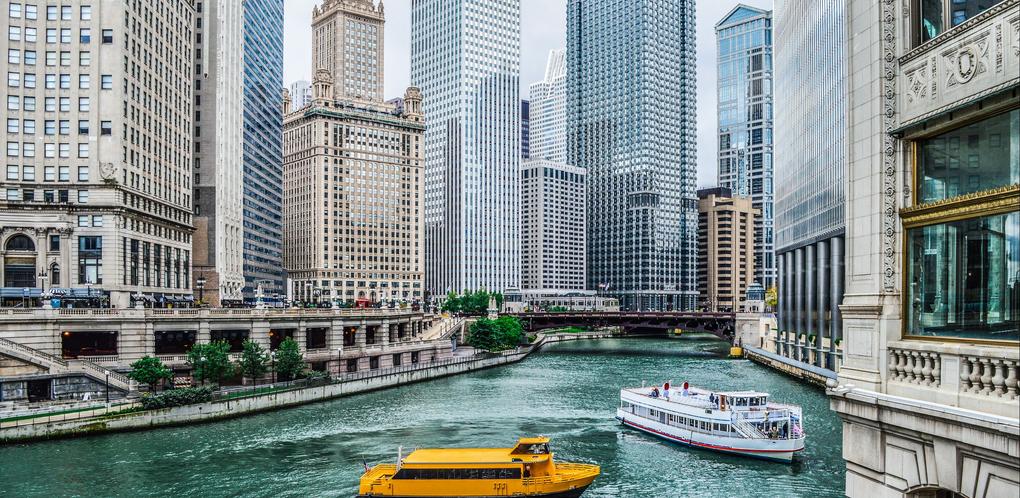
You do not need a car in Chicago. The CTA, which runs the city’s trains and buses, covers every area a first-timer is likely to visit. The system is old and not always pretty, but it works. A single ride costs 2.50 USD, and a 1-day pass costs 5 USD. Buy a Ventra card at any train station or use the Ventra app on your phone.
The elevated train lines, known locally as the L, are the fastest way to move between neighborhoods. The Red Line runs north-south through the center, and the Blue Line connects O’Hare to downtown and continues to the West Side. The Brown Line loops through the Loop and up to Lincoln Park and Lakeview. Buses fill the gaps, but they are slower in traffic.
Walking is often faster than transit for short downtown trips. The Loop is compact, and the riverwalk makes walking between the river and the lakefront pleasant. Ride-share apps are widely available and useful at night or in bad weather, but you will pay surge pricing during peak hours and after big events.
Frequently Asked Questions
How many days do I need for a trip to Chicago?
Three full days is the minimum for a first trip to Chicago. Four days is better if you want to add a neighborhood or a second museum without rushing. Five days and up lets you experience the city at a more relaxed, local pace.
Is Chicago safe for tourists?
Yes, the areas most tourists visit are generally safe, especially downtown, the River North, Lincoln Park, and the West Loop during the day and evening. Use the same caution you would in any large city: keep your phone and wallet secure, avoid empty streets late at night, and be aware of your surroundings on public transit.
Do I need a car in Chicago?
No, you do not need a car in Chicago. The CTA trains and buses, plus walking, cover almost everything a first-timer wants to see. A car is more of a hassle than a help, especially when it comes to parking, which is expensive and scarce downtown.
What is the best month to visit Chicago?
May, June, September, and October are the best months. The weather is pleasant, the crowds are smaller than summer, and the event calendar is full. September is my personal favorite because the summer heat breaks and the lakefront is still warm enough to enjoy.
Is Chicago a walkable city?
Yes, central Chicago is very walkable. The Loop, River North, the riverwalk, and the lakefront are all easy to cover on foot. For longer distances between neighborhoods, the CTA is efficient and inexpensive. Many visitors find they walk more than they expected.
How much does a trip to Chicago cost?
A mid-range trip to Chicago costs around 180 to 280 USD per person per day, including hotel, food, transit, and attractions. Budget travelers can do it for 100 to 140 USD per day, and higher-end trips run 350 USD or more per day. Hotel prices swing dramatically by season and event calendar.
What is the difference between O’Hare and Midway airports?
O’Hare is the larger airport with more flight options and a direct Blue Line train downtown. Midway is smaller, faster to navigate, and closer to the South Side. For most first-timers, O’Hare is the default choice because of flight availability, but Midway can be more convenient if you find a good fare.
What is the best area to stay in Chicago for a first trip?
The Loop, River North, or the West Loop are the best areas for a first trip. The Loop is the most central and walkable. River North has better dining and nightlife. The West Loop is the best food neighborhood and feels more local.
Plan your trip: booking platforms we trust
For a Chicago trip, the booking order I recommend is flight first, then hotel, then tours and special meals. Here are the platforms I use for each step, based on what actually works for Chicago specifically.
Best for comparing flights into O’Hare and Midway.
The widest selection of Loop and River North hotels.
Good for architecture tours and food experiences.
Best for family apartments in the West Loop and Lincoln Park.
Good for recent restaurant and neighborhood reviews.