advertisement
Hunting Island State Park: The Complete Visitor’s Guide (Lighthouse, Camping & Beaches)
Fact-Checked By Maya Whitfield, Senior Travel Editor at WakaAbuja
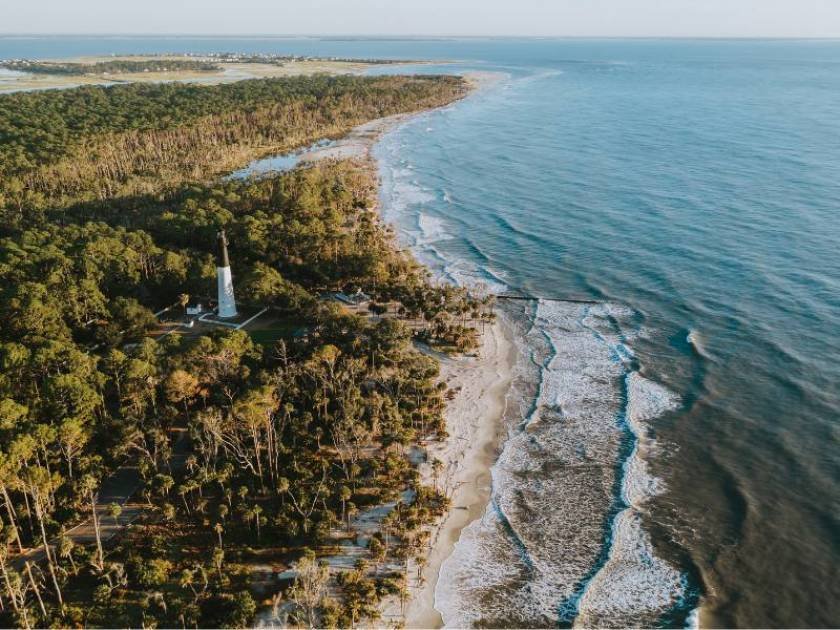
Hunting Island is South Carolina’s most-visited state park, a 5,000-acre barrier island where you can climb a historic lighthouse, camp in a maritime forest, and walk a beach littered with the sun-bleached skeletons of a drowned forest. Admission is $8 per adult, the lighthouse climb costs an extra $2, and the best months for comfortable weather and turtle nesting are May through early October.
The official state park page will give you the phone number, the gate hours, and a polite overview. What it will not tell you is that the campground books up months in advance, that the mosquitoes on the lagoon trail are genuinely formidable, or that arriving after 10 a.m. on a summer Saturday means circling the beach parking lot until someone leaves. I have made the drive down from Charleston three times now, and each visit has taught me something I wish I had known the time before.
This guide puts all of that in one place so you can plan a trip that actually works.
Jump to: Quick Facts | Lighthouse | Best Time to Visit | Where to Stay | Things to Do | One-Day Itinerary | Cost Breakdown | Mistakes to Avoid | FAQs
Key takeaways
- Hunting Island is a 5,000-acre barrier island 16 miles east of Beaufort, SC, with five miles of natural beach and a climbable 167-step lighthouse.
- Admission costs $8 per adult, $5 for South Carolina seniors, and $4 per child aged 6 to 15. The lighthouse climb adds a separate $2 fee per person.
- The 102-site campground with 50-amp hookups fills completely on weekends from March through October. Reserve at least two months ahead.
- Loggerhead sea turtles nest on the beach from May through October, and the park runs guided turtle walks during nesting season.
- Boneyard Beach on the north end is a photography landmark formed by salt-killed trees left standing in the surf after severe erosion.
- Arrive before 9 a.m. on weekends and holidays to secure parking. The main beach lot fills early, and the park gates will close when capacity is reached.
- Bug spray is non-negotiable from April through November. The saltwater lagoon and maritime forest trails breed mosquitoes thick enough to ruin an unprepared hike.
Quick facts at a glance

The official park site spreads this information across several pages. I pulled the core logistics here so you do not have to hunt for them.
Address: 2555 Sea Island Parkway, Hunting Island, SC 29920
Phone: (843) 838-2011
Hours: Gates open daily 6 a.m. to 6 p.m. (extended to 9 p.m. during daylight saving time). Lighthouse opens at 10 a.m. daily; last climb ticket sold at 4:30 p.m.
Admission: $8 per adult, $5 for SC resident seniors, $4 per child aged 6 to 15, and free for children 5 and under. A lighthouse climb adds $2 per person.
Pet policy: Dogs are allowed on the beach and trails but must be on a leash no longer than six feet. They are not permitted inside the lighthouse or the nature center building.
Reservations: Camping and the cabin book through the South Carolina State Parks reservation system online or by phone. Day-use admission does not require a reservation, but the park does sell out of parking capacity on peak days.
The Hunting Island Lighthouse
The lighthouse is the park’s centerpiece and the only publicly climbable lighthouse in South Carolina. It was built in 1859, destroyed during the Civil War, rebuilt in 1875, and moved 1.3 miles inland in 1889 because the original site was eroding into the sea. The cast-iron structure was designed with interchangeable sections so it could be disassembled and relocated, a feature that literally saved it.
Climbing the lighthouse
The climb is 167 steps up a spiral cast-iron staircase with a narrow final ladder at the top. The observation deck gives you a 360-degree view that stretches from the maritime forest canopy to the Atlantic horizon. On clear days you can see across the sound to Fripp Island. The climb is not air-conditioned and gets warm in summer, so bring water and expect your legs to feel it the next morning. Children must be at least 44 inches tall to climb. A small museum with original lighthouse artifacts sits at the base and is included in the climb ticket.
Maya’s honest take: “The climb is manageable for most reasonably fit people, but the line builds by mid-morning on weekends. Go at 10 a.m. right when it opens, or save it for a weekday, and you will have the stairs almost entirely to yourself.”
Best time to visit Hunting Island

The park is open year-round, but the experience shifts dramatically by season. March through May and September through early November are the sweet spots. You get warm but not oppressive temperatures, thinner crowds than the summer peak, and significantly fewer biting insects than the deep summer months.
Weather and crowds by season
Summer (June through August) brings the warmest ocean water and the fullest schedule of ranger programs, but it also brings humidity, afternoon thunderstorms, and weekend crowds heavy enough that the park entrance gate closes by late morning. Winter is quiet and cool, with daytime highs in the 50s and 60s Fahrenheit, ideal for hiking and photography with no crowds at all, but the lighthouse may close during high winds, and the ocean is too cold for swimming.
Sea turtle nesting season
Loggerhead sea turtles nest on Hunting Island’s beach from May through October. Hatchlings emerge roughly 60 days after each nest is laid, meaning July through early October offers the best chance to see a nest boil, where dozens of tiny turtles scramble for the surf at once. The park runs ranger-guided night turtle walks during nesting season that require advance registration and fill quickly. Artificial lights disorient hatchlings, so the beach closes to visitors after dark during nesting months unless you are on a guided walk.
Hurricane season note
Hurricane season officially spans June through November, with the highest activity in the Lowcountry typically occurring in September and early October. Hunting Island has taken significant storm damage in past years, including the gradual loss of park structures and shoreline. Check the official park website for any closures or facility updates before driving down during peak storm months.
Where to stay
Camping
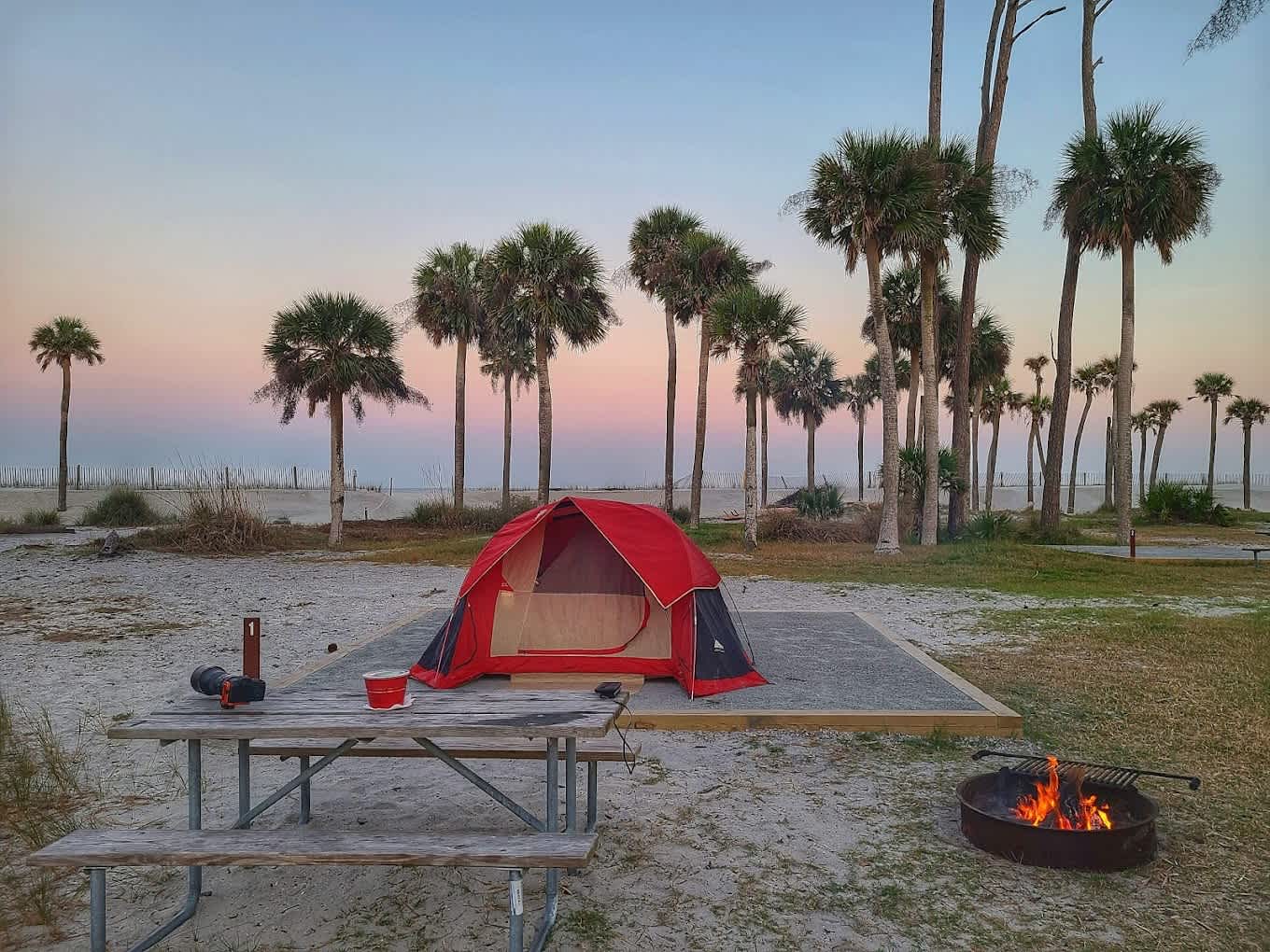
The park campground offers 102 standard sites with 50-amp electrical and water hookups, plus 25 rustic tent sites near the saltwater lagoon. The campground sits within the maritime forest, so shade is plentiful. Sites are unpaved but well-maintained. A minimum two-night stay applies on weekends. Restrooms have hot showers. These sites book solid for every weekend from March through October, often two to three months in advance. Reserve through the South Carolina State Parks online system as early as your dates allow.
The cabin
A single cabin near the lighthouse is available for rent. It is small, historic, and books up even further ahead than the campsites. If the cabin is sold out, the closest off-island accommodations are in Beaufort, about a 25-minute drive away, or on Fripp Island just across the bridge.
Day trips from Beaufort or Fripp Island
Staying off-island and driving in for the day works well if camping is unavailable. Beaufort offers a broad range of hotels and vacation rentals. The drive from downtown Beaufort to the park entrance is roughly 30 minutes. Fripp Island sits immediately adjacent to Hunting Island and has its own rental market, but note that Fripp is a private gated community, and non-guest access is restricted.
Things to do
Beaches and Boneyard Beach
The park has five miles of beach, but the northern stretch is the one that draws photographers from across the country. Boneyard Beach is a stretch of coast where decades of erosion have killed the maritime forest, leaving standing, sun-bleached tree skeletons rooted in the surf. It is a striking, almost surreal landscape, especially at sunrise and low tide. The beach is accessed via a short trail from the north-end parking lot. The southern beaches are wider, sandier, and better for swimming and spreading out a towel.
Trails
A network of flat, sandy trails runs through the maritime forest and around the saltwater lagoon. The Lagoon Trail is a roughly one-mile loop that passes through dense palmetto and live oak habitat. It is scenic, but bring bug spray and check yourself for ticks afterward. The Marsh Boardwalk trail leads to a covered overlook facing the salt marsh and is wheelchair-accessible via the park’s track chair program.
Fishing pier
A fishing pier extends into the ocean near the lighthouse. A valid South Carolina fishing license is required to fish. The pier is open to walkers as well, and at sunset it offers a clean view of the coastline and the lighthouse from a distance.
Nature center
The nature center is small but worth a stop with children. It houses live native reptiles, touch tanks with marine invertebrates, and exhibits on the island’s loggerhead turtle program. Admission is included with park entry.
Wildlife you might see
The official park page mentions a “vast array of wildlife” without naming what you will actually encounter. Here is what you should watch for. Loggerhead sea turtles nest on the beach from May through October. Alligators sun themselves on the banks of the saltwater lagoon year-round, especially on cooler winter mornings. Atlantic bottlenose dolphins are visible from the beach and the fishing pier most days, usually traveling in small pods parallel to the shoreline. The salt marsh attracts herons, egrets, ospreys, and, in winter, migrating waterfowl. The maritime forest hosts painted buntings in spring and summer and is one of the northernmost reliable spots to see them on the East Coast.
Do not approach or feed any wildlife. Alligators may look lethargic but move fast over short distances. Give them at least 30 feet of space. Sea turtle nests are marked with stakes and protective grating, and disturbing a marked nest carries a heavy fine.
A one-day itinerary for first-timers
This plan assumes you arrive at the park entrance by 8:30 a.m., which is the single most important variable for a smooth day.
Start at the lighthouse. Climb the 167 steps as close to the 10 a.m. opening time as possible. The line is shortest then; the metal staircase is not yet radiating stored heat, and the morning light on the observation deck is ideal for photos. Spend about an hour here, including the museum at the base.
From the lighthouse, drive or walk north to Boneyard Beach. Spend 45 minutes walking among the skeleton trees and photographing the shoreline. The tide schedule matters here. At high tide, the waves reach the tree line, and wading becomes harder. Check a tide chart before your visit and aim to be on Boneyard Beach within two hours of low tide for the best access.
Break for an early lunch at one of the picnic shelters near the South Beach parking area. There are no restaurants inside the park, so pack a cooler. After lunch, walk the Lagoon Trail for about an hour, scanning the banks for alligators. Spend the remaining afternoon on the south beach swimming and relaxing. Leave the park by late afternoon to beat the dusk mosquito surge, or stay for sunset at the fishing pier if the bugs are tolerable that day.
What it actually costs
The admission fee is modest, but the total cost of a visit adds up with camping, food, and the lighthouse ticket. Here is a realistic breakdown based on current rates published by South Carolina State Parks. Always verify on the official reservation site before booking.
Day trip cost (two adults, one child):
- Park admission: $20 (two adults at $8, one child at $4)
- Lighthouse climb for two adults: $4
- Packed lunch and snacks: roughly $25
- Total: about $50 for a family of three
Weekend camping trip (two adults, one child, two nights):
- Park admission for two days: $40
- Standard campsite for two nights: roughly $70 to $100 total
- Lighthouse climb: $4
- Groceries and ice for two days: about $60
- Total: approximately $175 to $205 for the weekend
Mistakes first-time visitors make
These are the errors I have either made myself or watched other visitors stumble into on multiple trips.
- Arriving too late. On summer weekends the park often reaches parking capacity by mid-morning, and the gate closes. Arrive by 8:30 a.m. or plan to wait in a long entry line.
- Skipping bug spray. The lagoon trail and marsh boardwalk are mosquito-heavy year-round and genuinely unpleasant without repellent. Apply before you leave the car.
- Not checking the tide chart for Boneyard Beach. At high tide, the treeline surf is deep and access shrinks. Visit within two hours of low tide.
- Assuming walk-up camping will be available. The campground fills months in advance for weekends. Book online before you plan anything else.
- Underestimating the lighthouse climb. The staircase is narrow, the final ladder is steep, and the heat inside the iron structure in summer is significant. It is not dangerous, but it is more physically demanding than it looks from the parking lot.
- Forgetting cash for the lighthouse. The lighthouse ticket booth is a separate cash-only transaction from the park entrance gate. Bring small bills.
- Expecting cell service. The signal is unreliable across much of the island. Download an offline map and the tide chart before you enter the park.
Frequently asked questions
How much does it cost to visit Hunting Island State Park?
Admission is $8 per adult, $5 for South Carolina residents aged 65 and older, and $4 per child aged 6 to 15. Children 5 and under enter free. The lighthouse climb costs an additional $2 per person. Camping and cabin rentals are separate reservations with their own fees.
Can you climb the Hunting Island lighthouse?
Yes. The lighthouse is the only publicly climbable lighthouse in South Carolina. It opens daily at 10 a.m., and the last ticket sells at 4:30 p.m. The climb is 167 steps up a cast-iron spiral staircase. Children must be at least 44 inches tall. The lighthouse may close during high winds or lightning.
Is Hunting Island good for camping?
Yes, and it is one of the most popular campgrounds on the South Carolina coast. There are 102 standard campsites with 50-amp electrical and water hookups, plus 25 rustic tent sites. Sites sit within a shaded maritime forest a short walk from the beach. Book months ahead, especially for spring and fall weekends.
What is Boneyard Beach?
Boneyard Beach is the northern stretch of Hunting Island’s shoreline where decades of erosion have killed the maritime forest. The standing, sun-bleached skeletons of dead live oaks and pines remain rooted in the surf, creating a dramatic and heavily photographed landscape. It is accessed by a short trail from the north-end parking lot and is best visited at low tide.
Are dogs allowed at Hunting Island State Park?
Dogs are permitted on the beach and trails but must remain on a leash no longer than six feet at all times. They are not allowed inside the lighthouse, the nature center, or the cabin. Owners must clean up after their pets, and the park can get hot, so bring water for your dog.
When can you see sea turtles on Hunting Island?
Loggerhead sea turtles nest from May through October. Hatchlings emerge roughly two months after each nest is laid, so July through early October is the best window to see hatchlings. The park offers ranger-guided night turtle walks that require advance registration. The beach closes to the public after dark during nesting season to protect the turtles.
Is there a restaurant or store inside the park?
No. There are no restaurants or grocery stores inside the park. A small camp store near the campground sells basic supplies, snacks, and ice, but hours are limited and seasonal. Pack all your food and water before entering. The nearest full grocery stores and restaurants are in Beaufort, roughly 25 minutes away.
Plan your trip: booking resources we trust
For camping reservations, use the official South Carolina State Parks online system directly. For nearby off-island hotels and vacation rentals in Beaufort, these platforms offer flexible cancellation policies that give you room to adjust if weather or availability shifts.
Best for finding hotels and B&Bs in downtown Beaufort with free cancellation options.
Best for booking full beach houses and cottages on Fripp Island or in the Hunting Island area for families.
Best for reading recent visitor reviews of campground conditions and the current state of beach erosion and trails.
Best for comparing flight and car rental prices if you are flying into Charleston or Savannah and driving to the Lowcountry.