Nature treks with stunning views combine physical effort with a payoff only altitude and distance can deliver. Our team has ranked 10 trails across 4 continents, with real permit caps, seasonal windows, and the exact costs no glossy brochure will tell you. If you want a shortlist of what you can book today, this is it.
I still remember Fatima laughing at me on the Inca Trail. I was bent double at Dead Woman’s Pass, gasping at 4,215 meters, and she was already photographing a condor. “Chidi,” she said, “nature treks with stunning views don’t just happen. You earn them.” She was right. That moment reshaped how I evaluate every trail. Since then, our WakaAbuja team has collectively logged boots-on-ground time on six of the ten treks listed below.
The remaining four come from trusted mountaineering contacts whose judgment we’d stake our reputation on. No filler. No poetry about “the soul of the mountain. ” Just ten treks, their real costs, permit limits that sell out months in advance, and the specific months when the views actually deliver.
Jump to: The 10 Ranked Trails | What Makes a View Stunning | Best Seasons | Permits & Costs | How to Prepare | Mistakes to Avoid | FAQ
Key takeaways
- Permits are the real gatekeepers on nature treks with stunning views. The Inca Trail caps at 500 people per day, including porters, and February is closed entirely for maintenance.
- Stunning views correlate directly with elevation gain and coastal exposure. Flat forest walks are pleasant but rarely make “stunning” lists; our top ten all climb significantly.
- Prices range from free day-use to $5,000+ for guided summit expeditions. The sweet spot for a multi-day nature trek with stunning views is $800 to $2,500 per person.
- Seasonal timing is everything. Torres del Paine in July is a wind-battered misery. The same trail in December delivers Patagonia at its most photogenic.
- Leave No Trace principles are non-negotiable on every trek listed. Packing out waste, staying on marked trails, and respecting fire bans protect the views for everyone behind you.
- Chidi and Fatima have personally completed six of these ten trails. Their direct quotes throughout come from actual boots-on-the-ground experience, not desk research.
- Booking platforms like GetYourGuide and Booking.com now offer bookable trek packages for several trails below, but always verify permit inclusion before paying.
What actually makes a nature trek deliver stunning views?

A nature trek with stunning views isn’t just any pretty walk. The views have to be earned through elevation, perspective shift, or a dramatic reveal. Think of rounding a ridge at 4,000 meters and seeing an entire valley of glaciers you didn’t know existed thirty seconds ago. Think coastal cliff paths where the ocean feels like it’s pulling at your ankles from 200 meters below. The treks on this list share three things: significant vertical gain or loss, an unobstructed final viewpoint that changes how you understand the landscape, and a moment where you involuntarily stop walking because your brain needs a second to process what it’s seeing. Nature treks with stunning views are sensory overload in the best way.
The distinction matters because search results are full of gentle woodland strolls mislabeled as “stunning.” A shaded forest path with one glimpse of a lake through the trees is a lovely walk. It is not what we’re ranking here. Every entry below earned its place by delivering a payoff that makes the lactic acid in your legs irrelevant. Nature treks with stunning views require effort, and that effort is what makes the view stick in your memory for decades.
10 world-ranked nature treks with stunning views
1. Inca Trail to Machu Picchu, Peru
Distance: 43 km (26 miles) | Duration: 4 days | Max elevation: 4,215 m (Dead Woman’s Pass)

This is the definitive nature trek with stunning views and the standard against which I measure every other multi-day hike. The four-day route passes three high passes, each revealing a new layer of the Andes. Dead Woman’s Pass on day two is brutal, but the cloud forest descent into the ruins on day four, with mist burning off the stone terraces as you arrive through the Sun Gate, is genuinely overwhelming. Fatima wept. I pretended I had dust in my eyes.
Permit reality: Peru’s Ministry of Culture caps Inca Trail permits are 500 per day, and that number includes guides, porters, and cooks. Only about 200 are left for trekkers. February is closed for maintenance. For peak months (May to September), permits vanish within hours of release in October. You cannot do this trek independently; a licensed guide is mandatory. Check current permit availability on official channels before booking anything.
Real cost: $650 to $850 per person for a reputable operator. Budget operators at $500 exist but often underpay porters. Porter welfare is a serious issue on this trail, and I strongly recommend operators certified by the Porter’s Federation. Train tickets back from Aguas Calientes add $70 to $100.
Best season for stunning views: May and September. Dry season visibility has fewer crowds than June to August. Avoid December to March (wet season; cloud cover hides the ruins).
Fatima’s honest take: “Train your quads for the downhill from Dead Woman’s Pass. Everyone talks about the climb. Nobody warns you that going down is what destroys your knees. I saw a man in his 50s cry on the stone steps. Not from emotion. From his kneecaps.”
2. Torres del Paine W Trek, Chile
Distance: 76 km (47 miles) | Duration: 4–5 days | Max elevation: 1,200 m (moderate)
Patagonia doesn’t do subtlety. The W Trek delivers nature treks with stunning views in the most aggressive way possible: granite towers that look like they were dropped from space, an electric-blue glacier that calves chunks of ice while you eat lunch, and wind that once physically knocked Chidi sideways into a bush. The views here are so consistently dramatic that by day three you become numb to things that would be the highlight of any other trail. The final push to the base of the Torres at sunrise is a pilgrimage that earns every Instagram post ever made about it.
Permit reality: You need CONAF park entry tickets and camping/refugio reservations for each night. This isn’t a single permit system like the Inca Trail. Each campsite (Vertice, Las Torres) runs its own booking platform. Reservations open in April for the coming season (October to April). November and March refugios sell out within weeks. You can piece together a self-guided W Trek without a tour operator, but the logistics of syncing campsite availability across two different companies are exactly as frustrating as they sound.
Real cost: Self-guided with refugios and full-board meals: $800 to $1,200 for four nights. Guided packages: $1,800 to $2,500. Campsite-only (bring your own tent): $400 to $600. All figures exclude flights to Puerto Natales.
Best season for stunning views: December to February (Patagonian summer). Long daylight hours and the most stable weather. October and March are shoulder-season gambles with lower prices and higher wind. Park closed for much of winter (June to August).
Chidi’s honest take: “The wind at the Paine Grande campsite ripped the tent stakes out of the ground at 3 AM. I had to hold the tent pole from inside for an hour. The next morning, the sunrise over Los Cuernos made me forget every second of that misery. Book the refugio. Don’t be a hero.”
3. Everest Base Camp Trek, Nepal
Distance: 130 km (80 miles) round trip | Duration: 12–14 days | Max elevation: 5,545 m (Kala Patthar)
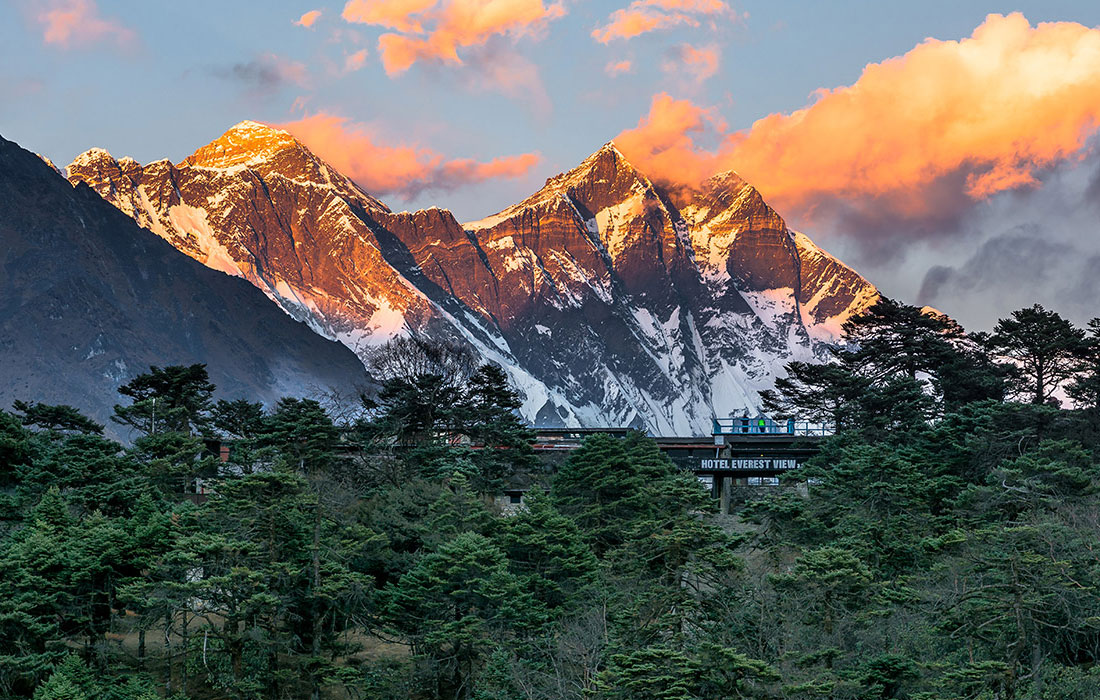
No list of nature treks with stunning views is complete without EBC. The trek itself threads through Sagarmatha National Park, past suspended bridges over glacial rivers, through Sherpa villages where prayer wheels line every wall, and finally into a high-altitude amphitheater of peaks that includes Everest, Lhotse, and Nuptse. The actual base camp is visually underwhelming (a rubble field with tents), but Kala Patthar at sunrise is the view that justifies the entire trip. The entire Khumbu region spreads below you, and Everest’s summit plume catches the first light of day.
Permit reality: You need two permits: the TIMS card (Trekking Information Management System, roughly $20) and the Sagarmatha National Park entry permit (roughly $30). No daily cap, no advance booking required. You can obtain both in Kathmandu or at the park entrance. This is one of the few world-class nature treks with stunning views that doesn’t require months-ahead permit logistics.
Real cost: Self-guided: $800 to $1,200, including domestic flights to Lukla, teahouse accommodation, and meals. Guided packages: $1,500 to $2,500. The Kathmandu to Lukla flight ($180 each way) is the single largest line item. Budget an extra $100 to $150 for a helicopter evacuation insurance policy; your travel insurance must cover trekking above 5,500 meters.
Best season for stunning views: October and November. Crystal-clear skies, stable weather, and the post-monsoon landscape are green and alive. March to May is the second window, warmer but hazier. Avoid June to September (monsoon, no views, and leeches at lower elevations).
Fatima’s honest take: “The teahouses are freezing at night. Bring a sleeping bag rated to minus 10 Celsius even if you booked ‘heated’ rooms. The heating is a yak-dung stove in the dining hall that goes out by 8 PM. Also, the garlic soup at 4,000 meters is the most delicious thing you will ever taste.”
4. Milford Track, New Zealand
Distance: 53.5 km (33 miles) | Duration: 4 days | Max elevation: 1,154 m (MacKinnon Pass)
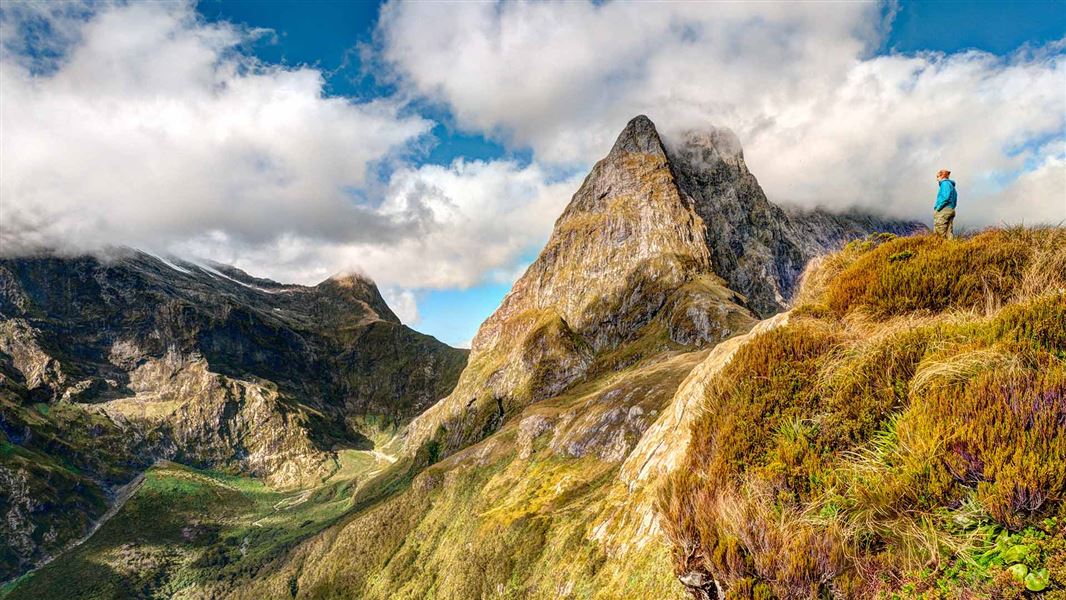
The Milford Track is often called “the finest walk in the world,” and while that phrase is marketing fluff, the view from MacKinnon Pass comes close to justifying it. This is a nature trek with stunning views that builds slowly: day one is a gentle river valley, day two climbs through beech forest, and then day three erupts onto an alpine pass with a 360-degree panorama of glacier-carved cliffs, waterfalls that drop hundreds of meters, and the Clinton Valley snaking back the way you came. The final day descends to Milford Sound, where the scale of the fjord walls makes you feel insect-sized.
Permit reality: New Zealand’s Department of Conservation (DOC) restricts the Milford Track to 40 independent walkers per day during the Great Walks season (late October to late April). Beds in the DOC huts are released via an online booking system and sell out within minutes of the season opening, usually around May or June for the coming season. Guided walk packages bypass the DOC hut booking chaos but cost significantly more. Outside the Great Walks season (May to October), the track is open, but avalanche risk closes MacKinnon Pass, and huts become first-come, first-served with reduced facilities.
Real cost: DOC hut pass: NZ$110 per night (roughly $65 USD), $260 total for three huts. Transport to the start and from the end adds NZ$150 to $200. Guided packages: NZ$2,500 to $3,500 (roughly $1,500 to $2,100 USD). Book transport and hut dates simultaneously or risk a logistical nightmare.
Best season for stunning views: January and February. Most stable weather, warmest temperatures, and the alpine flowers are out. November is greener but wetter. The track is closed by snow from roughly June to October.
Chidi’s honest take: “The sandflies will test your sanity. Bring a head net. They don’t care about your DEET. They don’t care about your positive attitude. They care about your exposed skin and nothing else. The views are worth it, but you’ll spend every rest stop swatting the air like a madman.”
5. Tour du Mont Blanc, France/Italy/Switzerland
Distance: 170 km (105 miles) | Duration: 10–12 days | Max elevation: 2,665 m (Col des Fours variant)
The TMB is the heavyweight champion of European nature treks with stunning views. Over eleven days, the trail loops around the Mont Blanc massif, crossing three international borders and seven major passes. Every day delivers a new angle on the highest peak in Western Europe. The views shift from French cow pastures to Italian alpine meadows to Swiss granite spires, often within a single afternoon. This is not a wilderness trek; you sleep in refuges or valley hotels most nights, and you’ll eat tartiflette and pasta more often than freeze-dried meals. The cultural layer (three cuisines, three languages) adds depth that pure wilderness treks sometimes lack.
Permit reality: No permits required for the TMB itself. However, refuge accommodation must be booked months in advance for July and August. Many refuges open bookings in December or January and are full by March. Wild camping is restricted in sections of France and Italy; check local regulations per valley. The trail crosses through several national parks and reserves, each with its own rules.
Real cost: Self-guided with refuge demi-pension (dinner, bed, and breakfast): $80 to $120 per day; $1,000 to $1,400 for a full circuit. Guided tours: $2,500 to $4,000. Lunch and snacks add $15 to $25 daily. Cable car shortcuts (if you skip sections) add $15 to $30 per ride.
Best season for stunning views: Late June to early September. July and August are peak with guaranteed refuge access but have crowded trails. Early September has thinner crowds and stable weather. Snow covers the high passes until mid-June in heavy snow years.
Fatima’s honest take: “The refuges serve wine at altitude. After a seven-hour hiking day. This is both the best and worst feature of the TMB. Also, the cows in Switzerland wear massive bells that sound like a discordant orchestra. You’ll hear them before you see them. Every single morning.”
6. Kalalau Trail, Hawaii, USA
Distance: 35 km (22 miles) round trip | Duration: 2–3 days | Max elevation: 250 m (moderate but relentless undulation)
The Na Pali Coast is the most dramatic coastline in the United States, and the Kalalau Trail is the only way to see it up close without a helicopter. This nature trek with stunning views hugs sea cliffs for eleven miles, dropping onto secluded beaches and climbing back onto exposed ridges. The views are vertical: emerald pinnacles dropping straight into turquoise surf, with sea caves and waterfalls that only exist after rain. Kalalau Beach at the end is the payoff, a crescent of sand backed by 600-meter cliffs, accessible only by foot or boat. It’s not a high-altitude epic, but the exposure and heat make it feel harder than the elevation suggests.
Permit reality: Hawaii’s Department of Land and Natural Resources caps camping permits at Kalalau Beach to 60 people per night. Permits are released 90 days in advance on a rolling window and sell out in minutes during peak months (May to September). Day hiking to Hanakapiai Beach (mile 2) and Hanakapiai Falls (mile 4) does not require a permit. Overnight camping anywhere beyond Hanakapiai requires the Kalalau permit. Rangers check permits at the trailhead and at the beach.
Real cost: Permit: $35 per person per night (non-resident). Parking at Haena State Park: $10 entry plus $5 parking; must be reserved separately. No guided operators run overnight trips (not permitted). Total for two nights: roughly $120 including all fees and parking.
Best season for stunning views: May and June. Drier weather, greener vegetation from spring rains, and a calmer ocean. July to September is hotter. October to April brings rain that makes the trail treacherous; the stream crossing at Hanakapiai can become impassable after heavy rain.
Chidi’s honest take: “Crawler’s The ledge at mile 7 is overhyped. People act like it’s a death trap. It’s a wide ledge with a handhold. But the heat is not overhyped. Start at 6 AM or you’ll bake on the exposed sections. I drank four liters of water on the way in and still felt dehydrated at Kalalau Beach.”
7. Mount Rinjani Summit Trek, Indonesia
Distance: 25 km (15.5 miles) | Duration: 2–3 days | Max elevation: 3,726 m (summit)
Rinjani is an active volcano on Lombok Island with a crater lake so blue it looks like someone adjusted the saturation. The summit push starts at 2 AM from the crater rim camp, and you climb volcanic scree in total darkness for three hours. When the sun rises over the crater lake with Bali’s Mount Agung visible in the distance, the sleep deprivation and leg-burning scree slope become completely irrelevant. This is the most underrated nature trek with stunning views on this list. The descent is a sliding, laughing mess of volcanic ash that fills your shoes and ruins your socks. Worth it.
Permit reality: Rinjani National Park entry fee is IDR 150,000 (roughly $10) per person per day. A local guide is mandatory, arranged through registered trekking operators based in Senaru or Sembalun. The park closes entirely from January through March during the wet season for safety and trail rehabilitation. No independent trekking is allowed, and enforcement has tightened significantly since the 2016 earthquakes.
Real cost: Two-day, one-night summit packages: $150 to $250 per person, including a guide, porters, meals, a tent, and park fees. Three-day, two-night packages that include the crater lake and hot springs: $250 to $400. Transport from Lombok airport or ferry terminal adds $30 to $50.
Best season for stunning views: April to June and September to October. These shoulder windows avoid the July/August peak-season crowds and the November-to-March closure. Sunrise from the summit is clearest in June.
Fatima’s honest take: “The volcanic scree on the summit push is two steps forward, one step back. Literally. You slide backward with every step. Trekking poles are mandatory, not optional. Also, the porters will overtake you wearing flip-flops while carrying 30 kilograms of camping gear. It’s humbling.”
8. Cinque Terre Coastal Trail, Italy
Distance: 12 km (7.5 miles) one way | Duration: 5–6 hours | Max elevation: 200 m (gentle coastal undulation)

This is the shortest and most accessible nature trek with stunning views on this list, and it proves that scale isn’t everything. The Sentiero Azzurro (Blue Trail) connects five pastel-colored fishing villages along the Ligurian coast. The views alternate between terraced vineyards dropping into the Mediterranean and postcard-perfect village approaches from above. The section between Vernazza and Monterosso delivers the money shot: a cliffside path where the village appears below you like a model train set, with the sea stretching to Corsica on clear days.
Permit reality: The Cinque Terre National Park card is required to hike the paid sections of the Blue Trail. Day passes cost roughly $8 and include trail access and local bus transport between villages. Multi-day trekking passes are about $16. The card is available at any village train station or information office. No permit cap, no advance booking needed. Sections of the trail close periodically due to landslides; check the official park website for current status before you go.
Real cost: Park card: $8 to $16. Train tickets between villages (if you want to skip sections): $5 to $7 per ride. Accommodation in any of the five villages during summer starts at $120 per night and goes up fast. Budget $50 to $80 for lunch and snacks at village trattorias.
Best season for stunning views: April, May, and October. Summer (June to September) brings crushing crowds and harsh midday light. The villages lose their charm when you’re shuffling shoulder-to-shoulder. Spring wildflowers and autumn sunsets are the sweet spots.
Chidi’s honest take: “Start at Monterosso and hike south. The morning light hits the villages face-on from this direction, and you’ll finish in Riomaggiore in time for a sunset aperitivo. Also, the trail between Manarola and Riomaggiore (Via dell’Amore) has been closed for years due to rockfall. It’s supposed to reopen, but check before you plan around it.”
9. Laugavegur Trail, Iceland
Distance: 55 km (34 miles) | Duration: 4 days | Max elevation: 1,100 m (moderate)
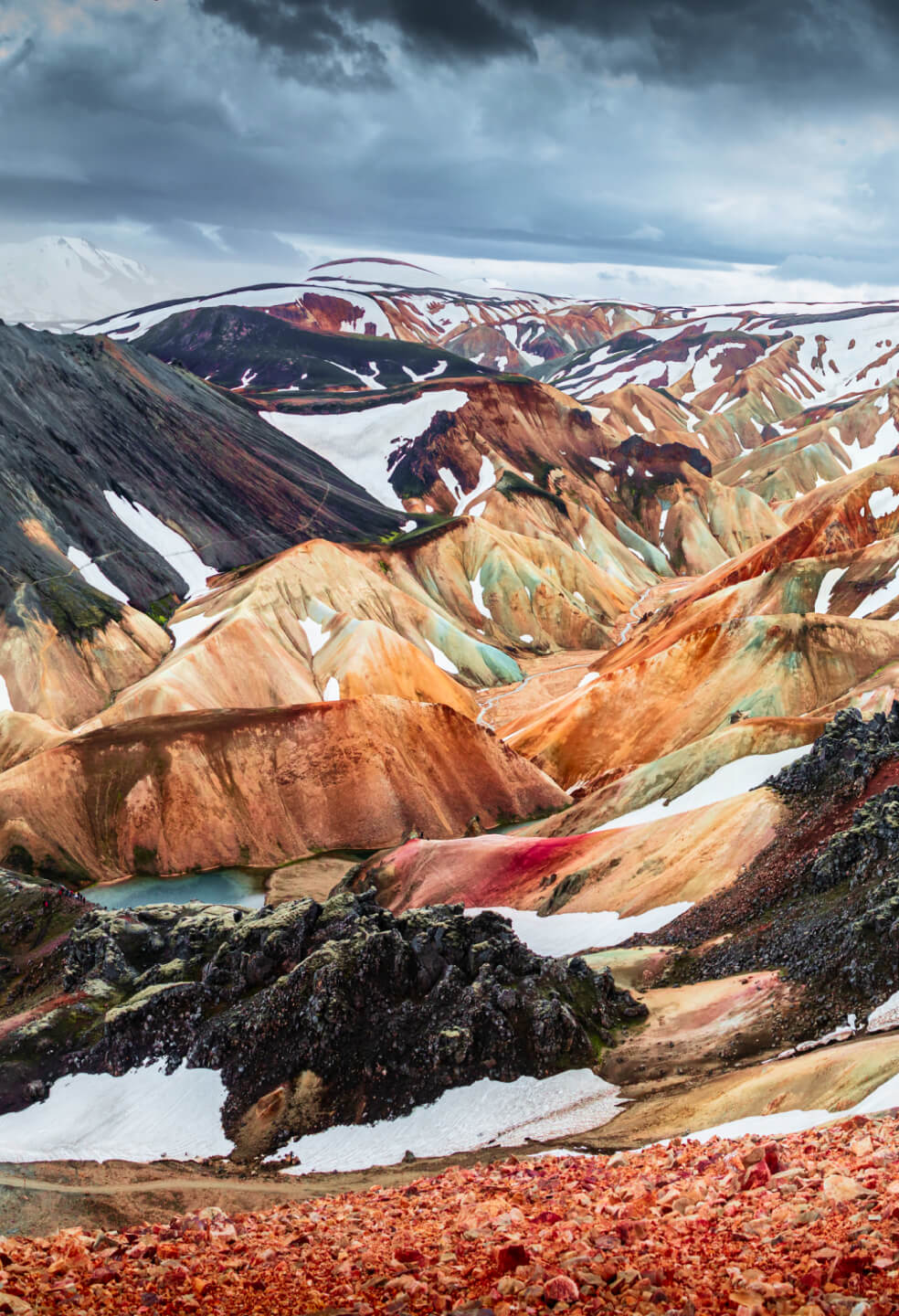
Iceland’s Laugavegur Trail is a nature trek with stunning views that looks like a geology textbook exploded across a single valley. Over four days, the trail passes through rhyolite mountains streaked in reds, yellows, and greens, black-sand deserts, steaming geothermal vents, and glacial river crossings. The landscape changes color so frequently that by day three, you stop being surprised when a mountain ahead of you shifts from green to rust-red over the course of an hour. The final day ends at Thórsmörk, a glacial valley that feels like a Norse god’s private garden.
Permit reality: No permits required to hike the Laugavegur. However, hut accommodation must be booked through Ferðafélag Íslands (Iceland Touring Association) and sells out months ahead for July and August. Camping spots at the same huts are first-come, first-served and do not require advance booking. River crossings are unbridged and can be dangerous during rain or glacial melt. A 4×4 bus service connects the trailheads and is the standard way to access the start and end.
Real cost: Hut package (four nights, sleeping bag accommodation): $350 to $450. Camping: $60 to $80 total for hut campground access. Bus transport from Reykjavik to Landmannalaugar and Thórsmörk back: $120 to $180. Food for four days: $80 to $120 if purchased in Reykjavik and carried in. Book bus transport and huts together or risk mismatched dates.
Best season for stunning views: Mid-July to mid-August. The trail is snow-free, the rivers are at normal levels, and the midnight sun gives you effectively unlimited daylight. The trail opens in late June, but snow patches linger. It closes by mid-September.
Fatima’s honest take: “The river crossings are no joke. The water is glacial melt. It’s painfully cold. Bring river shoes with a sole you trust, not flimsy water sandals. And accept that your feet will go numb. There’s a hot spring at Landmannalaugar at the start. Soak before you begin. Your future self will thank you.”
10. John Muir Trail, California, USA
Distance: 340 km (211 miles) | Duration: 3–4 weeks | Max elevation: 4,421 m (Forester Pass)
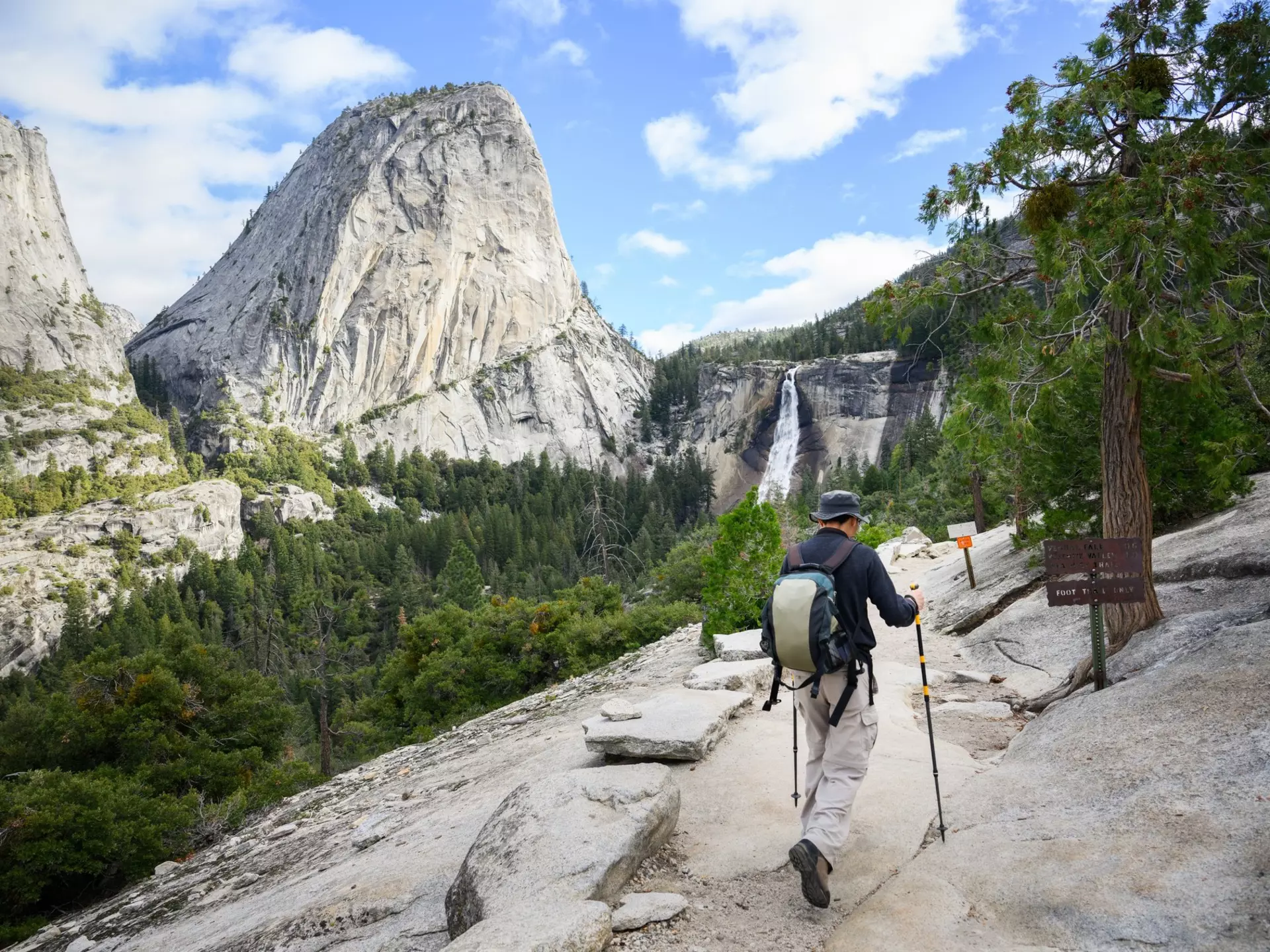
The John Muir Trail is the grand finale of nature treks with stunning views in the contiguous United States. Running from Yosemite Valley to the summit of Mount Whitney, the JMT crosses three national parks and six high passes above 3,300 meters and delivers a concentration of alpine scenery that no other American trail matches for sustained quality. The Ansel Adams Wilderness section, with the Minarets reflecting in Thousand Island Lake, is the single most beautiful campsite I have ever pitched a tent in. The permit system is infamously competitive, and the logistics of resupply require planning months in advance. This is a lifetime-achievement trek, not a casual entry.
Permit reality: You need a wilderness permit from the agency where your hike starts. For southbound JMT, that’s Yosemite National Park, where permits are released via a lottery system 24 weeks in advance. The Happy Isles to Little Yosemite Valley permit is the most competitive wilderness permit in the United States. Roughly 97% of applications are denied. Northbound JMT permits (starting from Inyo National Forest near Whitney Portal) are slightly easier but still require advance planning. A separate Mount Whitney permit is not required if Whitney is part of your continuous JMT itinerary. Check current rules with the National Park Service and Inyo National Forest before applying.
Real cost: Permits: $10 to $15 application fee plus $5 to $10 per person if approved. Resupply logistics (mailing food buckets to backcountry post offices): $80 to $150. Gear for a three-week unsupported trek (if you don’t already own it): $1,000 to $3,000. Transport to trailheads and back: $100 to $250. No guiding companies operate full JMT trips due to permit restrictions. This is an independent trek.
Best season for stunning views: Late July through early September. Snow covers the high passes until mid-July in most years. Mosquitoes are biblical in June and early July. September offers stable weather and thinner crowds but shorter days and freezing nights.
Chidi’s honest take: “The permit lottery is soul-crushing. Apply for a less popular trailhead and hike a connector to the JMT instead. The Mono Meadow trailhead in Yosemite adds a day but actually has availability. Also, the resupply at Muir Trail Ranch is expensive, and they lose packages. Pack an extra day of food.”
When is the best season for nature treks with stunning views globally?
Nature treks with stunning views don’t operate on a universal calendar. The Himalayan sweet spot (October/November) is the exact opposite of Patagonia’s (December/February). The Inca Trail closes every February. Iceland’s Laugavegur is inaccessible before late June. Booking your trek during the wrong month means low cloud cover, trail closures, or walking in relentless rain.
Always verify the specific seasonal window for your chosen trail before booking flights. We use Kayak to set flight price alerts once we lock in trek dates.
Northern Hemisphere Treks
- Himalaya (Nepal, India): October/November and March/May. Avoid the monsoon season, June/September.
- Alps (TMB, Alta Via): Late June to early September. Snow covers passes until mid-June.
- Sierra Nevada (JMT, USA): Late July to September. Snow until July; permits released 24 weeks out.
- Iceland (Laugavegur): Mid-July to mid-August. The trail opens late June and closes mid-September.
Southern Hemisphere & Equatorial Treks
- Patagonia (W Trek, Chile): December to February. October and March are shoulder-season gambles.
- Peru (Inca Trail): May to September. The February trail is closed. Permits released October prior.
- New Zealand (Milford Track): Late October to late April. Huts sell out within minutes of May/June release.
- Indonesia (Rinjani): April to October. The park closes from January to March for the wet season.
How do trek permits work, and what do they actually cost?
Permits are the invisible infrastructure behind every major nature trek with stunning views. They serve two purposes: funding trail maintenance and capping human impact. Some permits are cheap and easy (Nepal’s TIMS card, roughly $20, no cap). Others are expensive, competitive lotteries (JMT Happy Isles permit, $15 application, 97% rejection rate). I have lost count of how many trip plans collapsed because someone assumed a permit was walk-up available when it actually sold out six months earlier.
Always, always check the official park or government agency website for current permit rules. Do not rely on tour operators to communicate permit availability accurately. They sell trips first and secure permits second.
Capped, competitive permits
- Inca Trail: 500/day, February closed, book 6 to 8 months ahead via licensed operator.
- Kalalau Trail: 60/night at Kalalau Beach, released 90 days out, sells out in minutes.
- Milford Track: 40 independent walkers/day; DOC huts released in May/June for the coming season.
- John Muir Trail: Yosemite lottery 24 weeks out, 97% denial rate for Happy Isles.
Uncapped or walk-up permits
- Everest Base Camp: TIMS card plus park entry, roughly $50, no cap, obtainable in Kathmandu.
- Tour du Mont Blanc: No trail permit. Refuge bookings are the real constraint; book by March for July/August.
- Cinque Terre: Park card is roughly $8, available at village stations, no cap.
- Laugavegur Trail: No trail permit. Hut bookings open months ahead; camping spots are first-come, first-served.
How should I physically and mentally prepare for nature treks with stunning views?
Train for the downhill, not just the uphill
The single most common injury on multi-day nature treks with stunning views is knee damage from uncontrolled descents. Fatima learned this on the Inca Trail. I watched hikers with strong cardio crumble on day three because their quads couldn’t handle the eccentric load of descending stone steps. Stair training with a loaded pack, especially the descent, is more valuable than flat-ground running.
You can check current trekking gear recommendations on TripAdvisor forums for trail-specific packing advice from recent completers.
Acclimatization is not optional
Any trek above 3,000 meters demands acclimatization days. The Everest Base Camp trek builds a rest day into Namche Bazaar specifically for this reason. The Inca Trail’s first day is a deliberate moderate grade before the Dead Woman’s Pass push. Altitude sickness doesn’t care about your marathon time. Symptoms (headache, nausea, poor sleep) can hit anyone regardless of fitness. Diamox is widely used but requires a prescription and a trial dose at home before the trek.
Leave No Trace on every single trek
Nature treks with stunning views exist because previous generations protected these landscapes. Pack out all waste, including biodegradable items like fruit peels. Stay on marked trails to prevent erosion. Do not feed wildlife, ever. Follow fire regulations, especially in dry regions like California’s Sierra Nevada and Australia’s national parks. Local conservation rules vary by country, and ignorance is not an excuse. The views we chase depend on the collective responsibility of everyone who walks these trails.
What are the biggest mistakes people make on nature treks with stunning views?
- Assuming permits are walk-up available. The Kalalau Trail, Inca Trail, and Milford Tracks sell out months ahead. Book permits before flights.
- Wearing brand-new boots on day one. Blisters on a multi-day trek turn every step into a negotiation with pain. Break in footwear over at least 30 miles of training walks.
- Carrying too much weight. A pack over 15 kilograms for a hut-to-hut trek or over 18 kilograms for a fully self-supported trek is too heavy. Weigh everything. Cut duplicates.
- Ignoring seasonal closures. The Inca Trail closes every February. Rinjani closes January to March. Laugavegur is inaccessible before late June. Check official park websites, not travel blogs.
- Relying on a single water source. Carry water treatment (filter, tablets, or UV) and know where refill points are. Giardia is a trek-ending diagnosis.
- Not budgeting for evacuation. Helicopter rescue in Nepal or medical evacuation from a remote trail costs thousands. Travel insurance with trekking and altitude coverage is non-negotiable.
- Skipping the guide when it’s mandatory. Rinjani and the Inca Trail require licensed guides. Rangers will turn you around. Independent trekking where it’s not permitted is not rebellious; it’s dangerous and illegal.
Frequently asked questions about nature treks with stunning views
Which nature trek with stunning views is best for beginners?
The Cinque Terre Coastal Trail in Italy is the best entry point. It’s a day hike with gentle elevation, village stops with food and water every 90 minutes, and no permit lottery. The views rival treks twice their difficulty. For a multi-day beginner option, the Milford Track in New Zealand is well-marked, has hut infrastructure, and avoids high-altitude risks.
How far in advance should I book permits for nature treks with stunning views?
For the Inca Trail, 6 to 8 months ahead. For the Kalalau Trail, exactly 90 days ahead the moment permits release. For the John Muir Trail, enter the lottery 24 weeks ahead and have a backup plan. For uncapped permits like Everest Base Camp or Cinque Terre, a few days ahead is fine. Always verify on the official park website for current rules.
What gear is absolutely essential for nature treks with stunning views?
Broken-in waterproof boots, trekking poles (especially for descents), a sleeping bag rated to the coldest expected temperature, water treatment (filter or tablets), and a comprehensive first-aid kit including blister treatment. For high-altitude treks, add a prescription for Diamox and insurance covering evacuation above 4,000 meters.
Can I do nature treks with stunning views without a guide?
It depends on the trail. The Inca Trail and Mount Rinjani require licensed guides by law. The Tour du Mont Blanc, Everest Base Camp, and John Muir Trail can be done independently with proper planning. The Milford Track and Kalalau Trail are independent by default for overnight stays. Always check current regulations before assuming self-guided is allowed.
How much do nature treks with stunning views typically cost?
Day treks like Cinque Terre cost under $50, including permits and food. Multi-day guided treks like the Inca Trail run $650 to $850. Self-guided hut-to-hut treks like the Tour du Mont Blanc cost $1,000 to $1,400. Full expeditions like the John Muir Trail cost $1,500 to $3,000, excluding gear. Flights are always the largest additional expense.
Are nature treks with stunning views safe for solo travelers?
Yes, on well-trafficked routes like Everest Base Camp, Tour du Mont Blanc, and Cinque Terre, solo trekking is common and safe with standard precautions. Less trafficked trails require a satellite communication device (Garmin inReach or similar) and a detailed itinerary left with someone reliable. Solo trekking on remote routes without communication backup is strongly discouraged.
What’s the difference between a nature trek and a hike?
A trek is typically a multi-day journey on foot, often hut-to-hut or campsite-to-campsite, covering significant distance and elevation. A hike is generally a single-day outing. The treks on this list all require at least one overnight, and most involve multiple days of sustained walking. The term “nature trek” specifically implies an immersive, extended experience rather than a short walk.
How do I book a nature trek with stunning views through a reputable operator?
Start by checking the official park or government website for a list of licensed operators. Read recent reviews on TripAdvisor and cross-reference with independent travel forums. Verify that the price includes permits, meals, and transport. Ask directly about porter welfare policies for treks like the Inca Trail. Book with an operator that communicates clearly about permit timelines, not one that pressures you to pay before confirming permit availability.
Plan your trek: booking platforms we trust
The WakaAbuja team has used these platforms to research, book, and verify trek logistics across multiple continents. None of them replace checking official permit websites directly, but they’re solid starting points for comparing guided options, reading recent reviews, and booking transport.
Best for bookable day treks and short guided experiences.
Best for recent trekker reviews and operator comparisons.
Best for trailhead accommodation and refuge bookings.
Best for flight price alerts once trek dates are locked.
Best for bundling flights with trailhead-city hotels.