advertisement
The BEST Things to Do in Bahia, Brazil, include exploring Salvador’s Pelourinho district with its colonial pastel buildings, watching a live capoeira roda on Terreiro de Jesus, and escaping to the white-sand beaches of Morro de São Paulo.
For nature lovers, Chapada Diamantina National Park offers waterfalls and caves, while foodies should not leave without tasting authentic acarajé from a street vendor in Rio Vermelho.
Chidi from our Abuja team spent three weeks backpacking across Bahia last June. “I thought I knew rhythm until I heard Ilê Aiyê drumming at 2 AM in Salvador’s lower city,” he says.
We have curated this list based on real visits, local tips from Bahian friends, and countless hours of on-the-ground research. No sponsored fluff. Just the absolute must-dos plus honest cons so you can plan your own adventure without surprises.
Jump to: 1. Pelourinho | 2. Elevador Lacerda | 3. Mercado Modelo 4. Igreja de São Francisco | 5. Praia do Forte 6. Chapada Diamantina 7. Olodum drumming 8. Capoeira performance 9. Candomblé terreiro 10. Morro de São Paulo | 11. Boipeba Island | 12. Itacaré beaches | 13. Salvador Carnival | 14. Cooking class | 15. Recôncavo region | FAQ
Key takeaways
- Pelourinho’s cobblestone streets are free to explore, but guided tours from GetYourGuide reveal hidden Afro-Brazilian history.
- For beach hopping, combine Praia do Forte (turtle sanctuary) and Morro de São Paulo (no cars allowed).
- Chapada Diamantina requires at least two full days; book a 4×4 or hike with a local guide from Lençóis town.
- Capoeira performances happen every Tuesday night at Pelourinho’s main square—free and unforgettable.
- Book your Salvador pousada well in advance for Carnival; otherwise use Booking.com for last-minute deals in Barra or Rio Vermelho.
- Cash is king for street food and markets; withdraw Reais at Banco do Brasil ATMs inside shopping malls to avoid skimmers.
- Learn basic Portuguese greetings – locals warm up instantly when you say “Bom dia” with a smile.
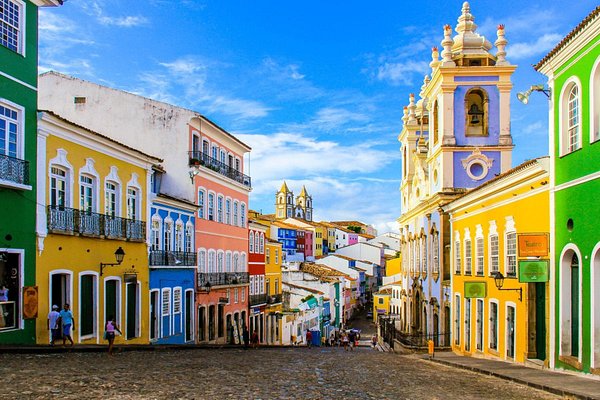
1. Pelourinho: The Most Photogenic Historic Center in the Americas
“I arrived at 9 AM and the light was already bouncing off those yellow, blue, and pink facades,” recalls Chidi. “No filter needed.” Pelourinho (or Pelo) is Salvador’s Unesco-listed heart.
You will see capoeiristas warming up on the steps of Igreja do Rosário dos Pretos, women selling acarajé under colorful umbrellas, and kids kicking balls that ricochet off 17th-century walls. We spent a whole day just getting lost—every alley ends in a mini plaza with live music or a tiny museum.
Chidi’s honest take: “It is touristy, yes, but the soul is real. Skip the overpriced restaurants on the main square and eat at the small boteco on Rua Maciel de Baixo. Their moqueca de peixe fed me for 35 reais.”
Pros
- Free to wander and dozens of live capoeira and samba shows daily.
- Central location – walk to Elevador Lacerda and Mercado Modelo.
- Excellent photo ops from the upper terraces near Solar do Unhão.
Cons
- Aggressive vendors at peak hours; a polite “não, obrigado” works.
- Steep hills – wear comfortable walking shoes.
- Pickpocketing risk after dark; Uber back to your hotel by 9 PM.
Best for: Culture vultures, photographers, and anyone wanting to feel Bahia’s heartbeat in one afternoon.
2. Elevador Lacerda: A 15-Cent Ride with a 85-Meter View
You will not find a cheaper thrill. The Elevador Lacerda connects Salvador’s Cidade Alta (upper town) to Cidade Baixa (lower town) in 30 seconds. For less than a dollar, you get sweeping views of All Saints Bay and the busy port below.
Fatima, our Lagos correspondent, rode it four times just to watch the sunset from the upper terrace. “Each time the light changed, the water turned from silver to gold to deep indigo,” she says. The elevator itself is an art deco beauty built in 1930.
Fatima’s honest take: “Do not just ride and leave. Stay on the upper platform for ten minutes. Watch the ferries come in and the street vendors balancing trays of shrimp. That is the real show.”
Pros
- Dirt cheap – 0.15 BRL per ride as of early this year (verify at ticket booth).
- Connects to Mercado Modelo and the Comércio district.
- Perfect intro for first-time visitors to understand Salvador’s geography.
Cons
- Very short ride – some might find it underwhelming.
- Can be crowded on weekends; go early morning or late afternoon.
- No air conditioning inside the cabin – it gets stuffy.
Best for: Budget travelers, families, and anyone who loves vintage engineering.
3. Mercado Modelo: Souvenirs, Spices, and a Rooftop Bar
Right across from the Elevador Lacerda’s lower exit, Mercado Modelo is a bustling indoor market. Housed in a former customs house, its 250+ stalls sell everything from berimbaus (capoeira bow) to cachaça and handmade lace.
We spent an hour bargaining for a wooden carving of Oxum, the orixá of fresh waters. The upstairs food court serves the best acarajé we tried in Salvador, and there is a tiny capoeira stage that erupts with drumming most afternoons.
Chidi’s honest take: “Do not buy the first thing you see. Walk the entire ground floor. The stalls near the back have better prices on leather goods. And always check the ‘feito à mão’ (handmade) sticker.”
Pros
- Huge variety of authentic crafts under one roof.
- Free live music or capoeira on most afternoons.
- Open daily from 9 AM to 7 PM (verify on official social media).
Cons
- Tourist prices – you can haggle but be respectful.
- Some stalls sell cheap imported knockoffs; look for local hallmarks.
- No ATMs inside; bring cash in small notes.
Best for: Souvenir hunters and those who love a lively, chaotic market atmosphere.
4. Igreja de São Francisco: Baroque Excess with Gold Leaf Everywhere
You have seen gold churches in Europe. You have not seen this. The Convent and Church of São Francisco in Pelourinho is coated in an estimated 800 kilograms of gold leaf on the inside. Every inch of the nave, side altars, and ceiling is carved and gilded.
The adjacent cloister has blue and white Portuguese tiles (azulejos) telling biblical stories. Admission includes a guided tour in English; the guide will show you where the monks hid from pirates and the hidden confessionals. TripAdvisor reviewers rank it as Salvador’s top attraction for a reason.
Fatima’s honest take: “My neck hurt from staring up. But what moved me most was the courtyard—the silence after the gold overload. Sit on the stone bench and just breathe.”
Pros
- Unmatched baroque interior—one of the richest in Latin America.
- Included tour in multiple languages (check times at entrance).
- Azulejo panels are Instagram gold without filters.
Cons
- Entrance fee (around 10 BRL) – cash only, no card.
- No photography inside the main church (yes, they enforce it).
- Can feel overwhelming if you are not into religious art.
Best for: History buffs, architecture lovers, and anyone who wants to see absurd wealth preserved in gold.
5. Praia do Forte: Turtles, Beach Huts, and a Lighthouse
An hour north of Salvador by bus, Praia do Forte is the anti-high-rise beach town. The main attraction is the Tamar Project, a sea turtle conservation center where you can see dozens of loggerheads and green turtles being rehabilitated. Afterwards, walk the seaside path to the ruins of a 16th-century fortress (now a restaurant).
The beach itself is calm and swimmable, dotted with thatched barracas selling grilled fish and ice-cold Brahma beer. We booked a day trip through GetYourGuide that included round-trip transport and a bilingual guide.
Chidi’s honest take: “The turtle project is small but meaningful. I saw a five-year-old girl cry tears of joy releasing a baby turtle into the surf. That alone was worth the bumpy bus ride.”
Pros
- Family-friendly – shallow water and a supervised turtle release.
- Village atmosphere with no high-rise hotels, only pousadas and villas (Vrbo has great beach houses).
- Excellent seafood at Barraca do Nô.
Cons
- Can get crowded on weekends with local families.
- Limited nightlife – it quiets down after 9 PM.
- Some beach vendors overcharge; agree on a price before ordering.
Best for: Families, couples, and turtle lovers.
6. Chapada Diamantina: Waterfalls, Caves, and the Blue Pool
This is not a day trip. Chapada Diamantina is a 38,000 square kilometer national park three hours inland from Salvador. Base yourself in Lençóis, a charming mining town. The must-do: hike to Cachoeira da Fumaça, Brazil’s second-highest waterfall (340 meters).
The dry season (May to September) means the water often turns to mist before hitting the ground—hence “Smoke Falls.” For swimming, head to Poço Azul (Blue Well), a natural pool inside a cave with crystal-clear water. We used Expedia to bundle a three-night stay at a pousada in Lençóis with a rental car from Salvador Airport.
Fatima’s honest take: “The hike to Fumaça kicked my Lagos-bred legs.” But when you stand on the rim and feel the spray on your face, you forget the sweat. Bring at least two liters of water and a hat.”
Pros
- Diverse landscapes—table mountains, underground rivers, and waterfalls.
- Lençóis is a walkable, safe base with great pousadas.
- Fewer international tourists than Patagonia; cheaper guides.
Cons
- Requires physical fitness – some hikes are 6 to 8 hours.
- Remote area; cell service is spotty outside Lençóis.
- Best accessed with a 4×4; rent from Kayak for price comparison.
Best for: Adventurous hikers, nature photographers, and anyone who wants to escape crowds.
7. Olodum: The Rhythm That Shook the World
Olodum is a cultural group from Pelourinho that reinvented samba-reggae. They perform every Tuesday night at their headquarters on Rua Gregório de Matos. The drumming is not background music—it is a physical force. You feel the bass drum in your sternum.
The group also runs social projects for local Black youth. Arrive early (around 7 PM) to grab a spot on the stairs; the show starts at 8 and lasts about 90 minutes. Admission is a donation (suggested 20 BRL). Check their official Instagram for schedule changes – they sometimes cancel during rain.
Chidi’s honest take: “This was not a show. It was a ceremony. I have never seen drummers smile that hard while beating the life out of their instruments. Do not miss it even if you are tired.”
Pros
- Authentic, non-touristy – mostly locals in the audience.
- Supports a community arts organization.
- You can buy Olodum CDs and t-shirts directly from the group.
Cons
- Very loud – bring earplugs if you are sensitive.
- No seating; you stand or sit on concrete steps.
- Only on Tuesdays; plan your itinerary around that night.
Best for: Music lovers, culture seekers, and anyone who wants to feel Bahia’s Afro heart.
8. Capoeira: The Dance-Fight That Defied Slavery
You cannot visit Bahia without seeing capoeira. The most accessible roda (circle) happens every Tuesday and Saturday at 8 PM on the main square of Pelourinho (Terreiro de Jesus). It is free, open-air, and draws both masters and beginners. The ginga (swaying movement) looks deceptively easy; try it yourself during a workshop.
Many academies offer 2-hour introduction classes. GetYourGuide lists certified teachers who speak English and Portuguese. We took a class with Mestre Zumbi in Rio Vermelho – he taught us the berimbau rhythm and the basic esquiva.
Chidi’s honest take: “I tried a rasteira (sweep) on my partner and fell flat. But the master laughed and said ‘that is the first lesson – how to get up with style.’ The community is incredibly welcoming.”
Pros
- Free outdoor rodas almost nightly in Pelourinho.
- Excellent workout and cultural immersion.
- No prior dance or martial arts experience needed.
Cons
- Street rodas can be interrupted by rain or noise ordinances.
- Private classes cost 70-100 BRL per hour.
- Some tourists just watch and never participate – you will get more out of it if you join.
Best for: Active travelers and anyone curious about Afro-Brazilian resistance culture.
9. Candomblé Terreiro: Respectful Visit to a Sacred House
Candomblé is an Afro-Brazilian religion that honors orixás (gods of nature). Several terreiros (temples) in Salvador welcome respectful visitors during public ceremonies.
The most open to tourists is Terreiro do Gantois, active since 1849. Do not treat this as a show—remove your shoes, stay quiet, and never photograph the initiates in trance. Offerings of white flowers or a small donation (10-20 BRL) are appreciated.
Ceremonies occur on specific saints’ days; check with the official Bahia tourism board for dates. We attended a Friday night feast for Oxalá; the chanted songs in Yoruba gave me chills.
Fatima’s honest take: “This is not Instagram bait. You are a guest in a living, breathing faith. I wore all white as suggested and stayed for four hours. When the mãe-de-santo blessed me with coconut water, I felt more welcome than in many tourist attractions.”
Pros
- Deep cultural and spiritual insight.
- Very few tourists make the effort – you will have a genuine local experience.
- Often accompanied by drumming and singing that rivals any stage show.
Cons
- Ceremonies can last 3-6 hours; no fixed end time.
- No photography inside the main hall.
- Language barrier – most chants and explanations are in Yoruba or Portuguese.
Best for: Spiritually curious travelers and anthropology enthusiasts.
10. Morro de São Paulo: Island Paradise with No Cars
Two hours by catamaran from Salvador, Morro de São Paulo is a car-free island with four main beaches, each wilder than the last. First beach is the party hub with bars and loud music. Second beach has calm waters and family resorts. Third beach is for surfers. Fourth beach is almost deserted—you walk through mangrove trails to get there.
Accommodation ranges from simple pousadas to luxury villas on Vrbo. We stayed at Pousada Bahia Bacana (booked via Hotels.com for loyalty points). The only transport is by foot, bike, or beach tractor—yes, tractors haul luggage and building materials on the sand.
Chidi’s honest take: “Getting there is half the adventure. The catamaran might be packed, and you will climb 150 uneven steps from the pier to the village. But when you dip into the warm, clear water of Second Beach, you forget every complaint.”
Pros
- No traffic noise – only birds, waves, and chatter.
- Stunning sunsets from the Forte do Morro.
- Great for snorkeling near Gamboa beach.
Cons
- More expensive than mainland Bahia (restaurants 30-50% higher).
- Main streets can get muddy when it rains.
- High season (December to February) is packed; book ferries one day ahead.
Best for: Beach lovers, digital nomads, and anyone who wants to unplug completely.
11. Boipeba Island: The Quieter, Greener Sibling of Morro
If Morro de São Paulo is too developed for you, head to Boipeba. It requires a combination of a bus, a ferry, and a 4×4 ride—which keeps the crowds away. The main village, Velha Boipeba, has no paved roads and only a handful of restaurants. The beaches are lined with coconut palms and natural pools formed by coral reefs at low tide.
We found a pousada for 80 BRL a night (cash only). There is no ATM on the island, so withdraw enough Reais before leaving Salvador. For a true Robinson Crusoe experience, hire a local boat to take you to Ilha do Cairu, a completely uninhabited spit of sand.
Fatima’s honest take: “I saw more hermit crabs than humans on Boca da Barra beach. That is the level of seclusion. If you need Wi-Fi and cocktails by a pool, stay in Morro. If you want raw nature, go to Boipeba.”
Pros
- Extremely quiet even in peak season.
- Excellent sea turtle nesting sites (seasonal).
- Local community runs eco-friendly tours.
Cons
- Difficult to reach – three transfers from Salvador.
- No nightlife or shopping.
- Power outages are not uncommon; bring a flashlight.
Best for: Hermits, honeymooners, and seasoned off-the-beaten-path travelers.
12. Itacaré: Surf, Jungle Trails, and Waterfall Hopping
Itacaré is a former cacao port turned surf town on Bahia’s “Cacao Coast.” The town itself is laid-back, with backpacker hostels and artisan ice cream shops. The real draw is the dozen beaches within a 10 km radius, many accessible only by hiking trails through the Atlantic rainforest.
Praia da Concha is sheltered and good for beginners. Praia do Resende has consistent waves for intermediates. After surfing, cool off at the nearby Tijuípe Waterfall—a series of pools cascading down mossy rocks. We booked a surf lesson through GetYourGuide for 120 BRL including board rental.
Chidi’s honest take: “I have surfed in Lagos and Cape Town. Itacaré’s waves are friendlier – you get long, rolling rides without the aggression. And the sunset from the cliffs of Prainha is a religious experience.”
Pros
- Affordable surf camps and equipment rentals.
- Lush jungle-meets-ocean scenery.
- Good bus connections from Salvador (6 hours, 70 BRL).
Cons
- Beaches can have strong rip currents; always check flags.
- Some trails require a local guide to avoid getting lost.
- Rainy season (April to July) turns trails muddy.
Best for: Surfers of all levels, hikers, and budget travelers.
13. Salvador Carnival: Six Days of Axé and Trios Elétricos
Salvador’s Carnival is not a spectator event—it is a participatory street explosion. Unlike Rio’s ticketed sambadrome, Salvador’s carnival is free to join along any of the 25 km of street circuits. The main innovation is the “trio elétrico”: a massive truck with a live band on top, blasting axé music while thousands dance behind.
You can either join the crowd (bloco) for free or buy a “abadá” (official shirt) to ride inside the rope-protected area. Prices for abadás start around 300 BRL and go up. Verify current dates and safety zones on the official Salvador city website. We booked our accommodation through Booking.com six months in advance—it sells out completely.
Fatima’s honest take: “I lasted three nights before my feet gave out. But the energy is unmatched. Old ladies dancing with toddlers on their hips. A stranger shared his coconut water when I looked dehydrated. It is chaos, beautiful chaos.”
Pros
- More authentic and inclusive than Rio’s Carnival.
- Free to watch from the sidelines.
- World-class musicians like Ivete Sangalo and Carlinhos Brown perform.
Cons
- Extreme crowds and pickpocketing risk; use a phone tether.
- Accommodation prices triple during carnival week.
- Very little sleep – music goes until 5 AM.
Best for: Party animals and anyone who wants to experience the world’s largest street party.
14. Cooking Class: How to Make Moqueca and Acarajé from Scratch
Bahian food is a religion. The flavors come from palm oil (dendê), coconut milk, dried shrimp, and malagueta pepper. We took a half-day class with Chef Alaíde in Rio Vermelho. She took us to the São Miguel market to buy fresh fish, onions, tomatoes, and cilantro. Back in her open-air kitchen, she taught us the proper layering technique for moqueca (no stirring).
The acarajé lesson was trickier – getting the black-eyed pea batter to float perfectly in hot dendê oil without burning. You can find similar classes on GetYourGuide starting at 180 BRL per person, including a meal and a caipirinha.
Chidi’s honest take: “I will never look at a can of dendê the same way. Chef Alaíde told us that the quality of the oil changes the entire dish—she buys it from a specific supplier in the lower city. My moqueca is still not as good as hers, but now I know why.”
Pros
- Hands-on learning with ingredients you can find at home.
- Includes market tour – great for food photography.
- You eat everything you cook (plus leftovers).
Cons
- Classes are often in Portuguese with limited English translation.
- Some classes skip the market tour to save time – read the fine print.
- Can be messy (dendê oil stains clothes).
Best for: Foodies, home cooks, and anyone who wants more than restaurant meals.
15. Recôncavo Region: Colonial Cachoeira and the Island of the Dead
The Recôncavo is the fertile bay area around Salvador, dotted with 17th-century towns. The easiest day trip is to Cachoeira, two hours by bus from Salvador’s Estação Rodoviária. Cachoeira has a stunning bridge over the Paraguaçu River and the Convento do Carmo, now a hotel.
Walk across the bridge to São Félix, known for its cigar factories (you can roll your own). For something eerie, take a boat to Ilha de Itaparica—locals call one part “Ilha dos Mortos” (Island of the Dead) because of an abandoned leper colony. We used a local guide recommended by our pousada; never wander there alone. Always check the TripAdvisor page for Cachoeira for updated tour operators.
Fatima’s honest take: “Cachoeira feels like Pelourinho without the crowds. The same pastel mansions, but you can sit in the main square and hear nothing but birds and a distant radio. Go on a Tuesday—that is when the local market spills into the streets.”
Pros
- Rich in colonial history and Afro-Brazilian heritage.
- Less crowded than Salvador; cheaper restaurants.
- Good for a one-day escape from the city.
Cons
- Limited public transport to smaller towns like São Félix.
- Some historic buildings are closed for restoration.
- Very hot and humid year-round; carry water.
Best for: History buffs and day-trippers who have already seen Salvador’s main sights.
What you need to know before you go
Visa requirements
Many nationalities (US, Canada, Australia, and Japan) do not need a tourist visa for stays up to 90 days. Citizens of Nigeria and other African nations generally require a visa in advance. Always check the official Brazilian Ministry of Foreign Affairs website or your local Brazilian embassy. Requirements change, and we never trust third-party sites for this.
Currency and payment tips
The Brazilian Real (BRL) is the local currency. Credit cards (Visa and Mastercard) are accepted in hotels and nicer restaurants, but street food, markets, and local buses are cash only. ATMs are widely available, but avoid standalone machines on quiet streets. Use ATMs inside shopping malls or bank branches. As of this year, 100 BRL is roughly 18 USD or 28,000 NGN – but rates fluctuate daily.
Local transport options
Uber is safe and affordable in Salvador (a trip across town costs 20-40 BRL). For longer distances, use the rodoviária (bus terminal)—companies like Águia Branca and Itapemirim offer air-conditioned coaches. To reach the islands, take catamarans from Salvador’s Nautical Terminal; buy tickets one day in advance during high season. In rural areas like Chapada Diamantina, you will need a 4×4 rental or a hired local driver.
Cultural etiquette
Bahians are warm and informal. A greeting of “bom dia” (good morning) or “boa tarde” (good afternoon) goes a long way. Tipping is not mandatory but appreciated—10% is standard in sit-down restaurants. When visiting a Candomblé terreiro, wear white clothing, remove shoes, and never photograph people without explicit permission. For churches, cover your shoulders and knees.
Safety tips
Petty theft is the main concern. Do not wear expensive jewelry or flash your phone on empty streets. Keep your backpack zipped and wear it in front on crowded buses. After dark, take Ubers rather than walking, even in Pelourinho. Avoid deserted beaches after sunset. The neighborhoods of Barra, Rio Vermelho, and Graça are generally safer than the historic center at night. Trust your instincts – if a street looks too dark or empty, turn back.
Where are these located?
For a full interactive route, open in Google Maps or consult a local guide on arrival.
Frequently asked questions
What is the best time of year to visit Bahia?
The best time is September through March, when rainfall is lowest and temperatures hover around 27°C (81°F). February and March bring Carnival, which is electric but crowded and expensive. If you want to see humpback whales, visit between July and October. Always confirm specific event dates on the official Bahia tourism site.
Is Bahia safe for tourists?
Yes, but use street smarts. Stick to tourist zones like Pelourinho, Barra, and Rio Vermelho during the day. Avoid walking alone on deserted beaches after sunset. Do not carry large sums of cash. We have walked Salvador at night in groups and felt safe, but we always took Ubers after 9 PM. Petty theft is the main risk; violent crime against tourists is rare.
Do I need a visa for Brazil from Nigeria?
Nigerian passport holders require a tourist visa before arrival. You must apply at the Brazilian embassy in Abuja or Lagos. Other nationalities (US, UK, and Canada) do not need a visa for stays up to 90 days as of this year. However, visa policies change – always check the official Brazilian Ministry of Foreign Affairs website.
How many days do I need to see the best things to do in Bahia, Brazil?
At least seven days: three full days in Salvador, two days in Praia do Forte or Morro de São Paulo, and two days in Chapada Diamantina. With ten days, you can add Itacaré and Boipeba. With only five days, focus on Salvador plus one beach destination.
What is the best way to book tours in Bahia?
We use GetYourGuide for skip-the-line tickets and certified tours. For local pousadas and hotels, Booking.com has flexible cancellation. For flight and hotel packages, compare deals on Expedia or Kayak. Always read recent reviews—a tour that was great in 2022 may have changed ownership.
Is Bahia expensive for budget travelers?
Not at all. A filling moqueca lunch costs 30-50 BRL, a hostel dorm bed is 60-80 BRL, and a local bus ride is under 5 BRL. Street acarajé is 7-10 BRL. You can comfortably travel on 150-200 BRL per day (about 30-40 USD). Splurge on a guide for Chapada Diamantina and a catamaran to Morro de São Paulo.
Plan your trip: booking platforms we trust
The WakaAbuja team tests these platforms personally. We prioritize sites with transparent fees, real customer support, and flexible cancellation policies. For flights, we use Kayak to compare carriers. For hotels and pousadas, Booking.com and Hotels.com (for loyalty rewards). For vacation rentals in beach towns like Praia do Forte, Vrbo has excellent villas. Tours and skip-the-line tickets are easiest on GetYourGuide. For flight+hotel packages, Expedia often bundles at a discount. Finally, check restaurant and hotel reviews on TripAdvisor before booking—locals use it religiously.