
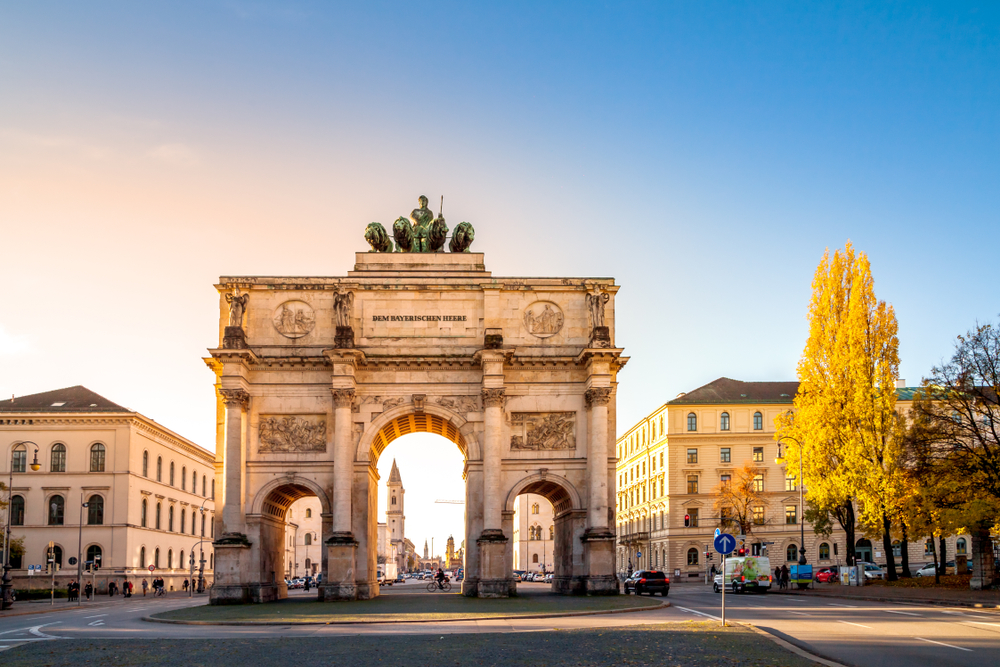
Travel to Munich for the First Time: What to Know Before You Go
If you travel to Munich for the first time, plan on three full days to cover the old town, the Englischer Garten, and one museum without rushing. A mid-range budget runs about €120 to €180 per person per day, covering a 3-star hotel, meals, and public transport (confirm current rates on Booking.com). Buy a Munich transit pass based on zones and days, validate it before your first ride, and avoid jaywalking, since Munich police fine pedestrians around €5 for crossing on red (confirm the latest fine schedule with the City of Munich). The best months are May, June, September, and October.
Munich has a reputation for being the easiest big city in Germany to visit, and after a dozen trips there, I mostly agree. The transit is clean and on time. The old town is walkable. English is widely spoken. But first-timers still trip over the same handful of things: they buy the wrong transit ticket, they get caught jaywalking, or they show up on a Sunday expecting to shop.
This guide is the single page I wish I had on my first visit. It covers costs, transit passes, etiquette, food, sights, and the mistakes that actually cost money. It does not cover Oktoberfest in depth, which is its own trip and deserves its own guide.
Jump to: Key Takeaways | Getting There & First Hour | Transit Passes | What It Costs | Where to Stay | Sights by Day | Etiquette & Fines | Mistakes to Avoid | FAQ
Key takeaways
- Three full days is the right length for a first visit to Munich. Five days lets you add a day trip to Neuschwanstein, Dachau, or Salzburg.
- The S-Bahn from Munich Airport to the city center takes about 40 minutes and costs around €13 for a single journey or is covered by a valid transit pass (confirm current fares on the MVV site).
- A Munich transit pass for the inner zone (Zone M) costs about €6.70 for a single day or €17.60 for a three-day group version (check current fares on the official MVV site).
- Mid-range travelers spend about €120 to €180 per person per day, including hotel, meals, and transport (confirm current rates on Booking.com).
- Jaywalking is fined in Munich, usually around €5 for pedestrians (confirm the latest fine schedule with the City of Munich).
- Shops in Munich, including most supermarkets, are closed on Sundays. Plan your groceries and shopping around that.
- The best months to visit are May, June, September, and October, with mild weather and fewer crowds than the July and August peak.
How do you get from Munich Airport to the city center?
The S-Bahn S1 and S8 lines connect Munich Airport to the city center in about 40 minutes. Both end at the Hauptbahnhof (main station) and pass through Marienplatz and other central stations. A single ticket costs around €13 (confirm current fares on the official MVV site). Trains run every 10 to 20 minutes from early morning to after midnight.
A taxi from the airport to the center costs €75 to €95 and takes 40 to 60 minutes depending on traffic (confirm current fares with the official airport taxi line). The S-Bahn is faster, cheaper, and usually the better choice unless you have heavy luggage or are arriving late at night.
The airport has free Wi-Fi, and you can buy a German SIM card from a kiosk in the arrivals hall. If your phone supports eSIM, set it up before you fly. T-Mobile, Vodafone, and O2 all offer tourist SIM cards starting at around €10 for a few gigabytes of data (confirm current prices with the operator).
Maya Whitfield’s honest take: “I once bought a single ticket from the airport and then realized a three-day pass would have covered that ride plus all my city transport for only a few euros more. If you are staying three days, buy the pass at the airport ticket machine before you board.”
Which Munich transit pass should a first-timer buy?
Munich’s public transport is run by MVV and includes the U-Bahn, S-Bahn, trams, and buses. Fares depend on zones. Most tourist sights are in Zone M, the inner zone that covers the center. If you are staying outside Zone M, you will need a ticket that includes your outer zone.
For a typical three-day visit, the best option is the IsarCard 3-day ticket for Zone M, which covers unlimited rides for three consecutive days. For two adults traveling together, the group version is cheaper than two individual passes. For a single day, the IsarCard day ticket is fine. Single-ride tickets are only worth it if you are taking one or two trips.
Validate your ticket before your first ride. Munich has no turnstiles, but inspectors do check tickets randomly on trains and trams, and the fine for an unvalidated ticket is €60 (confirm the current penalty with MVV). This catches more tourists than any other single mistake in Munich.
Best pass-by trip length
- 1 day: IsarCard day ticket, Zone M.
- 3 days: IsarCard 3-day ticket, Zone M.
- Group of 2 to 5: IsarCard group versions, cheaper per person.
- Week-long stay: IsarCard weekly pass.
Worth noting
- Validate your ticket before your first ride. Inspectors fined €60 for unvalidated tickets (confirm with MVV).
- The Deutschland-Ticket is not usually available to tourists short-term.
What does a trip to Munich cost per day?
Munich is one of the more expensive cities in Germany, but it is not London or Zurich. A budget traveler can manage on €70 to €100 per person per day, a mid-range traveler on €120 to €180, and a comfort traveler on €250 or more (confirm current rates with your hotel and any tour operators).
These figures exclude international airfare and Oktoberfest, when hotel rates triple or worse.
Budget tier (hostels, local food)
- Daily: €70 to €100 per person (confirm current rates on Booking.com).
- Lodging: Hostels and simple guesthouses, €25 to €50 per night.
- Food: Bakery breakfasts, beer garden lunches, simple dinners, €25 to €40 per day.
- Transport: Transit pass, €7 per day.
Mid-range tier (3-star hotels, mix of dining)
- Daily: €120 to €180 per person (confirm current rates on Booking.com).
- Lodging: 3 to 4-star hotels, €80 to €150 per night.
- Food: Mix of cafes and traditional restaurants, €40 to €70 per day.
- Attractions: One paid sight per day, €10 to €20.
Comfort tier (4 to 5-star hotels, finer dining)
- Daily: €250 to €400 per person (confirm current rates with the hotel directly).
- Lodging: 4 to 5-star hotels, €150 to €300 per night.
- Food: Better restaurants and wine bars, €70 to €120 per day.
- Transport: Transit pass or taxi, €10 to €25 per day.
Where should you stay on your first trip to Munich?
Munich is not a huge city, and the right neighborhood depends on what you want to be near. Altstadt and Marienplatz are central and best for sights but noisy and touristy. Schwabing is leafy, near the Englischer Garten, and best for a more local feel. Ludwigsvorstadt and Isarvorstadt are near the main station and best for transit access. Haidhausen is quieter, well located, and good for food.
Best for first-timers
- Altstadt: Walk to Marienplatz and the main sights.
- Isarvorstadt: good restaurants, easy transit, quieter at night.
- Haidhausen: local feel, close to the river, excellent food.
Best for a local feel
- Schwabing: leafy streets, near the Englischer Garten.
- Glockenbachviertel: nightlife, cafes, and a younger crowd.
Hotel prices vary widely. Budget hostels run €25 to €50 per night, 3-star hotels €80 to €150, and 4 to 5-star hotels €150 to €300 or more (confirm current rates on Booking.com). For families or groups, Vrbo has apartments in Schwabing and Haidhausen that often cost less than two hotel rooms.
What should you actually see in Munich in 1 to 3 days?
Munich’s sights cluster into a walkable center, so you can cover the highlights on foot without rushing. Here is how I would structure a first visit.
Day 1: Old Town and central sights
Start at Marienplatz for the Glockenspiel show at 11 AM or noon. Walk to the Frauenkirche, then the Viktualienmarkt for lunch and a wander. In the afternoon, visit the Residenz, the former royal palace, which costs around €10 (confirm current prices on the official Residenz site). Finish with dinner at a traditional Bavarian restaurant near the market.
Day 2: Museums, the Englischer Garten, and beer
Spend the morning at one of Munich’s world-class museums: the Deutsches Museum for science and technology, the Alte Pinakothek for old masters, or the Pinakothek der Moderne for contemporary art. In the afternoon, walk into the Englischer Garten and stop at the Chinese Tower beer garden or the Seehaus on the lake. Dinner at a beer hall in the evening.
Day 3: Day trip or a slow local day
Take a day trip to Neuschwanstein Castle, Dachau Memorial Site, or Salzburg, all reachable by train within two hours. If you prefer to stay in Munich, spend the day at Nymphenburg Palace, the BMW Museum, and the Olympiapark, ending with dinner in Schwabing.
Must-see
- Marienplatz and Glockenspiel: free.
- Frauenkirche: free, tower ascent small fee.
- Viktualienmarkt: free to walk; food costs vary.
- Englischer Garten: free.
Worth considering
- Residenz: about €10, worth the ticket (confirm on the official site).
- Deutsches Museum: about €15, excellent for science lovers (confirm current prices).
- Nymphenburg Palace: about €12, worth the tram ride (confirm on the official site).
What etiquette rules and fines should first-timers know in Munich?
Munich is relaxed compared with other German cities, but a few local rules carry real fines. Knowing them saves money and awkwardness.
Jaywalking
Munich police do enforce jaywalking, especially at busy crossings in the center. The fine for pedestrians is usually around €5 (confirm the latest fine schedule with the City of Munich). Wait for the green signal. Locals do it, but tourists get stopped.
Ticket validation
Munich has no turnstiles, but inspectors check tickets randomly on trains, trams, and buses. If your ticket is not validated, the fine is €60 (confirm the current penalty with MVV). Validate at the blue machines on the platform before boarding.
Sunday closures
Most shops, including supermarkets, are closed on Sundays under the German Sonntagsruhe (Sunday rest) law. Restaurants, cafes, and museums stay open. Plan your groceries and shopping around that. The main station and the airport are exceptions.
Tipping
Tipping is not mandatory in Munich, but 5 to 10 percent is customary at restaurants and cafes. Tell the server the total you want to pay when you hand over cash or card. Rounding up is common for small bills.
Beer garden etiquette
Bavarian beer gardens traditionally let you bring your own food, as long as you buy drinks from the garden. This is not a scam or a loophole. It is the local custom, and it saves money on lunch.
For destination-specific visa and entry rules, see the WakaAbuja visa guide.
What mistakes do first-timers make when they travel to Munich?
I have made most of these over the years. Here are the ones that actually cost money or time.
Buying the wrong transit ticket
Munich’s fare zones are confusing. If you are staying in Zone M and only visiting the center, buy a Zone M ticket. If you buy a single-ride ticket for every trip, you will pay more than a day or 3-day pass. If you buy a pass for a zone you do not need, you waste money.
Not validating the ticket
This is the single most common mistake by tourists in Munich. Inspectors fine €60 for unvalidated tickets (confirm with MVV). Validate at the blue machines on the platform before you board.
Planning shopping on Sunday
Most shops are closed on Sundays. If you fly in on a Sunday and need groceries, plan to buy from the main station, the airport, or a petrol station. The same rule applies on public holidays.
Underestimating Oktoberfest prices
Oktoberfest hotel rates triple or more, and beer prices inside the tents are around €15 per liter (confirm current prices on the official Oktoberfest site). If you are not specifically going for Oktoberfest, avoid late September and early October.
Skipping the beer garden food rule
You can bring your own food to most traditional beer gardens. This is the local custom, not a loophole, and it saves real money. Just buy your drinks from the garden.
Not booking Neuschwanstein in advance
Neuschwanstein Castle tickets sell out days ahead in peak season. Book online on the official Bavarian Palace Administration site before you travel. Walk-up tickets are limited and often gone by midday.
Frequently asked questions
How many days do you need in Munich for a first visit?
Three full days is the right length for a first visit. That covers the old town, one museum, the Englischer Garten, and one beer garden without rushing. Five days lets you add a day trip to Neuschwanstein, Dachau, or Salzburg.
What is the best time of year to visit Munich?
May, June, September, and October offer the best weather with fewer crowds than the July and August peak. September is busier because of Oktoberfest. Winter is cold and gray but cheap and atmospheric, especially around the Christmas markets in December.
Is English widely spoken in Munich?
Yes, English is widely spoken in Munich, especially among younger locals, in hotels, restaurants, and tourist areas. You can get by entirely in English, though learning a few German phrases like “Danke” and “Bitte” is appreciated.
What does a trip to Munich cost per day?
Budget travelers spend about €70 to €100 per person per day, mid-range travelers €120 to €180, and comfort travelers €250 or more, covering hotels, meals, transport, and attractions (confirm current rates on Booking.com).
Which transit pass should I buy in Munich?
For most first-timers staying in the center, the IsarCard 3-day ticket for Zone M is the best value. For a single day, the IsarCard day ticket. Groups of 2 to 5 save money with the group versions. Validate your ticket before your first ride (check current fares on the official MVV site).
Are shops open on Sundays in Munich?
No, most shops, including supermarkets, are closed on Sundays under the German Sonntagsruhe law. Restaurants, cafes, museums, and the main train station stay open. Plan your groceries and shopping around Sunday.
Is Munich safe for tourists?
Yes, Munich is one of the safest major cities in Europe for tourists. Violent crime is rare, and the central neighborhoods are well-lit and busy at night. The main risks are petty theft in crowded areas and pickpocketing on public transport, both avoidable with normal precautions.
Plan your trip: booking platforms we trust
I use these platforms myself. They are the ones that consistently surface the best rates for Munich hotels, apartments, and day tours, and the ones I recommend to friends planning a first trip to Bavaria.
Booking.com
Best for Munich hotels across all budgets and neighborhoods.
Kayak
Compare international flight prices to Munich Airport.
GetYourGuide
Book Neuschwanstein, Dachau, and Salzburg day tours.
Agoda
Useful for stopover hotels en route to Munich.
Expedia
Bundle flights and hotels for package pricing.
TripAdvisor
Reviews and restaurant recommendations across Munich.
WakaAbuja does its best to keep all information accurate at the time of publishing. Prices, policies, and availability change regularly. Always verify with official sources before you travel. We are not liable for errors caused by outdated information. Travel insurance is strongly recommended.