advertisement
Trip to the Isle of Skye: Costs, Best Base & What to Pack
A well-planned trip to the Isle of Skye needs a minimum of 2 full days, a home base chosen for your travel style rather than just the postcode, and a realistic budget of £120–£200 per person per day for a comfortable mid-range experience. This planner fills in the specific numbers, town comparisons, and a packable checklist that most narrative travel guides skip.
Most Isle of Skye guides will tell you where to go. Fewer will tell you what it actually costs, which town to sleep in when Portree is fully booked, or what to throw in your bag when the forecast changes four times before lunch. This is the planning page we wished existed before our own trip, with the numbers filled in and the trade-offs stated plainly.
Jump to: Quick Facts | How Many Days | Cost Breakdown | Getting There | Where to Base | Best Time to Visit | Top Things to Do | Best Hikes | Where to Eat | What to Pack | FAQs
Key takeaways
- Two full days is the minimum. Three days lets you see the Trotternish Loop and the western peninsulas without panic.
- Portree is the most convenient base, but it books out months in advance. Broadford and Sleat are strong, quieter alternatives with better availability.
- A car is effectively essential. Public buses exist but will dictate your entire schedule on an island where the best moments happen between timetable stops.
- Budget £120–£200 per person per day (roughly $150–$250 USD) for mid-range travel, including accommodation, meals, fuel, and one paid attraction.
- Pack full waterproofs and midge repellent regardless of the month. Skye’s weather is not a forecast; it is a mood.
- Book dinner tables days ahead in peak season. The best pubs fill every seat between 6 p.m. and 9 p.m. from May to September.
Isle of Skye Trip Planner: The Essentials at a Glance

Before you book anything, here is the one-paragraph briefing I give friends who ask me to plan their Skye trip over coffee. The island is not large in miles, roughly 50 miles tip to tip, but single-track roads and the sheer density of stop-and-stare viewpoints mean a 30-mile drive can honestly consume a morning. You need a car. You need a base booked well ahead. And you need to accept that the itinerary you sketch at breakfast might get rewritten by a rain squall by 11 a.m.
Where
Isle of Skye, Inner Hebrides, off the northwest coast of Scotland. Connected to the mainland by the Skye Bridge.
How Much Time
Minimum 2 full days. 3–4 days is recommended. Photographers and serious hikers should plan 5+ days.
Best Time to Visit
May, June, and September for the best balance of daylight, open facilities, and manageable crowds.
Car Needed?
Yes, strongly. Public buses exist but limit you to main routes and fixed schedules. The best viewpoints are between bus stops.
Best Base
Portree for first-timers and convenience. Broadford for budget and availability. Sleep for tranquility.
Best For
Hikers, photographers, road-trippers, and anyone who values dramatic landscapes over urban nightlife.
How Many Days Do You Need on the Isle of Skye?
Two full days is the functional minimum. That gives you one day for the Trotternish Loop, the island’s most concentrated stretch of iconic scenery, and a second day for a western peninsula like Neist Point or a longer hike. You will leave wanting more, but you will have seen the headliners. Three days is the honest sweet spot where Skye shifts from a checklist exercise to an experience. Four to five days lets you add a boat trip, a day lost to weather without panic, and an evening where you linger at a pub without calculating tomorrow’s drive.
Maya’s honest take: “I once tried to ‘do’ Skye in a single day from Inverness. I saw the Old Man of Storr, ate a sandwich in the car, and drove back. Technically I visited Skye. Actually, I missed it entirely. Do not do this.”
1 Day (Not Recommended)
You can see the Trotternish highlights, Old Man of Storr, Kilt Rock, and Quiraing viewpoint by driving the loop without long hikes. You will spend more time in the car than out of it. Only attempt this as part of a wider Highlands road trip where Skye is a teaser, not the main event.
2–3 Days (Recommended)
Day 1: Trotternish Loop with short hikes at the Storr and Quiraing. Day 2: Neist Point, Dunvegan Castle, and the Fairy Pools. A third day gives you a proper long hike, a boat trip to the Cuillin corries, or a slow exploration of the Sleat peninsula.
5+ Days (Photographers & Hikers)
Add the Fairy Glen at sunrise, a full-day Cuillin ridge hike, a day trip to Raasay, and the time to revisit locations in different light. Photographers should budget for multiple mornings at the same spot; Skye’s mood changes by the minute.
How Much Does a Trip to the Isle of Skye Cost?
Skye is not a budget outlier within Scotland, but it is more expensive than the mainland Highlands for one simple reason: demand dramatically outstrips accommodation supply for much of the year. The single most effective cost-control move is booking your bed as early as possible. A room that costs £90 in February can hit £220 for the same dates booked in June. The figures below reflect mid-season pricing, roughly May through September, based on real bookings we have made and prices we have tracked.
Accommodation (Per Night, Two People Sharing)
- Budget B&B or hostel: £70–£100 / $88–$125 USD
- Mid-range hotel or inn: £130–£200 / $160–$250 USD
- Luxury or boutique hotel: £220–£400+ / $275–$500+ USD
Transport Costs
- Skye Bridge: Free. No toll in either direction.
- Ferry (Mallaig to Armadale, CalMac): Roughly £20–£25 per car, £5–£7 per passenger. Check current fares on the CalMac website.
- Train to Mallaig (ScotRail, Glasgow to Mallaig): £30–£60 per person one-way depending on advance booking. Check ScotRail for current timetables.
- Fuel: Budget £50–£80 for a 3-day trip with daily driving. Petrol stations are sparse outside Portree and Broadford; fill up before you need to.
Daily Budget Per Person (Excluding Accommodation)
Use these as planning benchmarks. Prices are in GBP with approximate USD equivalents at a typical exchange rate.
- Budget traveler: £40–£60 / $50–$75 USD. Self-catering, packed lunches, one paid attraction, limited pub spend.
- Mid-range traveler: £80–£120 / $100–$150 USD. Pub lunch, sit-down dinner, one or two paid attractions, a distillery tasting.
- Splurge: £150–£250+ / $190–$315+ USD. Fine dining, boat trips, private tours, and whisky flights.
Getting to the Isle of Skye: Bridge, Ferry, Train, and Bus
There are two ways onto Skye: the bridge and the ferry. The Skye Bridge connects Kyle of Lochalsh on the mainland to Kyleakin on Skye. It is free, open 24 hours a day, and the route 95% of visitors use. The alternative is the CalMac ferry from Mallaig to Armadale on the Sleat peninsula, a roughly 30-minute crossing that deposits you on the island’s southern edge. The ferry is the scenic choice, especially if you are driving the Road to the Isles from Fort William. The bridge is the practical choice.
By train, the West Highland Line from Glasgow Queen Street to Mallaig is one of Britain’s great rail journeys. You can connect to the ferry at Mallaig and arrive on Skye without a car. There is also a Citylink bus service from Glasgow and Inverness that crosses the bridge. Both options work, but they work best if you are staying in Portree and not planning to explore the far-flung peninsulas independently. Once on Skye, the local Stagecoach bus network covers the main villages, but services are infrequent, and you will spend your holiday checking timetables rather than chasing light.
Maya’s honest take: “I have done Skye with a car and without one. The car-free trip was fine but limited. I saw Portree, Dunvegan, and the bus-accessible stops. The trip with a car felt like actually being on Skye rather than observing it from a route map.”
Where to Base Yourself: Portree vs. Broadford vs. Dunvegan vs. Sleat
Choosing where to sleep each night shapes your entire Skye experience. The island is not large in mileage, but driving from the southern tip to the northern tip takes well over an hour on single-track roads. Where you base yourself determines which attractions are a relaxed morning stroll and which require a committed drive. I have stayed in all four of the areas below on different trips. They are genuinely different propositions.
Portree
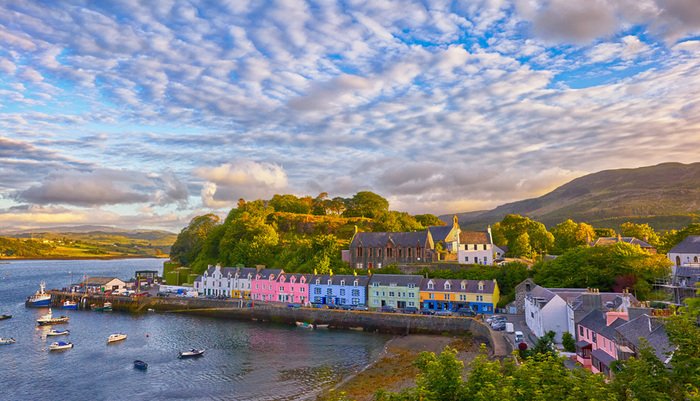
Best for first-timers and those wanting walkable restaurants. The island’s largest town has the most accommodation, the best restaurant selection, and a harbour that genuinely looks like the postcards. Book months ahead. Portree in August without a reservation is not a strategy, it is a prayer.
Check Portree hotel availability on Booking.com.
Broadford
Best for budget-conscious travellers and those arriving late. The first major village after the bridge. More accommodation availability, lower prices than Portree, and a handy Co-op for self-catering supplies. Less atmospheric in the evenings, but strategically smart.
Compare Broadford hotel deals on Hotels.com.
Dunvegan
Best for exploring the west (Neist Point, Coral Beach). A quiet village with a castle, a legendary bakery, and fewer dining options. Self-catering cottages work brilliantly here. A car is non-negotiable.
Find a self-catering cottage near Dunvegan on Vrbo.
Sleat Peninsula
Best for tranquillity and ferry access. The “Garden of Skye” feels a world apart from the busy north. Armadale Castle, the ferry to Mallaig, and a handful of excellent small hotels. Choose this if you want quiet mornings and do not mind driving an hour to reach the Trotternish highlights.
Best Time to Visit the Isle of Skye: Weather, Midges, and Crowds
May, June, and September are the months I recommend most often. May brings long daylight, usually settled weather, and midge numbers that have not yet hit their summer peak. June gives you the extraordinary near-midnight twilight of a Scottish summer, but the midges begin in earnest. September often delivers crisp, clear walking days with the tourist numbers thinning after the school holidays. July and August are the warmest and busiest months, with the most reliable temperatures and the most crowded car parks.
Winter on Skye, roughly November through March, is for photographers and solitude-seekers. The light is low and dramatic. The trails are empty. But daylight is scarce, many businesses close, and the weather can shut down outdoor plans for days at a stretch. Check the Met Office mountain forecast specifically for the Northwest Highlands before any winter walk.
Top Things to Do on the Isle of Skye
These are the locations that earn their fame. The trick is sequencing them so you are not driving back and forth across the island each day. Group the Trotternish sites together. Group the western peninsula sites together. You can find bookable guided tours of the main sights on GetYourGuide if you prefer not to self-drive.
The Trotternish Loop
- Old Man of Storr: The iconic rock pinnacle. Arrive before 8 a.m. or after 5 p.m. for manageable parking and crowd levels.
- Quiraing: A landslip landscape that looks like a fantasy film set. The full circuit hike is exceptional.
- Kilt Rock and Mealt Falls: A waterfall that drops directly into the sea beside a basalt cliff. A quick viewpoint stop.
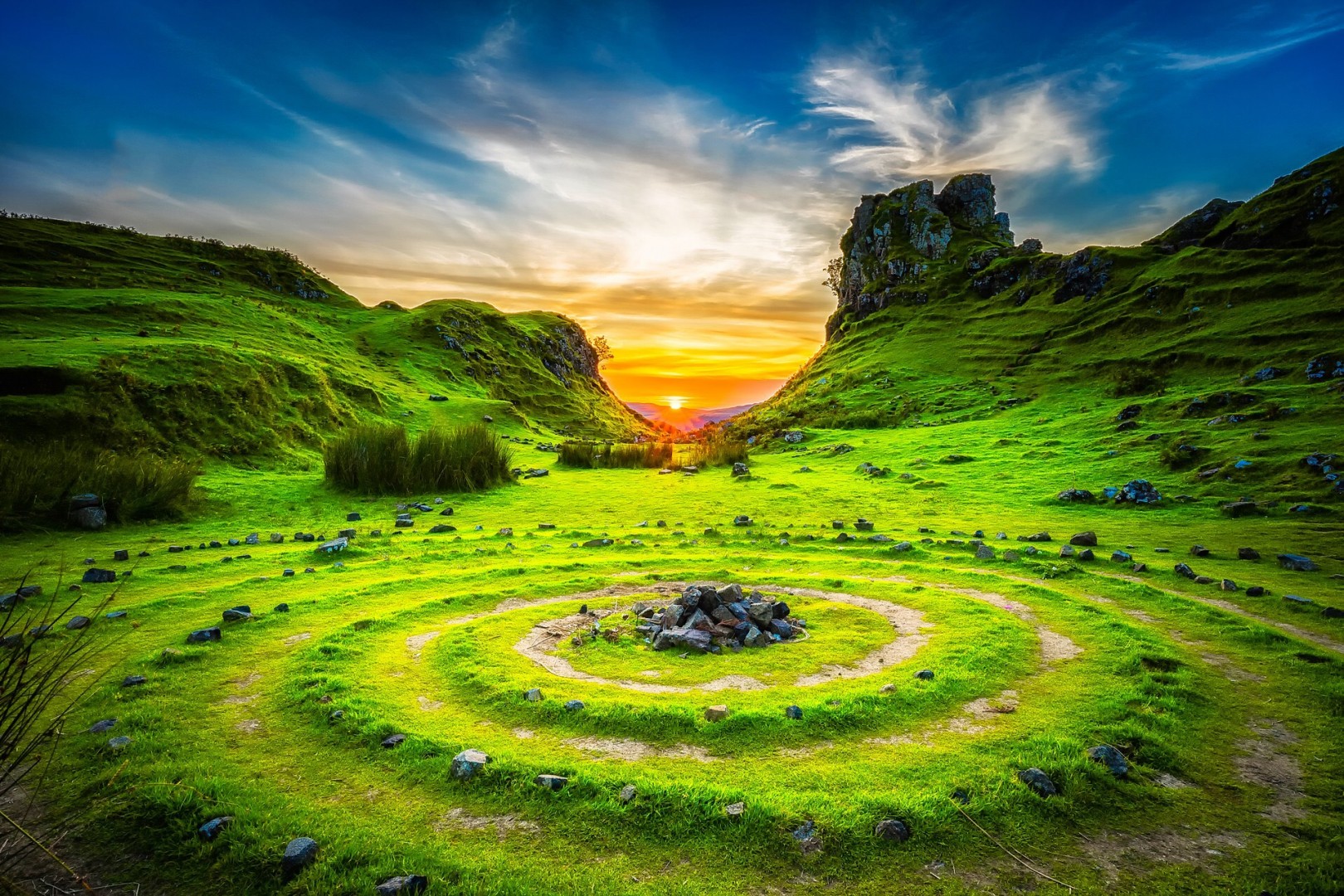
- Fairy Glen: A whimsical hummocky landscape near Uig. Not a formal attraction with a car park, and increasingly strained by visitor numbers. Park respectfully.
Western Peninsula & Beyond
- Neist Point Lighthouse: The westernmost point of Skye. Best at sunset. The walk down is steep but paved.
- Fairy Pools: Crystal-clear cascading pools at the foot of the Cuillins. The walk is easy and flat. The water is freezing.
- Dunvegan Castle: Seat of Clan MacLeod. The gardens are worth the entry fee even if historic interiors are not your thing. Check opening dates on the official website.
- Coral Beach: A startlingly turquoise stretch of sand near Dunvegan. Not coral, but crushed white maerl shells.
Best Hikes on the Isle of Skye by Difficulty Level
Skye is a walker’s island first and a driving destination second. The hikes below are graded honestly, based on having done them in varying conditions. A “moderate” Skye hike in rain and wind can feel strenuous; grade yourself conservatively.
Easy
- Fairy Pools: Flat gravel path, roughly 2.4km return. Suitable for most fitness levels.
- Coral Beach: Short walk from the car park, gentle terrain, stunning payoff.
- Neist Point (to viewpoint, not the lighthouse): The steep descent to the lighthouse is moderate; the cliff-top views from the car park area are easy to access.
Moderate
- Old Man of Storr: A steady climb on a well-trodden path, roughly 3.8km return with 250m of ascent. Can be muddy.
- Quiraing Circuit: Roughly 6.8km loop. Some steep sections and a short scramble. Spectacular the whole way.
Strenuous
- The Cuillin Ridge: A serious mountaineering objective, not a hike. Requires scrambling ability, navigation skills, and proper equipment. Guided ascents are available for those without the experience.
- Bla Bheinn (Blaven): A standalone Munro with a challenging but non-technical ascent. Incredible views across to the main Cuillin ridge.
Where to Eat on the Isle of Skye
Skye’s food scene has improved dramatically over the past decade. You can now eat exceptionally well here, but you need to plan ahead. The single most useful piece of advice I can give you is this: book your dinner table when you book your accommodation, especially between May and September. The best pub kitchens and restaurants on Skye are small, and they fill every seat between 6 p.m. and 9 p.m. Walking in without a reservation at 7 p.m. on a Friday in August usually ends with a supermarket sandwich in the car.
@cookingwithrel Your guide to Isle of Skye ☁️ To eat: 🐟Lochleven Cafe for lunch or dinner on your way to Skye (about half way from Edinburgh) 🍫Chocolates of Glenshiel for hot chocolate on your way to Skye 🦐Shellfish Shack for fresh takeaway shellfish, right as you come onto Skye 🕯️Dulse & Brose for a casual, homey dinner in Portree ☕️Caora Dhubh Coffee for the BEST shortbread and coffees 🦪The Oyster Shed for fried soft shell crab, amongst other wonderful sea treats 🌊Scorrybreac restaurant for a very special meal featuring local seafood & foraged ingredients To see/do: Old Man of Storr hike Whisky tasting at Talisker Fairy Pools hike Sadly, we got totally rained out but I’ve heard great things about Neist Point lighthouse and the Quiraing hike! To stay: I recommend staying in the town of Portree, especially if you’re short on time. Otherwise you will spend a lot of time in the car driving for basic needs! Portree is adorable and I linked our charming Airbnb in my story highlights. We had a view of the harbor. 💚✨ #scotland #isleofskye #isleofskyescotland #travelscotland
Pub Classics & Casual
- The Old Inn, Carbost: Near the Talisker Distillery. Hearty pub food, local ales, and a proper Highland atmosphere. Book ahead.
- Sea Breezes, Portree: Seafood-focused, centrally located, consistently good. One of the easier Portree restaurants to get a table at with some notice.
Fine Dining & Special Occasions
- The Three Chimneys, Colbost: Skye’s most famous restaurant. Tasting menus and local ingredients book weeks or months in advance. A genuine splurge.
- Loch Bay, Stein: A tiny seafood restaurant on the Waternish peninsula. Intimate, exceptional, and essential to reserve well ahead.
For a quick lunch, the bakeries and cafes in Portree and Dunvegan do excellent takeaway sandwiches and soups. The Sligachan Hotel bar, at the crossroads beneath the Cuillins, is a walker’s refuel classic with a legendary selection of whiskies. Check recent reviews and current menus on TripAdvisor before you commit to a long drive for a specific meal.
What to Pack for the Isle of Skye
Skye’s weather is famous for a reason. I have started walks in a t-shirt and finished them in a hail shower, on the same day, in July. Pack for four seasons, layered, and assume you will get rained on at least once regardless of the forecast. The checklist below is what I actually carry, not a generic outdoors-shop list.
Non-Negotiable Clothing
- Waterproof jacket with a proper hood.
- Waterproof overtrousers.
- Sturdy waterproof hiking boots with good ankle support and grip.
- Multiple thin layers: base layer, fleece, and lightweight insulated jacket.
- Warm hat and gloves, even in summer, for exposed ridges.
Gear & Essentials
- Midge repellent (Smidge or similar; essential May–September).
- A midge head net. It weighs nothing and saves your sanity on still evenings.
- Ordnance Survey Landranger maps (sheets 23, 24, and 32) or fully downloaded offline maps on your phone.
- Power bank for your phone.
- Reusable water bottle and a thermos for hot drinks.
Easily Forgotten, Genuinely Useful
- Sunglasses and high-factor sunscreen. The glare off the sea and wet rock is strong, and you burn faster than you think at latitude 57.
- Cash for small village honesty boxes and some rural car parks.
- A small first-aid kit with blister plasters. Skye hikes are hard on feet.
- Swimwear. The Fairy Pools are freezing, but you might want to say you did it.
Frequently asked questions about planning a trip to the Isle of Skye
How many days do you need on the Isle of Skye?
A minimum of 2 full days is needed to see the Trotternish loop and one western peninsula without rushing. Three to four days is recommended for a comfortable pace with time for longer hikes and weather flexibility.
Do you need a car on the Isle of Skye?
A car is strongly recommended. Public buses serve the main villages but operate on infrequent schedules. The island’s best viewpoints and trailheads are spread across single-track roads with no bus access.
What is the best month to visit the Isle of Skye?
May and September offer the best balance of decent weather, long daylight, manageable midge levels, and fewer crowds than the July–August peak. June has the longest days but marks the start of midge season.
Is the Isle of Skye worth visiting in the rain?
Yes, with the right gear. The landscapes take on a dramatic, mist-shrouded quality that photographers often prefer. However, high fell walks become hazardous in heavy rain and low visibility; have flexible backup plans for indoor attractions like Dunvegan Castle or Talisker Distillery.
Which is better, Portree or Broadford as a base?
Portree has more restaurants, a prettier harbor, and a walkable town center. It is the best choice for first-time visitors but books out early and costs more. Broadford is more affordable, has better last-minute availability, and sits closer to the bridge for easy arrival and departure.
How much does a trip to the Isle of Skye cost?
Budget roughly £120–£200 per person per day ($150–$250 USD) for a comfortable mid-range trip, including accommodation, meals, fuel, and one or two paid attractions. Costs are highest from May through September and drop significantly in winter.
Is the bridge to Skye free?
Yes. The Skye Bridge, connecting Kyle of Lochalsh to Kyleakin, has been toll-free since 2004. The alternative CalMac ferry from Mallaig to Armadale charges a fare of roughly £20–£25 per car.
When are the midges worst on Skye?
Midges are most active from late May through September, particularly on still, overcast days and around dawn and dusk near water. They are not a problem in windy conditions or at higher elevations. Bring repellent and a head net.
Plan your trip: booking platforms we use for Skye
I have booked Isle of Skye trips across all these platforms at different times. None are perfect for every situation, so I have listed what each does best. Using the right tool for the job saves money and avoids hours of scrolling through listings that are not what you need.
Best for overall hotel and B&B availability across Portree, Broadford, and Sleat.
Best for self-catering cottages in Dunvegan, Waternish, and the quieter peninsulas.
Best for bundling a flight to Inverness or Glasgow with a hire car for a single Skye trip itinerary.
Best for bookable guided tours of the Trotternish loop and boat trips from Portree.
Best for checking recent reviews of restaurants and pubs before you reserve a table.
Best for loyalty rewards if you book multiple Scotland stays across one trip.