A Trip to Seoul: The First-Timer’s Guide to Visas, Budget, and the Itinerary Everyone Pays For
A trip to Seoul works best at five days, which is enough for the palaces, Myeongdong, and Hongdae, and one day trip without rushing. Most Western passport holders can enter South Korea visa-free for up to 90 days, and the K-ETA temporary exemption for eligible countries has been extended through the end of this year, so check the official K-ETA site before you fly. Budget travelers should plan on roughly 80 to 110 dollars per day, mid-range travelers 160 to 220 dollars, and upscale travelers from 350 dollars upward, excluding flights (confirm current rates with your hotel and airline).
Seoul is the rare capital where the subway is faster than a taxi, the street food is better than most restaurants, and the wifi works in the tunnels. I have planned trips here for friends who wanted palaces and for friends who wanted skincare and late-night barbecue, and the plans looked almost nothing alike.
What they had in common was this: nobody regretted five days, and everybody regretted two. This guide gives you the fast version first, then the depth, so you can build the trip you actually want.
Jump to: Visa and K-ETA | Airport transfer | Where to stay | 5-day itinerary | Budget | Mistakes to avoid | FAQ
Key takeaways
- The K-ETA temporary exemption for eligible countries runs through the end of this year, so verify your status on the official K-ETA site before booking (confirm eligibility directly).
- The AREX Express train from Incheon to Seoul Station takes about 43 minutes and costs around 9,500 to 11,000 won (check current fares on the official AREX site).
- Buy a T-Money card at any convenience store for about 2,500 to 4,000 won, then load it with cash or card (confirm the current card fee at the store).
- Seoul’s subway fare starts at 1,400 won per ride with a T-Money card (check current fares on the Seoul Metro site).
- Gyeongbokgung Palace costs 3,000 won for adults, and entry is free if you wear a hanbok (confirm the current ticket price on the official palace site).
- A budget traveler can manage on roughly 80 to 110 dollars per day excluding flights, while mid-range travelers should plan 160 to 220 dollars (confirm current rates with your hotel and tour operators).
- Five days is the correct length for a first trip. Two days means you see Myeongdong and nothing else.
Do you need a visa for a trip to Seoul?
Most travelers from the United States, the United Kingdom, Canada, Australia, and the European Union can enter South Korea visa-free for up to 90 days for tourism. The K-ETA, Korea’s electronic travel authorization, has been temporarily exempted for many of those same countries through the end of this year, so you do not need to apply in advance unless your nationality is not on the exemption list. Verify your status on the official K-ETA site, not a third-party agency, and check the rules again before you fly because the exemption window has been extended before.
If you do need a K-ETA, it costs about 10,000 won and is valid for two years (confirm the fee on the official site). Applications typically process within 72 hours, but apply at least a week before departure so you have room for corrections. Your passport needs to be valid for the duration of your stay, and you should carry a return ticket because immigration officers can ask for it.
The other detail people miss is the arrival card. You will fill one out on the plane or at the immigration hall, and you need your accommodation address in Seoul to complete it. Save the hotel address on your phone before you board, because the wifi at Incheon is reliable, but the line for the immigration card is not the place to look it up.
Maya’s honest take: “Check the K-ETA site yourself, not a blog. The exemption list has changed twice in the last two years, and a five-minute check on the official government site is worth more than any guide’s summary.”
How do you get from Incheon Airport to Seoul?
Incheon International Airport is about 50 kilometers west of central Seoul, and the transfer you choose shapes your first two hours in the country. Here is how the options compare.
AREX Express train
The fastest and most predictable option. It runs nonstop from Incheon to Seoul Station in about 43 minutes and costs roughly 9,500 to 11,000 won depending on where you book (check current fares on the official AREX site). Trains run every 20 to 30 minutes, and there is space for luggage.
AREX All-Stop train
Slower but cheaper, at around 4,500 to 5,000 won (confirm the fare on the AREX site). It stops at every station between the airport and Seoul Station and takes roughly 60 minutes. Use this if your hotel is near one of the stops along the way, like Hongik University in Hongdae.
Airport limousine bus
Comfortable and direct to many hotel districts, including Myeongdong and Gangnam. Fares run about 16,000 to 18,000 won depending on the route (confirm the current fare with the bus operator). It takes 60 to 90 minutes in traffic, and it is the easiest option if you have heavy luggage.
Taxi
The most expensive option, at roughly 65,000 to 100,000 won to central Seoul depending on traffic and surcharges (confirm the fare estimate with the driver or on the Kakao T app). Worth it only if you arrive late at night or are splitting the cost with a group.
Maya’s honest take: “Take the AREX Express into Seoul Station and then a short taxi to your hotel. It is the best balance of speed, price, and not dragging your suitcase through a subway transfer after a long flight.”
Where should you stay on a trip to Seoul?
Seoul is enormous, and the neighborhood you pick changes the trip more than the hotel does. Here is how the main areas compare.
Myeongdong
Best for first-timers. Walking distance to the palaces, shopping, street food, and multiple subway lines. It is busy and touristy, but it is the most efficient base if you have three to five days and want to see the classic sights.
Hongdae
Best for younger travelers and anyone who wants nightlife, live music, and indie cafes. It is farther from the historic center, but the AREX All-Stop train connects directly to the airport, and the energy is unmatched. Hotel rates are often lower than Myeongdong.
Insadong and Bukchon
Best for anyone who wants a quieter base near the palaces and hanok architecture. It is walkable to Gyeongbokgung and Changdeokgung, and the streets are lined with tea houses and small galleries. Fewer hotels, but the ones there are memorable.
Gangnam
Best for business travelers and anyone who wants modern Seoul, upscale dining, and shopping. It is south of the river and farther from the historic sights, but the subway connects easily and the hotel inventory is strong.
Best for a first trip
- Myeongdong: central, walkable, easy subway access
- Insadong: quiet base near the palaces
- Hongdae: cheaper and livelier, direct airport train
Worth considering
- Gangnam: modern hotels, best for business travel
- Booking through Booking.com lets you filter by subway station, which matters more than the neighborhood name
What does a 5-day Seoul itinerary look like?
This is a free version of the plan most guides charge for. It spreads the palaces, neighborhoods, and one-day trip across five days without backtracking.
Day 1: Myeongdong and Namsan
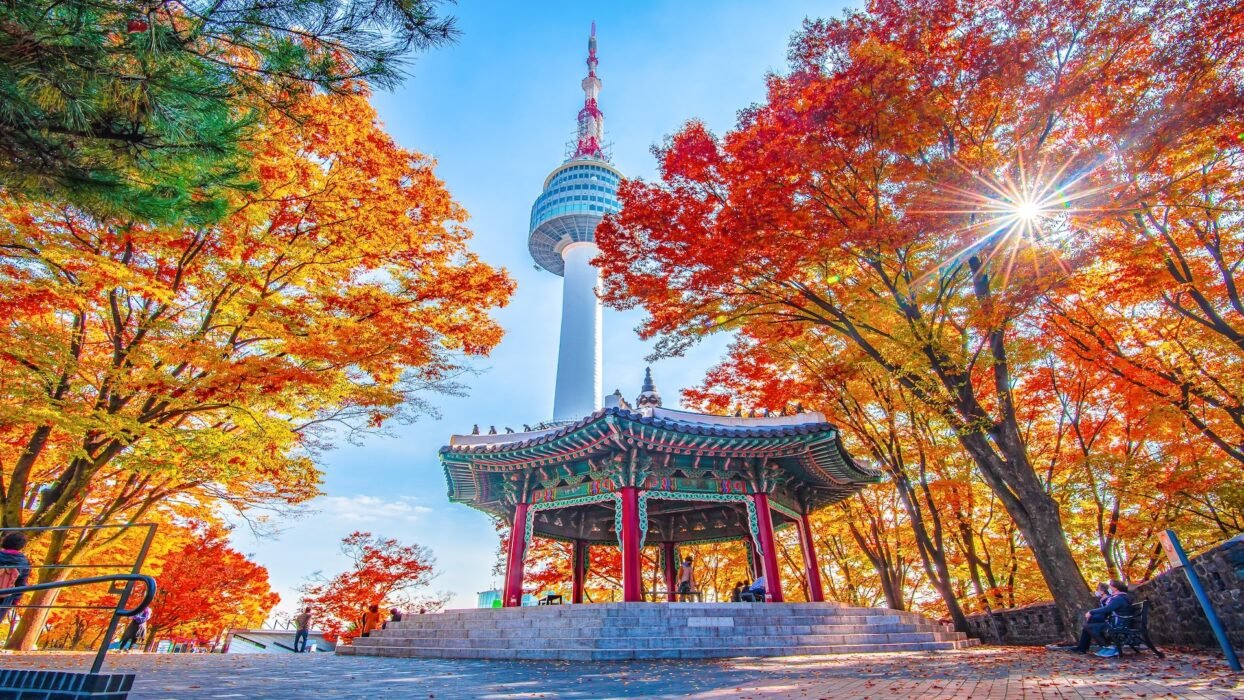
Arrive, check in, and walk Myeongdong for street food and shopping. In the late afternoon, take the Namsan cable car up to N Seoul Tower for the view, then walk down or take the bus back. Dinner at a barbecue restaurant in Myeongdong.
Day 2: Palaces and Bukchon
Start at Gyeongbokgung for the changing of the guard ceremony at 10am, then walk to Bukchon Hanok Village for the traditional houses. Lunch in Insadong, then Changdeokgung in the afternoon for the Secret Garden tour. Entry to Gyeongbokgung is 3,000 won and free if you wear a hanbok (confirm the current ticket price on the official palace site).
Day 3: Hongdae and the Han River
Spend the morning exploring Hongdae’s cafes and shops, then walk to the Han River in the afternoon for a picnic and a river cruise. Rent a bike along the river path, which is one of the cheapest and best things to do in Seoul.
Day 4: Day trip to Suwon or the DMZ
Suwon is 30 minutes by train and has the Hwaseong Fortress, which is a UNESCO site and walkable in a few hours. The DMZ tour runs half a day and costs about 50 to 70 dollars per person depending on the operator (confirm the current price with your tour provider, and book through GetYourGuide if you want a vetted operator).
Day 5: Gangnam, COEX, and a spa
Spend the morning at COEX Mall and the Starfield Library, then an afternoon at a jjimjilbang (Korean spa) for the full local experience. A day pass at a mid-range spa costs around 15,000 to 25,000 won (confirm the current price with the spa). Dinner in Gangnam or Apgujeong to close the trip.
Maya’s honest take: “Do not try to do both Suwon and the DMZ. Pick one. The DMZ is more memorable and less physically demanding, but Suwon is closer and cheaper.”
How much does a trip to Seoul cost?
Seoul is cheaper than Tokyo and much cheaper than Singapore, but it is not a budget destination in the way Southeast Asia is. Here is what the numbers look like this year.
Budget travelers staying in guesthouses or budget hotels in Hongdae or Insadong, eating street food and convenience store meals, and using the subway should plan on roughly 80 to 110 dollars per person per day, excluding flights (confirm current rates with your accommodation). Mid-range travelers in a three-star or four-star hotel with restaurant meals and paid attractions should budget around 160 to 220 dollars per person per day. Upscale travelers in a five-star hotel with fine dining and tours start near 350 dollars per person per day (check current rates with each property).
Flights to Incheon vary widely by origin. From Europe, round trips typically run 600 to 1,000 dollars, while from North America the range is closer to 800 to 1,300 dollars (check current fares on Kayak before booking). The T-Money card costs about 2,500 to 4,000 won, and subway fares start at 1,400 won per ride (confirm the card fee and current fares on the Seoul Metro site). Museum entry is often free or under 5,000 won, so the biggest cost drivers are accommodation and food.
Best ways to save
- Eat at street stalls and convenience stores, which are excellent and cheap
- Wear a hanbok to the palaces and get free entry (confirm the current rule on the palace site)
- Stay in Hongdae instead of Myeongdong for lower hotel rates
Worth considering
- Visiting in spring or autumn for the best weather and lowest crowds outside peak weeks
- A T-Money card pays for itself in a day if you use the subway more than three times
What do first-time Seoul visitors get wrong?
Underestimating the subway. Seoul’s metro is extensive, clean, and English-signed. Learn to read the station maps and use a T-Money card, and you will rarely need a taxi. The Naver Map app works better than Google Maps in Korea.
Booking flights without checking the K-ETA status. Even if you think you are exempt, verify on the official site before you book. A denied boarding at the airport is a much worse scenario than a five-minute check.
Visiting the palaces on a Tuesday. Gyeongbokgung is closed on Tuesdays, and Changdeokgung is closed on Mondays. Check the official palace site for the current schedule before you plan your day.
Assuming credit cards work everywhere. Most Seoul businesses accept cards, but some small restaurants and market stalls are cash-only. Carry a small amount of won for those cases.
Skipping the neighborhoods outside the center. Myeongdong is convenient, but Seoul is better in Hongdae, Ikseondong, and Seongsu. Give at least one afternoon to a neighborhood you have never heard of before you arrived.
Tipping. Korea does not have a tipping culture in most restaurants and cafes. Leaving a tip is not expected and can even seem strange. Taxis and hotels are the only places where rounding up is common.
Frequently asked questions
Do I need a visa or K-ETA for a trip to Seoul?
Most travelers from the US, UK, Canada, Australia, and the EU can enter visa-free for up to 90 days. The K-ETA temporary exemption for eligible countries runs through the end of this year, so verify your status on the official K-ETA site before booking (confirm eligibility directly). If you do need it, the fee is about 10,000 won and processing takes up to 72 hours (check the current fee on the official site).
How many days do you need for a trip to Seoul?
Five days is the right length for a first trip. It covers the palaces, Myeongdong, Hongdae, the Han River, and one day trip without rushing. Three days is possible if you skip the day trip and focus on the center, but you will leave without seeing the neighborhoods that make Seoul distinctive.
Is Seoul expensive for tourists?
Seoul is mid-range by developed-country standards, cheaper than Tokyo and much cheaper than Singapore. Budget travelers can manage on roughly 80 to 110 dollars per day excluding flights, while mid-range travelers should budget 160 to 220 dollars per day (confirm current rates with your hotel). The biggest cost lever is accommodation, not food or transport.
What is the best time of year to visit Seoul?
Spring, from April to early June, and autumn, from September to early November, offer the best weather with mild temperatures and clear skies. Summer is hot, humid, and rainy, and winter is cold and dry. Cherry blossom season in April is beautiful but crowded and expensive.
How do you get from Incheon Airport to Seoul?
The AREX Express train runs nonstop to Seoul Station in about 43 minutes and costs roughly 9,500 to 11,000 won (check current fares on the official AREX site). The All-Stop train is cheaper at around 4,500 to 5,000 won but takes 60 minutes. A taxi to central Seoul costs 65,000 to 100,000 won depending on traffic (confirm the fare with the driver or on the Kakao T app).
Is Seoul safe for tourists?
Seoul is one of the safest major cities in the world, with very low rates of violent crime and a reliable public transport system. Petty theft is rare. The bigger risks are getting lost in the subway system, overeating at street stalls, and underestimating the summer humidity.
Plan your trip: booking platforms we trust
I use these platforms because they surface useful inventory and transparent pricing for Seoul, and I have booked through most of them personally. The links below are affiliate links, which means WakaAbuja may earn a small commission if you book through them at no extra cost to you. Pick the one that fits your trip, not all of them.
Booking.com
Best for Myeongdong and Hongdae hotels with free cancellation.
Agoda
Strong inventory for Seoul hotel deals, especially in the center.
Kayak
Compare flights into Incheon and Gimpo before you commit.
GetYourGuide
DMZ tours, palace guides, and food tours.
Expedia
Flight and hotel packages if you want a bundled Seoul trip.
WakaAbuja does its best to keep all information accurate at the time of publishing. Prices, policies, and availability change regularly. Always verify with official sources before you travel. We are not liable for errors caused by outdated information. Travel insurance is strongly recommended.