advertisement
Volcano travel offers some of the world’s most dramatic landscapes, and these eight regions make it easier to see active and ancient volcanoes while knowing how to get there.
Fact-Checked By: Maya Whitfield—Senior Travel Editor at WakaAbuja
The best places to see an active volcano are Hawaii for accessible lava viewing at Kilauea, Iceland for dramatic eruptions on the Reykjanes Peninsula, Italy for Stromboli and Etna, and Guatemala for the Pacaya night hike. Budget around $150 to $400 per person for a guided volcano tour (confirm the latest price directly with the operator), plus flights and accommodation. The clearest lava viewing is usually at night, and the safest sites are those with official park monitoring from the USGS or local equivalent.
Most volcano guides list every dramatic-looking peak on Earth. Only a handful of them will actually show you glowing lava, and knowing which is the difference between a good photo and a once-in-a-lifetime night. I have hiked Pacaya in Guatemala, watched the glow of Stromboli from a boat off Sicily, and stood at the rim of a dormant caldera in Iceland that was still steaming from the last eruption.
This guide tells you which regions are actually worth the trip, what it really costs, and how to pick between them depending on whether you want lava, adventure, or both.
Jump to: Quick Comparison | Hawaii | Iceland | Italy | Indonesia | Japan | New Zealand | Central America | The Andes | What It Costs | By Traveler Type | FAQ
Key takeaways
- Lava viewing is not the same as volcano viewing. Most volcano hikes give you craters and steam, not glowing lava. Kilauea in Hawaii and Stromboli in Italy are the two most reliable lava shows.
- Volcano tours cost $150 to $400 per person (confirm the latest price directly with the operator). Night tours are more expensive but far better for lava viewing.
- Hawaii is the easiest active volcano to visit. Kilauea is inside a national park with roads, viewpoints, and ranger monitoring.
- Iceland is the most dramatic for eruptions. The Reykjanes Peninsula has had repeated eruptions since 2021, with viewing areas managed by local authorities.
- Guatemala’s Pacaya is the best value. A night hike to see lava glow costs around $30 to $60 with a local guide (confirm the latest price directly with the operator).
- Always check current alert levels before you book. Volcanoes close without notice when activity changes. Check the Smithsonian Global Volcanism Program or the local geological survey before you travel.
Best Places to See Volcanoes: Quick Comparison
This is the short version for anyone deciding between regions. Use it to narrow down before you read the full entries.
Hawaii
Volcanoes: Kilauea, Mauna Loa, Haleakala
Lava odds: High when Kilauea is erupting
Difficulty: Easy, with road access and viewpoints
Best time: Year-round, dry season from April to October
Cost: Moderate, park entry plus flights (confirm the latest price directly with the operator)
Iceland
Volcanoes: Fagradalsfjall, Eyjafjallajokull, Hekla
Lava odds: Medium, depends on eruption cycle
Difficulty: Easy to moderate; weather is the main challenge.
Best time: June to August for hiking, winter for northern lights
Cost: High. Iceland is expensive (confirm the latest price directly with the operator).
Italy
Volcanoes: Stromboli, Etna, Vesuvius
Lava odds: High at Stromboli, medium at Etna
Difficulty: Moderate to hard; Stromboli requires a guided hike.
Best time: May to June, September to October
Cost: Moderate, tours $50 to $150 (confirm the latest price directly with the operator)
Indonesia
Volcanoes: Mount Bromo, Ijen, Merapi
Lava odds: Medium. Ijen has blue fire rather than lava.
Difficulty: Moderate. Bromo is easy; Ijen requires a night hike.
Best time: April to October (dry season)
Cost: Low, tours $40 to $100 (confirm the latest price directly with the operator)
Japan
Volcanoes: Mount Fuji, Sakurajima, Aso
Lava odds: Low; most are scenic, not erupting.
Difficulty: Easy to hard, the Fuji climb is strenuous.
Best time: July to September for Fuji, year-round for Aso
Cost: Moderate to high (confirm the latest price directly with the operator)
Central America
Volcanoes: Pacaya, Fuego, Arenal, Masaya
Lava odds: High at Pacaya and Fuego
Difficulty: Easy to moderate, night hikes available
Best time: November to April (dry season)
Cost: Low, tours $30 to $80 (confirm the latest price directly with the operator)
New Zealand
Volcanoes: Tongariro, Ruapehu, Whakaari
Lava odds: Low, Whakaari is currently closed.
Difficulty: Moderate, Tongariro Alpine Crossing is a full day
Best time: November to March
Cost: Moderate (confirm the latest price directly with the operator)
The Andes
Volcanoes: Cotopaxi, Villarrica, Osorno
Lava odds: Low; these are mostly scenic.
Difficulty: Moderate to hard, high altitude
Best time: December to March
Cost: Moderate to high (confirm the latest price directly with the operator)
Hawaii: The Easiest Place to See an Active Volcano
Hawaii is the best place in the world for a first volcano trip. Kilauea on the Big Island is one of the most active volcanoes on Earth, and it sits inside Hawaii Volcanoes National Park with roads, viewpoints, and ranger monitoring. When Kilauea is erupting, you can often see the glow from the Crater Rim Drive without hiking at all.
Mauna Loa, the largest active volcano on Earth, is on the same island. It erupts rarely but dramatically. Haleakala on Maui is a different experience: a massive shield volcano with a summit at 10,023 feet and one of the best sunrises in the world.
Cost: Park entry around $30 per vehicle, flights from the US mainland $400 to $800 round-trip (confirm the latest price directly with the operator).
Best time: Year-round. The dry season (April to October) has clearer skies for viewing.
Maya Whitfield’s honest take: “Check the USGS Hawaiian Volcano Observatory website before you book your flight. Kilauea goes through long quiet periods. When it is erupting, this is the single best lava-viewing site in the world.”
Iceland: The Most Dramatic Recent Eruptions
Iceland has had repeated eruptions on the Reykjanes Peninsula since 2021, making it one of the most accessible active volcanic zones in Europe. The eruptions have closed and reopened to tourism depending on lava flow and gas levels, so access changes constantly. Fagradalsfjall and the nearby Sundhnukur crater row have been the main eruption sites.
Beyond the recent eruptions, Iceland has Eyjafjallajokull (the 2010 eruption that grounded European flights), Hekla, and the Katla system. Most of the accessible volcanic experiences are either hiking to cooled lava fields or viewing from designated safe zones managed by Icelandic authorities.
Cost: Tours $100 to $200, plus flights and Iceland’s expensive accommodation (confirm the latest price directly with the operator).
Best time: June to August for hiking, winter for the northern lights over volcanic landscapes.
Italy: Stromboli, Etna, and Vesuvius
Italy has three of the most famous volcanoes in the world. Stromboli, on a small island off the coast of Sicily, has been in near-continuous eruption for thousands of years and is one of the best places in the world to see regular lava bursts. Etna, on Sicily, is Europe’s most active volcano and offers summit hikes and off-road tours. Vesuvius, near Naples, is dormant but famous for the 79 AD eruption that buried Pompeii.
The Stromboli night hike is the standout experience. You hike up with a licensed guide in the late afternoon, watch the sunset from the summit, and then see the glowing lava bursts in the dark. It is a moderate hike but not technical. Groups are capped by the Italian authorities for safety.
Cost: Stromboli guided hike $50 to $100, Etna summit tours $60 to $150 (confirm the latest price directly with the operator).
Best time: May to June and September to October. July and August are crowded and hot.
Indonesia: Bromo, Ijen, and the Blue Fire
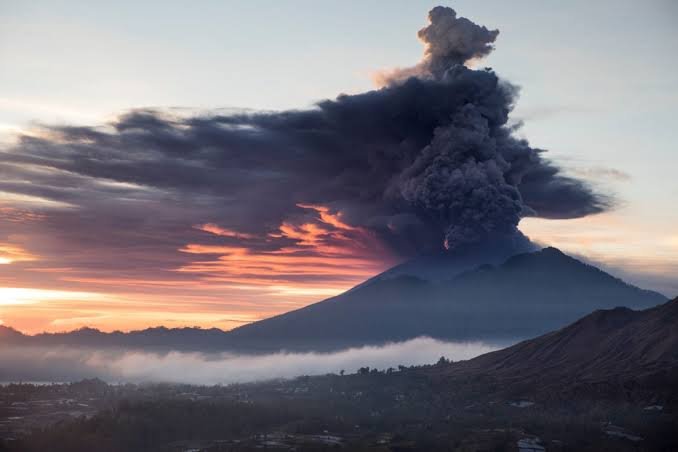
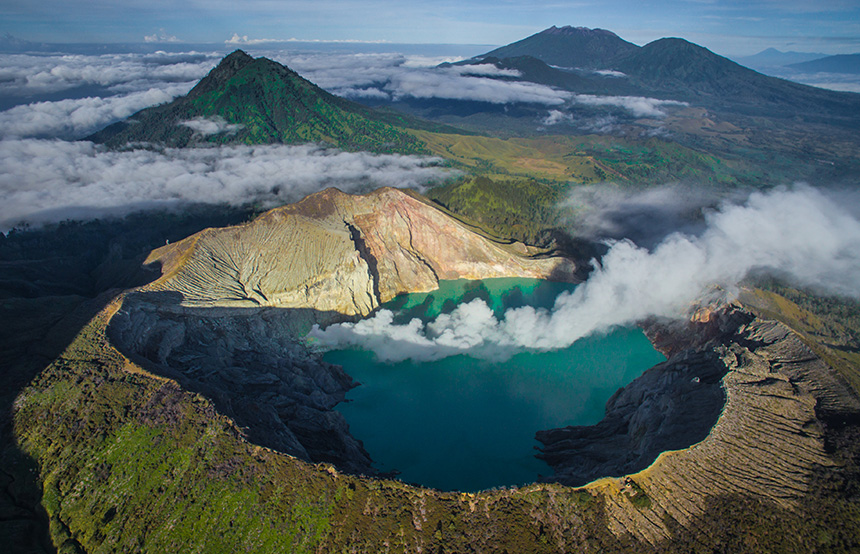
Indonesia has more active volcanoes than any other country on Earth, and it has some of the most photogenic. Mount Bromo on Java is the postcard volcano: a smoking crater in a vast caldera, accessible by jeep at sunrise. Ijen, also on Java, is famous for its electric-blue fire caused by burning sulfuric gas, though this is a night hike and requires a gas mask.
Mount Merapi, near Yogyakarta, is one of the most active volcanoes in Indonesia and offers jeep tours of the 2010 eruption damage zone. Note that Indonesia’s volcanoes are genuinely dangerous, and local authorities regularly raise alert levels. Always check the current status before booking.
Cost: Bromo sunrise tours $40 to $80, Ijen blue fire tours $50 to $100 (confirm the latest price directly with the operator).
Best time: April to October (dry season).
Japan: Mount Fuji, Sakurajima, and Aso
Japan’s volcanoes are mostly scenic rather than eruptive. Mount Fuji is the iconic one, and the official climbing season runs July to early September. It is a strenuous climb, not a walk, and altitude sickness is a real risk. Sakurajima, near Kagoshima in southern Japan, is one of the most active volcanoes in the country and regularly produces ash plumes visible from the city. Aso, on Kyushu, has one of the largest calderas in the world.
The experience here is less about lava and more about the combination of Japanese culture and volcanic landscapes. Ryokan stays near onsen (hot springs) heated by volcanic activity, which is part of the appeal.
Cost: Fuji climbing tours $100 to $200, Sakurajima ferry and tours $20 to $50 (confirm the latest price directly with the operator).
Best time: July to September for Fuji, year-round for Aso and Sakurajima.
New Zealand: Tongariro and the Whakaari Situation
New Zealand’s volcanic heartland is the Tongariro National Park on the North Island, home to three active volcanoes: Tongariro, Ngauruhoe, and Ruapehu. The Tongariro Alpine Crossing is one of the best day hikes in the world and passes through volcanic terrain, including the Emerald Lakes and the Red Crater.
Whakaari (White Island) is the country’s most famous active volcano, but access has been restricted since the 2019 eruption that killed 21 people. Tours are not currently operating, and the situation remains under review. Any guide that suggests you can book a Whakaari tour right now is wrong. Check GeoNet for the current status.
Cost: Tongariro Alpine Crossing guided hikes $150 to $250 (confirm the latest price directly with the operator).
Best time: November to March for the Alpine Crossing. The trail is often snow-covered outside that window.
Central America: Pacaya, Fuego, and Arenal
Central America is the best value region for volcano tourism. Guatemala’s Pacaya is an easy hike to a lava field, and when it is active, you can see glowing lava up close from a safe distance. Fuego, near Antigua, is one of the most active volcanoes in the world and can be seen erupting from the town itself on clear days. Acatenango is the tougher overnight hike where you camp and watch Fuego erupt across the valley all night.
Costa Rica’s Arenal is a classic cone volcano, though it has been mostly dormant since 2010. Nicaragua’s Masaya has a drive-up crater with a viewing platform, which makes it one of the easiest active craters in the world to see.
Cost: Pacaya night hike $30 to $60, Acatenango overnight $80 to $150, Masaya entrance $10 (confirm the latest price directly with the operator).
Best time: November to April (dry season).
The Andes: Cotopaxi, Villarrica, and Osorno
The Andes has hundreds of volcanoes, but most are high-altitude and physically demanding. Ecuador’s Cotopaxi is one of the highest active volcanoes in the world at 5,897 meters, and climbing it requires acclimatization and a guided ascent. Villarrica in Chile is a more accessible climb, with a summit view into an active lava lake on clear days. Osorno, also in Chile, is the postcard cone of the Lake District.
These are not beginner-friendly volcanoes. The altitude alone makes them a serious undertaking, and weather windows are narrow. If you are a fit hiker looking for a real mountaineering experience with volcanic features, this is the region.
Cost: Cotopaxi guided climb $300 to $600, Villarrica guided climb $100 to $200 (confirm the latest price directly with the operator).
Best time: December to March for the clearest weather.
What Does a Volcano Trip Actually Cost?
Costs vary widely by region. Here is a realistic budget per person for a volcano-focused trip, not including international flights (confirm the latest price directly with the operator).
Budget volcano trip ($500 to $900)
Guatemala or Nicaragua. Night hike to Pacaya or Masaya with a local guide, three nights in a guesthouse, and local food. The most affordable real volcano experience in the world.
Mid-range volcano trip ($1,200 to $2,500)
Italy (Stromboli and Etna) or Indonesia (Bromo and Ijen). Guided hikes, mid-range accommodation, and some internal flights.
Splurge volcano trip ($3,000 to $6,000+)
Iceland, Hawaii, or the Andes. Iceland for high-end lodges and recent eruption zones. Hawaii for national park access and add-on island hopping. The Andes for serious mountaineering with equipment and acclimatization.
Best Volcano Trip by Traveler Type
Families with kids
Hawaii: Drive-up viewpoints, ranger programs, and easy trails.
Masaya, Nicaragua: Viewing platform at the crater edge, no hiking required.
Budget travelers
Guatemala: Pacaya night hike for under $60 with a local guide.
Indonesia: Bromo and Ijen tours under $100 each (confirm the latest price directly with the operator).
Adventure travelers
Ecuador: Cotopaxi summit climb with acclimatization.
Chile: Villarrica for a real lava lake at the summit.
Photographers
Stromboli, Italy: Night lava bursts from the summit.
Fuego, Guatemala: Visible erupting from Antigua on clear days.
Luxury travelers
Iceland: Helicopter tours over eruption sites and luxury lodges.
Hawaii: High-end resorts on the Big Island and private guides.
Is It Safe to Visit an Active Volcano?
Yes, if you follow the rules and do not try to go beyond marked zones. Volcanoes kill people every year, mostly tourists who ignore warnings. Here is what to actually do.
Check the current alert level.
Before you book, check the Smithsonian Global Volcanism Program or the local geological survey. Volcanoes close without notice when activity changes. If a site is on high alert, do not book it.
Hire a licensed guide.
Almost every serious volcano hike requires a licensed guide. They know the gas conditions, the wind direction, and the correct route. Never hike into an exclusion zone on your own.
Bring a gas mask on sulfur-heavy hikes.
At Ijen, Kawah Ijen, Whakaari (when open), and some Italian sites, sulfur dioxide levels can be dangerous. A proper respirator with acid gas cartridges is essential. Paper masks do nothing.
Start early.
Most volcano hikes start before dawn or in the late afternoon. The conditions are better, the crowds are thinner, and the lava glows at night. Start times are not optional.
Respect the exclusion zones.
Exclusion zones exist for a reason. Do not walk past the barrier, do not follow social media influencers who have gone off-trail, and do not stand near active vents. Rocks and gas can change without warning.
Frequently asked questions about seeing volcanoes
Where is the best place to see an active volcano?
Hawaii is the best overall destination for a first-time volcano trip. Kilauea is one of the most active volcanoes in the world and is inside a national park with road access. Italy’s Stromboli is the best for viewing regular lava bursts at night.
Can you see lava without hiking?
Yes, at a few sites. Hawaii’s Kilauea has road-accessible viewpoints when it is erupting. Nicaragua’s Masaya has a drive-up crater with a viewing platform. Most other volcanoes require at least a moderate hike to see anything.
How much does a volcano tour cost?
Tours range from $30 to $60 for a Pacaya night hike in Guatemala to $300 to $600 for a Cotopaxi summit climb in Ecuador (confirm the latest price directly with the operator). Most mid-range volcano tours fall in the $50 to $150 range.
Is it safe to visit an active volcano?
Yes, if you follow the rules. Always check the current alert level, hire a licensed guide, and never enter an exclusion zone. Most volcano accidents happen when tourists ignore warnings and go beyond marked areas.
What is the best volcano to visit with kids?
Hawaii Volcanoes National Park and Masaya in Nicaragua are the best for kids. Both have viewing platforms and short walks that do not require hiking. Hawaii also has ranger programs and a visitor center.
Can you still visit Whakaari (White Island) in New Zealand?
No. Whakaari has been closed to tourism since the 2019 eruption that killed 21 people. The situation is under ongoing review, and no tours are operating. Do not book any tour that claims otherwise.
What is the best time of year to see a volcano?
It depends on the region. Hawaii is year-round. Italy is best in May to June and September to October. Central America and Indonesia are best in their dry seasons, November to April and April to October, respectively.
Plan your trip: booking platforms we trust
These are the platforms I use to plan volcano trips. For guided hikes, always confirm that the operator is licensed by the local park authority before booking.
GetYourGuide
Best for booking guided volcano hikes and night tours worldwide.
Booking.com
Reliable for hotels near volcano regions with free cancellation.
Kayak
Useful for comparing flights to Hawaii, Guatemala, and Iceland.
Expedia
Useful for bundling flights and hotels into a volcano trip package.
Vrbo
Good for renting a house near Arenal or in the Antigua region for a longer stay.
TripAdvisor
Essential for reading recent reviews of specific volcano tour operators.
For more planning help, see our travel planning guides, our hotel reviews, our attractions section, and our visa category. When you are ready to book flights, start with our discounted flights page.
WakaAbuja does its best to keep all information accurate at the time of publishing. Prices, policies, and availability change regularly. Always verify with official sources before you travel. We are not liable for errors caused by outdated information. Travel insurance is strongly recommended.