
advertisement
See the Best Places to Visit in Ireland on one realistic trip, from iconic cities to dramatic coastal landscapes.
Fact-Checked By: Maya Whitfield, Senior Travel Editor at WakaAbuja
The best places to visit in Ireland are Dublin, Galway, Killarney, Kilkenny, Cork, the Dingle Peninsula, the Ring of Kerry, the Cliffs of Moher, and Connemara. You need at least 7 days to see the highlights without rushing, and 10 to 14 days if you want to add the West Coast properly. A rental car gives you the most freedom, though trains connect Dublin, Cork, Galway, and Limerick comfortably.
Every list of the best places to visit in Ireland gives you the same five names. What almost none of them tell you is how to actually connect those places into a trip that does not waste half your vacation driving in circles. I have planned this route for friends, for readers, and for myself more times than I can count. The order matters as much as the destinations.
Jump to: How to use this list | The places | A 7-day route | Best time to go | Mistakes to avoid | FAQ
Key takeaways
- Seven days is the minimum for a highlights trip. Ten to fourteen days lets you add the West Coast without constant driving.
- Dublin deserves two full days. Galway, Killarney, and Kilkenny each need one to two days.
- The west coast weather is wetter and windier than Dublin. Pack layers and a real rain jacket, not an umbrella.
- Driving distances look short on the map but take longer than you expect. Irish back roads are narrow and slow.
- Trains connect Dublin, Cork, Galway, Limerick, and Kilkenny well. Rural areas like Dingle and Connemara need a car.
- Accommodation in Killarney and Galway sells out months ahead in summer. Book early or travel in shoulder season.
- Budget roughly 120 to 200 euros per person per day for mid-range hotels, meals, and transport (confirm the latest rates on the official booking sites).
How many days do you actually need in Ireland?
This is the question that should decide your entire itinerary, and almost no list answers it directly. The honest answer depends on how much driving you are willing to do. Ireland is small on paper, but the roads are slow, the weather is unpredictable, and the best parts reward lingering rather than ticking off.
With five days, pick one region and stay there. Dublin plus one West Coast base is realistic. With seven days, you can do Dublin, Kilkenny, Killarney, and Galway in a loop without feeling frantic. With ten days, add Cork, the Dingle Peninsula, and a night in Connemara. With two weeks, you can slow down, take ferries to the Aran Islands, and actually enjoy the pubs instead of just passing through them.
My rule of thumb: never plan more than two hours of driving on a day when you also want to see something properly. Ireland punishes over-scheduling more than almost any country I have traveled in.
Maya’s honest take: “If you only remember one thing from this guide, make it this: book your car before you book your hotels. Rental cars in Ireland sell out in summer, and the price doubles if you wait.”
Best for a short trip
- Dublin, two full days for history, pubs, and Trinity College
- Galway, one to two days as a base for Connemara and the Aran Islands
- Cliffs of Moher, an easy day trip from Galway or Ennis
- Kilkenny, one day for the Medieval Mile and castle
Worth adding with more time
- Dingle Peninsula, one to two days for the most scenic drive in the country
- Connemara, one day for empty landscapes and Kylemore Abbey
- Cork and Kinsale, one to two days for food and coastal walks
What are the best places to visit in Ireland?
Below are the destinations that earn their place on almost every serious Ireland itinerary. For each one I have included why it ranks, how long to stay, the best time to visit, and one tip I only learned by going there myself. If you are booking accommodation as you go, browse options on Booking.com or compare guesthouses and self-catering cottages on Vrbo if you are traveling as a group.
Dublin
Dublin is the gateway for almost every trip and the country’s cultural and political hub. It is also the place most visitors rush through on the way west, which is a mistake. Two full days lets you see Trinity College and the Book of Kells, Dublin Castle, St. Patrick’s Cathedral, and the Guinness Storehouse without sprinting. The National Museum of Ireland is free and genuinely worth half a day.
Ideal length of stay: two full days, three if you want a day trip to Glendalough or Howth.
Best time to visit: May, June, and September for lighter crowds. August is peak tourist season, and hotel prices reflect it.
Local tip: skip Temple Bar for a proper pint. Walk ten minutes to the Cobblestone in Smithfield or Mulligan’s on Poolbeg Street for a real Dublin pub experience without the tourist markup.
Kilkenny
Kilkenny is the best medieval town in Ireland and an easy stop between Dublin and the south. The Medieval Mile runs from Kilkenny Castle through the center of town, and it is genuinely walkable in an afternoon. The castle itself is restored and impressive, and the Smithwick’s Experience tells the story of the brewery that made the town famous.
Ideal length of stay: one day, or one night if you want to enjoy the pubs after the day-trippers leave.
Best time to visit: late spring through early autumn. The town is quiet in winter, but many smaller attractions reduce their hours.
@best_of_ireland The best of Kilkenny City 🏰 We started the day at Bridie’s Bar, a unique spot for coffees and cakes Then we escaped the city without really leaving it, with a visit to @Kilkenny Grand Sauna – Right beside the train station and shopping centre, it’s a brilliant wellness experience with Estonian igloo saunas, cold plunges and a hot tub. From there, we took a walk through the beautiful grounds of Kilkenny Castle before heading to the River Nore for an unforgettable kayaking experience with Roger and the team Riverbend Adventures, with incredible views of the castle from the water. After that, we checked into The Hoban Hotel, where the team gave us such a warm welcome and went above and beyond to make our stay comfortable. And there was only one way to finish the evening: dinner at Petronella , tucked away in the iconic Butter Slip, one of the most photographed spots in Kilkenny. Beautiful food, a gorgeous setting and a brilliant way to end our first day in the city. In partnership with @Visit Kilkenny – Save this for your next Kilkenny City trip ✨ #BestofIreland #VisitKilkenny Kilkenny #KilkennyCity #IrelandTravel
Local tip: stay overnight. Kilkenny transforms in the evening when the tour buses are gone, and the pub music is some of the best in the country.
Killarney and Killarney National Park
Killarney is the base for the Ring of Kerry and one of the most beautiful corners of the country. The town itself is lively and tourist-friendly, but the real draw is the national park next door. Muckross House, Torc Waterfall, and the lakes are all within a short drive or a long walk from town. The Gap of Dunloe is a spectacular detour if the weather cooperates.
Ideal length of stay: one to two days for the town and park, plus one full day for the Ring of Kerry.
Best time to visit: May through September. The park is at its best in early summer when the rhododendrons bloom.
Local tip: drive the Ring of Kerry counterclockwise. You will avoid the tour buses, which all go the other way, and the views open up in front of you rather than behind.
Galway
Galway is the cultural heart of the West and my personal favorite city in Ireland. It has the best music scene, the best pub culture, and the best base for exploring Connemara and the Aran Islands. The Latin Quarter is pedestrianized and full of buskers, and the Spanish Arch and Claddagh areas are worth a slow wander. The Galway International Arts Festival in July is a genuine highlight of the Irish cultural calendar.
Ideal length of stay: two days in the city, plus one or two more for day trips.
Best time to visit: June through September for the best weather and festival season. Galway is also excellent in October when the crowds thin but the pubs stay warm.
Local tip: book a trad music session at Tigh Neachtain or the Crane Bar. These are real sessions, not tourist shows, and the standard is extraordinary.
The Dingle Peninsula
Dingle is the most scenic drive in Ireland and the one I recommend to anyone who asks me to pick just one. The Slea Head Drive loops around the western tip of the peninsula, passing ancient stone huts, beehive cells, and cliffs that drop straight into the Atlantic. The town of Dingle itself is small, colorful, and full of good seafood and traditional music.
Ideal length of stay: one to two days. One day for the drive, one more to enjoy the town and take a boat trip to see Fungie’s legacy or the Blasket Islands.
Best time to visit: May through September. The drive is exposed and can be miserable in high wind and rain.
Local tip: drive Slea Head clockwise. This puts you on the ocean side of the road, which is safer and gives you the best views without crossing traffic.
The Cliffs of Moher
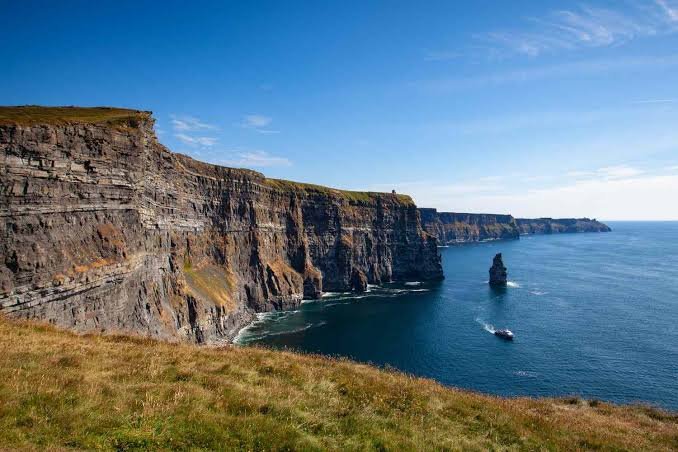
The Cliffs of Moher are Ireland’s most visited natural attraction, and they earn the hype. The cliffs rise nearly 214 meters at their highest point and stretch for about 14 kilometers along the County Clare coast. The visitor center is well organized, but the best experience is walking the cliff path away from the main viewing platform. On a clear day you can see the Aran Islands and the mountains of Connemara.
Ideal length of stay: half a day, or a full day if you combine it with the Burren and Galway.
Best time to visit: early morning or late afternoon to avoid the tour bus crowds. Summer midday is the busiest.
Local tip: check the weather forecast before you go. The cliffs are often fogged in, and there is no refund if you cannot see them. The official website posts live visibility updates.
Connemara
Connemara is the wild, empty heart of the west. It is a landscape of bogs, mountains, and lakes, with a coastline that feels almost Scandinavian. Kylemore Abbey is the most famous stop, a nineteenth-century castle and walled garden set against a mountain backdrop. The Connemara National Park has excellent walking trails, and the Sky Road near Clifden is one of the best short drives in the country.
Ideal length of stay: one full day, or two if you want to walk in the national park.
Best time to visit: May through September. Winter is bleak, and many smaller attractions close.
Local tip: learn a few words of Irish before you go. Connemara is a Gaeltacht region, and locals appreciate the effort even if you only manage “go raibh maith agat.”
Cork and Kinsale
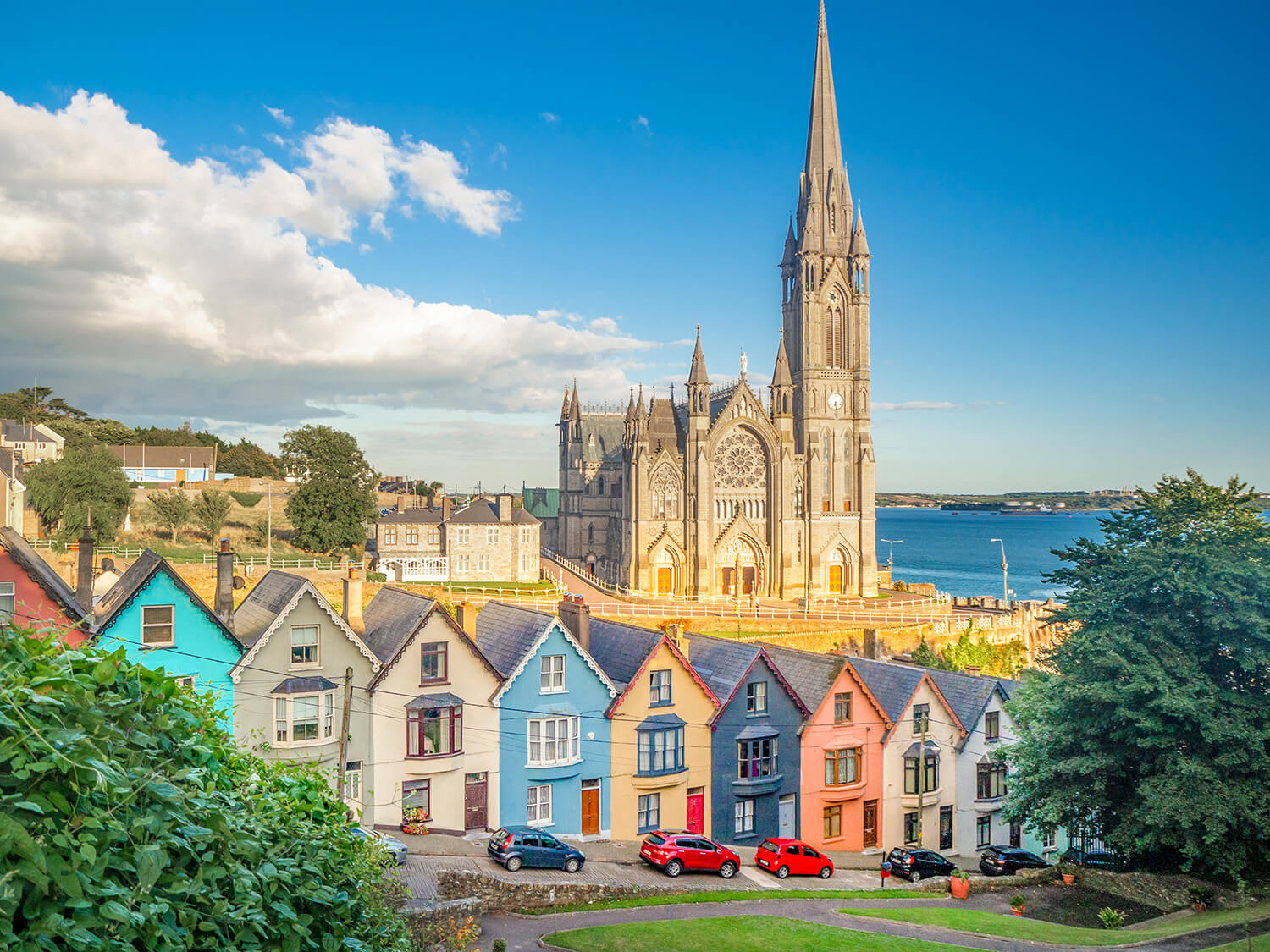
Cork is Ireland’s second city and the food capital of the country. The English Market is the best covered market in Ireland, and the restaurant scene around it is genuinely excellent. Kinsale, a short drive south, is a pretty harbor town known for its food and its role in Irish history. The drive from Cork to Kinsale along the coast is one of the nicest short drives in the south.
Ideal length of stay: one day in Cork, one day in Kinsale, or two days if you want to explore West Cork further.
Best time to visit: May through September. Cork is a year-round city, but Kinsale is best in summer.
Local tip: eat at the English Market, not just in it. The Farmgate Cafe upstairs serves a proper lunch using market ingredients, and it is where locals actually eat.
The Ring of Kerry
The Ring of Kerry is a 179-kilometer circular route around the Iveragh Peninsula. It is the most famous scenic drive in Ireland and one of the most popular. The route passes through Killarney, Kenmare, Sneem, Waterville, and Cahersiveen, with coastal views, mountain passes, and ancient ring forts along the way. It is best done as a full day from Killarney.
Ideal length of stay: one full day. Two, if you want to stop at the Skellig Experience or take a boat to Skellig Michael.
Best time to visit: May through September. The route is exposed and can be dangerous in winter weather.
@faroutfarah 🚗 Don’t do Ring of Kerry, Ireland before watching this 🇮🇪 This is NOT just a drive, it’s 179km of pure Irish magic and these 15 stops will ruin every other road trip for you: The Ultimate Ring of Kerry Itinerary 📌 🏰 Ross Castle – straight out of a fairytale 🌊 Kerry Cliffs – 10x wilder than Moher, without the crowds ⛰️ Bray Head – the hike with THAT view ⛪ Muckross Abbey – hauntingly beautiful ruins 🏡 Muckross House – Downton Abbey vibes in Killarney National Park 💦 Torc Waterfall – you can hear it before you see it 💚 Ladies View – the most famous viewpoint in Ireland for a reason 🏛️ Staigue Stone Fort – 2500 years old and still standing 🏖️ Inch Beach, Derrynane Beach, Keel Beach, Ballinskelligs Beach & Minard Beach – 5 beaches, 5 different moods, all unreal 🌍 Dingle Peninsula peeking in the distance Save this for your Ireland road trip – you’ll thank me later. #wildatlanticway #countykerry #ringofkerry #visitireland #travelblogger FYP
Local tip: do not try to drive the Ring of Kerry and the Dingle Peninsula on the same day. They are close on the map, but each deserves its own full day.
Best for scenery
- Dingle Peninsula for the Slea Head Drive
- Ring of Kerry for the classic Irish coastal loop
- Connemara for empty landscapes and mountains
- Cliffs of Moher for dramatic sea cliffs
Best for culture and food
- Dublin for history, literature, and museums
- Galway for music, festivals, and pub culture
- Cork for the English market and restaurants
- Kilkenny for medieval history and castle tours
What is a realistic 7-day Ireland itinerary?
This is the route I recommend most often. It covers the highlights without turning your vacation into a driving marathon. It assumes you have a rental car from day three onward. If you prefer trains, you can swap the Killarney and Dingle legs for a Cork and Galway train route instead.
Days 1 and 2: Dublin
Land, settle in, and spend two full days in the city. Day one for Trinity College, Dublin Castle, and the National Museum. Day two for the Guinness Storehouse, St. Patrick’s Cathedral, and an evening in a proper Dublin pub. Do not rent a car in Dublin. You will not need it, and parking is expensive.
Day 3: Dublin to Kilkenny
Pick up your rental car at the airport or on the outskirts of the city and drive south to Kilkenny, about 90 minutes. Spend the afternoon on the Medieval Mile and tour the castle. Stay overnight so you get the evening atmosphere.
Day 4: Kilkenny to Killarney
This is your longest driving day, around three and a half hours. Break it up with a stop in Cashel to see the Rock of Cashel, one of Ireland’s most impressive historic sites. Arrive in Killarney in the late afternoon and take an easy walk in the national park.
Day 5: Ring of Kerry
Full day for the Ring of Kerry. Leave early, drive counterclockwise, and stop often. Waterville and Sneem are good lunch stops. Return to Killarney for the evening.
Day 6: Killarney to Dingle
Drive to Dingle in the morning, about an hour and a half. Spend the afternoon driving Slea Head and exploring the town. Stay overnight in Dingle if you can, as the music and seafood are worth it.
Day 7: Dingle to Galway
Drive north to Galway, about three hours with a stop at the Cliffs of Moher on the way. Spend your final evening in Galway’s Latin Quarter. If you have an extra day, use it for Connemara.
If you want to add a food or history tour in Dublin or Galway, GetYourGuide has a good range of local operators. For flight price comparison into Dublin or Shannon, try Kayak before you commit.
What mistakes do first-time visitors to Ireland make?
I have made most of these myself, and I have watched friends make them too. Ireland is a forgiving country to travel in, but a few planning errors can turn a great trip into a stressful one.
Over-scheduling the driving
The single biggest mistake. Distances on the map do not reflect reality. A two-hour drive on an Irish back road can take three hours with traffic, weather, and narrow lanes. Plan fewer stops and stay longer in each place.
Skipping the West Coast
Some visitors stay in Dublin and do day trips, then wonder why Ireland did not feel special. The West Coast is where the country’s character lives. Galway, Connemara, and Dingle are worth the drive.
Underestimating the weather
Irish weather changes fast. A sunny morning can become a wet afternoon. Bring a waterproof jacket with a hood, not an umbrella. Wind makes umbrellas useless on the coast.
Booking accommodation too late
Killarney, Galway, and Dingle sell out months in advance for summer weekends. If you are traveling between June and August, book your beds before you book anything else. Check Hotels.com and Agoda for comparison before you commit.
Driving into Dublin city center
Dublin traffic is heavy and parking is expensive. If you are starting in Dublin, pick up your rental car on the way out of the city, not at the start of your trip. Most airports and city outskirts have rental locations that are easier to reach.
Ignoring the small towns
The big names are famous for a reason, but the small towns are where you find the real Ireland. Adare, Doolin, Kenmare, and Westport are all worth a stop if they fit your route.
Forgetting to check opening hours
Many Irish attractions close in winter or reduce their hours. Always check the official website before you drive to a site. A wasted drive is the fastest way to lose a day.
Frequently asked questions
How many days do you need in Ireland?
Seven days is the minimum for a highlights trip covering Dublin, Kilkenny, Killarney, and Galway. Ten days lets you add Cork, Dingle, and Connemara comfortably. Two weeks gives you time to slow down and enjoy the West Coast properly.
Is it better to rent a car in Ireland or take the train?
Both work, and the best trips often use both. Trains connect Dublin, Cork, Galway, Limerick, and Kilkenny comfortably. Rural areas like Dingle, Connemara, and the Ring of Kerry need a car. Rent a car for the west coast portion and use trains for the cities.
Should I visit Dublin or Galway first?
Start in Dublin. It is the main international gateway, and it works best as an introduction before you head west. Galway is better as the finale because it sits near the most dramatic scenery and has the best music scene.
What is the best time of year to visit Ireland?
May, June, and September are the best months. You get long daylight hours, milder weather, and smaller crowds than July and August. Winter is quiet and cheaper, but many attractions reduce their hours, and the West Coast weather is harsh.
Is Ireland expensive to visit?
Ireland is moderately expensive by European standards. Budget around 120 to 200 euros per person per day for mid-range hotels, meals, and transport (confirm the latest rates on the official booking sites). Hostels and guesthouses can bring that down significantly, especially outside Dublin.
Do I need a visa to visit Ireland?
It depends on your nationality. Citizens of the US, Canada, Australia, New Zealand, and the EU can generally visit without a visa for short stays. Other nationalities should check the official Irish immigration website before booking. Rules change, so always verify before you travel.
What should I pack for Ireland?
A waterproof jacket with a hood, comfortable walking shoes, layers, and a warm sweater. Even in summer, evenings can be cool, and rain is always possible. Leave the umbrella at home and bring a rain shell instead.
Is the Ring of Kerry worth it?
Yes, but only if you have a full day and decent weather. The drive is spectacular on a clear day and disappointing in heavy rain. If the forecast is bad, consider the Dingle Peninsula instead, as it is slightly more sheltered.
Plan your trip: booking platforms we trust
I use these platforms when I plan my own Ireland trips. They are reliable for comparing prices and reading recent reviews, and I have noted what each one is best for so you can go straight to the right one.
Agoda
Best for Asian hotel deals, with competitive rates on Irish B&Bs too.
General hotel search with strong filters for Irish guesthouses and hotels.
Best for flight and hotel packages into Dublin or Shannon.
Flight price comparison across airlines and booking sites.
Family villas and self-catering cottages for groups and longer stays.
Tours and activities, including Dublin walking tours and Cliffs of Moher day trips.
Loyalty rewards bookings, good if you collect stamps toward free nights.
Reviews and restaurant finds are useful for checking recent diner and traveler feedback.
WakaAbuja does its best to keep all information accurate at the time of publishing. Prices, policies, and availability change regularly. Always verify with official sources before you travel. We are not liable for errors caused by outdated information. Travel insurance is strongly recommended.