
Trip to Tokyo, Japan: The Complete Planning Guide for Itinerary, Costs, and Where to Stay
Some links on this page are affiliate links. We may earn a commission at no extra cost to you.
A trip to Tokyo, Japan, works best with 4 to 5 full days for a first visit, a base in Shinjuku, Asakusa/Ueno, or Ginza, and an IC card such as Suica or PASMO for flexible travel. Plan 3 days for the main highlights, 5 days for a balanced city break, or 7 days if you want day trips to Nikko, Kamakura, or Mount Fuji. Japan’s International Tourist Tax is 3,000 yen per departure from July this year (confirm the latest rate with the National Tax Agency).
A trip to Tokyo, Japan is easiest to plan when you decide three things first: how many days you have, where you will sleep, and how you will pay for trains. Tokyo is huge, but a well-located hotel near a rail hub makes the city feel manageable without turning every day into a transport project.
This guide is for first-time visitors from the United States and the United Kingdom who want a practical plan rather than an endless list of restaurants and shrines. It is less useful if you are visiting Japan only to stay at a remote ryokan, because that kind of trip needs a different transport and accommodation strategy.
What makes this guide different is its decision-first approach. It explains when the Japan Rail Pass makes sense, which Tokyo neighborhood suits which traveler, how to build a realistic budget, and how to adjust the itinerary when the weather changes.
Jump to: Best time | How many days | Itineraries | Costs | Where to stay | Getting around | Things to do | What to eat | Travel tips | Mistakes | FAQ
Key takeaways
- Plan 4 to 5 full days for a first trip to Tokyo, Japan, or 7 days if you want day trips and a slower pace.
- Stay in Shinjuku for nightlife and rail access, Asakusa or Ueno for traditional sights and often lower-cost stays, or Ginza for a polished central base.
- Use Suica or PASMO for pay-as-you-go travel, and consider a Tokyo Subway Ticket if you expect repeated Tokyo Metro and Toei Subway journeys.
- The Tokyo Subway Ticket costs 1,000 yen for 24 hours, 1,500 yen for 48 hours, and 2,000 yen for 72 hours for adults (check current fares on the official site).
- Japan’s International Tourist Tax is 3,000 yen per departure from July this year, generally collected through the airline or cruise line (confirm the latest rate with the National Tax Agency).
- Book timed-entry attractions such as TeamLab Planets, TeamLab Borderless, Shibuya Sky, and Tokyo Skytree early, especially for weekends and holiday periods.
- Do not buy a Japan Rail Pass for a Tokyo-only trip without calculating your actual rail journeys; it is usually more useful for multi-city Japan travel.
When is the best time for a trip to Tokyo, Japan?
The best time for a trip to Tokyo, Japan, is usually late March to early May for cherry blossoms and mild weather, or October to November for autumn color and comfortable walking conditions. Summer is hot and humid, while winter is cold but often clear and less crowded outside New Year.
Tokyo’s cherry blossom season varies by year, so do not plan an entire trip around a forecast. Autumn is more predictable for comfortable sightseeing, while summer can be excellent for festivals but demanding if you are not used to heat and humidity.
Best for
- Late March to early May: cherry blossoms, mild temperatures, and outdoor sightseeing.
- October to November: autumn foliage, comfortable walking weather, and seasonal food.
- January to February: lower crowds outside New Year, though evenings can be cold.
Worth considering
- June to August: summer festivals and long daylight hours, but heat, humidity, and possible typhoons.
- Golden Week, late April to early May: major domestic travel period and higher demand.
- Rainy season, generally June into July: pack waterproof footwear and keep indoor plans flexible.
For official seasonal advice, events, and neighborhood information, use GO TOKYO. For weather, check the Japan Meteorological Agency closer to departure rather than relying on a long-range forecast.
Maya’s honest take: Cherry blossoms are lovely, but they are also one of Tokyo’s busiest and most expensive periods. If your dates are flexible, autumn often gives you a better balance of weather, availability, and calmer streets.
How many days do you need for a trip to Tokyo, Japan?
For a first trip to Tokyo, Japan, plan 4 to 5 full days if you want the major districts, food, museums, and a one-day trip. Choose 3 days for a quick city break, or 7 days if you want Nikko, Kamakura, Mount Fuji, or a slower pace.
Tokyo is not one compact sightseeing zone. Shibuya, Shinjuku, Asakusa, Ueno, Ginza, Odaiba, and the Tokyo waterfront each require travel time, and the city’s rail network makes it easy to move between them but makes it easy to underestimate how much a day can absorb.
Choose 3 full days if
- You are combining Tokyo with Kyoto, Osaka, or another Japanese city.
- You mainly want Shibuya, Shinjuku, Asakusa, and one observation deck.
- You are comfortable skipping museums and day trips.
Choose 4 to 5 full days if
- This is your first trip to Tokyo, and you want a balanced plan.
- You want time for markets, temples, nightlife, shopping, and a museum.
- You may add a day trip to Kamakura, Nikko, or Mount Fuji.
Choose 6 to 7 full days if
- You want a slower pace, neighborhood walks, and multiple day trips.
- You are travelling with children or older relatives.
- You want to see more than the headline sights without changing hotels.
For official sightseeing information and current event listings, use GO TOKYO. Use it to fill the days around your fixed bookings rather than treating it as a rigid itinerary.
Maya’s honest take: The mistake I see most is packing five neighborhoods into one day. Pick one anchor area per day, then add one nearby stop. Tokyo feels better when you leave room to wander.
What are the best Tokyo itineraries for 3, 5, and 7 days?
The best Tokyo itinerary depends on trip length: use 3 days for the essentials, 5 days for a balanced first visit, and 7 days for day trips and a slower pace. Keep one afternoon flexible in every version so weather, queues, and recommendations can shape the plan.
3-day Tokyo itinerary
Use Day 1 for Asakusa, Senso-ji, and Ueno. Use Day 2 for Shibuya, Harajuku, Meiji Jingu, and Shinjuku. Use Day 3 for Ginza, Tsukiji Outer Market, Tokyo Tower, or Tokyo Skytree, then leave the evening flexible.
5-day Tokyo itinerary
Add TeamLab Planets or TeamLab Borderless, a museum such as the Tokyo National Museum, and a neighborhood you would otherwise skip. Use the fifth day for Odaiba, a food-focused walk or a day trip to Kamakura.
7-day Tokyo itinerary
Use the extra days for Nikko, Mount Fuji, Hakone, or a slower return to favorite neighborhoods. Do not schedule a long day trip immediately after an early-morning airport arrival or a late-night Shinjuku evening.
Maya’s honest take: Do not schedule a Mount Fuji day trip immediately after an early-morning airport arrival. Tokyo looks compact on a map, but rail connections, queues, and walking can turn a simple plan into a long day.
For attraction ideas, browse our guide to things to do in Tokyo. For a broader planning framework, see our travel itinerary planning guide.
How much does a trip to Tokyo, Japan cost?
A trip to Tokyo, Japan, can suit a modest budget or a luxury one, but accommodation, flights, and dining are usually the biggest costs. Build the budget from flights, hotel or rental accommodation, food, transport, attractions, and a buffer for shopping, taxis, or a day trip.
Use Japanese yen (JPY) throughout. The most useful approach is to set a nightly accommodation budget first, then decide how many paid attractions you want, because timed-entry experiences and day trips can turn a reasonable hotel rate into an expensive trip.
Value traveller
- Stay in a hostel, business hotel, or simple guesthouse.
- Use convenience stores, food halls, and casual restaurants for some meals.
- Use trains and walking rather than taxis.
- Choose free parks, shrines, neighborhoods, and markets alongside a few paid attractions.
Mid-range traveller
- Stay in a well-located mid-range hotel or apartment-style stay.
- Mix casual meals with a few sit-down dinners.
- Include several paid attractions, such as an observation deck and a teamLab venue.
- Allow a buffer for a day trip and occasional taxis.
Comfortable traveler
- Stay in a higher-end hotel in Ginza, Shinjuku, or near Tokyo Station.
- Book restaurant reservations and guided experiences.
- Use taxis when convenient, especially late at night or with luggage.
- Include premium observation decks, theater, shopping, and private transfers if useful.
For flights, compare dates before booking. Use our guide to cheap flights to Tokyo to plan the booking step, then compare package options through Expedia if you want flights and accommodation together.
Maya’s honest take: The cost trap is assuming Tokyo is expensive everywhere. A business hotel near a rail hub, breakfast from a convenience store, and a subway pass can keep a city break reasonable. The expensive version is usually a last-minute hotel in a prime district plus taxis.
Where should you stay on a trip to Tokyo, Japan?
For a first trip to Tokyo, Japan, stay in Shinjuku, Asakusa/Ueno, Ginza, Shibuya, or near Tokyo Station. The right area depends on whether you value nightlife, traditional sights, shopping, rail access, or a quieter base.
Shinjuku
- Choose Shinjuku if you want nightlife, dining, shopping, and major rail connections.
- It is practical for travelers using multiple train lines or arriving late.
- Downside: it can feel intense, especially around the station at rush hour.
Asakusa or Ueno
- Choose Asakusa or Ueno for traditional Tokyo, temples, markets, and often lower-cost accommodation.
- Ueno is convenient for museums and park walks, while Asakusa puts Senso-ji within easy reach.
- Downside: it is east of the city centre, so some west-side plans take longer.
Ginza
- Choose Ginza for a polished, central base, shopping and convenient rail access.
- It works well for couples, business-style travellers and visitors using Tokyo Station.
- Downside: hotels can be costly, particularly during peak periods.
Shibuya
- Choose Shibuya if nightlife, shopping, music and a younger atmosphere matter most.
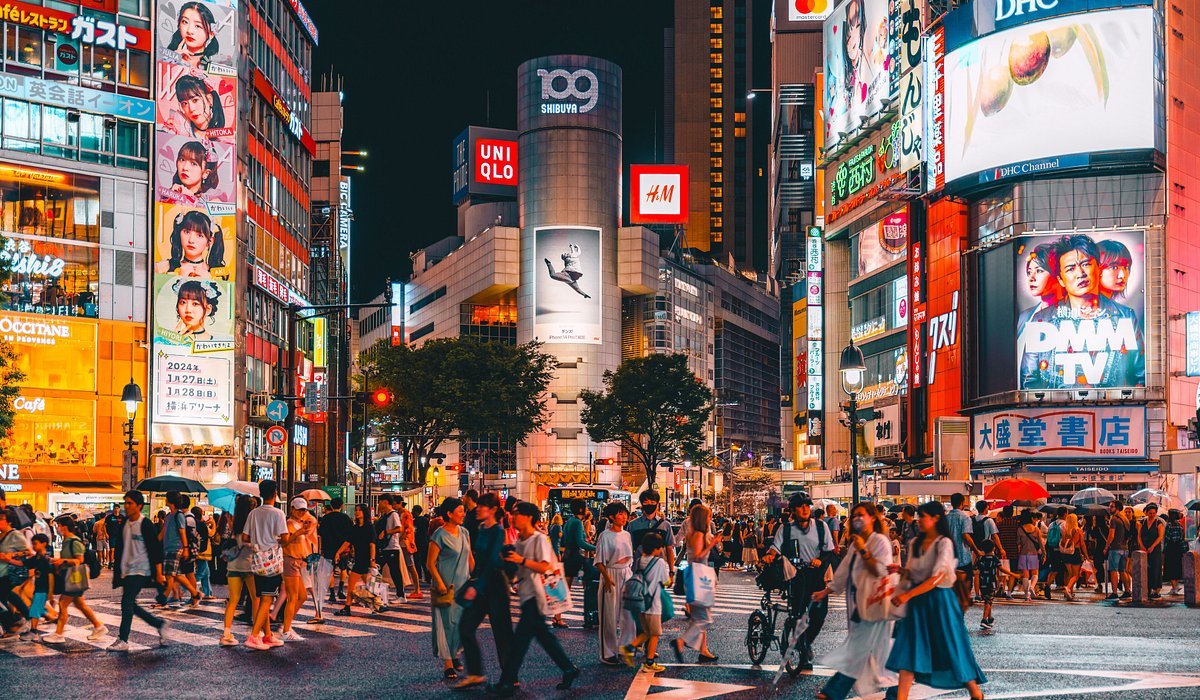
- It is convenient for Shibuya Crossing, Harajuku and west-side sightseeing.
- Downside: it can be noisy and busy, especially near the main crossing.
Tokyo Station
- Choose Tokyo Station if you plan to use the Shinkansen or want a central, businesslike base.
- It is practical for travellers combining Tokyo with Kyoto, Osaka or another region.
- Downside: hotels can be expensive and the area can feel quieter after business hours.
For a first visit, I would start with Shinjuku if you value nightlife and transport, then compare Asakusa or Ueno if you want traditional sights and a more relaxed base. Compare hotels and reviews on Booking.com, Agoda or Hotels.com. For a family or group, check apartment-style options on Vrbo, but verify the exact location, sleeping arrangements and cancellation terms before paying.
For more accommodation ideas, see our guide to where to stay in Tokyo.
How do you get around Tokyo: Suica, PASMO, subway tickets or a JR Pass?
For a trip to Tokyo, Japan, use an IC card such as Suica or PASMO for flexible pay-as-you-go travel, or choose a Tokyo Subway Ticket if you expect several subway journeys each day. The best option depends on whether you also need JR lines, buses or travel beyond central Tokyo.
The Tokyo Subway Ticket gives unlimited rides on Tokyo Metro and Toei Subway lines for 24, 48 or 72 hours from first use. Tokyo Metro lists adult prices of 1,000 yen for 24 hours, 1,500 yen for 48 hours and 2,000 yen for 72 hours (check current fares and eligibility on the official site).
Check Tokyo Metro’s Tokyo Subway Ticket page
Choose an IC card if
- You want to use metro, JR, buses and many shops without thinking about ticket types.
- Your plans include places outside the Tokyo Metro and Toei Subway network.
- You prefer flexibility over squeezing value from a pass.
Choose a Tokyo Subway Ticket if
- You expect to use Tokyo Metro and Toei Subway several times daily.
- You are staying centrally and will mostly sightsee within the covered network.
- You want a simple, fixed transport cost for a short city break.
Narita or Haneda: which airport is better?
Haneda Airport (HND) is usually closer to central Tokyo, while Narita Airport (NRT) often has more international flight choices and can be cheaper. Choose Haneda if the fare difference is small and you value a shorter transfer; choose Narita if the flight is materially cheaper or the schedule is better.
For Narita, consider the Narita Express, Keisei Skyliner, airport buses or regular trains. For Haneda, consider the Tokyo Monorail, Keikyu Line, airport buses or a taxi, depending on your hotel location and arrival time.
A Japan Rail Pass is not automatically good value for a Tokyo-only trip. It can make sense if you are travelling long distances across Japan by rail, but calculate the cost against your actual itinerary before buying it. For a Tokyo city break, an IC card plus a subway pass is often simpler.
GO TOKYO’s guide to IC cards and tickets explains the differences between Tokyo Metro tickets and visitor passes.
Maya’s honest take: A cheap hotel 40 minutes from everywhere is rarely cheap once you add late-night taxis, extra rail fares and wasted energy. Pay attention to the walking distance to a station, not just the district name.
What are the top things to do in Tokyo, Japan?
The top things to do in Tokyo, Japan are Senso-ji, Shibuya Crossing, Meiji Jingu, Tokyo Skytree, teamLab, Tsukiji Outer Market and a day trip to Kamakura, Nikko or Mount Fuji. Choose two or three major activities per day rather than trying to see every highlight.
Best for first-timers
- Senso-ji and Asakusa for traditional Tokyo.
- Shibuya Crossing and Harajuku for the modern city.
- Meiji Jingu for a quieter green-space break.
- Tokyo Skytree or Tokyo Tower for a city viewpoint.
Worth considering
- teamLab Planets or teamLab Borderless for immersive digital art.
- Tsukiji Outer Market for food and shopping.
- Ueno museums for art, history and science.
- Kamakura, Nikko or Mount Fuji for a day beyond the city.
For tours and activity tickets, compare availability on GetYourGuide, but always check the operator’s cancellation policy, meeting point and whether admission is included.
For current visitor information, events and neighbourhood guidance, use GO TOKYO.
What should you eat on a trip to Tokyo, Japan?
On a trip to Tokyo, Japan, try sushi, ramen, tempura, yakitori, izakaya food, convenience-store meals and department-store food halls. Tokyo’s food range is one of its main reasons to visit, so do not save every meal for a hotel restaurant.
Use food halls, markets and neighbourhood restaurants rather than eating every meal in one district. Tsukiji Outer Market is useful for seafood and snacks, while Shinjuku, Shibuya and Ginza are practical areas to pair with sightseeing.
For restaurant reviews and traveller recommendations, browse Tripadvisor, but treat recent reviews as a starting point rather than a substitute for checking opening hours directly with the restaurant.
Maya’s honest take: Do not save all your food budget for one fancy dinner. Tokyo’s best value is often a convenience-store breakfast, a market lunch and a neighbourhood dinner rather than three restaurant meals in the same precinct.
What should you know before a trip to Tokyo, Japan?
Before a trip to Tokyo, Japan, check visa rules, carry some cash, arrange mobile data, learn basic train etiquette and understand the departure tax. These small preparations make the city easier to navigate and reduce avoidable costs.
- Visa and entry rules. Check your nationality, purpose of visit and length of stay with Japan’s Ministry of Foreign Affairs before booking non-refundable travel.
- Departure tax. Japan’s International Tourist Tax is 3,000 yen per departure from July this year, generally collected through the airline or cruise line (confirm the latest rate with the National Tax Agency).
- Cash and cards. Carry a modest amount of yen for small shops, markets, temples and places that do not accept foreign cards.
- Mobile data. Arrange an eSIM, local SIM or pocket Wi-Fi before arrival if you rely on maps and translation apps.
- Train etiquette. Keep phone calls quiet, let passengers exit before boarding and avoid blocking doors during rush hour.
- Tipping. Tipping is not customary in Japan, so do not feel obliged to add a gratuity.
- Earthquake awareness. Save emergency contacts, know your hotel’s evacuation information and follow official instructions during an alert.
Check the National Tax Agency’s International Tourist Tax information
For a broader pre-departure checklist, see our travel planning checklist.
What mistakes do first-time visitors make on a trip to Tokyo, Japan?
The most common mistakes on a trip to Tokyo, Japan are overpacking the itinerary, choosing a hotel solely on price, buying a rail pass without doing the maths, and relying on outdated tax-free advice. Each has a simple fix.
- Trying to see too much each day. Fix it by choosing one anchor neighbourhood and one or two nearby stops.
- Booking a hotel far from a station. Fix it by checking walking time, lift access and late-night transport before booking.
- Buying a Japan Rail Pass without doing the maths. Fix it by pricing your actual intercity journeys; a Tokyo-only trip often does not justify one.
- Assuming every attraction needs a tour. Fix it by checking whether timed entry, a self-guided visit or a simple transport ticket is enough.
- Forgetting the departure tax. Fix it by checking whether it is included in your ticket and budgeting for it if it is not.
- Arriving without a plan for cash and connectivity. Fix it by arranging an eSIM or local data option and carrying a modest yen reserve.
- Ignoring the accommodation tax. Fix it by checking whether your hotel includes it in the displayed price and what threshold applies to your stay.
For visa and entry guidance, see our guide to Japan visa requirements.
Frequently asked questions
How many days do you need in Tokyo?
Most first-time visitors should plan 4 to 5 full days in Tokyo. That allows time for major districts, food, museums and one optional day trip. Use 3 days for a quick city break or 7 days for a slower itinerary.
How much does a trip to Tokyo cost?
The total depends on flights, hotel category, dining style and paid attractions. Build a budget from accommodation per night, daily food and transport, attraction tickets, airport transfers and the International Tourist Tax. Check each figure close to booking because prices change.
What is the best month to visit Tokyo?
Late March to early May and October to November are usually the most comfortable periods. Cherry blossoms are popular but busy, while summer brings heat, humidity and possible typhoons.
Is Tokyo expensive for tourists?
Tokyo can be expensive, especially for accommodation, dining and tours. It becomes more affordable with a well-located budget hotel, convenience-store breakfasts, public transport and a small number of paid activities.
Do I need a visa to visit Japan?
It depends on your nationality, purpose of visit and length of stay. Many short-term tourists from the US and UK do not need a visa, but confirm your exact situation with Japan’s Ministry of Foreign Affairs before booking.
Should I get a JR Pass for Tokyo?
Usually not for a Tokyo-only trip. A Japan Rail Pass can make sense for multi-city Japan travel, but an IC card plus a Tokyo Subway Ticket is often simpler and better value for a city break.
Where should I stay in Tokyo for the first time?
Shinjuku is best for nightlife and transport, Asakusa or Ueno for traditional sights and often lower-cost stays, and Ginza or Tokyo Station for a central, polished base. Choose the area that matches your evening plans and airport transfer needs.
How do I get from Narita or Haneda to central Tokyo?
Haneda (HND) is usually closer to central Tokyo, with rail options including the Tokyo Monorail and Keikyu Line. Narita (NRT) is farther away but often has more international flight choices; use the Narita Express, Keisei Skyliner, airport bus or regular train depending on luggage, budget and arrival time.
Sources we checked
Maya verifies transport fares, visa rules, airport information and visitor policies against official Japanese government, tourism and transit sources before publishing. Rules can change, so recheck the relevant page shortly before departure.
Plan your trip: booking platforms we trust
For a trip to Tokyo, Japan, I would compare flights first, then choose accommodation within a short walk of a major rail hub. Use a hotel platform for cancellation terms, a tours platform for timed experiences, and keep the transport plan simple with an IC card and a subway pass if it suits your itinerary.
Useful for comparing Tokyo hotels, apartments and cancellation policies.
Agoda
Useful for comparing hotels and stays across Japan and the Asia-Pacific region.
Hotels.com
Useful for hotel loyalty bookings and comparing central Tokyo stays.
Vrbo
Useful for families or groups looking for apartment-style space.
GetYourGuide
Useful for teamLab, observation decks and guided Tokyo experiences.
Tripadvisor
Useful for reading recent traveller reviews of hotels, restaurants and tours.
For more help choosing dates and accommodation, see our guides to where to stay in Tokyo, cheap flights to Tokyo and travel planning guides.
WakaAbuja does its best to keep all information accurate at the time of publishing. Prices, policies, and availability change regularly. Always verify with official sources before you travel. We are not liable for errors caused by outdated information. Travel insurance is strongly recommended.