advertisement
Best Beaches in Florida Gulf Coast: 14 Picks and How to Choose the Right One for Your Trip
Siesta Key in Sarasota is the most consistently top-ranked beach on Florida’s Gulf Coast for its quartz sand and calm, shallow water. Clearwater Beach is the best pick for families who want amenities and easy access, while Grayton Beach on 30A and St. George Island in the Panhandle are the best for quiet, uncrowded sand. Sanibel and Captiva near Fort Myers lead for shelling, and Naples is the best for a walkable, upscale beach town. Most public beach parking along the Gulf Coast costs between $2 and $5 per hour (confirm current rates with the specific county or city before you go).
I have spent more weekends than I can count chasing the perfect stretch of Gulf Coast sand, from Pensacola down to Marco Island. The truth is that “best” depends entirely on what kind of trip you are taking. A beach that is perfect for a romantic long weekend can be miserable with a toddler and a stroller.
This guide covers 14 Gulf Coast beaches, and it also gives you the tool to pick the right one, because that is the part most beach lists skip.
Jump to: Compare at a Glance | How to Choose | Panhandle | North Gulf | Central Gulf | South Gulf | FAQ
Key takeaways
- Siesta Key, Clearwater Beach, and St. Pete Beach are the three most popular Gulf Coast beaches and the easiest to reach from major airports.
- For quiet, uncrowded sand, look at Grayton Beach on 30A, St. George Island, and Captiva. These are the beaches locals go to when they want space.
- Sanibel and Captiva are the best shelling beaches in North America. Go at low tide, early in the morning.
- Red tide and rip currents are the two real hazards on the Gulf Coast. Check the Florida Fish and Wildlife red tide map and the county beach flag system before you swim.
- The best months for weather are April, May, October, and November. Summer is hot, crowded, and in the middle of hurricane season.
- Public beach parking generally runs $2 to $5 per hour (confirm current rates with the local municipality). Some beaches charge flat daily fees instead.
- Dogs are allowed on some Gulf Coast beaches, but rules vary by city and county. Always check the local ordinance before you bring a pet.
How do Florida’s Gulf Coast beaches compare?
This is the section most beach lists never give you. I have sorted the 14 beaches by what they are genuinely best for, so you can shortlist in thirty seconds and read only the entries that matter to your trip. I built it this way after a friend booked Clearwater for a quiet anniversary trip and spent the weekend in traffic on Gulf Boulevard.

Best for families
- Clearwater Beach: shallow water, lifeguards, boardwalk amenities
- St. Pete Beach: calm water, plenty of hotels and restaurants
- Fort Myers Beach: gentle slope, family resorts nearby
Best for quiet and solitude
- Grayton Beach, 30A: dune lakes, protected state park
- St. George Island: long, undeveloped, no high-rises
- Captiva: narrow island, limited development
Best for shelling
- Sanibel Island: the shelling capital of North America
- Captiva: quieter neighbor with the same shell beds
- Marco Island: good shelling on the south end
Best for a walkable beach town
- Naples: upscale downtown, pier, easy walkability
- Sarasota: arts scene plus Siesta Key nearby
- Pensacola Beach: boardwalk, restaurants, easy access
How do you choose the right Gulf Coast beach for your trip?
Choosing a Gulf Coast beach comes down to four questions. Answer them honestly, and the shortlist builds itself.
How far are you willing to drive from the airport?
Tampa International and Sarasota-Bradenton serve the central Gulf Coast, which puts Clearwater, St. Pete, Siesta Key, and Anna Maria within an hour. Pensacola and Panama City serve the Panhandle. Fort Myers serves Sanibel, Captiva, and Naples. Fort Lauderdale and Miami work for the southwest coast but add two to three hours of driving.
Do you want a beach town or a quiet beach?
Clearwater, St. Pete Beach, Fort Myers Beach, and Naples are beach towns. You get restaurants, bars, hotels, and crowds. Grayton Beach, St. George Island, and Captiva are quiet beaches. You get space, and you drive for dinner.
What time of year are you going?
April, May, October, and November are the best months. Summer is hot and crowded and inside hurricane season. Winter is mild but can bring red tide and occasional cold fronts.
Are you traveling with kids, a partner, or solo?
Families do best at Clearwater, St. Pete Beach, and Fort Myers Beach. Couples tend to prefer Captiva, Grayton Beach, and Anna Maria Island. Solo travelers get the most out of Naples, Sarasota, and Pensacola Beach, where walkability matters.
Maya’s honest take: “If you have three days and you want one beach that does everything well, pick Siesta Key. If you have a week and you want to slow down, drive up to 30A and stay in Grayton or Seaside. Those two choices solve 80 percent of Gulf Coast trips.”
Best beaches in the Florida Panhandle
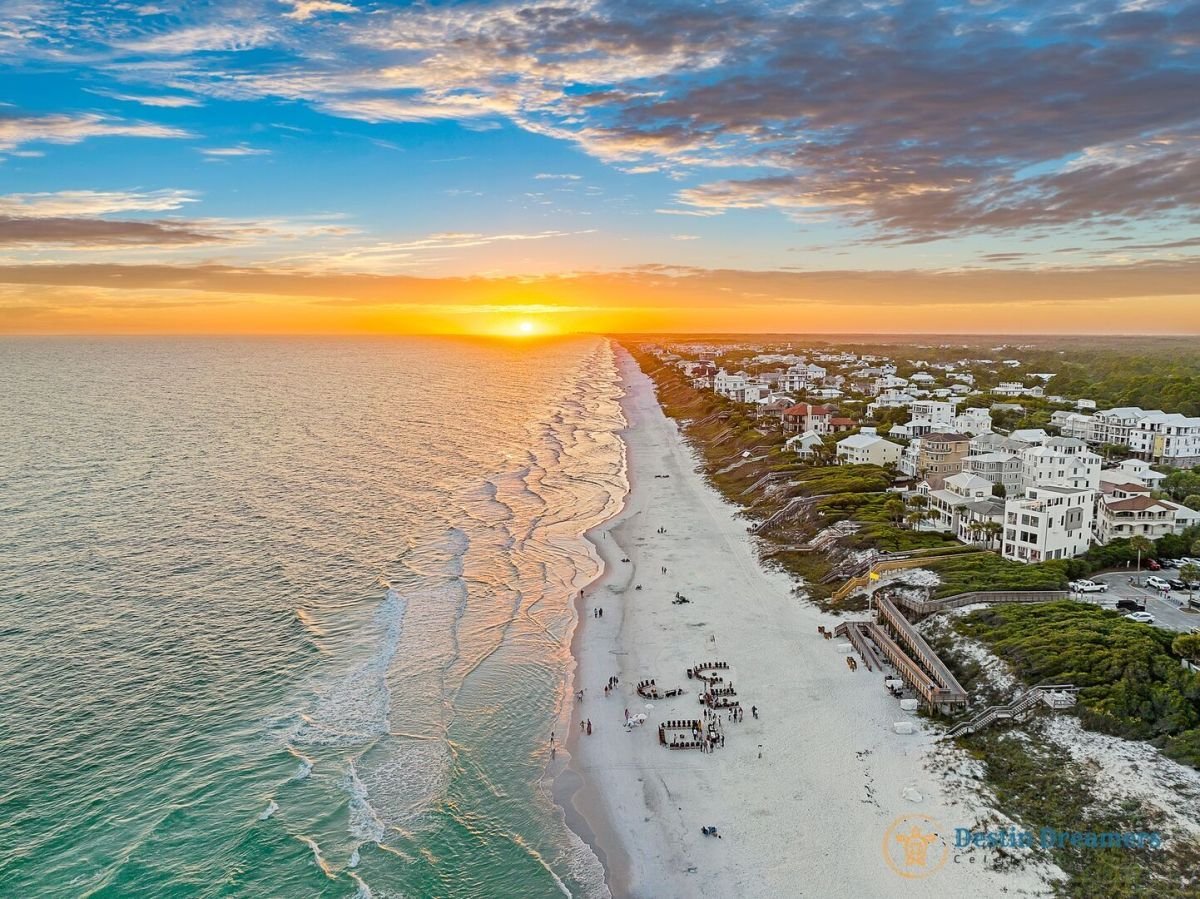
The Panhandle has the whitest sand and the clearest water on the Gulf Coast. The sand is almost pure quartz, washed down from the Appalachian Mountains, and it stays cool underfoot even in July. This is the stretch that people mean when they say “the Emerald Coast.”
Pensacola Beach
Pensacola Beach sits on Santa Rosa Island, a barrier island with the Gulf on one side and Pensacola Bay on the other. The beach itself is wide and white, and the boardwalk area has restaurants and bars within walking distance. It is the most accessible Panhandle beach for a first-time visitor.
Parking and cost: Public parking is available at several lots, generally $2 to $4 per hour (confirm current rates with Escambia County). Some lots charge a flat daily fee.
Best season: April to October. July and August are the busiest and hottest.
Grayton Beach State Park
Grayton Beach is the beach I recommend to anyone who wants the Panhandle without the crowds. It sits inside a state park, backed by dunes and rare coastal dune lakes, and the sand is the same sugar-white quartz as the rest of the Panhandle. There are no high-rises here and no boardwalk. Just sand, water, and pine trees.
Parking and cost: Park entry runs roughly $6 per vehicle (confirm current fees with Florida State Parks). The lot fills early in summer.
Best season: April, May, September, and October. Peak summer is crowded despite the park setting.
Seaside and 30A
Seaside is the planned community that made 30A famous, a stretch of New Urbanist design with pastel houses, walkable streets, and beach access pavilions between the homes. It is expensive and photogenic, and the beaches along 30A are some of the best in the state.
Parking and cost: Most 30 Beach access points require a permit or paid parking, generally $10 to $20 per day (confirm current rates with Walton County).
Best season: April to October. Summer requires booking accommodation months ahead.
St. George Island
St. George Island is a 28-mile barrier island in the Apalachicola Bay area, and it is the quietest beach on this list. There are no high-rises, no chain hotels, and very little commercial development. The state park at the eastern end has some of the most undeveloped beaches in Florida.
Parking and cost: State park entry is roughly $6 per vehicle (check current fees with Florida State Parks). Street parking near public access points is generally free.
Best season: April to October. Winter is quiet and mild.
Best beaches on Florida’s North Gulf Coast
The North Gulf Coast stretches from the Big Bend region down through the Tampa Bay area. This is where you find the highest concentration of well-known beaches and the easiest access from major airports.
Clearwater Beach
Clearwater Beach is the most popular beach on the Gulf Coast and consistently ranks among the best in the country. The sand is wide, the water is calm, and the boardwalk area, Pier 60, has buskers, restaurants, and sunset celebrations every evening. It is busy, but it earns the crowds.
Parking and cost: Public parking lots and garages run $2 to $5 per hour (confirm current rates with the City of Clearwater). Some lots have a daily maximum.
Best season: March to May and September to November. Summer is hot and very crowded.
St. Pete Beach
St. Pete Beach sits just south of Clearwater and has a similar feel, with a slightly more relaxed pace. The beach is wide, the water is calm, and the hotels along Gulf Boulevard range from budget to luxury. It is a good base if you want to be close to both Tampa and Sarasota.
Parking and cost: Public parking runs $2 to $4 per hour (check current rates with Pinellas County). Some hotels charge resort fees for beach access.
Best season: March to May and October to November.
Honeymoon Island State Park
Honeymoon Island is a state park just off Dunedin, reachable by causeway, and it is the best beach in the Tampa Bay area for shelling and quiet walks. The beach is long, the water is clear, and the park has hiking trails through the dunes. It is also one of the few Gulf Coast beaches where you can bring a dog, though only in designated areas.
Parking and cost: Park entry is roughly $8 per vehicle (confirm current fees with Florida State Parks).
Best season: March to May and October to November. Summer is hot, but the park is less crowded than Clearwater.
Anna Maria Island
Anna Maria Island is a seven-mile barrier island south of Tampa Bay, and it is the best Gulf Coast beach for a slow, old-Florida trip. There are no high-rises, no chain restaurants, and no traffic lights. The beaches at Bean Point and Coquina Beach are the two best on the island.
Parking and cost: Most public beach access points have free parking, though the lots fill early. Some areas require a permit (check current rules with Manatee County).
Best season: March to May and October to November.
Siesta Key
Siesta Key is the beach most often named the best in the United States, and it earns the title. The sand is 99 percent pure quartz, which keeps it cool and gives it a brilliant white color. The water is calm and shallow, and the beach is wide enough that even on busy days you can find space. Siesta Village, just behind the beach, has restaurants and bars within walking distance.
Parking and cost: Public parking is free at the main beach access, but the lot fills by 9 AM in peak season. Overflow parking is available nearby (check current rules with Sarasota County).
Best season: March to May and October to November. Summer is hot and crowded.
Lido Key and South Lido Park
Lido Key is Siesta Key’s quieter neighbour, closer to downtown Sarasota and with a more residential feel. South Lido Park has a mangrove-lined beach that is popular with kayakers and paddleboarders, and the sand is nearly as good as Siesta’s.
Parking and cost: Public parking is generally free, though lots are smaller than at Siesta Key (check current rules with the City of Sarasota).
Best season: March to May and October to November.
Best beaches on Florida’s Central Gulf Coast
The Central Gulf Coast runs from Sarasota down through Charlotte County. This is where you find the barrier islands that are best for shelling, plus the quieter beaches that locals keep to themselves.
Sanibel Island
Sanibel Island is the shelling capital of North America, and the beach is genuinely different from the rest of the Gulf Coast. The sand is packed with shells, and the island’s east-west orientation means it catches shells that other beaches miss. The J.N. “Ding” Darling National Wildlife Refuge covers a large part of the island.
Parking and cost: Public beach access points generally have free or low-cost parking, and some lots charge $3 to $5 per hour (confirm current rates with the City of Sanibel). The causeway toll from the mainland is $6 per vehicle (check current tolls).
Best season: October to April. Summer is hot and shelling is less productive.
Captiva Island
Captiva is Sanibel’s quieter northern neighbour, reachable by a bridge at the north end of Sanibel. The island is narrow, the beaches are less developed, and the shelling is nearly as good. Captiva is the beach I recommend for couples who want quiet and don’t need a beach town.
Parking and cost: Public parking is limited. Most visitors park at their accommodation or at the South Seas resort area (confirm current rules and fees with the resort).
Best season: October to April.
Boca Grande
Boca Grande sits on Gasparilla Island at the mouth of Charlotte Harbor, and it is the most upscale quiet beach on the Gulf Coast. The island has a small downtown, a lighthouse, and long stretches of uncrowded sand. It is not a party destination, and that is the point.
Parking and cost: Public parking is generally free at the beach access points (check current rules with Lee County). The causeway toll is $6 per vehicle (confirm current tolls).
Best season: October to April.
Best beaches on Florida’s South Gulf Coast
The South Gulf Coast runs from Fort Myers down to Naples and Marco Island. This is the warmest stretch of the Gulf Coast in winter, which makes it the best bet for a cold-weather escape.
Fort Myers Beach
Fort Myers Beach is a classic family beach town, with a wide beach, shallow water, and a walkable strip of restaurants and shops along Estero Boulevard. The beach was heavily damaged by Hurricane Ian in 2022 and has been rebuilding since. Check current conditions before you book.
Parking and cost: Public parking runs $2 to $5 per hour (confirm current rates with Lee County). Some lots are still limited as rebuilding continues.
Best season: October to April.
Naples Municipal Beach and Pier
Naples is the most upscale beach town on the Gulf Coast, and the municipal beach and pier are its centerpiece. The beach is wide, the water is clear, and the pier is a popular fishing spot. Downtown Naples, with its restaurants and galleries, is a short walk away.
Parking and cost: Public parking near the pier runs $2 to $3 per hour (check current rates with the City of Naples). The lots fill early in peak season.
Best season: October to April. Summer is hot and humid.
Marco Island (Tigertail Beach and South Beach)
Marco Island is the largest of the Ten Thousand Islands, and it has two distinct beach experiences. Tigertail Beach is a lagoon-backed beach that is excellent for shelling and kayaking. South Beach is the more traditional resort beach, with calm water and easy access.
Parking and cost: Public parking at Tigertail Beach runs $8 per day (confirm current rates with Collier County). South Beach parking is generally free.
Best season: October to April.
What are the most common mistakes when visiting Florida’s Gulf Coast beaches?
I have made most of these, and I have watched plenty of visitors make the rest. The pattern is always the same: showing up unprepared for the realities of a Gulf Coast summer or a Gulf Coast winter.
Visiting in July and August and expecting quiet
Summer is peak season on the Gulf Coast and it is hot, humid, and crowded. If you want quiet, go in April, May, October, or November. The water is still warm in October and the crowds are gone.
Ignoring red tide
Red tide is a naturally occurring algae bloom that can kill fish and cause respiratory irritation in humans. It occurs most often in late summer and fall. Check the Florida Fish and Wildlife Conservation Commission red tide map before you go, and have a backup plan if it is active in your area.
Swimming outside the flags
Rip currents are the leading cause of beach drownings on the Gulf Coast, and the calm appearance of the water is misleading. Swim between the red and yellow flags, and check the county beach flag system before you get in.
Not checking parking rules before you arrive
Parking is the single biggest source of frustration on a Gulf Coast beach trip. Some beaches have free lots that fill by 9 AM. Others require permits, and some municipalities ticket aggressively. Check the rules for your specific beach before you go.
Assuming dogs are allowed
Most Gulf Coast beaches do not allow dogs. The exceptions are specific state parks and designated dog beaches. Always check the local ordinance before you bring a pet.
Booking accommodation without checking the beach access
Some hotels and rentals advertise “beachfront” but sit across a busy road from the sand. Check the map and the access point before you book. This matters most in Clearwater, Fort Myers Beach, and St. Pete Beach, where Gulf Boulevard separates many hotels from the water.
Skipping travel insurance during hurricane season
Hurricane season runs June 1 to November 30. If you are traveling during those months, travel insurance with weather coverage is worth the cost. Our guide to travel insurance for travelers covers the basics.
Frequently asked questions
Which Florida Gulf Coast beach has the whitest sand?
The Panhandle beaches, especially Pensacola Beach, Grayton Beach, and the 30A communities, have the whitest sand on the Gulf Coast. The sand is nearly pure quartz and stays cool underfoot. Siesta Key on the central Gulf Coast is also known for its quartz sand, which is 99 percent pure.
Are Florida Gulf Coast beaches good in winter?
Yes, especially on the South Gulf Coast. Naples, Marco Island, and Sanibel have mild winter weather and are popular cold-weather escapes. The Panhandle and North Gulf Coast get colder, and water temperatures drop enough that swimming is only for the brave. Winter is also the driest season.
Which Florida Gulf Coast beaches are dog-friendly?
Honeymoon Island State Park has designated dog areas, and a few Gulf Coast beaches allow leashed dogs in specific zones. Most public beaches do not allow dogs. Always check the local city or county ordinance before you bring a pet to the beach.
What is the best time of year to visit Florida’s Gulf Coast beaches?
April, May, October, and November are the best months. The weather is warm but not oppressive, the crowds are smaller, and prices are lower than peak summer. Summer is hot, humid, and inside hurricane season. Winter is mild in the south but can be cold in the Panhandle.
Which Gulf Coast beach is best for families with young kids?
Clearwater Beach and St. Pete Beach are the best for families. Both have calm, shallow water, lifeguards, and plenty of restaurants and hotels within walking distance. Fort Myers Beach is also a good family option, though you should check current conditions as the area continues rebuilding after Hurricane Ian.
How much does it cost to park at Florida Gulf Coast beaches?
Public beach parking generally runs $2 to $5 per hour (confirm current rates with the specific city or county). Some beaches charge flat daily fees instead. State parks charge entry fees of roughly $6 to $8 per vehicle (check current fees with Florida State Parks). Free parking exists at some beaches, but those lots fill early.
What is red tide and should I worry about it?
Red tide is a naturally occurring algae bloom that can cause respiratory irritation and kill fish. It occurs most often in late summer and fall, but timing and location vary year to year. Check the Florida Fish and Wildlife Conservation Commission red tide map before your trip and have a backup plan if it is active in your area.
Plan your trip: booking platforms we trust
I use these platforms because each one solves a different part of a Gulf Coast beach trip. Flights into Tampa, Sarasota, Fort Myers, or Pensacola get compared on Kayak and Expedia. Beach accommodation gets booked on Booking.com, with Agoda often strong for the larger resort markets like Clearwater and Naples. Vrbo is the right call for families who want a condo or house near the sand. GetYourGuide covers the boat tours and shelling trips that make Sanibel and Captiva worth the drive.
Booking.com
General hotel search for beach towns along the Gulf Coast.
Kayak
Flight price comparison into Tampa, Fort Myers, and Pensacola.
Expedia
Flight and hotel packages for beach getaways.
Vrbo
Family condos and beach houses for longer stays.
GetYourGuide
Boat tours, shelling trips, and dolphin cruises.
TripAdvisor
Reviews and restaurant finds in each beach town.
WakaAbuja does its best to keep all information accurate at the time of publishing. Prices, policies, and availability change regularly. Always verify with official sources before you travel. We are not liable for errors caused by outdated information. Travel insurance is strongly recommended.